

Published May 20, 2026 06:15AM
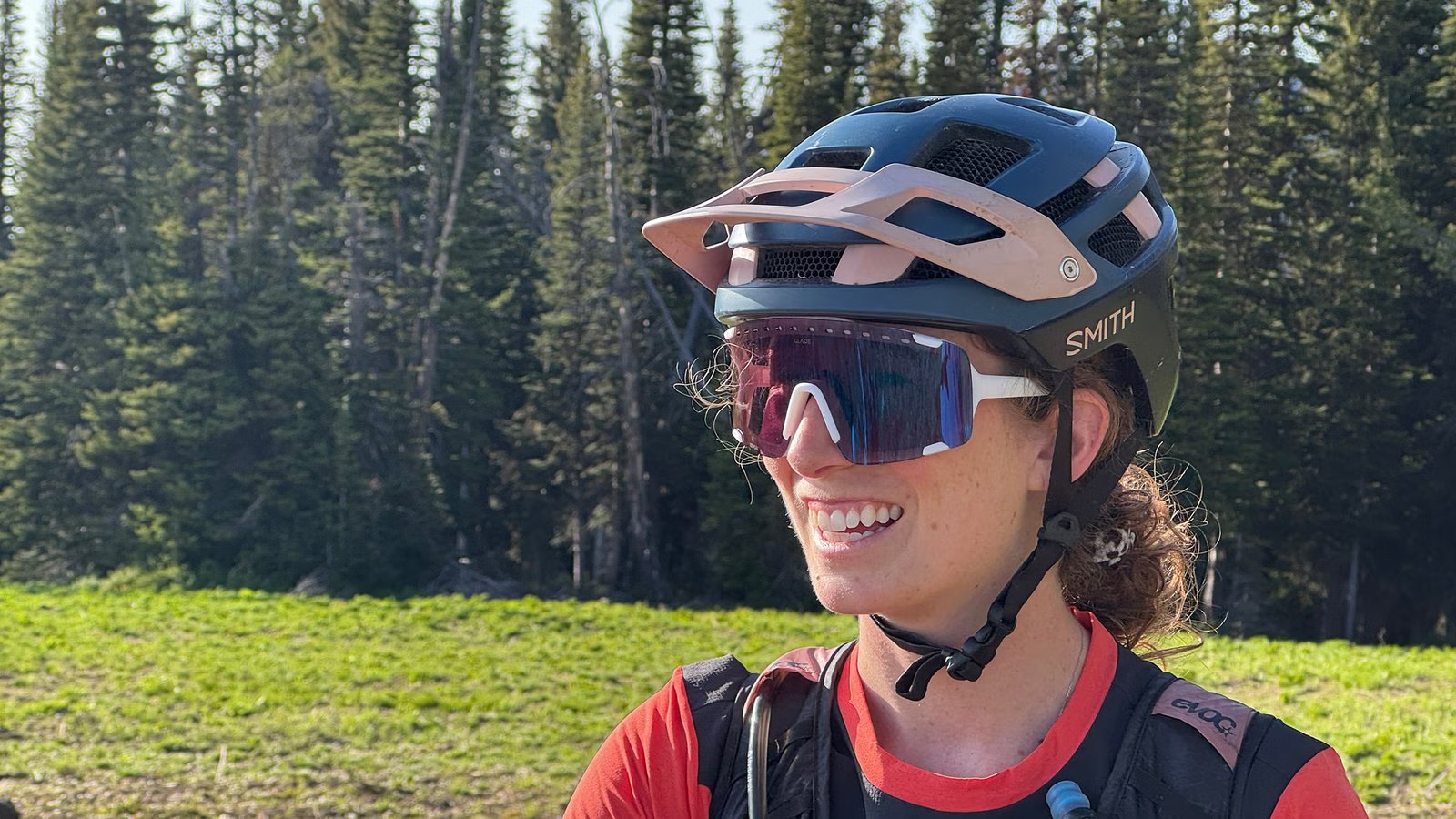
May 2026: After six months of testing 51 new sunglasses and comparing them with the 81 from the summer/fall test, we named new winners in six of the 14 categories and updated the pricing and availability for all. We named the Sierra shades by Warby Parker, a new brand in the sport sunglasses field, as the most versatile for its blend of trail performance and street style.
The best thing about sports sunglasses? You can never have too many. That might seem like a dangerous invitation to shop excessively, but we like to think of it as an excuse to accessorize. Nothing completes a kit like the perfect pair of shades.
While it’s impossible to crown just one pair of sunglasses as the best of the best, given diverse sport-specific priorities and personal preferences, we can narrow it down to top contenders for each activity. Whether your activity of choice is crushing thousands of vert on your bike, spending hours on the water, or drinking beers at the trailhead (yes, that’s a sport in our book), shades that offer crystal-clear optics are a must—seeing those sweeping vistas, lush green forests, and bright red desert rock in their full glory is the reason we get outside in the first place, right?
Our team took these shades on fishing trips, bouldering sessions, afternoon motorcycle rides, dawn patrol runs, stormy ski tours, and camping trips in the desert to find the best sunglasses for every adventure. Here are our 14 favorites.
Best Sport Sunglasses: At a Glance
Best Sport Sunglasses Under $30
Goodr OG
Lens: Polarized, in 13 color options
Frame shape: Sporty square
Fit: Narrow/medium
Pros and Cons
+ Comfortable
+ Complete protection that’s affordable
— Lenses difficult to keep clean
— Lenses easily damaged
Chances are, you’ve seen Goodr’s OG sunglasses on your local running trail, at the pool, or on the sidelines of your kid’s soccer game. That’s no surprise, given their classic frame, dozens of colorways, and a very accessible $30 price tag. Our testers also praised their light weight and the fact that they stay locked in place, even during high-impact activities like running.
“I don’t usually race in sunglasses, but I wore these in the Berlin Marathon,” said tester Jacqueline de Berry. “I thought for sure I would get annoyed by them toward the end of the race and want to toss them away—and I wouldn’t even have minded due to how affordable they are. But they were so comfortable I wore them to the finish, and they helped me score a new PR [personal record].” Another tester logged over 1,000 miles in the OGs and recommended them specifically for squintingly sunny weather. “They can affect your depth perception in the shade, so I only wear them on sunny, non-technical trails,” he says.
Sure, they’re not as teched out as the other sports sunglasses we tested, but they’re incredibly solid all around. If you’re someone with an unfortunate reputation for losing every pair of sunglasses you’ve ever owned (relatable), the OG Goodrs are worth buying in bulk.
Best Sunglasses For Running
Smith Defy
Lens: ChromaPop, comes in six colors
Frame shape: Wraparound
Fit: Medium
Pros and Cons
+ Lightweight
+ Secure fit doesn’t bounce around
— Not enough coverage for high speeds
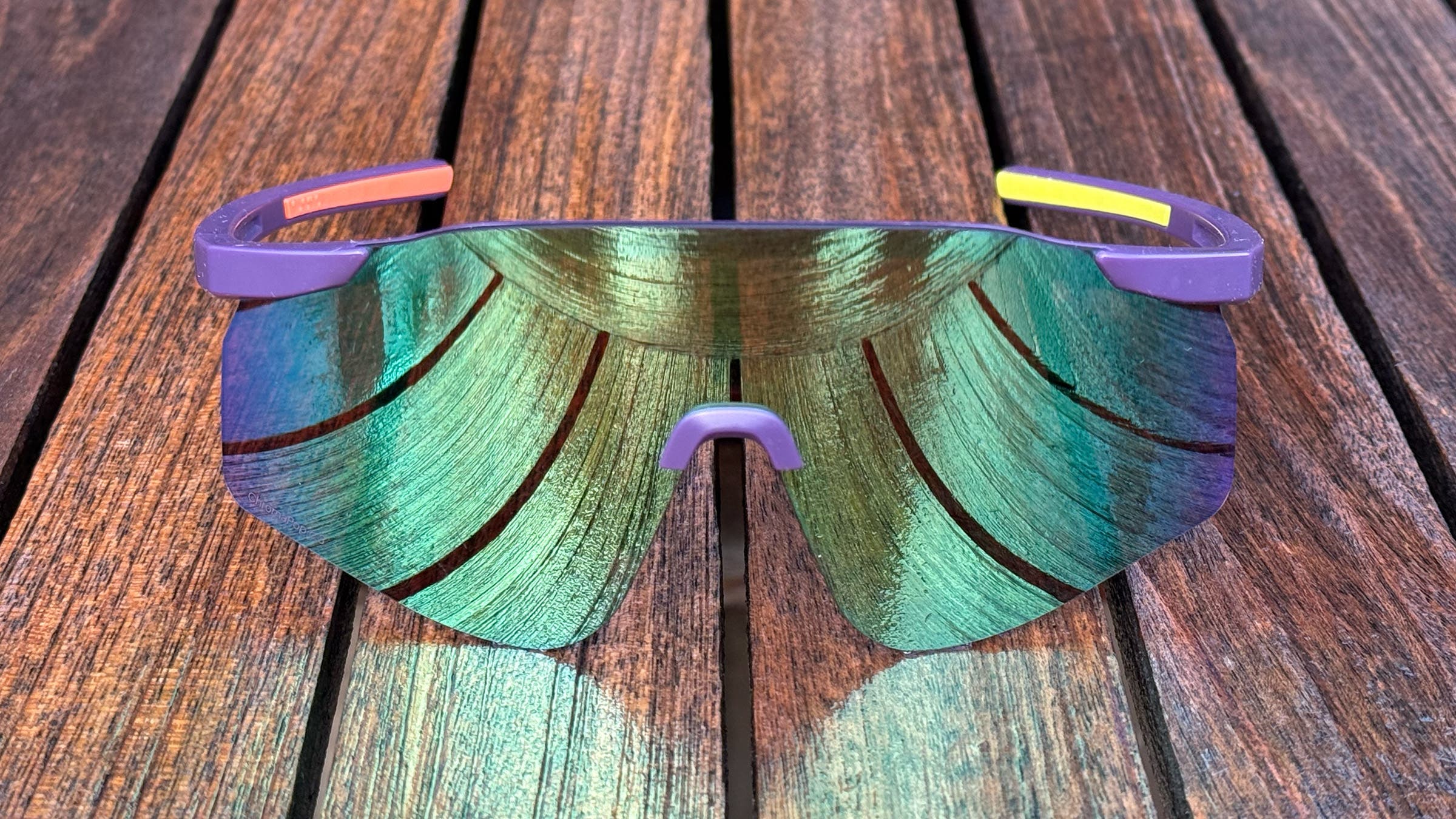
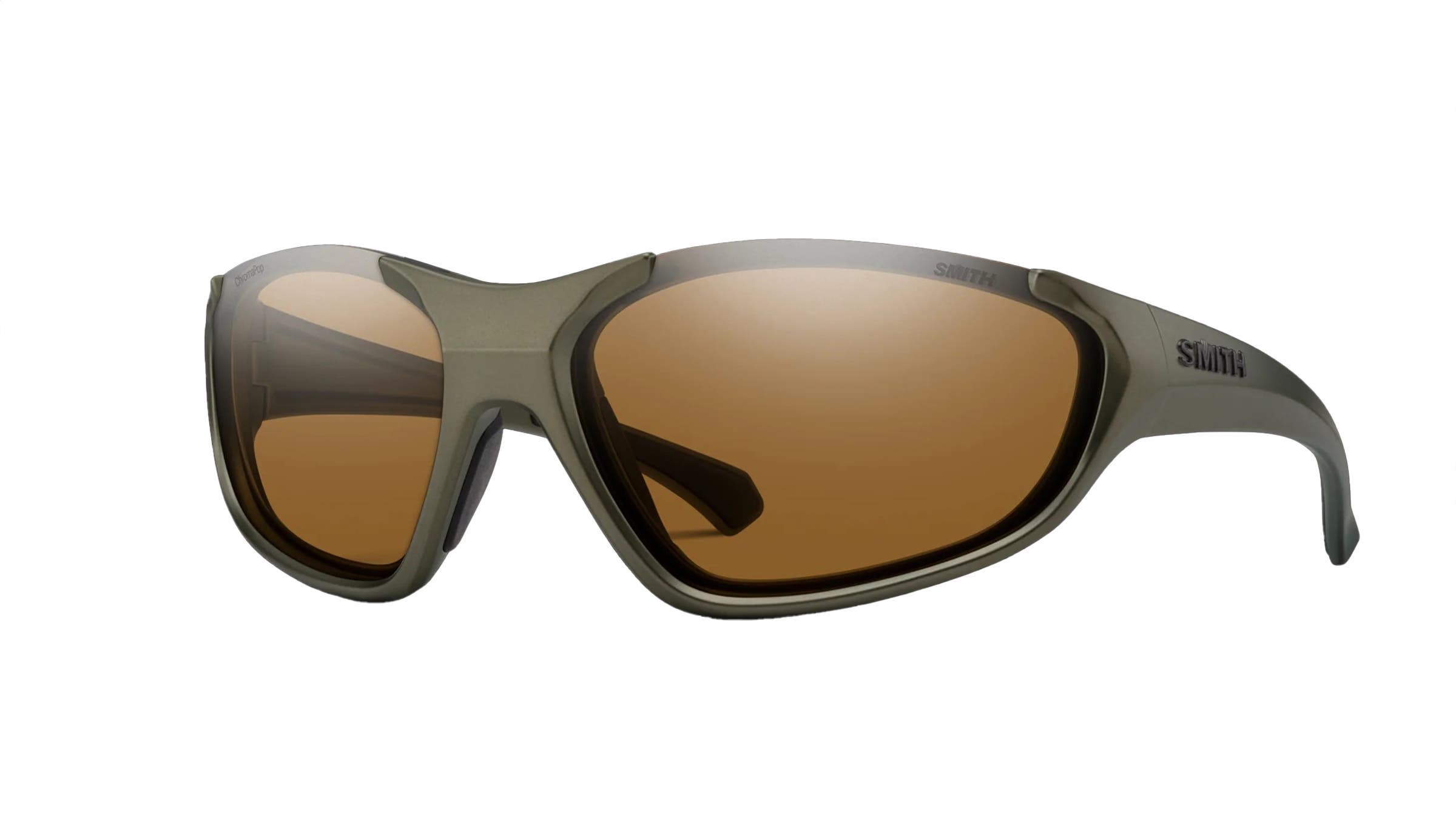
Zippy and lightweight, the Smith Defy sunglasses had us feeling fast and smooth on trail runs and city jogs. We loved the clarity of the ChromaPop lenses, which feature a subtle curve that wraps around the face for a sleek fit. “They feel so light on my face, I honestly forgot I was wearing sunglasses,” one tester reported after a long run at Jackson Hole Mountain Resort, WY. The flexible frame, combined with the grippy nose and temple pads, make the Defy shades both secure and durable, trustworthy on bumpy rides and rocky trail runs.
Testers agreed these were also great candidates for ski touring and mountain biking, though a few reported that the coverage wasn’t quite enough for clocking high speeds on the road bike. “If I hit more than 15 mph, my eyes started to water from all the airflow,” one tester reported. We never maxed out the coverage speed on foot, however.
Most Versatile
Warby Parker Sierra
Lens: Polarized
Frame: Cat-eye
Fit: Medium
Pros and Cons
+ Grippy, won’t fall off your face
+ Lightweight
+ Prescription options
– A little too much air flow for fast cycling
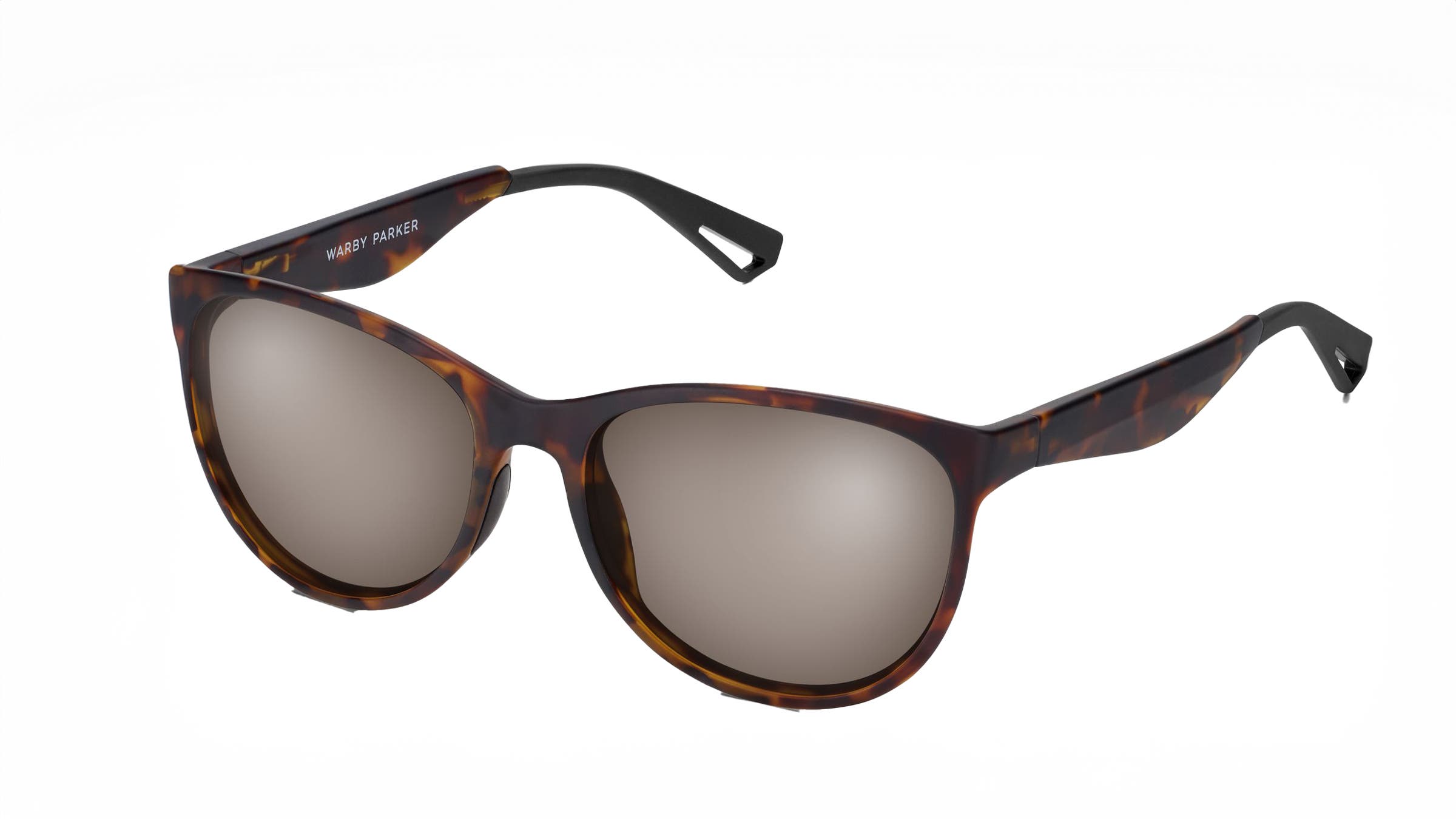
Cat-eye sunglasses built for the mountains? Warby Parker has been a household name in the prescription eyewear world for some time, and they’ve just stepped into the world of sport shades. Judging by early feedback from testers, they’ve made quite a splash. We’ve crowned the Warby Parker Sierra sunglasses as the most versatile of the bunch, winning us over for performance on the trail and style at the bar. “I never thought I could look this good while sweating my butt off,” said one tester.
Soft rubber temple and nose pads kept the Sierras firmly on our faces while we cruised along bike paths, hiked rocky trails in the Cascades, and even bounced on a neighbor’s trampoline (confirmed: there is an age limit for trampolines). The Italian-made nylon frames are exceptionally light—meaning it’s easy to stash them in the pocket of a windshell and forget they are there—but durable: they were no worse for wear even after accidentally smushing them in our backpack.
While the Sierras don’t offer full wrap-around coverage (not the best choice for mega fast road rides), we found the field of view impressive. We would have guessed the cat eye shape might impede our vision range, but the extended curve provides a similar field of view to the larger-framed glasses we tested. Unless you’re planning to race a time trial, we give these a solid thumbs up for just about anything summer throws your way.
Best Sport Sunglasses When on Water
Bajío Palehorse
Lens: Polarized (glass or polycarbonate)
Frame: Square
Fit: Large
Pros and Cons
+ Side shields add extra protection
+ Highly durable
+ Impressively grippy
– Prescription options are expensive
– Large fit is less versatile
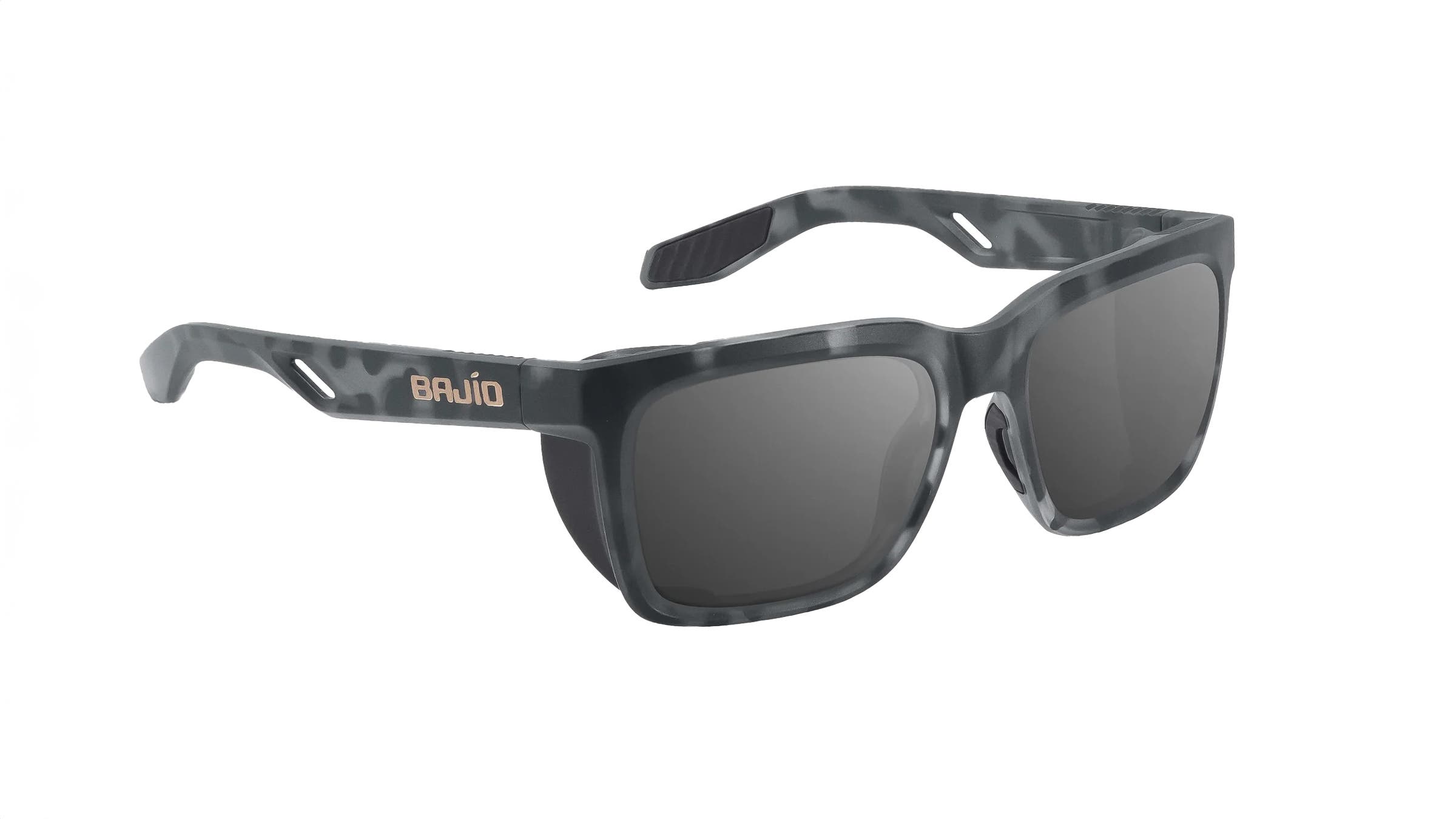
Built for long days on the water, Bajio’s Palehorse Sunglasses proved to be a solid companion on river trips and boating excursions. With extra sun protection, thanks to the removable side shields, the Palehorse shades are proof that you don’t need to look like you’re getting shot out of a cannon to protect your eyes. Testers loved the casual shape and felt comfortable taking these glasses off the water for hikes and picnics in the park.
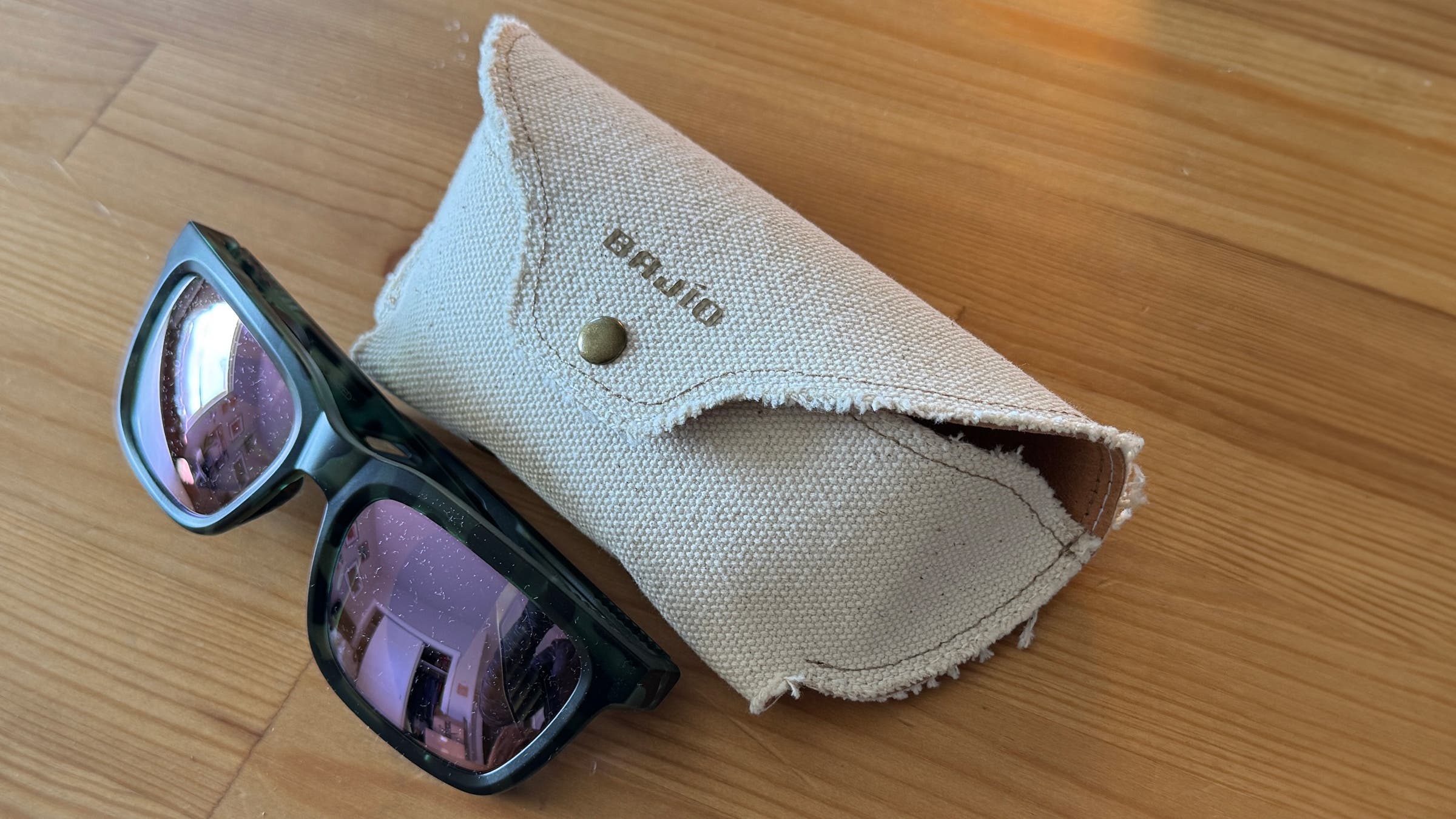
The bio-based frames are lightweight and seemingly indestructible (at least in our testing), with grippy yet comfortable recessed nose pads. “I forgot I was wearing them,” reported one tester after a spring day on the Teton River in Idaho. “I appreciated that I could remove the side shields so I could wear these casually on days I didn’t need the extra protection.”
We also tested these on rocky summits and spring ski tours but found they shine on the water, where Bajío’s LAPIS lens technology—which blocks 95 percent of bluelight—reduces haze, sharpens contrast, and eases eye strain. Minor niggles: the large frame was too much for smaller-faced folks, and the prescription lens options are quite pricey.
Most Fun
Smith Slider Series
Lens: ChromaPop, interchangeable
Frame: Wraparound
Fit: Medium
Pros and Cons
+ Blends fun and function
+High coverage is great for speed
+ 3 sets of lenses included
– Daring look is not for everyone
Style undoubtedly goes in circles, and that’s never been truer than with the 90s-style shades that are now commonplace at trailheads, ski hills, and breweries. In celebration of their sixtieth anniversary, Smith relaunched their iconic Slider Series sunglasses, which in 1995 were the first patented dual-lens interchangeable sunglasses.
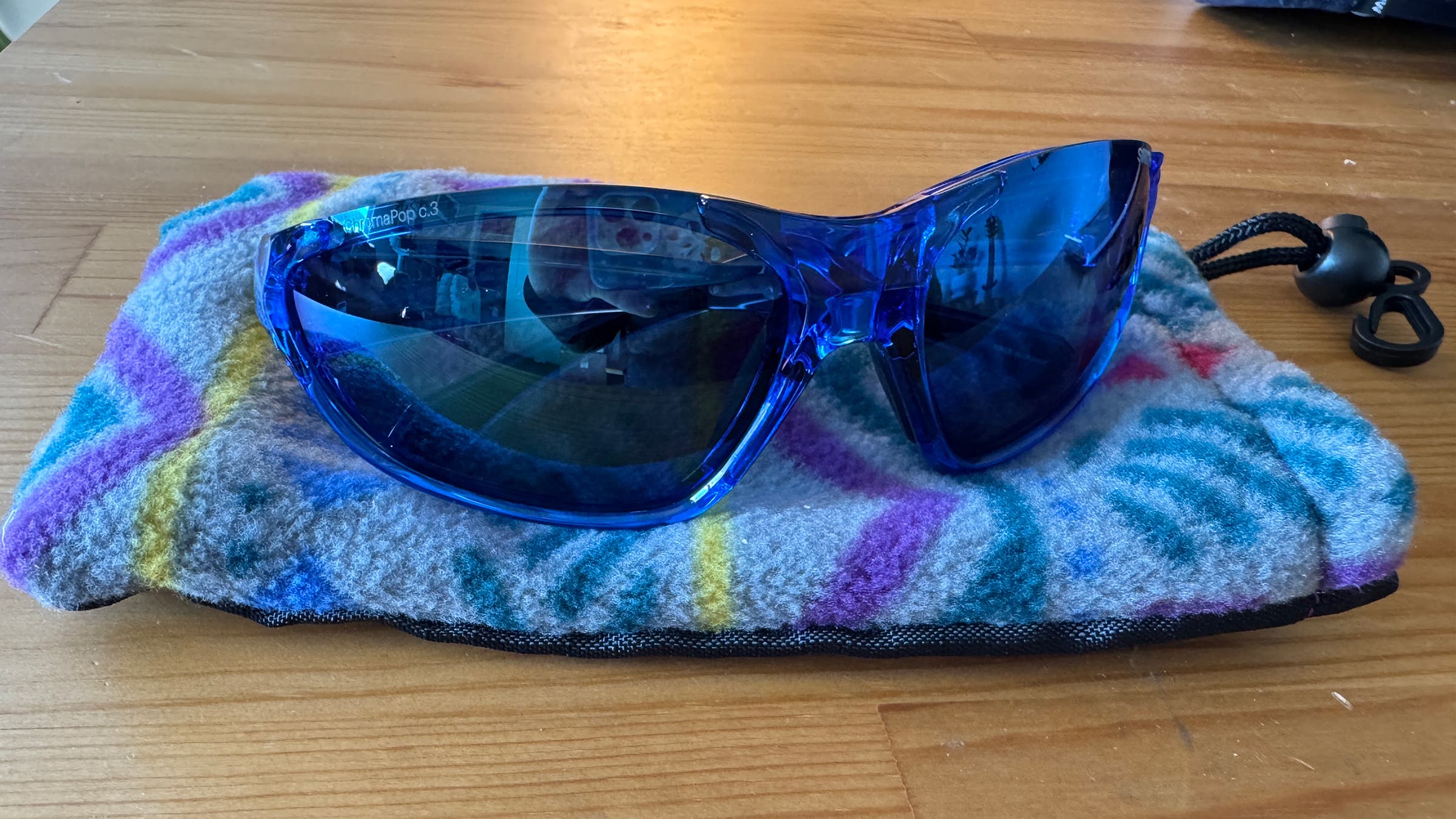
Testers loved that they didn’t have to choose between fun and function with these wraparound frames. They’re spirited enough for a party-shirt rollerblade adventure, but equally protective from wind and glare while road biking or ski touring. “I was skeptical about this sunglass shape since it seems so ‘Gen Z,’ but I found myself loving them more and more each time,” said one Idaho-based tester. “I almost feel like I have an alter ego when I wear them.”
The Sliders include three sets of lenses, which are easy to pop out and replace (one at a time). Testers praised the grippy nose and temple pads that stayed securely in place on rocky trail runs and slushy spring bump skiing. Some people love this sunglass trend, some hate it, but it’s probably not going anywhere anytime soon.
Best Budget Shield Sunglasses
Knockaround Campeones
Lens: Non-polarized polycarbonate
Frame shape: Shield
Fit: Medium to large
Pros and Cons
+ Affordable and high performing
+ Super lightweight
— Not as comfortable as other glasses
— Less effective at cutting glare on water
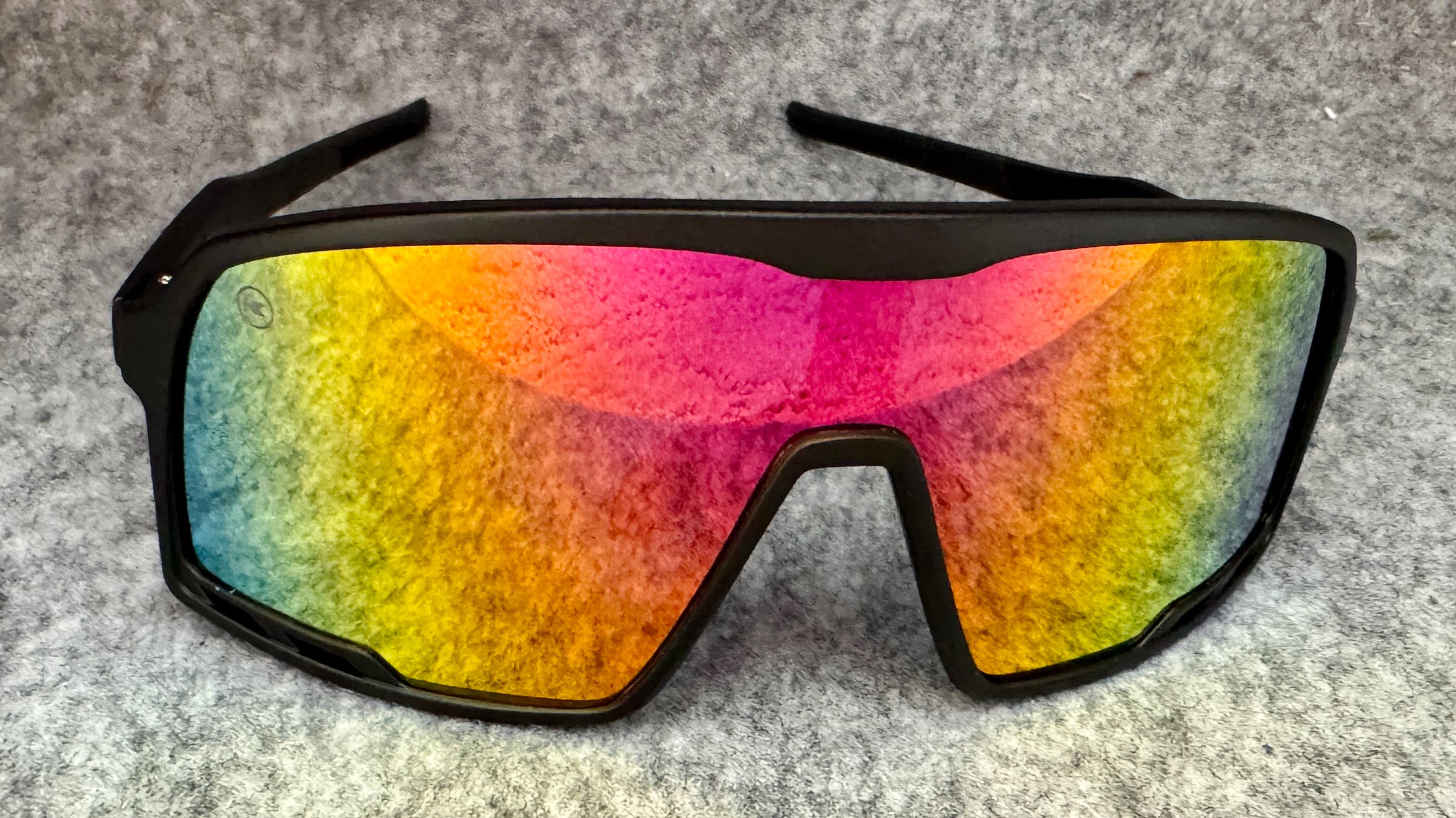
Unless you’re deep-sea fishing or lake kayaking, you actually don’t need a polarized lens, which helps cut glare from flat, reflective surfaces like water and roads. The Knockaround Campeones come with intentionally non-polarized lenses to allow for more depth perception, higher contrast, and less eye fatigue during non-water-based activities where glare isn’t an issue. (Plus, not having polarization keeps the price down.)
These were our testers’ favorite shield sunglasses in the lower price bracket. We wore them Nordic skiing, backcountry skiing, and road running, and they stayed put on our faces during all of those activities, mostly due to an adjustable rubber nose pad that gives you a custom fit. Plus, unlike some sunglasses that show every morsel of sweat and sunscreen smudged across the lens and require constant cleaning, these stayed mostly clean despite heavy use, thanks to an oil-resistant lens treatment. “I sweat in them all day without dealing with greasy smudges. I call that a win,” one tester said.
Best Oversized Sport Sunglasses
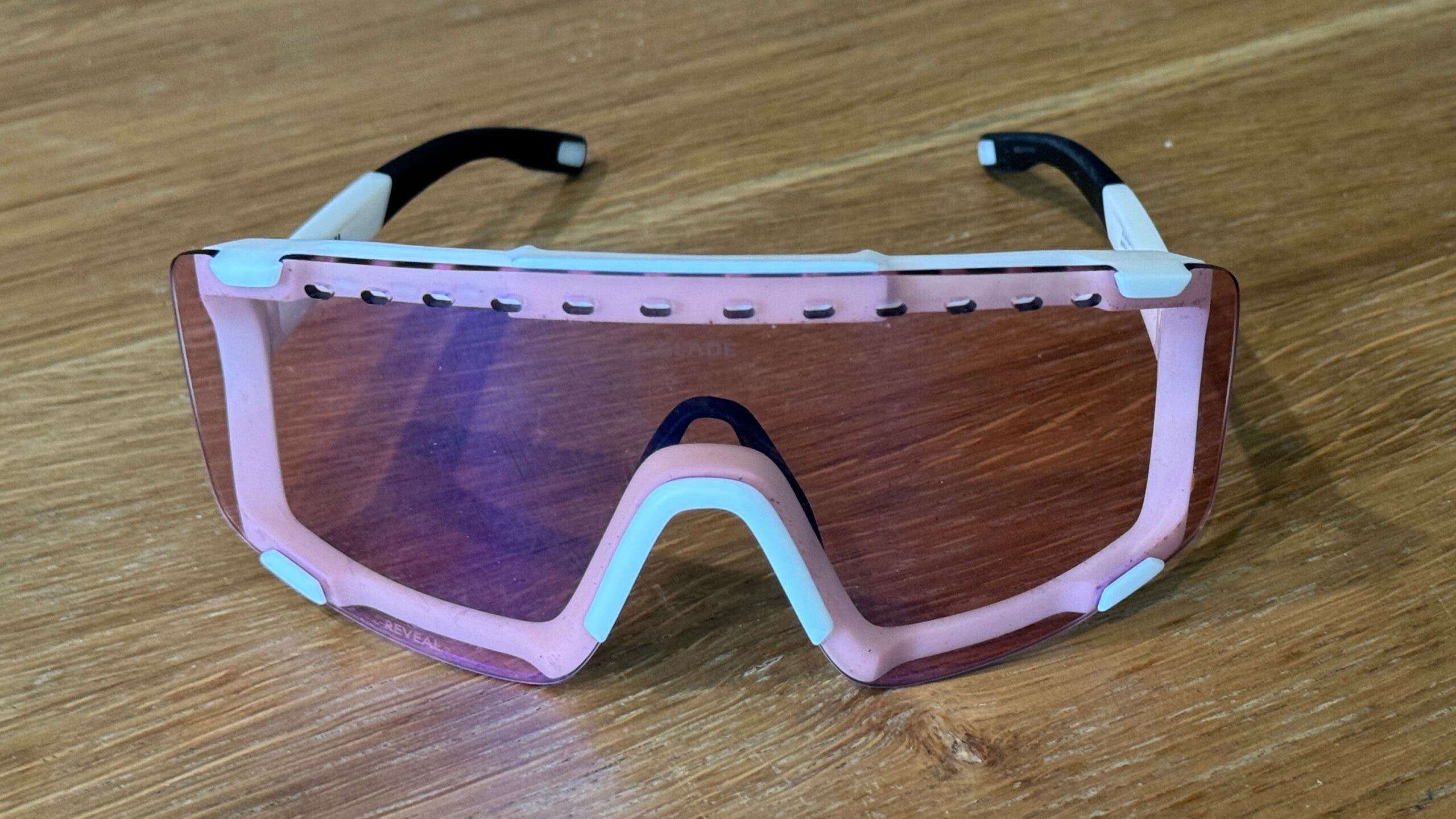
Glade Stash
Lens: Photochromic
Frame shape: Full coverage
Fit: Medium/large
Pros and Cons
+ Impressive anti-fog ability
+ Highly durable design
+ Great for mixed light settings
— Can slide down during prolonged mountain bike descents
Testers loved the full coverage and goggle-like feel of the Glade Stash sport sunglasses, which we found to be the perfect companion for ski tours and mountain bike rides. The photochromic lenses adapted on the fly, a huge asset while riding bikes in mixed light conditions. “The lenses transitioned super quickly while pedaling between dark forests and open fields,” said one tester after a long mountain bike ride in North Bend, WA. Testers were also impressed with the glasses’ ability to keep fogging at bay during cold, sweaty ski tours.
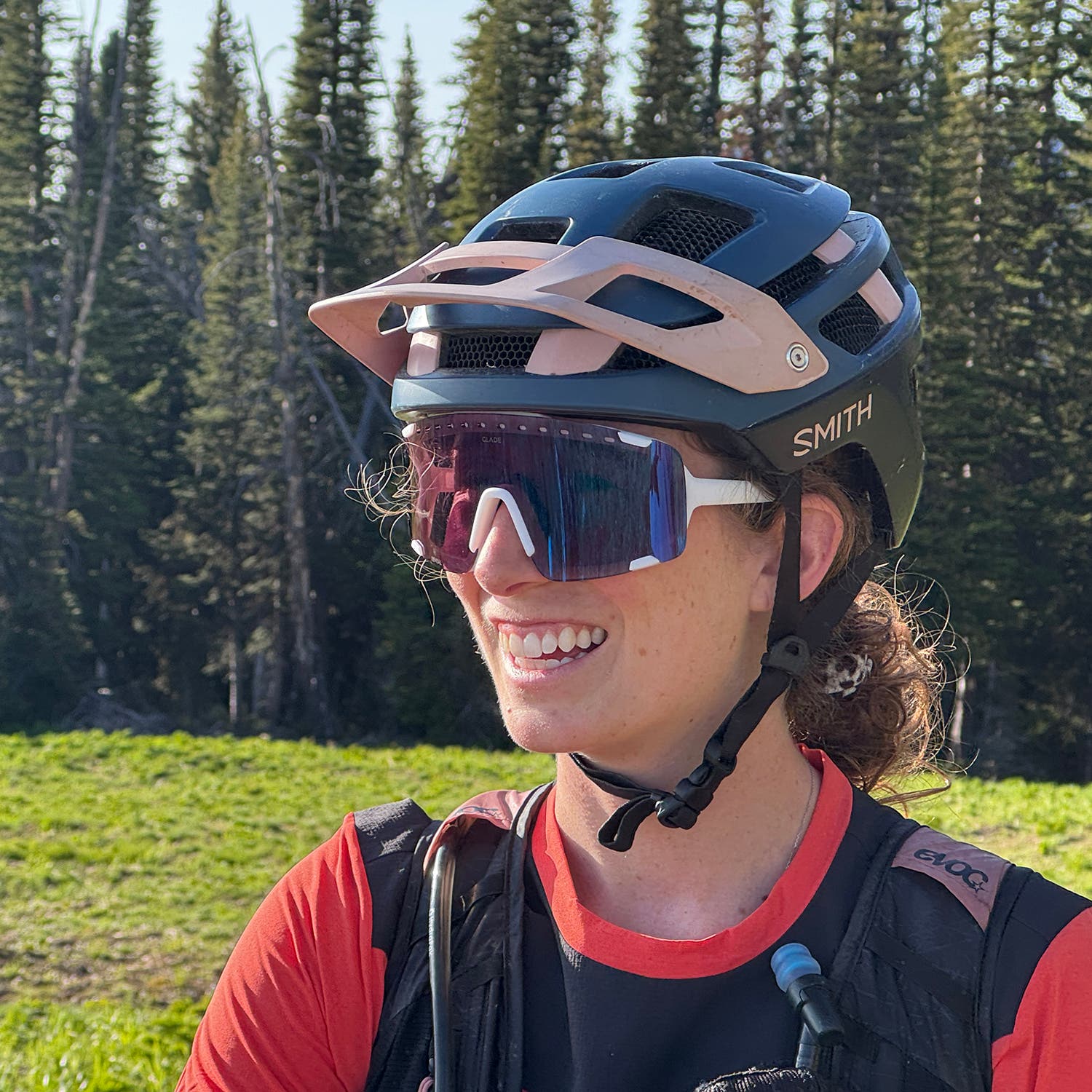
The only reported downside was that the oversized design slipped down the nose a bit on rugged mountain bike descents. That’s likely due to the medium-large frame size—testers with smaller faces agreed that the Stash felt less secure. Otherwise, the durable, oversized design won over testers for summer and winter activities. “I might even consider replacing my goggles with these for winter ski tours,” one Teton-based tester said.
Best Casual Shades
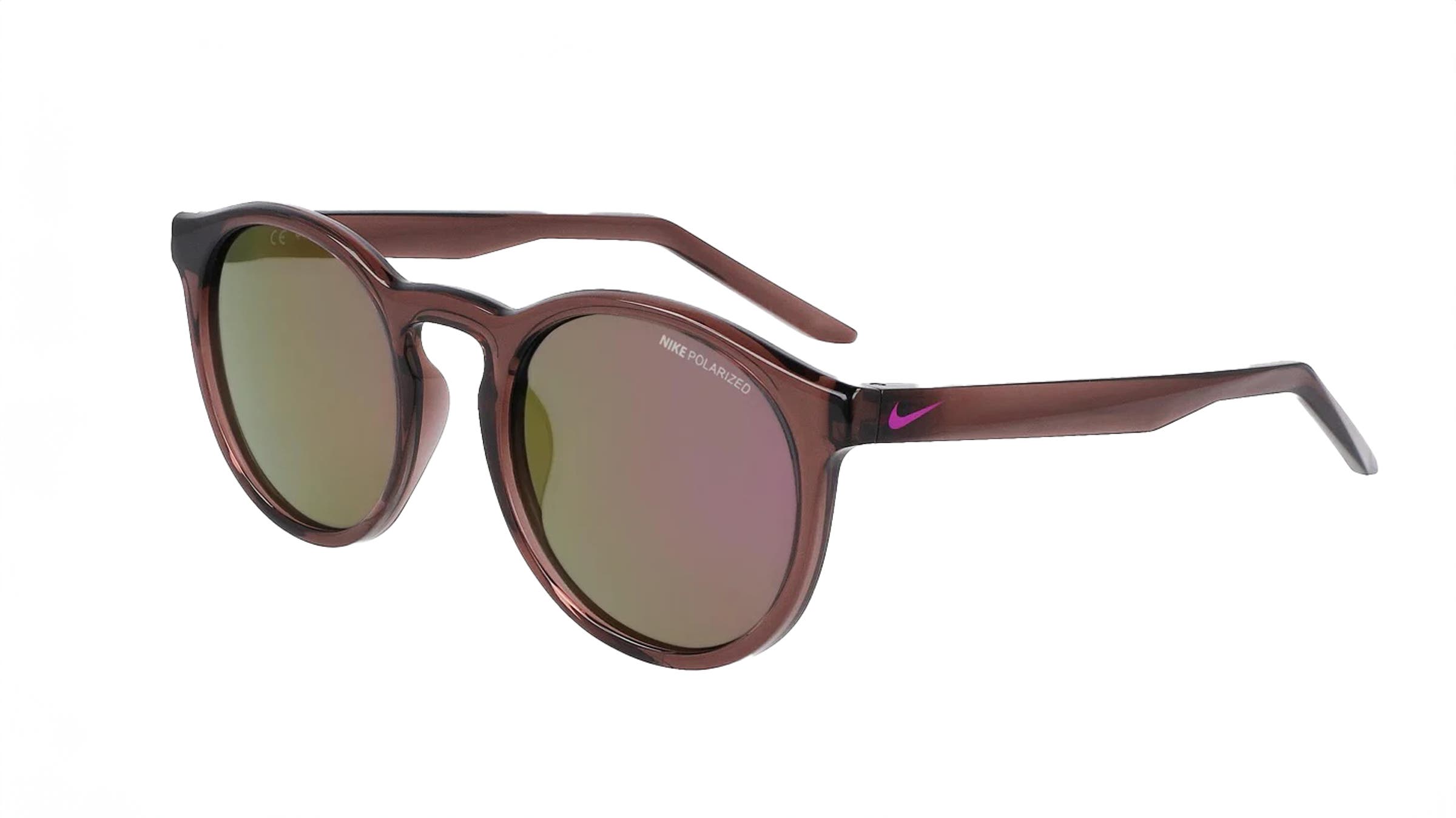
Nike Swerve Polarized
Lens: Polarized
Frame: Round
Fit: Medium
Pros and Cons
+ Lightweight
+ Stylish from town to trail
– Not grippy enough for high activity
The Nike Swerve Polarized sunglasses are so versatile, they haven’t left our faces much this spring. These simple, lightweight shades have become our tailgating BFFs, pairing well with just about everything and fitting almost all of our testers’ faces.
The ultralight design made it easy to keep these sunnies on hand at all times for easy deployment wherever we were. “I just started leaving them in my pocket while skiing so I could throw them on whenever I took my goggles off,” said one tester.
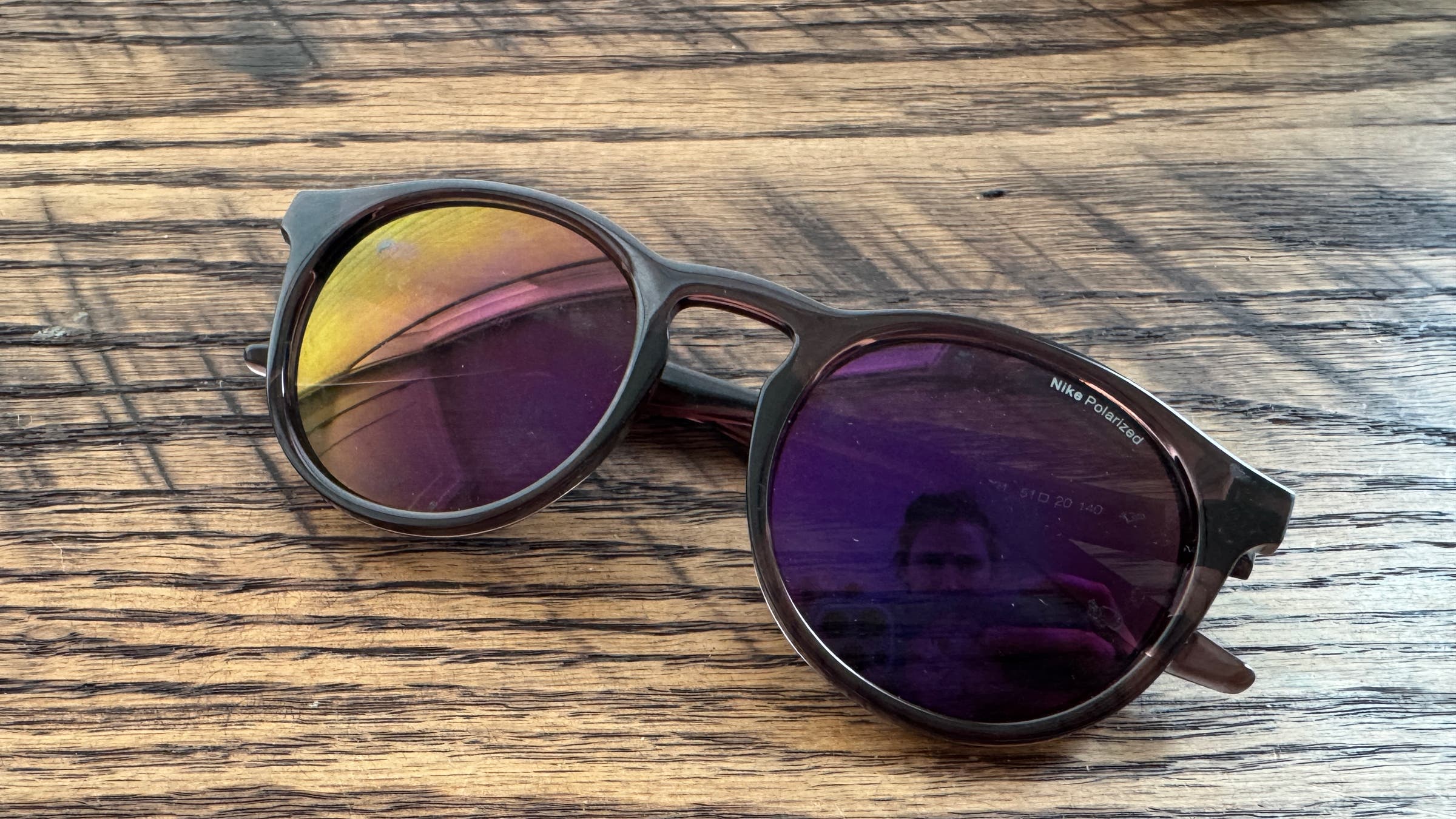
They’re not our top choice for high-output activities: the temples aren’t grippy enough to remain securely in place when you’re working up a sweat or bouncing around (like trail running). The polarized lenses, however, are a nice touch for snowy après tailgates and sunset happy hour where you need protection but aren’t planning on doing burpees or jumping on a trampoline.
Best Ultralight Sunglasses
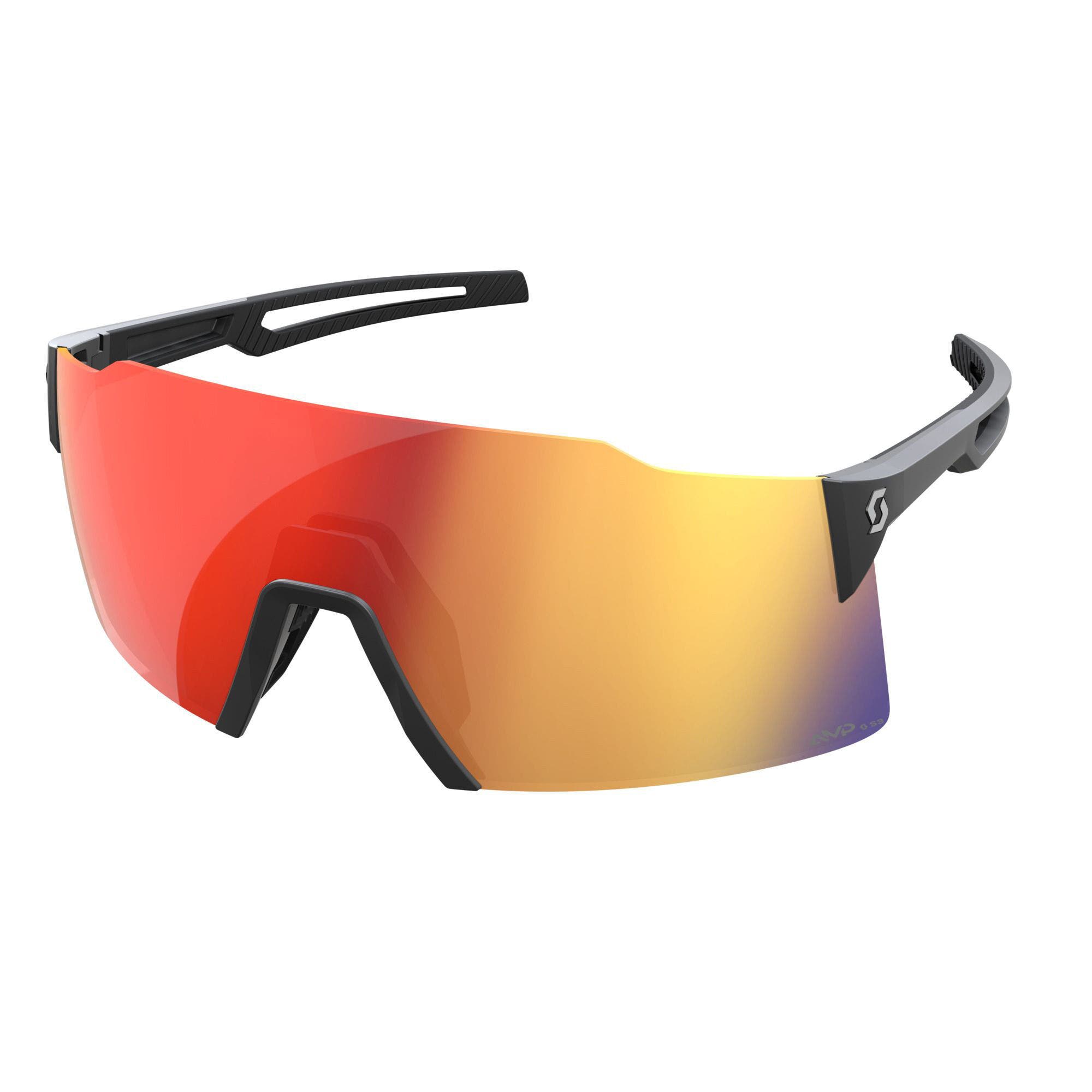
Scott Stride
Lens: Toric
Frame shape: Frameless square shield
Fit: Medium
Pros and Cons
+ Ample field of view
+ Featherweight
+ Breathable rubber nose pad for sweaty pursuits
— Feel fragile
— Red-tinted world not for everyone
The Scott Stride’s toric lens (shaped like the edge of a donut) didn’t seem noticeable at first, but eventually, we realized we had more peripheral vision than we’re used to without suffering from a bubble-shaped lens that distorts vision. For sports where seeing clearly makes a big difference—like road cycling, mountain biking, and trail running—a toric lens can help you take in the whole picture of the terrain ahead. One tester called them futuristic and praised their non-obstructed view. “The lens provided ample coverage and great clarity in a comfortable, non-slip fit,” he said.
The Stride is built frameless for the fast-and-light crew, like uphill skiers, marathon runners, and backpackers. It tips the scales at a mere 27 grams—you won’t even feel it on your face. Plus, the pliable temples fit perfectly under bike and ski helmets. The glasses come with two lens color choices: a white or a red chrome. The red blocks more intense rays but it’s a little jarring to look through as it makes the world look like it’s been dyed in strawberry Kool-Aid; opt for the white lens if you want a more toned-down, everyday look.
Best Ventilation
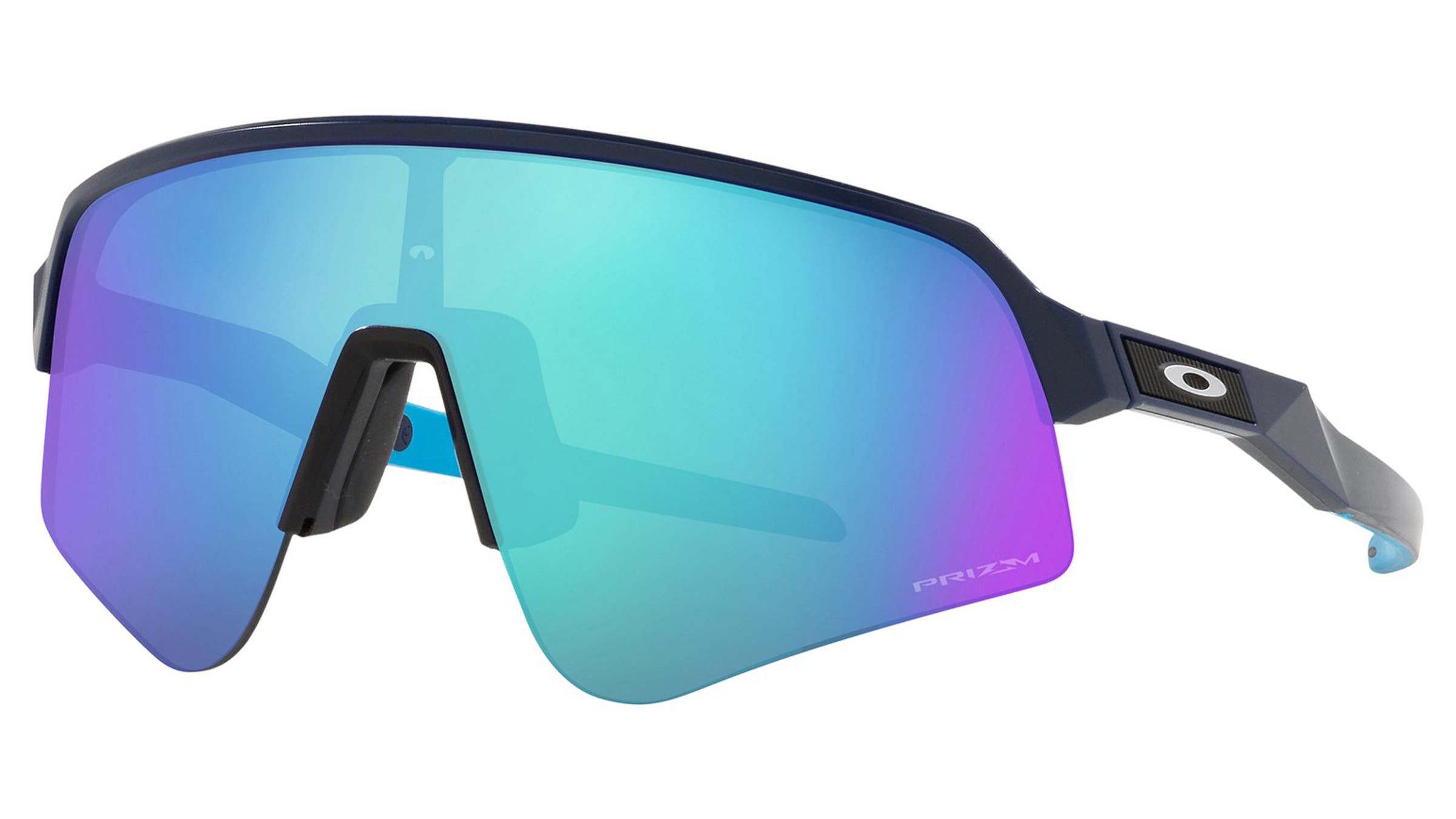
Oakley Sutro Lite Sweep
Lens: Choose from 10 color options, including clear
Frame shape: Sporty shields
Fit: Small
Pros and Cons
+ Ultra light for endurance sports
+ No sweat-induced fogging
+ Massive rubber nose pads that stay put
— Too sporty to wear casually
— A little tight at the temples
For running, cycling, and other sweaty pursuits, the Oakley Sutro Lite Sweep was a true champ. “Great combo of ventilation and coverage for a hard training ride,” said tester Tristan Queen, who trained for the Leadville 100 in these shades. “Good airflow meant I wasn’t getting sweaty eye area syndrome.” (Yes, that’s a thing.)
In mixed lighting through forests or dimly lit roads, the lenses—which one tester called A+ quality—popped color and light without distortion. This is a slight, minimalist option for athletic types who’d rather not wear a massive shield but still want the wind and sun protection of a full-coverage shade.
Best Full Coverage Sunglasses
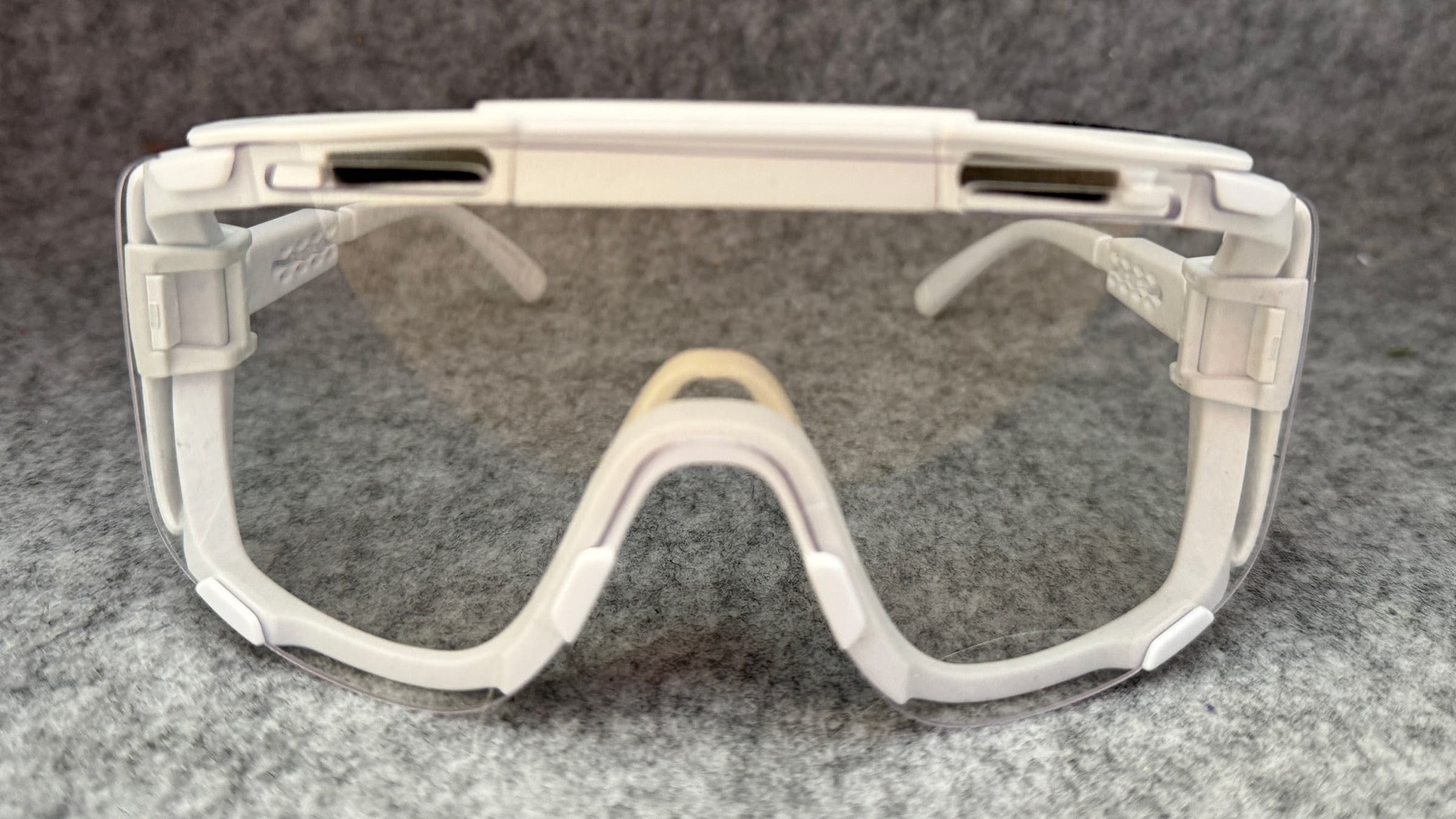
POC Devour Glacial
Lens: Comes with two interchangeable lenses
Frame shape: Oversized shield
Fit: Medium to extra large
Pros and Cons
+ Fits like sunglasses, performs like goggles
+ Zero fogging
— Lenses were clunky to swap out
— A little overbuilt for casual wear
The POC Devour Glacial is based on the design of POC’s top-selling Devour glasses, used mostly by downhill mountain bikers, but has additional features that make them more suitable for snow and mountain travel. The Devour Glacial comes with lenses you can swap out, side shields for added protection, and the same color-sharpening lens technology as POC’s ski goggles. Testers wore them backcountry skiing in place of goggles, and they did the job of both breathable sunglasses on the skintrack uphill and goggles for wind protection on the way down. “Why carry more stuff if you don’t have to?” one tester said. “This is the ultimate two-in-one tool.” Even our more skeptical testers were converts: “I would usually never ski down in a pair of sunglasses, but these are not normal sunglasses.”
Since they come with a dark full-sun lens and a completely clear lens, one tester figured: night skiing? She took them on a night backcountry tour under a full moon and the crisp, clear lens and wide field of view were perfect. You’re likely not going to want to wear these shades around town afterward—they look like techy lab glasses. If you want more of an everyday style with similar features, consider POC’s more streamlined Devour instead.
Best Après Glasses
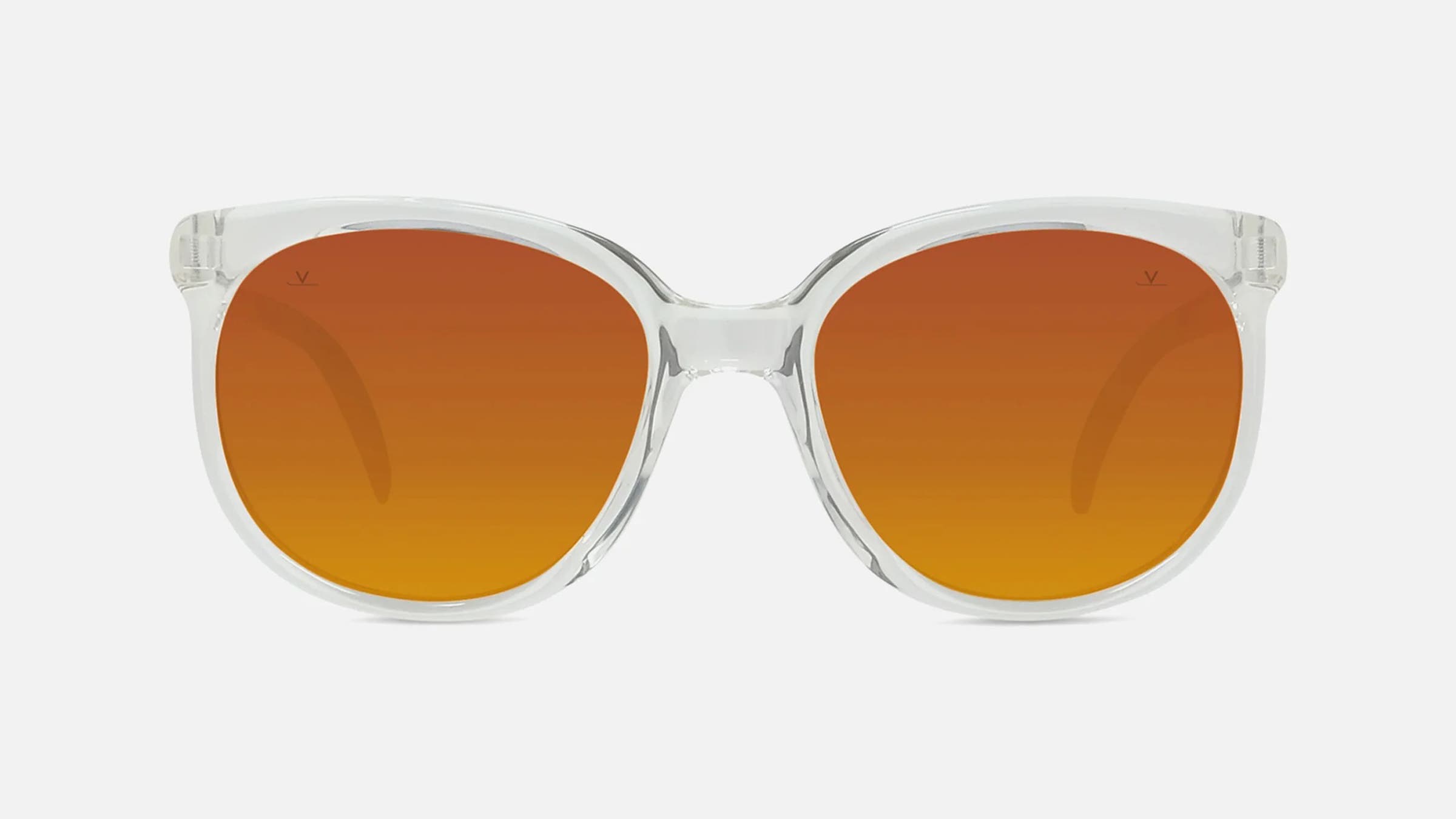
Vuarnet Legend 02 Jean Vuarnet Edition
Lens: Polarized
Frame: Cat eye
Fit: Medium
Pros and Cons
+ Stylish
+ Flexible frame is durable
– Red lens is far from subtle
Jean Vuarnet himself rocked a pair of the Legend 02 sunglasses while skiing in the 1960 Olympics Games in Tahoe, California, making them one of Vuarnet’s most iconic styles. If that doesn’t make them a solid addition to après we’re not sure what does.
Testers loved these sunglasses for skiing spring corn and casually hanging out for après barbecues and tailgates. “I love that the Legend 02 looks like a pair of casual shades, but backs it up with impressive clarity and glare-reducing qualities,” said one Wyoming-based tester after a full day of inline skating followed by sunset grilling.
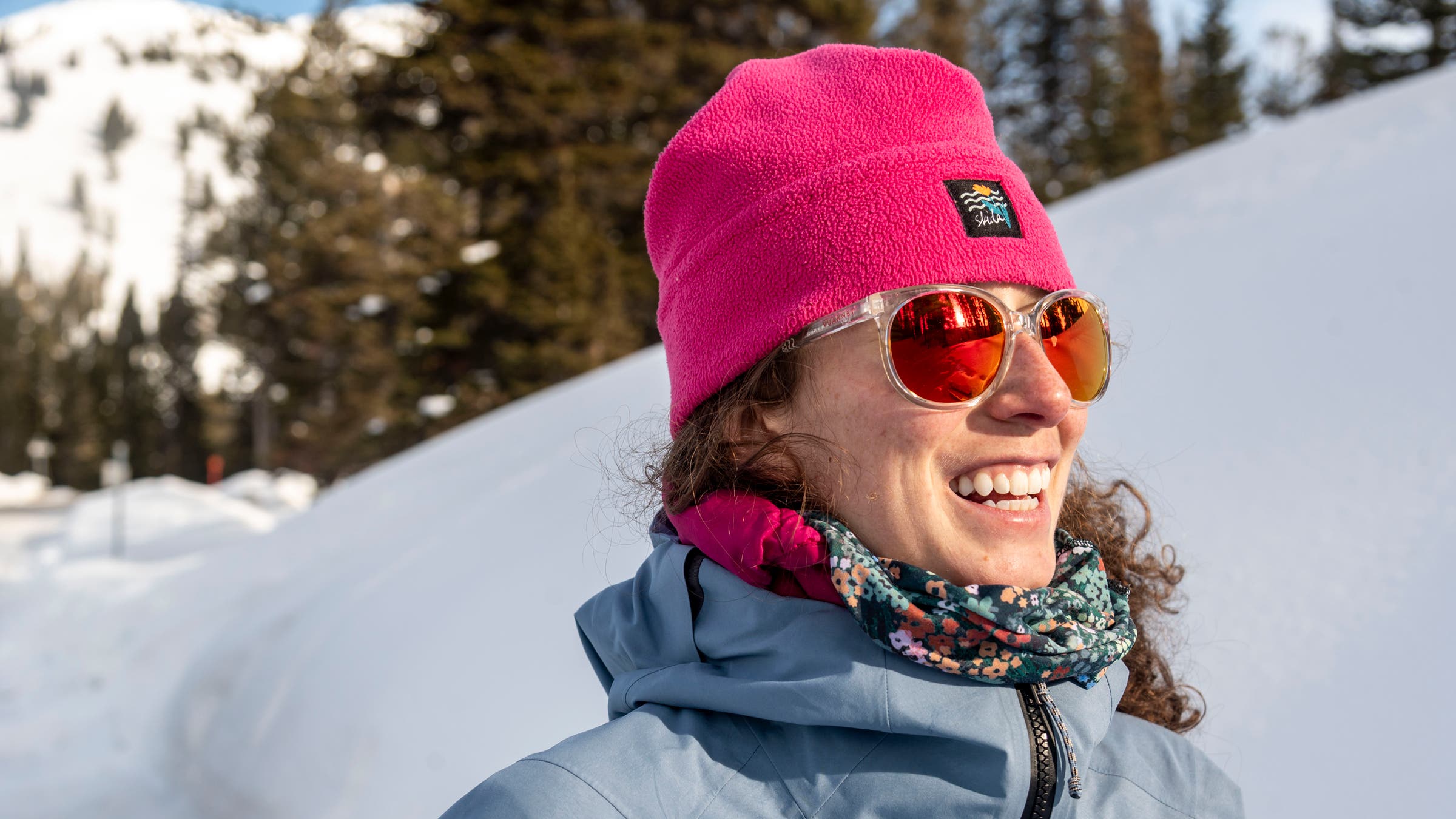
The subtle cat-eye shape offers a little boost in protection and field of view, and the flexible nylon frames stood strong despite getting sat on, tossed, and stuffed in packs. The red lens can be a fun statement, but a couple of testers felt like it was a bit much, and would have opted for something more muted.
Best Sunglasses For Cycling
Rudy Project Kelion
Lens: 11 color options, photochromic available
Frame shape: Wraparound
Fit: Medium/Large
Pros and Cons
+ Impressive coverage
+ Excellent field of view
+ Interchangeable lenses
— Not dark enough for skiing
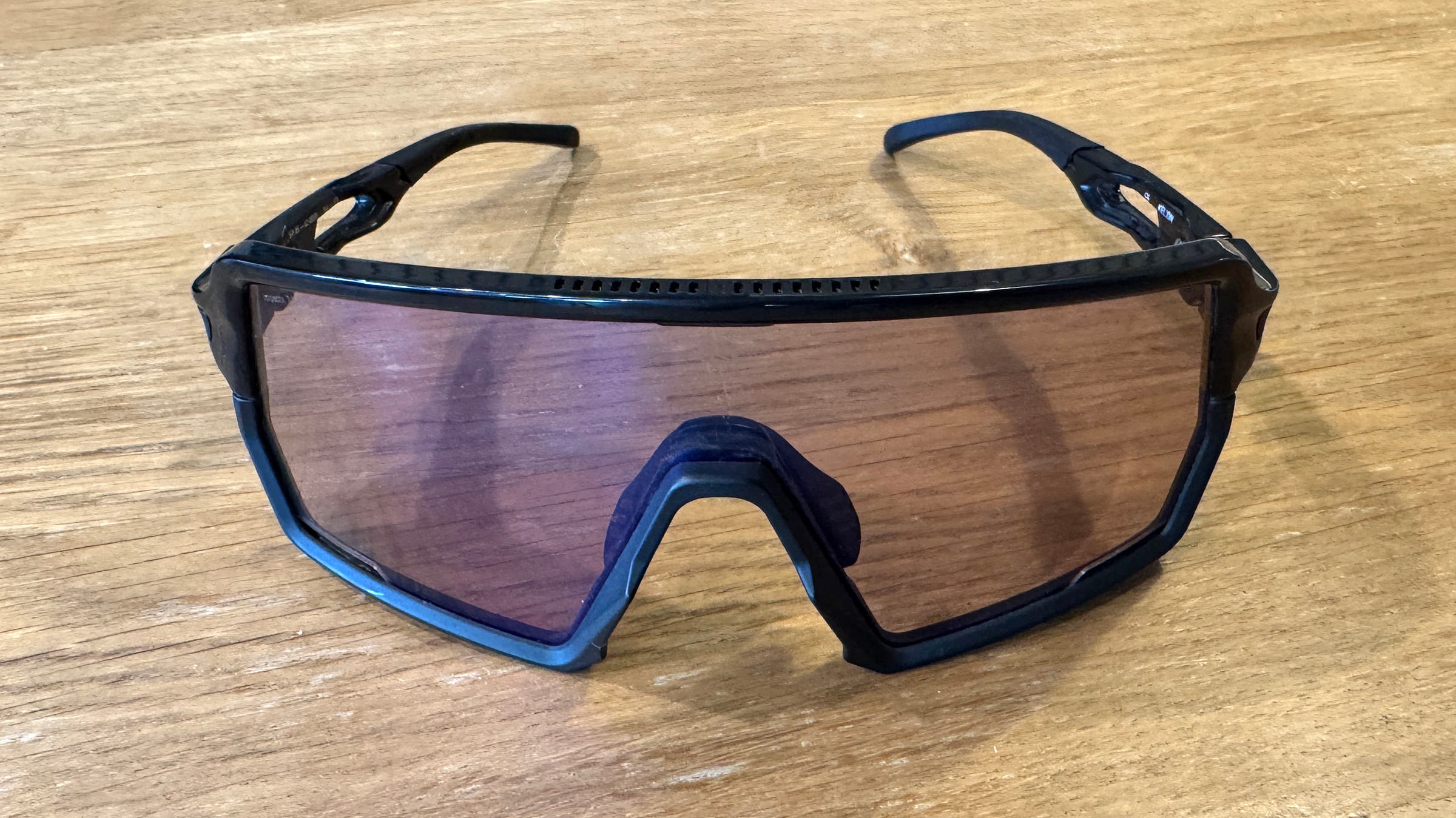
The Rudy Project Kelion sport sunglasses scored top marks from mountain bikers, road cyclists, and gravel riders for their impressive field of view, protection, fit, and helmet integration. “The optics are insane. Extremely clear, effective photochromic adjustment, and very scratch and smudge-resistant,” one tester reported after a couple hundred miles of gravel and mountain biking in the Pacific Northwest.
Grippy temple and nose pads kept these glasses securely in place during technical bike descents. Testers also appreciated the max-coverage design, noting that even while clocking high speeds, wind never snuck in. The photochromic lenses didn’t quite get dark enough for skiing in the winter, but for summertime, we couldn’t find many faults with these shades.
Best for Swapping Lenses
Sweet Protection Shinobi RIG
Lens: RIG
Frame: Wraparound
Fit: Medium
Pros and Cons
+ Excellent protection while skiing and biking
+ Easy to swap lenses
– Bulky when folded
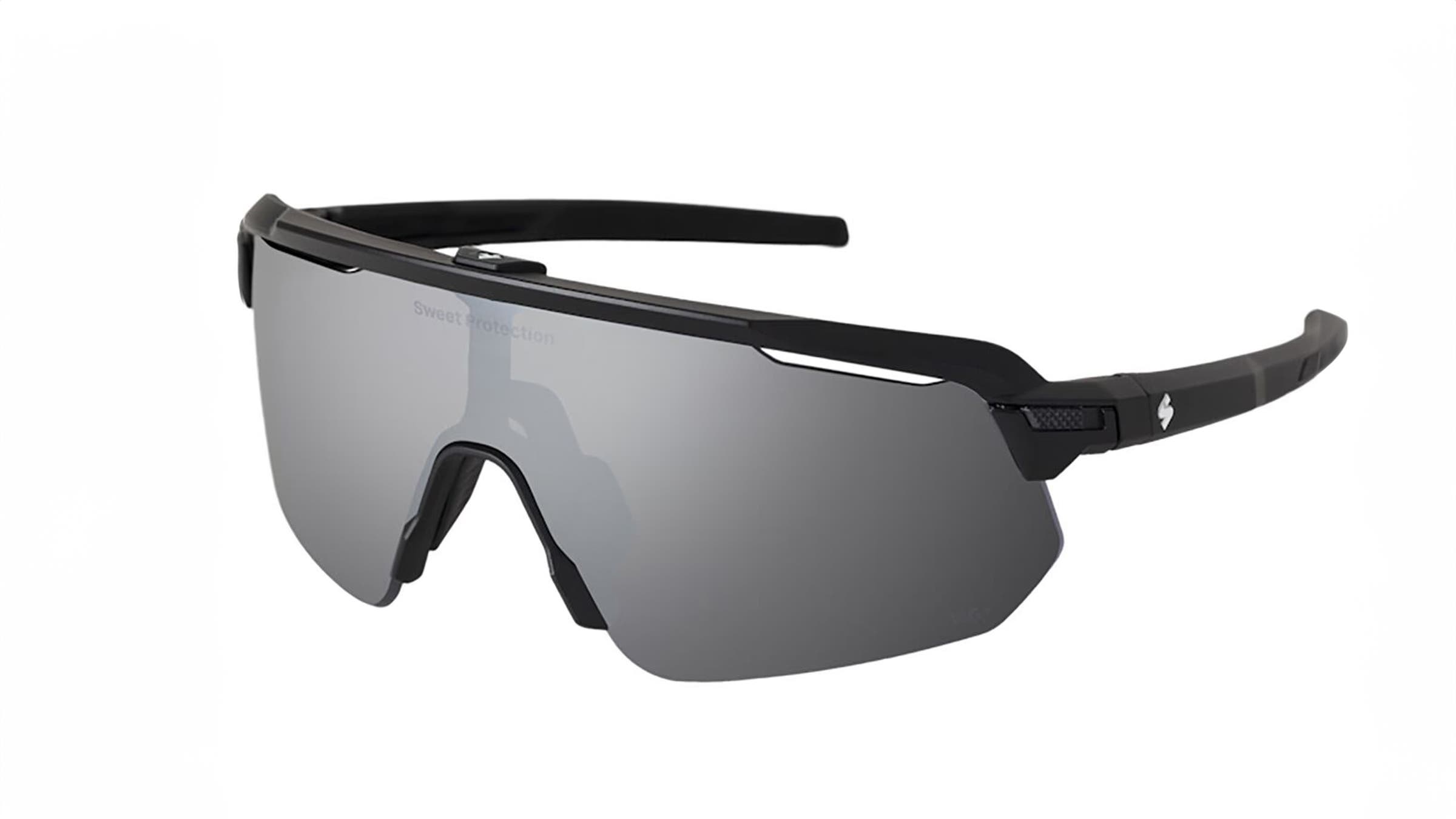
High speeds are no match for the Sweet Protection Shinobi RIG Sunglasses. Testers in Idaho, Wyoming and Washington State took the Shinobi shades along for stormy ski tours, sunny trail runs, days at the crag, and springtime road rides, reporting excellent coverage and protection, especially when moving fast.
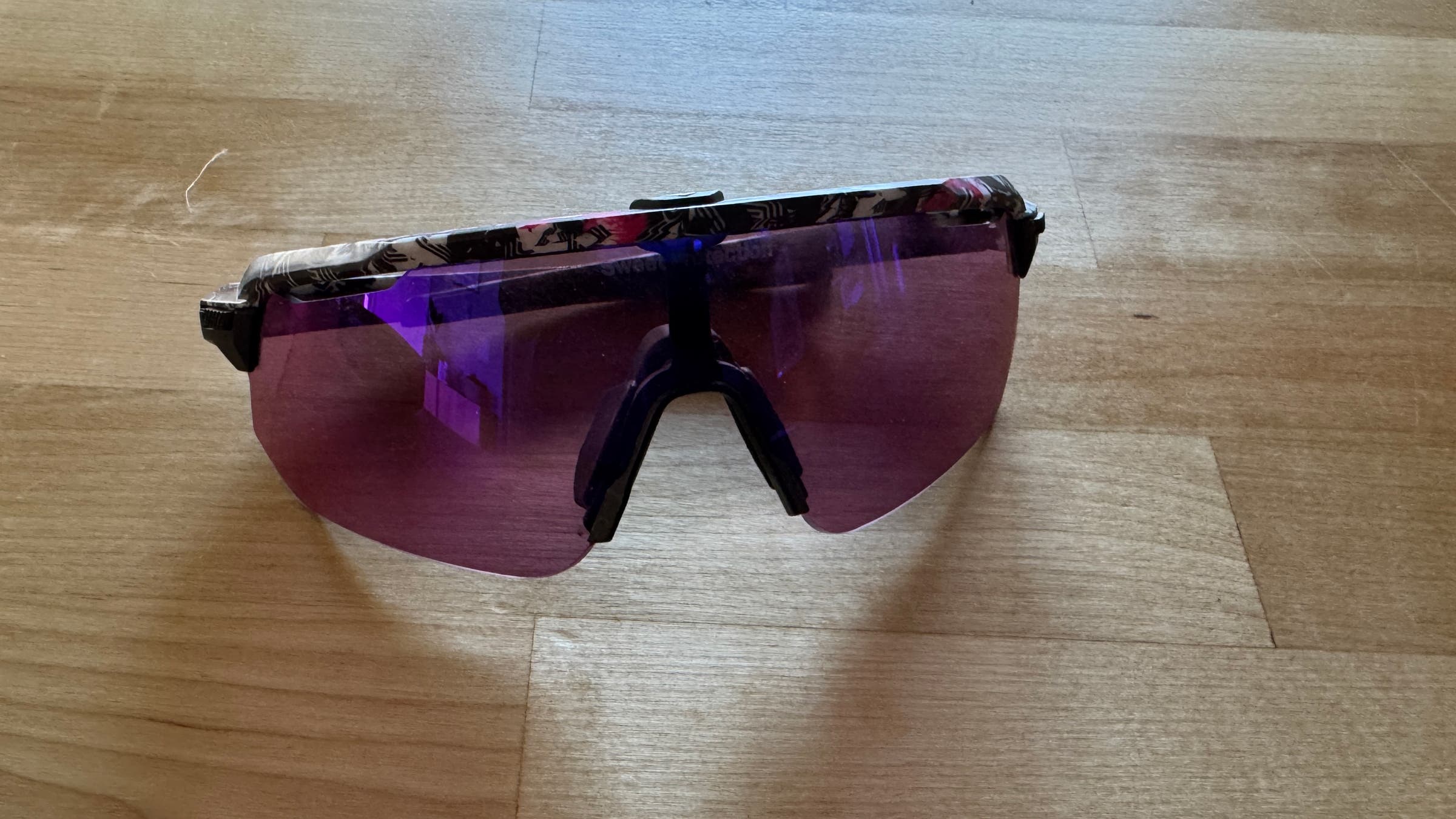
The Shinobi is built with RIG (retina illumination grading)—Sweet Protection’s proprietary lens technology—to enhance contrast and minimize color distortion (which seemed to work for our testers). Customization was ideal: snap-in lenses were easy to swap out, and three included nose pieces let folks dial in a precise fit. One Idaho tester summed up his impressions: “The mid-sized frame fit most, stays very secure, and provides enough coverage without looking like you’re headed to explore outer space—and the optics are excellent for varied light conditions.”
One downside: these sunglasses are bulky when folded, making them less convenient to stash in a pack. The solution? Don’t take them off.
Sport Sunglasses Comparison Chart
How We Test Sports Sunglasses
- Number of testers: 28
- Number of products tested: 132 (81 in the previous test and 51 in this most recent test)
- Countries sunglasses were tested in: U.S., Canada, Mexico, Georgia, Turkey, Japan, Norway, Austria, Italy, Chile
- Longest bike ride during the test: 54 miles
- Highest elevation achieved while testing: 13,775 feet
- Number of summits while testing: 39
- Number of sunglasses we broke: 4
To determine what we consider to be the best sport sunglasses of the year, we handed out five or six pairs of sunglasses each to a group of 12 testers based in the Tetons, Pacific Northwest, and Appalachian Mountains, and asked them to wear them for bike rides, trail runs, ski tours, tailgates and everything in between. Throughout the year, testers swap sports sunglasses, putting them through the wringer on adventures big and small. (11 Lake Tahoe, California-based testers evaluated last year’s models, several of which we retained for this year’s list)
Testing goes on year-round to accommodate all the seasons, with new rounds of products tested several times each year.
Testers with a wide range of backgrounds, ages, outdoor interests, and face shapes put the shades through their paces in both winter and summer conditions–from low-light blizzards to mid-day July sun—while doing everything from running ultramarathons to multi-day river trips. We wore these sunglasses while riding motorcycles through the Appalachian Mountains, guiding the Grand Teton, ski touring in Norway, mountain biking in Squamish, and daily runs, bike rides, and everyday outings in the Tetons and Pacific Northwest.
Testers were chosen based on a diversity of recreational pursuits, but mostly because they’re opinionated about gear and they get outside regularly. Once they’d sufficiently wear-tested products, they filled out in-depth feedback forms where they reviewed characteristics like lens quality, fit, features, and durability.
Meet Our Testers
Our testers are outdoorsy, well-traveled and opinionated folks based in the Teton Mountains, the Pacific Northwest, the Blue Ridge Mountains, and Lake Tahoe. On our roster, we have certified mountain guides, ski instructors, filmmakers, medical students, retired van-lifers, ultra runners, and others, each with their own set of criteria for the perfect pair of sunglasses.
