

Published May 22, 2026 07:40AM
Update May 2026: For this season’s guide, we chose two new category winners, and created three new categories (Most Versatile Tee, Most Breathable Tee, and Best Raceday Tee). We again worked with the Outside Lab for stats on air permeability and dry time, and added a new breathability test.
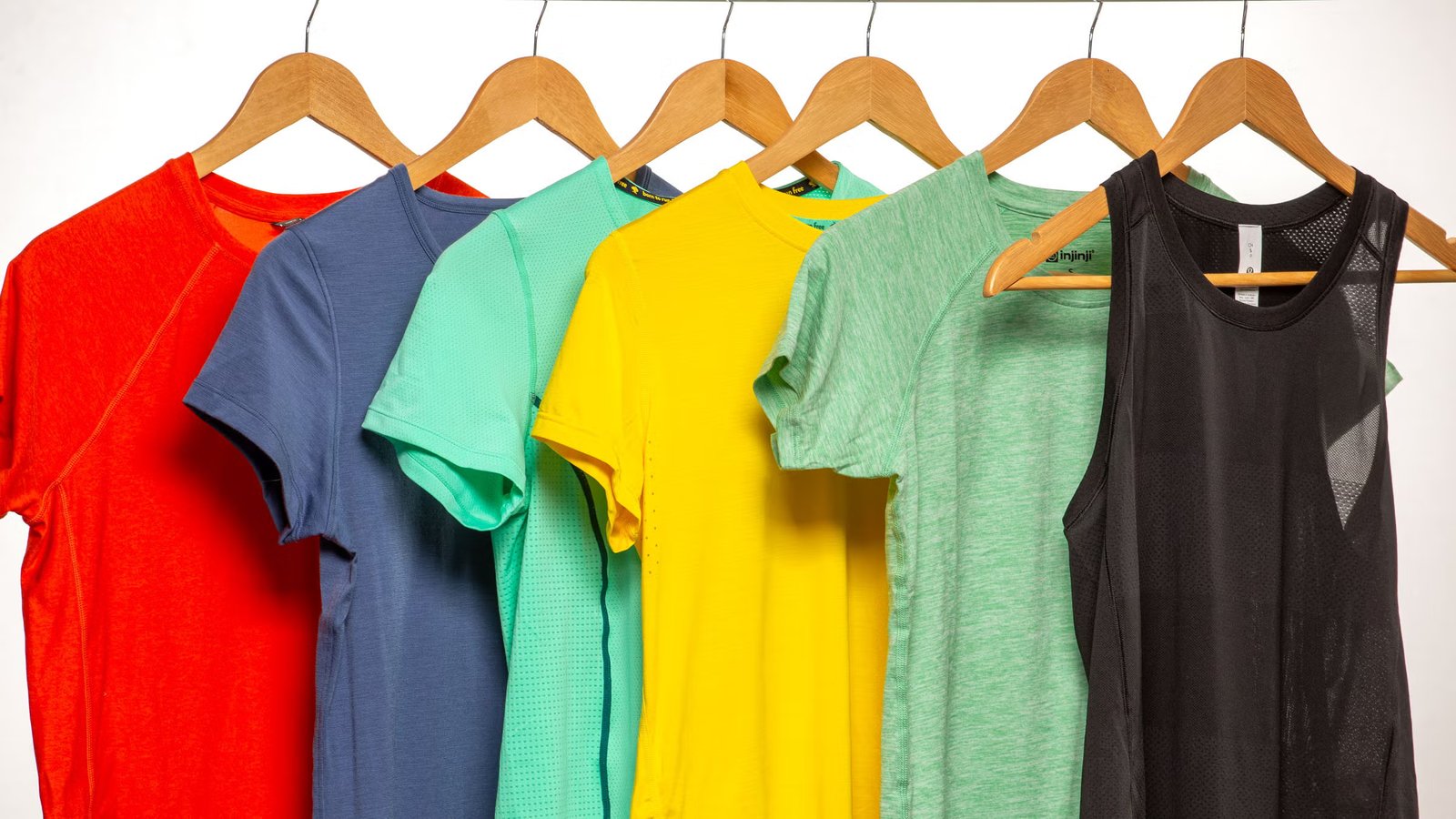
Warm spring temperatures mean it’s time for runners to break out the tanks and tees. You’ll enjoy your miles more if you’re wearing a running top that moves with you, wicks sweat, and keeps you comfortable, so you can focus on fresh blooms and green grasses. Our favorite tops of the season also look stylish and keep performing during gym workouts, hikes, and while grabbing a coffee (or beer) post-run.
Our team of testers put the season’s new styles up against each other in diverse wear-test conditions and rigorous lab tests, then compared the best to the best from seasons past. We have zero tolerance for irritating seams and awkward fits, and we place high value on breathability, mobility, softness, overall comfort, function, and style. Here are our winning picks.
At a Glance
Best Women’s Running Tank Tops
Best Women’s Running T-Shirts
Best Women’s Running Tanks
Best Value Running Tank
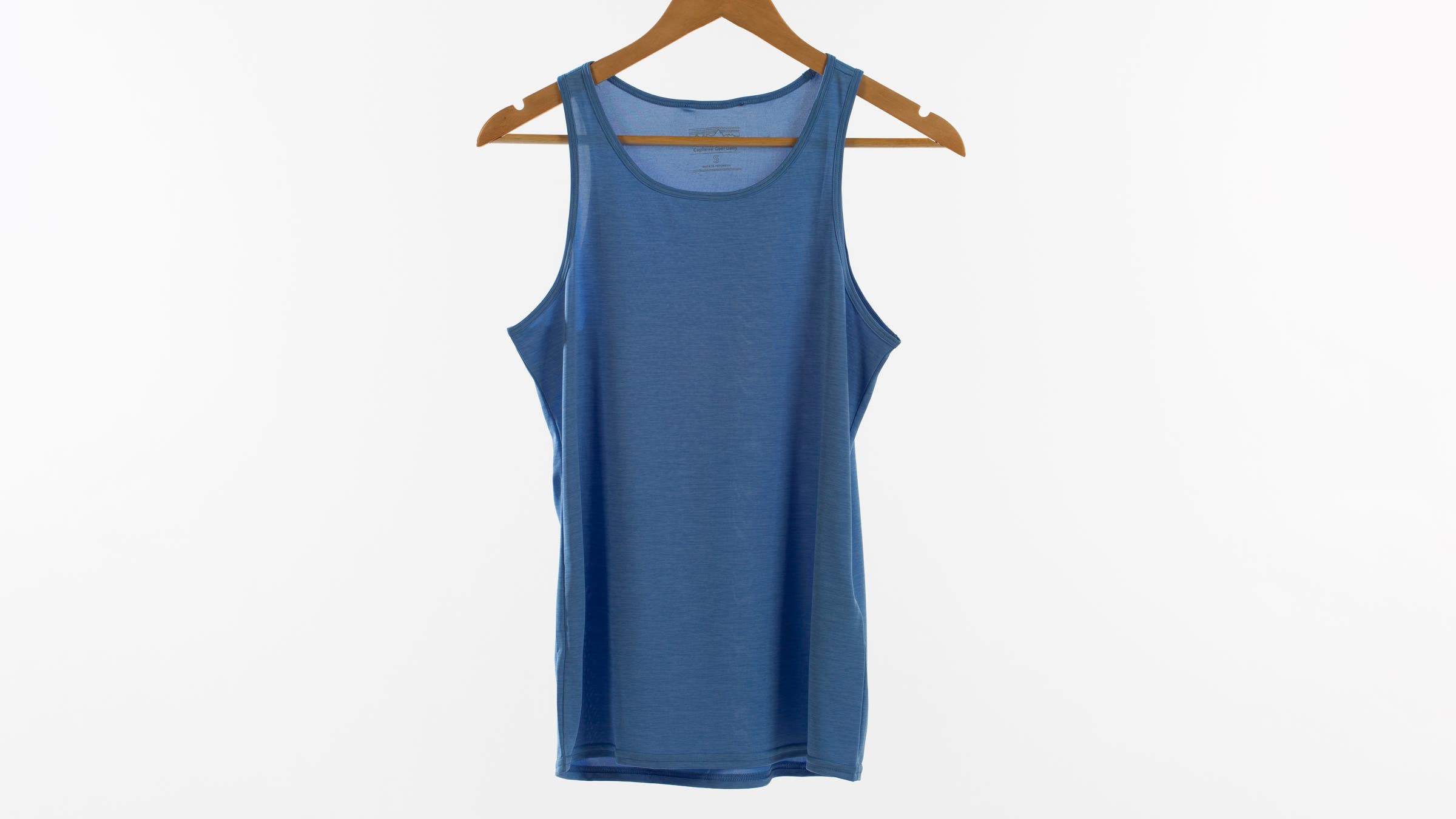
Patagonia Capilene Cool Daily Tank
Sizes: XS-XL
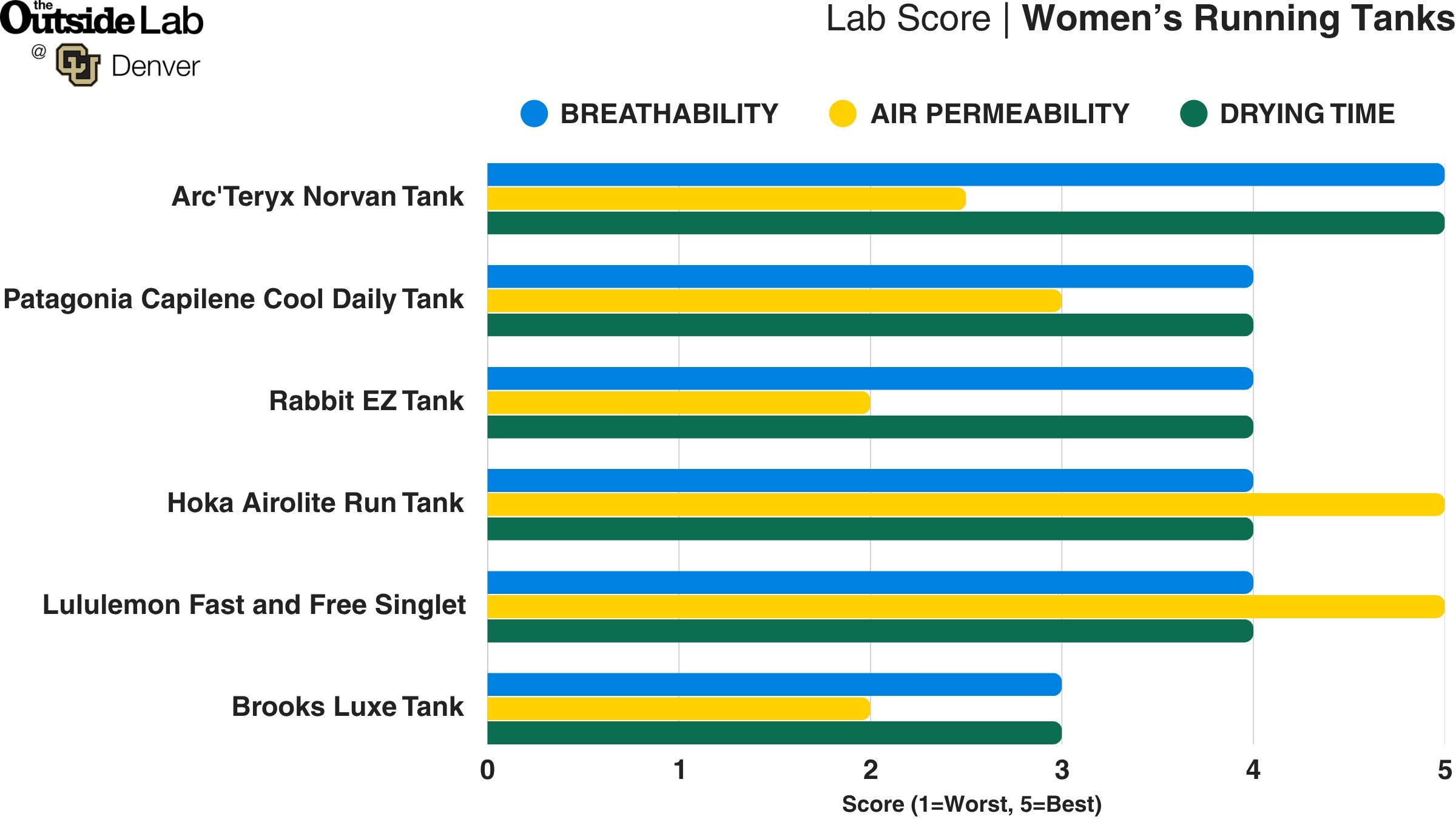
Lab Breathability: 4 (1=worst; 5=best)
Lab Air Permeability: 3
Lab Dry Time: 4
Pros and Cons
+ Extremely lightweight
+ Minimal branding allows versatility
– Runs large
It may be surprising to find Patagonia in a “Best Value” category, but the versatility and function of this running tank makes the Capillene Cool Daily Tank well worth the just-under-40-bucks price tag.
We loved the feel of this workout tank for everything from warm-weather runs in Colorado to high-humidity hikes in the Caribbean. Testers described the recycled polyester Capilene Cool fabric as “extremely lightweight” and said it helped them “maintain comfort while sweating.” The thin fabric dries quickly, whether on the run, during water sports like stand-up paddleboarding, or while traveling.
Like most Patagonia apparel, the fit of this running tank runs a little large, but we liked the relaxed shape. It’s one tester’s go-to shirt while wearing compression-style running shorts. “I like the coverage of the longer cut,” she said. We also loved the versatility of the tank’s styling—the only visible branding is a tiny Patagonia tag at the bottom seam, so it doesn’t look overly athletic and out of place off the trail.
Most Versatile Tank
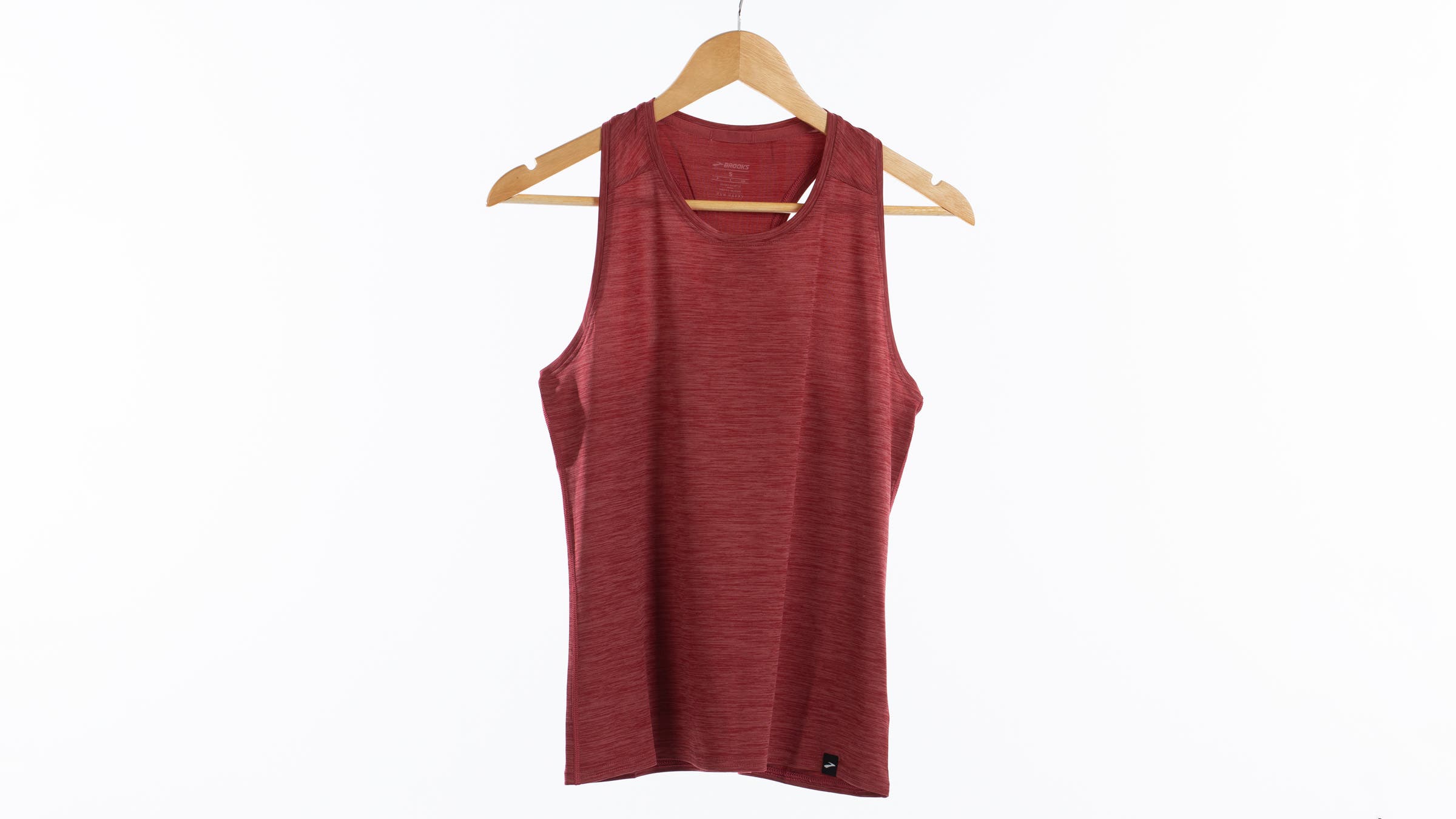
Brooks Luxe Tank
Sizes: XS-XXL
Lab Breathability: 3 (1=worst; 5=best)
Lab Air Permeability: 2
Lab Dry Time: 3
Pros and Cons
+ Super soft
+ Minimal branding
– Underarm seams can rub (but don’t chafe)
This soft, breathable, minimally branded running tank looks so good we’ve worn it casually to run errands around town, but the stylishness doesn’t compromise how well it feels and moves on the run. The cut is slightly long and loose, which makes it comfortable, flattering, and adds to its versatile appeal—it can work both tucked in or left out. “So soft and breathable,” said a tester, while another marveled at how lightweight the material felt against her skin.
A couple testers noted the underarm cut was a tad high, making the non-flat seams rub their armpits, but it was more of an irritation than a run-ruining situation—no chafing. That minor complaint was easy to overlook, given the workout tank’s versatility. “This tank is great to layer under a long sleeve for a morning run when it starts cool and will warm up,” said one tester. “I also love it for a short run, when it can double as a casual tank to run errands in before or after.
Best Raceday Tank
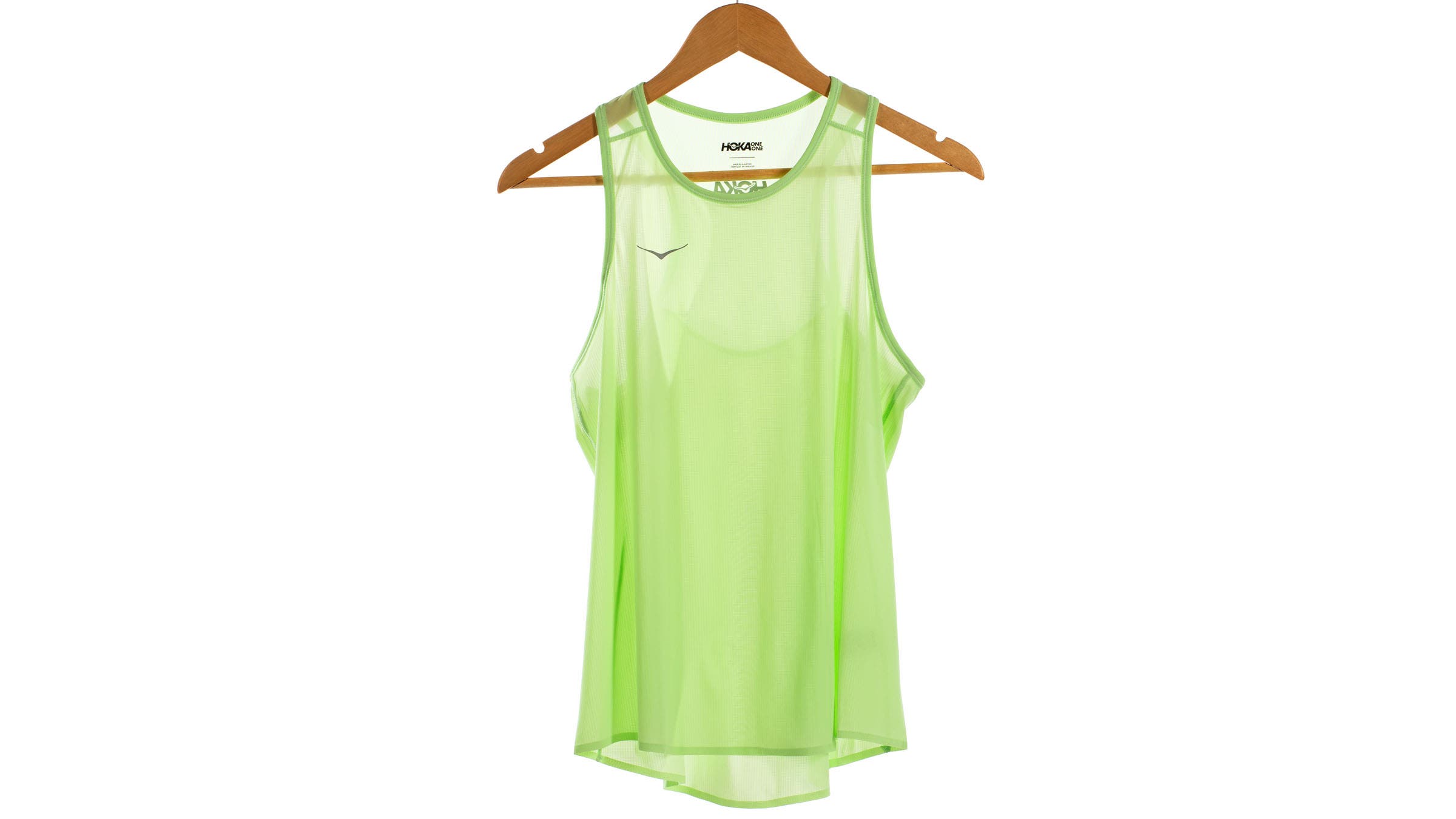
Hoka Airolite Tank 2.0
Sizes: XS-XXL
Lab Breathability: 4 (1=worst; 5=best)
Lab Air Permeability: 5
Lab Dry Time: 4
Pros and Cons
+ Extremely lightweight
+ Bonded seams remain comfortable
– Sticks when sweaty
This airy, lightweight tank has go-fast vibes. A stretchy, silky-smooth blend of recycled polyester and elastane felt soft and cool against our skin and moved with us on fast-effort training runs. Two testers wore this tank during a half-marathon and said they didn’t think about it during their race, which let them focus on the task at hand. A super-breathable mesh panel at the upper back added welcome ventilation, and bonded seams caused zero irritation. The tank is treated with an HeiQ mint finish that seemed effective in reducing odor.
One knock: When sweaty, the material can cling to skin. But we weren’t bothered by it since the fabric is ridiculously lightweight, lets air through better than any in the test, and dries quickly.
Best Tank for Hot Weather Running
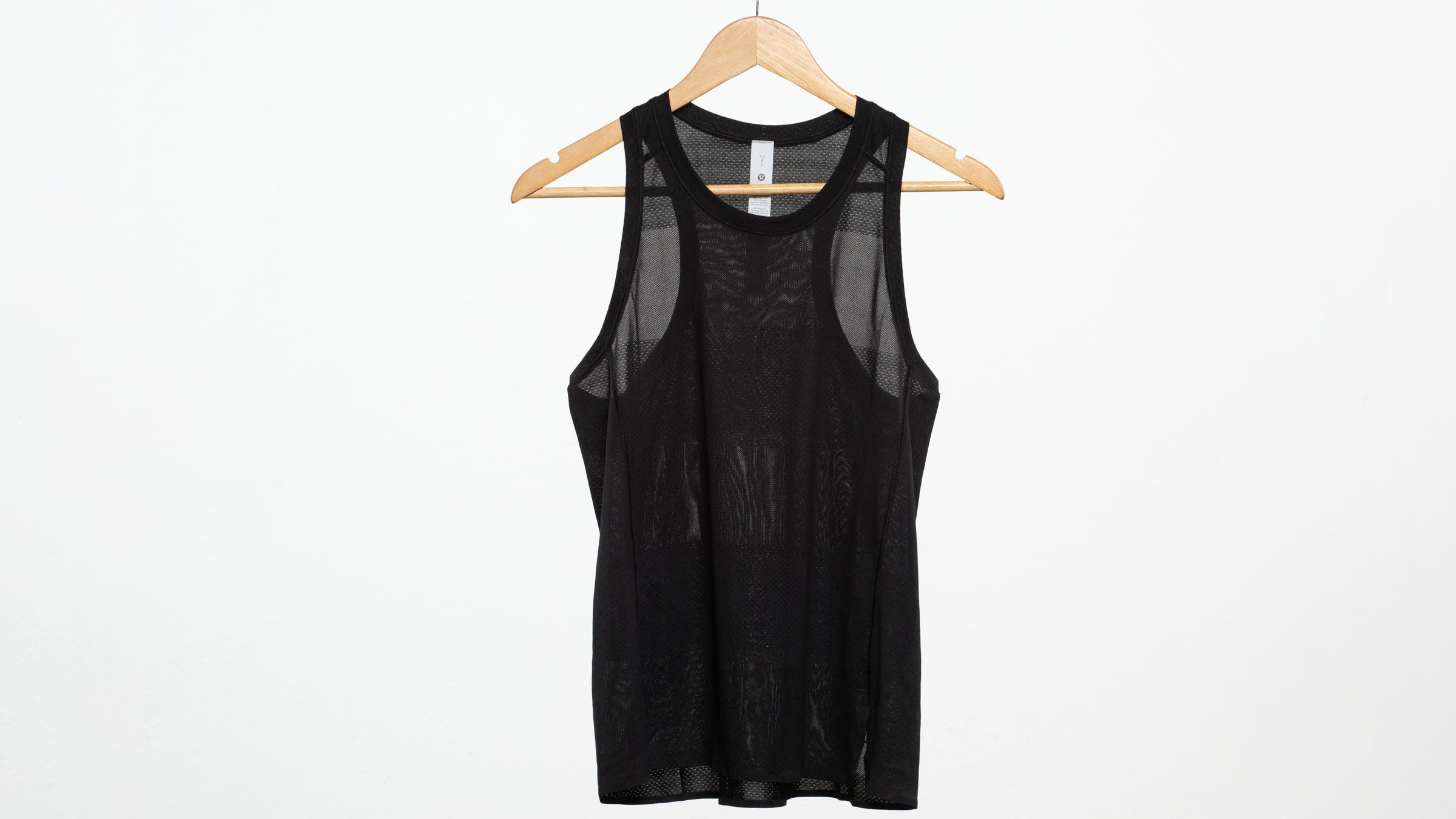
Lululemon Fast and Free Singlet
Sizes: XXS-XL
Lab Breathability: 4 (1=worst; 5=best)
Lab Air Permeability: 5
Lab Dry Time: 4
Pros and Cons
+ Extremely lightweight
+ Airy and breathable
– Slits at bottom hem look a little odd
This tank, made of 100 percent recycled polyester, wicks sweat, breathes great, and dries insanely fast. Testers loved the airy lightness of the material that billows out a bit at the waist. The tank is cut long and has two side slits at the bottom hem, which allows it to float freely—some testers thought it floated a bit too much in the wind. The length—and the side slits—let us tuck in the front, which we particularly liked when wearing shorts with an exposed drawstring.
The already light and breezy material gets added ventilation from perforated stripe paneling that wraps around the body at the chest, mid-section, and lower edge of the tank. The exceptional breathing and ventilation make this a great hot-weather staple.
Best Trail Running Tank
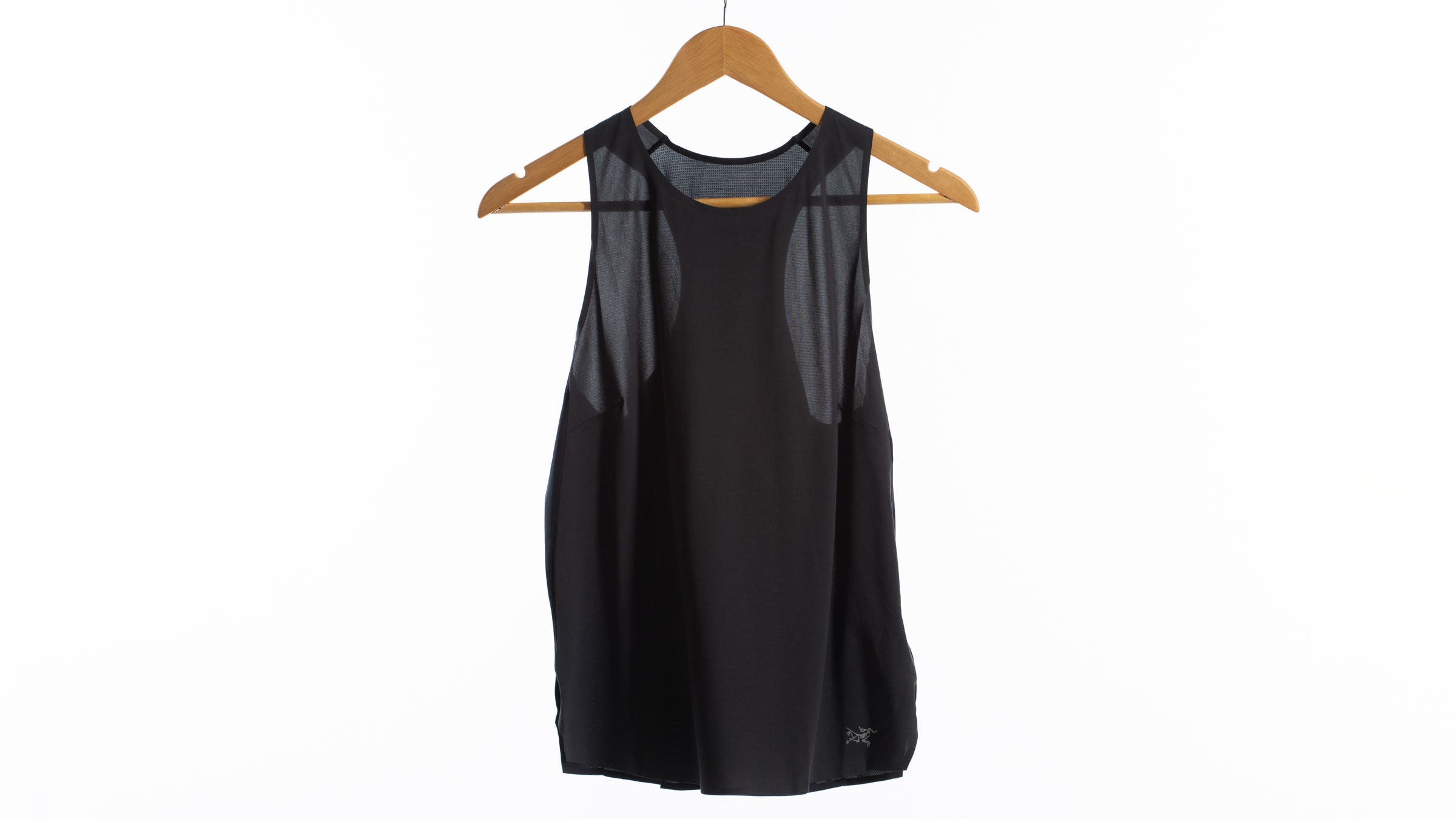
Arc’teryx Norvan Tank
Sizes: XXS-XXL
Lab Breathability: 5 (1=worst; 5=best)
Lab Air Permeability: 2.5
Lab Dry Time: 5
Pros and Cons
+ Wide shoulder straps work well under a pack
+ Lightweight, airy, and quick-drying
– 80 bucks is a lot for a running tank
Some tank top shoulder straps can start to rub underneath a hydration vest or running pack straps, but the Norvan workout tank doesn’t have this issue. A wider cut at the shoulders means the straps stayed flat and in place under a pack during hours of mountain running in Colorado’s Indian Peak Wilderness.
This is a looser-fitting running tank, which we loved for its forgiving fit all around and slightly longer cut. The material—a softer polyester frontside with a meshy backside—feels great against the skin, breathes well, and dries quickly (the fastest-drying of all the tanks here, according to the lab). All seams remained comfortable over hours of wear as well—no chafing here.
Softest Tank
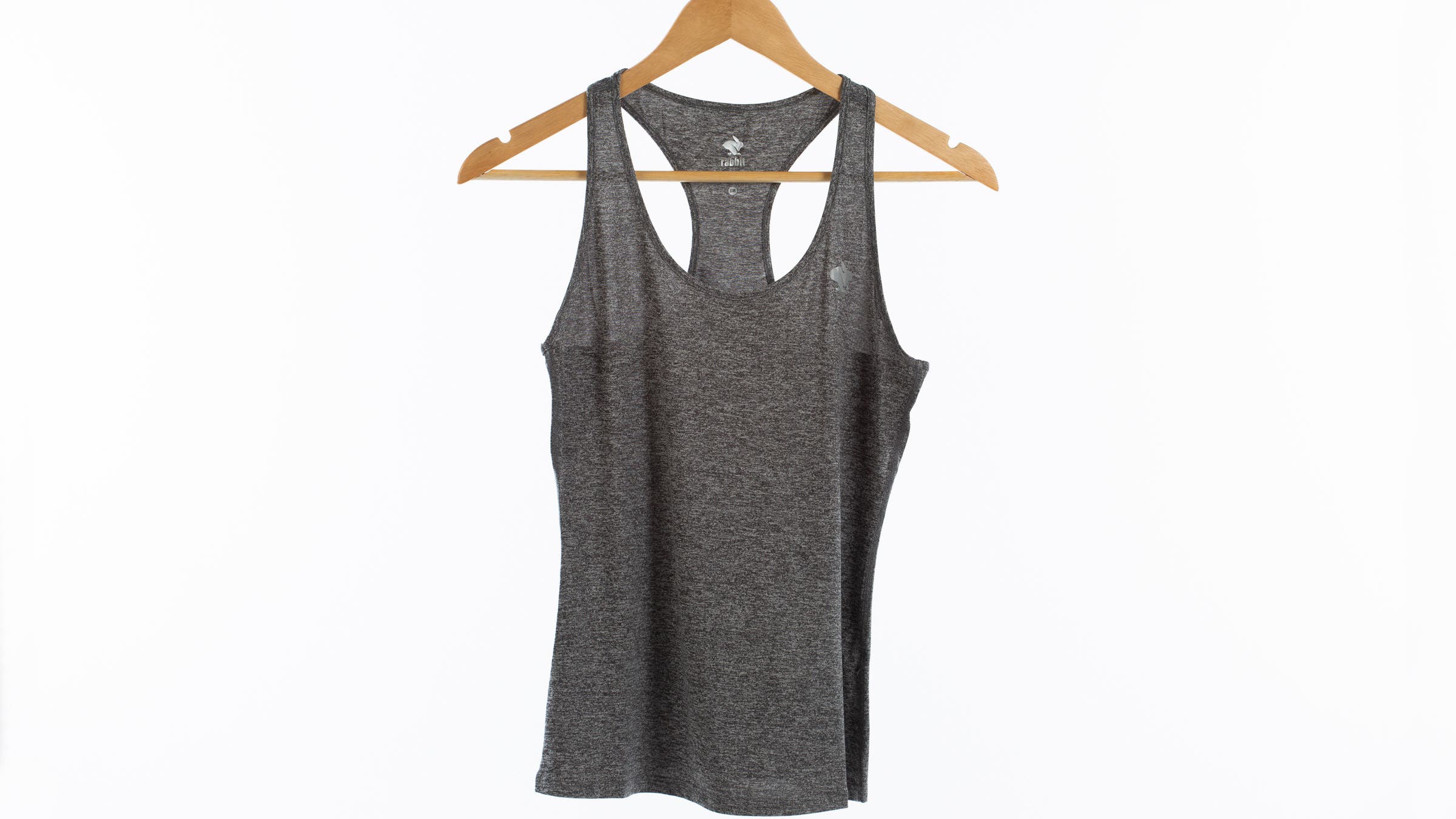
Rabbit EZ Tank
Sizes: XXS-XXL
Lab Breathability: 4 (1=worst; 5=best)
Lab Air Permeability: 2
Lab Dry Time: 4
Pros and Cons
+ Super soft and comfortable
+ Bonded seams
– Runs small (size up!)
Talk about buttery soft. This running tank is made from the brand’s recycled polyester/spandex blend that feels like your favorite old cotton t-shirt, softened in the wash after decades of use. But unlike cotton, this material dries quickly after being soaked in sweat. While the material might not be as airy as some other techier-feeling tanks or running tees in this roundup, it feels fantastic on the skin and still performs even when damp. Bonded seams around the armholes and neckline remained soft and proved irritation-free for our team of testers.
“The softness and overall comfort made up for the lack of breathability,” said a tester. “It’s become one of my favorites. It’s just very ‘ez’ to wear.” We find ourselves reaching for this tank (and the Rabbit EZ Tee) for lounging; it’s that comfortable.
Best Women’s Running Tees
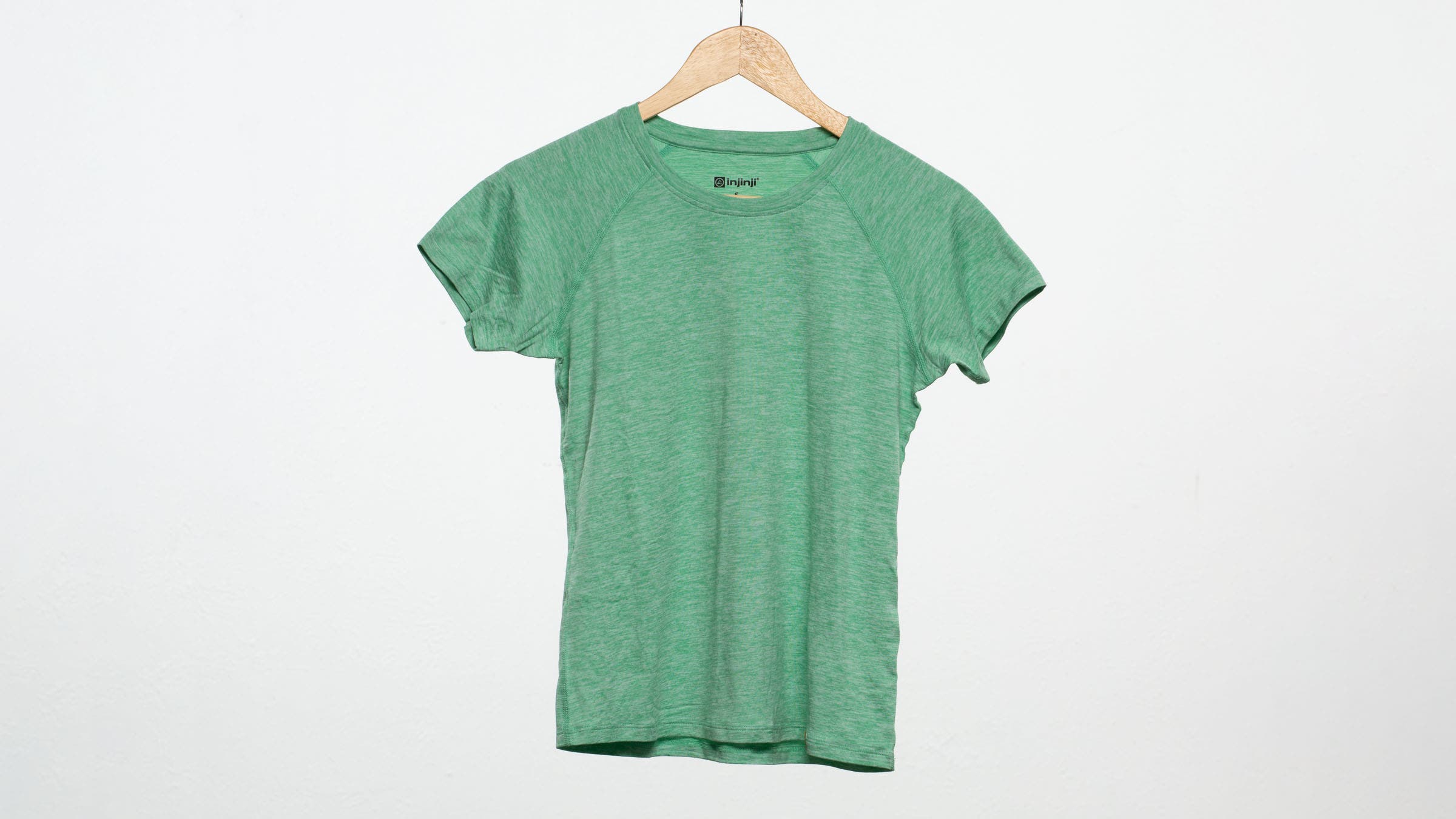
Best Value Running Tee
injinji Women’s Short Sleeve Tee
Sizes: XS-XL
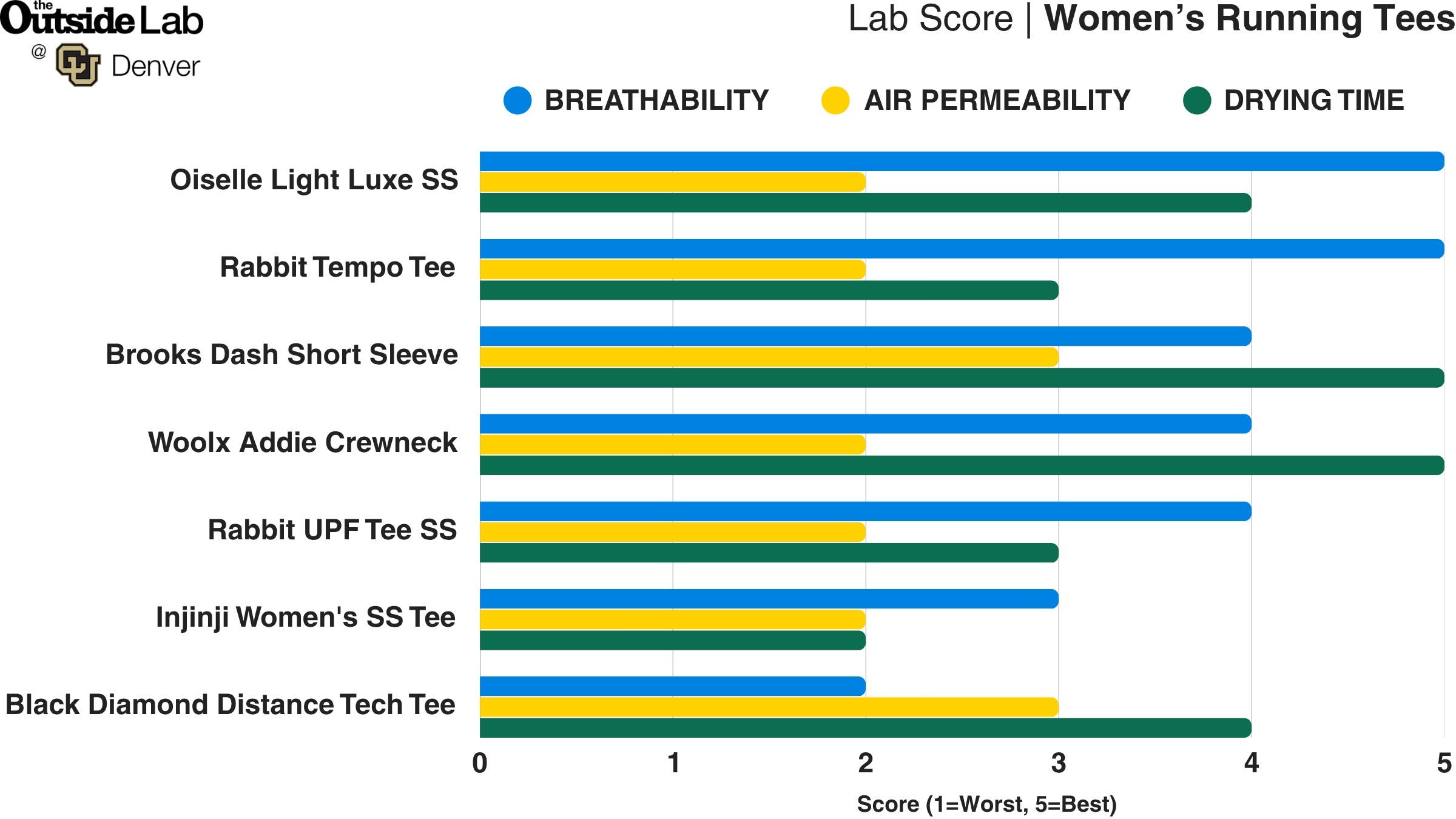
Lab Breathability: 3 (1=worst; 5=best)
Lab Air Permeability: 2
Lab Dry Time: 2
Pros and Cons
+ Crossover ability
+ Soft, cotton-like feel
– Not as breathable as some others
This $40 running tee works across a range of activity (and inactivity). We loved it for everything from runs in warm temps to a 12-hour car ride, hiking, yardwork, and running errands. The Injinji tee feels soft against the skin, like cotton, but we didn’t find it breathed as well as others we tested. Still, the 95% polyester, 5% spandex tee was comfortable in all but the hottest conditions, and we loved its crossover ability, as well as its price tag. “This is a dependable, easy t-shirt that is super versatile,” said a tester.
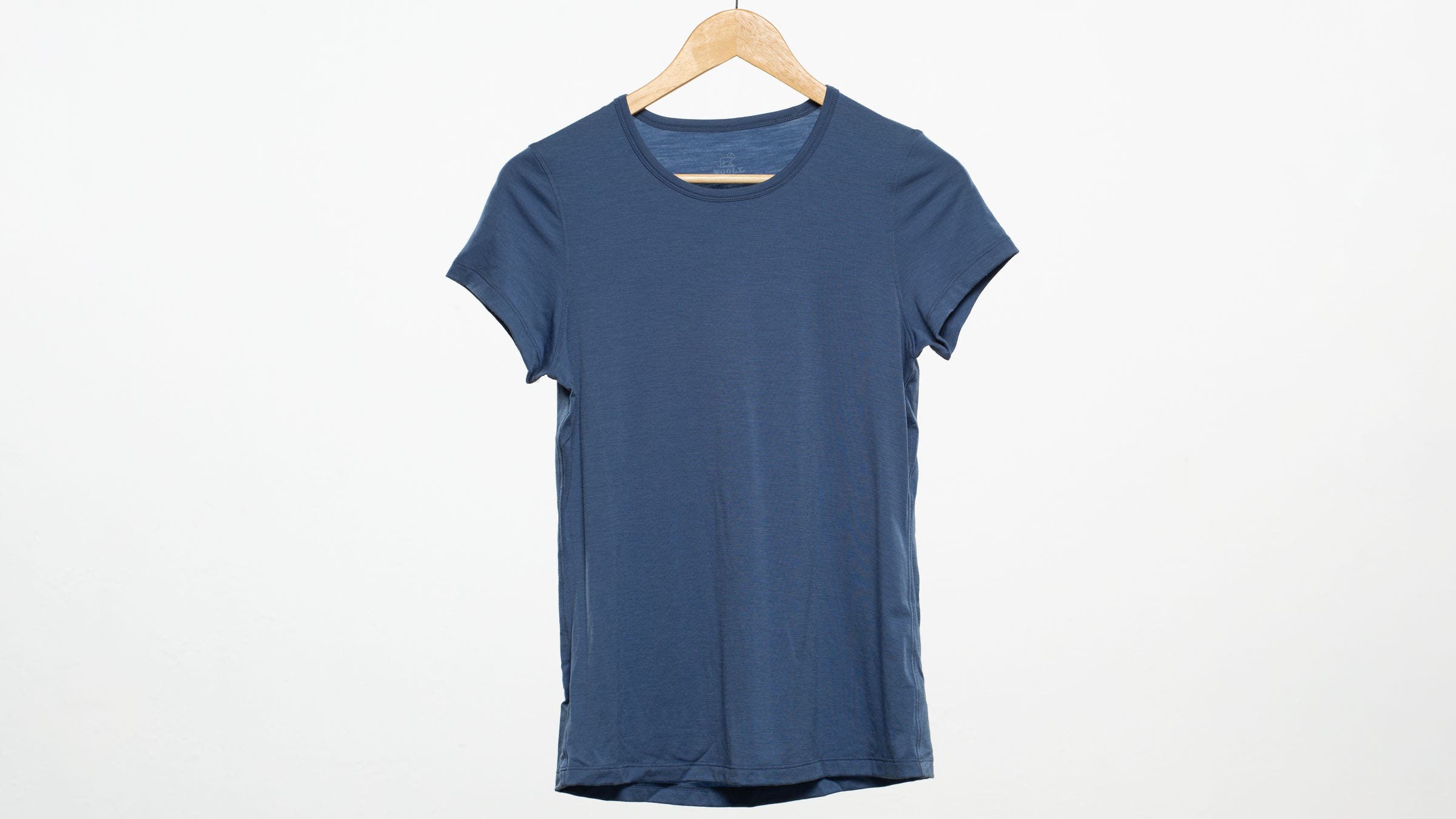
Most Versatile Tee
WoolX Addie Crewneck
Sizes: XS-3X
Lab Breathability: 4 (1=worst; 5=best)
Lab Air Permeability: 2
Lab Dry Time: 5
Pros and Cons
+ Naturally temperature-regulating
+ Soft and stretchy
– Expensive
This tee is more athletic than it looks. On first appearance, it’s a basic t-shirt with cap sleeves, but the fit and style are elevated by nicely finished, smooth seams, a polished neckline, and zero exterior branding (which we love). Performance-wise, the 85 percent merino wool, 12 percent nylon, 3 percent spandex blend fabric breathed well, wicked sweat, and kept us perfectly comfortable, causing no irritation whatsoever while we ran roads and trails alike, sometimes while wearing a pack. “This shirt had the perfect amount of stretch and flexibility,” said a tester. “I’d wear it year-round for a variety of activities and travel.”
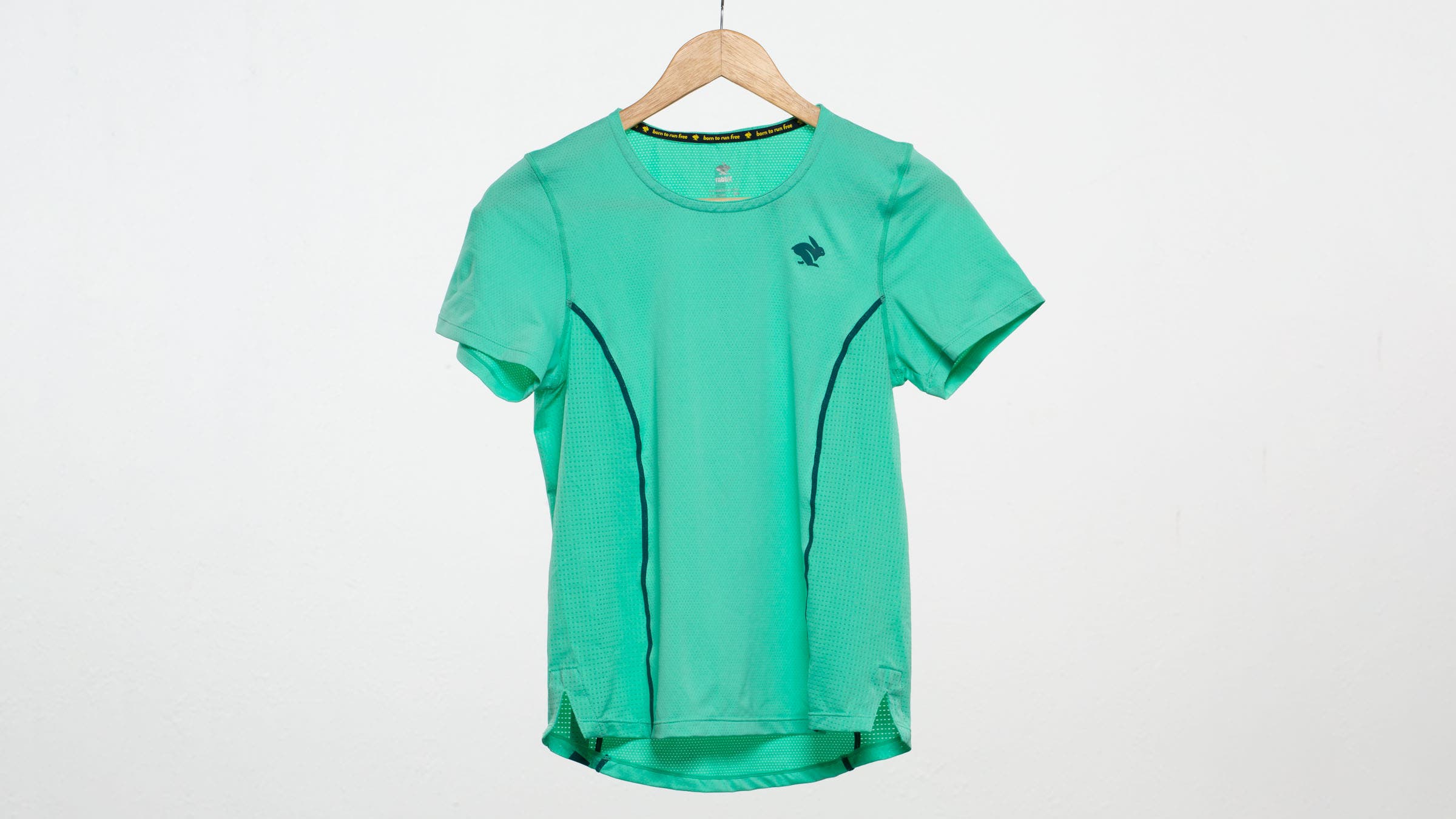
Best Tee for Raceday
Rabbit Tempo S/S
Sizes: XXS-XL
Lab Breathability: 5 (1=worst; 5=best)
Lab Air Permeability: 2
Lab Dry Time: 3
Pros and Cons
+ Streamlined fit
+ Highly breathable
– Noticeable interior seams
– Runs small
This tee’s streamlined fit made us feel fast and ready for anything. “This is a fantastic basic that I have worn day in and day out,” said a tester. The fabric is 88 percent polyester, 8 percent polyester, and 8 percent spandex with a sweat-activated cooling treatment and two different patterns of mesh . The main body is thicker and more durable while side panels from the underarm to the waist are thinner and more open to maximize moisture escape (it earned the highest score in the lab on breathability). Testers described the fabric as “wonderfully thin and silky soft” and said that it did indeed keep their skin cool.
The seams that connect the two mesh panels are noticeable on the interior of the shirt, which admittedly worried us upon first touch. But testers agreed that they didn’t experience any chafing while running.
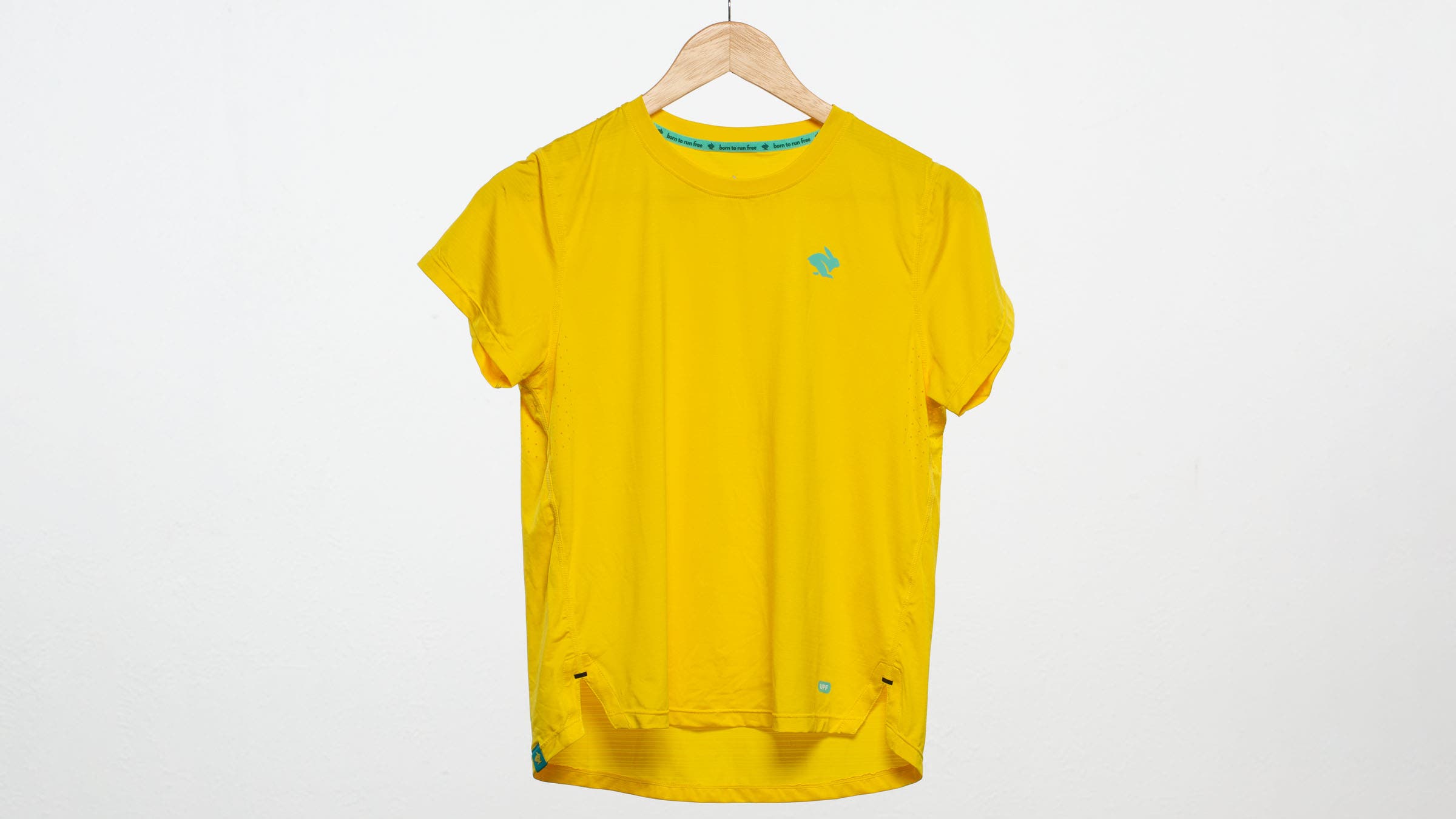
Best Running Tee for Hot Weather
Rabbit UPF Tee S/S
Sizes: XS-XL
Lab Breathability: 4 (1=worst; 5=best)
Lab Air Permeability: 2
Lab Dry Time: 3
Pros and Cons
+ UPF 50 sun protection
+ Lightweight and breathable
– Falls short at the waist
This lightweight, seemingly simple running tee from Rabbit takes over the top spot in this category, mostly because it offers UPF 50 protection from the sun that testers reported worked well, leaving them with farmer’s tans as proof. They also loved the feeling of the fabric, a polyester/spandex blend that they described as “luxurious,” “soft and silky,” and “cooling.” This running t-shirt kept us comfortable in everything from swampy conditions in the Mid-Atlantic to hot and dry summer days in Colorado.
“I love how light it feels and how quickly it dries when I am suffering in the heat. I especially liked that it wasn’t clingy at all,” said a tester. Underarm perforations and a loose (albeit, slightly short) fit aided airflow. All testers who wore the UPF tee ranked it among their favorites of the lot. “This shirt is phenomenal,” exclaimed one.
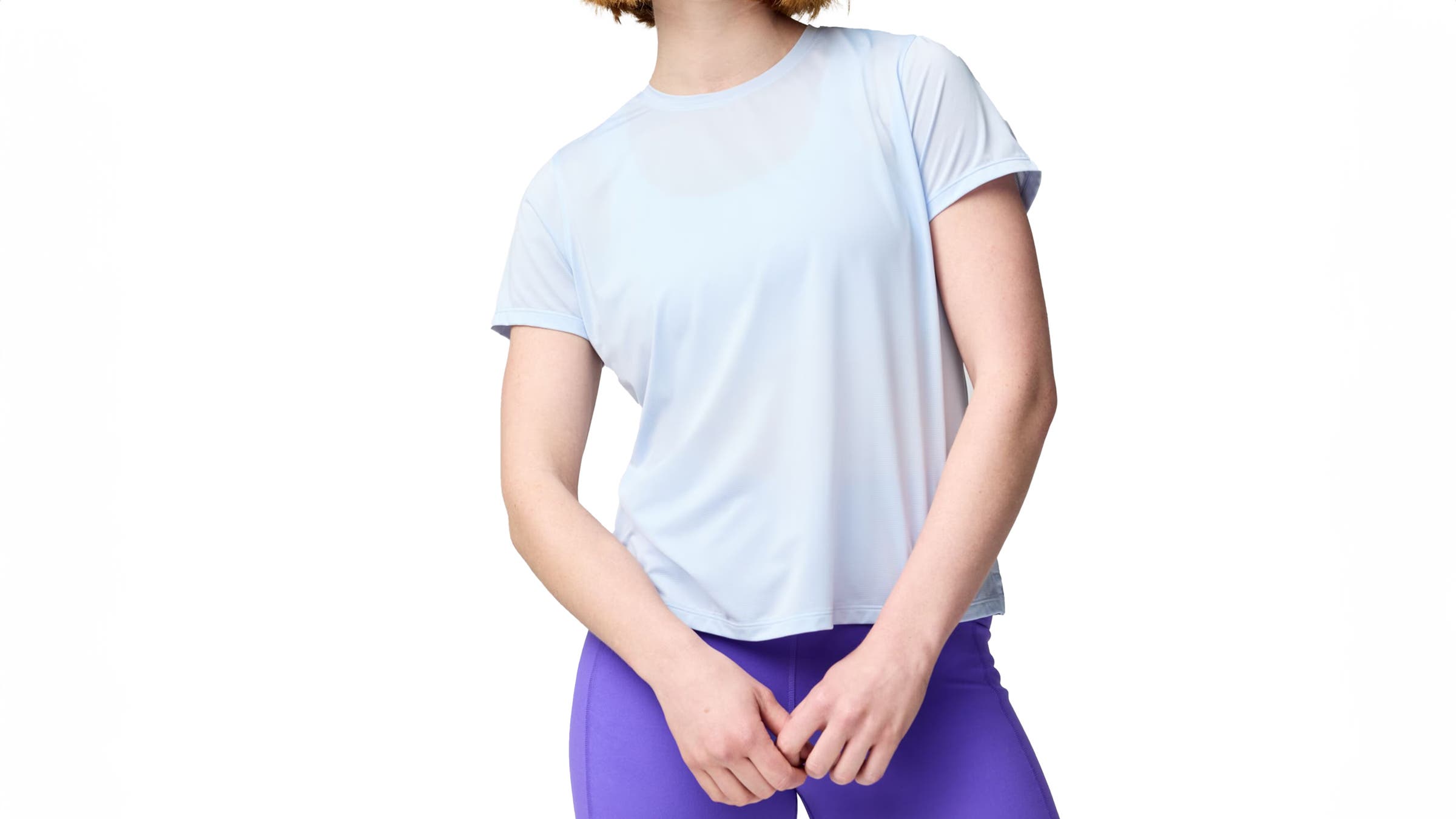
Fastest Drying
Brooks Dash Short Sleeve
Sizes: XS-3X
Lab Breathability: 4 (1=worst; 5=best)
Lab Air Permeability: 3
Lab Dry Time: 5
Pros and Cons
+ Excellent moisture management
+ Rated to 20+ UPF
+ Antimicrobial finish for odor resistance
– Sheer fabric
Testers across the board loved the fit of this tee. The semi-fitted cut is not too loose, nor too tight, drapes nicely while allowing great airflow, and doesn’t ride up. “This shirt has nice coverage, but is also loose enough to feel super light, breathable, and with good movement,” said a tester.
The lightweight, stretchy, silky-feeling fabric, made from 86 percent recycled materials, wicked moisture fantastically, and dried almost immediately. “This shirt kept me cool in 80-plus degree temps with 70 percent or higher humidity level runs,” said our New Hampshire-based tester. “I never felt that ick wet where the shirt is sticking to me…it always felt loose and breathable, while also having a flattering fit.”
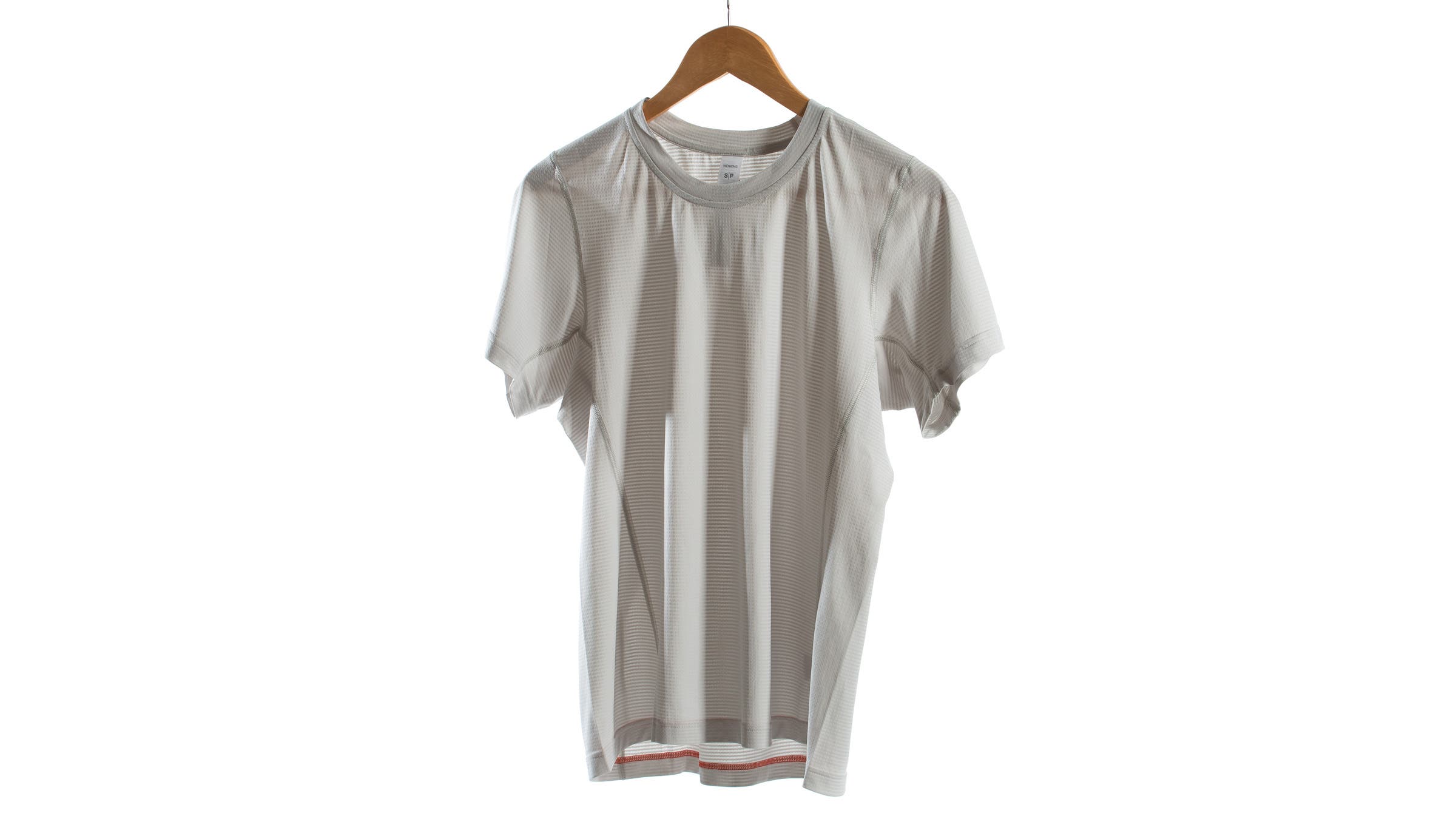
Best Trail Running Tee
Black Diamond Distance SS Tech Tee
Sizes: XS-XL
Lab Breathability: 2 (1=worst; 5=best)
Lab Air Permeability: 3
Lab Dry Time: 4
Pros and Cons
+ Extremely lightweight, breathable, and quick drying
+ Zero irritation over long wear
– Not as cottony feeling as some others
We’ve worn this running t-shirt under a pack over multi-day runs from hut to hut in the White Mountains of New Hampshire, as well as on multiple short runs around the Boulder Foothills and neighborhood suburbs. The shirt performs: Its quick-drying, moisture-wicking, airy—yet durable—polyester jersey material with a “Quick Dry” finish never felt bogged down with sweat. “Loved the material. It’s loose, super ventilated, and fits well throughout,” raved a tester. The Anti-Odor finish also proved effective—did we mention that multi-day, multi-wear hut trip? We got no complaints from our running mates. Flat lock seams, a flat hem, and lack of a tag add to overall comfort, as does this shirt’s ridiculously lightweight feel on the body.
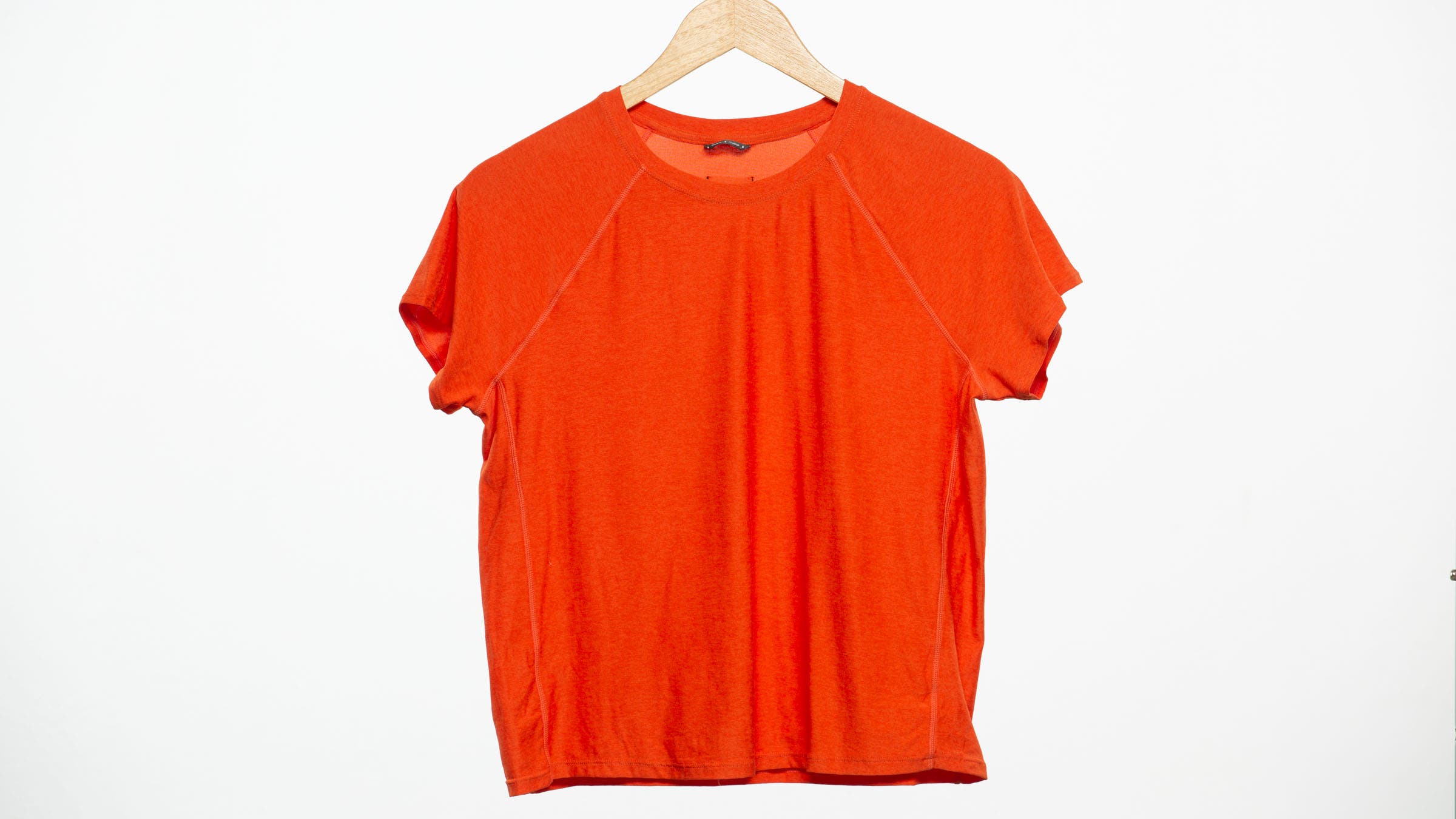
Softest Tee
Oiselle Light Luxe Short Sleeve
Sizes: XS-XL
Lab Breathability: 5 (1=worst; 5=best)
Lab Air Permeability: 2
Lab Dry Time: 4
Pros and Cons
+ Super-soft
+ Versatile styling
– Not as breezy as some
We loved the Lite Luxe Longsleeve Shirt so much we named it “Most Versatile” in our roundup of women’s long-sleeve running shirts, and the short-sleeved version is made of the same fantastically soft, buttery material. “It’s so incredibly soft, I didn’t want to take it off,” said a tester. Strategic seam placement with nothing crossing the shoulders added to the chafe-free performance.
Testers also praised the shirt’s fit, particularly noting its slightly cropped cut that allowed full mobility with no material getting in the way on the run or during strength work. The sleeves, which are on the short side, create a feminine look while adding to the summer feel. The Light Luxe showed off in the lab on breathability and dry time, but didn’t let a lot of air through the smooth fabric.
Women’s Running Tops Comparison Chart
How To Choose the Best Running Top
When it comes to summer running shirts and tanks, look for comfort, breathability, moisture-wicking, and a chafe-free fit.
Comfort
Aside from chafe-free seams and a cut that allows full arm movement without restriction, consider how the tank or tee makes you feel. Are you comfortable wearing the top both on a run and stopping for coffee afterward? Are you looking for a tank that makes you feel fast on race day? Do you want a tee that also makes you feel comfortable—both in function and style— in the gym?
Materials
Breathable, sweat-wicking materials are essential, as is how the material feels against your skin. While some fabric blends prioritize breathability and quick-drying, others provide a more cotton-like feel—the latter sometimes stay wet from sweat longer than the former, but the tradeoff can be worth it. All tops in this round up perform great on the run.
Fit
The fabric, cut, and seam placement should not restrict your arm movement or your breathing. The best-fitting tops make you forget that you’re wearing them. Some will fit looser or boxier around the middle, while some have a more streamlined fit. Consider what you’re after and shop from there. (Our guide describes the fit of each top.)
Tanks vs Tees
T-shirts provide more coverage and therefore more sun protection, and they can also deliver more of a cooling effect, depending on the fabric and fit. Tank tops are typically less restricting and more breathable, because of their lack of sleeves. That doesn’t mean all tank tops have freedom of movement. Some fit more streamlined around the midsection than others, while some are looser. The looser ones tend to allow airflow, while the more narrow silhouettes rely on their fabric for breathability. In addition to fit, consider how much skin exposure and coverage you’re comfortable with, and how the tank interacts with your sports bra and running vest, if you’ll be wearing one. And consider all the settings where you’ll want to wear the top, both athletic and casual.
How We Tested Running Tops in the Field
- Number of testers: 10
- Number of products tested: 54
- Number of miles logged while testing: 2,500
We tested the best running tanks and tees through the summer and fall of 2025 and the spring of 2026, comparing them to top-rated items that we’d already tested and are still on the market to find the best of the best. Our testers range in age and pace, with one of them an ultrarunning champion, one a six-time Ironman, and all of them with years of experience scrutinizing every top they wear. We evaluated products by comfort first, which includes breathability, quickness in drying, chafe-free seaming, and fit, followed by style, utility (ability to multitask as casual wear was a big plus), and durability.
How We Tested Running Shirts in the Outside Lab
Breathability (New test in 2026)
Breathability deals specifically with the movement of moisture vapor through a material. Moisture is thicker and harder to move than air, which we measure with our air permeability test. To test breathability in the Outside Lab @ CU Denver, we use a modified version of the standard ASTM “Upright Cup Method,” which works by sealing a section of fabric from the shirt over a bowl of water with a maintained temperature of 100-degree F. This temperature simulates human body temperature when working up a sweat, and is maintained with the use of a hot plate. Since the Outside Lab is located in Denver, the air is generally dry and holds a relatively low humidity level (approximately 35 percent) to help draw out moisture during testing. Breathability, or moisture vapor transmission, is recorded by measuring the combined weight of the sample and water dish over time. The more weight lost during the test, the better the breathability. Running shirts are given a score of 1 to 5, least to most breathable.
For shirts using different materials in specific zones, such as vented back or side panels, each section was tested. The weight of each shirt by itself was also taken at the start and end of the test. This shows how much moisture became trapped in the material during testing, which can affect breathability. The weight gain, if any, is used when scoring each shirt—more moisture trapped in the fabric results in a slight downgrade in score.
It’s important to note that our test in the Outside Lab only accounts for the fabric itself, not taking into consideration the fit, which, combined with air permeability, can affect how a shirt feels on a run. Lab data is important, but it’s best to combine it with the results from field testing for a more complete view of the product.
Air Permeability
Air permeability is a measure of how much air (in volume) is able to move through a fabric. It is not the same as breathability, which measures how moisture vapor (sweat) moves through a fabric. The more air permeable, the more the cooling breeze makes it through your shirt and reaches your skin directly. To test this in the Outside Lab @ CU Denver, we use a James Heal AirPro, a machine that uses a vacuum pump to pull air through fabric clamped between plates with a specific-diameter opening to measure the flow rate at a pre-set pressure. The greater the volume of air getting through, the more air permeable the fabric is. This lab test only evaluates the material itself, and can’t account for how the cut and design of a garment aids its airiness.
Dry Time
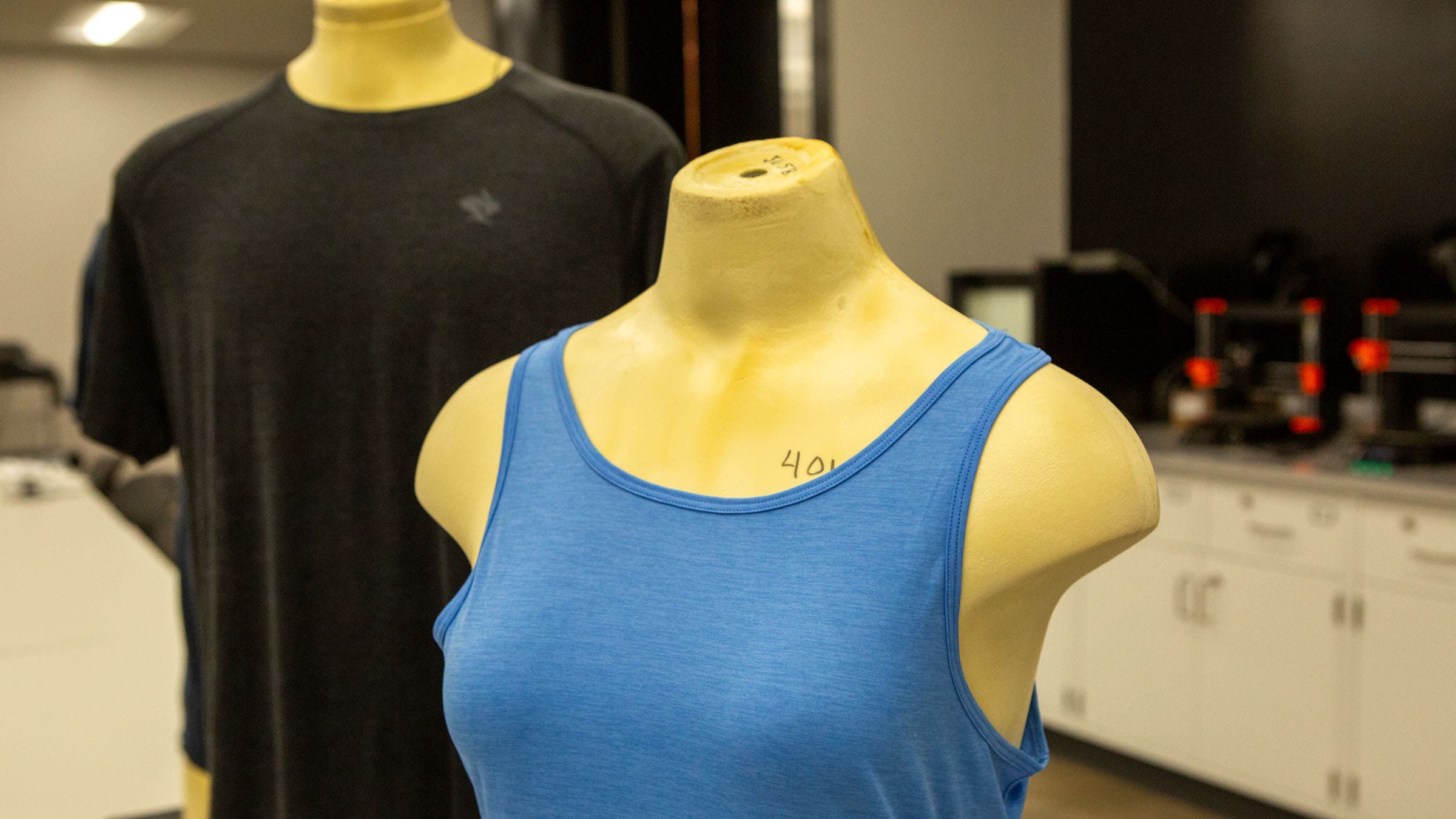
The lab tested drying time by soaking each shirt and then recording how long each needed to dry. Each shirt was weighed while dry, then soaked in tap water until all of the material had absorbed water. After soaking, they were hand wrung until all excess water stopped releasing from the fabric, leaving a fully saturated, but not soaked, shirt. The saturated shirts were weighed again to get the “wet” starting point and then put on a mannequin to dry. Weight was recorded every hour to start and then every 15 minutes as they approached dryness, stopping when the sample was within 4 percent of the original dry value. Allowing for 4 percent of weight gain (a few grams) takes into account any dirt particles that could be introduced from the tap water or environment, and small hemmed areas of the shirt that may hold a little moisture, even though the overwhelming majority of the shirt is dry.
Meet Our Lead Tester
Lisa Jhung writes, runs, and generally adventures from her homebase in Boulder, Colorado. Raised as a California beach kid, she also makes it back to the coast—any coast, but primarily the Pacific—as often as possible. She’s been testing gear for Outside for a couple of decades and co-manages the road and trail running shoe tests, along with managing the women’s running apparel, sports bras, and running hydration vest tests.
