

Published May 27, 2026 03:05AM
The Mother Road celebrates her 100th birthday in 2026. For its centennial, America’s most iconic highway gets a glow-up with fresh bicycle paths, revived retro hotels, and payment that sings (for real).
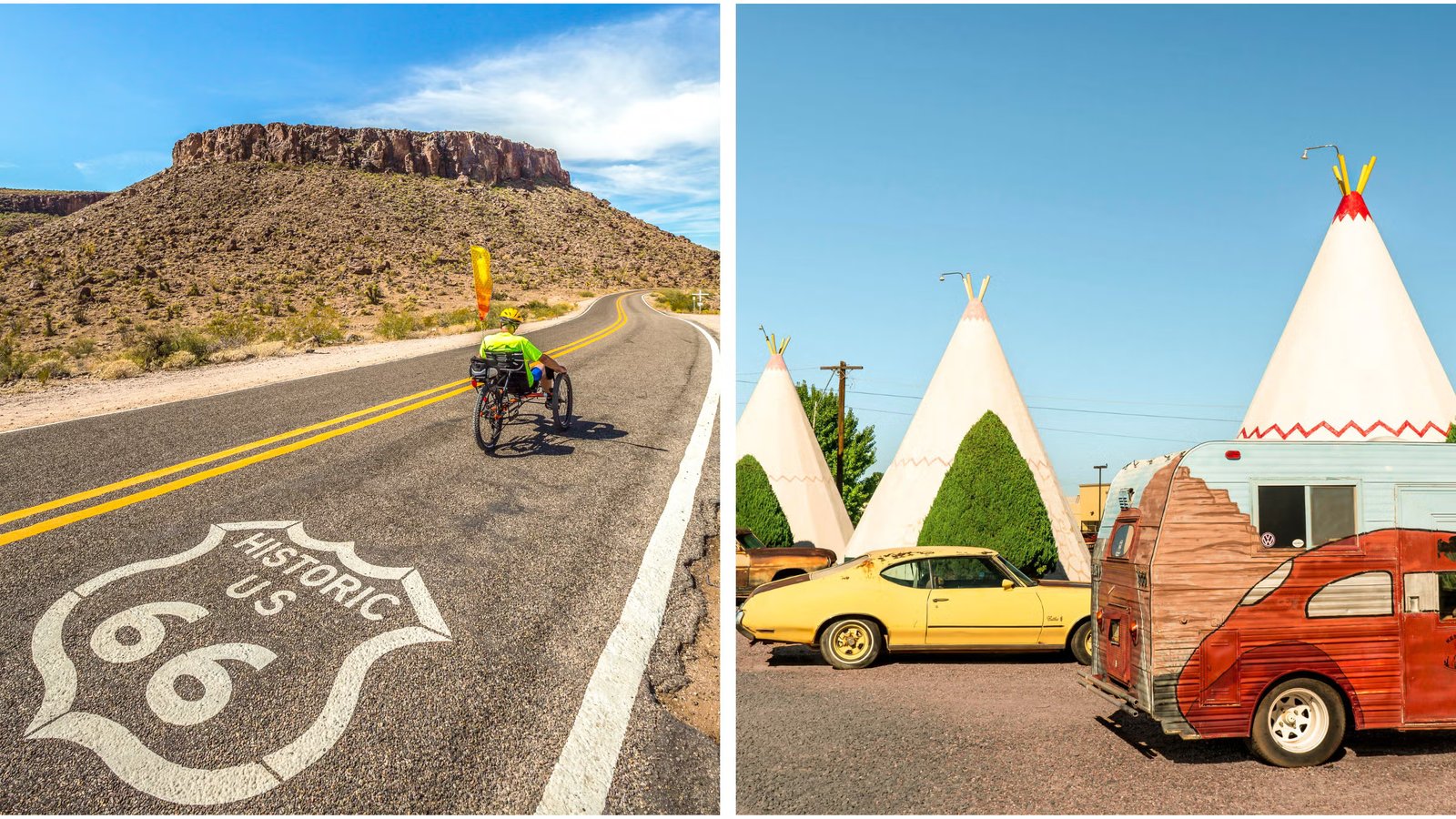
View from the Handlebars: Cycling Route 66
It might be road-trip blasphemy to suggest ditching the car for a Route 66 adventure—after all, the Mother Road was designed for motor touring—but with excellent established cycling routes and new bike initiatives, we’ll just say it: Why drive when you can bike?
First, there’s Adventure Cycling Association’s Bicycle Route 66, a 2,493-mile cross-country trek ribboning through all eight states on the Mother Road, plunging cyclists into both stunning landscapes and sometimes punishing conditions. That’s what makes it such an epic bucket-list to-do. Bicycle Route 66 debuted more than a decade ago, so it’s not new, though completing portions of it makes for a worthy centennial homage.
Less bucket-list and more Sunday-afternoon is the Illinois Route 66 Trail from Chicago to the Mississippi River. Like Bicycle Route 66, the 369-mile stretch of bike-friendly paths is not new, though the ride is memorable, embodying all that makes two-wheeled exploration on Route 66 so magic: a slow-paced journey through small towns, by roadside attractions, and down bucolic country roads.
What is new: Recent bike-path buildouts in Oklahoma and California under the U.S. Bicycle Route System (USBRS) initiative. In partnership with Adventure Cycling Association, USBRS added 429 miles of trails lining Route 66 in Oklahoma—giving the state bragging rights to the most rideable miles of the Mother Road. Cyclists pedal past iconic landmarks like the Meadow Gold neon sign in Tulsa; the Round Barn and Pops 66 (stop here for a fizzy soda and a selfie by the 66-foot-tall pop bottle), both in Arcadia; Geary’s Pony Bridge, made famous in the 1940 film The Grapes of Wrath; and in Chelsea, Totem Pole Park, home of the world’s largest concrete totem pole.
As part of the same USBRS initiative, California gets a new 3.8-mile extension of the Route 66-adjacent Santa Ana River Trail in San Bernardino, a scenic path newly opened in February, while a current expansion is underway for the 20-mile Pacific Electric Inland Empire Trail, which starts at Route 66 Trailhead Park.
Where to Stay: New (and Newly Revived) Lodging on 66
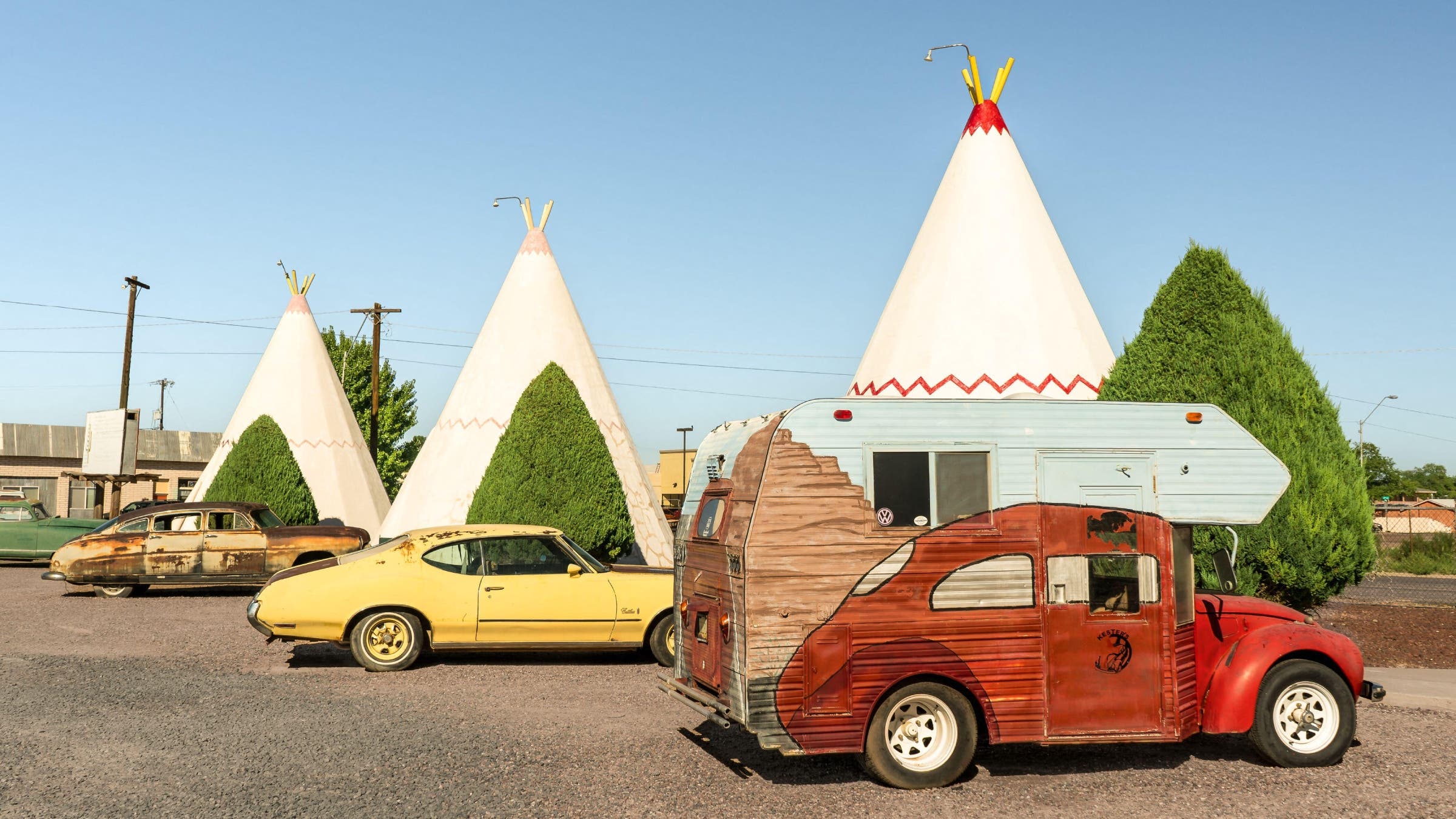
No highway, byway, or roadway can rival Route 66 when it comes to unique accommodations. From retro motels known for striking architecture (looking at you, Wigwam Motel in Holbrook, Arizona) to historic Harvey Houses where Hollywood’s 1930s elite bedded down (Hotel El Rancho in Gallup, New Mexico), the lodging on Route 66 is as much a draw as the road itself. And just in time for the centennial, a crop of new hotels, plus a few recently reimagined ones, entice travelers to stop and rest awhile.
In Amarillo, Texas, there’s The Barfield, a new boutique hotel inside a renovated 1920s skyscraper. In addition to stylishly appointed rooms with a hint of Texas flair, the hotel also organizes horseback rides through Palo Duro Canyon, the second largest canyon in the U.S., and a favorite nature stop for outdoorsy Route 66-ers.
Continuing west, you’ll arrive in Albuquerque, New Mexico—and at ARRIVE Hotel. Opened in 1965 as the Downtowner Motor Inn, the property was transformed in 2025 to the 137-room ARRIVE. Vintage touches blend with laid-back luxury for a stay that’s a little bit Southwestern charm with a dash of upscale hipster.
In Arizona, road trippers have two newish options: Americana Motor Hotel in Flagstaff and Dwell in Topock. The latter opened in March of this year as a glamping destination on the Arizona-California border with spacious sites for camper vans or RVs and cozy casitas bestowing serene desert vistas. As for the Americana, its roots date to 1962 when it operated as a motor lodge; it’s since received a $20 million renovation, and now the hotel is a playful retro-futuristic nod to Route 66’s midcentury heyday.
What to Do: Recently Restored Landmarks on 66
Snagging photo ops of the Mother Road’s revered landmarks is a must—in some cases, a literal must, since you’ll be winkingly asked to show “proof” of your adventure when you arrive at the End of the Trail kiosk at Route 66’s western terminus on Santa Monica Pier. While many of these roadside attractions haven’t gotten so much as a paint job in 100 years, a few have enjoyed a centennial facelift. From east to west:
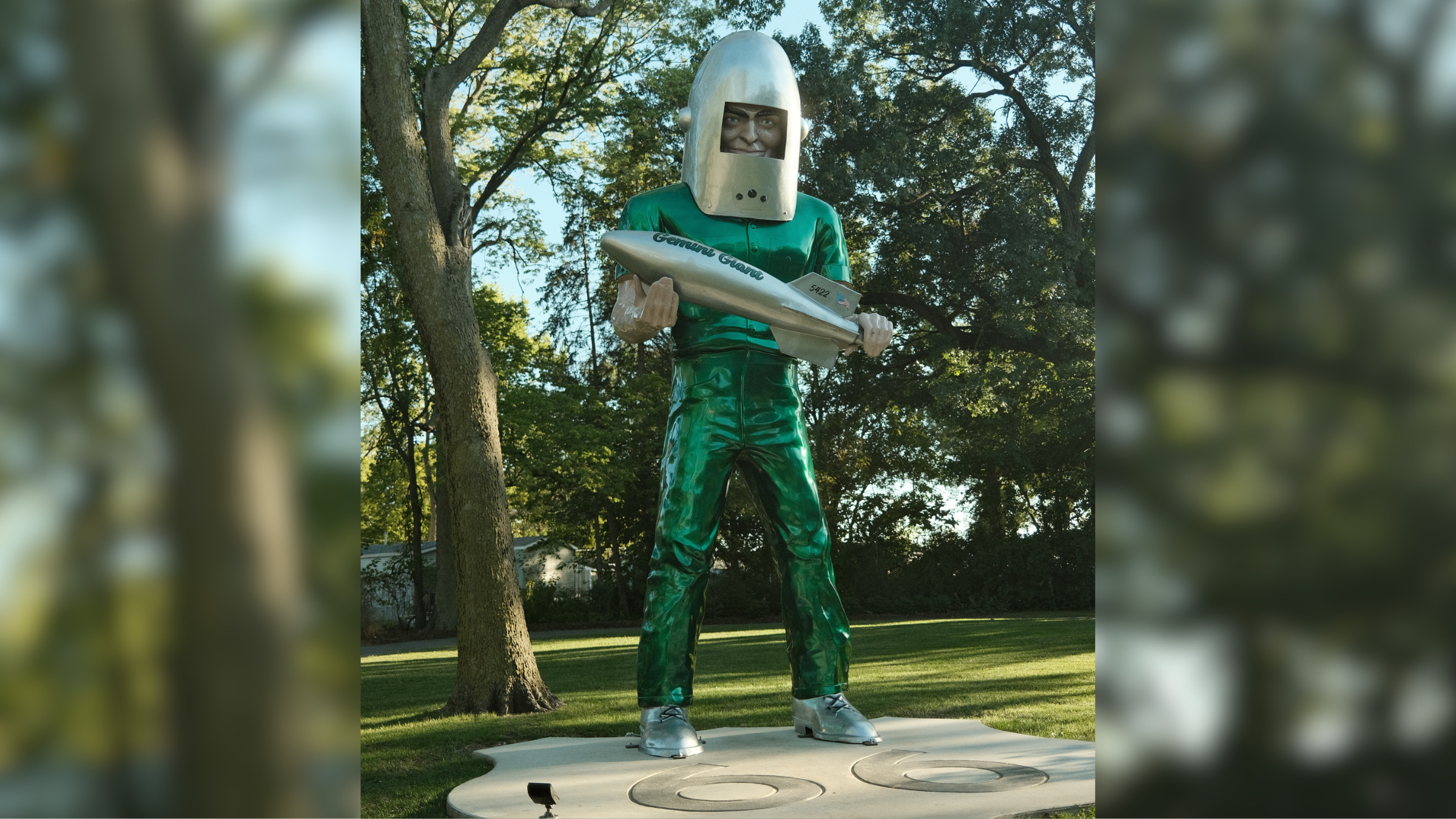
Gemini Giant, Wilmington, Illinois
Following a meticulous restoration, the 30-foot-tall, 1960s space-age Muffler Man statue got a new home, and a new dedication, at South Island Park.
Birthplace of Route 66, Springfield, Missouri
The city debuted a 20-foot-tall monument for the centennial by the legendary Rail Haven Hotel.
The Filling Station, El Reno, Oklahoma
Thanks to a $1.2 million grant from the Centennial Commission, this 1950s gas station was remodeled and reopened as a visitor center and restaurant.
Blue Whale, Catoosa, Oklahoma
Undergoing a $2 million renovation, the gigantic, beloved fiberglass whale reopens this summer with a visitor center, gift shop, and buzzing neon lights.
Road Tunes, Winslow, Arizona
The town installed a “singing road” as part of its centennial tribute. Drive over the synthetic asphalt at 35mph to hear your vehicle tires vibrate to the tune of “Take it Easy” by the Eagles.
This article is from the Summer 2026 issue of Outside magazine. To receive the print magazine, become an Outside+ member here.
Jessica Dunham is an Arizona-based travel and lifestyle writer. She authored the books Route 66 Road Trip and The Open Road: 50 Best Road Trips in the USA. She is also the producer of the Emmy Award-winning documentaries Arizona Road Trips: Route 66 and A Grand Canyon Story.
