

Published May 27, 2026 05:24AM
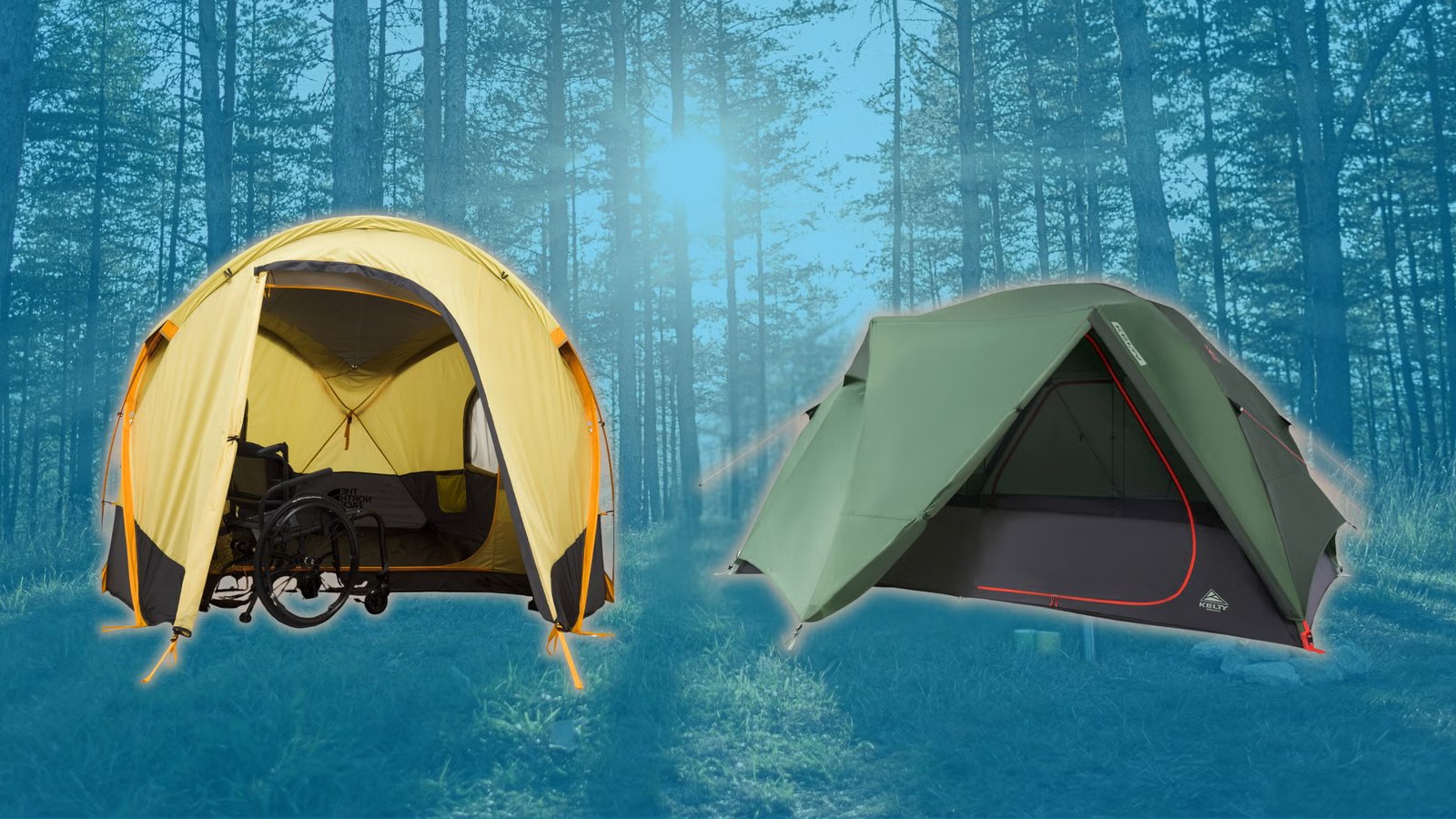
Key Takeaway: After testing 29 car camping tents, we still recommend the NEMO Aurora Highrise 4 as the best overall thanks to its easy setup, roomy interior, and excellent ventilation. For 2026, we added two new picks: the wheelchair-friendly The North Face Universal Wawona 3 and the spacious and simple-to-pitch Kelty Wireless 8.
Stooping in a lightweight, minimalist backpacking tent while camping out of your car isn’t much fun. Neither is getting blown over in a flimsy big-box store shelter. Fortunately, there are car camping tents designed for families who prioritize spaciousness, convenience, and storm-worthiness above all else. We tested 29 different tents and found seven options that had us lounging in comfort and style no matter what conditions rolled through the campground.
Best Car Camping Tents: At a Glance
The Reviews: Best Tents for Camping
Best Tent Overall
NEMO Aurora Highrise 4
Peak height: 75 inches
Interior space: 90″ x 100″
Pros and Cons
+ Easy setup/takedown
+ Effective ventilation
+ Spacious vestibule
+ High ceiling
– Floor gets dirty fast
The Aurora Highrise 4 stood out in our test thanks to its supreme livability. Unlike many other four-person tents, this one does, in fact, comfortably house a family of four thanks to its 75-inch peak height, steep sidewalls, and two generous 19.5-square-foot vestibules.
During testing, two families of four remarked on the internal geometry, which maximizes space and freedom of movement. Its steep walls create more headroom above the 62.5-square-foot floor area than other dome tents—a 6-foot-2 tester could easily stand upright and move around freely. Two doors on either side allowed campers to enter and exit the tent without disturbing others and were tall enough that our 6-foot-2 tester didn’t have to crouch to get in and out.
With just two base poles that set up the main body of the tent and two cross poles that pitch an awning at the top, the Aurora Highrise proved easy enough for first-time campers to set up without having to look up directions. One veteran tester was able to set it up by herself in about 15 minutes. It was just as easy to break down and pack up thanks to its oversized stuff sack.
Testers who camped out in Crescent City, California during a 17-hour rainstorm applauded the tent’s waterproofing and ventilation. The hearty 68-denier polyester body material and burly 150-denier polyester floor make this freestanding tent a hoss. It proved impervious to 20 mile-per-hour wind gusts without any help from the included guylines. The PU polyester rainfly, rated to 1,200-millimeters, boasts a structured overhang that extends six inches beyond the mesh windows, which kept the tent dry even with its two windows opened for ventilation
We loved the small details on this tent that made a big difference in comfort and convenience, like a light-diffusing pocket in the canopy for pre-bed rituals, and the slightly opaque mesh on the windows that offered shade on the hottest days but didn’t spoil views.
Our only dig on this tent is its mostly-white floor, which proved impossible to keep clean—a problem for anyone bringing kids or pets along for the ride. Overall, the Aurora Highrise 4 is a standout in the car camping category for its balance of comfort and performance at a reasonable price.
Best Value
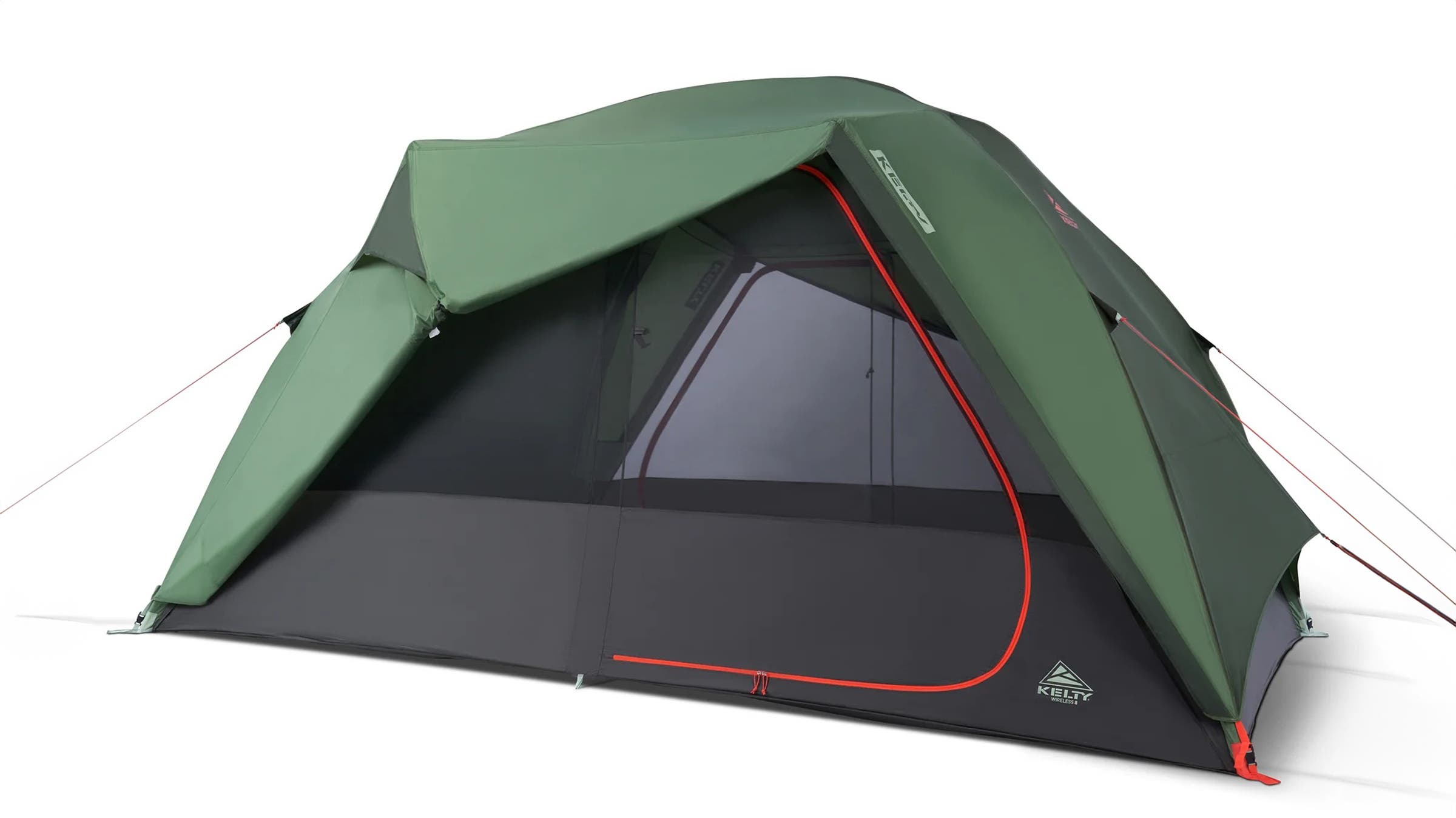
Kelty Wireless 8
Peak height: 83.5 inches
Interior space: 155″ x 109″
Pros and Cons
+ Solid bang for your buck
+ Easy setup
+ Spacious
– Not a ton of interior storage
– We noticed some corner delamination
Have you ever tried to set up a tent and found yourself yanking out your hair and cursing the sadistic designers responsible for the unsolvable puzzle of poles? This Kelty eight-person castle is no such Rubik’s Cube. Stout and solid fiberglass poles improve durability and structural integrity compared to traditional hollow aluminum options. Those poles slide easily into big fabric sleeves, and the fly snaps into place quickly thanks to color-coded buckles. “A generally brainless setup,” complimented one six-foot-two Washington tester, who noted, however, that shorter campers might need to stand on a cooler to set up this nearly seven-foot tent.
With a 117-square-foot floor plan and two 26-square-foot vestibules, the Wireless 8 is well-suited for families and groups with four to eight campers. Given the price per square foot—a key metric for any real estate transaction—testers agreed the Kelty is a smart buy for the value-driven car camper.
What’s not to love? While the fiberglass poles proved their worth during a wet and windy adventure on Whidbey Island, they’re as heavy as it gets. The tent weighs 28 pounds, so heavy testers actually used the packed tent as a faux kettlebell during workouts. Additionally, while the Wireless scored decently for durability, testers noticed lamination peeling in one of the tent corners. Lastly, Kelty could’ve added more than four internal pockets and storage options.
Most Accessible Tent
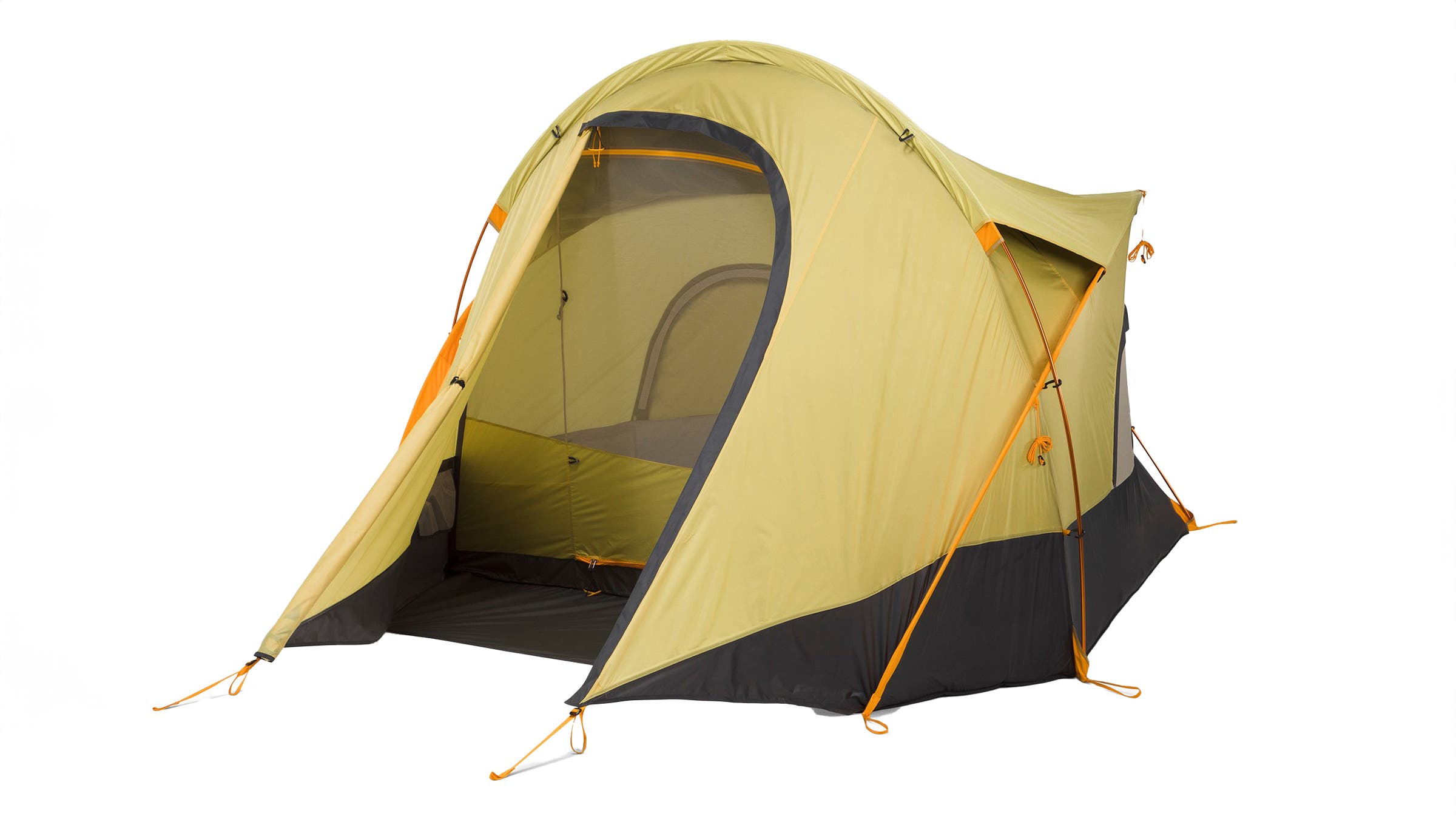
The North Face Universal Wawona 3
Peak height: 73 inches
Interior space: 91″ x 48/98/45″ (length by head/shoulder/foot)
Pros and Cons
+ Accessible, universal design
+ Tall for a three-person tent
+ Easy setup and rolltop rainfly
– Good ventilation
– Heavy for its size
This April, The North Face launched a new line of outdoor gear built around universal design—a term likely to become more common in the outdoor industry lexicon. Universal design aims to make outdoor gear more adaptable and inclusive of different body types and abilities. At the center of the collection is the Universal Wawona 3.
With a peak height of just over six feet—tall for a three-person tent—plus an innovative vestibule with a roll-back rainfly and a hardwearing floor mat at the entrance, this shelter accommodates up to two wheelchairs. There’s even a dogleash attachment for service animals. While these features are purpose-built for accessibility and inclusivity, it’s worth emphasizing that anyone can enjoy the Universal Wawona 3. In fact, it’s one of our favorite tents for a classic millennial family unit: couple plus dog.
The three poles are all the same size, so you don’t need to do any mental math during setup. Paired with obvious loops and sleeves, assembling the tent is a breeze. “Since the rain fly came already attached, we could have won a world record for fastest setup,” said a Tahoe tester. He also gave the tent points for sturdiness, the storm-readiness of the PU-coated 75-denier polyester rainfly, and the ventilation from the huge windows and mesh door. “We had zero mosquito issues,” he reported.
The main concern testers raised around accessibility is weight. The duffel-style carrying case is a tad cumbersome, and the tent weighs just under 14 pounds. While that’s typical for a car camping tent, it’s worth considering if it will create difficulties before making a purchase.
Most Durable
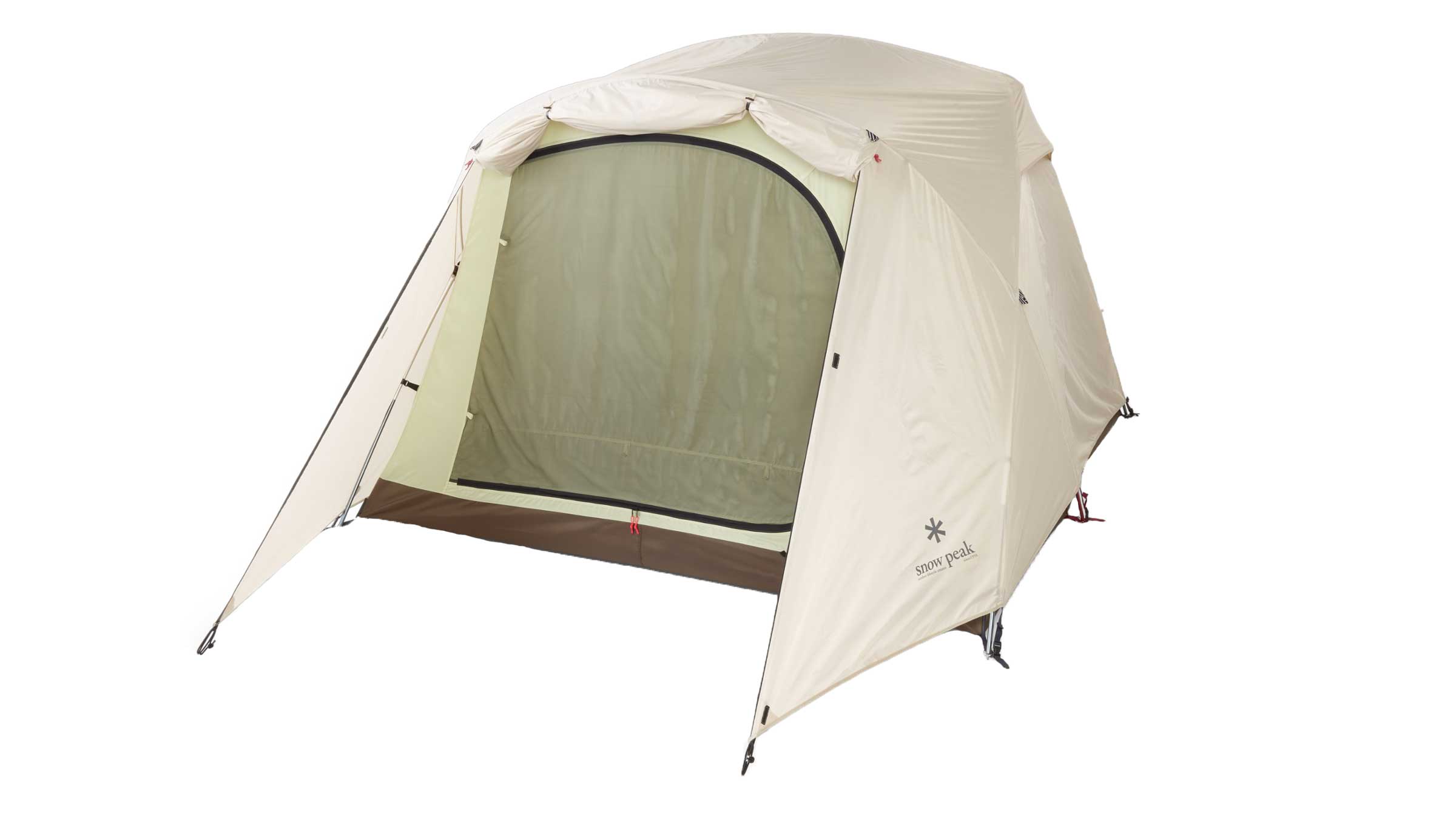
Snow Peak Alpha Breeze
Peak Height: 73 inches
Interior Space: 109″ x 102″
Pros and Cons
+ Four points of entry
+ Excellent ventilation
+ Durable
– Heavy
Inspired by alpine architecture, the Alpha Breeze delivers the durability car campers need with the livability they want. Snow Peak recently replaced the rainfly and inner tent fabric with a tear-resistant ripstop, shaving more than two pounds while retaining the tent’s rugged DNA.
That toughness showed up in testing. The extra-thick aluminum alloy poles stayed solid during sustained 15 mph wind on Washington’s Camano Island. The 75-denier, DWR-treated polyester silicon ripstop rain fly shrugged off a wintry mix in Winter Park and Steamboat, Colorado. And after camping in the Rockies, the updated 40-denier polyester tent floor looked brand-new.
The Alpha Breeze earns its name with exceptional ventilation and a spacious interior that feels downright luxurious. Four doors make midnight exits easy and discreet while also creating cross-breezes from nearly every direction. A high ceiling and two mesh windows amplify the spaciousness, making the interior feel to one Colorado camper like “vacationing in the Taj Mahal.” That sense of space extends outside, too: The vestibule morphs into a generous awning. “It really opens up the living space outside of the tent, and was a nice reprieve from the sun while prepping some snacks in the middle of the day,” one tester said.
All good things come at a cost, though, and with the Alpha Breeze, the cost is 22 pounds. Another ding? Its six-plus-foot height can make setup unwieldy in windy conditions. Our Colorado camper reported that pitching it solo tested his mental fortitude. Testers ultimately forgave those shortcomings and enjoyed the Alpha Breeze’s rock-solid pitch, unique awning design, and roomy, comfortable interior.
Best Vestibule
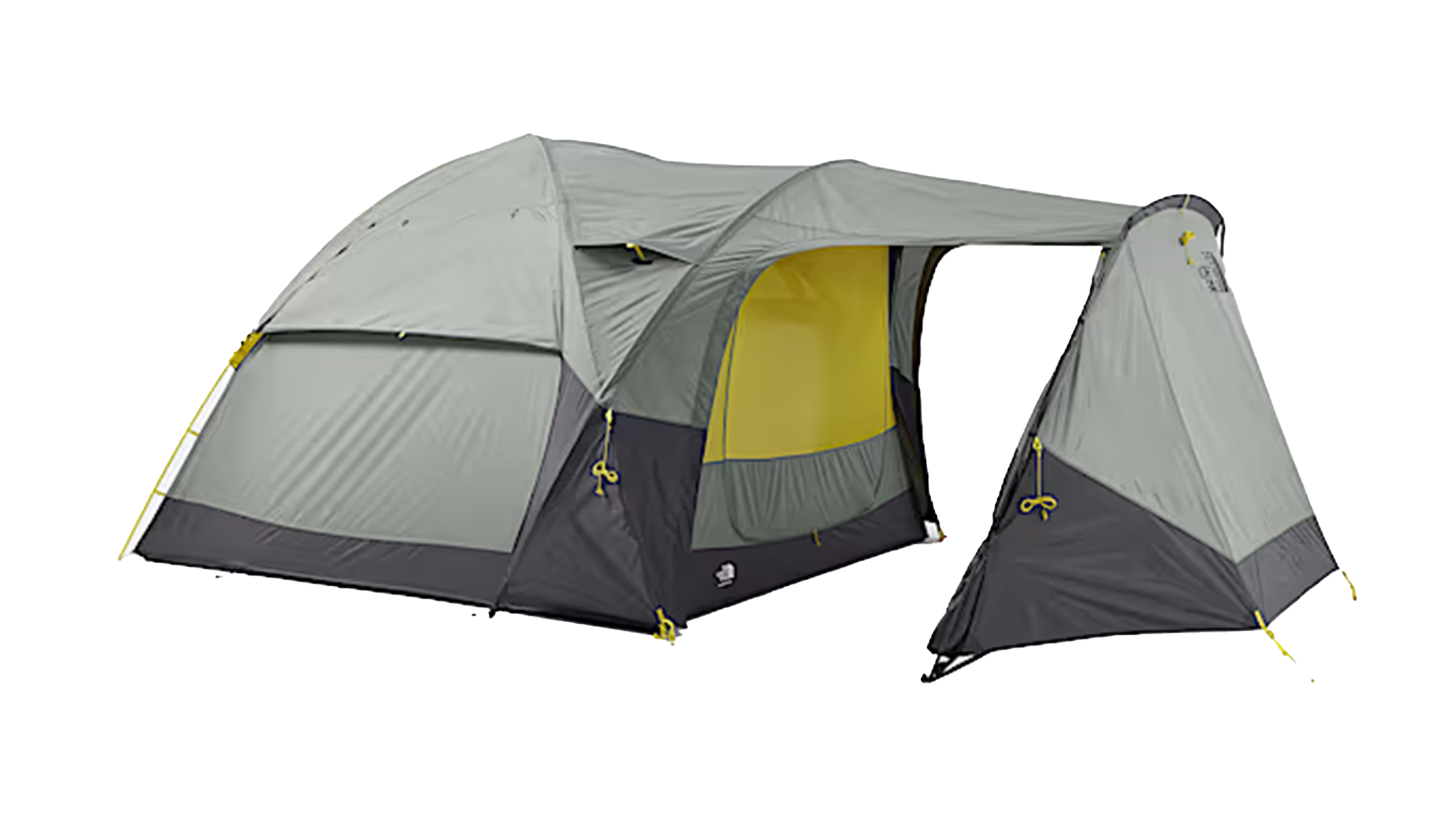
The North Face Wawona 6
Peak height: 76 inches
Interior space: 120″ x 96″
Pros and Cons
+ Solid weatherproofing
+ Spacious vestibule
+ Good organizational features
– Orange fabric is bright during the day (not nap-friendly)
– Some condensation issues
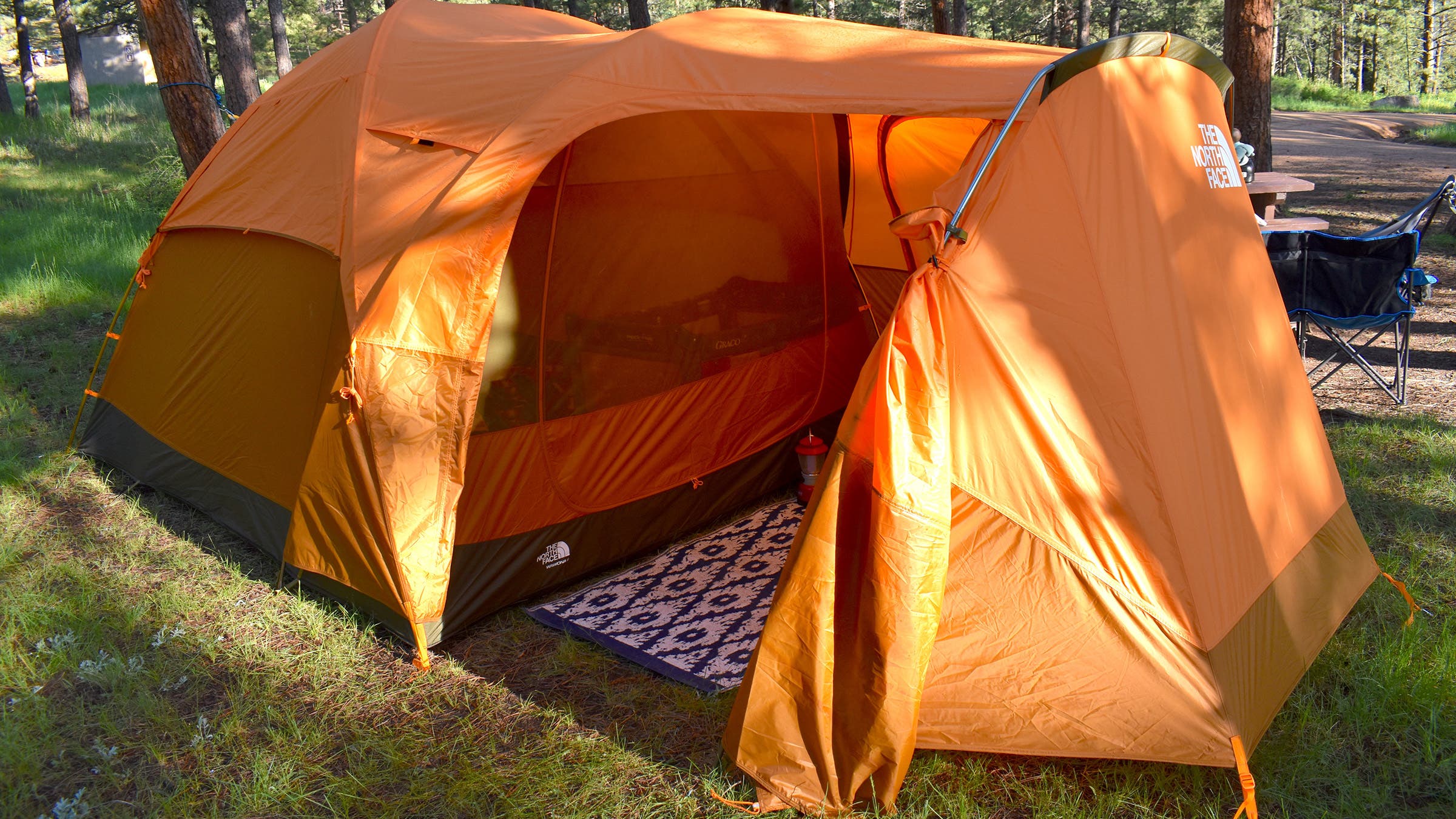
In one word, the Wawona 6 is “palatial.” It was spacious enough for a family of four, a crib for her youngest tent tester (nine months old), and an adventure pup to boot, making the weatherproof Wawona a smart play for families.
Our first setup was time-consuming (17 minutes, to be exact). Granted, Mom and Dad purposefully ignored instructions, and both baby and toddler simultaneously required wrangling—conditions that reflect what young families will find in the field. The mesh-walled main tent is fairly self-explanatory: It’s a classic, tall-enough-to-stand dome design, with three criss-crossing poles providing structure. The rainfly, however, is trickier to pitch, as it requires a pole of its own and needs to be staked taut. With time, setup has gotten easier, albeit not much quicker.
Once the rainfly is deployed, the Wawona shines. One family treated the capacious vestibule like a living room during a rainstorm. At night, the enclosed chamber housed camp gear and clothes, a kid carrier, and the dog, freeing up room in the main tent. “We fit a double air mattress in [the main tent], a single sleeping pad for our two-year-old, and a regular-sized Pack-N-Play for our baby,” said our tester. “Even with all of that, we had a narrow, one-foot corridor at our heads that we could use to walk around freely in the tent.” But for larger families with older children, the six-person capacity might be cramped. Luckily, The North Face makes a Wawona 8 ($750).
During a stormy stint in the Rockies, the 75-denier, polyurethane-coated rainfly handled precipitation like a pro, staying dry after 72 hours of constant rain. It even withstood lateral sprinkler fire during a backyard test—a solid proxy for sideways-blowing storms. “No leaking at the windows, seams, or doors,” reported a tester.
However, the rainfly wasn’t without issue. Testers noted the heavy-duty material wasn’t immune to condensation when pitched in soggy settings, although a mesh front door and windows can help manage moisture. What’s more, the bright orange fabric glows in sunlight, which makes it hard for tuckered little ones to nap during the day.
The North Face nailed the internal organization features though, including mesh pockets on the ceiling and walls. “My favorite pockets were the three stacked on the rear door, which were so helpful for stashing essential baby items that we might need in the middle of the night (like diapers, wipes, extra pacifiers, headlamp, etc.),” said our tester, who was also grateful for the rear door, which enabled quiet exits during naptime.
Lastly, while the Wawona’s apparent durability and proven weatherproofing help justify the cost, if you’re a fairweather camper, there are cheaper options that’ll get the job done.
Best Under $300
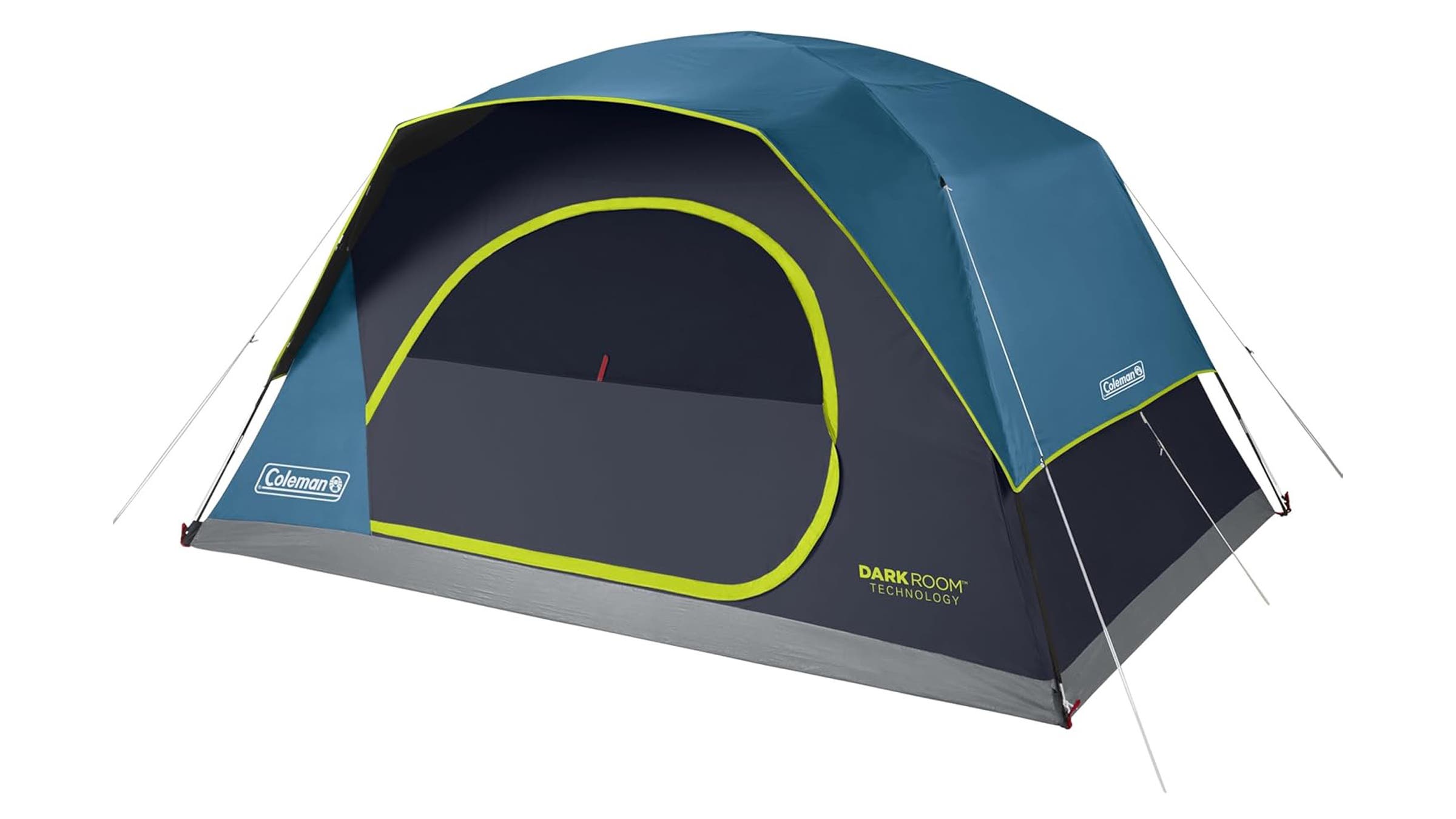
Coleman 8-Person Dark Room Skydome
Peak height: 68 inches
Interior Space: 144″ x 108″
Pros and Cons
+ Great price
+ Blocks sunlight
– Poor wind performance
At $275, the eight-person Dark Room Skydome costs less than half what other popular eight-person tents cost, making it a great entry-level option for families. You don’t get the same high-performance materials with that price, but for casual frontcountry camp trips in mild temperatures and weather, the Dark Room Skydome gets the job done.
Besides the price and easy setup, the tent’s light-blocking fabric is what made this tent stand out, especially for folks with little kids. Coleman uses a dark-coated polyester on the rain fly and inner panels of the Skydome to block out 90 percent more light than the brand’s normal car-camping tents. Besides creating ideal sleeping and napping conditions even when the sun is still up, the dark fabric also helps keep the interior cool during the day.
While inexpensive tents don’t always have the best track record in terms of durability and weatherproofing, the Dark Room Skydome proved surprisingly robust for a budget option. After over a dozen days in the rain, testers gave its 300-millimeter-rated polyurethane rainfly high scores for waterproofing in spite of the low rating. One tester used it for over 30 nights—including on three different rafting trips, which are notoriously rough on tents because they’re exposed to the elements not only when they’re pitched, but also while being transported on the water. It held up admirably to rain and rough pack jobs until sustained 20 mile-per-hour wind gusts snapped one of the two aluminum poles.
At 68-inches tall, it’s slightly shorter than the other tents on this list. That made it easier to pitch—setup was incredibly simple despite its massive footprint—but didn’t offer the same generous standing height. Testers taller than 5’10” had to crouch significantly in the tent. And like many large-capacity tents, this “eight person” shelter is stretching it with six occupants.
It’s not our pick for seasoned campers who head out into the wild no matter the weather, but for families with young kids and the budget-conscious, the Darkroom Skydome is a smart buy.
Splurge
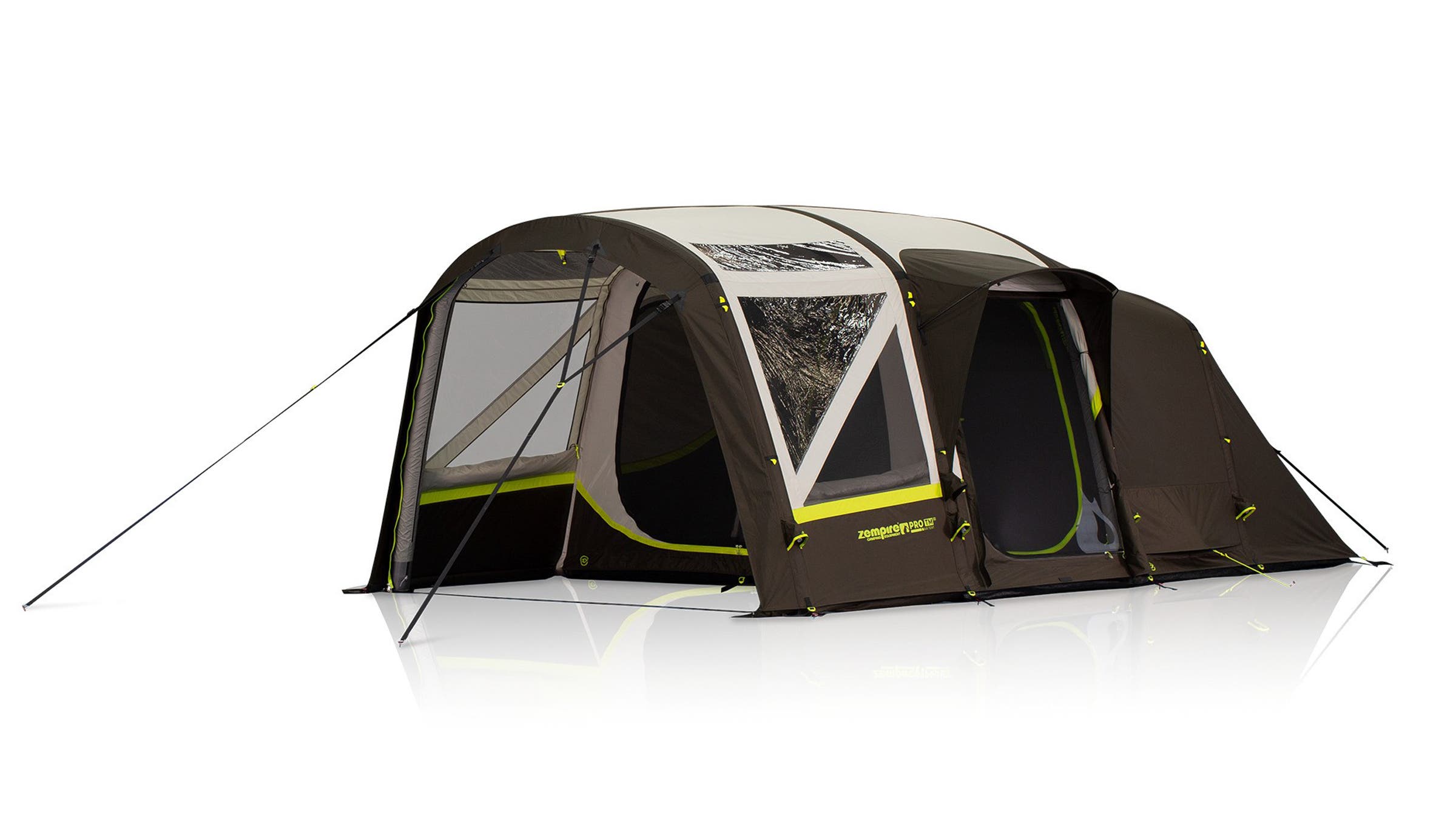
Zempire Pro TM V2 Inflatable Air Tent
Peak height: 82.7 inches
Interior space: 155″ x 120″
Pros and Cons
+ Easy, fast setup
+ Spacious
+ Optional room divider
– No mosquito mesh on entryway
– Expensive
– Extremely heavy
“Two bedrooms, a living room, covered patio for indoor-outdoor living…” The Zempire Pro TM V2 reads like a Zillow listing, not a camping tent. Unsurprisingly, this massive, multi-room mansion is our top pick for liveability. If we were lucky enough to ditch real-world responsibilities and camp in one tent for months on end, you could find us living large in this Zempire.
Setup is relatively simple: The tent is inflatable (Zempire’s specialty), with a single inflation point that pumps up a tubed TPU frame. A Tahoe tester who erected the tent solo said the maiden voyage required referencing the instructions, but his second setup was sub-ten minutes and instruction-free—not bad for a six-person tent of this size. That said, he noted that the 70-pound tent is hefty to handle alone without help. “Getting the tent to the campsite is the hardest part,” he explained, also noting he couldn’t fit the packed tent in his Thule roofbox. Instead, the 32.3 by 21.1 by 18.1-inch bundle took up the bulk of his hatchback’s trunk space. Deflation was more involved, and coaxing the rolled-up tent back into its carrying case was a two-person job.
Any skepticism as to the efficacy of an inflatable tent in real weather evaporated when 30 mph winds rolled through the Sierra. “Plentiful stake-out points and the semi-rigid skeleton made the tent feel like a brick house,” he reported. Testers had no issue with air leaks during testing, and both the TPU frame and the tent fabric itself felt “bombproof,” according to the tester in the wake of the storm. “I’m confident that with minimal care, this tent should hold up to extended use for a long time.”
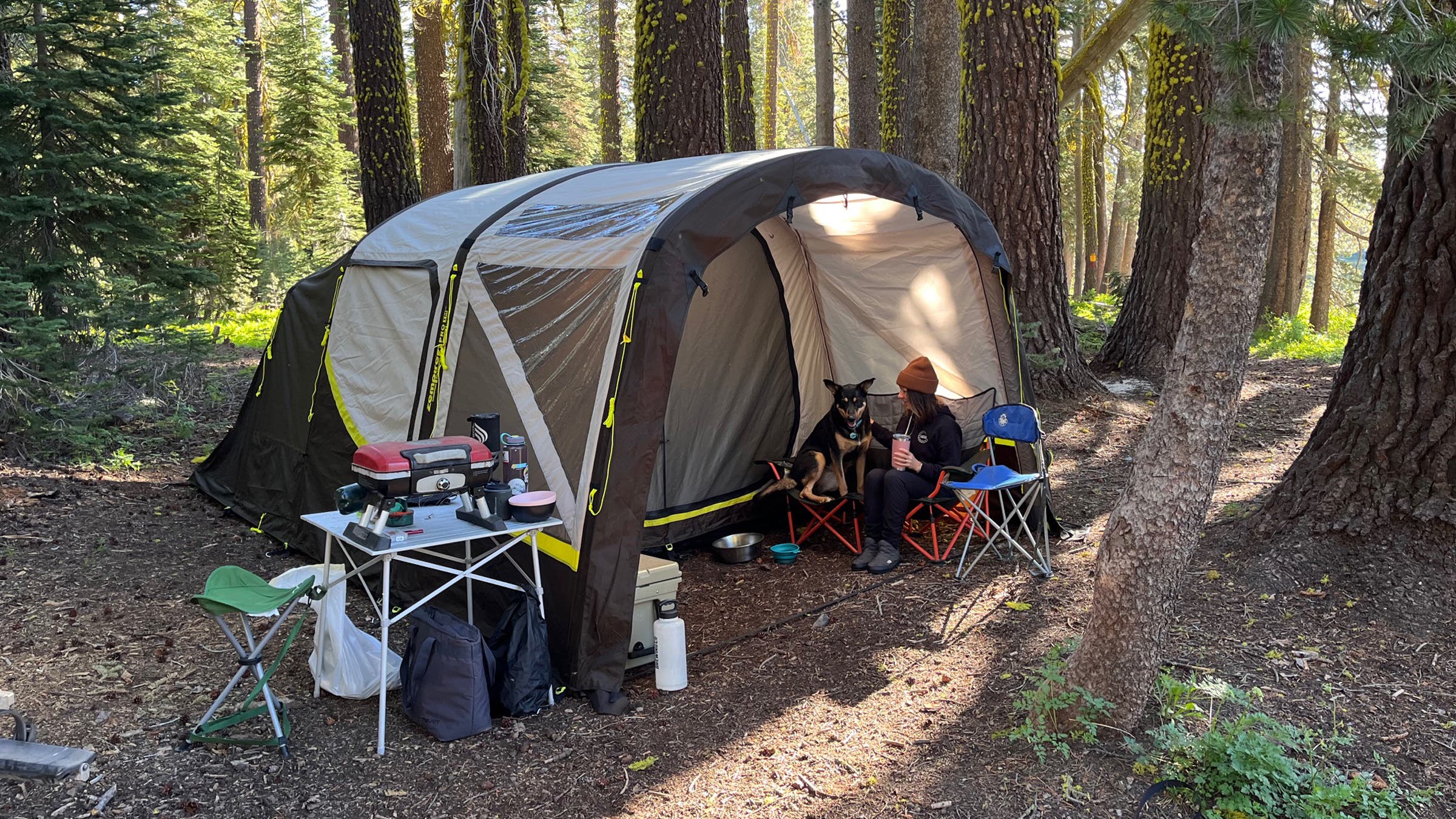
The real magic of the Zempire Pro TM V2 stems from its tube-style layout. Zempire broke the tent into three separate sections: a covered entryway up front, an enclosed living room in the middle, and dedicated sleeping quarters in the rear. The main entryway is a covered, protected porch, perfect for setting up camp chairs and enjoying the outdoors without exposure to the sun or rain. Tinted PVC skylights even allow for more natural light. “We fit our double-wide love seat, a table, dog bed, and stools under the awning for maximum chill vibes,” reported our Tahoe tester. A zipper along the edge of the awning is compatible with additional awnings or a zip-on wall set (sold separately) and enables further camp customization. Bug netting, in particular, was at the top of our wish list.
Even without netting covering the patio, testers loved relaxing in the shade. When swarms of mosquitoes descended at dusk, testers happily retreated to the living room to play board games. They even had a dance party in there, complete with a disco ball. “There is so much space and headroom that most trailers and truck campers feel cramped in comparison,” approved our Tahoe tester.
The main bedroom is seriously spacious, and can be divided into two rooms that each comfortably sleep two campers. Both bedrooms have access to a large, separate side door, facilitating stress-free trips to the bathroom at night. Those doors are “airy when opened up and weather-tight when storms roll in,” reported a tester. While the tent can sleep six if you convert the living room into a sleeping space, testers agreed it’s best as a four-person tent. However, if you happened to invest in the accessory wall to enclose the entryway, fitting eight would be possible, albeit cramped.
Additional features—like a gusseted rear window for airflow, shelf-like storage ladders, and slots for snaking extension cords—only increase the Zempire’s utility. All of that liveability does come at a cost though, and you might need to take out a second mortgage to pay for this inflatable camp cabin.
Other Tents We Tested
Car Camping Tents Comparison Chart
How to Choose a Camping Tent
Size and Dimensions
Start with the number of people who will be sleeping in the tent and add at least one. No one ever complained about a little extra elbow room, and ultra-wide camping pads often need extra space. Next, consider packability: If you have limited storage or trunk space, a more packable option will make jamming it between all of the coolers and propane easier. Height is crucial, but comes with a tradeoff: Being able to stand up to get dressed or stretch your legs is nice, but means it will be harder to set up, especially if you’re doing it solo.
Feature Set
Look for ample pockets for staying organized, big vestibules and/or high bathtub walls that protect the interior from blowing rain, multiple venting options, and roomy doors. Of course, a tent’s principal job is to protect you from the elements, so weatherproofing should be a primary consideration. A fly that reaches to the ground provides the most coverage, but can also limit venting, making for uncomfortably stuffy conditions when it’s hot. A tall pole structure is susceptible to high winds, so make sure the tent has plenty of guy-out points for stabilizing and protecting the tent from gusts.
Budget
Price is always important, but try to prioritize value. Spending a bit more for a tent with more durable materials, like higher denier fabrics and burly aluminum poles, will save you money in the long run. You can find a no frills, serviceable four-person summer tent in the $200 range, with waterproofing, durability, and reparability generally improving as you start getting into higher price ranges.
But if you’re looking for a tent to use three seasons of the year, that you expect to get a lot of use in stormy weather, or that you’d like to use for the rest of your life, we recommend budgeting between $350 and $600. That’s the cost of more reliable construction and waterproofing—which, as all of our testers who have woken up to puddles inside their tents can tell you, is priceless when you really need it.
How We Test Car Camping Tents
- Tents tested: 29
- Number of nights camped: 100+
- Number of testers: 30
- States tested in: California, Oregon, Washington, Colorado, Utah, Nevada
For this test, we mainly considered four- to eight-person, three-season tents because they tend to best fit car campers who prioritize comfort and space over weight and packability. When all was said and done, our crew of 30 testers tried out 29 tents—newer options on the market as well as some perennial favorites—to find the best tents for frontcountry campers.
We tested these tents in the mountains of California, Oregon, Washington, Colorado, Nevada, and Utah. Most testing went down from May through November, although some of these tents we’ve been testing for years. Conditions ranged from sub-freezing temps and sustained rainstorms to blazing hot rafting trips.
We asked all testers to evaluate tents on their functionality, ease of setup and take-down, standout features, durability, and overall comfort and livability. Finally, our gear team compared tester feedback before putting together the reviews in this guide.
Meet Our Lead Tester
Drew Zieff is a Tahoe-based freelancer who is a regular contributor to Outside. A few years back, he and his partner turned a plumbing van into their dream adventure mobile. After a couple years of vanlife, the highlight of which was surfing from Canada to Mexico, the couple put roots down in Tahoe, though they still take van trips to the coast when there’s swell. Familiar with the needs of both weekend warriors and full-time road trippers, Zieff happily directs our camping gear testing each summer, finding the best camping items for every style of camper and backpacker.
