

Published May 27, 2026 03:31AM
Greg Nance was jogging down a road in eastern Iowa when he met Carol the beekeeper, who was selling honey at a roadside stand. At least that’s how Nance, 37, remembers the start of their conversation.
“It was the week after Charlie Kirk had been shot so she talked about that and how heartbroken she was,” Nance says. “She wished young people had more opportunities to connect to society. ‘Life is sweeter when we contribute,’ she kept repeating.”
Nance shared his memory of this conversation as only a professional politician could—with a healthy dose of optimism and a lesson about America tacked on at the end. Nance is a member of Washington’s state legislature, and he represents communities in Kitsap County, just west of Seattle. He’s a Democrat, and proudly proclaims his family’s commitment to public service (“the son of a social worker and a public defender”) on his website.
While he did not know Carol’s political affiliation, he says they found ways to connect over their shared values, rather than dwelling on the many reasons not to see eye-to-eye.
“People like Carol care deeply about the future of our country,” he says. “It’s amazing how much we have in common, even [as] people who vote differently and watch different TV networks.”
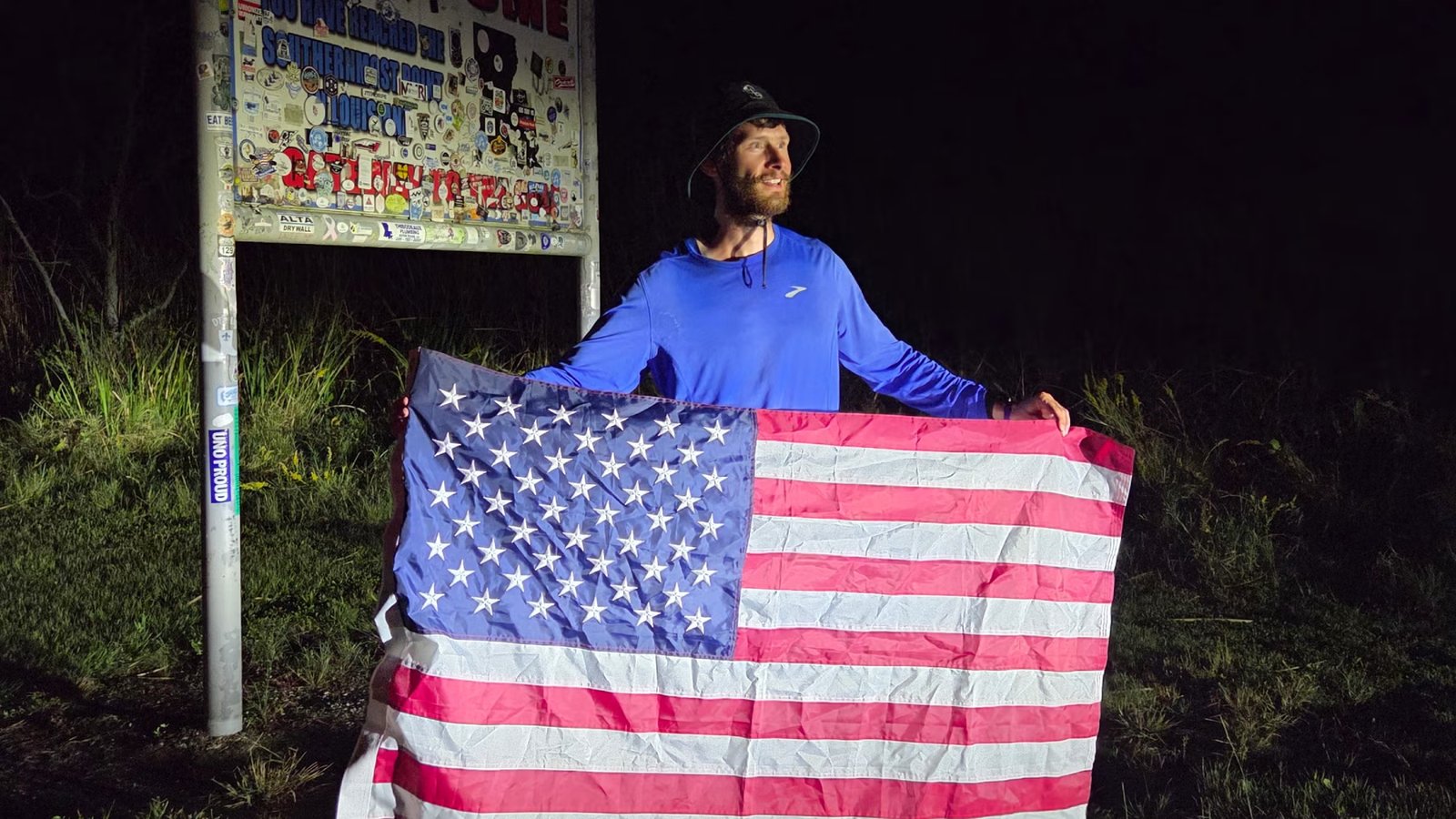
The encounter was just one of several dozen memories Nance has from his epic 2025 cross-country journey on foot. Between August 20 and October 30, Nance ran the length of the Mississippi River, from its headwaters at Lake Itasca in Northern Minnesota down to the Gulf of Mexico in Louisiana. The more than 2,000-mile journey took him 72 days to complete. Along the way, Nance endured injuries and close-calls with cars, passed through dozens of postcard-size towns along the river, and raised money for his personal nonprofit, the Run Far Foundation, which focuses on improving youth mental health.
While taking on a cross-country run may seem odd for a lawmaker, Nance isn’t your average politician. Long before he was elected to office, Nance had a passion for taking on eye-popping physical challenges. After getting bitten by the ultramarathon bug in grad school, Nance completed a self-supported 155-mile run across the Gobi Desert in 2014. In 2019 he completed the World Marathon Challenge, running seven marathons in seven days on seven different continents. In 2022, he ran 3,156 miles from New York City to the Pacific Coast. He wasn’t done—later that year, he ran 85 miles from the shore of Puget Sound to the summit of Mount Rainier.
While shorter than the east-to-west run, tracing the Mississippi River came with its own challenges—namely, the lack of an established running route.
“I searched online for trip reports and local news stories and never found anything,” he says. “There was nothing. Nobody blogged about doing it. If someone did it, it was top secret and without verification.”
Old Man River, which touches ten states, holds a special place of importance for Nance. While he grew up in the district he represents, Nance spent summers at his grandparents’ house in Natchez, Mississippi, and he watched barges and paddlewheelers float toward the Gulf of Mexico. In 2024 he began plotting a running route from Minnesota to Louisiana along the Great River Road, the national scenic byway that follows the river on its bank.
Unfortunately, Nance didn’t take into account an important element of the road—the actual pavement is heavily sloped for flood control. For the first eight days he felt great, ticking off 40 miles or so each day. But he had trained on flat trails and paths prior to the massive run, and after more than a week of footfalls on the uneven ground, Nance felt a twang in his joints as he approached Minneapolis.
“My ankles started to degrade and I got a super painful case of tendinitis. My foot looked like a balloon,” he says. “If your ankle isn’t working, there’s no propulsion down there. It brought me to my knees.”
After 200 miles, Nance’s pace became a crawl, down to just one or two miles a day. He’d walk for several hours, only to stop to ice his painful joint and watch television. He thought about quitting altogether.
“I felt embarrassed,” he says. “I had promised friends and sponsors that I’d do it, and I had barely made it to Minneapolis.”
But the easier days and hours spent recovering helped him heal, and after a few days, two miles a day became seven, and then more. A week after he nearly had to stop, Nance was approaching 20 miles a day. He kept this pace for the rest of the journey.
He passed roadkill, live snakes, and barking dogs. There were times when Nance had to jump off the roadway to avoid being hit by drivers. Crossing from Illinois into Kentucky, he had to navigate a bridge with no shoulder and traffic screaming by. And as the miles ticked by, and the states passed under his feet, Nance turned his attention from pacing and speed to the towns and people he met along the way.
“I’d see some landscaper or construction worker and tell them, ‘Hey, I’m running the length of the Mississippi for youth mental health,’ and people would tell me about their own mental health challenges,” Nance says. “They’re under deadlines and pressure at work. They’ve lost friends to violence or fentanyl.”
These interactions have blended into a series of memories, Nance says, alongside other high points from the run. In Arkansas he stopped at a memorial to a Japanese internment camp from World War II. In Mississippi he stopped at his grandmother’s house. Near the end of the journey, Nance learned that his wife was pregnant, with a girl.
When Nance spoke to Outside, just one month after completing the run, he admitted that he was still attempting to digest the lessons he had learned about the current state of the country by running across it. The people he met along the route—yes, even those who voted for different candidates than he did—left an impression that, Nance says, he plans to remember as his political career continues.
They had assumptions about him (a liberal from Seattle) just as he had preconceptions about them. But actually talking to each other for a prolonged period showed that these expectations were often skewed.
“TV networks want us to focus on all the things we disagree about—so do many of our politicians,” Nance says. “But we all agree on so much. And when I stripped that away and was just able to have conversations with people out there, it became really apparent that we have so much common ground. It was beautiful.”
This article is from the Summer 2026 issue of Outside magazine. To receive the print magazine, become an Outside+ member here.
