

Published May 27, 2026 03:22AM
For someone new to foraging, deciding whether a plant is edible or deadly can be daunting, even terrifying. For the 10-million-plus social media followers of Alexis Nikole Nelson (@blackforager), it’s a rollicking good time.
“Welcome back to America’s 12th-favorite game show: Poison or Snack!” Nelson gleefully declares in a series of posts where she gamifies plant identification. Do you know your spotted smartweed (snack) from your white snakeroot (poison)? She’ll talk you through it with the authority of a botany professor and the timing of a stand-up comedian—all while looking like a magical forest sprite, her floral sundress trailing to her ankles.
More often than not, Nelson is pursuing edible plants in her own Columbus, Ohio, neighborhood. Along with other foragers across America’s postindustrial Rust Belt, she’s laying claim to a landscape long inaccessible for a host of historical reasons or simply overlooked in favor of the mineral wealth beneath it.
“I say all the time, foraging is just a practice of noticing,” Nelson says. She provides a guide to doing that safely and joyfully, season by season, in her new book Happy Snacking, Don’t Die! (Simon Element), out September 22. From Dandelion Flower Fritters to hot-pink Milkweed Nectar to Quick-Pickled Purslane, the recipes rely on ingredients quite possibly ripe for the picking in your own backyard.
Nelson comes by her whimsy naturally, but she also understands it can be powerful. “It’s exciting to be part of the conversation of women and femmes getting a say in how we show up in the outdoors,” she says. “There are some great women-led athleticwear brands now. You have your pockets for everything. You have your shorts to make sure your thighs don’t hate you. But you also get to feel cute.”
Her style is strategic in other crucial ways. “Being in the forest and looking like a fairy princess makes me, a nearly six-foot-tall Black woman, seem approachable to people,” Nelson says. “I would much prefer that they come and ask me what I’m doing rather than ask the cops. Which has happened.” She recalls being “lightly bullied” by other kids in junior high school who told her, “We’re Black. Black kids don’t do that. We don’t go camping and we don’t go picking random wild plants and telling everyone what they are and putting them in food.”
Now she unpacks the history behind those attitudes and the loss of local plant knowledge, which she’s made it her mission to restore. In one post, she provides an illustrated chart, starting with Reconstruction-era trespass laws that criminalized foraging on lands where Black and Indigenous people had previously gathered food, through “hands-off” conservation policies that restricted foraging in parks, up to what she calls “The Big Food Forgetting.”
She believes the future can look different. “I live in a neighborhood with a lot of school-age kids and teenagers, and we’re the ones with the weird yard with all the native plants,” Nelson says. “We just got native pollinator gardens protected in Columbus. We’re making baby steps. But they’re steps.”
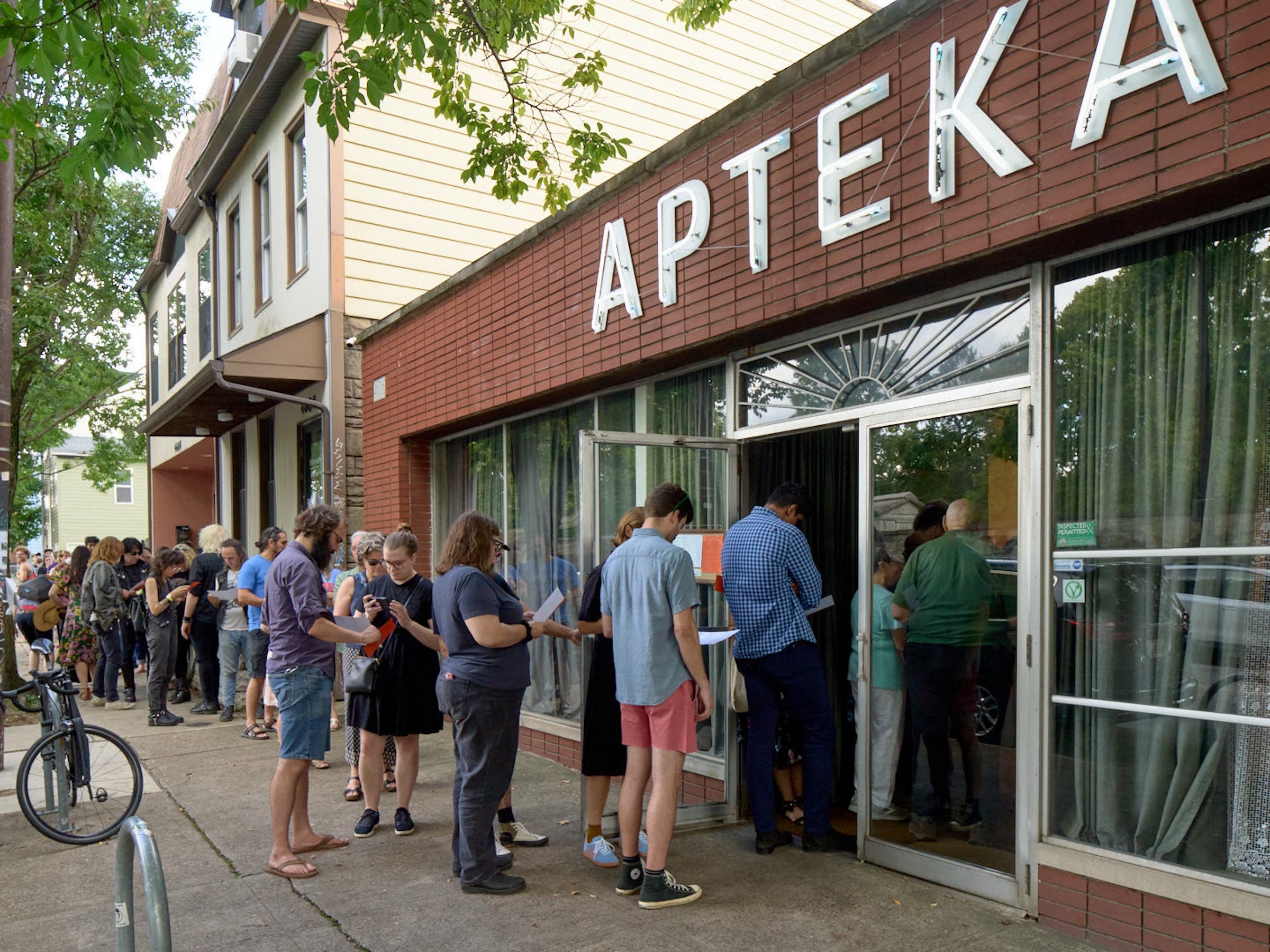
Three hours east of Nelson’s foraging grounds, in Pittsburgh, it’s a Wednesday afternoon at Apteka. The restaurant specializes in modern Slavic plant-based cooking. It isn’t open for dinner Wednesdays, but the kitchen staff is here anyway, prepping and receiving.
Chef Tomasz Skowronski has just gotten a call from his father, a materials science professor at nearby Carnegie Mellon University who brought his foraging habit with him from his native Poland. “He was asking me what to do about all this spruce he cut, and should he just get started on something?” Skowronski sounds mildly exasperated. “My dad’s like a bear! He’s out there, picking those berries.” Sometimes, it’s all Skowronski and his co-chef and co-owner, Kate Lasky, can do to keep up.
“A restaurant doing foraging well is about creating systems for how to handle that logistically,” Skowronski says. “Not just the aspiration of being seasonal or having foraged stuff, but how to actually pick it, how to make time to pick it when the moment’s right, how to store it, and how to make use of it in a way that really shows off the ingredient.”
Those systems are visible from the moment you walk into Apteka. Jars of different ferments and cordials line shelves by the door. Bundles of dried tansy bristling with tight yellow blossoms hang from the ceiling. Want to sip some of that? Order the Zeptucha cocktail, made with tinctures of tansy, sage, mistletoe, and marigold. It’s shaken until frothy, light, bright, herbal, delicious, and totally unique.
The restaurant recently earned a semi-finalist nod from the James Beard Foundation for Outstanding Wine and Other Beverages Program. Here, “other beverages” include an entire section of the menu dedicated to Western PA Wild Teas made from plants picked by Apteka staffer Zach Rihn. “Zach has really invested a lot of time in learning plants. He’s pretty Western Pennsylvania–obsessed, canoeing and hiking around this area,” Lasky says. “I think it’s encouraged a lot of people here to spend more time learning their environment and understanding it.”
Rihn adds, “There’s a lot of history of plant use in this part of the world, of flavors that don’t really exist in food we eat today.” Right now he’s interested in local alternatives to the bay leaves you can buy at any supermarket; in the absence of those Mediterranean imports, Indigenous people and early European settlers in some parts of what’s now Pennsylvania relied on, for instance, incredibly fragrant sweet bay magnolia. A discovery like this snaps the world around him into sharper focus: “A lot of nuance gets lost when you have hyper access to anything, anywhere.”
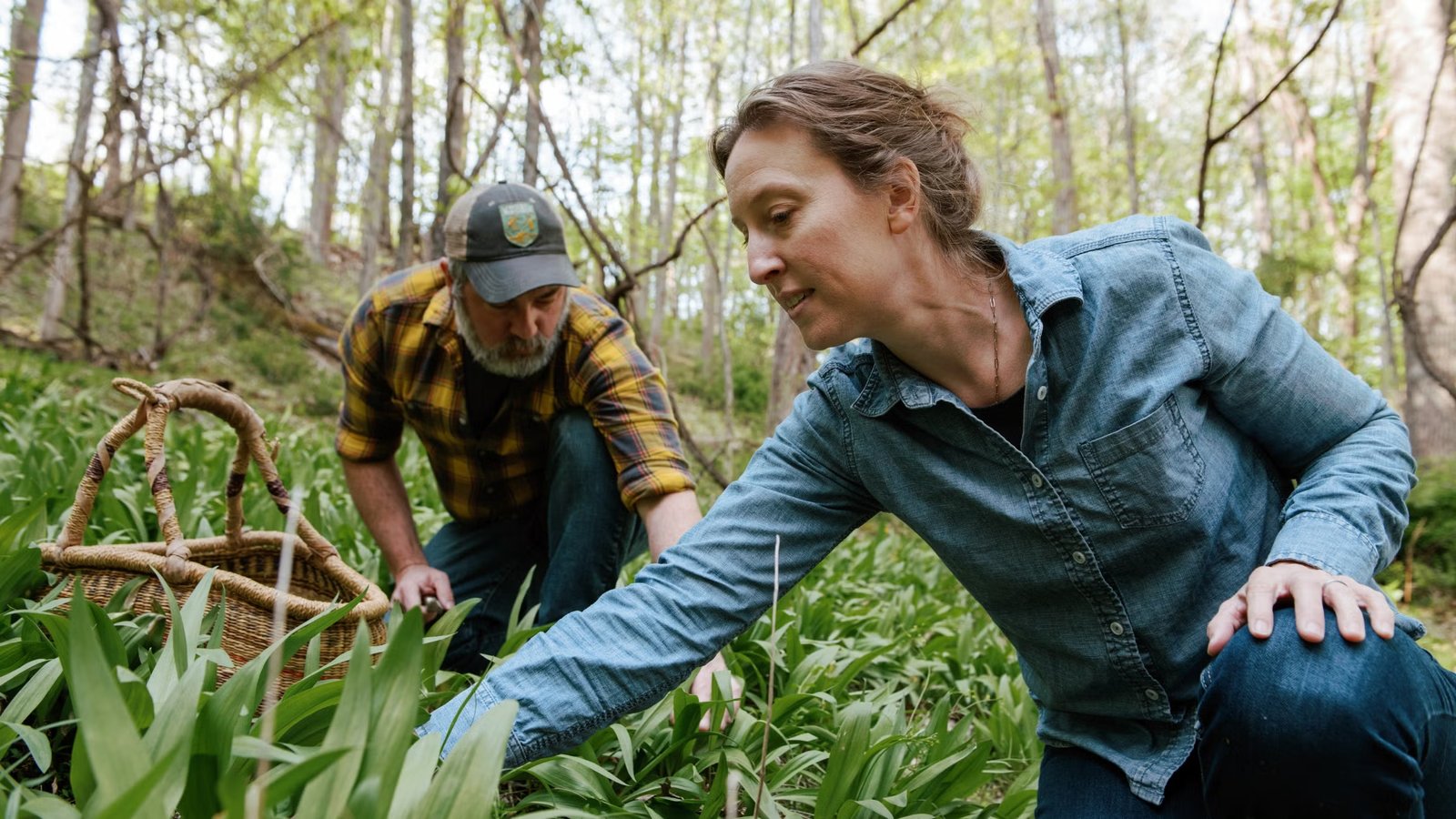
But is it possible, maybe, to get a little too interested in a native plant? “Everybody wants to talk about ramps,” says West Virginia farmer Mike Costello, and he admits he gets tired of it. “At the same time, it’s really important to talk about ramps.”
Costello and his wife, Amy Dawson, live and produce food at Lost Creek Farm in northern West Virginia. The property has been in Dawson’s family for generations. Her maternal grandparents were the last to occupy the farmhouse before the couple returned to restore it in 2013, though Dawson’s parents continued to run cattle on the property in the meantime.
At the Farm and Forage Supper Club that Costello and Dawson run May through October, occasionally you’ll see a cow hanging out surprisingly close to the long dining table set up on the grass, under lights strung from tree to tree. There’s something slightly surreal about it and also absolutely right. The cows are part of the story Costello and Dawson are sharing. Foraged ingredients are, too. “A central theme of Appalachian food is making the most of what you can get your hands on,” Costello says. “People who lived rurally, in times defined by scarcity, could go to the forest and find something that would sustain them.”
Depending on what month you visit Lost Creek Farm, you might get a slice of carrot-butter cake made with the edible leaves and flowers of wild carrot (aka Queen Anne’s lace), served with elderflower whipped cream. You might get house-cured bologna flavored with smoked Dryad’s saddle mushrooms, served as an opening snack on a rustic communion wafer—the same recipe Costello’s grandmother baked for her church—with wild-onion mayonnaise and wildflowers. And you might just get a soup that’s a vehicle for ramps Costello and Dawson harvested, along with their complicated thoughts about them.
Though they both grew up on farms, when they met, Costello was working on conservation campaigns on public lands; Dawson, as an environmental attorney on issues largely related to coal mining. Restoring Lost Creek Farm to food production has been a yearslong, deeply meaningful, very hands-on process. “After a long day of renovating, Amy and I would walk up into the forest and see what we could find,” Costello says. “We realized how lucky we were when we found a few really robust patches of ramps.”
They also knew they had to be cautious about how they used them. Appalachian food had become trendy and ramps along with it; overharvesting was an issue. “In New York, ramps could be selling for $20 or $30 a pound, but the people actually harvesting them here are not seeing very much of that,” Costello says. “You know, in West Virginia, we don’t have good examples from the coal industry or the logging industry about how responsible resource extraction works.”
Instead, Costello and Dawson take their cues from local communities and the ramp suppers they hold when the brief season rolls around. “That event might pay their municipal electricity bill for the year,” says Costello. “At almost every one of them, you’ll see a menu of ham, fried potatoes, beans, ramps, and cornbread.” At Lost Creek Farm, their tribute is an heirloom bean and ramp soup with smoked ham and fried potatoes, served with Dawson’s cornbread. It delivers concentrated flavor efficiently by way of dehydrated ramps and ramp oil. For Costello, the context that comes with the dish is as important as the conservation: “Without using all that many ramps, we’re able to tell that story.”
This article is from the Summer 2026 issue of Outside magazine. To receive the print magazine, become an Outside+ member here.
