

Published May 27, 2026 03:16AM
We begin with a story that by now feels overly familiar: A Black man went surfing and he got called the N-word. It was 2021. Twenty-four-year-old Justin “Brick” Howze was a beginner surfer then, still learning his way around the breaks at Manhattan Beach outside of Los Angeles when a white surfer unleashed a barrage of verbal abuse upon him and his friend, using the slur repeatedly, as the pair recalled in an Instagram live they posted shortly after. The reel went viral. Howze’s account gained 10,000 followers in just a few days.
The friends organized a Peace Paddle, where at least 200 Black surfers and their supporters showed up. Everyone from the L.A. Times to Patagonia reached out to tell the story. But over time, Howze, a DJ and music producer who describes himself to me as “a really unserious person,” grew weary of the earnest articles, the reporters asking him how it felt to be called that word.
“I’m like, ‘This is becoming a white-person pity party,’” he says. “This is boring.”
Howze never meant to be “the dude who was like, ‘Woe is me, I’m Black and I’m surfing,’” he says. It wasn’t his personality. Nonetheless, the kerfuffle kick-started Ebony Beach Club, the name Howze eventually gave his Instagram account and the 70,000-followers-strong community he’s since built around it. His vision: to merge surfing and “authentic Black culture in L.A.,” or, in his words, to “fuse the fun.”
In April 2022, Howze and Ebony Beach Club started putting on what he called a monthly “beach bounce.” He’d pull his 1969 El Camino up onto the beach with his DJ setup in the truck bed while two inclusive surf groups, Sofly Surf School and Color the Water, offered free surf lessons. By September, he says, 5,000 Black beachgoers RSVP’d. Women brought poles to dance on. Gray-haired uncs pulled up on their tricked-out Harleys. The majority of attendees by this point weren’t surfing. But, “everyone is having the best day of their life,” he says.
The club’s Instagram bio is “The Black Beach Renaissance,” in part a nod to the original Ebony Beach Club, founded in the late 1950s by entrepreneur Silas White. In Jim Crow–era Southern California, beaches were by practice segregated, so White acquired a lease to purchase beachfront property in Santa Monica in order to develop it into a Black resort. He told reporters he had sold 2,000 memberships when the city claimed eminent domain of the land, a move that White’s family would later allege was racially motivated. White, reportedly devastated, died a few years later, and the lot was sold back to a developer that turned it into a luxury hotel.
Howze doesn’t want to get mired in the past. “I’m not gonna live in what’s already happened,” he says. “How will we build this world moving forward?” But he also knows it’s important to tell this story, to give context to his community for what they’re doing now. Last Juneteenth, he partnered with Black Lives Matter to throw a party on the Santa Monica Pier near where White’s resort would have been, and stopped the music and dancing halfway through to share the story with roughly 2,000 attendees.
The balance he’s trying to strike is one that likely feels familiar to many outdoor leaders today. The history of outdoor recreation has been defined by exclusion—from the forced removal of Indigenous people to create national parks, to the legal segregation of swimming pools and beaches, to the systemic factors today that keep the outdoors unfamiliar and inaccessible to many. The DEI movement in the outdoors, and other realms of society, attempted to acknowledge and remedy this history. But its circa-2020 fever pitch now feels distant both culturally and politically; momentum flagged long before Trump returned to the Oval Office, and the term DEI is essentially inadmissible under this current administration.
It’s no longer 2021. Yet it’s clear that, as historian Alison Rose Jefferson, author of Living the California Dream: African American Leisure Sites during the Jim Crow Era, put it to me, “We are not going back.” Outdoor activists, community organizers, and some industry leaders are still working toward a future in which more people have access to nature. The movement may be evolving, by necessity—but as it does, it has the opportunity to become something even more durable and impactful than before.
Much of the discussion around access to the outdoors today has been framed around the concept of inclusion and exclusion, says Carolyn Finney, PhD, environmentalist and author of Black Faces, White Spaces: Reimagining the Relationship of African Americans to the Great Outdoors. This framing was useful, Finney says, but she believes that it’s “outlived” that usefulness. As she explains, inclusion assumes the dominant culture isn’t problematic and should be assimilated into, which isn’t always true. And exclusion assumes that there’s an in-group with all the power, who says who belongs. But, she says, these other groups have power too. “They always have.”
The inclusion and exclusion debate has also taken place within a narrow definition of outdoor recreation—one shaped by a multibillion-dollar industry, Finney points out, which sells gear, travel, and guiding services. In fact, she says, “The outdoors is everywhere. People have been taking time to lay out on the grass or go fishing in a creek, and sometimes it doesn’t cost hardly anything.” Finney wonders if it’s time to expand our idea of outdoor recreation by including all the ways that various people and communities relate with nature, from dancing on a beach to farming. This broader view, she says, “allows almost anyone to step into that experience.”
It also creates what Aaryn Kay, executive director of the Professional Trail-Builders Association, calls “gateways” to outdoor activities. For example, she’s seeing a trend toward “wheels parks,” which serve various users on scooters, skateboards, and bikes. Riding on an asphalt pump track may not fit our preconception of a nature experience, she says, but it is, and it introduces kids to activities that could one day lead to farther-flung adventures. “You’re bringing those gateways into the places where people are,” she says.
To see beyond what Finney calls the capitalist lens on outdoor recreation could also help decision makers—like brands, land managers, or the media—to focus efforts on initiatives that truly grow access. Ian Ruder, a wheelchair user and the editor of New Mobility magazine, tells me adaptive electric mountain bikes can cost $8,000 to $25,000, and new categories of accessible travel, like safaris, largely target the wealthy.
“I’m glad we have those top-end things—we need those,” he says. But what more people need is affordable equipment, infrastructure, and services that enable them to simply get out of their homes, into their communities, and outside. These include truly accessible trails, even if they’re paved or have boardwalks. “We all want to preserve the beauty of the outdoors, but to increase access for people with more limitations, you have to make some sacrifices,” he says.
He also reminds me that the right to recreate remains inextricably tied to other more existential—and imperiled—rights. About whether the conversation has changed on inclusion in the outdoors, he says, “We’re all worried about that, but we’re also worried about losing our medical benefits.” (The Trump administration has cut Medicaid and proposed other cuts to disability benefits.) “So it’s not top of list.”
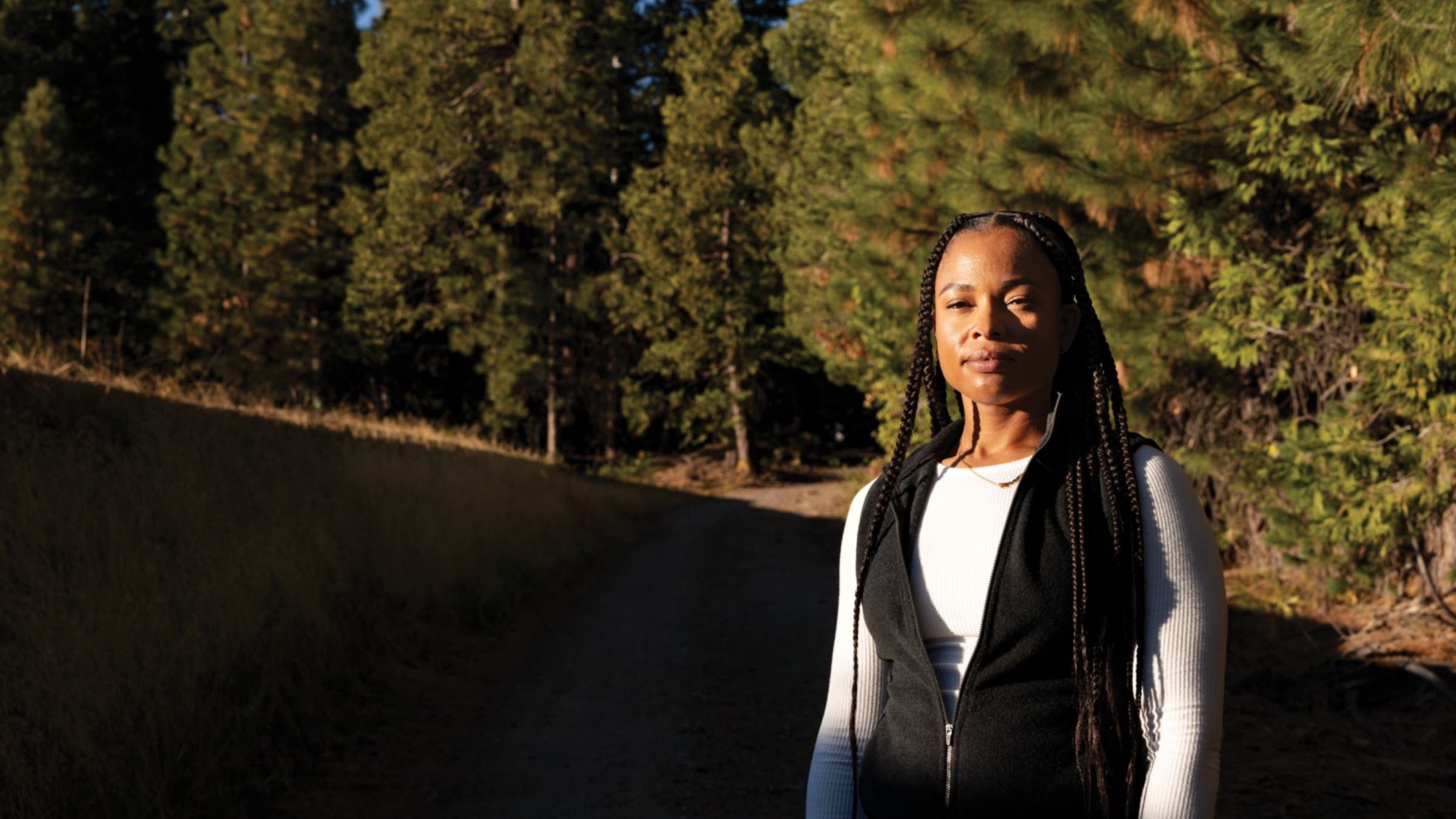
In November 2021, Jade Stevens, a marketing professional and elite road cyclist, founded 40 Acre Conservation League, California’s first Black-led land trust, which aims to connect urban communities, especially people of color, with nature. The name was inspired by the “40 acres and a mule” promise made by the Lincoln administration to provide each family of freed slaves with 40 acres of land after the Civil War. After Lincoln was assassinated, President Andrew Johnson rescinded the order.
In 2024, 40 Acre Conservation League acquired 650 acres of former timberland abutting the Tahoe National Forest, about 70 miles northeast of Sacramento. The land trust is now restoring the property, currently referred to as Gateway Park, for conservation (the purchase was funded in part by California’s 30×30 biodiversity initiative) and recreation. The name “gateway” is both literal and metaphorical; Stevens intends the park to serve as an entry point to both the national forest and the outdoors in general, offering outdoor courses; rentals of gear like kayaks, snowshoes, and hiking poles; and lakeside cabins and treehouses.
The land trust is also intended to be an innovative approach to reparations, the movement to compensate Black Americans for the economic and social impacts of slavery and systemic racism. One estimate for the cumulative wealth denied freed slaves who never received their 40 acres, by economist William Darity, is $14 trillion today, an infeasible amount to pay. Access to land, Stevens says, could be “a different way to think about how to fulfill that promise in today’s time.”
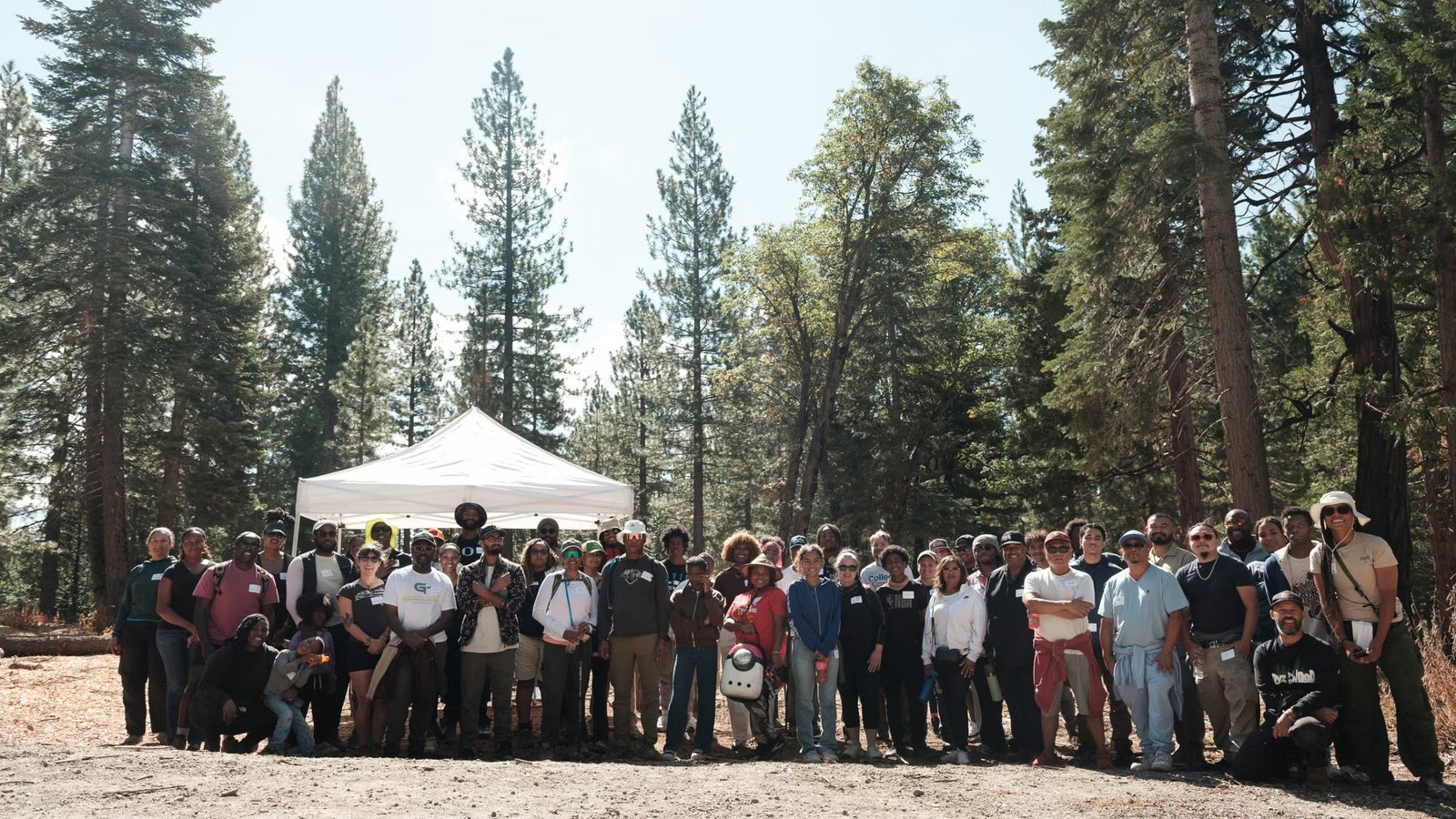
Support from the local, rural community will be integral to the park’s long-term success and the comfort of future visitors, Stevens says, which is why she’s carefully building relationships with the park’s neighbors, using the land as common ground. “We’re intentional about talking about not just the access we want to provide to visitors, but the benefit to the community,” she says. The organization hosted a tour of the property for locals in March in order to show the restoration work they were doing, including wildfire mitigation through fuel reduction. Afterward, it opened up the property to let kids play in the snow. “It’s a benefit for everyone,” says Stevens, “from accessibility to protecting biodiversity.”
At the root of reparations is the word repair. Reparations is a complicated concept to apply, says Finney. “But I think what’s most useful is to think about it in terms of repair: repair to the relationship to land and place, as well as to each other.”
“I don’t see how we can do one without the other,” she adds.
When Stevens first launched 40 Acre, much of the public attention revolved around the fact that it was California’s first Black-led land trust. However, the organization always had a dual mission of conservation and expanding access. Now that “the shininess” of being first has worn off, she says, particularly in the current political environment, she emphasizes both goals and their equal priorities since day one. I asked Finney whether the current political climate around DEI could force a new, perhaps improved, language and approach to access. “Why not?” she says. “I think we should come up with new language. And we can do it on purpose.”
“One thing I hope to God that we believe is that we have something new to say in the next 250 years,” she continues. “I don’t know what the new words are. But I believe there are new words, concepts, and framings possible.”
The examples being set by the Ebony Beach Club and the 40 Acre Conservation League suggest how this new framing could look. It broadens our view of what outdoor recreation is. It repairs our connections to one another. And it builds bridges upon the recognition that we have a collective stake in nature, in access to public lands, and in an inhabitable planet. Already, Jefferson points out, the current Trump administration’s policies—from staff cuts at national parks to the health care rollbacks mentioned by Ruder—will affect Americans of all backgrounds. “People forget that you have to continually fight for your rights in a democracy,” she says. Everyone has to participate, she says—to stay informed, to lower their environmental impact, to vote.
“Do you think we have another 250 years?” Howze had joked at the start of our interview, when I mentioned the story theme of “the next 250 years.” Like all good humor, it touches on a reality—that the future isn’t something we can take for granted. The future we’ll get is the one we create.
This article is from the Summer 2026 issue of Outside magazine. To receive the print magazine, become an Outside+ member here.
