

Published May 27, 2026 03:15AM
At last summer’s Chicago River Swim, the first in a century in that iconic waterway of stunning skyscrapers and ornamented drawbridges, swimmers were captivated by one of the joys of urban swimming: a unique perspective on the city, from the water.
“There were guys who said, ‘I came to be competitive and I ended up sightseeing,’” says founder and organizer Doug McConnell.
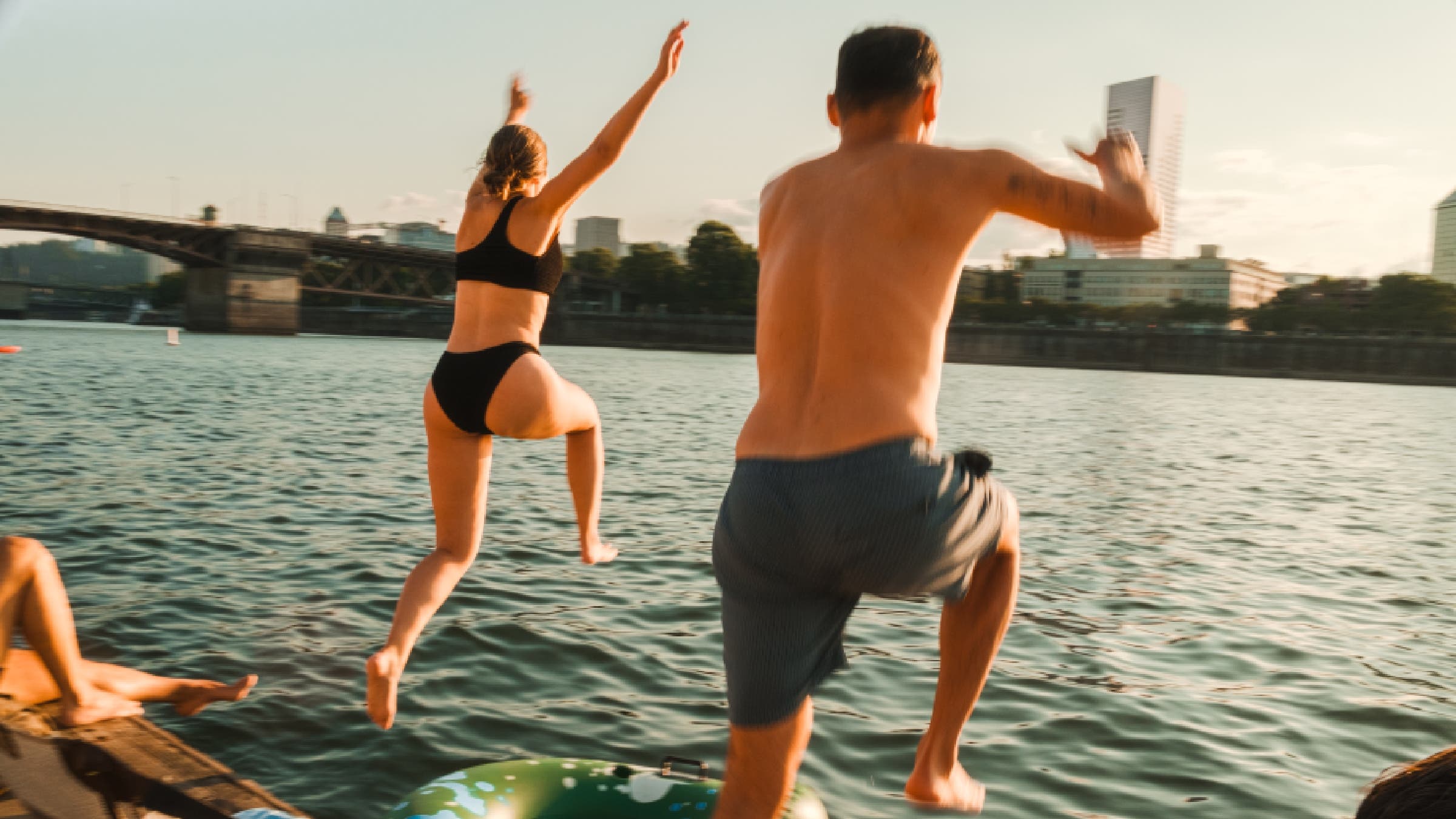
From Chicago to New York, Baltimore to Portland, swimmers across America are taking to urban waterways, expanding public access to rivers and harbors through open water swim races, splash parties off piers, permanent swimming beaches, and even plans for a floating, river swimming pool off Manhattan.
It’s a movement decades in the making, as anti-pollution laws and billions spent in overhauling sewer systems and cleaning contaminated riverbeds made waterways safe again for swimming. It’s been buoyed more recently by the rising popularity of open-water swimming, inspired by everything from the Olympic debut of a 10K swim in 2008 to the current wellness trend of cold-water immersion.
Now, urban swimming advocates are getting a boost from Swimmable Cities, a global grassroots movement chartered in 2024 that’s championing the right to swim in urban waterways. The alliance is putting a spotlight on 200-plus member organizations from more than 100 municipalities that have found creative ways of getting people safely into city waters, and it’s inspiring others to take up the challenge.
“The trajectory that we’re on is that swimmability will just become a mainstream part of urban planning and integrated water management,” says Matthew Sykes, a cofounder of Swimmable Cities, which plans to pick a North American city for its next summit in 2027.
“Canada, the U.S., Mexico—I think these are all places where we’re going to see a lot of growth,” Sykes says. “There’s the sporting part of this community, but I think the biggest growth is in everyday people just wanting to access their waters.”
To be sure, many U.S. rivers and streams remain unsafe for swimming, and those that are deemed safe can still be tainted by sewer overflows or harmful runoffs after rains, and swimmers can face risks of currents and debris. Then there’s the bureaucratic hurdles to lifting swimming bans. And open-water swimming may not be a struggling city’s top prospect for funding.
The biggest obstacle in McConnell’s 13-year quest to put swimmers in the Chicago River was a long-held notion that the river was a toxic soup. “So much of what these urban swims have dealt with, not just in Chicago but other places, it isn’t so much that the water isn’t clean, it’s that people’s perception is that the water isn’t clean,” McConnell says.
In the weeks before the one-mile and two-mile swims last September, all 72 water tests showed “solidly in the green zone” for safe swimming, says McConnell, who runs the event through his family’s A Long Swim nonprofit supporting ALS research. The second swim is set for September 20, with a target of 750 slots, up from 500.
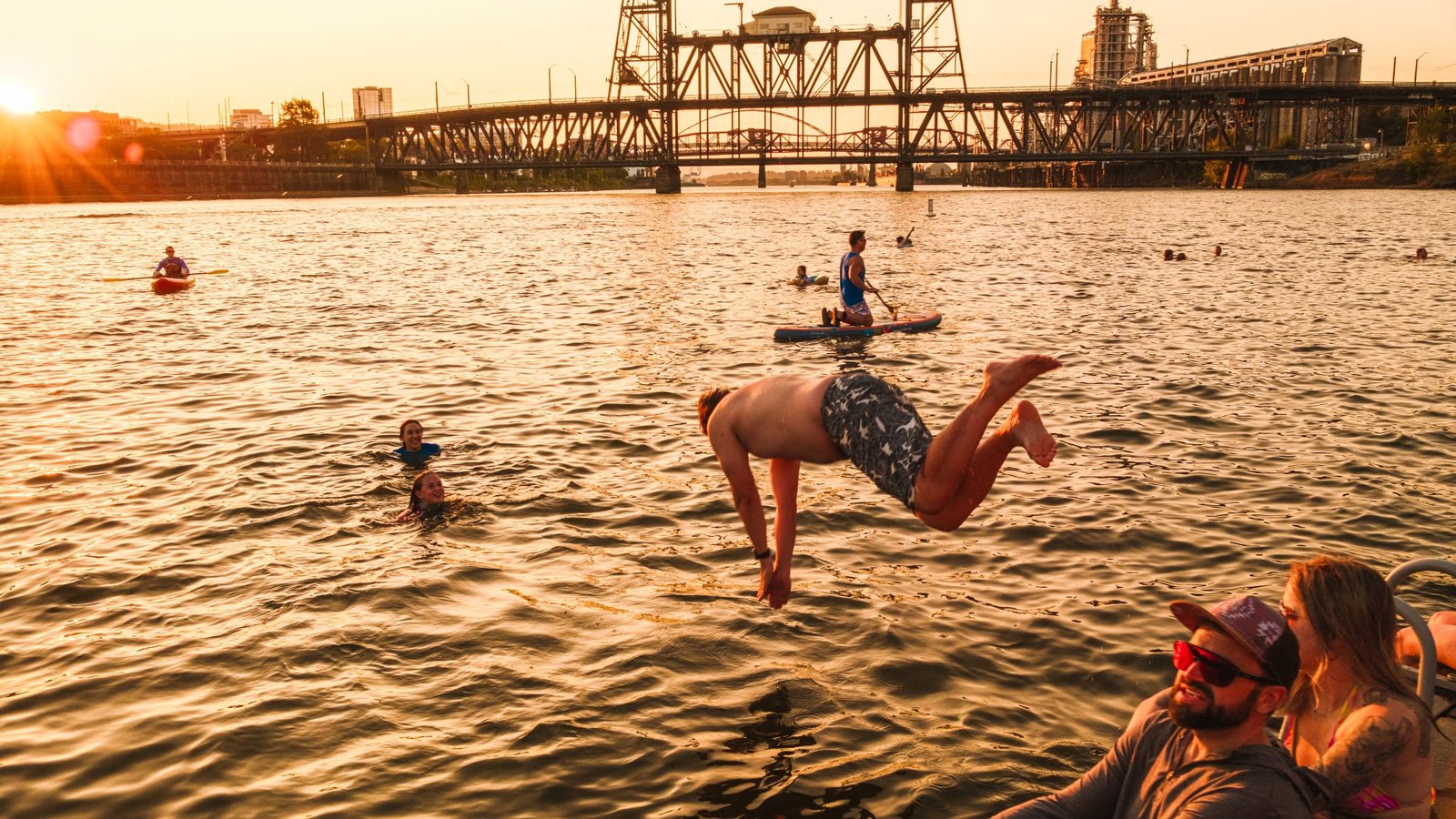
While the Chicago swim opened once-a-year access, the Human Access Project (HAP) in Portland, Oregon, has led the way to permanent access at seven beaches and two docks on the Willamette River since its founding in 2010, with another beach to open this year.
A $1.4 billion, two-decade revamp of the city’s stormwater and wastewater system, completed in 2011, cleaned the river. HAP and volunteers removed more than 500 tons of concrete from the river and its banks, says its executive director, Scott Fogarty.
Now it’s weighing in on the pending Superfund cleanup of the riverbed, mostly downstream from the swimming sites, and adding more evening Splashdown parties and a second weekday River Huggers Willamette crossing swim.
“We like to say this is activism disguised as a party,” Fogarty says. “We envision greater, not just access, but greater open water swimming going forward.”
In Baltimore, ultramarathon swimmer Katie Pumphrey is using sport to get people into the harbor. This year, she started Baltimore Open Water Swimmers with plans for a one-mile swim this summer in the harbor and, possibly, another one in the fall that replicates her celebrated 24-mile swim in 2024, crossing from the Chesapeake Bay to Baltimore’s Inner Harbor.
People tend to tune out talk of environmental progress, but seeing swimmers regularly in the harbor resonates emotionally and even pushes people to try it themselves, she says. She’ll also be partnering with learn-to-swim programs.
Pumphrey has the backing of Waterfront Partnership of Baltimore, a nonprofit group that set a goal in 2010 to make the harbor safe for swimming. The water was safe enough for a public swim in 2024, after the city spent more than $1 billion in sewer improvements, says partnership vice president Adam Lindquist. Next, the group intends to host more summer Harbor Splash events and study locations for a permanent swimming site.
“My hope is that Baltimore will have more recreational access,” Pumphrey says, “making sure that that’s open and accessible to everyone.”
New York City is taking the risk out of river swimming with its plan for a floating pool in the East River near the Manhattan Bridge. Over the past decade, the +POOL initiative has gathered public and government support for free and safe access to the river through the concept of a plus sign–shaped pool with filtered river water flowing through its walls.
Kara Meyer, +POOL managing director, expects to have a smaller pilot pool being tested off Pier 35 this summer and open to swimmers in 2027.
There’s no solid date for opening +POOL, but the organization has already achieved another kind of first: establishing a regulatory pathway for other organizations that want to get approval for what the state calls novel bathing facilities, like a swimming beach off a park.
Swim groups have organized special-exception swims around Manhattan or the Statue of Liberty for years, but Meyer says about 500 of New York City’s 520 miles of waterfront (outside of designated beaches like Coney Island in Brooklyn) are not classified for swimming.
“We’re really proud of that policy work and we hope that other people will tap into it,” Meyer says. “We have a vision where people all over New York City are accessing their waters in safe ways.”
This article is from the Summer 2026 issue of Outside magazine. To receive the print magazine, become an Outside+ member here.
