

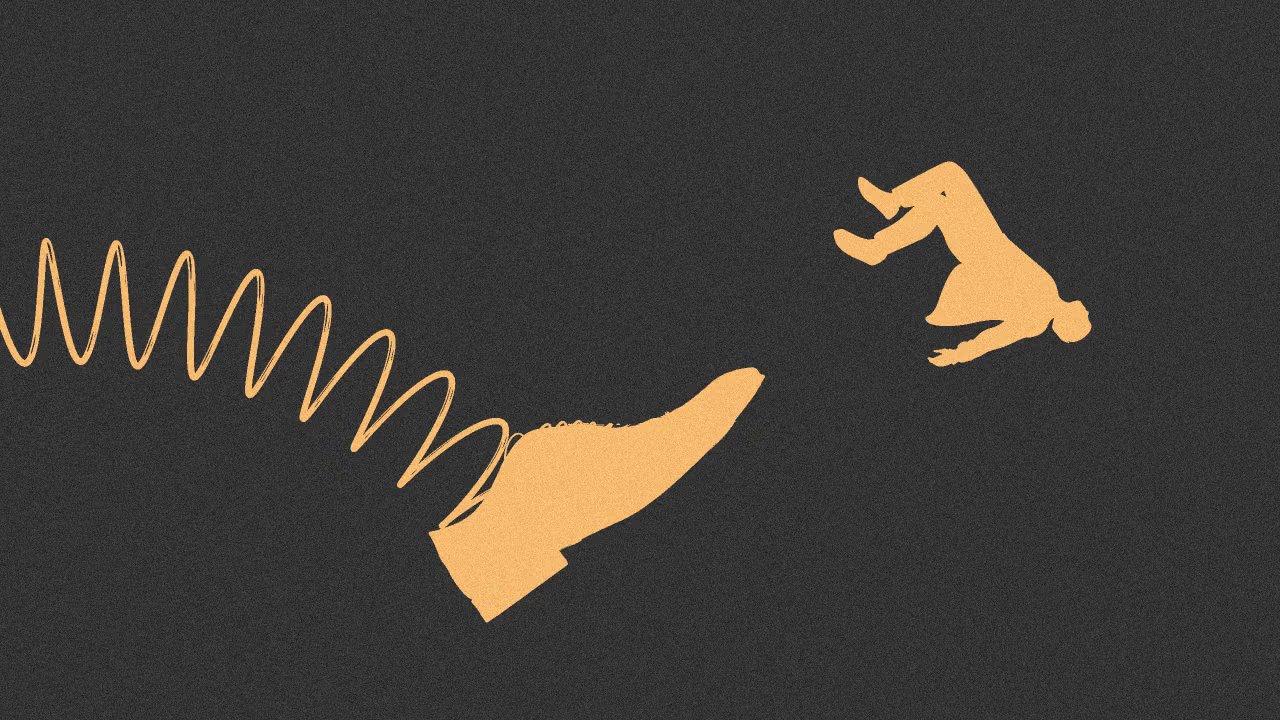
Recently, I spoke with a head of HR for a tech company who asked: “Are you hearing of other organizations eliminating the manager role? Our CEO thinks they won’t be needed in the future because of AI, because the future is self-managing teams.” Aside from the obvious point that CEOs saying this may be talking themselves out of a job, it’s not a rare question at all.
There’s even a name for this—the “Great Flattening”—and it’s everywhere. Some 41% of employees say their companies trimmed management layers last year, according to Korn Ferry’s survey of 15,000 professionals worldwide. Middle managers accounted for more than 31% of all layoffs in 2023. And it’s not likely to stop, but to accelerate instead: Gartner predicts that through 2026, 20% of organizations will use AI to flatten their structure, eliminating over half of their middle management positions.
I get the appeal. Layers of management are expensive, and bad managers do exist. And if AI can take the notes, draft the goals, schedule the one-on-ones, and flag the underperformers in a dashboard, what exactly is the human in the middle for?
{“blockType”:”mv-promo-block”,”data”:{“imageDesktopUrl”:”https:\/\/images.fastcompany.com\/image\/upload\/f_webp,q_auto,c_fit\/wp-cms-2\/2026\/01\/i-169-Ashley-Herd.jpg”,”imageMobileUrl”:”https:\/\/images.fastcompany.com\/image\/upload\/f_webp,q_auto,c_fit\/wp-cms-2\/2026\/01\/i-11-Ashley-Herd.jpg”,”eyebrow”:””,”headline”:”\u003Cem\u003EThe Manager Method\u003C\/em\u003E”,”dek”:”Want practical leadership development training that actually sticks? Visit managermethod.com to learn more and order Ashley Herd’s book, \u003Cem\u003EThe Manager Method\u003C\/em\u003E.”,”subhed”:””,”description”:””,”ctaText”:”Learn More”,”ctaUrl”:”http:\/\/managermethod.com”,”theme”:{“bg”:”#2b2d30″,”text”:”#ffffff”,”eyebrow”:”#9aa2aa”,”subhed”:”#ffffff”,”buttonBg”:”#3b3f46″,”buttonHoverBg”:”#3b3f46″,”buttonText”:”#ffffff”},”imageDesktopId”:91478992,”imageMobileId”:91478994,”shareable”:false,”slug”:””,”wpCssClasses”:””}}
Here’s what I’d say to that CEO, having spent years as an employment lawyer cleaning up the messes that bad management creates, and also in HR roles watching what great management actually produces: The question isn’t whether we need managers. It’s whether we’re willing to admit how much value they bring, and the weight they’re already carrying.
The number nobody can argue with
Gallup’s research has one finding that every CEO should have taped to their monitor: Managers account for at least 70% of the variance in employee engagement scores across business units.
Seventy percent. It’s not perks, or even words that a CEO says in an all-hands. It’s the person your team member reports to that controls the vast majority of how much effort they choose to put into their work.
And engagement isn’t a soft metric. Gallup has linked it to customer ratings, profitability, productivity, quality, turnover, absenteeism, theft, and safety incidents. Everything an executive actually cares about runs through the manager layer. So when a CEO asks, “Do we even need managers?,” what they’re really asking is: “Can we cut 70% of the variance in our results and hope it goes the right way?”
That’s a big bet.
Where the work actually goes
We’ve run this experiment before. Companies have tried this, with different names: flat structures, Holacracy, “self-management.” Over a decade ago, Zappos famously eliminated the manager role and offered employees the opportunity to stay or take a buyout. Within a year, 210 staff (14%) of their workforce took the buyout—but only 20 of those were managers, meaning that 190 individual contributors voluntarily decided to leave. And in the years after, Zappos ran into “big challenges” and brought managers back. Medium, another early adopter of the same self-management model, later abandoned it when the system started taxing its team’s effectiveness and sense of connection.
The pattern is almost always the same. When you remove the manager, you don’t remove management. You just redistribute it. And the data’s now catching up to that: After flattening, senior executives are absorbing more direct reports and operational tasks, making the humans doing the jobs question their ability to actually do those jobs.
The work didn’t disappear—but the accountability and coaching did. High-potential employees aren’t learning how to make tough calls anymore—and the leadership crisis from that won’t show up until about two years after the cuts.
In the AI version of this fantasy, it’s worse. Because now the “manager” is a dashboard. Your performance is scored, and any feedback is a summary.
I’ve sat in—and heard about—enough exit interviews to tell you what employees actually say when they leave: “Nobody told me what was expected.” “I didn’t feel like I mattered.” “I had no idea if I was doing a good job or about to get fired.” None of those get solved by an algorithm. They get solved by a human who knows your name, your pet’s name, and what you’re trying to build, in this job and your career.
What human team members actually go through
Org charts and spreadsheets don’t show what actually leads to engagement.
The high performer who used to stay late just returned from maternity leave. She’s nursing in the parking lot between meetings and is convinced she’s now failing at her job and being a mom.
The team member who received not-so-great biopsy results for his mother last Tuesday didn’t share the news with you. He just showed up at 9 a.m. Zoom meeting with his camera off.
The team member who’s been quiet lately is trying to hold it together because her closest work friend just got laid off. And she’s balancing the guilt of still having a job with the stress of being expected to do the job of two people now.
You’re a real part of these people’s lives. Not in a saccharine, “we’re a family here” way. (As an employment lawyer, I’d highly encourage you not to say that.) But in the actual, measurable sense that how you handle a 30-second conversation will affect whether they sleep tonight—and the work they do all year.
That is not a job for artificial intelligence, nor a job someone can do alone.
The business case people actually need
I know what matters most in a boardroom, so let me translate.
A manager who can read the room and have the hard conversation prevents the lawsuit. (I’ve seen countless lawsuits that started with: “Well, nobody ever actually told her that her performance was a problem.”)
A manager who gives clear feedback prevents the regretted attrition. The real-talk version is a human thinking, “My boss is great—why would I ever leave?” Now picture the opposite: the person whose manager never showed up to their one-on-one, so they spent that time updating their résumé instead. The cost of replacing an employee runs anywhere from half to two times their salary, depending on the role. Multiply that by the turnover a disengaged—aka résumé-updating—team produces, and the “expensive middle layer” pays for itself before lunch.
A manager who actually develops people produces the next layer of leaders. And the pipeline is already thinning: Deloitte research found that only 6% of Gen Zers say achieving a leadership position is their primary career goal. That’s what happens when they watch middle managers get eliminated for efficiency and conclude the path isn’t worth it. AI is excellent at many things. It doesn’t develop a 24-year-old into a 34-year-old who can run a P&L.
The CEOs asking whether we need managers are usually asking the wrong question. The right question is: Do we have the right managers—and have we actually trained them?
Gallup’s research is also clear on this: Companies miss the mark on high managerial talent in 82% of their hiring decisions. We promote the best individual contributor and expect that sole qualification to empower them to successfully lead their teams, without actually giving them training to do so. Then we’re shocked when they can’t manage and get so frustrated that they leave.
The answer isn’t fewer managers. It’s better-supported ones: people who know how to set expectations, give feedback, handle the moments that matter, and drive results without driving their team out the door.
If you’re a manager reading this, here’s what I want you to take away: Your job is one of the most consequential roles in modern work. And if you’re a CEO, here’s your takeaway: This isn’t theoretical research—it’s your real business results. Plenty of companies have already run this experiment and learned the lesson the hard way. You can pay full price for it, or learn it for free. Either way, the human on the other side of your next one-on-one is counting on you—whether they say so or not.
{“blockType”:”mv-promo-block”,”data”:{“imageDesktopUrl”:”https:\/\/images.fastcompany.com\/image\/upload\/f_webp,q_auto,c_fit\/wp-cms-2\/2026\/01\/i-169-Ashley-Herd.jpg”,”imageMobileUrl”:”https:\/\/images.fastcompany.com\/image\/upload\/f_webp,q_auto,c_fit\/wp-cms-2\/2026\/01\/i-11-Ashley-Herd.jpg”,”eyebrow”:””,”headline”:”\u003Cem\u003EThe Manager Method\u003C\/em\u003E”,”dek”:”Want practical leadership development training that actually sticks? Visit managermethod.com to learn more and order Ashley Herd’s book, \u003Cem\u003EThe Manager Method\u003C\/em\u003E.”,”subhed”:””,”description”:””,”ctaText”:”Learn More”,”ctaUrl”:”http:\/\/managermethod.com”,”theme”:{“bg”:”#2b2d30″,”text”:”#ffffff”,”eyebrow”:”#9aa2aa”,”subhed”:”#ffffff”,”buttonBg”:”#3b3f46″,”buttonHoverBg”:”#3b3f46″,”buttonText”:”#ffffff”},”imageDesktopId”:91478992,”imageMobileId”:91478994,”shareable”:false,”slug”:””,”wpCssClasses”:””}}
