

Published July 16, 2026 03:28AM
If you or someone you know is having thoughts of suicide or self-harm, call the National Suicide Prevention Lifeline toll-free from anywhere in the U.S. at 1-800-273-8255.
He hadn’t made a wrong turn. Most people who drive out to the mesa west of Taos, New Mexico manage to get lost once or twice, even in the era of smartphones. Here he was, without a cell signal, using printed pages from MapQuest. He had worked intelligence in the military—he knew how to use a compass, to follow the sun and scope out the land. Still, even though his dashboard Garmin device insisted he was going the right way, he was convinced he was lost.
This was familiar enough. He had been lost ever since he returned from Afghanistan. He had contacted the U.S. Department of Veterans Affairs to put his name on a list to see a doctor. He finally saw someone five months later. But the doctor prescribed painkillers, and he didn’t feel any better, and he didn’t know who to talk to. He still had a military security clearance at the time, so he couldn’t tell the doctor he was thinking about suicide.
Like so many other military veterans, Ryan Timmermans felt that society wouldn’t open up a place for him, wouldn’t calm the unrelenting tension in his brain, and instead it spit him out here, all the way across the country and out the backdoor of Taos and to this winding unpaved road that didn’t feel like the right way at all. It had been flat, then it had descended and crossed a river and now it was precariously hugging a cliff, switchbacking its way up until a final corner threw him onto the open mesa. The howling winds blew balls of sagebrush, the land looking barren at first glance, until suddenly a rainbow cracked through the clouds and, when he looked back down at the road, he was staring down a bighorn sheep.
I’m back in Afghanistan, Ryan thought. Then, strangely, he thought: I’m home.
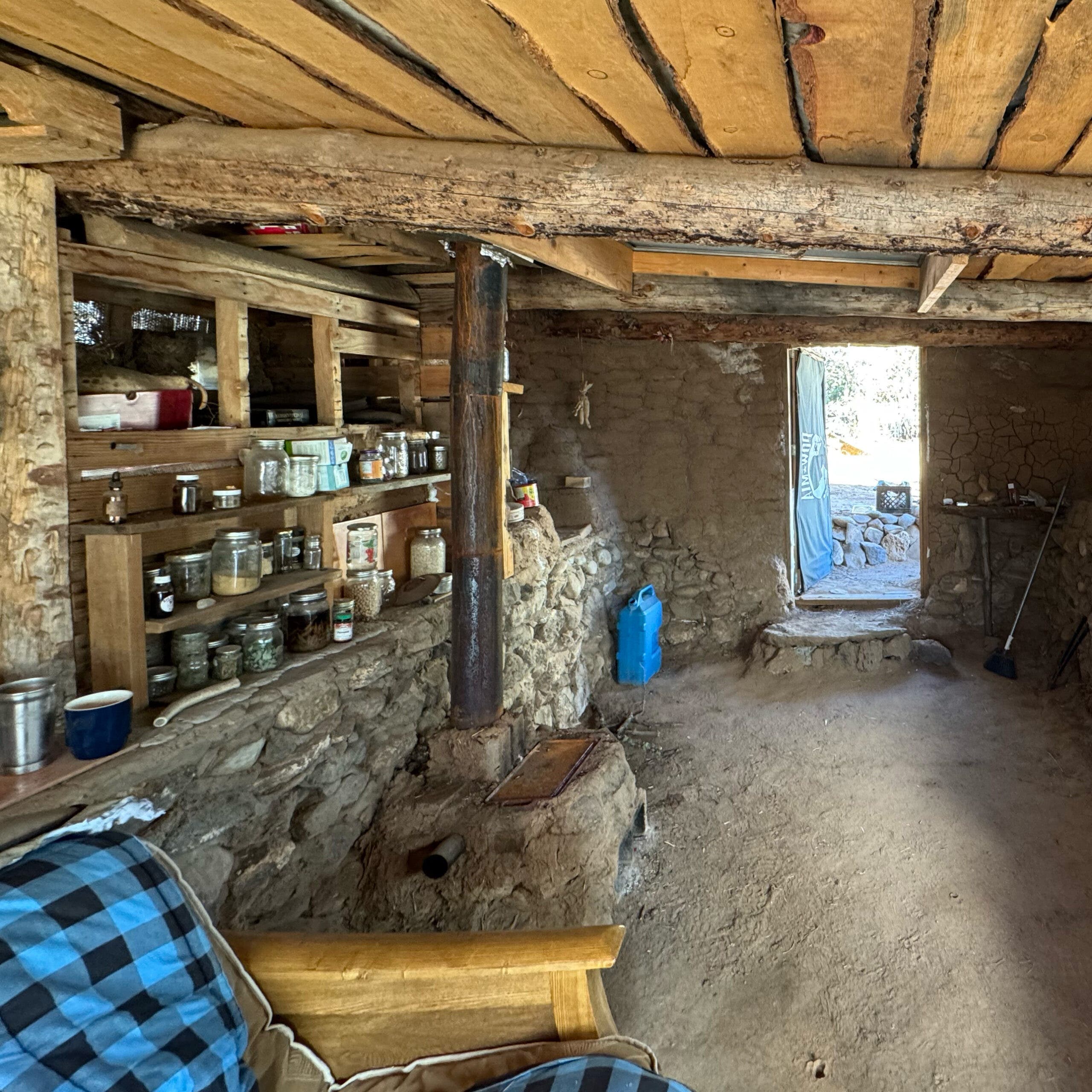
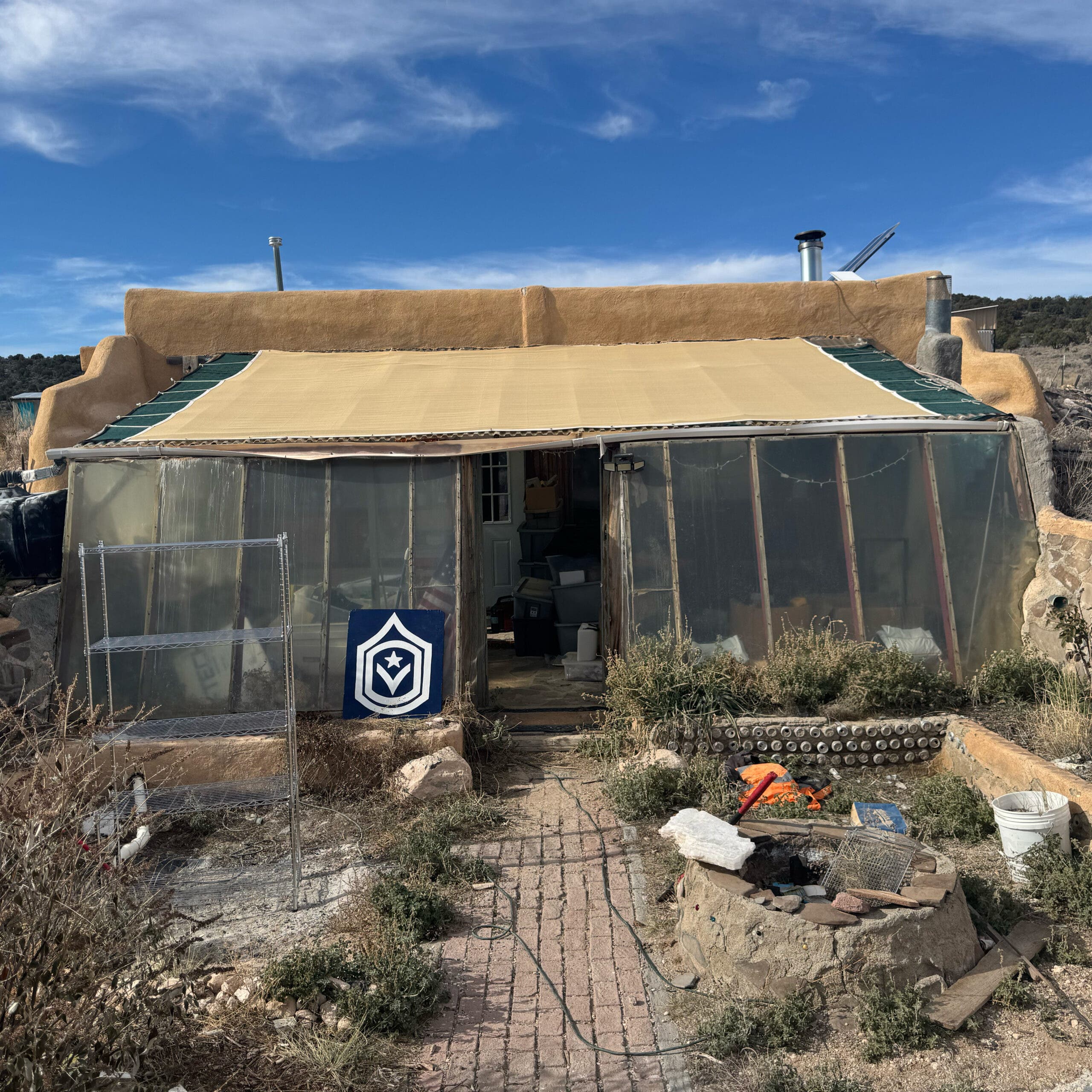
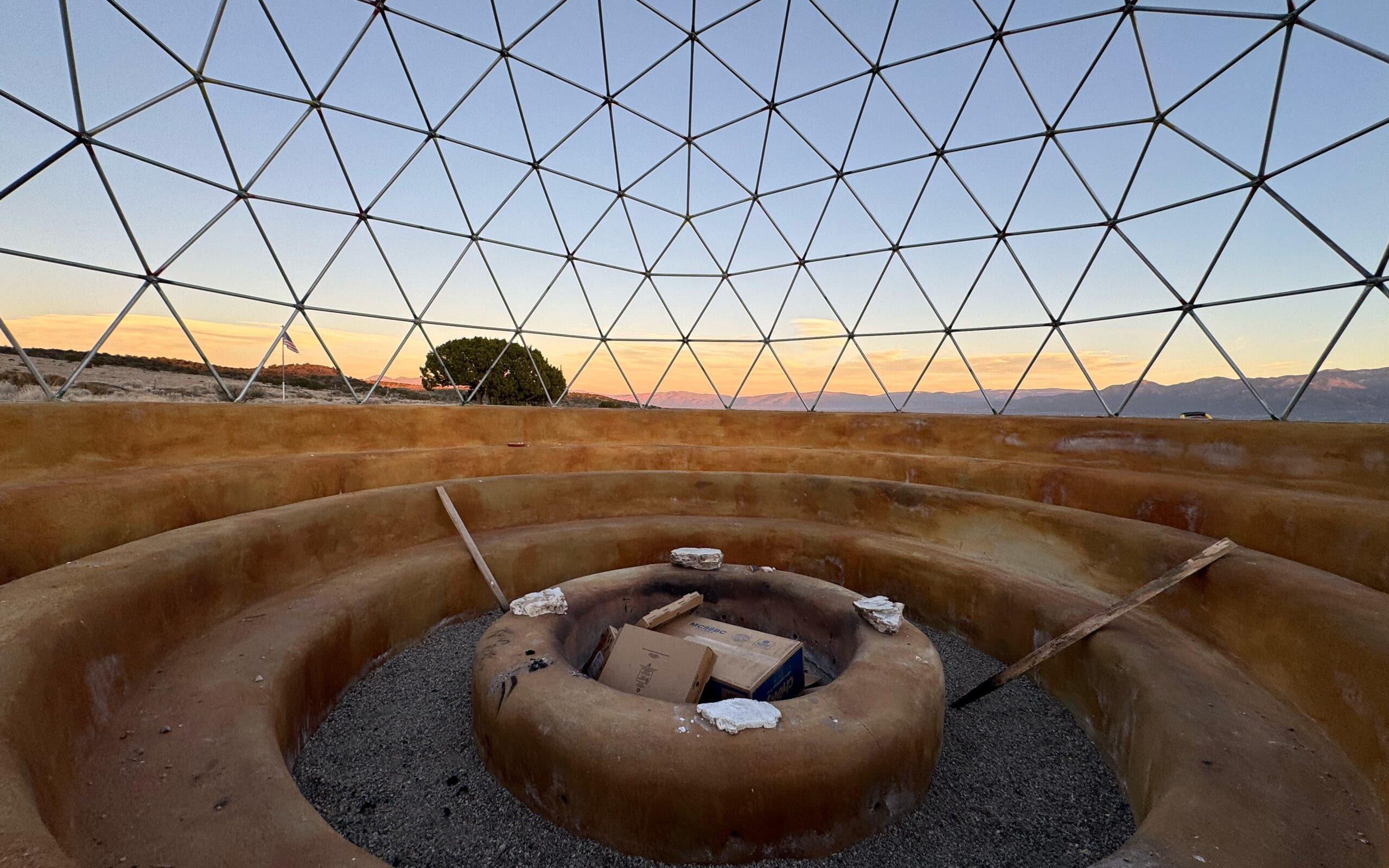
The first time I visit Ryan, I get lost, too. It’s easy to miss the turn from the highway and assume the long dirt driveway, like so many identical paths in northern New Mexico, goes nowhere. If you do make the turn, your GPS device leads you directly about two miles away, to his neighbor’s house. Ryan first made this journey three years ago. Today, about a mile from the highway, earth huts and tin-roofed outhouses sit like beige paint across the pale green canvas of the hillside, enough to draw the naked eye in the right direction. As you get closer, the driveway transforms into a mixture of hard sand and fine shards of crystals until you reach a sign that reads Veterans Off-Grid. Ryan calls his compound Camp Phoenix.
Ryan, who is 49, founded Veterans Off-Grid as a nonprofit in 2017 as a way to provide housing and work for former soldiers who, in his view, needed an alternate path toward reintegrating into society. On its website, Ryan wrote out the nonprofit’s mission statement: As the housing crisis grows across America, veterans are at greater risk of housing instability than ever, while the physical and behavioral health services they need are hard to access.
The United States Department of Veterans Affairs (VA) estimates that around 17 veterans die by suicide each day. Ryan believes learning eco-friendly ways of living, and pursuing self-sufficiency disconnected from the public water supply and power grid, can help veterans avoid the many pitfalls they encounter in everyday life.
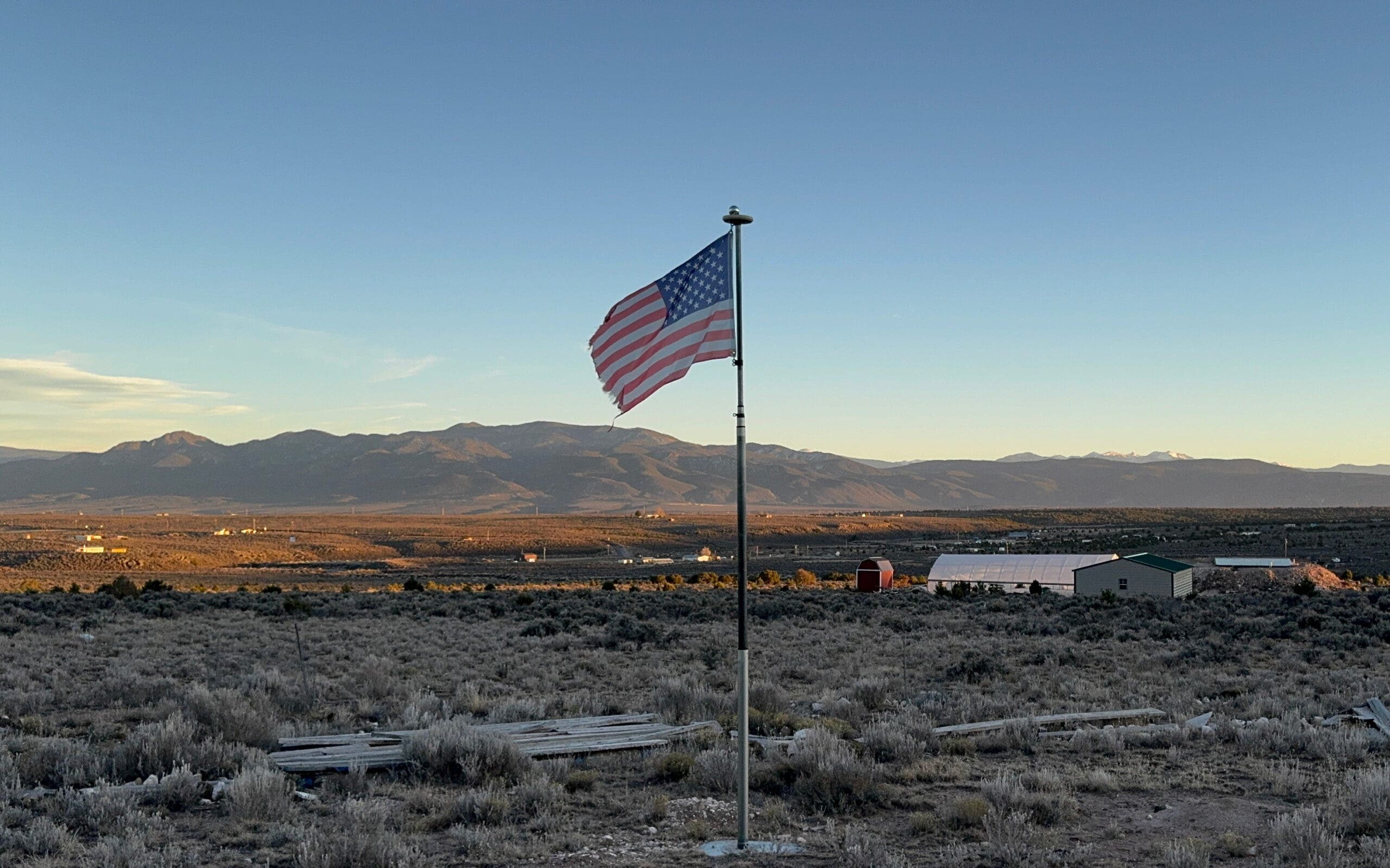
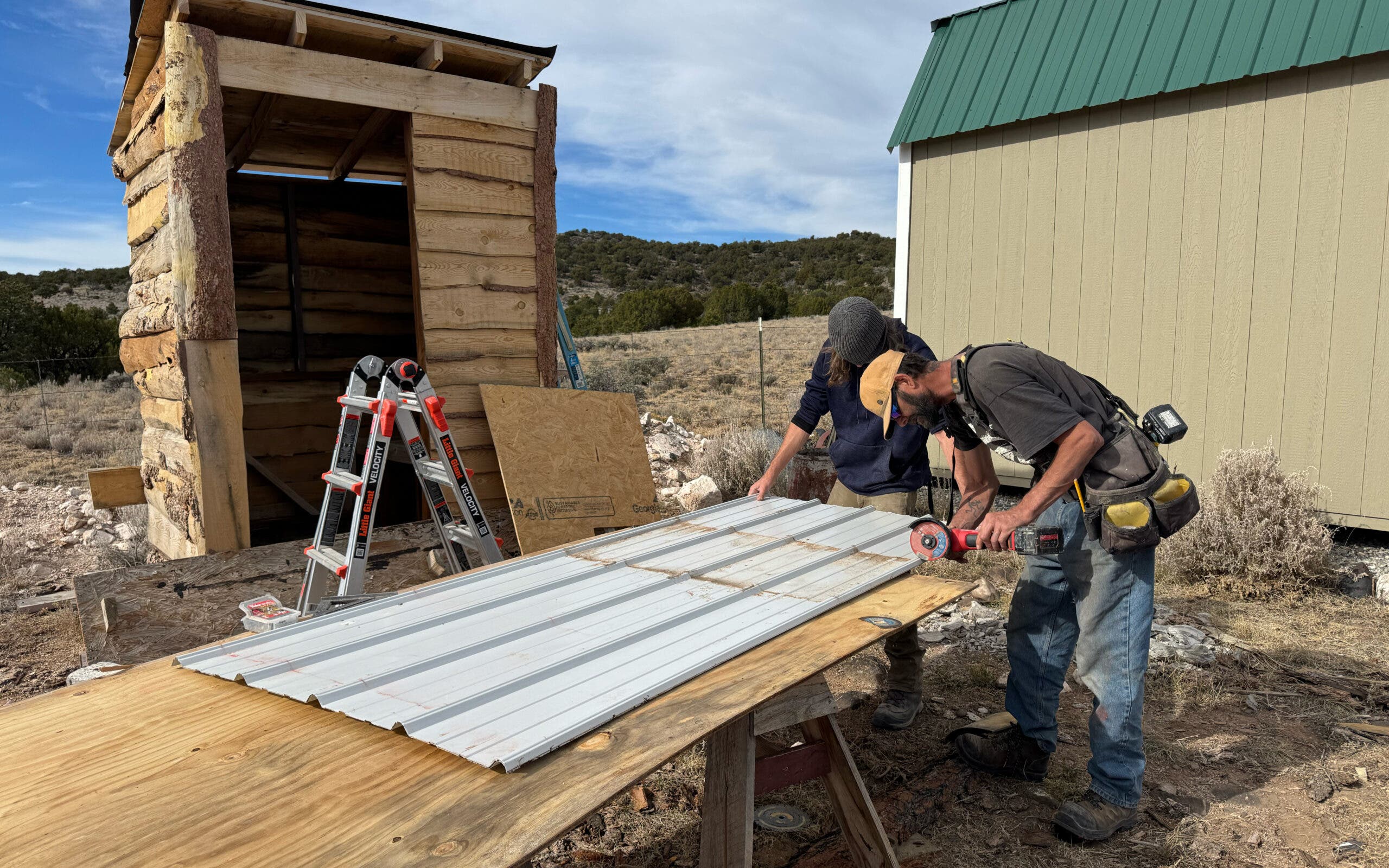
By July 2026, Ryan has 15 other veterans living at Camp Phoenix. But when I visit in late November, Ryan is the only veteran here. He is bouncing between construction and gardening and endlessly organizing a warehouse, but he is never truly alone; he has plenty of stories to tell of people who came here and found home. When I meet him, he’s digging through a pile of iron sheets to fit an outhouse roof. Before I say hello, he warns me to keep the panels pinned down; the wind might pick one up and blow it in my face and kill me. He had envisioned a dark green roof, but now he can’t find enough panels. Reluctantly, he settles on white.
Ryan didn’t have much of a plan when he bought these 50 acres in 2017, shortly before founding his nonprofit. He had done one tour in Afghanistan, then went back as a contractor, and couldn’t figure out what was missing in his life. Plenty of agencies, from the VA to a long list of nonprofits, help veterans find their way back into society, but Ryan always felt that these groups failed to deliver what veterans really needed.
It was impossible to replicate the camaraderie and forced collective spirit of a unit in combat, the shared commitment to solving problems, the knowledge that everyone around you held your life in their hands. It could never be recreated, but through living off-grid, Ryan thought, former soldiers could come close.
“I decided,” he tells me, “to create an environment like we had in war, without the war.”
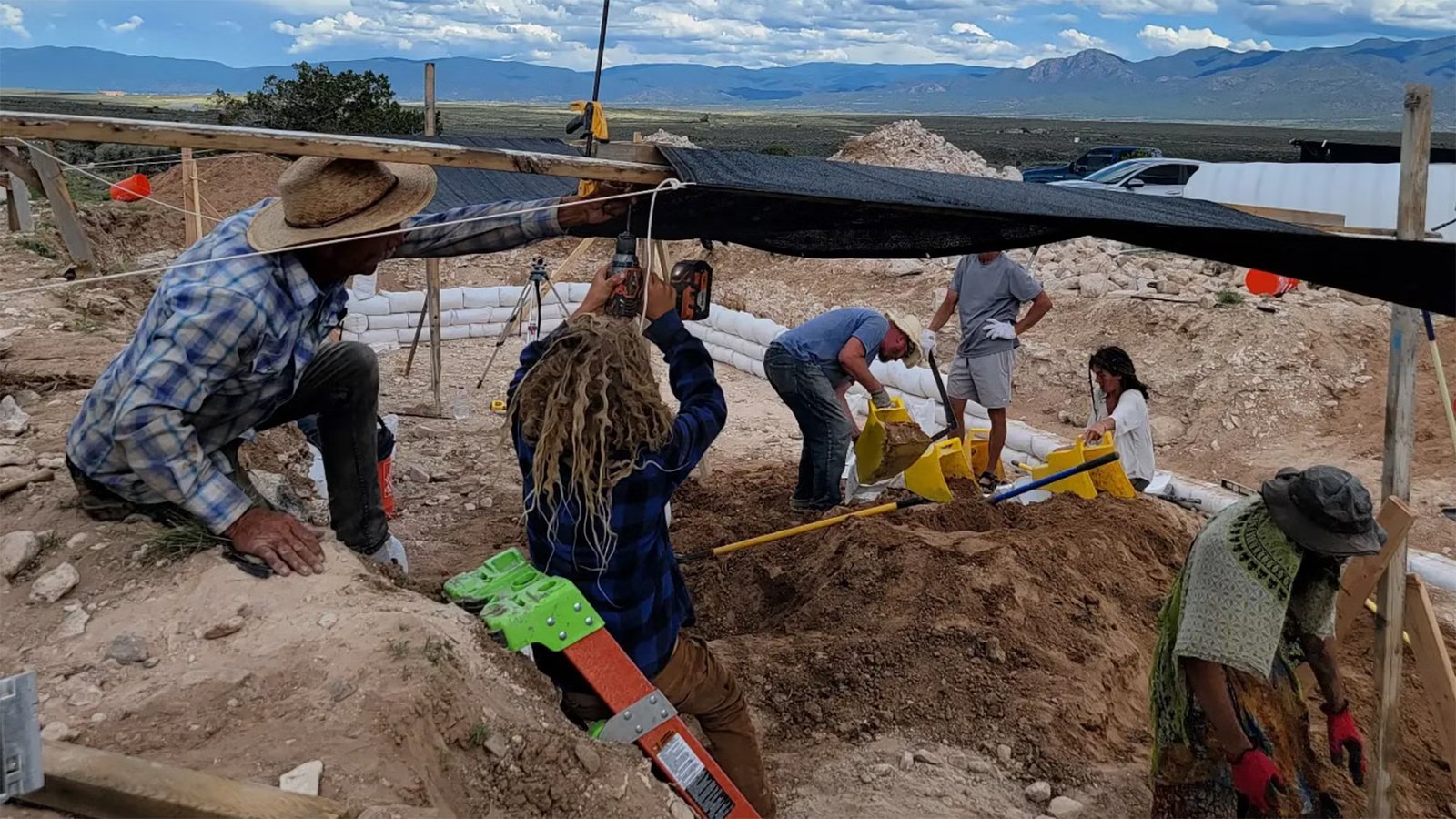
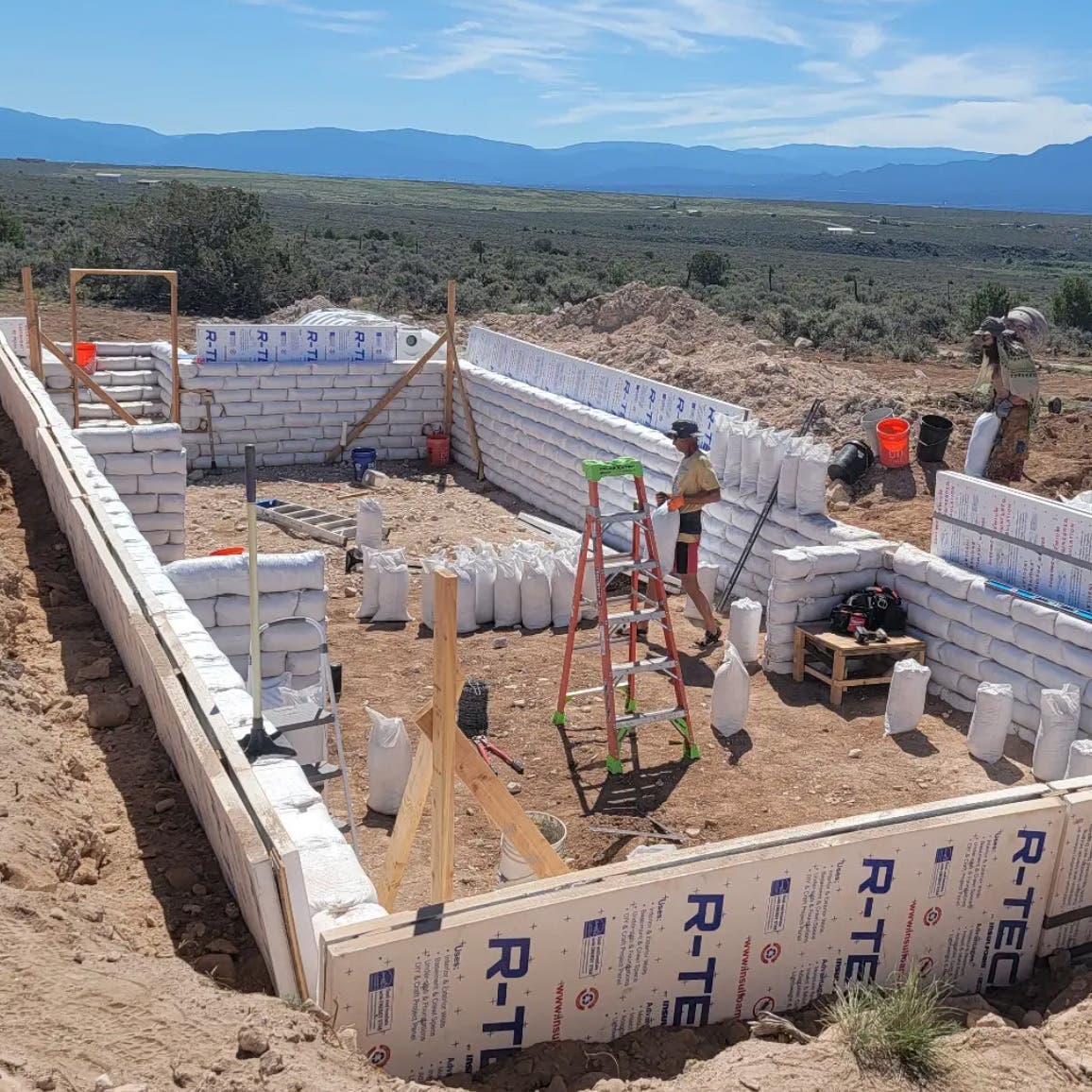
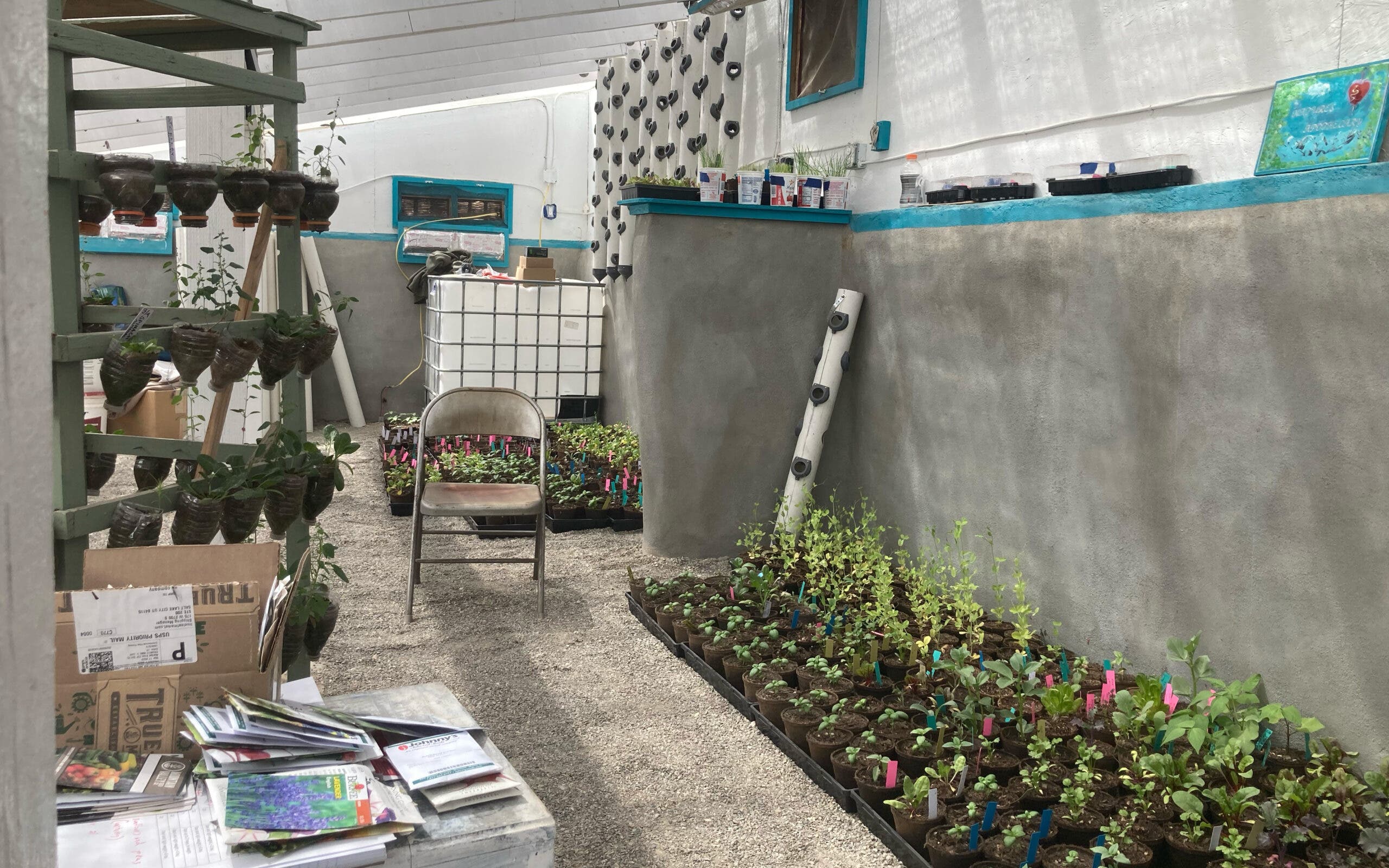
Word got around in military communities that there was a place where, as long as you put in work, you could have a roof over your head, without judgment. Veterans Off-Grid has never asked participants to strictly adhere to a set of guidelines; instead, Ryan figures he’ll find a use for anyone who passes through Camp Phoenix. Newcomers initially ask Ryan about how they can fit in and what they want to accomplish, which varies for everyone. If you like gardening, Ryan asks you to grow food. If you like yoga, you can teach classes. Some of the projects at Camp Phoenix, like the walipini, an underground greenhouse, which is now used to grow microgreens, started because someone was interested in building it.
Most veterans give 20 hours of their time each week at most, in exchange for a safe place to stay in one of the yurts or earthships, and for a support system. Everyone is expected to contribute when something needs to be done, from maintaining a rainwater catchment tank to watering the microgreens. The rhythm of the place isn’t dictated so much by rigid schedules as it is by the needs of the land and the group at large. And while its ultimate goal is not necessarily to prepare veterans to leave and rejoin society, that’s what most of them really want, making Veterans Off-Grid a transitory station, a space between a person’s anxiety and security, between the unpredictable and the inevitable.
When Ryan was 11 years old, he went to a survival camp in the mountains of Boone, North Carolina, run by the outdoorsman Eustace Conway at his 1000-acre nature sanctuary called Turtle Island Preserve. Ryan didn’t want to go at first, but his parents pushed for it and some friends were going, none of them entirely prepared for a week off the grid.
“It was like Lord of the Flies,” Ryan recalls. “In the best possible way. Nobody died.” Eustace woke the boys up at sunrise and put them to work building log cabins, crafting bow and arrows, and making baskets out of tree bark. He taught them to usher in the spirit of an animal when you take its life.
On the last day of camp, Conway sent the boys into the forest with two matches and told them to collect what they needed to make a fire, then tend to it all night.
They barely slept, keeping the fire alive until sunrise. In the morning, Ryan walked five miles to the nearest phone and called his parents, begging them to let him stay another week. “He connected me to the earth,” he remembers.
When Ryan arrived in New Mexico, he had a vision of rebirth, rising from the ashes. Afghanistan had plenty of military camps: Leatherneck, Eggers, Dwyer.
Camp Phoenix is less than a half-hour from the center of Taos, where, once you cross the steel arch bridge that stands 600 feet above the Rio Grande Gorge, there are miles of trailers, reclaimed storage containers, school buses, and unpermitted dirt-and-stick homes that make up one of the largest contiguous off-grid communities in the United States. The area, spanning about 30 miles from Carson to Tres Piedras, is home to young idealists, aging hippies, and people struggling with addiction, family, and staying on the right side of the law. Many people come because nothing else is left.
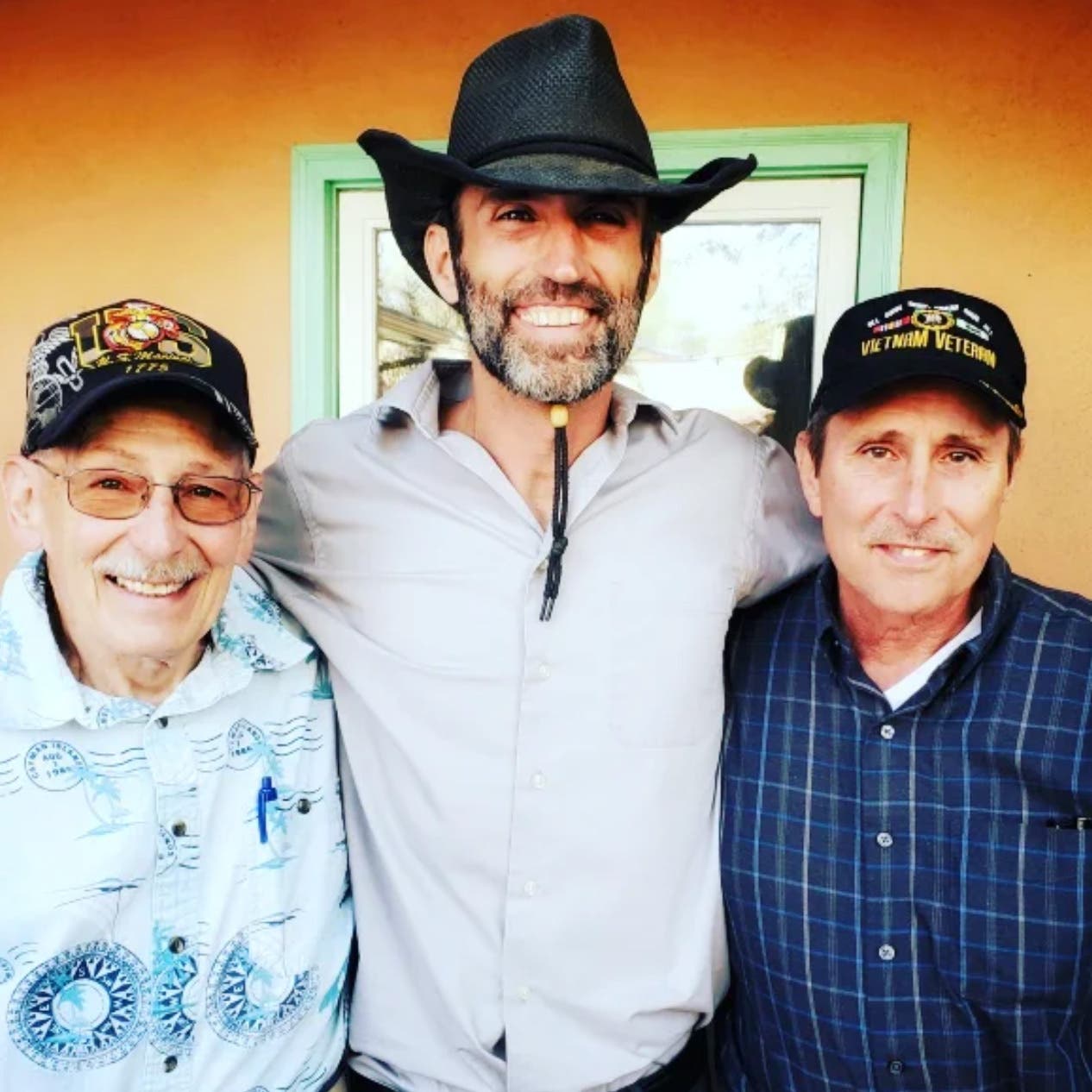
Stephen Barr, a former airman in the U.S. Air Force, was working as a ski instructor and managing rental cabins when, in 2022, the largest wildfire in New Mexico’s history burned them all down. A few months later, he learned he had a pulmonary embolism that he believes came from inhaling so much smoke. He had no insurance and couldn’t work, so he had to drain his retirement savings. His only option was to cross the bridge and live on the mesa. A friend had a small house there, but he would have to fend for himself.
At that time, the railings on the Rio Grande Gorge Bridge were four feet high. It was easy for anyone to walk down the pedestrian pathway, climb over, and jump. “I had one leg over that bridge,” Barr tells me. He coughs, pausing to remember the moment. “Ryan talked me out of it,” he adds.
Ryan constantly brings up the suicide statistics for veterans in conversation, like a cursed metronome ticking within his mind. When he first got a phone call from Barr, Ryan used his training as a hotline counselor, gave reassurance, and quickly worked to connect him with available services. He couldn’t offer a place to stay. Almost 100 people have passed through Veterans Off-Grid since it was founded, staying from weeks to years, but the county puts strict limits on how many he can legally house at a time, so until he can buy more land, he wants its philosophy to grow outwardly.
Ryan tells me the story of a veteran who arrived at the camp from Santa Fe, where he had lived in his car outside of the city. The man had come back from Iraq with brain damage from an IED that hit his unit’s Humvee. Everyone else was killed. He had tried to forget what day it was, to forget the anniversary of when it happened, but on his fourth day at Veterans Off-Grid, the anniversary arrived, and the man broke down crying. Ryan wasn’t around, and the man apologetically told the others he couldn’t work that day. They told him to take the day off, go down to the river and ground. Ryan finally caught up with him the next day. How are you doing? , he asked. I’m home, the man told him.
“I was like, oh my gosh, it’s finally working,” Ryan says.
It’s a perfectly crisp early December day, the sky clear after a snowfall canceled the last community event of the year before the sun melted it the next day. There’s a short hike up a hill in neighboring Carson National Forest which leads to a birds-eye view of the gorge slicing its way through the mesa to the south, of not-so-distant Taos alive in the footprint of three 13,000-foot mountains, of Camp Phoenix as it continues to grow.
Ryan was married before he first joined the military, then divorced, and now has been single for almost two years. He remembers how his mother would see Eustace Conway on TV and cajole him not to be like Conway, never finding a woman to settle down with.
Ryan’s last relationship—much of it, at least—was documented by the reality TV show Love Off the Grid. He and his girlfriend, Shayla, had a telepathic connection, he says, but they broke up more times than he could count; he knew that his relationship conflicted with his mission. He just watched a video, he tells me, of a relationship guru talking about how long it takes to heal.
“TikTok is great because the algorithm will figure out exactly what I need,” he says. He remembers bemusedly that reality TV fans on Reddit accused him of not being truly off-the-grid when he created an account to answer their questions. But Ryan was never trying to completely remove himself from society.
“I call it the Goldilocks zone, where you still have Walmart, you still have access to civilization,” he says. “But you come back to your safe place.”
Ryan uses the word “safe” all the time, sometimes catching himself in remembering the New Mexico mesa doesn’t align with most people’s idea of safety. Of the 110 or so people who have come to his camp since he founded Veterans Off-Grid, only two remain. It was a place, many of them say, to work their own issues out and move on, but it also reflects the mind of Ryan, focused on too many things at once, projects often left unfinished.
There’s a cafe down the hill from Camp Phoenix with burritos and burnt coffee and a small store selling essential goods that’s usually operated by Dustin Freyta. A soft-faced man who speaks slowly with long, thoughtful pauses, Freyta taught the veterans to collect their rainwater by terraforming the mesa and creating rain gardens. He has watched most of the veterans come and go, wondering if their transience comes from their military mindset, where the familiarity of being deployed is also temporary. “It’s another replication of what they come from,” Freyta says.
Freyta lives on the other side of the highway, where he’s built several crude earthen houses halfway into the ground for shockingly little money, on a plot of land surprisingly covered by trees. “People say this soil is horrible; it’s dead, there’s no life to it,” he says. Freyta fiddles with a joint, taking his time to roll it. “You can spit on the ground here and grow something,” he adds.
Freyta’s Apache ancestors lived here before he bought it back from landowners who bought up the mesa after World War II and subdivided it and sold it off to dreamers, to hippies, to people like Ryan. People who, like Ryan, come from elsewhere and speak of reclaiming the desert, of restoring the environment.
“I went to him like a bro and said, ‘Hey man, you’ve gotta watch how we say things and do things around here. You guys are military. What are you reclaiming?’” Freyta smirks and lets out a deep laugh, as if to soften the impact of his truth. “Those are fighting words amongst my people,” he adds.
“I have to head into town,” Ryan tells me one day as he begins loading trays of microgreens into the back of his SUV, where he delivers them to restaurants around Taos. He brings along a couple extra trays because he’s stopping in a community center to deliver a presentation about Veterans Off-Grid to a group of retirees.
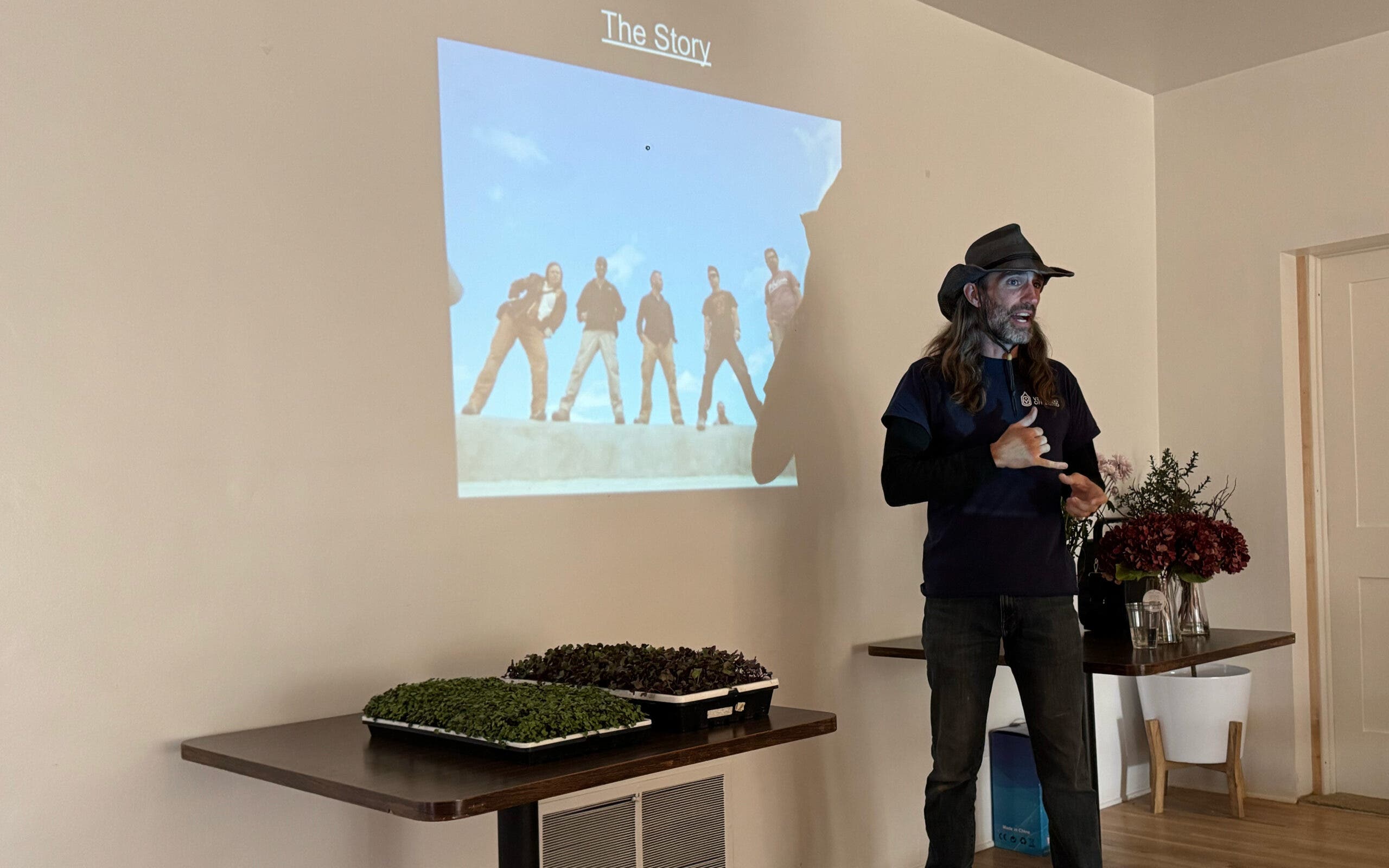
Ryan arrives early to find two women and a young staffer fiddling with the projector. A split-second look of resignation at the small crowd flashes across his face, quickly flushed away by a smile. He starts talking, introducing the nonprofit, his journey to Taos, his stories that quickly become personal. He had hurt his back before a mission in Afghanistan, he says, and another man took his place on the Humvee. It was hit by an IED and the man died. His guilt overwhelmed him, he says, and he started realizing how many other veterans came home feeling the same way.
As if pulled in by magnetism, more retirees enter the room. Ryan tells them about a music video that changed his life.
“You know Madonna, ‘Like a Virgin?’” A second passes as the room figures out that he has just told a joke. Ryan smiles, enjoying the awkward pause. “No, it’s a band you’ve probably never heard of,” he continues. That band, Five Finger Death Punch, had made a video following a group of soldiers home from deployment, only to watch their lives unravel. Ryan plays the song. When it finishes, the screen goes dark with statistics of veteran suicides. One more military veteran, the letters flash, will take his life by the time you finish watching this video.
“I just wept because I was like, that’s me,” Ryan says. “I dedicated my life, whether I go broke or die trying, to being part of the solution to bringing warriors home successfully.”
The women in the crowd lean forward.
“Do you have any veterans in your life?” Ryan asks. A few people in the crowd nod. “Do they ever talk about their experiences?” Nobody nods. Their generation, he posits, wanted to keep everything inside so as not to burden their families. Nowadays, he tells them, modern military equipment causes trauma so extreme that it can’t be healed with medicine, not without destroying other parts of your body.
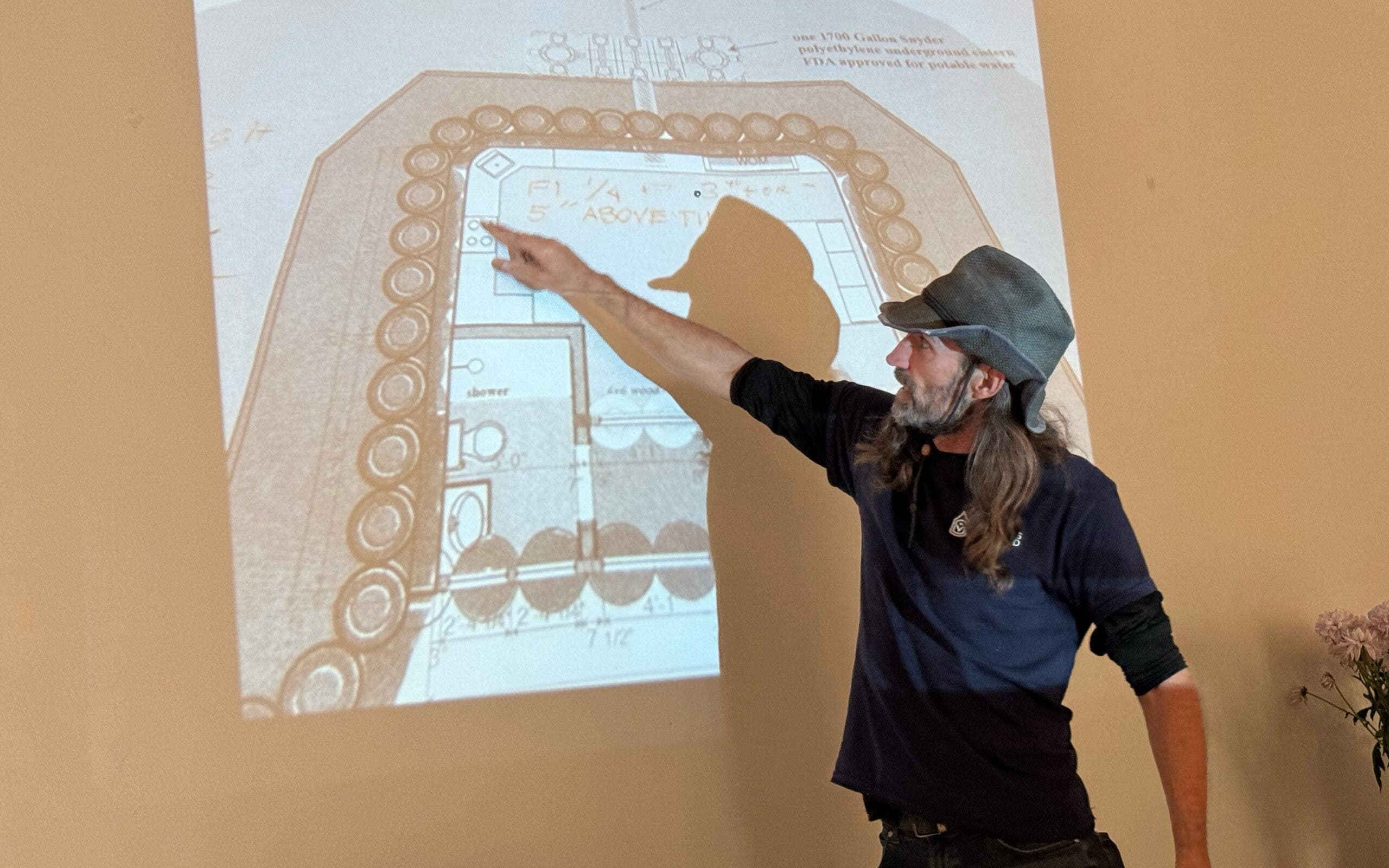
“You can heal with crystals, with reiki, with massage therapy. You can heal with mushrooms. You can heal with plant medicine,” Ryan says. He excitedly bounces from topic to topic; if his presentation had any sort of linear order, it’s impossible to tell. Ryan then tells the crowd success stories from Veterans Off-Grid. He shows how Dustin’s rain gardens have fed the roots of apricot trees, how simply collecting rain and snow provides enough water to grow food for the community, enough of a surplus to give away and sell. He offers to deliver microgreens but tells the crowd how it’s easy to grow their own, too.
In public, Ryan shows a restrained bitterness toward the VA, and explains how its treatment programs feel like being fed through a cold bureaucracy. He also expresses optimism that the agency is becoming more flexible. Ryan speaks of his experiences with the drug psilocybin as crucial to his personal recovery; many veterans have turned to mushrooms as an alternative to pharmaceutical medicine, and New Mexico is one of three states that have approved psilocybin for therapeutic use.
Psilocybin treatment is not yet supported by the VA. But the agency is conducting clinical trials on the use of psychedelics as a treatment for PTSD, says Ilse Wiechers, the acting deputy assistant under secretary for Health for Patient Care Services and co-lead for VA’s Psychedelic Medicine Integrated Project Team.
Ketamine treatment has shown more promise and has been approved for use when prescribed by doctors. “Ketamine therapy has been proven effective to treat veterans with treatment-resistant depression and/or acute suicidal ideation,” Wiechers said. “When clinically indicated, VA has the ability to treat veterans with those conditions through ketamine therapy.”
The VA takes personal needs, such as housing, into account when planning treatment programs. “A veteran’s preference for a type of housing, such as off-grid or renting, may be part of their PTSD treatment if it is relevant to their PTSD recovery,” says Sonya Norman, the PTSD consultation program director at the VA’s National Center for PTSD.
Still, few organizations aiming to help veterans have committed to off-grid living in the way Ryan does. Some established nonprofits construct homes for disabled veterans. But these groups are “almost all doing pretty conventional buildings,” says Mark Goldman, the coordinator of the construction technology program at the University of New Mexico Taos. Goldman is a friend of Ryan’s. “He’s doing something that’s the whole psychological aspect of being off-grid,” Goldman tells me.
Once Ryan reaches the last slide in his presentation, several women approach him, wondering how they can support what he’s doing. He gives them his phone number in case they decide to order microgreens. He offers a tour of the compound, but advises it not happen during winter.
One woman beams at him as she shakes his hand, thankful for his work. She asks Ryan what he thinks about the state of American politics. Ryan’s face flinches, not offering the expected solidarity. He searches for something safe. “I’m really excited about Robert F. Kennedy Jr.,” he says. The retiree lets out a half-gasp, chuckles uncomfortably, then changes the topic.
Ryan tells me later that this has happened before. He registered as a Democrat, he said, so as not to alienate himself from people looking up his nonprofit in deep-blue Taos. He tried to hide his politics until, in 2025, political personality Charlie Kirk was killed while visiting a college campus. Ryan says he saw people he knew, through his eyes, appearing happy about Kirk’s death.
“Now, I don’t care,” he says. Ryan had learned about Kirk a few months earlier the same way most people did: through his TikTok feed, seeing him as a debater, as someone who wanted to engage with opposing viewpoints and build bridges, seemingly unaware of why so many people saw him differently.
Ryan normally carries himself with the placidity of a man trained to defuse tension, of a life governed by the cycles of nature, and it’s easy to notice this change when he brings up something he’s seen on social media. He doesn’t always understand why people struggle to disagree with him. “Have you noticed,” he asks me, “that if someone says something that you don’t agree with, it does something inside your stomach? It’s new for me. I started feeling it in the last year or two. They’re treating you with disgust. It creates this weird tension right in the center of the body.”
The wellness and survivalist communities are not far from extremist politics. In what the historian Kathleen Belew calls the “crunchy-to-alt-right pipeline,” social media is flooded with podcasters and tradwife influencers who reach people skeptical of processed foods and overprescribed pharmaceuticals and drag them toward more extreme perspectives on American society.
Nobody has ever tried to quantify the effect living off-grid has on the mental health of veterans. Research shows that activities in nature, like fishing and hiking, can be helpful in combating PTSD. Norman, at the VA, said this is “an emerging area of research” and that while existing studies show modest overall improvement compared to established PTSD treatments, “nature-based interventions could promote general wellness and reintegration through the social connections often involved in these activities,” she adds.
When I call Amy Cooter, a researcher at the Middlebury Institute who focuses on links between veterans and domestic extremism, she says she has never encountered something quite like Ryan’s project. Some of the men she talked to while doing fieldwork in Michigan said that living in nature helped them. They could use skills they had learned in the military, she recounted, and they could do things with their hands. Without that, “they thought that potentially set people up for some cascading problems,” she tells me. Veterans just home from war find the first landing pad they see, she says, and usually a group on social media “that says, ‘Hey, we’ve got your back. We’re also upset,’” Cooter adds.
Ryan, many of his friends confirm, never appears to be angry. He often appears to be alone, but he never is. When he first drove to the mesa west of Taos, his GPS sending him up the side of a cliff and into the gaze of a bighorn sheep, he didn’t know where he was going. In the first six months after he came back from Afghanistan, two friends from his unit died by suicide. Ryan says he would have been the third. Sometimes, he starts a thought, and you’re not sure if he’s talking about war or about the mesa.
“The people beside you are committed to you. They’re gonna risk their lives to get your body, even if they know you’re already dead,” Ryan says. He’s talking about war, mostly.
Ryan takes a long pause, gathering his thoughts. “I don’t know why war felt like home. Maybe a psychologist can diagnose me one day. Because going back to Afghanistan felt safe,” he adds. “Coming back, not to Taos, but to my own country, did not feel safe. But when I came here, I felt safe again.”
