

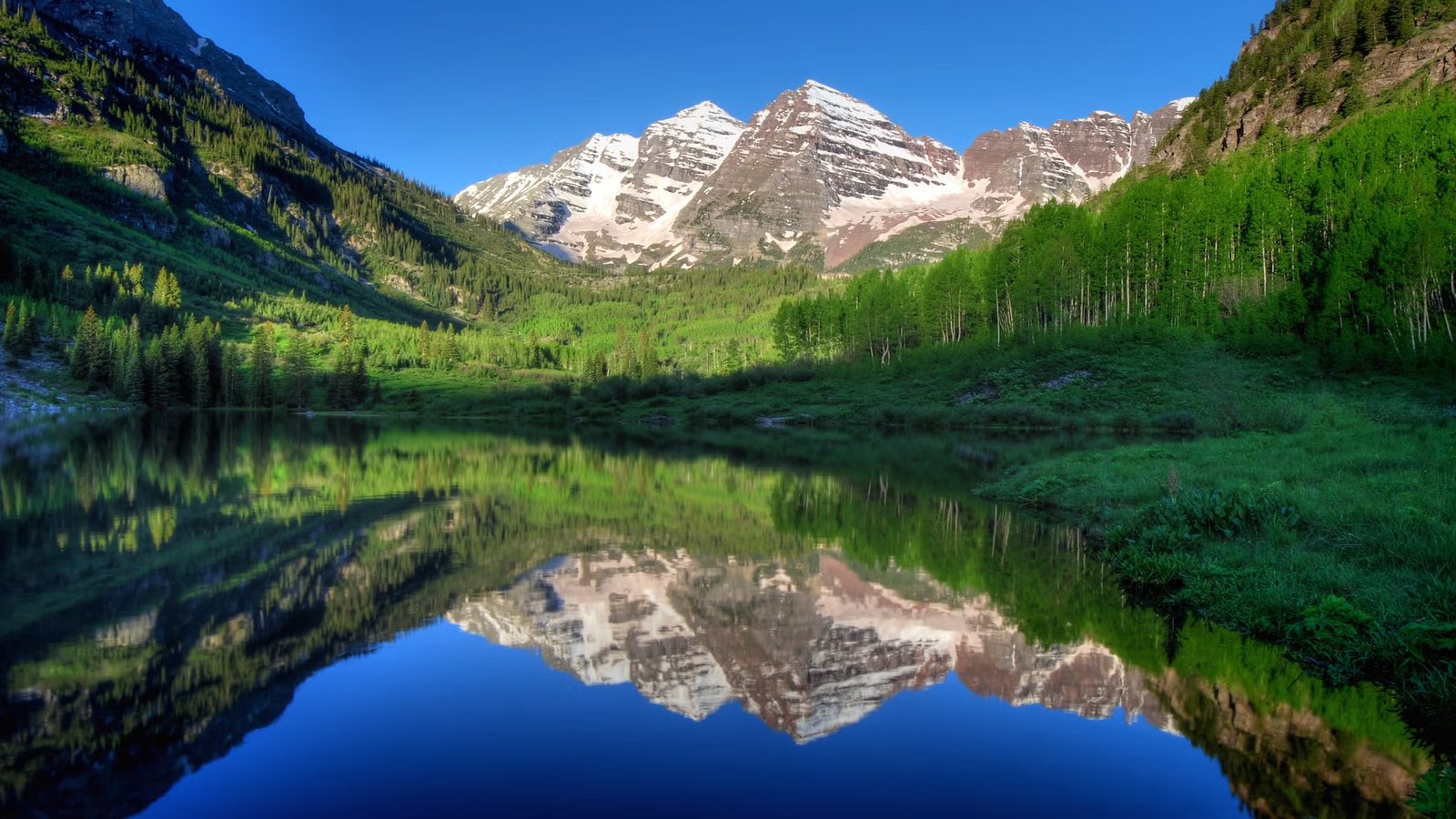
A steep slide in the Maroon Bells-Snowmass Wilderness serves as a reminder that Colorado’s high-alpine passes remain treacherous long after the valleys warm up.
Four Loops Trail in Colorado’s Maroon Bells is a strenuous, difficult hike that often sees snow late into summer (Photo: Sierralara/Getty Images)
Published June 1, 2026 05:07PM
A hiker is safe after sliding down a 200-foot fall in Colorado’s Maroon Bells on Saturday, May 30. The person, whose name and age have not yet been released, suffered non-life-threatening injuries when they slipped at an elevation of around 11,300 feet.
The Pitkin County Sheriff’s Office and the responding agency, Mountain Rescue Aspen (MRA), said the emergency call came in just after 2 P.M. Dispatchers sent a group of three field teams, totaling 12 members, to the hiker’s location at Buckskin Pass, about 3.5 miles from the trailhead.
Buckskin Pass s is a high-alpine, strenuous trail found in Colorado’s Maroon Bells-Snowmass Wilderness. Sitting at an elevation of 12,400 feet, Buckskin is a part of the Four Pass Loop, a 26-mile circuit known for panoramic views of the Maroon Bells, Snowmass Lake, and surrounding 14,000-foot peaks. The total circuit climbs over four mountain passes at elevations above 12,000 feet. According to the U.S. Forest Service, deep snow can persist on the passes until late in the summer.
A group of bystanders assisted the hiker while responders made their way up the mountain. Once on scene, officials said they conducted a medical assessment, stabilized the injury, and brought the hiker off the mountain in just under three hours.
Rescuers transferred the hiker by ambulance to Aspen Valley Hospital.
MRA said the accident is an important reminder that even in spring, winter conditions can persist at high elevations where snow remains. Coming equipped with microspikes and an ice axe, and knowing when to turn around, can save lives.
“The Pitkin County Sheriff’s Office reminds climbers and hikers to be prepared for potential injuries in technical terrain, dress appropriately for changing mountain conditions, bring technical gear appropriate for the route, and to carry a two-way satellite communication device when traveling in remote areas where cell service may be unavailable,” MRA wrote on Facebook.
