

Published June 2, 2026 03:24AM
In 2021, I started my Isle Royale National Park backpacking trip with a four-mile detour night at Lane Cove. It’s one of the few campgrounds with unobstructed north-facing views, which is a must-have for aurora hunting in the contiguous U.S. I set all night alarms to peek out the tent flap and scan for northern lights. After several groggy rounds, I noticed a green flicker. I ran to the lake to witness what would become one of the best aurora shows of my life.
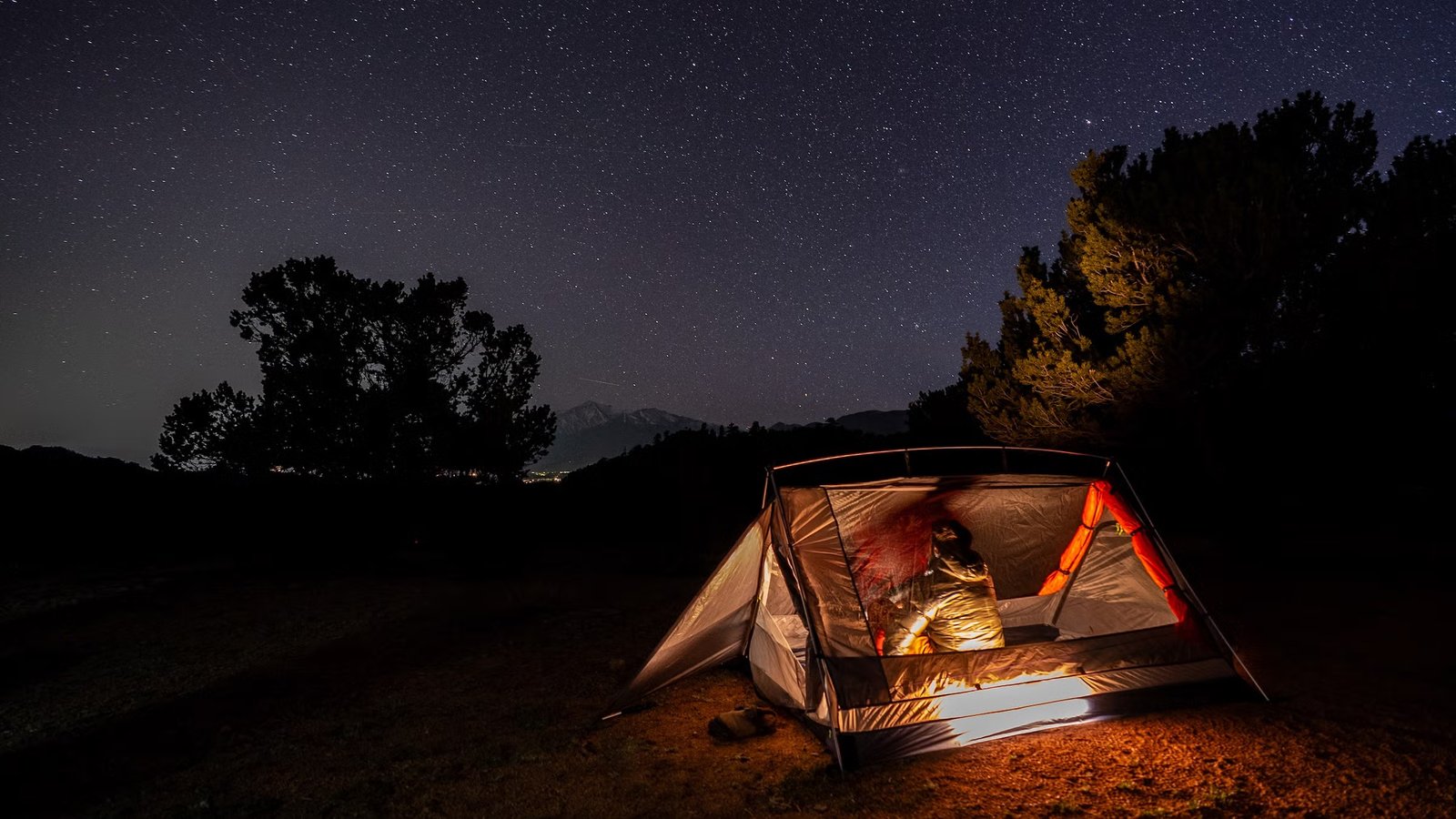
I tried to recreate this magic in May 2026. I was on a road trip in New England and my aurora forecasts told me lights could be on the horizon. This time, I had a new trick to level up my lights-watching: a Sky View Tent, one of the first tents built specifically for watching the night sky—without leaving your sleeping bag.
These A-frame-style tents feature all-mesh walls that turn nearly transparent under the cover of darkness. That meant I wouldn’t be fumbling with zippers every half hour for aurora monitoring. Unfortunately, I faced three nights of incessant clouds and zero northern lights, but I did pick up a new favorite tent along the way. Here’s what it was like to stargaze from the Sky View Tent.
A Tent Designed for Stargazing
Sky View Tents founder and nightscape enthusiast Joe Bissonnette, who’s based in Buena Vista, Colorado, came up with the idea for a stargazing-first tent out of necessity. “Every time I’d go camping, I would bring a hammock or just lie outside for as long as I could,” he says, noting that, like most campers, he’d eventually get cold then crawl inside beneath his rain fly. “People romanticize sleeping under the stars, but it’s actually in a tent with a rain fly.”
In early 2023, he developed an alternative. It’s pretty simple: The tent walls are made from a mesh that’s “clearer than the clearest plastic,” he says, noting the other distinguishing feature is an internal rain fly. That means you don’t have to leave your tent, or even your sleeping bag, for weather-sealing or privacy.
I was drawn to this portable abode for its easy access to stargazing. As Outside’s astrotourism columnist, I plan most of my trips around the night sky. In the plotting stage, I think first and foremost about how I’ll actually admire the heavens. Sometimes, I hike or drive hours to photograph remote scenery. But my favorite way to observe a starscape is to find an overnight perch beneath it. That’s when the magic really unfolds.
Here’s why: It takes our eyes up to 30 minutes to adjust to the dark after exposure to bright light. And even after that, it’s not like visible shooting stars occur every minute. You have to be watching, often for hours, to see the night’s greatest spectacles. If you’re only out there for half an hour before crawling beneath cover, you’ll miss a lot.
As I know from experience, the more comfortable you are in your dark-sky location, the likelier you are to keep looking up. That’s why I always recommend stargazing-centered accommodations, such as glass-walled igloos or domes, where you can comfortably gaze into space from bed. I figured a Sky View Tent would be kind of like a stargazing dome, except one where I could choose the location myself. I was right.
Skyview Tents’ Key Features
There are several sizing options for Sky View Tents. The XL Stargazing Tent sleeps three people or more, and the Sky View Backpacker Stargazing Tent sleeps two. Bissonnette says a lightweight, one-person version of the Backpacker Tent will be out in the coming months.
I tested the two-person Backpacker Stargazing Tent. It felt spacious enough for my friend and me to stargaze, with a 90-inch by 90-inch base and a peak height of 55 inches. It weighs around 5.6 pounds. Now, this is not the kind of roomy tent you’d hang out in for hours, but it’s adequate for comfortably lying back to look up after dark.
Stargazing-Friendly Mesh
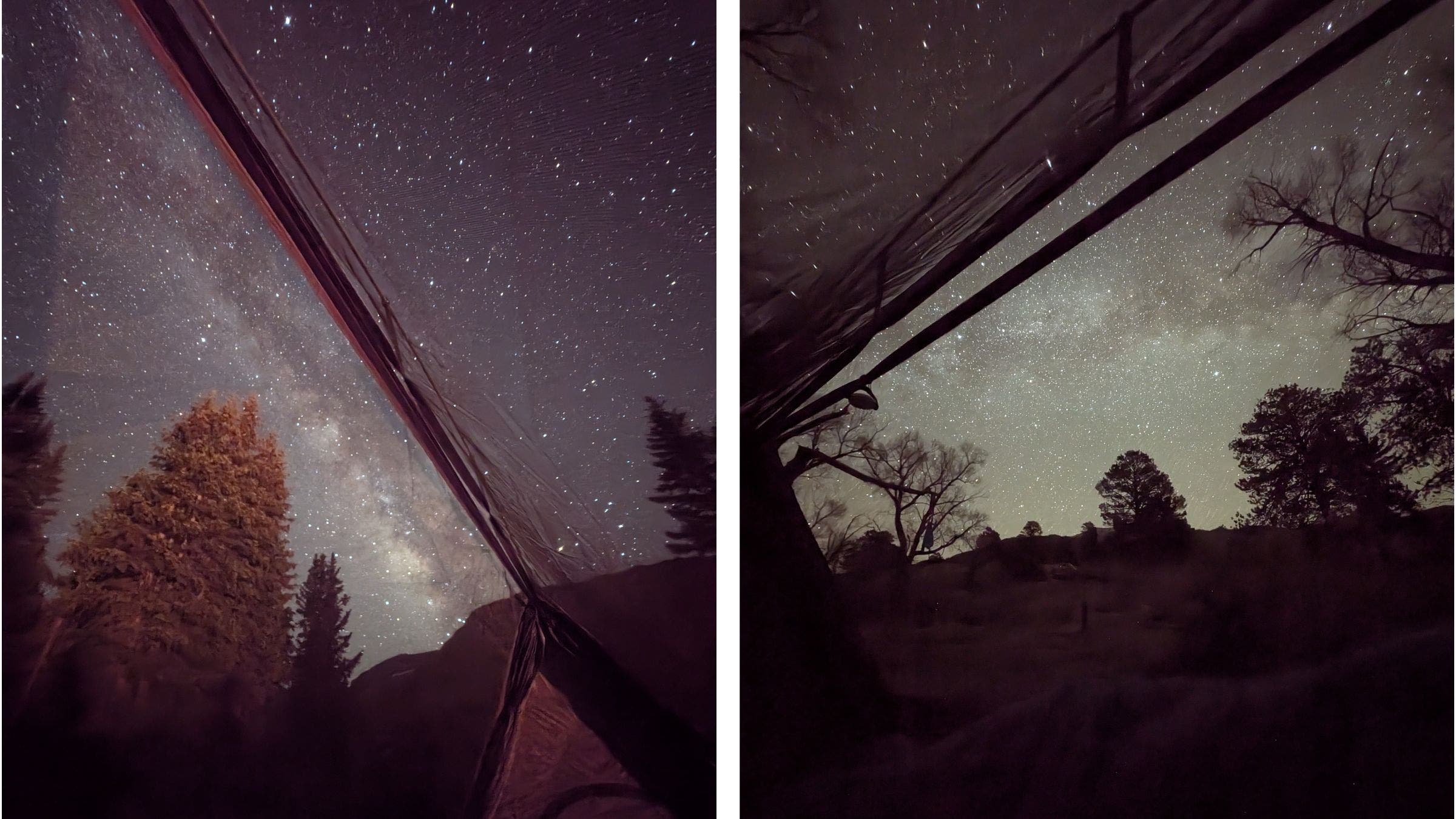
I first fell in love with stargazing on a tent-free camping trip in the Sahara Desert. With the Sky View Tent’s nearly transparent mesh, it felt pretty close to that first experience—minus the Sahara beetles that found their way into my sleeping bag. Of course, this May’s weather kept me from seeing stars like I did in the desert, but I could watch the quick-moving clouds through the mesh without getting out to check the sky every few minutes. It’s easy to forget the walls are even there.
Before writing this review, I wanted the experience of actually stargazing from the tent, so I set it up in my backyard on a clear night and can confirm its transparency is impressive. While I was stuck in light-polluted Cleveland, Ohio—not starlit rural New England—I could still easily spot constellations like Gemini and Ursa Major, and Venus and Jupiter, through the near-clear lining.
Quick Setup
I usually dread tent set-up time; I have a horrible memory and always forget which part goes where. Pitching this tent was much easier than I expected, though, even when configuring it after dark. That has a lot to do with the frame, which is one connected unit of poles. All the rods slip into place with minimal effort. A separate bag for the stakes keeps them readily accessible, too.
In total, it took me fewer than ten minutes to assemble the tent, and even less time to break it down—and I did both entirely by myself.
Interior Rainfly
Most tents, like the North Face Stormbreak I typically use, rely on rain flies as the tent’s outer layer. This makes sense for weather protection, but it does limit how long you’ll stargaze. That’s why Bissonnette introduced an interior rainfly. You can stargaze as long as you like, or until bad weather hits, then quickly install the cover without leaving your sleeping bag.
The actual process of activating the rainfly takes fewer than five minutes; you slide it across the tent top, then button and tether it into place with internal clips. It’s designed to overlap with the sides of the tent and underlap with the front of the tent to avoid letting in water, according to Bissonnette. While I experienced clouds, I didn’t face rain while camping in this tent, so I can’t speak to the effectiveness. Bissonnette did test it during an “absolute dump” of rain in Oregon, he says, and you can watch his experience in this video.
One note about using the rainfly: the tent gets stuffy pretty soon after the rainfly is deployed. I noticed this camping in mid-fifties weather in New England, and even more so on the muggy 70-degree night in my backyard, so keep this in mind with your sleepwear. I’d recommend lighter sleeping bags, or choosing a remote and private campsite where you can comfortably sleep without the rainfly (weather-permitting).
Who Are Sky View Tents for?
While the company is making strides with new lightweight options, like the one-person Backpacker Tent, I wouldn’t recommend these for long, strenuous trips in the backcountry, where weight can really add up. Instead, I’d use the 5.6-pound Backpacker Tent I tested for dark-sky backpacking trips with a short, one- to two-mile hike to camp or less. It would also work well for car camping in places with ample privacy.
Or, as I found, it’s also a great way to immerse yourself in the nocturnal happenings of your own backyard, whether you’re lucky enough to enjoy true darkness or, like me, you want to listen to crickets while navigating constellations—an activity that’s especially fun for summer stargazers.
