

An employee restocks eggs at an H-E-B grocery store on May 11, 2026 in Austin, Texas. The U.S. Producer Price Index (PPI) suggests that rising fuel prices may be beginning to weigh on wholesale margins, as ongoing tensions in the Strait of Hormuz continue to strain global energy markets. (Photo by Brandon Bell/Getty Images)
Getty Images
From his Florida office, Jason Herring, founder and CEO of hydrogen technology company VIVIFY Technology, is closely watching the escalating crisis in the Middle East and assessing its implications for global energy markets and food systems.
“The latest shock to food prices didn’t start on a farm or a grocery store,” he says pointedly. “It started in energy markets.”
As tensions in the Middle East have raised concerns about oil and fuel supplies, the resulting cost pressures have begun working their way through the global food system.
In May 2026, the United Nations Food and Agriculture Organization’s Food Price Index was 2.9% higher than a year earlier, with the FAO citing rising energy costs linked to the conflict as a contributing factor. The index has climbed steadily between February and April, reaching its highest level in more than three years.
The economic impact is significant. Americans devoted 9.7% of their disposable income to food in 2025, while total U.S. food spending reached $2.51 trillion. With food prices projected to increase by another 3.4% in 2026, even relatively modest increases can add billions of dollars to the nation’s food bill.
The time has come to “start seriously thinking about how to increase the absorption capacity of countries, how to increase their resilience to this choke, so that we start to minimize the potential impacts,” said Maximo Torero, chief economist of the FAO.
For Herring, the current crisis highlights a fundamental problem. Modern food systems rely on energy at every stage, from fertilizer production and irrigation to processing, refrigeration, and transportation. When fuel prices spike or power supplies are disrupted, food prices often follow.
“If food systems are becoming more vulnerable to energy shocks, they need to become less dependent on centralized energy systems,” he says.
Herring believes the answer lies in on-demand hydrogen generation, a technology that could allow food businesses to produce energy where and when it is needed, reducing their exposure to volatile fuel markets and grid disruptions.
Reducing Grid Dependency With Hydrogen
Concern over the risks of grid dependence has become the driving force behind VIVIFY Technology, a solution that Herring says he has spent the past 14 years developing.
“As energy markets become increasingly volatile and power systems face growing pressure from geopolitical tensions, extreme weather and aging infrastructure, energy-intensive businesses need greater control over how energy is generated and delivered,” he says.
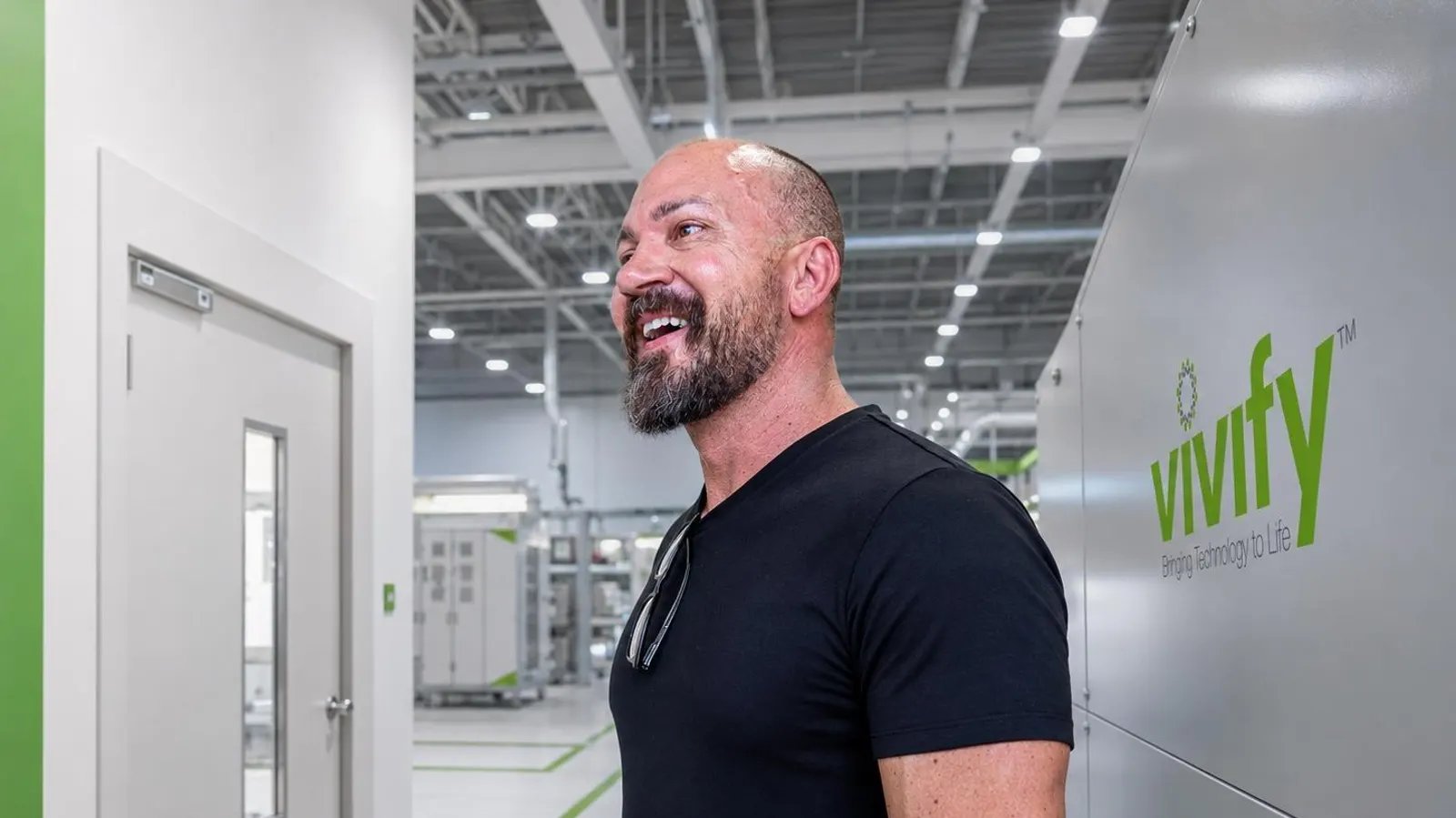
Jason Herring, founder and CEO of VIVIFY Technology wants to take the food system off-grid using hydrogen energy.
VIVIFY Technology
The company’s hydrogen-powered energy systems generate electricity where it is consumed, helping food and other energy-intensive businesses to reduce their exposure to volatile energy markets and grid failures while lowering emissions.
Researchers are increasingly exploring whether hydrogen can play a larger role in food production and processing. A recent study published in Food Control found that hydrogen could help food processors improve energy efficiency, reduce emissions, and support critical operations.
Because hydrogen contains a high amount of energy relative to its weight, researchers suggest it could play an important role in decarbonizing food production while improving operational resilience.
VIVIFY’s approach differs from many hydrogen projects already underway across agriculture and food systems. Much of the industry’s focus has been on replacing diesel in farm equipment, producing lower-carbon fertilizer, or turning agricultural waste into hydrogen fuel. Another major area of investment has been green hydrogen produced using renewable electricity.
VIVIFY, however, is less focused on hydrogen as a replacement fuel. The company is developing hydrogen-based systems designed to generate electricity on-site, positioning hydrogen as part of localized energy infrastructure intended to reduce reliance on centralized grids and conventional backup power systems.
At the center of the company’s strategy is its Hydrogen Oxygen Generator, or HOG, a closed-loop energy platform that uses water as its primary input. According to the company, the system is designed to provide scalable, on-site power for facilities seeking to reduce exposure to grid instability, fuel price volatility, and energy supply disruptions. VIVIFY describes the system as 99% pollutant-free, self-supporting, and scalable.
Interest in hydrogen-powered energy systems is also growing as businesses seek reliable power during grid disruptions, extended outages, and in remote locations. Increasingly viewed as a lower-emission alternative to diesel backup generation, the global market for hydrogen-powered generators was valued at roughly $1 billion in 2025 and is expected to double over the next decade.
VIVIFY hopes to capitalize on that trend with the Flying Pig, its containerized 1-megawatt power system. According to the company, each unit features a 500-gallon water tank, eight Pulsar units, two primary transformers, and quick-connect assembly capabilities, with projected five-year savings of $9.8 million compared with diesel priced at $4 per gallon.
The company says the system is designed for remote operations, industrial facilities, cold-storage sites, disaster-response missions, military applications, data centers, and other energy-intensive users seeking greater control over their power supply.
“The underlying idea is simple: rather than waiting years for new transmission lines, substations, and grid upgrades, generate electricity where it is needed most,” Herring says.
FAO Director-General, Qu Dongyu speaks during a meeting on the impact of the blockade of the Strait of Hormuz on food security at the Food and Agriculture Organization of the United Nations (FAO) headquarters, in Rome on May 26, 2026. (Photo by Andreas SOLARO / AFP via Getty Images)
AFP via Getty Images
A Bigger Question Than Hydrogen
Hydrogen has emerged as one of the most closely watched technologies in the energy transition, though whether it ultimately proves to be the answer remains to be seen.
Advocates see it as a pathway to decarbonizing hard-to-abate sectors, while critics question whether the technology can overcome persistent challenges related to cost, efficiency, and infrastructure.
Like many emerging energy technologies, VIVIFY’s success will ultimately depend on whether it can translate promising engineering into commercially proven infrastructure through large-scale deployments, independent validation, and real-world operating data.
Yet regardless of the outcome, the problem Herring is attempting to address has already arrived.
Modern food systems depend on energy at every stage, from fertilizer production and irrigation to processing, refrigeration, and transportation. The U.S. food system accounts for roughly 12% of national energy consumption, while the industrial food system consumes an estimated 15% of the world’s fossil fuels. That dependence leaves food prices highly vulnerable to energy shocks.
“For decades, food security has been discussed in terms of land, water, weather, and trade, but the events of 2026 suggest energy deserves equal attention,” Herring says.
This is why VIVIFY’s story is about more than just hydrogen.
“For us, hydrogen is simply the enabling technology,” Herring says. “The bigger question is whether energy can be made local enough, reliable enough, and affordable enough to stop becoming a luxury ingredient inside of the food we eat.”
