

Published June 8, 2026 03:57PM
Crews in Grand Canyon National Park are reeling from a tragedy that occurred on the afternoon of Wednesday, June 3. According to a news release from the National Park Service (NPS), a teenage hiker died of a heat-related illness while hiking the Bright Angel Trail. The accident is a reminder that the canyon’s unique geography can turn a seemingly manageable day hike into a deadly, heat-trapping furnace.
The 18-year-old male, whose name has not been released, was found approximately 30 feet below the trail in an area called Garden Creek, park spokesperson Joelle Baird told Outside. The teen was alive when responders found him. Crews evacuated him by helicopter, but the teenager died shortly after. The cause of death is pending an autopsy.
“There was a significant fall, but it’s hard to say what exactly happened, because it wasn’t witnessed by anyone on scene,” Baird said.
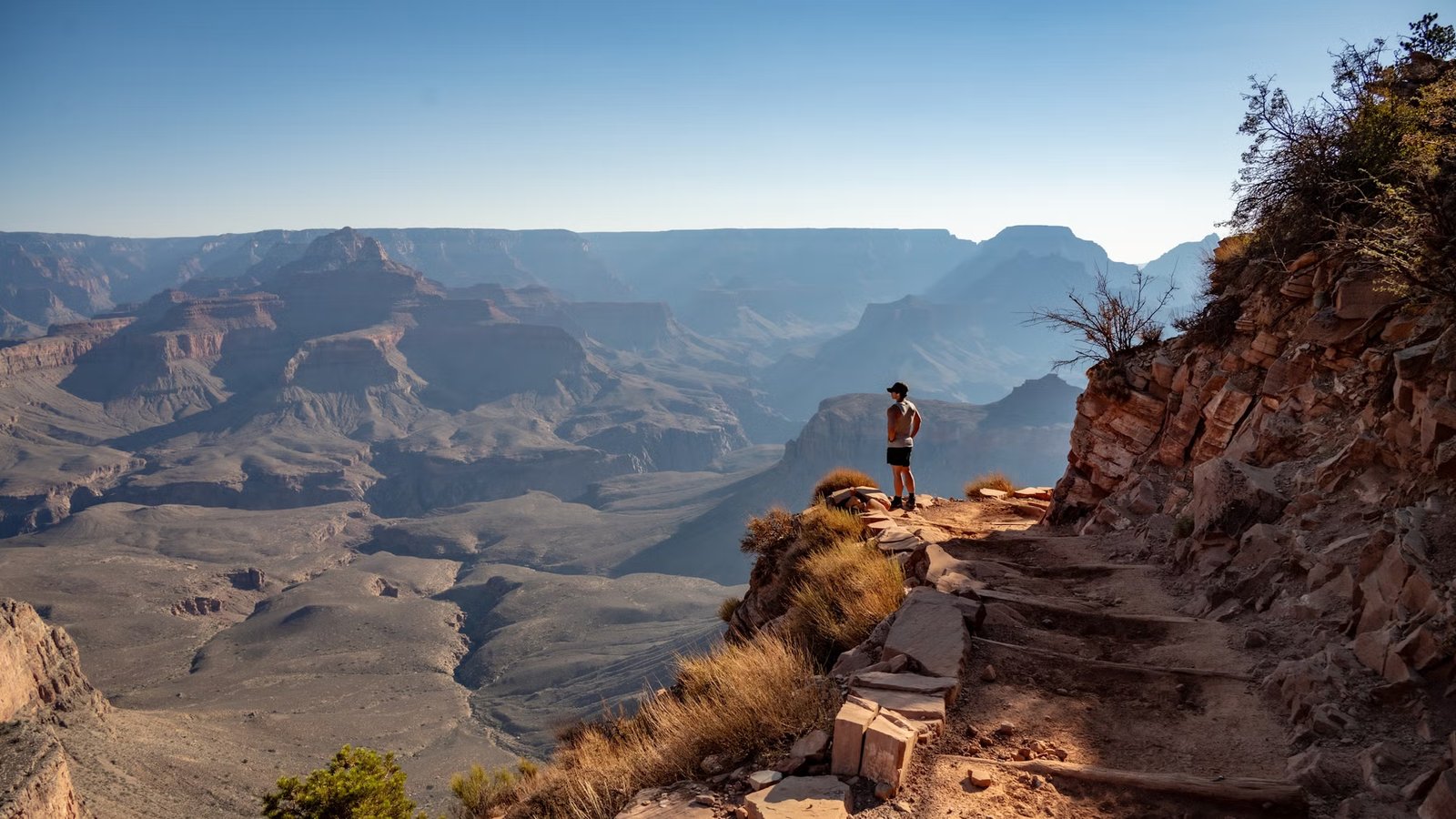
Bright Angel is the park’s most popular trail, according to the National Park Service (NPS). It takes hikers roughly eight miles from the South Rim to the Colorado River, and descends 4,500 feet. But in the heat of summer, the 16-mile round-trip hike can quickly turn deadly.
The teen was hiking with his father when he began experiencing symptoms of heat exhaustion, roughly a mile north of Havasupai Gardens, which is 4.8 miles from the canyon rim. Baird said that on June 3, temperatures at the bottom of the canyon were above 100 degrees Fahrenheit.
Officials believe heat stroke may have caused the man to faint or fall off the trail.
“The victim was experiencing heat-related illness prior to the fall, which may have been the contributing factor to the fall itself,” Baird said. “In extreme cases of heatstroke, victims can suffer ataxia, loss of balance, and altered mental status.”
After the hiker began experiencing signs of heat stroke, his father called for help using a satellite device. He then left the teen on the trail to find help at the Havasupai Gardens ranger station. When he returned, his son had fallen off the trail.
June is one of the hottest months in the Grand Canyon, and hiking inside the canyon at midday is incredibly dangerous, even when the park doesn’t post a formal heat warning.
“We didn’t even have extreme heat warnings on the day this happened,” Baird said. “Even so, we had triple-digit temperatures at the bottom of the canyon. Incidents like these occur when we have individuals overexerting themselves at the hottest time of the day, between the hours of 10 A.M. and 4 P.M.”
Grand Canyon Temperatures Vary by Elevation
Michael Lowe is a local hiking guide and owner and founder of Pygmy Guides, which offers backpacking adventures through the Grand Canyon. He’s lived in the area since the late nineties and has guided hikers into the canyon since 2005.
“It’s easy to underestimate the heat-related dangers in the Grand Canyon,” Lowe told Outside. “You start at the higher elevations, where it’s the coolest, and you’re moving downhill, so it seems kind of easy, but you’re hiking down into the heat. Once you hit that heat, you’re in it, and now you have to find your way back up and out.”
Lowe said that the sandstone walls of the canyon’s lower regions trap heat, and as the day goes on, the trails get hotter the deeper one descends.
“Those rocks heat up throughout the day and then radiate that heat back at you,” he said. “The rocks can be much hotter than the air temperature.”
While midday summer temperatures at the South Rim may hover in the eighties or nineties, the inner canyon has a distinct heat and weather pattern. Temperatures at the canyon bottom regularly reach between 105 and 115 degrees Fahrenheit. Because the inner gorge consists of dense, dark metamorphic rock that acts like an oven, ground temperatures on the trail surface can also spike up to 20 or 30 degrees hotter than the official air temperature reading.
The NPS advises hikers not to attempt a round trip to the river and back in a single day, but Bright Angel is a popular choice for those who do.
“The Bright Angel Trail is considered one of the safer, more manageable trails in the heat, because it does have water in certain spots, and it has more shade than some of the other trails,” Lowe said. “The main thing is that once you encounter those high midday temperatures, you need to find water, find shade, and wait out the heat of the day.”
Bright Angel Trail is wide and easy to follow, and Lowe says in the summer, it’s common for visitors to hike out at night.
“The real danger is the heat,” he said.
Preventing Heat Stroke in the Desert
Sunscreen, hats, and sunglasses are well-known heat-protection items for those hiking in the Grand Canyon, but Lowe recommends one surprising hack: an umbrella.
“Umbrellas are becoming more and more popular and for good reason. They’re very helpful in the sun. We carry umbrellas on all of our trips, often not for rain, but to keep the sun off,” he said.
Hikers should always carry an adequate amount of water. Most experts recommend carrying and drinking at least one liter of water for every two to three miles traveled in extreme heat. Eating right is important, too.
“Take electrolyte supplements, but also salty snacks, and proper meals,” Lowe said. “Don’t just rely on goo or drink powder.”
If you do find yourself trapped low in the canyon during high temperatures and begin experiencing symptoms of heat-related illness, such as dizziness, a cessation of sweating, and confusion or disorientation, Lowe said to find shade and get in the water, if possible.
“The only way to get out of that hot environment is to get in the water. Lay down in the creek, soak, cool off your core temperature, and just wait out the heat of the day,” he said. “Don’t try to push through. Don’t worry about your dinner reservations or potentially missing a flight. That is less important than your own personal safety.”
