

Published July 23, 2026 10:12AM
On July 18, Jackson Hole opened three new via ferrata routes over what might be the most famous ski feature in the West, if not in the entire United States: Corbet’s Couloir. This double black diamond at a 50-degree slope with a 20-foot drop over a cornice is one of the steepest runs in North America.
This new addition to Jackson’s via ferrata network doesn’t ascend the couloir itself, because there are actually already a few rock climbs here. To avoid disturbing the existing climbs, the via ferrata routes traverse under Corbet’s, then ascend the cliff directly to the east. These new routes bring Jackson’s via ferrata network total to 20—by all accounts, the largest in the country.
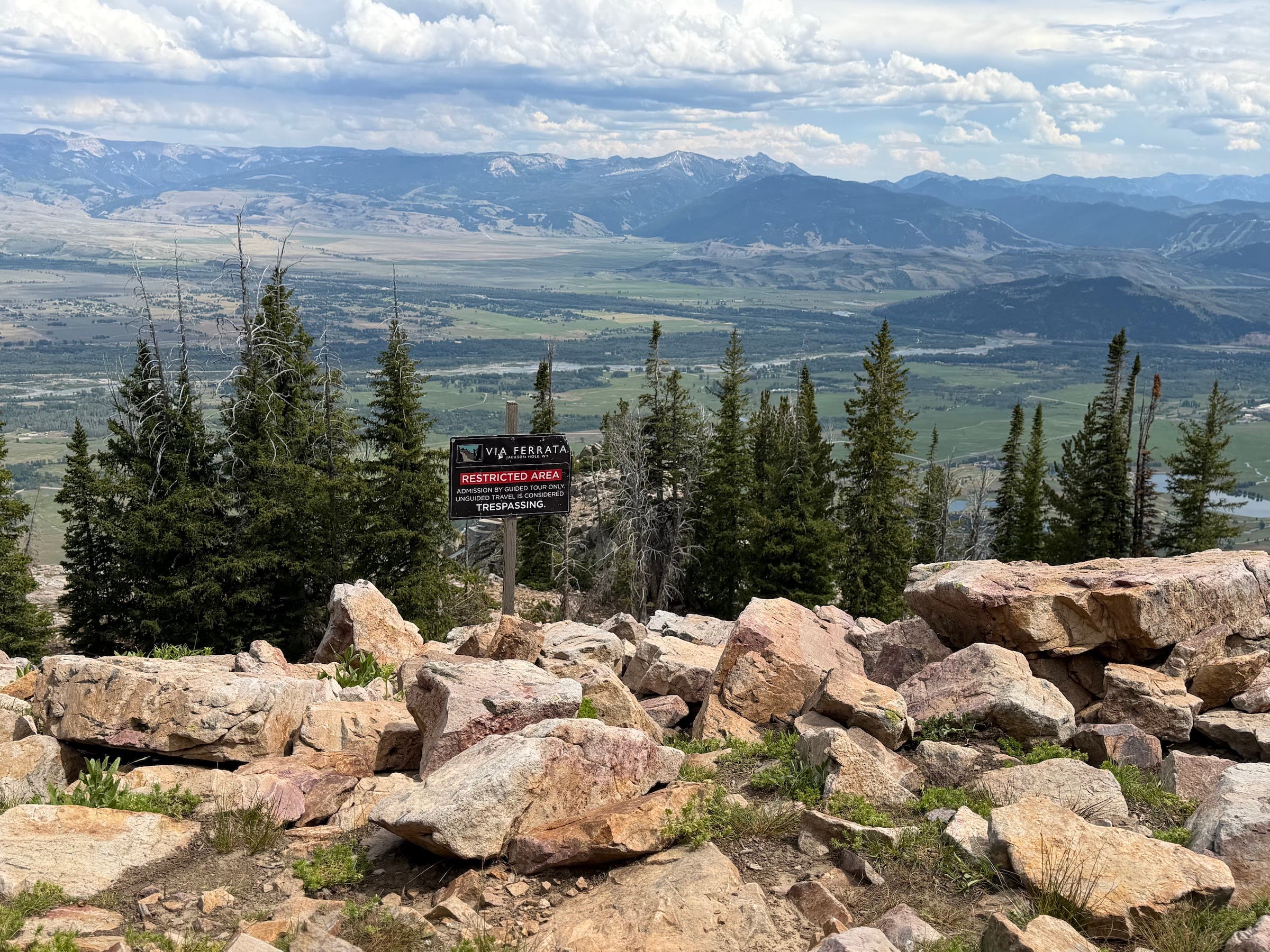
As anyone familiar with Corbet’s Couloir—oft dubbed “North America’s scariest ski run”—might expect, these routes are not exactly a cruise. One blue-rated route traverses under the couloir, then two black routes climb the cliff. While various grading systems exist for via ferratas, the Jackson Hole network uses green, blue, or black (like ski runs). All of Jackson Hole’s via ferrata routes, including Corbet’s, are only accessible via a guide (more info on pricing and trip options below).
While these new routes come with a stout grade, they’re still pretty accessible, allowing anyone with an adventurous spirit—but without double-black skiing or rock climbing skills—to check out the couloir and the magnificent surrounding cliffs. Even skiers who have backflipped into the couloir may want to take the opportunity to experience this exhilarating setting minus the snow.
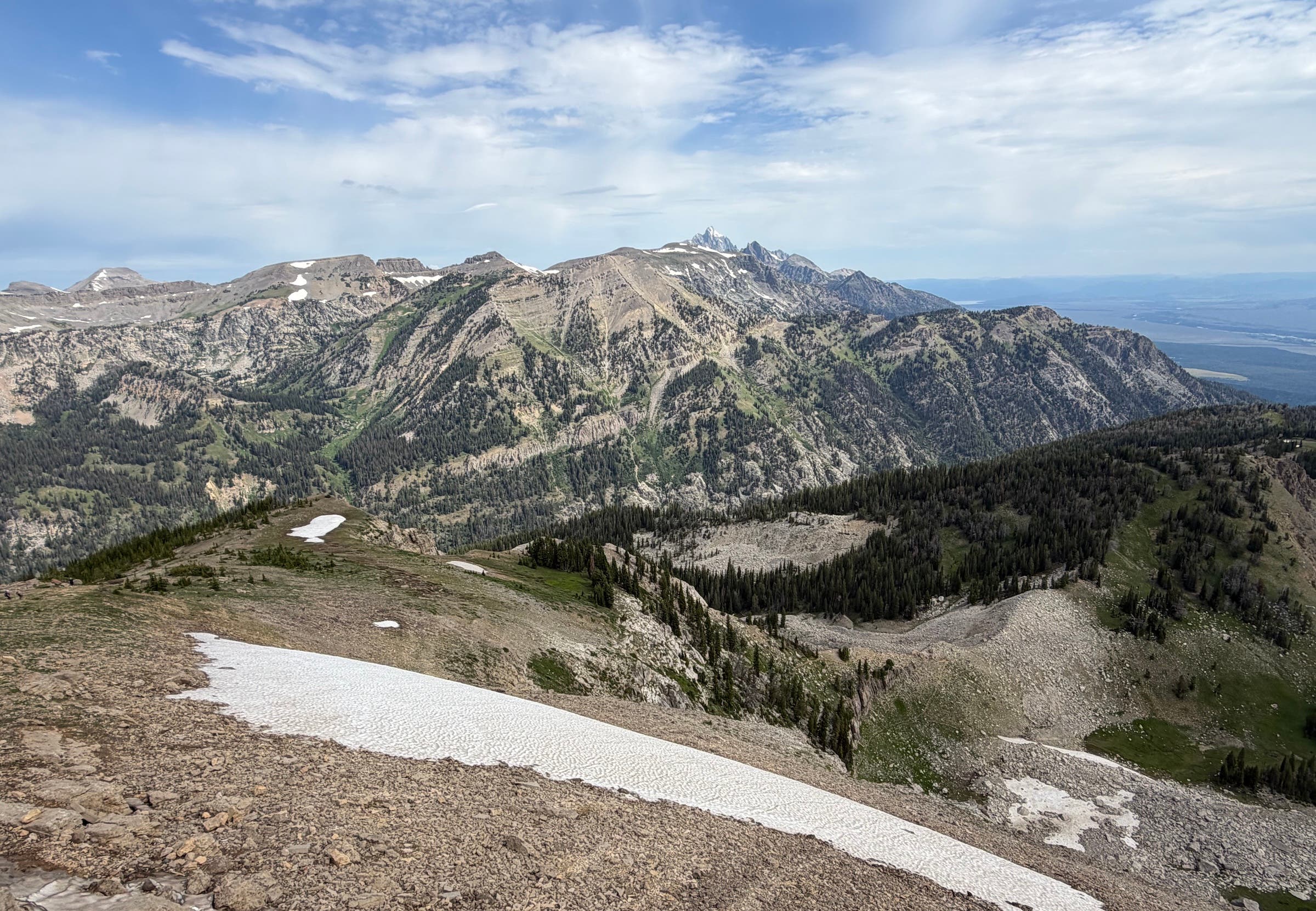
My interest in the new Corbet’s Couloir via ferrata came from a long-time curiosity about whether, as a skier who can get down almost anything (though not necessarily in good style), I could ski this iconic feature. Accessed via Jackson’s tram, which tops out at 10,450 feet, the couloir is named for Barry Corbet, an alpinist who taught skiing here. In 1960, Corbet remarked, “Someday someone will ski that.”
In 1967, someone did—Lonnie Ball, a 19-year-old Jackson Hole ski patroller. Nowadays, a lot of people ski Corbet’s Couloir. Every year since 2018, the mountain has hosted the Kings and Queens of Corbet’s competition, which decides who can ski the steep gully in the best style. Even a six-year-old has linked turns down it. And as of this past winter, what’s often billed as North America’s scariest ski run got its own livecam.
Since I’d never skied Jackson before—nor had I ever tried a via ferrata—I was excited about the prospect of staring down Corbet’s up close. As a long-time climber, I’ll also admit that I was equal parts via ferrata-curious and via ferrata-skeptical (i.e., Would a climber really ever want to ascend a literal ladder rather than the rock?). Last week, I got to follow my curiosity and check my cynicism. A day before the new Corbet’s via ferrata opened to the public, I sampled the routes. Here’s everything you need to know to clip cables across the couloir yourself.
Via Ferratas: A Short Primer
Italian for “iron path,” a via ferrata involves navigating a wall through medal features—rungs, bridges, even literal ladders. One of the first documented uses lies in the Dolomites, where soldiers needed to efficiently move through the mountains during World War I. Today, well over 1,000 via ferrata routes line walls across Europe.
While the history of via ferratas runs deep in the Old World, this mode of adventure is much newer in the U.S., which didn’t see its first route until 2001 in Kentucky’s Red River Gorge. But the trend is quickly building speed. After former Jackson Hole Resort owner Connie Kemmerer took a trip to Europe and tried via ferratas for herself, she returned home with a dogged motivation to bring them to the U.S.
While in Jackson, I got to enjoy an Arnold Palmer with 82-year-old Kemmerer, who intends to try the Corbet’s via ferrata routes herself in the coming weeks. Lightheartedly nicknamed the patron saint of via ferratas, Kemmerer, at age 81, also recently became one of the oldest known climbers to summit the Grand Teton.
I asked Kemmerer how it felt to see her vision come fully to fruition with the Corbet’s Couloir via ferrata routes. “It is the culmination of a dream that started over 20 years ago after climbing via ferratas in Europe,” she reflected. “My dream was to provide a climbing experience that you didn’t have to be an expert to do that gave a sense of scaling rocks in the mountains.”
Inside the New Corbet’s Couloir Via Ferrata Routes
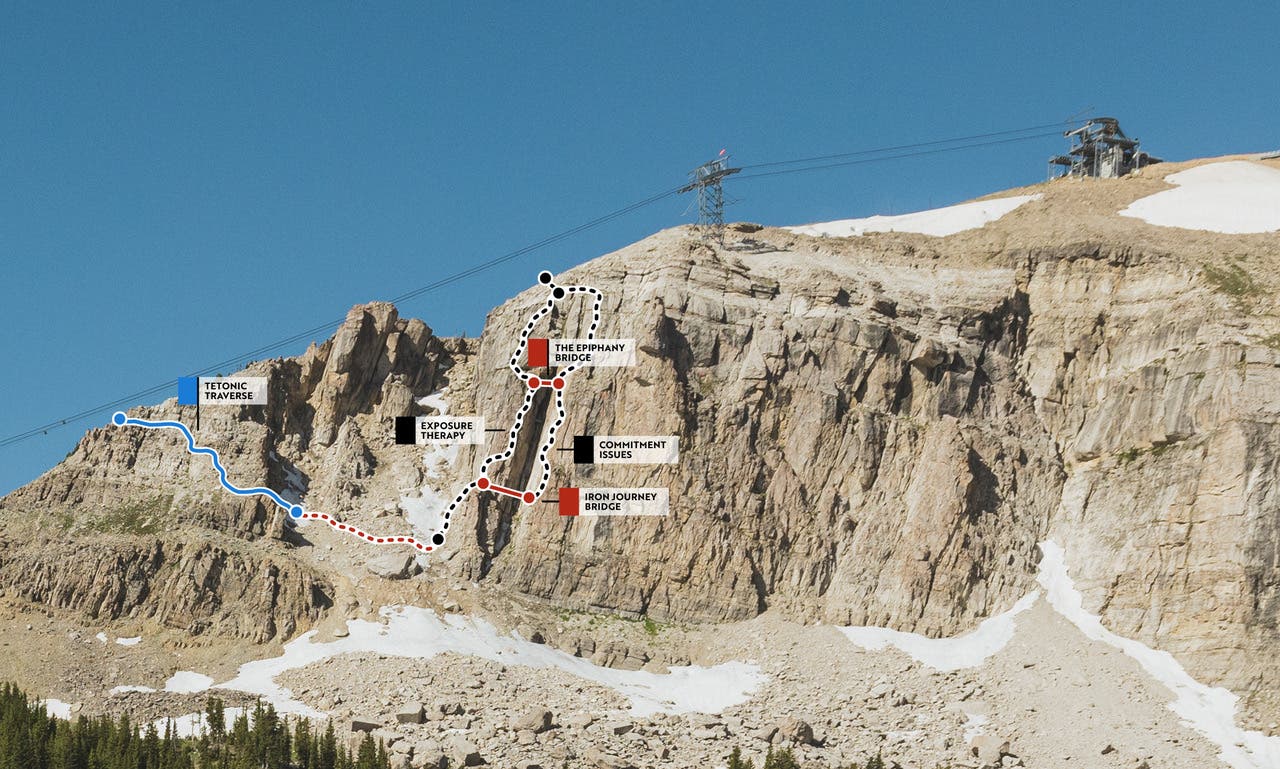
To reach the new routes around Corbet’s, you start by taking the tram up to the high point at Jackson Hole Mountain. From there, you hike down to the cusp of Corbet’s before starting the first traverse route.
Tetonic Traverse
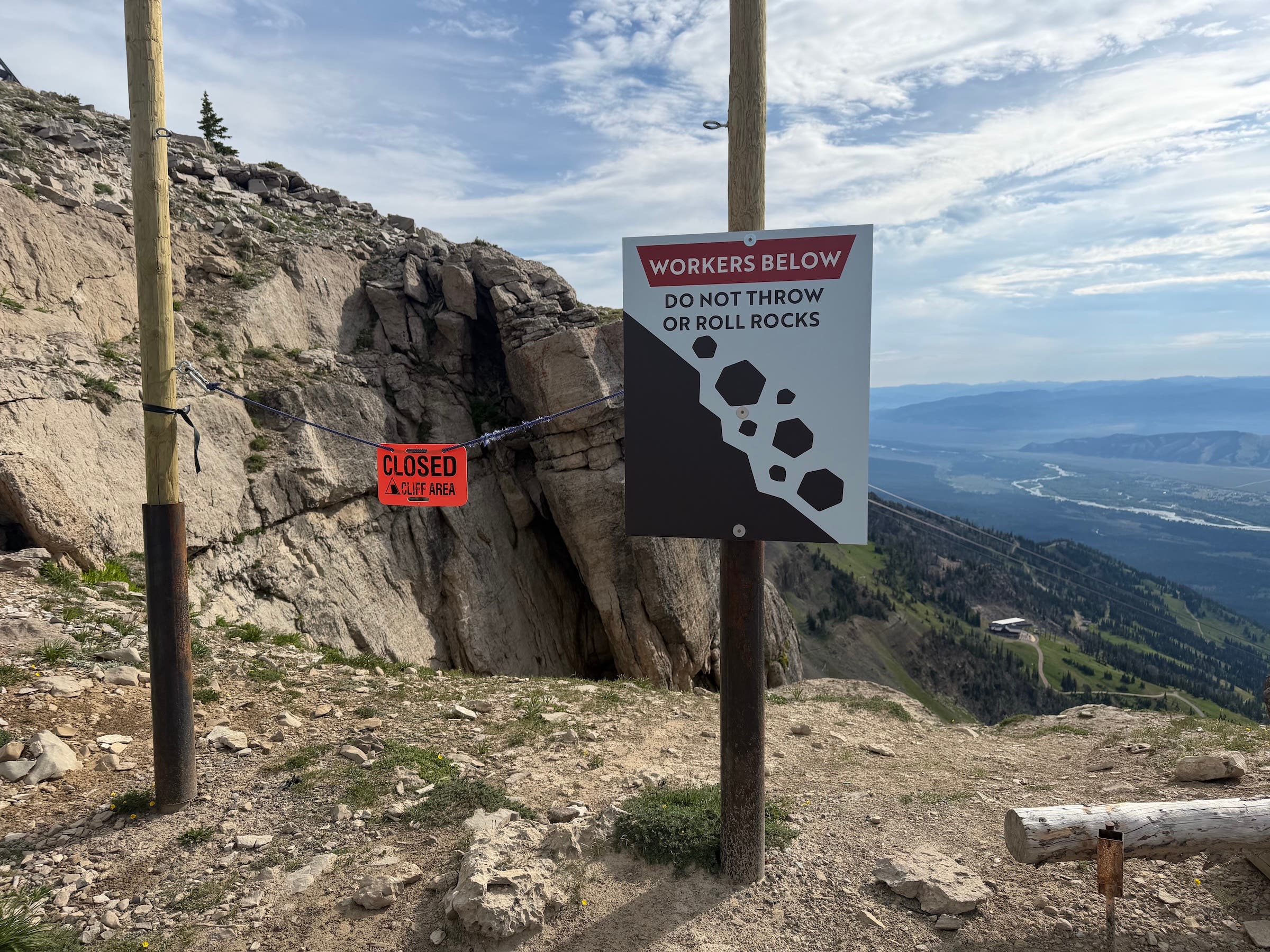
To access the two new black via ferrata routes, you first hike down to the right of Corbet’s and clip into the cable of Tetonic Traverse, rated blue. This route mostly involves hiking over a loose narrow path hugging the cliffband, with a high-consequence drop below and the risk of rockfall from the couloir above. There are also a few sections of mellow downclimbing.
Exposure Therapy
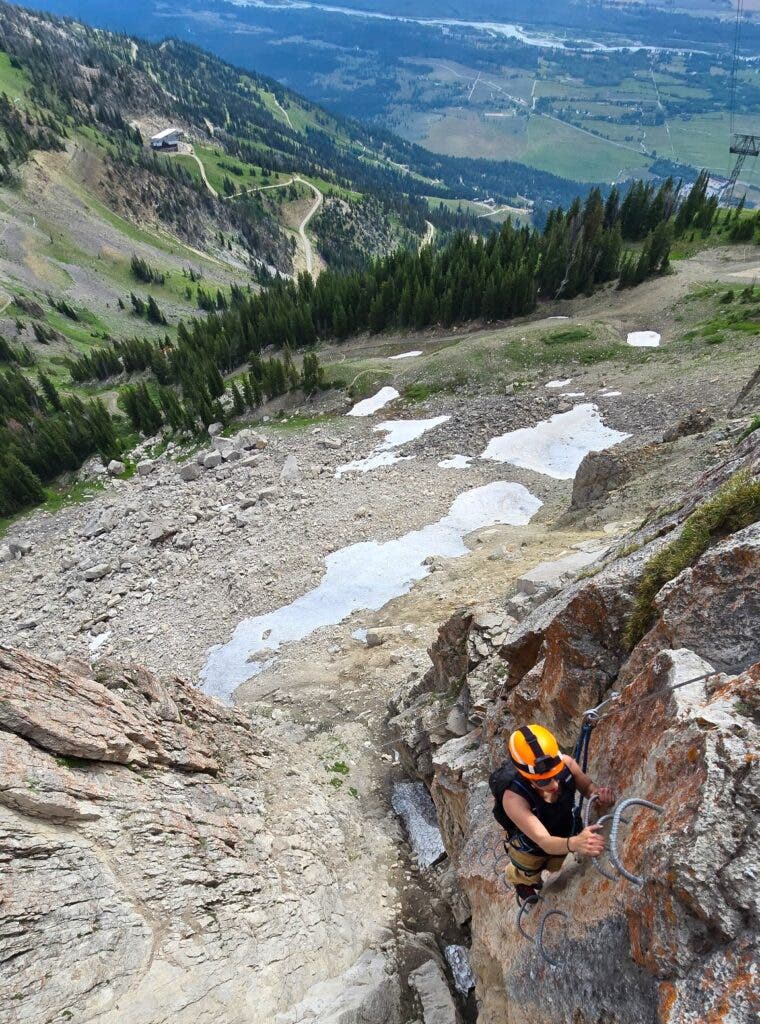
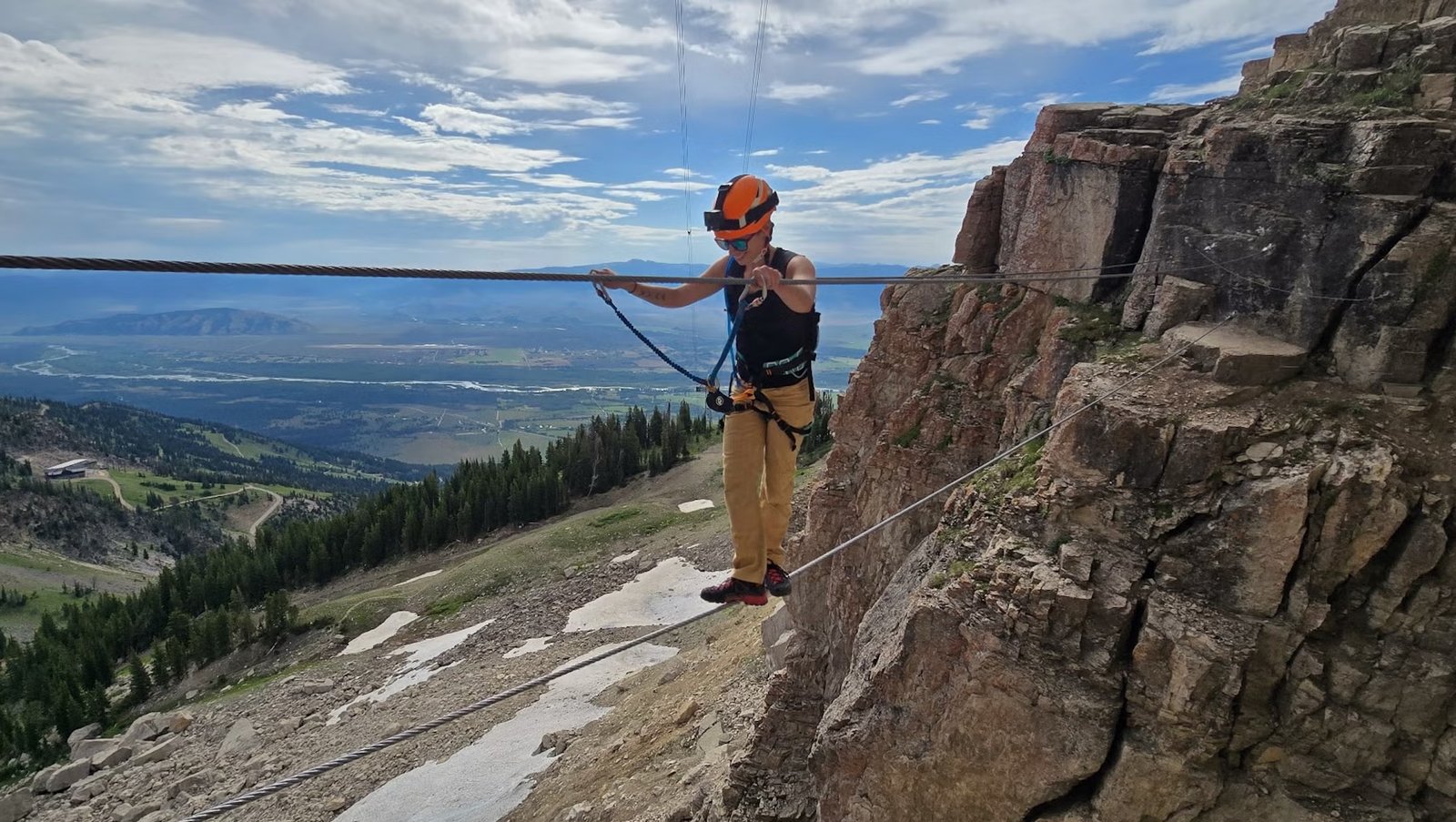
The first route you’ll reach is Exposure Therapy, which climbs up an arete (basically, a vertical ridge of rock). It’s narrow, with big open air to your right. During the most exposed part of the arete, you must hug the rock with your left hand and engage your core to prevent gravity from pulling you off. Then you cross a short chasm called The Epiphany Bridge with one cable beneath your feet, another above to hold onto, and 400 feet of air below. From here, you can continue upward, or access the top section of Commitment Issues. All in all, Exposure Therapy involves approximately 400 feet of climbing.
Commitment Issues
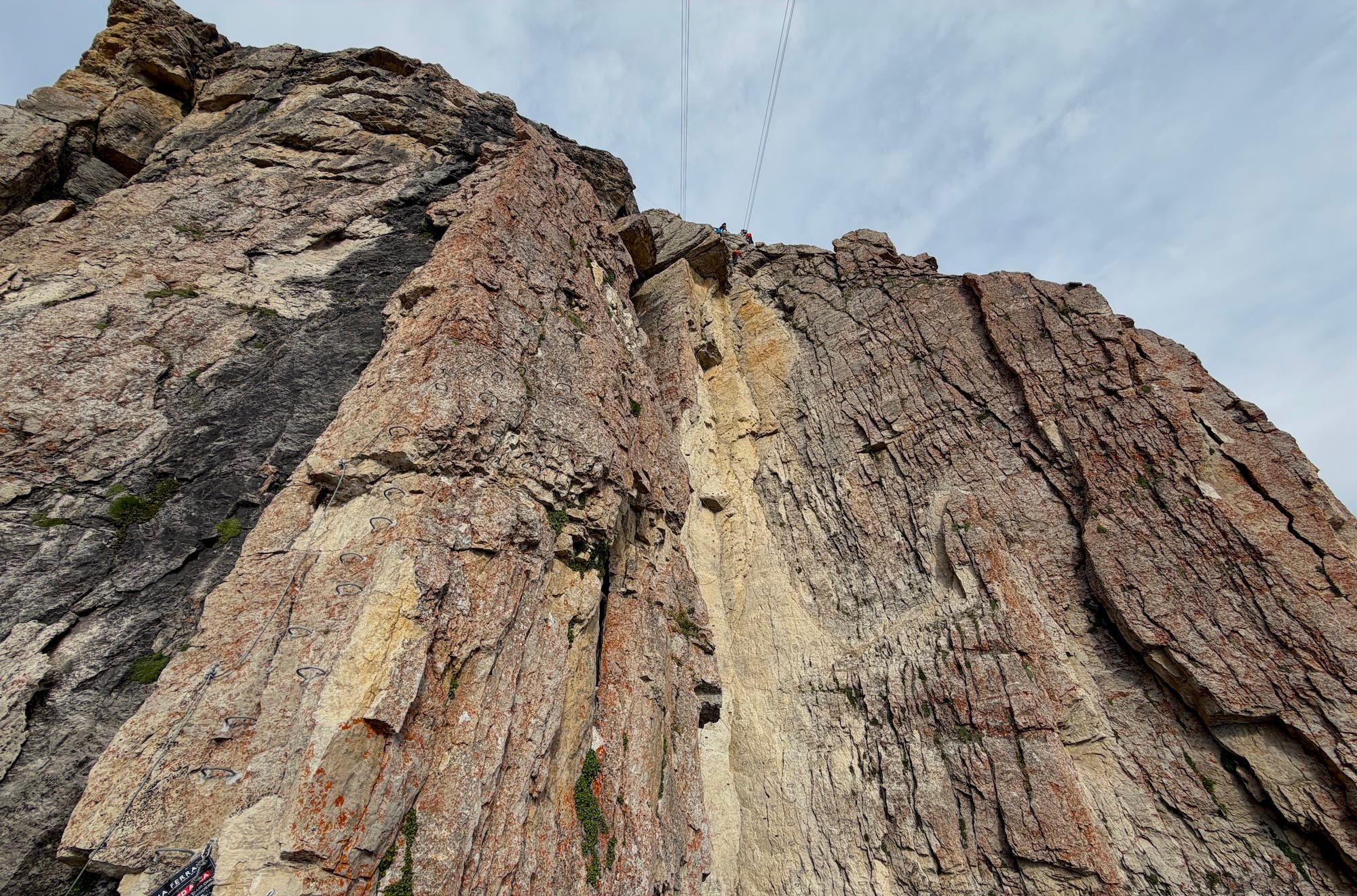
Ascending a limestone face, Commitment Issues—also a black-rated, 400-foot route—involves steeper moves with a couple roof sections. You feel less exposed than on Exposure Therapy since you’re moving up a wall, rather than climbing up a narrow pinnacle-like edge of rock. The rock down low is very chossy—a climbing term for crumbly, low-quality rock. But up high, the limestone gets more solid, and you can more easily use it for holds instead of the medal rungs if you so choose.
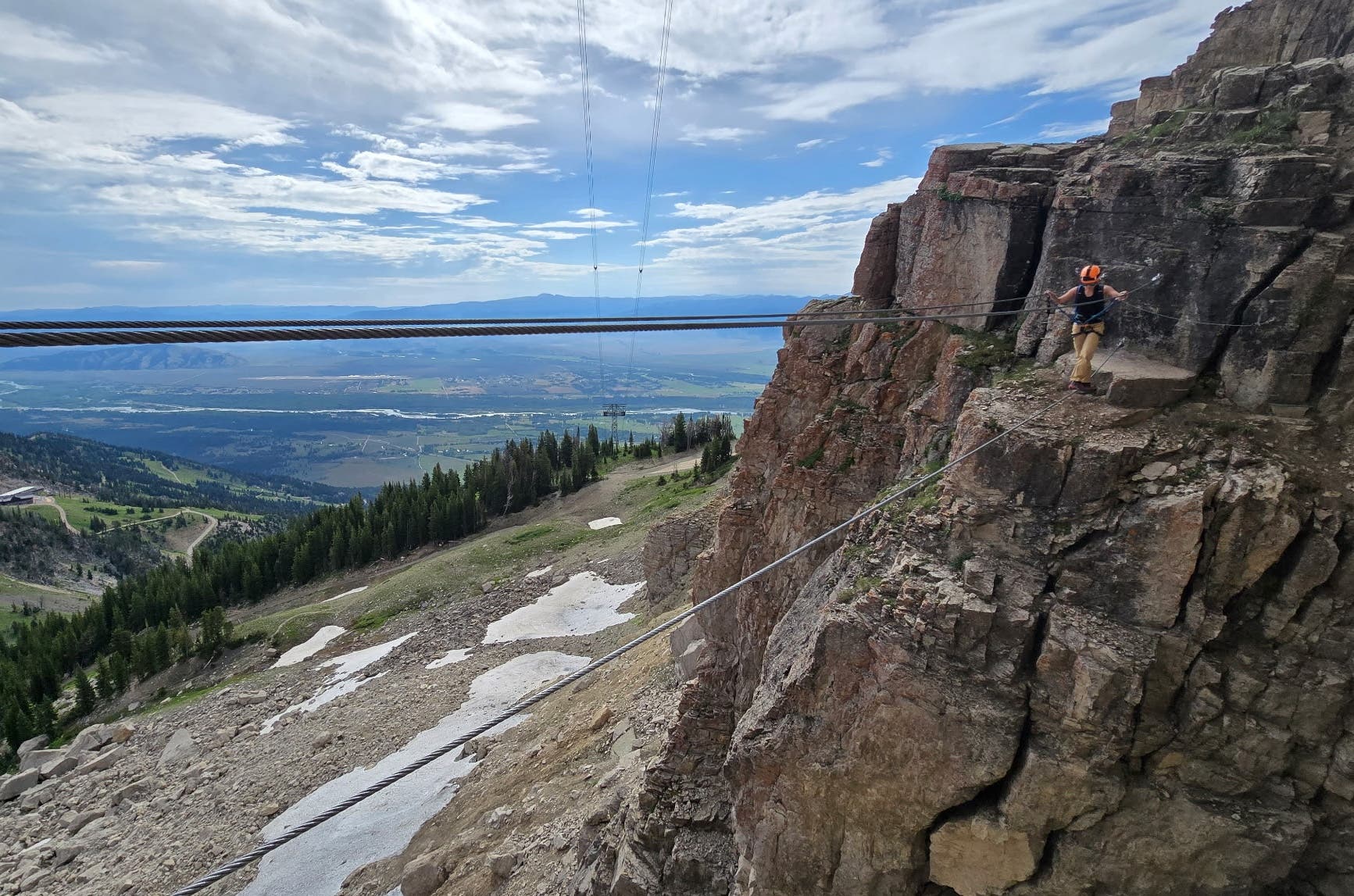
Commitment Issues involved the most adrenaline-inducing part of this whole experience for me: Iron Journey Bridge. With a single cable below and two above to death-grip as you cross, this bridge will be a crucible for anyone with a fear of heights. At 52 feet, Iron Journey is the longest bridge in Jackson’s via ferrata system. The extensive length causes the cable beneath your feet to bounce and wobble slightly with each step. Did I mention I rarely slackline? And that it’s a 100-foot drop to the ground below?
Jackson’s other via ferrata routes
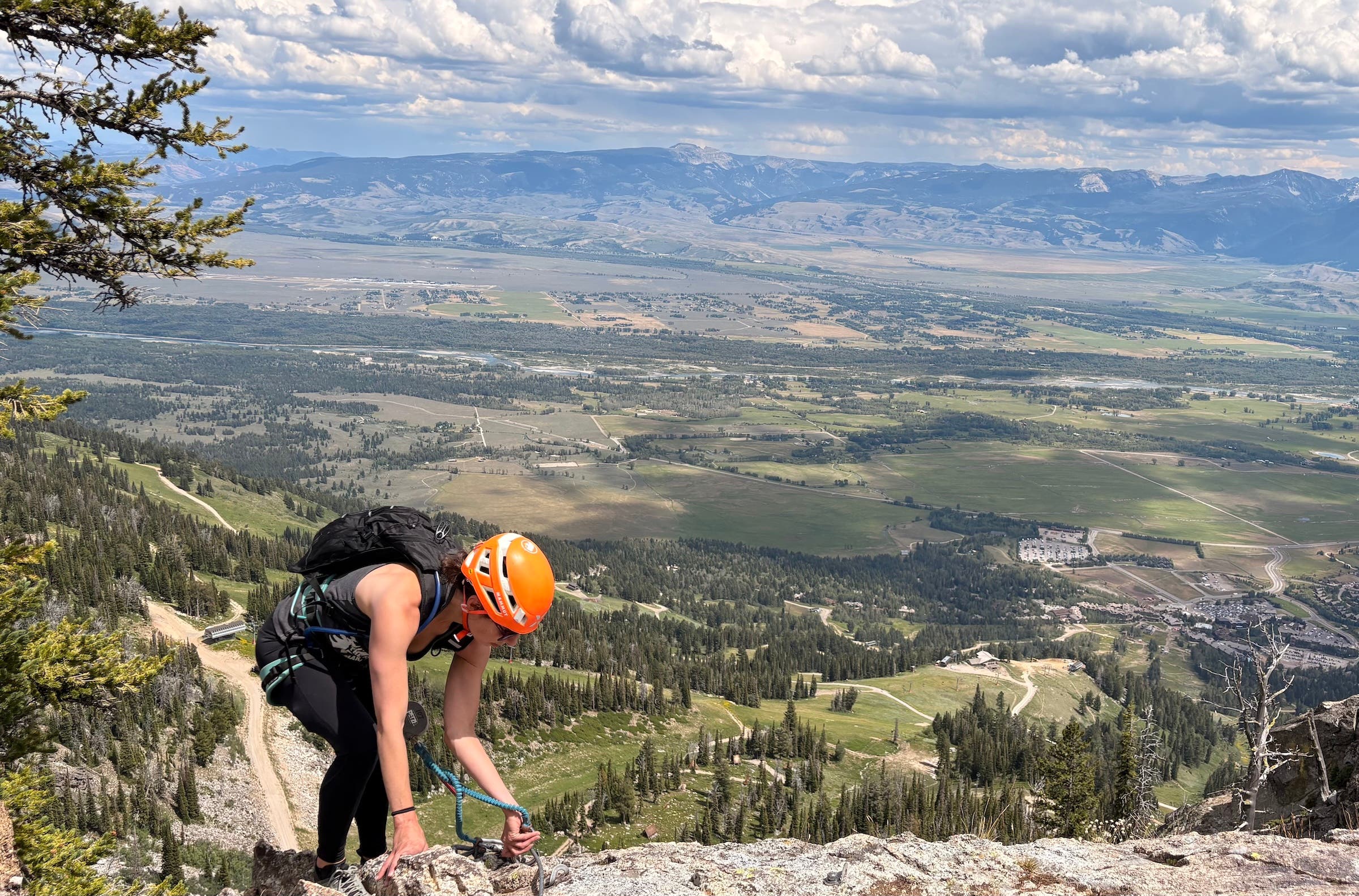
Not ready to jump on these exposure-intensive routes? Jackson Hole also has 17 existing via ferrata routes that have been around since 2017. These “legacy routes” include a mix of greens, blues, and blacks, decorated with cable bridges, swinging bridges, and swirling ladders.
A Climber’s Impressions of the Country’s Biggest Via Ferrata Network
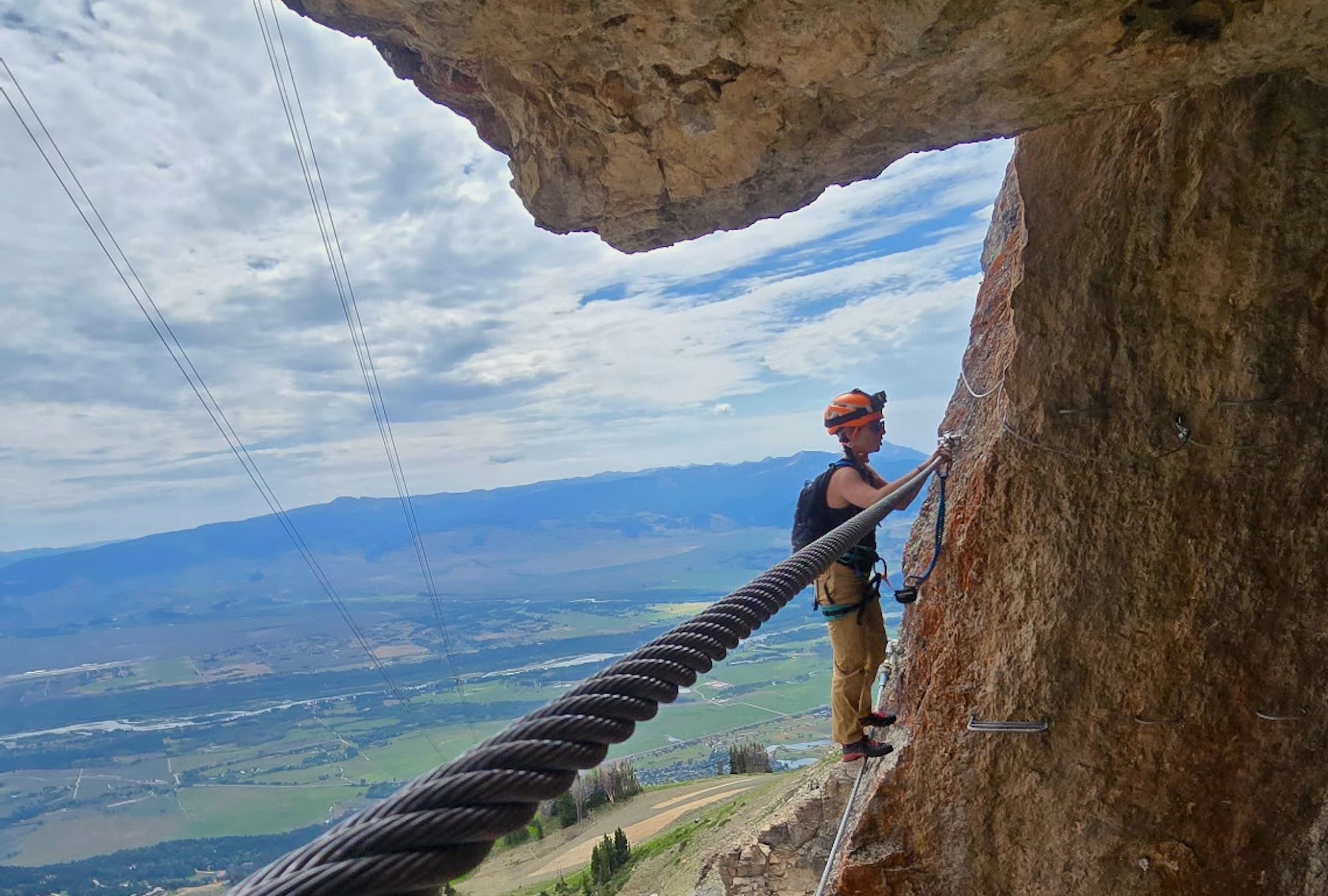
As a climber who had never tried a via ferrata before, I went into the Corbet’s via ferrata routes with mild expectations. But I was blown away at how much fun and flow I experienced on this vertical hike. Instead of stressing about my next bolt or gear placement to protect my climb, I was taking in the stunning alpine setting. Rather than focusing on a difficult move, I entered a zen rhythm that tuned me into the surroundings more than when I’m climbing. Step, step, pull, pull, clip, clip—repeat.
The other cool aspect of via ferratas compared to most modes of climbing is that you get to move in sync with the rest of your group. Generally, rock climbing feels solitary, as you leave the ground—and your belayer—behind, moving alone up the wall. With the cable system, you get to safely climb at the same time.
On the other hand, I didn’t feel the same sense of accomplishment that I do after rock climbing. Rather than a physical and mental battle up the wall, it felt more like a joy ride.
Corbet’s Couloir Via Ferrata: Planning, Season, and Cost
Wondering whether you should give the Corbet’s via ferrata a go? If you haven’t rock climbed or done a via ferrata before, I recommend hopping on some easier routes before you commit to the black lines around Corbet’s. Especially if you’re scared of heights or not surefooted, you’ll want to test your mettle and mindset on some greens or blues first. Kids are welcome, but they must be over the age of 12 and weigh more than 88 pounds to try Corbet’s.
The via ferrata season at Jackson Hole runs mid-June through early October, depending on conditions. At a higher elevation, the Corbet’s season starts later, in mid-July. To access the Corbet’s routes, the only option is a full day with a guide ($1,010 for up to four people). For the rest of the routes, both half day (from $620 for up to five people) and full day (from $910 for up to five people) options are available.
My Gear Recommendations for Jackson Hole’s Via Ferrata
Your guides will provide a helmet, approach shoes, and a harness with via ferrata tethers. I brought my own helmet and approach shoes, but you’re required to wear the guide-provided harness. You can also bring your own approach shoes—a couple recs include the versatile Arc’teryx Alpine Vertex and the La Sportiva TX4 EVO (more tested favorites here). Here are a few more gear and layer recommendations for the Corbet’s or any alpine via ferrata:
- Durable, stretch-friendly shorts or pants. I wore my La Sportiva Mainliner Pants that I’ve been climbing in all spring and summer.
- A sun hoodie, a light rain shell, and other layers depending on the forecast. I packed my Backcountry Tahoe Sun Hoodie (also available in men’s)—a layer that’s been going strong in my adventure closet for almost a decade. You might also wear/bring a light raincoat, synthetic puffy, or other low-bulk layer for warmth if needed.
- A light daypack, ideally compatible with hydration reservoirs, that can fit a layer, your phone, and a snack like this CamelBak pack.
- Bug spray. I got a bunch of mosquito bites while passing lingering snow on the approach to the Corbet’s routes. Pack some insect repellant!
Final Thoughts: Corbet’s Couloir Via Ferrata
While I can’t compare Jackson’s new Corbet’s Couloir via ferrata to the great iron paths of Europe, I can say that the routes felt exciting, flowy, scenic, and well thought out. I would highly recommend them for fun-focused climbers, or for anyone curious about rock climbing. Via ferratas make for good gateway adventures, whether leading to self-guided via ferrata routes in Switzerland, or to your first time rock climbing outside.
Lastly, to answer the question that motivated me to try this via ferrata in the first place: Can I get down Corbet’s Couloir on skis? Even though I’ve now seen the couloir, the answer is still “I don’t know.” I guess I’ll have to come back in winter for a more seasonally relevant look.
Maya Silver is the editor-in-chief of Climbing Magazine and a climber of almost 20 years. Until July of 2026, she had never done a via ferrata before. Since trying the Corbet’s Couloir via ferrata routes, she has added a self-guided via ferrata through the Italian Dolomites to her bucket list—but maybe she’ll try the new via ferrata through the Ashley Gorge near her home in Vernal, Utah, first. She lives in Kamas, Utah just outside the Uinta Mountains. with her family.
