

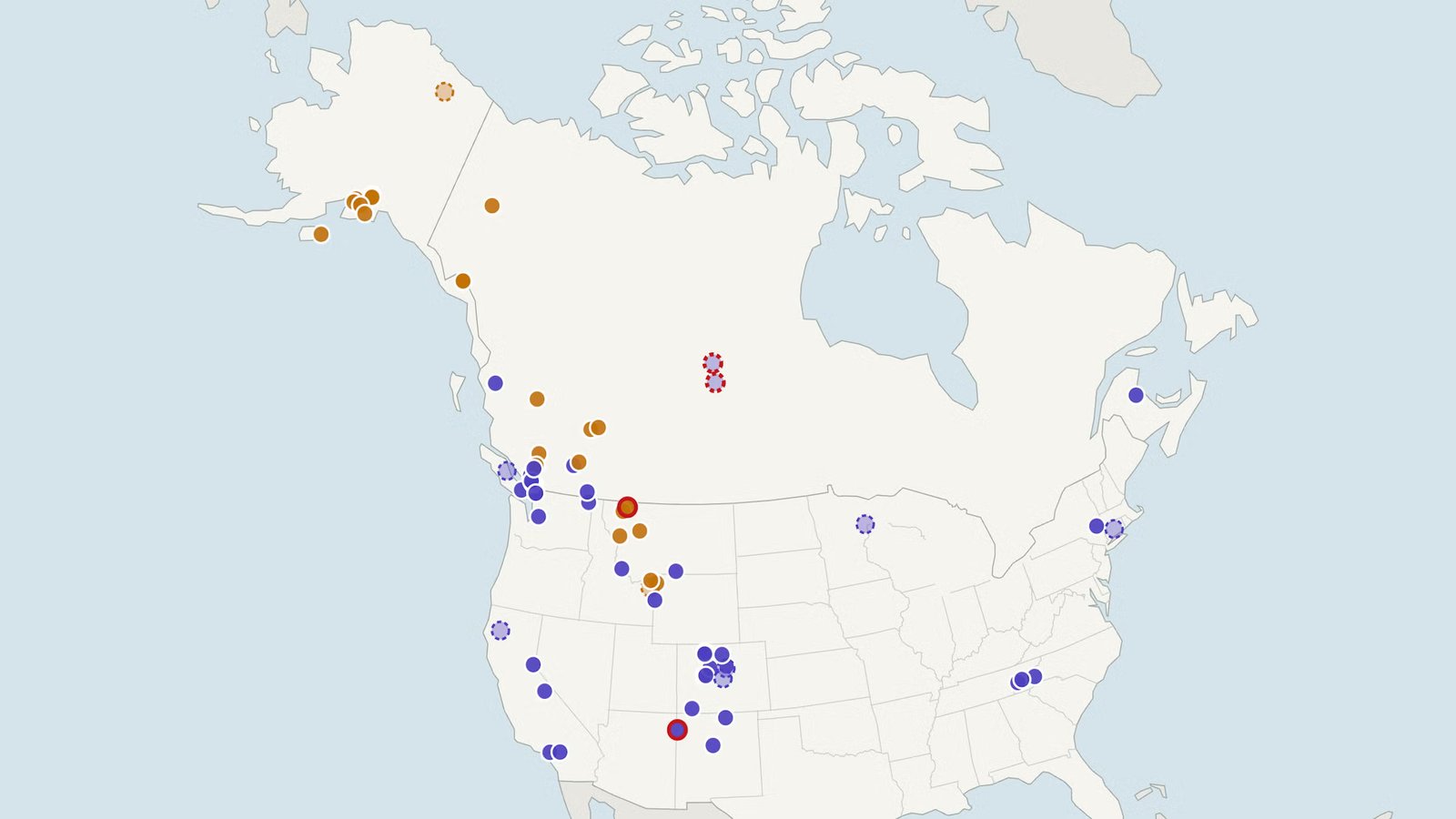
Environmental pressures and booming recreation are pushing bears into closer contact with humans. Government agencies don’t track bear attacks and encounters across the United States, so one Texas outdoorsman compiled his own comprehensive log.
In 2026, at least 73 black or grizzly bear attacks have been documented across North America (Photo: Generated using Claude)
Published October 21, 2026 04:24PM
Around 3:30 A.M. on October 7, a black bear sow and her two cubs broke into a man’s house near Salmon, Idaho. To protect his two sleeping daughters and wife, the man, Brian Heidemann, tackled the mother bear and put it in a chokehold.
Heidemann suffered bite wounds and deep gashes on his head, torso, and shoulder. Eventually, state officials euthanized the three bears.
The incident is another example of how bear-human encounters seem to be on the rise in 2026, as drought and food shortages have driven animals into neighborhoods and towns in search of food. Yet, quantifying encounters and even bear attacks on humans is surprisingly tricky. No national database tracks bear attacks on humans across the U.S. Instead, state agencies tally this data independently.
This information gap is where Mike Dickerson, 71, saw an opportunity. A Texas outdoorsman and writer, Dickerson noticed what he said seemed to be an uptick in reports of bear attacks and encounters across North America.
“I saw that there was no national database, and no one is tracking,” Dickerson told Outside. “I decided to start tracking attacks this year simply because I was reading and hearing of more attacks through some of my sources at various professional wildlife managers across the country, but particularly in the western states.”
Dickerson’s list, which he first published on Facebook, includes at least 73 encounters and attacks across 13 U.S. states, four Canadian provinces, and the Yukon Territory. Of the 73 total encounters, 64 were bear attacks that resulted in an injury or death.
A Bear Expert Crunches the Numbers
Bear experts describe an attack as any time a bear physically injures a person. A bear encounter, meanwhile, is when a person comes into contact with a bear. Dickerson said his list wasn’t meant to distinguish these nuances, but to document reported interactions, such as a bear bluff-charging a person, and direct attacks.
Outside sent the list to Chris Servheen, the former national grizzly bear recovery coordinator for the U.S. Fish and Wildlife Service, who crunched the numbers. According to Servheen, more than two-thirds of the incidents on Dickerson’s list involved black bears, while dogs were involved in a quarter of all bear attacks. Furthermore, he noted that:
- 24 percent of all attacks involved females with cubs, and 35 percent of those were grizzly/brown bears.
- 25 percent of attacks involved bears that were food-conditioned to human foods before the attack, and all were black bears.
- 43 percent of the attacks were predatory, and 94 percent involved black bears.
“Remember that these are usually reported due to an injury or a serious event,” Servheen told Outside. “Most minor encounters are not reported. That means that this list is biased toward serious events. There are countless minor encounters that are not reported and do not make it into such a list.”
Dickerson acknowledged that he did not create his list with the rigor of a scientific study.
“My purpose was simply to create a list and track attacks in North America,” he said.
Grabbing Bear Data from Local Reports
Dickerson gathered almost all his data from publicly available sources, mainly media reports and daily automated news alerts, plus a few direct reports from hunters.
I’m just an interested outdoor writer who decided to track attacks this year, again, precisely because the experts predicted this would be a bad year,” he added.
Data suggest brown bear attacks are rising worldwide. According to a 2019 study, North America saw 183 attacks between 2000 and 2015, averaging 11 per year. Between 1990 and 2019, North American black and grizzly bears have killed at least 150 people, and more people have died in recent decades than a century ago.
And 2026 appears to be an unusually high year for bear activity across the Western U.S.
“It is a bad food year for bears due to drought and climate change reducing natural foods for bears,” Servheen said. “This brings people and bears into increased encounters. There are more people living and recreating in bear habitat, and that results in increased encounter frequency and more reports and events.”
Outside verified Dickerson’s list against verified media and government reports describing incidents between people and black, brown, or grizzly bears. One incident was reported directly to Dickerson and not published in any outlet.
