

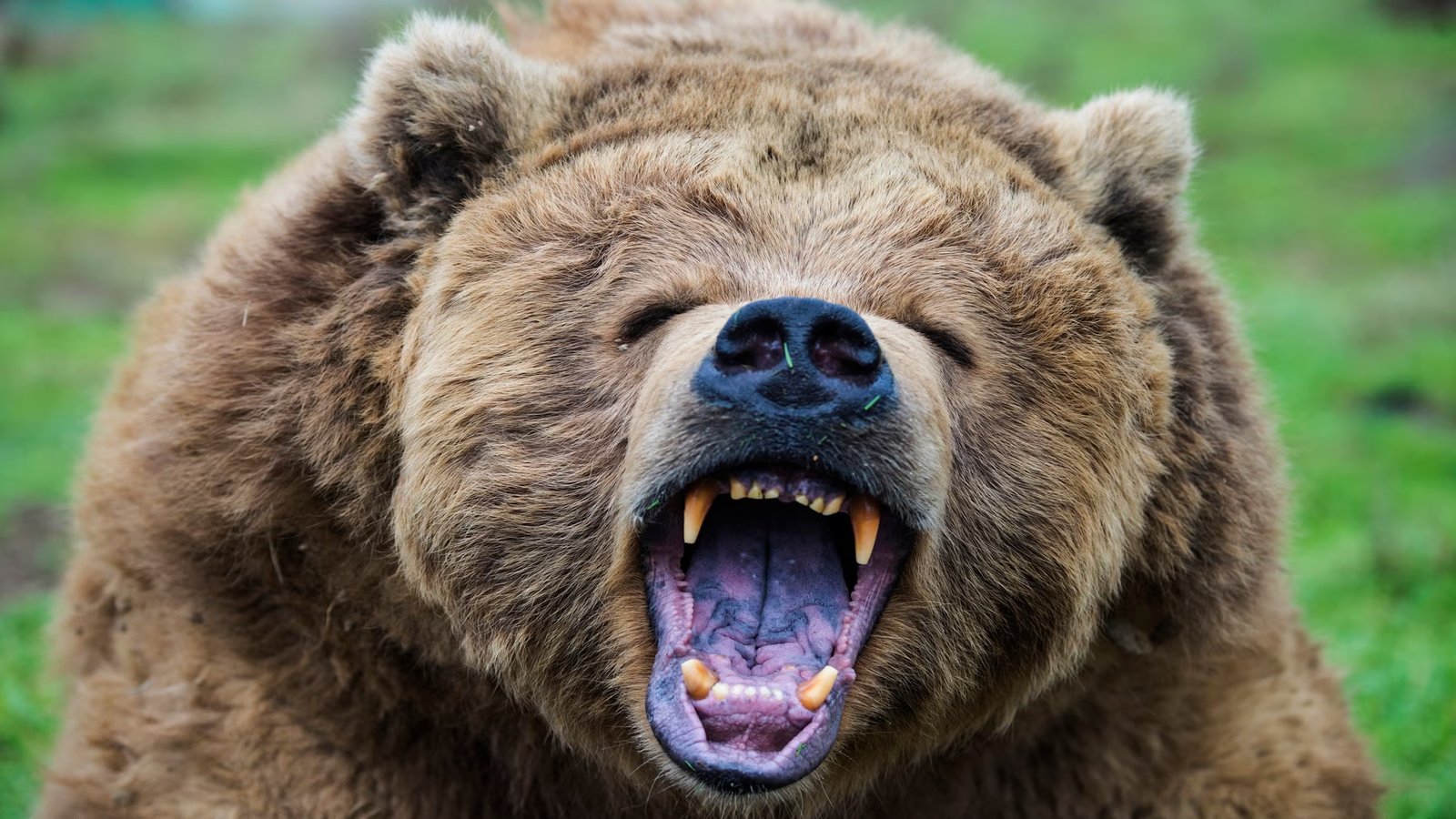
A new clip out of Yellowstone offers a rare look at the brutal reality of kleptoparasitism in the backcountry. Watch a pack of wolves challenge a grizzly for a seat at the dinner table—that is, until “king of the carcass” griz shows up.
Encounters between wolves and grizzlies are rare, and not often captured on camera (Photo: Mark Newman/Getty Images)
Published May 7, 2026 01:21PM
When two apex predators confront each other in Yellowstone National Park, the result is nothing short of nail-biting, edge-of-your-seat type wildlife drama. There’s a new video of an encounter that proves it. A clip captured in early May shows grizzly bears and a wolf pack battling over a carcass, highlighting the two species’ brutal competition.
Wildlife photographer Julie Argyle posted the video to her Facebook page on May 4. It shows two grizzly bears charging, swiping, and chomping at a pack of wolves that is attempting to steal a meal. Argyle said the carcass shown was a big bull bison that drowned in the winter.
“The interactions that kept us there. A swat by the bear and a poke by the wolf. A carcass in the river, a big bull bison that drowned during the winter. Mother Nature in all her glory,” Argyle wrote.
Chris Servheen, the former national grizzly bear recovery coordinator for the U.S. Fish and Wildlife Service, told Outside that encounters between grizzlies and wolves are rare but not unusual—this interaction just so happened to be captured on camera.
“Wolves will usually, but not always, avoid such close encounters with a grizzly, and carcasses are not usually this visible,” he said. Servheen added that the smaller of the two bears shown appears to be a subadult or a young female, more closely matching a wolf in size.
“The wolf would probably not get that close to an adult male grizzly. The wolf and the grizzly are both hungry in this video and want some of that carcass,” Servheen added.
And that’s exactly what appears to have happened. Argyle wrote on Facebook that the clips showed two different bears, one smaller one, which is why the wolves looked so large in comparison. As soon as the larger “king of the carcass” bear showed up, the wolves dipped out.
“He is an extremely big male. The wolves pretty much kept their distance from him. Can’t say I blame them,” Argyle wrote. A second clip shows a black wolf attempting to gnaw on the same carcass, snarling at the grizzly, before the bear swipes and charges the canine
The encounter is a prime example of kleptoparasitism, the act of one animal stealing food from another.
“Grizzlies regularly steal carcasses from wolves and even from whole wolf packs,” Servheen told Outside. “There is a social order so that male grizzlies usually end up with carcasses even if they are first found by younger bears or female grizzlies. Often, adult males eat as much as they can, then cover the carcass with dirt as they digest, waiting for their next meal.”
These adult males may also sleep on top of the carcass to deter animals such as grizzlies, wolves, coyotes, and ravens.
Research has found that how one animal mooches off another depends on the time of year and food availability, and both species, wolves and grizzlies, alter their behavior when the other is around. Wolves are known to steal mountain lion prey as well.
“Such a carcass is very attractive and will sometimes result in such close encounters. Many times, such encounters happen at night, so we cannot see them. Food is a strong motivator for getting close to another animal. Both appear to be hungry. An animal that is full is less likely to get so close,” Servheen said.
It’s not the first time this has happened, either. In 2021, the National Park Service shared a video from Yellowstone showing a grizzly bear stealing a wolf kill, noting that wolves typically yield to incoming bears, surrendering their kill.
“Since hunting is dangerous and often unsuccessful, it’s better for wolves to wait their turn at a carcass that has been usurped by a bear than it is for them to continue hunting,” NPS wrote. “From the bear’s perspective, it takes a lot of energy to follow a wolf pack around, but the reward is high if it successfully takes over a carcass. A fresh elk carcass is a wonderful source of fat and protein for a grizzly bear preparing for hibernation.”
The encounter begs the question: Who would win in a grizzly-wolf battle to the death?
“Usually, avoidance is the rule,” Servheen said. “A grizzly could kill a wolf if it got hold of it, but the wolf is careful and speedy, so that is unlikely. The grizzly could only catch the wolf if the wolf made a mistake.”
