

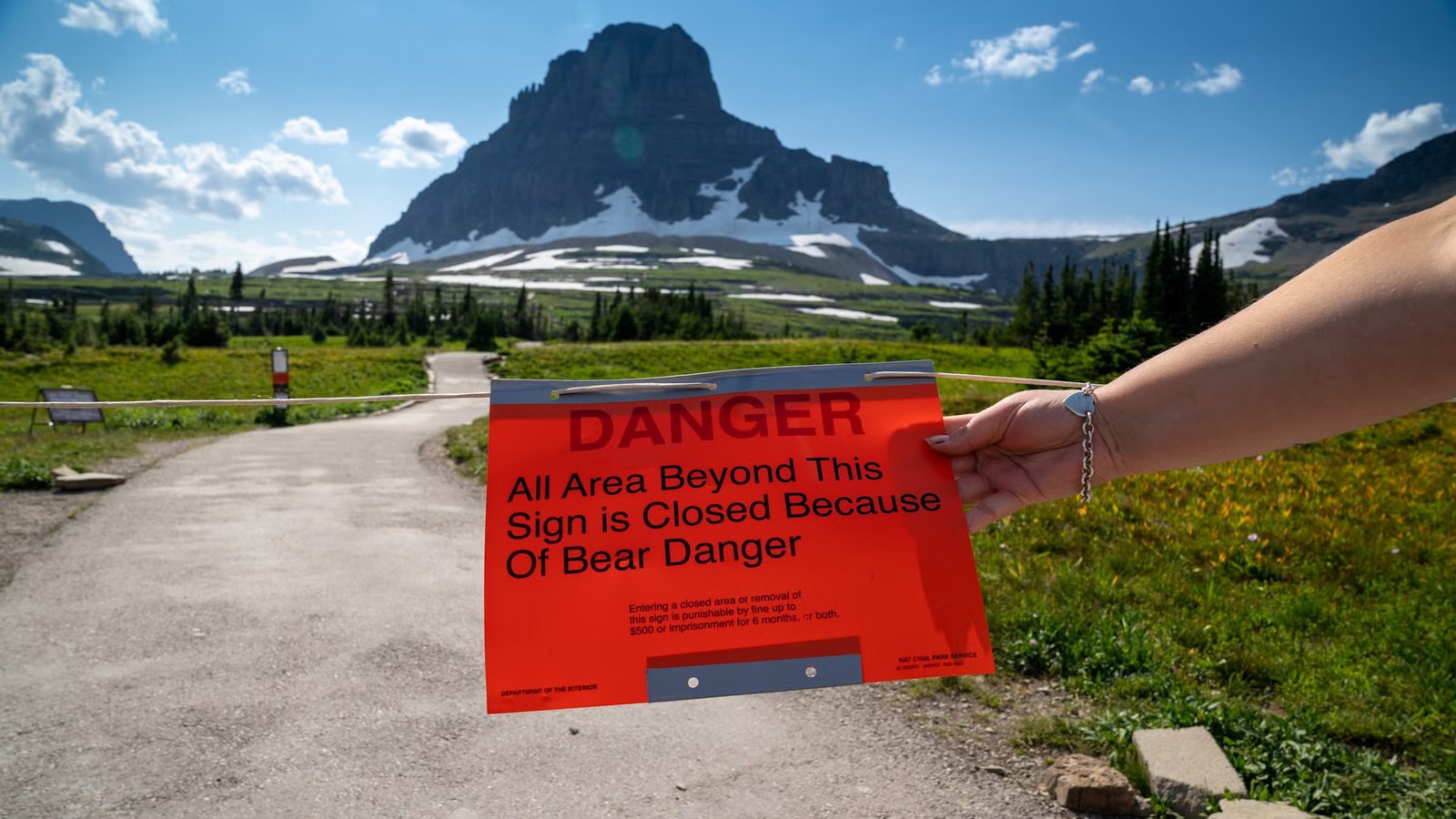
In the wake of high-profile encounters near Glacier and Yellowstone National Parks, a new tent mandate at Carbella Recreation Site in Montana is changing how people camp this summer.
A sign posted at the Hidden Lake trailhead in Glacier National Park in 2020 noted that the trail is closed due to bear activity (Photo: Melissa Kopka/Getty Images)
Published June 8, 2026 05:10PM
Following three high-profile grizzly bear attacks in Yellowstone and Glacier National Parks, officials in Montana have banned tent camping at a popular campground in the Yellowstone area.
Carbella Recreation Site is located roughly 20 miles north of the North Entrance of Yellowstone National Park in Gardiner, Montana, and offers 15 first-come, first-served campsites. Under the new rule, visitors can only use hard-sided camping units such as campers and hard-sided rooftop tents from now until December 31 “due to ongoing grizzly bear activity in the area,” according to the Bureau of Land Management (BLM). The order prohibits tent camping, soft-sided pop-up campers, and canvas-sided vehicles.
“The restriction has been implemented in an attempt to reduce the likelihood and severity of encounters between visitors and grizzly bears, which are frequently seen in the area,” Roger Olsen, BLM acting field manager, said in a June 1 statement.
The closure comes after a slew of bear-human encounters this spring. On May 14, a visitor in Yellowstone illegally operated a drone, harassing a grizzly sow and her two cubs.
View this post on Instagram
A series of bear attacks has also plagued Montana. On May 28, a grizzly broke a hiker’s arm on a popular trail in Glacier National Park. Less than three weeks earlier, the park reported its first fatal bear attack in 28 years on May 6. Just two days earlier, on May 4, a grizzly bear attacked two hikers 400 miles away in Yellowstone.
Chris Servheen, the former national grizzly bear recovery coordinator for the U.S. Fish and Wildlife Service, told Outside that the attacks don’t indicate an uptick in bear population or aggressive bear behavior. The events underscore the importance of staying bear-aware in grizzly country.
“That’s why everybody should maintain good security and bear-wise behavior at all times. The bears may not affect you, but they may affect a person who comes into that site after you,” Servheen said.
Our impact on the landscape doesn’t stop when we leave it, Servheen said. Food, garbage, and other scented items, such as toiletries and gasoline, also attract bears. When campers leave these items behind, bears begin to associate a camp with food.
“What people do historically at these campsites is really important because we can train a bear to do the wrong thing, even though we’re not there,” Servheen said. “Anything you do will affect how bears use that site for a long time. You teach them to come there because you left food, left it sloppy, and you’ve created a problem for the next person.”
The Carbella Recreation Site is a heavily used boating launch point for floating the Yellowstone River through Paradise Valley. Morgan Jacobsen, spokesperson for Montana Fish, Wildlife, and Parks (FWP), told Outside that the decision to restrict soft-sided tents was made in part because the area is so popular amongst visitors and locals alike.
“What we have are high densities of grizzly bears and a lot of human visitation and use, both for recreation and for people who live here and work out of here,” Jacobsen said. “It continues to be a place with a lot of bears and a lot of people.”
Food storage requirements are also in place at many popular camping and hiking sites across the state where grizzly bear populations are high. These often mean packing food in a storage bin or canister, or hanging food from a tree when camping.
“The situation we’re trying to avoid is when bears get access to unsecured attractions like food, garbage, and anything that has a smell to it,” Jacobsen said. “Avoiding conflicts is better than dealing with conflicts, and attraction is really the number one issue we have related to human-bear conflicts that we see.”
The BLM’s ban on tents at Carbella follows similar restrictions at popular recreation sites across the Rocky Mountains. Yellowstone’s Fishing Bridge RV Park, located on the northern bank of Yellowstone Lake, similarly prohibits soft-sided sleeping setups, and Glacier, Yellowstone, Rocky Mountain, and Grand Teton National Parks require visitors to use food storage containers.
Outside contacted BLM for more information on what prompted the closure, but did not receive a response in time for publication.
