

Updated June 9, 2026 02:53PM
American explorers Meriwether Lewis and William Clark were famously good friends. Beginning in 1804, they traveled 8,000 grueling miles together—up the Missouri River, across the Rocky Mountains, down to the Pacific Ocean, and then back again.
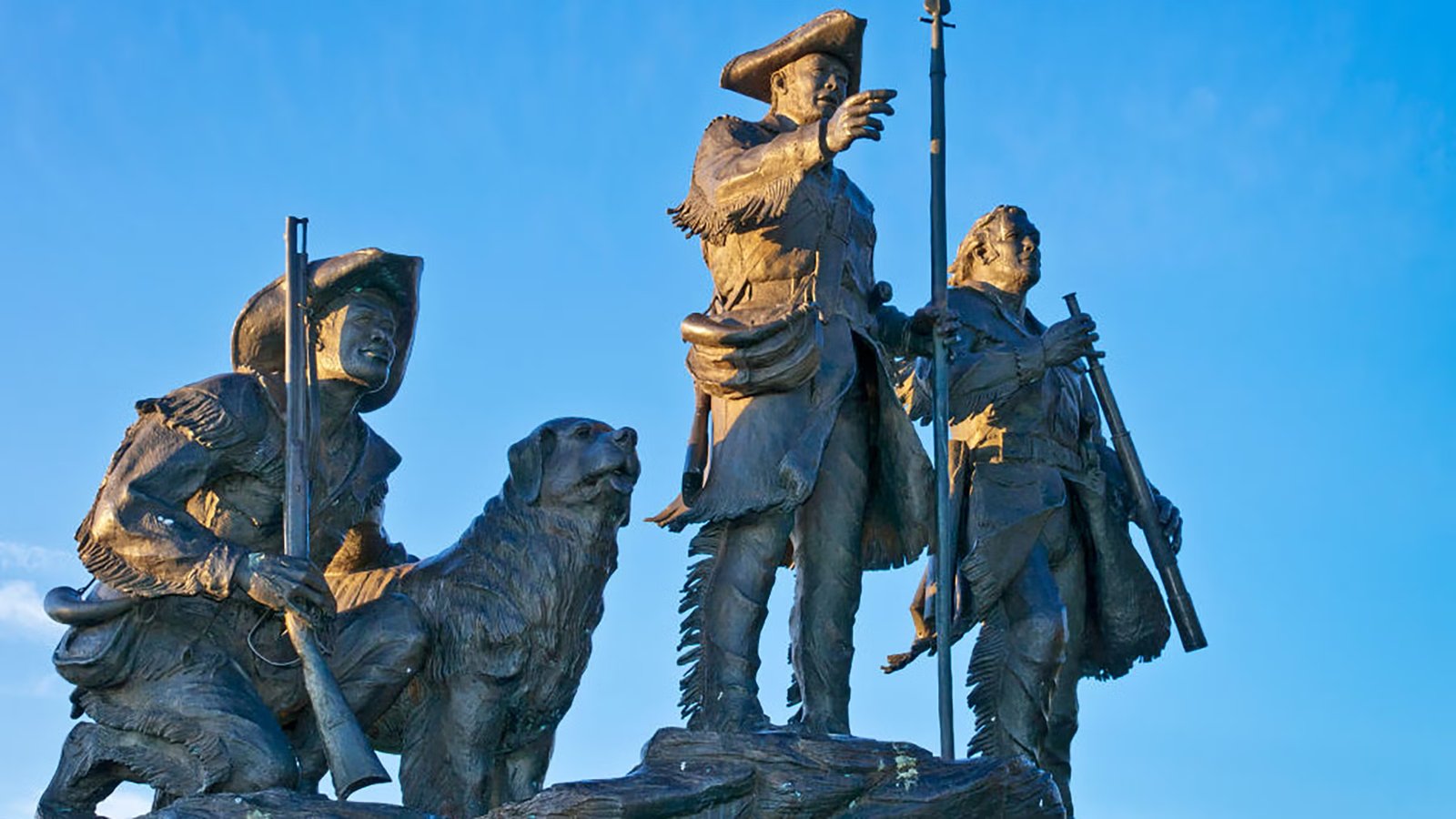
And yet it was never quite clear if Clark was Lewis’s favorite member of the expedition. Read their journals closely, as I have done, and a different companion emerges: Seaman, Lewis’s Newfoundland dog.
An Early Member of the Expedition
Seaman actually joined the expedition before Clark. While Lewis was out East, getting organized and gathering supplies, he bought the dog for $20. (Lewis’s monthly salary as an Army captain was $40.) Seaman, he wrote in his journal, was “active” and “strong.” Nineteenth-century Newfies often had brown-and-white coloring, as opposed to today’s more common shaggy black, but Seaman was still loyal and smart, a terrific swimmer thanks to his semi-webbed feet. He was the perfect choice for a river mission. “I prized [him] much for his docility,” Lewis wrote, “and qualifications generally for my journey.”
The expedition departed from near St. Louis on May 14, 1804. Lewis frequently left Clark and the 40 or so men to power their boats against the Missouri current. He and Seaman would scout ahead on shore, with Lewis gathering scientific specimens and hunting lunch for them both, sometimes with Seaman’s help. The dog loved to chase beavers out of their dams, to splash into the river after an elk. He and Lewis were inseparable. In their journals, the men usually called him “Captain Lewis’s dog.”
Seaman impressed the many Native people the party met. (According to their oral traditions, the Otoe-Missouria were struck by Seaman’s size, which was much larger than Native dogs.) At some point, Lewis taught Seaman a few tricks, and these also delighted Native observers. The Americans spent their first winter in what is now North Dakota, where they were joined by a woman named Sacagawea. Seaman must have enjoyed the snow, if not the subzero temperatures. He wasn’t the only one waiting for spring.
The expedition’s second year was harder on everyone, including Seaman. On May 19, 1805, one of the men shot a beaver. Seaman, who that day was riding in a boat with Lewis, leaped out and swam toward the animal—to catch it and, if necessary, to finish it off. The beaver fought back, biting the dog in the leg and severing an artery. Seaman began to howl and bleed. Lewis tried to calm his dog and probably himself as he pressed cloth against the wound. “It was with great difficulty that I could stop the blood,” he wrote. “I fear it will yet prove fatal.”
The following week, while still recovering, Seaman saved Lewis’s life. In the middle of a moonless night, when everyone but the guard was asleep, a lone buffalo galloped into camp. It sped past the campfire, passing within eighteen inches of the sleeping soldiers, then turned and ran back through a second time, and a third. On its final pass, it headed for the tipi where the captains were still asleep—until Seaman charged out, which caused the buffalo to swerve and rumble into the night.
Like most Newfoundlands, Seaman was probably a quiet dog, but danger always got him growling. The men, including the captains, were eager to encounter grizzly bears, which they saw as a test of their masculinity, their honor. Seaman was smarter—“in a constant state of alarm with these bears,” Lewis noted, “barking all night.” That spring and summer, the men had plenty of memorable meetings, including one grizzly they found fishing in the river. That bear took ten bullets and twenty excruciating minutes to die. The entire fleet had to stop and bob in the current, everyone watching as the grizzly splashed and wheezed until it collapsed on a sandbar. By the time they reached the Rockies, Lewis and the others had adopted Seaman’s wary attitude toward bears.
After the Rockies, they descended the Columbia River and its tributaries and finally reached the Pacific. Lewis wrote more about Seaman than you might expect. Certainly, he wrote more about him than his contemporary explorers wrote about their dogs. But there are many things Lewis never bothered to record. What did Seaman make of the ocean and the wet, dismal winter they endured ? Did he ever walk with Lewis along a beach? Did he bound ahead, sniffing the salt and hearing the surf, his paws digging small craters in the sand?
A New Era of Dog Ownership
Seaman was an essential member of the expedition. But as I wrote a new book about Lewis and Clark, titled The Vast Enterprise: A New History of Lewis & Clark, I realized he was something else: a window into Lewis’s troubled mind.
Scholars who study the relationship between humans and animals have long argued that this period—the early nineteenth century—was precisely when people began treating their pets differently. It’s true that humans had kept and loved dogs for centuries. (See Odysseus’s dog Argos—see him, in fact, on big screens this summer, when he will play a key role in Christopher Nolan’s Odyssey.) But something changed in Lewis’s lifetime. Earlier writers like Oliver Goldsmith understood dogs the way they understood horses or oxen, as tools. Goldsmith sorted dogs into practical categories, including hunting dogs and turnspit dogs, trained to run on wheels that rotated meat roasting over a fire. Goldsmith thought that “lapdogs,” or dogs valued for their emotional companionship, were “perfectly useless.”
Lewis initially chose Seaman to be a tool—because of his aforementioned qualities. But their bond quickly evolved. You can see it Lewis’s worries after the beaver attack. You can see it when Lewis notices how much the mosquitoes bothered Seaman (“the torture he experiences,” the captain wrote). You can see it in Lewis’s pride at Seaman performing tricks for Native audiences. You can see it on the way home, when some Native men tried to steal Seaman. Lewis dispatched three soldiers to get him back—“with orders,” he wrote, “if they made the least resistance or difficulty in surrendering the dog, to fire.”
When scholars try to explain this cultural shift, they typically point to the changing relationship between people and nature. “Wild animals and even farm animals,” writes one professor, “were becoming less and less the common experience.” But this can’t fully explain Lewis’s fondness for Seaman. After all, the explorer was outside every day. He was experiencing more nature, and more new nature, than any American had before.
Lewis’s fondness for Seaman, I think, flowed from his unique mind—from his intensity, his sensitivity, his self-awareness about his emotions, his fondness for all animals. There are many things about Lewis that feel modern. The way he loved his pet is one of them.
The other modern thing about this relationship is that it flowed in two directions. In 1809, three years after the expedition ended, Lewis killed himself. “I fear,” wrote Clark, “the weight of his mind has overcome him.”
By that point, Seaman’s paper trail had disappeared. But one researcher has found compelling evidence that Seaman survived the expedition—and that Lewis kept his dog close by, even after becoming governor of the Louisiana Territory.
A few years later, in 1814, a preacher recorded this story: “After the melancholy exit of Governor Lewis, his dog would not depart for a moment from his lifeless remains; and when they were deposited in the earth, no gentle means could draw him from the spot of interment. He refused to take every kind of food, which was offered him, and actually pined away and died with grief upon his master’s grave.”
