

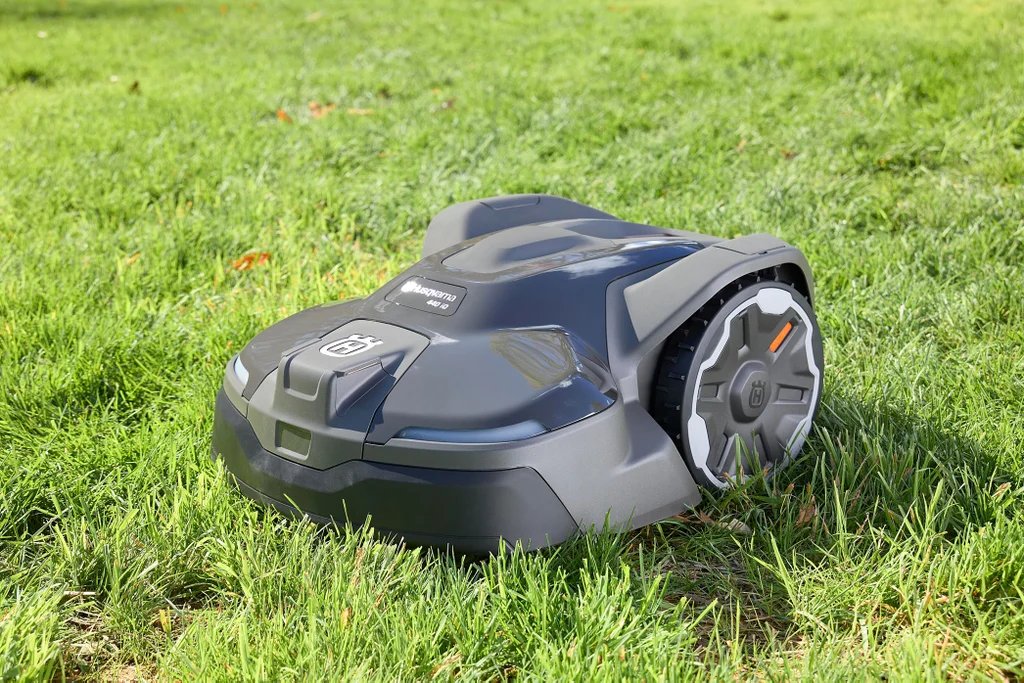
When I moved into a house in upstate New York after years of living in apartments, I decided to get an old-fashioned reel mower—the kind you push yourself, with no engine to help—for the lawn. The exercise seemed like a good idea at the time. But after spending hours each week covering my half-acre lot, I decided to test the other extreme: a robot mower guided by GPS.
Husqvarna, the Sweden-based company that pioneered robo-mowers three decades ago, let me try out one of its latest versions, the Automower 410iq. Like other robotic mowers, it’s electric, avoiding the noise and pollution from a traditional 2-stroke mower. (Using a typical gasoline mower for an hour emits as much smog-forming pollution as driving a gas car for around 300 miles.) It also uses far less energy than electric push mowers.
The user experience isn’t perfect yet—and at the moment, setting up the system is particularly challenging. But the tech is quickly changing as AI does, and it foreshadows where our domestic life is headed.
A tricky setup
The box arrived just before I was about to go out of town, and I naively thought that the Automower—which retails for $2,599—could take care of the lawn while I was gone. But this isn’t like a plug-and-play robot vacuum that you let automatically map your house. Outside, without walls to keep the mower corralled and guarantee that it won’t veer into the road or somewhere else it shouldn’t be, you have to manually map where it should go, and the full installation process takes time. (That may soon change—more on that later.)
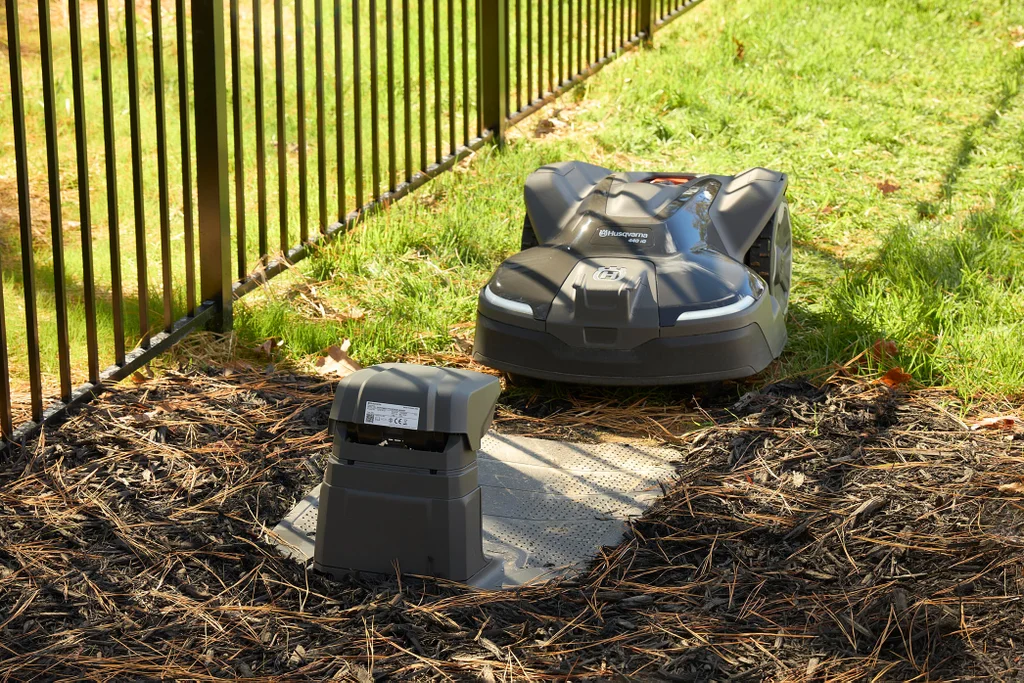
Robotic mowers used to require installing tedious boundary wires, but many now rely on GPS. That meant I had to find a place for a small antenna with a clear view of the sky. In my tree-filled yard, that proved harder than expected. I tried the garage, ordered the wrong mount, ordered another that didn’t work with my stucco wall, and kept using the reel mower through the back-and-forth. Eventually, I gave up and mounted the antenna on a small shed. The sky was partly blocked, but the signal came on anyway.
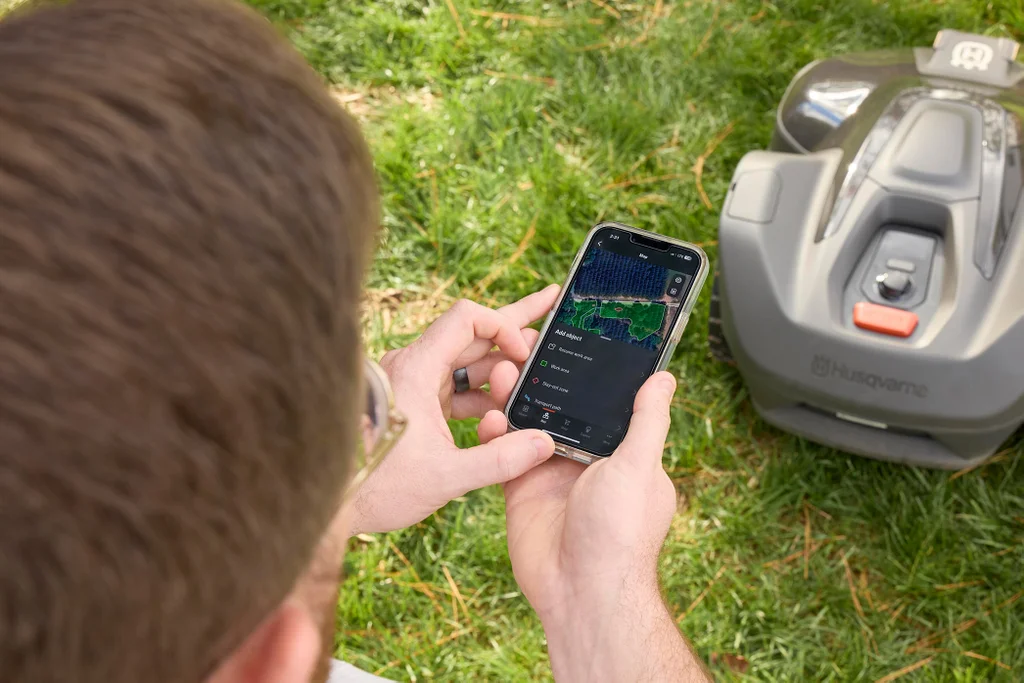
The next challenge was mapping the yard. To set that up, I used the mower’s app to drive it like a remote controlled car, dropping virtual waypoints as I went around the edge. Another mode let me map stay-out zones, though that didn’t always work: I drew a circle around a patch of wildflowers and then later watched as the mower started to plow through them anyway. The whole process was a little buggy, as the satellite connection dropped in some places as I was working. At one point, the battery ran out before the mower could drive itself back to the charging station. In one section of the yard, when the mower asked me to create a “transport path” back to the charger, it repeatedly rejected every path I tried to draw.
All of this could be much easier in coming models. The company told me that it’s beginning to roll out a cloud solution for GPS, so customers can subscribe to a network of reference stations instead of having to install their own antenna. New mower models are adding vision systems to supplement the GPS navigation, to avoid getting stuck under trees or between buildings as the signal drops. And with powerful cameras, mowers could eventually map yards by themselves, automating most of the installation process. Right now, buyers also have the option of paying a dealer to install the system. And some yards may be much easier to map than mine, which has multiple sections and obstacles.
Watching the mower work
With the yard mapped, I chose one section of the lawn in the app and pushed a button to start mowing. The mower took a few seconds to plan its route, and then very slowly began rolling across the grass.
It doesn’t work like a traditional mower—it’s designed to maintain grass that’s already at a particular height, slicing off a tip that’s so tiny that it’s almost hard to see. Instead of mowing once a week, it mows more often. By cutting such a small amount at a time, it uses very little energy; it also avoids the energy and noise of air blowing long grass clippings out of the way. (Trimming less grass at a time is also healthier for the grass.) When the app asked me to name the mower, I called it Nibbles.
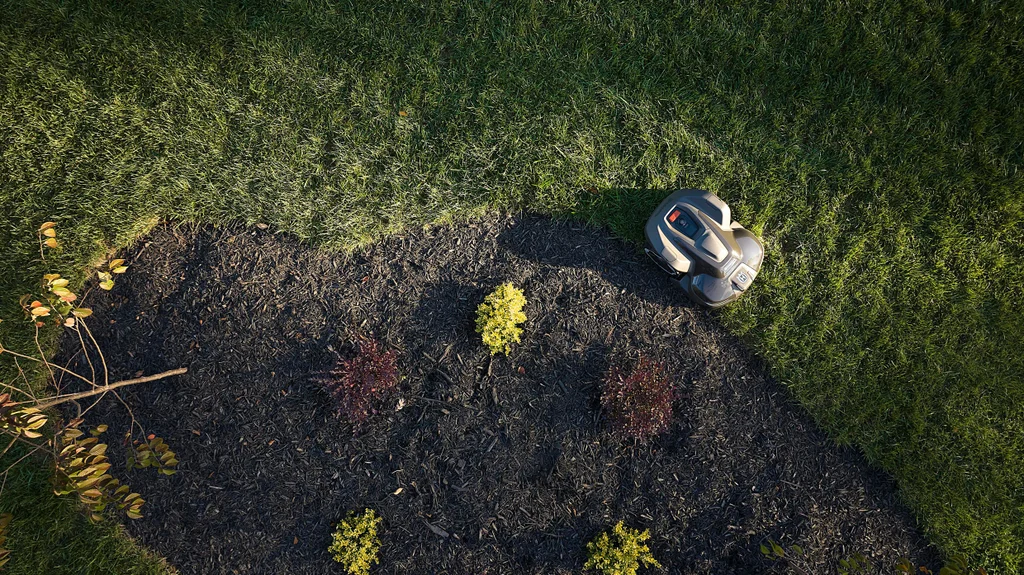
The slow speed of the mower also saves energy. The machine uses tens of watts of power, versus typical lawnmowers that use hundreds or thousands of watts. “We can get away with a machine that doesn’t need this big heavy blade; it doesn’t need a massive battery, it doesn’t need to consume a huge amount of energy to charge,” says Chris Price, senior engineering manager for robotics at Husqvarna’s U.S. office.
On the first runs, I supervised the mower, rescuing it when the satellite signal dropped or when it got stuck on a small slope. The map of the yard can be tweaked, adjusting points as needed. In areas that struggle with GPS, until new models with more cameras are available, it’s possible to add boundary wires, though I didn’t have any to try.
Once it was working—for the most part, at least—I liked it. It was incredibly quiet; I sat in the yard and heard almost nothing other than the birds. It left the grass looking perfect. The app allows the option of a few different patterns, from stripes to a checkerboard to a random pattern that creates an even carpet. After experimenting, I chose the stripes.
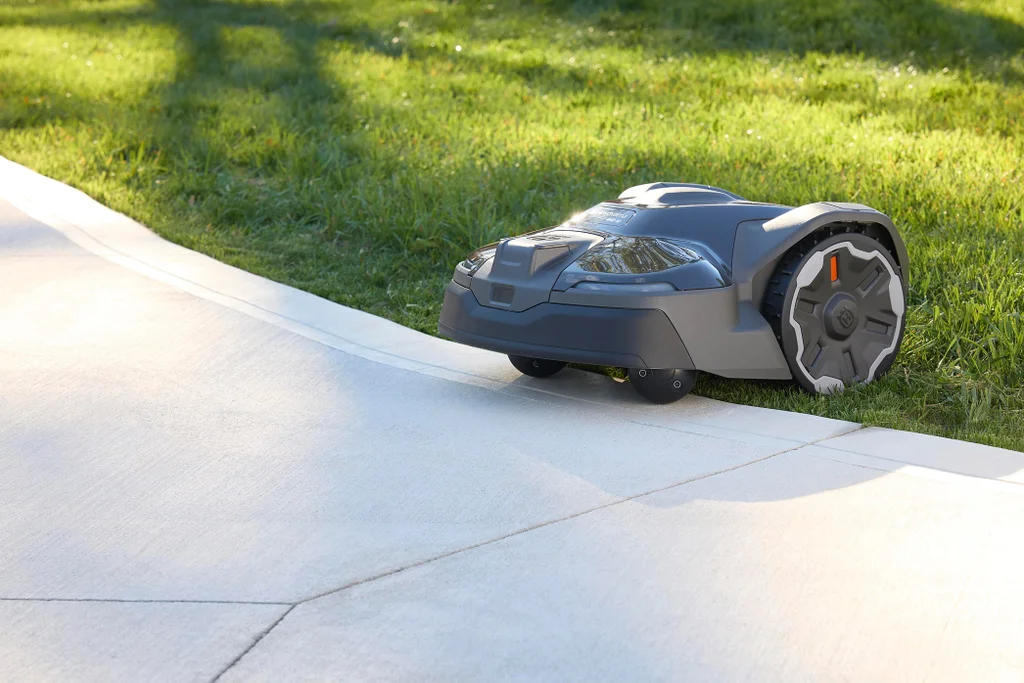
I worried about leaving it outside, since my yard isn’t fenced, and even with theft prevention features on the mower, it seems like it could be a target, especially if it’s mowing all week long and very noticeably there. I’m not sure I would feel comfortable letting it run while traveling. The instructions recommend unplugging the outdoor charging station during thunderstorms, something that wouldn’t work from out of town.
Still, it’s an illustration of the promise of home robotics, even if it’s not perfect yet. Instead of hours of hard labor, I watched the mower work out of the corner of my eye while working on my laptop on the deck and occasionally watching birds or deer go by. If one of the complaints about modern AI is that it doesn’t really mean that you work less—or that if you save some time, you’re likely to just waste it on something like TikTok—this was the opposite. I was spending more time outside and enjoying it. At some point, I’d like to get rid of my lawn and let the native maple forest take over. But for now, the robot is helpful.
There are other robot lawn mowers, including multiple other models from Husqvarna, like the Husqvarna Automower 450XH, which Wirecutter notes also isn’t quite perfect. Ambrogio, Toro, Worx, Mammotion, and Navimow all make sleek robot mowers. All still have some limitations.
The cost is steep but arguably worth it if you have the patience to tinker as needed to set it up. If you’re willing to wait, future models could also be worth it, as the technology improves along with AI.
