

Published July 30, 2026 04:00AM
I recently read Sebastian Junger’s The Perfect Storm—which grew out of a 1994 Outside article—that recounts the sinking of a Massachusetts fishing boat at sea. One passage caught me off guard. Junger is trying to understand why the massive storm formed and references global warming as a possibility. It surprised me that he didn’t say climate change was definitively a factor until I realized he was writing more than 30 years ago, before climate change was widely accepted as real and its effects became obvious.
Today, all I have to do to understand the realities of climate change is step outside. Here in New Mexico, where I live, summers are noticeably, dangerously, and maybe forever different. According to the National Centers for Environmental Information, summers across the state are 3.7°F warmer than in 1970, and eight of the 10 hottest summers on record have occurred in the last 23 years.
New Mexico isn’t unique when it comes to warming, so outdoor companies across the world are scrambling to find new technologies that will help people continue to recreate outside. Running, one of the most heat-intensive sports, is often in the spotlight, and this summer three new heat-abatement running shirts caught my eye. Nike ACG, Satisfy, and Raide all promised their shirts can breathe and cool in new ways, so I called them in for wear testing and also sent samples to our Outside Lab at CU Denver so we could run a host of lab tests. I also called in a more traditional Patagonia shirt that topped our spring testing of running shirts, as a control for comparison to the new technologies. Below are the results of field and lab testing.
Satisfy HeatCrush Base Layer
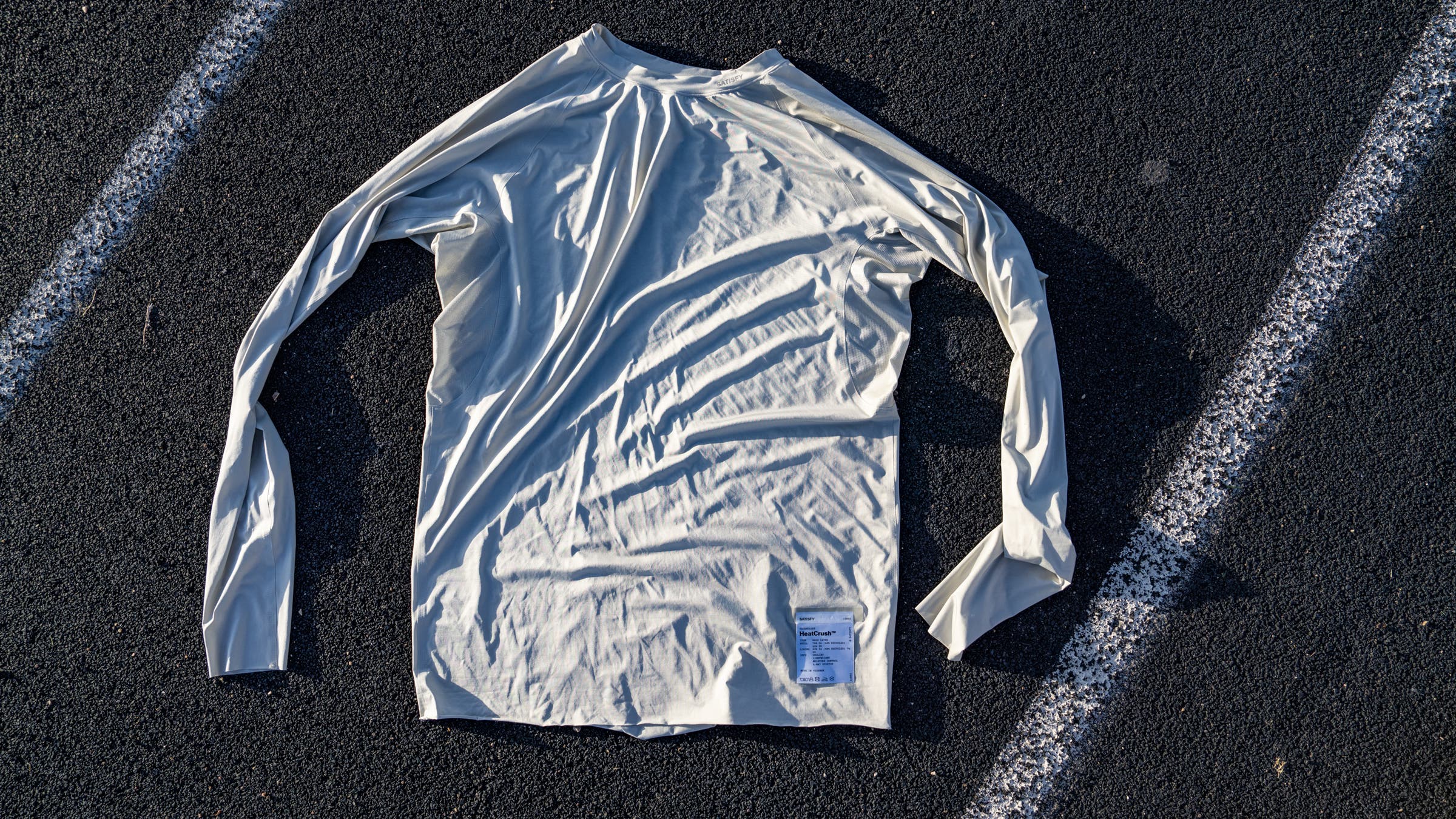
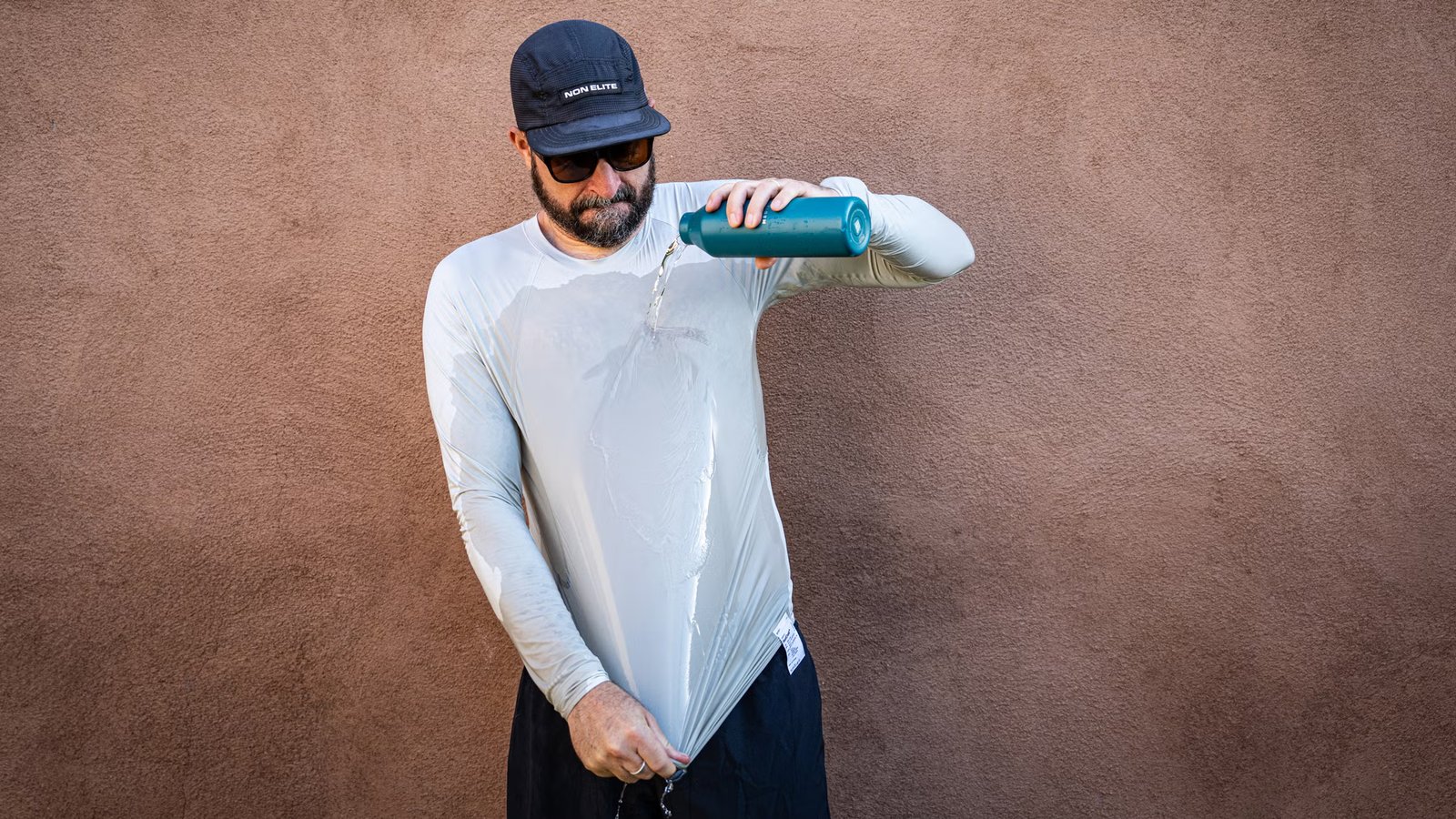
Field testing: It feels counterintuitive to pull on a long-sleeve shirt for a hot run, and when I first squeezed into this tight-fitting base layer, I thought I’d made a mistake because the temp felt like it jumped up a few degrees. But as soon as I started sweating, the thin, Japanese micro-jersey material started pulling the sweat off my entire upper body and my temp quickly regulated. Once the shirt was wet with sweat, the real heat dump began thanks to a process called evaporative cooling where moving air is chilled as it travels through the water trapped in the shirt (a process used in simple air conditioners). To take things up a notch, I dumped a bottle of cold water on the shirt and I was more refreshed than I’d ever been on a hot run, with the chill lasting a full 20 minutes in 100-degree temps.
Lab testing: Adam Trenkamp, our Lab Test Editor, ran the HeatCrush and all the other shirts through breathability, dry time, and air permeability tests, rating each shirt on a scale of 1-5 (worst to best) for each metric. The main body of the HeatCrush shirt earned a “worst” rating of 1 for air permeability (how much air gets through) while the under-arm mesh sections topped the scale with a 5.
I felt this lack of air movement up front but realized that’s by design. The material isn’t supposed to move as much air as possible but instead move some air through retained water to create the cooling effect I felt. The HeatCrush scored a 2 for breathability—how fast it can move sweat off the body—which wasn’t a surprise either since it wants to move sweat off the skin but then keep it around for its cooling properties. Dry time was a solid 4 because the fabric is so thin. In theory, I would want the dry time to be slower but found that my sweat kept the shirt plenty wet, and therefore cool, on the hottest days.
Best for: I wore the HeatCrush Base Layer on some short runs, but it’s definitely best for longer runs where sweat builds up and the evaporative cooling can regulate temps over a long period of time. This shirt is also perfect for runs with access to water sources—be it rivers or water fountains—where I could dip it and accelerate the cooling effect.
Nike ACG Radical AirFlow NXT
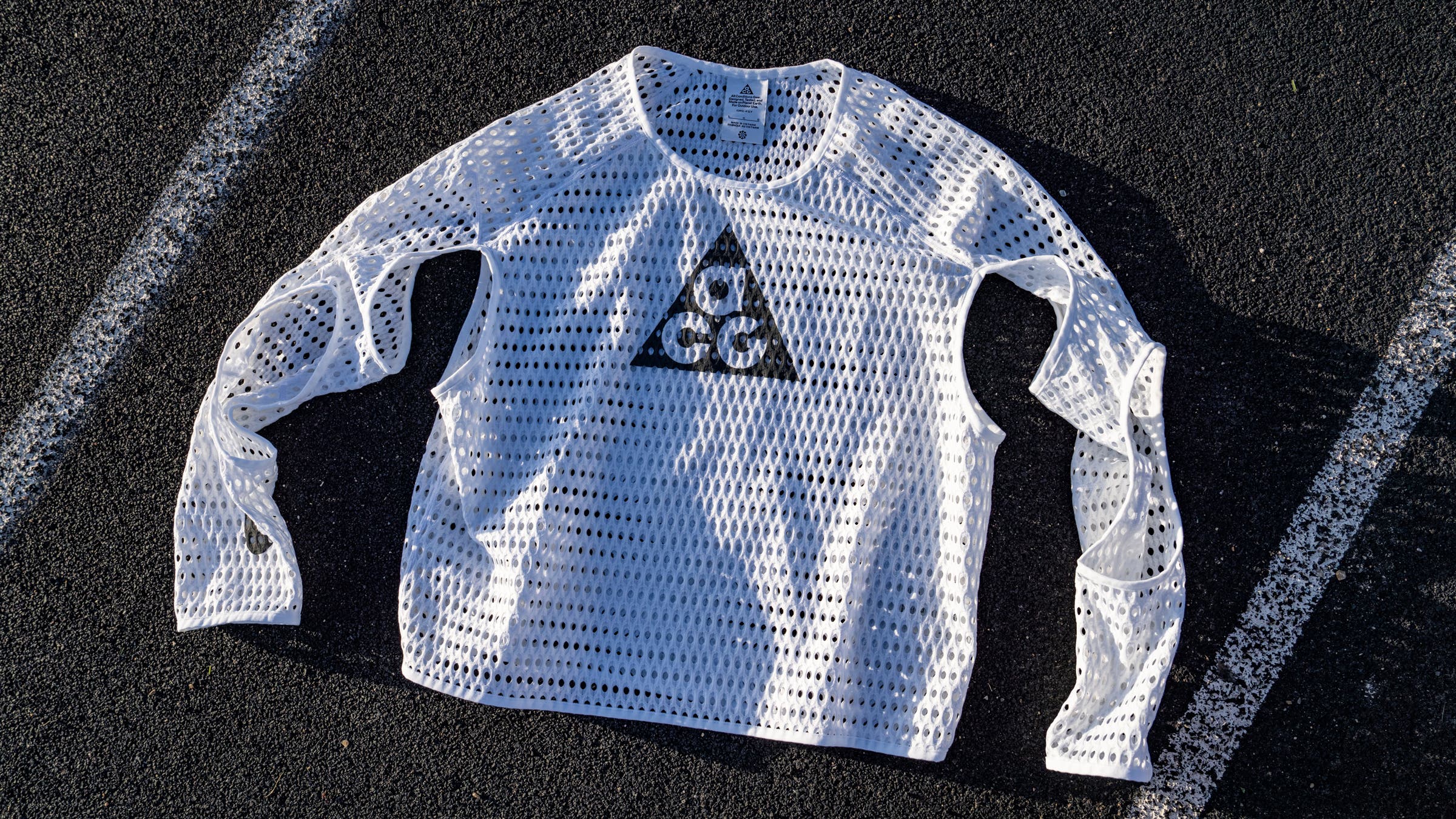
Field testing: The Radical Airflow NXT immediately grabbed my—and many other runners’—attention when Caleb Olson wore it to win Western States in 2025. Chock full of holes and cropped short, it seemed like either a gimmick or something radical. After testing, I can say that the NXT is easily the most innovative running shirt to hit the market in the 10-plus years I’ve been testing running shirts.
The biggest innovation is the holes, which are funnel-shaped so they condense and accelerate air as it passes through (similar to the Venturi Effect in fluid dynamics). This created significantly more airflow than I would feel if I was running without a shirt. Even just standing around I could feel the air being pushed against my forearms and chest. Once I started moving, it was like having a low-powered fan cooling my entire upper body. The only downside I found was that the material had to be against my skin to work. When I hunched over on climbs and the shirt fell loose off my chest, the cooling effect stopped.
Lab testing: As you might expect, the NXT crushed on air permeability, coming in at a 5. Breathability was also a 5 for two reasons: First, there’s so much airflow that it helps sweat dissipate quickly. Second, the polyester around the holes does a great job of mopping up any moisture. Dry time was the slowest of the group, rating a 1, but that’s a good thing: By retaining moisture, the NXT benefits from the same evaporative cooling effect as the HeatCrush, where air drops in temperature as it moves through the retained sweat.
Best for: If I had enough confidence, I’d wear the NXT on all my long runs. But because it’s so odd looking, it might get saved for race days only. We saw lots of people wear it for this year’s Western States, and I expect that as more people experience the technology, the shirt will become more ubiquitous. But for now, it’s still a strange-looking outlier.
Raide Thermal Dispersion Tee
Field testing: Raide is a popular brand at the moment thanks to several innovative launches. Their backcountry ski pack offers a completely new take on how to store your safety equipment, and their running belt set off an industry-wide rediscovery of the waist pack. I use the belt constantly and was looking forward to the Thermal Dispersion Tee. Unfortunately, I found it underwhelming.
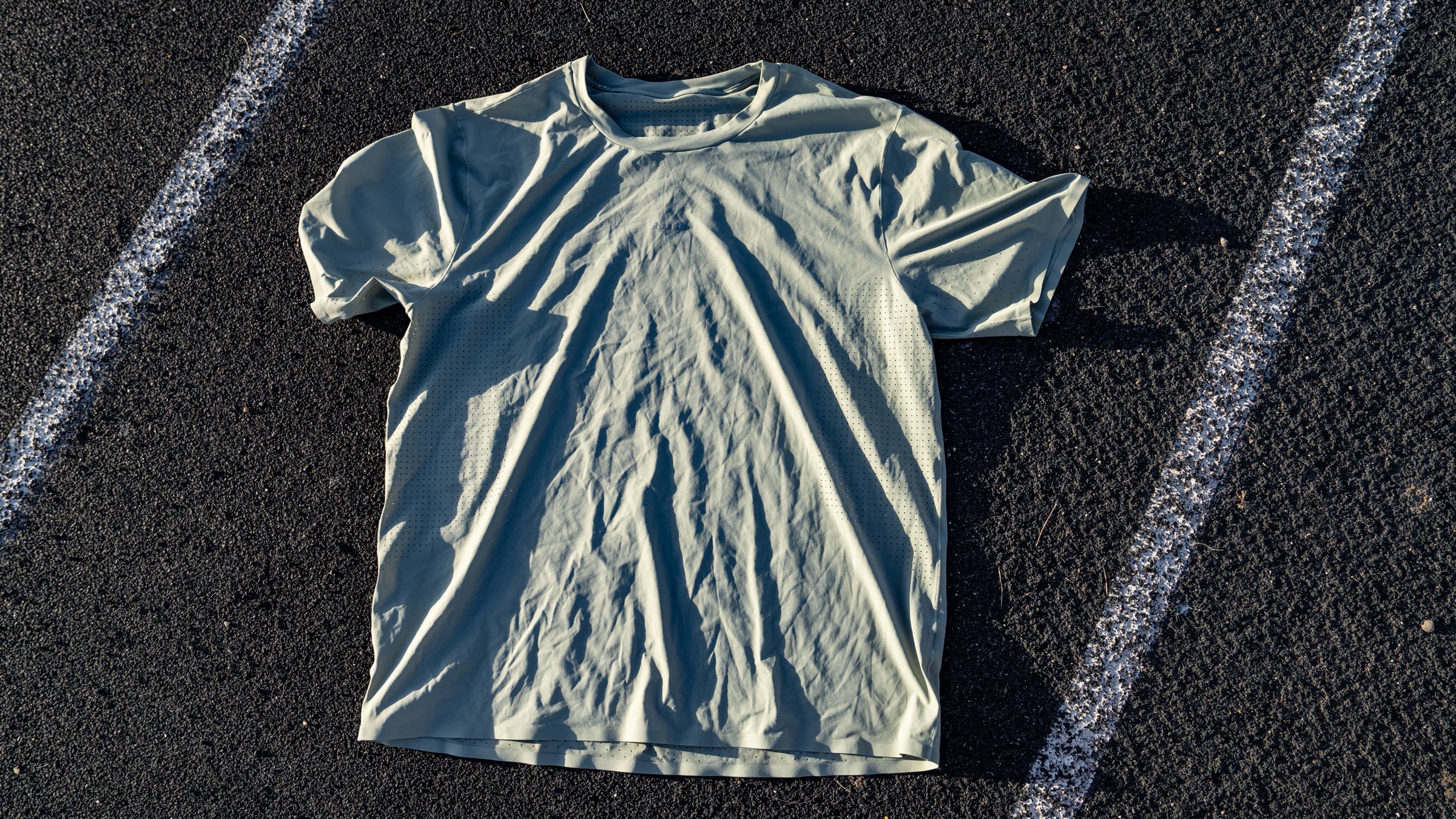
The shirt has lots of body-mapped perforations (small holes) on the back and sides that dump heat, but none on the front. The venting on the back kept me from overheating while wearing a pack, but it felt weird to not have airflow on my chest. Because of the irregular mapping, the Raide didn’t breathe or dump heat as well as the Patagonia Cap Cool Ultra, and also didn’t cool much by moving air over moisture, like the NXT or HeatCrush. I noticed some evaporative cooling, but nothing like what Satisfy created. The polyester material is stretchy, comfy, and durable—Raide says it is “wearable in a lot of environments”—but there was nothing about the shirt that made me want to reach for it over anything else in my drawer.
Lab testing: Trenkamp tested the air permeability of different zones on the shirt, and found the highest score was a 4 on the back where most of the holes are located. As expected, the front was much lower: it got a 2 and other areas a 3. The back of the Thermal Dispersion also scored a 5 for breathability, but the front and sides both got a 1. The dry time was solid, comparable to the HeatCrush at a 4.
Best for: Given its name and brand reputation, I expected the Thermal Dispersion Tee to optimize my heat tolerance, but Raide seems to have aimed more at versatility than specificity. Based on wear testing and lab numbers, the Thermal Dispersion Tee doesn’t really belong in the same category as the other three shirts, which, in my opinion, are the best on the current market for hot-weather running.
Patagonia Cap Cool Ultra Shirt
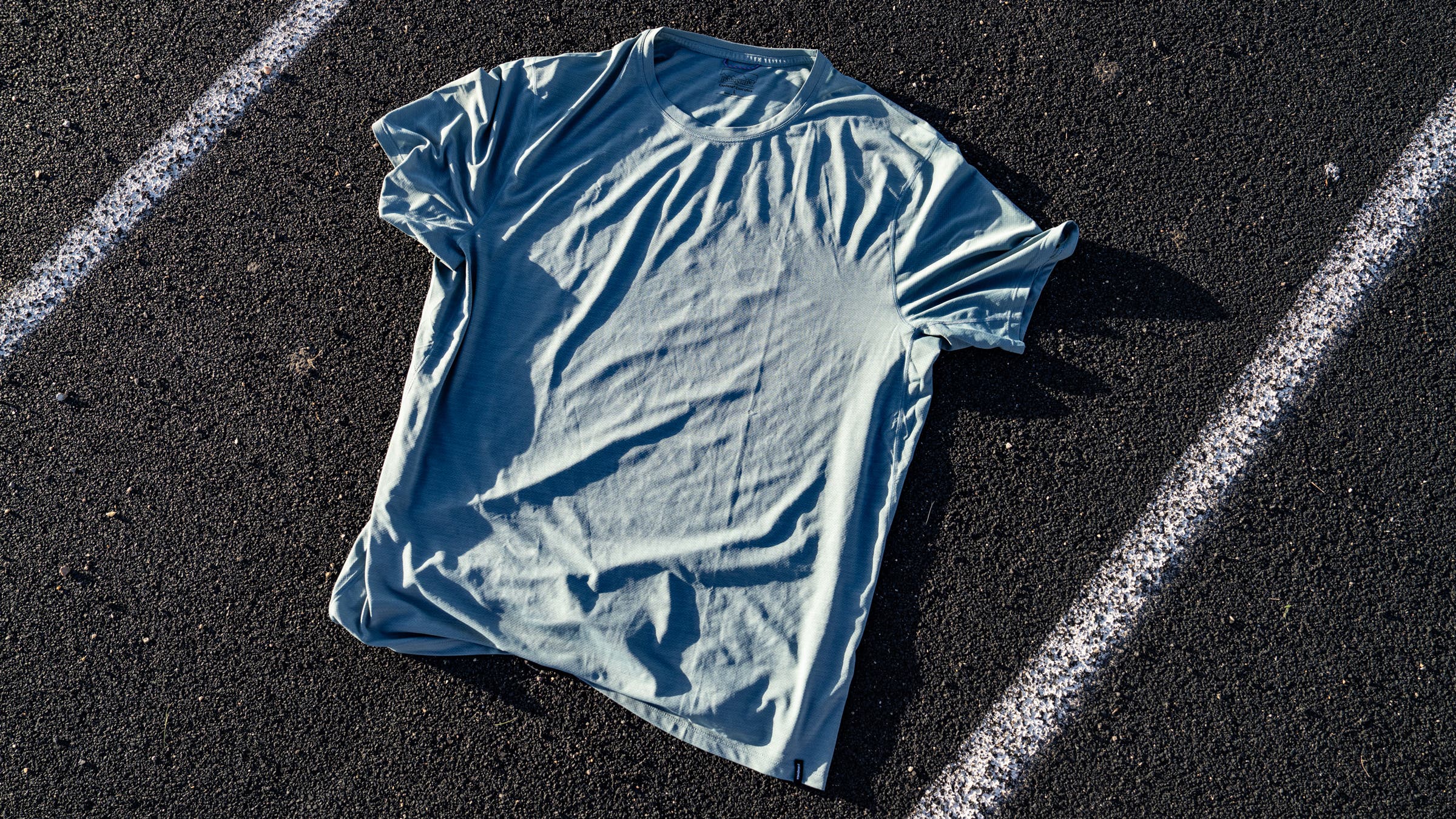
Field testing: Our control shirt of the test, the Patagonia Cap Cool Ultra, has no standout technology, but it was my favorite shirt of the bunch and the highest-ranked shirt for our Buyer’s Guide team as well. It rose to the top because, in addition to performing well on runs, the Cap Cool Ultra also doubles as a damn nice casual shirt. Cut to look good with running shorts or jeans, and offered in a diversity of colors, it’s the type of shirt I want to wear all summer long—during afternoon jogs and at work. At $60, it’s also significantly more affordable than the high-tech options.
Lab testing: Performance-wise, the Cap Cool Ultra received the highest average rating. It scored 4 for air permeability, 4 for dry time, and 5 for breathability. Put together, that means the shirt is really good at letting air reach your skin while also evaporating sweat. There’s no air concentration like the NXT creates, and it doesn’t rely as much on evaporative cooling as the HeatCrush, but it does let your body breathe and vent heat effectively. I was worried the thin polyester would be fragile and need to be babied, but it’s been just as tough as any standard running shirt I’ve ever worn.
Best for: If I had to recommend one shirt from this test, I’d start here. The Nike and Satisfy shirts will benefit pros and highly committed runners who spend more time training and racing. The rest of us, even on long runs, don’t need the same level of tech and can get by with a versatile shirt that lets our bodies use their natural cooling mechanisms.
