

Published October 29, 2026 08:30AM
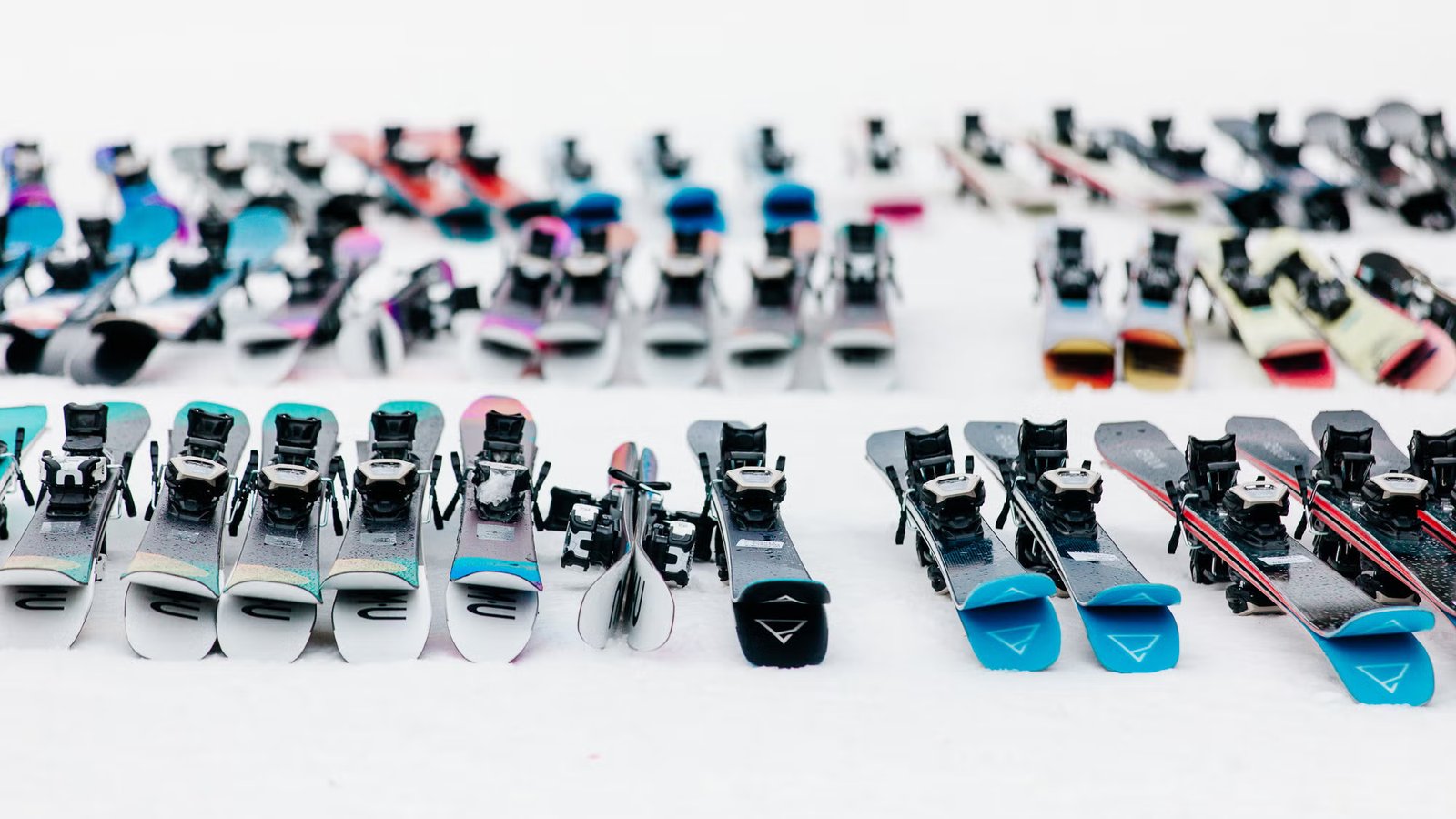
Overview: The best skis for intermediates in our test are the Atomic Maverick 84, our Editors’ Choice for all-around versatility, and the Dynastar M-Cross 78, the most intuitive and forgiving. The Rossignol Arcade 80 scored highest for carving, and the Head Pure Joy is a ski-and-binding system for women. Ten ski instructors, patrollers, and shop pros tested 13 skis under $650 at Eldora Mountain, Colorado.
Being an intermediate skier does not mean mediocrity. Ski brands know that skill should be cultivated, which is why the best skis for intermediates have characteristics that help skiers gain confidence by offering a stable platform or allowing them to progress through easy turn initiation and great edge hold.
The best skis for intermediate have waist widths between 75 and 85 millimeters and lean toward frontside performance or narrow all-mountain versatility. Though all skis in this category are designed to spend the majority of their time on groomers, our testers were impressed with how many models can help intermediates explore new terrain like trees or moguls.
The added bonus of skis designed for intermediate skiers is that, along with qualities like stability at speed, responsiveness, or versatility, they won’t break the bank. Some are even system skis that come with bindings. Higher-end models often come with a steep price tag and a burlier build. So if your barrier to entry to the sport comes from price or intimidation, check out these intermediate skis that bridge affordability with accessibility. Here are our top skis for intermediates of 2027.
Best Skis for Intermediate Skiers: At a Glance
Intermediate Skis Comparison Chart
| Ski | Price | Pros | Cons |
| Atomic Maverick 84 Editors’ Choice |
$550 | Easy to turn; Epitomizes versatility | Loses stability at speed; Not designed for aggressive skiers |
| Dynastar M-Cross 78 Most Intuitive |
$550 | Turns without thinking; Light and nimble | Loses stability at high speed; Can be overpowered |
| Völkl Blaze 82 Best for Strong Intermediates |
$650 | Stable in medium to long turns; Strong and dependable underfoot | Too stiff a build for novices; Lacks stability in variable snow |
| Head Pure Joy Women’s Pick |
$599 | Rolls easily edge-to-edge; Loves short to medium radius turns | Loses edge grip in large radius turns; Less forgiving in crud and cutup snow |
| Fischer Ranger 84 Most Stable |
$500 | Easy turn initiation; Reliable hardsnow-integrity | Short turns require work; Not an aggressive carver |
| Salomon Stance 80 Most Dependable |
$580–$600 | Offers a stable, balanced platform; Suits beginners to intermediates | Loses hardsnow performance at speed; Not super responsive |
| Rossignol Arcade 80 Best Carver |
$650 | Intuitive carver for a range of ability levels; Shines in short to medium radius turns | Loses stability in crud; Not the top choice for high-speed arcs |
Editors’ Choice
Atomic Maverick 84
Lengths: 153, 162, 171, 180 cm
Dimensions: 121-84-105 mm
Pros and Cons
+ Easy to turn
+ Epitomizes versatility
— Loses stability at speed
— Not designed for aggressive skiers
The Atomic Maverick 84 didn’t win “Editors’ Choice” just because it suits a wide range of skiers or because it can handle the largest variety of conditions in the category. It wasn’t just the ski’s easy turn initiation and ability to make short-, medium- or long-radius turns with reliable edge hold, either. It wasn’t one skill; it’s the combination of all these skills that impressed testers the most.
“This ski is a quiver killer,” said one tester. “It’s a good carver, especially in long GS-style turns, and remains stable in variable conditions with just enough flex in the tips to absorb bumps and compressions at speed.”
The ski instructors in our test group were most excited about the Maverick 84’s ability to help intermediate skiers gain confidence around the mountain. The construction strikes a balance between all-mountain versatility and carving performance, thanks to a light wood core with a Titanal stabilizer, designed to cut weight and absorb vibrations without softening the ski too much. The all-mountain rocker helps the 84-millimeter-waisted ski roll easily on edge as well as move through crud and cut-up snow.
When really pushed, the Maverick can lose stability at speed, so aggressive skiers who want to push their limits should look elsewhere. But in terms of best value for the most well-rounded ski that can carve or cruise through crud, the Maverick 84 is hard to beat.

Most Intuitive
Dynastar M-Cross 78
Lengths: 148, 156, 164, 172, 178 cm
Dimensions: 124-78-110 mm
Pros and Cons
+ Turns without thinking
+ Light and nimble
— Loses stability at high speed
— Can be overpowered
The M-Cross 78 impressed testers with its ability to intuit different ski styles. “This mind reader of a ski loves to carve and stay balanced through a variety of speeds and turn shapes,” said one. “It’s a great ski for all levels given its big sweet spot.”
During our testing at Eldora Mountain, Colorado, the M-Cross 78 earned the highest scores in the category for forgiveness, hence the “Most Intuitive” moniker. Light and nimble, it gave testers beer league slalom-ski vibes and a high fun factor down the fall line. Perfect for intermediate through advanced skiers, Dynastar’s Hybrid Core 2.0 construction—with wood layered in three directions—creates a stable platform that stays balanced, whether driven in a more aggressive or relaxed stance.
The M-Cross 78’s geometry includes a wide shovel with generous tip and tail rocker designed to make turn initiation easy, but that’s also where the ski may fall short. Our expert testers found the M-Cross 78 sacrificed stability at higher speeds, since there’s less effective edge connecting with the snow than on other, more carving-oriented models. But if you’re looking for a nimble ski that turns without thinking, this is a great choice.

Völkl Blaze 82
Lengths: 146, 152, 159, 166, 173, 180 cm
Dimensions: 125-82-107 mm
Pros and Cons
+ Stable in medium to long turns
+ Strong and dependable underfoot
— Too stiff a build for novices
— Lacks stability in variable snow
Völkl calls the 82-millimeter-waisted Blaze 82 a narrow all-mountain freeride ski that targets intermediates. Our testers called it a “confidence-inspiring carver for intermediates to grow into.” One thing is for sure: The Blaze 82’s freeride profile helps make this model more approachable than previous burlier builds. It still has a directional lean, as exemplified by the high marks it received for responsiveness and carving, particularly in medium- to long-radius turns, but it’s more welcoming to a range of skiers than ever before.
“This is a great ski for intermediate to advanced skiers who look for a solid ski to charge on through all conditions and speeds,” said one tester. “You feel the full surface area of the ski underfoot and can have confidence that if you stand on it, it will be there for you.”
The Blaze 82 has a multilayer wood core, with a 3D radius sidecut designed to create a shorter turn radius underfoot and a longer turn radius in the rockered tip and tail, expanding its turn-shape versatility. Though stable on groomers, the Blaze 82 loses stability in mixed snow conditions and feels “a bit stiff and damp for bumps,” according to one tester. But take the Blaze 82 to frontside groomers where you can stand on it in medium- to long-radius turns, and you’ll know that it’s got your back.

Women’s Pick
Head Pure Joy
Lengths: 143, 148, 153, 158, 163 cm
Dimensions: 121-75-107 mm
Pros and Cons
+ Rolls easily edge-to-edge
+ Loves short to medium radius turns
— Loses edge grip in large radius turns
— Less forgiving in crud and cutup snow
For women looking to purchase their first carving ski, or for intermediates looking for one to grow with, the Head Pure Joy is the full package—literally. Designed as a ski and binding system, the Pure Joy is essentially ready to ride from the shop to the slopes. At our test in Eldora, Colorado, this carving ski earned high marks for turn-shape versatility. The joy with this ski, according to testers, is its ability to turn easily in a relaxed manner or when skied more aggressively, depending on the driver.
“This ski is a beautiful teaching tool as it just pulls you into a carve without thinking about it,” said one tester. “It’s a perfect mix of being stable but energetic for dependable performance in either firm or soft snow, East or West.”
The Pure Joy employs women’s-specific design elements, including a constant ramp angle to accommodate women’s shorter boot sizes. The LYT Tech construction creates a softer flex in the middle of the ski, making it easier to bend, with light-but-strong Graphene to keep the ski from being too soft. Topping it off, tip rocker with 80 percent camber means the 75-millimeter-waisted ski rolls easily edge to edge with little input.
The only shortcoming: The Pure Joy shies away from larger radius turns at speed. When testers put their foot on the gas, they felt less bite underfoot, which translated to reduced stability.
But if you’re a novice looking to make easy, playful turns around the mountain or an intermediate ready to start carving, the Head Pure Joy is eager to please.

Most Stable
Fischer Ranger 84
Lengths: 167, 174, 181 cm
Dimensions: 119-85-109 mm
Pros and Cons
+ Easy turn initiation
+ Reliable hardsnow-integrity
— Short turns require work
— Not an aggressive carver
As the narrowest ski in Fischer’s freeride-oriented Ranger line, the Ranger 84 is easy to handle for intermediates while still offering great performance for advanced skiers. More of a narrow all-mountain model than a carver, the Ranger 84 impressed testers with its hardsnow integrity and stability at speed. It’s a great option for West or East Coast skiers with established carving chops who like a maneuverable ski that’s on the stiffer side.
“This is a great bang for your buck for a no-surprise, dependable ski that can handle a little variable snow,” said one tester. “Its happy place is medium-to-long turns. Though not a grow-and-go ski, it’s totally suitable for a range of skiers who value versatility and balance underfoot.”
The Ranger 84’s wood core is made from poplar, known for its poppy characteristics. The sandwich sidewall construction gives the ski progressive edge grip for on-piste performance. The long freeski rocker tip profile makes turn initiation a snap while also increasing its playfulness off-piste, impressing testers with its performance in bumps, trees and cut-up snow.
Aggressive skiers should note that the Ranger 84 feels sluggish in short turns and is not a fall-line charger like Fischer’s more groomer-oriented The Carv series. But testers appreciated the ski’s dependable edge hold in medium-radius turns when snow firmed up. So if you want to ski the whole mountain and keep exploring, the Ranger 84 is a reliable ride.

Most Dependable
Salomon Stance 80
Lengths: 141, 151, 161, 169, 177, 185 cm
Dimensions: 125-80-107 mm
Pros and Cons
+ Offers a stable, balanced platform
+ Suits beginners to intermediates
— Loses hardsnow performance at speed
— Not super responsive
Standing on the shoulders of Salomon’s all-mountain Stance line, the Stance 80 takes the sturdy build of wider models and tailors it to suit advanced beginners to intermediates, making it a sound investment for the multitudes. Testers were most impressed with the Stance 80’s versatility in variable snow at our test in Eldora, Colorado, as well as the stable platform it provides for aspiring carvers.
“This Salomon could be a one-ski quiver for a lot of skiers due to its big sweet spot and ability to stay balanced in different turn shapes,” said one tester. “It’s fun and dependable in a variety of conditions.”
Testers noted that the Stance 80 feels stiff underfoot, thanks in part to the sheet of Titanal placed there to increase power and control in a carved turn. The metal placement and wide steel edges also create a solid platform to help beginners gain confidence. With 15 percent tip rocker, the Stance 80 has some soft-snow capability, though testers noted that the tip can vibrate at higher speeds on hardpack.
Don’t expect a playful personality: The directional Stance 80 requires some muscle and know-how to get on edge and arc. For aspiring carvers, however, it offers a strong platform that won’t punish a backseat stance. Its value, therefore, comes not just in affordability but in the wide net it casts in suiting a range of skiers looking for a no-surprise, narrow all-mountain ski.

Best Carver
Rossignol Arcade 80
Lengths: 142, 150, 158, 166, 174, 182 cm
Dimensions: 130-80-118 mm
Pros and Cons
+ Intuitive carver for a range of ability levels
+ Shines in short to medium radius turns
— Loses stability in crud
— Not the top choice for high-speed arcs
If your happy place is making short- to medium-radius turns on blueish terrain at take-in-the-view speeds, then the Rossignol Arcade 80 will help you find your bliss. “It’s an intermediate carver’s dream,” said one tester. “It has easy turn initiation, good dampening properties, and a lightweight construction that can help reduce leg fatigue throughout the day.”
Testers were impressed with the Arcade 80’s groomer performance, awarding it the highest score in the category for carving. The ski’s 80-millimeter waist, short 13-meter turn radius and oversized sidecut contribute to how easily the ski rolls on edge, prompting one tester to dub the Arcade 80 “an approachable slalom ski.” Testers also called out the smooth ride, thanks to Rossignol’s Vibration Absorber System, and the stability underfoot enhanced by the central power rail in the wood core.
Aggressive skiers take note: According to testers, the Arcade 80’s lightweight construction, though beneficial for some, can decrease stability in both high-speed GS-type turns and chunky snow conditions. For best results, keep the Arcade 80 in its lane, that is, frontside terrain where aspiring carvers and confident cruisers can fire off short- to medium-radius turns all day long
Frequently Asked Questions
Who are intermediate skis for?
Intermediate skis aren’t just for those who ski greens and blues and are still progressing their skills. Skis designed for intermediates are also great-value options for less aggressive, less confident skiers, including those who have skied for many years but no longer push themselves on groomers or into off-piste terrain. Intermediate skis are lighter and easier to ski, making them a great choice (and a more affordable one) for skiers who only ski occasionally, skiers who stick to groomers and cruising speeds, and skiers who don’t want to work so hard to turn their skis.
What’s the best ski for intermediates?
After skiing 13 skis designed for intermediate skiers, our testers recommend the Atomic Maverick 84 as the best ski for intermediates. It earned our Editors’ Choice for its easy turn initiation, reliable edge hold, and ability to handle a wide variety of conditions, making it a well-rounded ski that can help you develop your skills and confidence on the slopes.
What type of skis are good for intermediates?
The best skis for intermediates are lighter-weight, narrow all-mountain skis with waist widths between 75 and 85 millimeters and a bit of shape to help you initiate and hold turns. These “frontside” skis are ideal for groomers, with just enough versatility for moguls and trees once you’re ready to progress there.
What’s the difference between intermediate skis and expert skis?
Skis designed for intermediate skiers tend to be more affordable and lighter than skis designed for experts because they use cheaper materials. This is not to say that these skis don’t ski well. They’re ideal for intermediates who ski at moderate speeds and primarily push or pivot their skis through a turn (as opposed to carve on edge).
Skis designed for advanced and expert skiers tend to contain heavier materials like metal and reinforced sidewalls for enhanced stability at speed, better energy transfer, and more precise edging performance.
How long should skis be?
It all depends on your physical build, skill, and skiing aspirations. The best way to determine the right ski length for you is to visit your local (and reputable) ski shop and talk to the pros. If that’s not an option, then a very general rule of thumb is that intermediate skiers should consider skis that are between chin and nose height.
A shorter ski is easier to turn and control, but offers less stability at speed and in variable snow conditions. So if you’re an intermediate with big skiing aspirations, you might want to consider a slightly longer ski that you won’t outgrow in one season.
How We Test the Best Skis for Intermediates
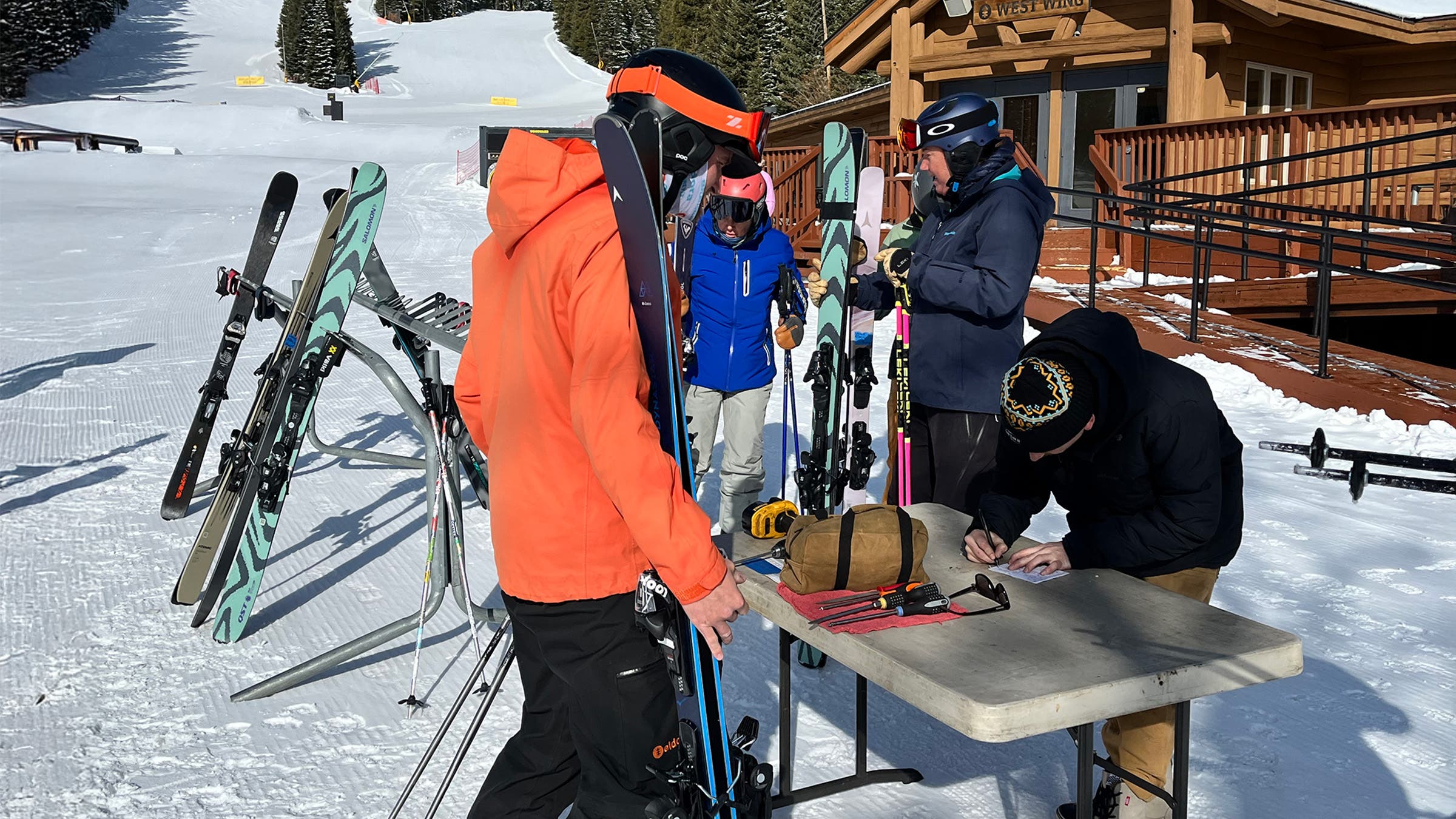
Number of skis tested: 13
Number of testers: 10
Testing location: Eldora Mountain, Colorado
Average tester: Age: 37 | Height: 5’7” | Weight: 144 lbs
Every season, Outside and SKI host a week-long gear test, inviting a team of seasoned industry professionals—ski instructors, shop employees, coaches, and outdoor gear experts—to put more than 150 pairs of skis through their paces.
Our crew of testers skis every model and evaluates each one’s strengths, weaknesses, target skier, and ideal terrain and snow conditions. For intermediate skis—also called “value” skis—that means focusing on how well they perform primarily on groomed runs and for novice skiers.
Testers assess edge hold, stability at speed, and responsiveness from edge to edge. Immediately after each run, they record both quantitative scores and qualitative impressions on digital scorecards. From there, our editors analyze the data and synthesize tester feedback to create authoritative, real-world reviews of the best skis on the market today.
