

Published June 24, 2026 04:00AM
Go for a hike of any level of difficulty, and you’ll see people wearing everything from minimal trail running shoes to burly boots. It’s easy to wonder which type of footwear is better for hiking.
Trail runners and day hikers travel over much the same terrain. We’re all out there on hilly, ungroomed trails, moving one foot in front of the other. Day hikers are more likely to be carrying heavy packs and may be on the trail for longer than trail runners. Trail runners usually travel lighter and move faster. But do runners and hikers require different shoes?
The Experiment
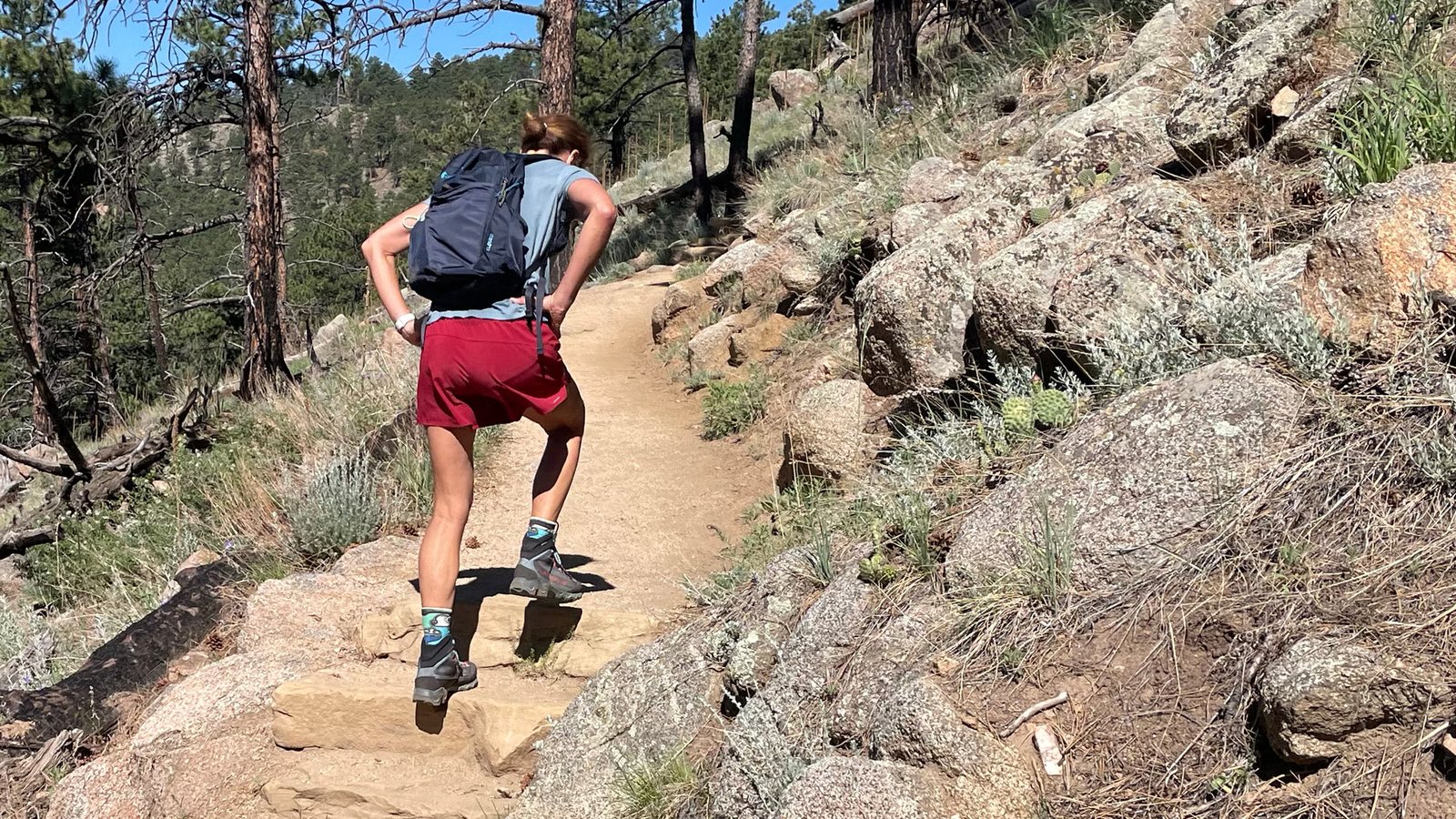
To hone in on the differences between hiking boots and trail shoes, I started my hike in trail shoes and swapped to boots halfway through. I did this twice on looped trails, each time changing which shoe I wear first. Plus, I hiked in each shoe individually.
For this experiment, I focused on comparing trail runners and hiking boots from the same brands, with shared technologies and fit but varied performance features. I compared the La Sportiva Prodigio Pro trail running shoe (named “Best Technical Terrain” in our trail running shoe guide) against the La Sportiva Aequilibrium Hike GTX (which won Backpacker’s “Best Women’s Hiking Boots All-Around” in their 2026 hiking boot guide), and pitted the Altra Olympus 6 (which Backpacker named “Most Supportive” in their trail running shoes for hiking guide) against the Altra Olympus 6 Hike Mid GTX.
Known Pros and Cons
There are a few obvious differences between trail running shoes and hiking boots: Trail running shoes are lighter and more flexible, while hiking boots are more supportive and protective. The lighter swing weight of trail running shoes makes them more suited for moving faster, and can result in less leg fatigue. But hiking boots’ additional weight comes from supportive, padded ankle cuffs, more protective uppers, thicker rubber outsoles, and rock plates blocking underfoot jabs—making them best for times when support is a bigger priority than speed, on more rugged trails, or when carrying heavy packs.
Wear-Test Notes
While hiking, I tapped into my years of experience testing running shoes to assess the qualities of each shoe. I took note of my inner dialogue and used voice recordings on my phone to capture my thoughts while out on the trail.
Hiking Boot 1: La Sportiva Aequilibrium Hike GTX
As soon as I laced up the boots at the trailhead, I noticed that my feet felt super protected, like they were wrapped in a cocoon. That protection, combined with the extremely supportive and secure high ankle cuff, made me feel tough—like I could conquer anything.
Once I hit the trail, the boot felt notably stiff and minimal underfoot, which reminded me of a mountaineering boot. While my gait was smooth and easy, every step felt firm and flat-soled. The midsole consists of a polypropylene foam with an integrated stiffener layer, and it’s notably harder than the EVA or softer foam midsoles found in running shoes. The sparse cushioning (less than in any of my trail running shoes) didn’t bother me on a short hike while wearing a pack, but I did find myself craving more cush towards the end of a longer hike.
Despite a beefy outsole, the minimal midsole still allowed me to feel the ground beneath me, making me agile and in control of where I placed my feet. But even when I chose to zone out and hike without as much attention, the boot protected me underfoot and shielded me from a large rock I accidentally kicked. For an extremely supportive boot, the Aequilibrium Hike GTX is relatively lightweight (16.9 ounces), even with a weather-protective Gore-Tex layer.
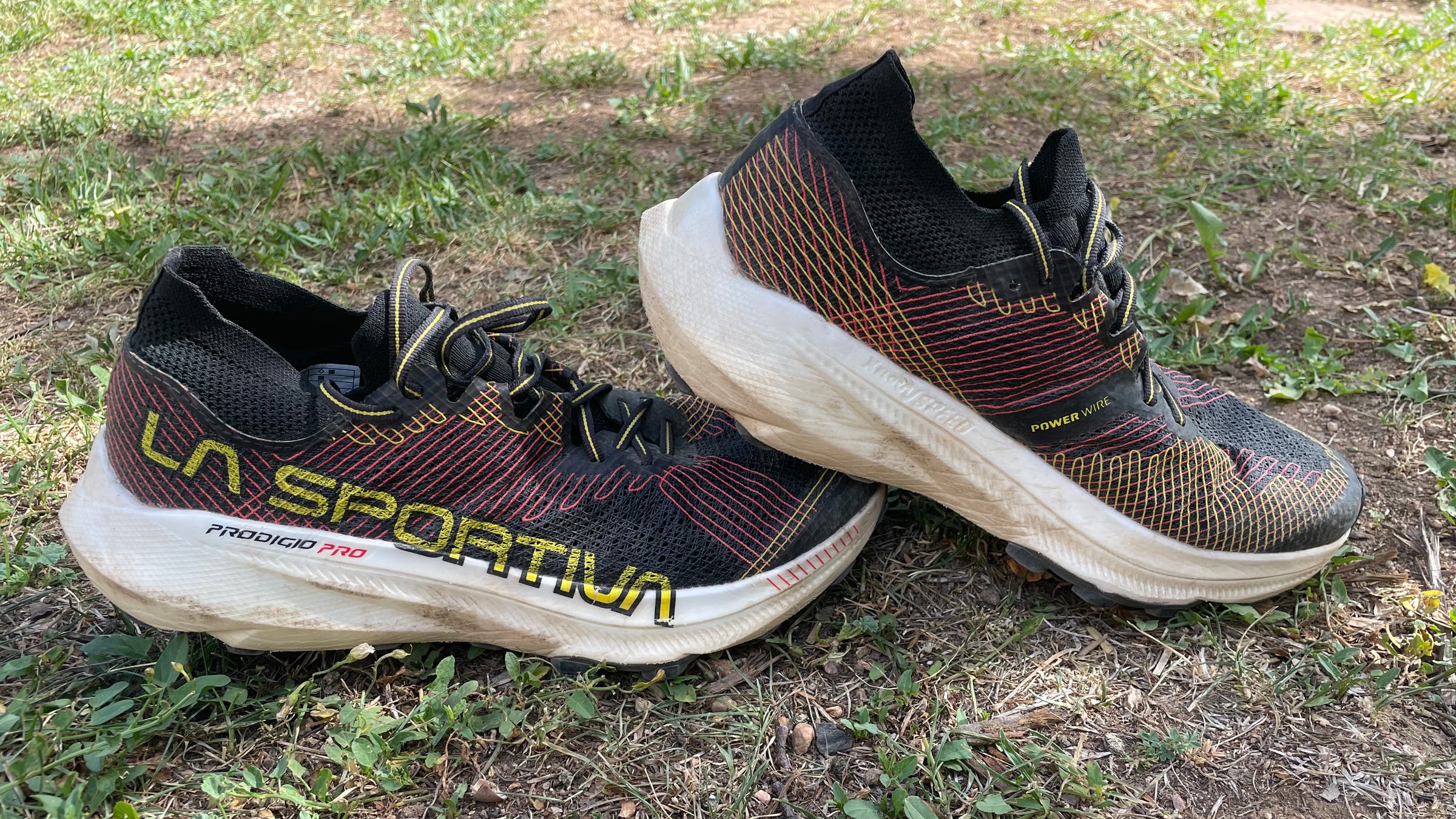
Running Shoe 1: La Sportiva Prodigio Pro
I changed into the Prodigio Pros mid-hike, and was instantly happy to have trail running shoes on my feet—they’re simply more comfortable than a boot. But they’re also significantly less protective. The most notable difference between the two is the midsole: the Prodigio Pro trail shoe has a moderately thick stack of super-critical, nitrogen-infused EVA and TPU foam that cushioned every step, yet didn’t feel too squishy, even when wearing a pack. At 8.9 ounces, the shoe is about half the weight of the Aequilibrium Hike GTX boot. The traction is similar, if not better, in the shoe, thanks to a proprietary outsole rubber compound with chevron-shaped lugs that engage in loose ground and hold firm on rocky slabs.
What the shoe lacked compared to the boot was support around my ankles and total bomber protection around my feet. The mesh upper, reinforced with thin, durable wire for structure, breathes better than the GTX upper of the boot and wraps the foot comfortably. However, it doesn’t create a protective casing, so it requires more precise, careful foot placement.
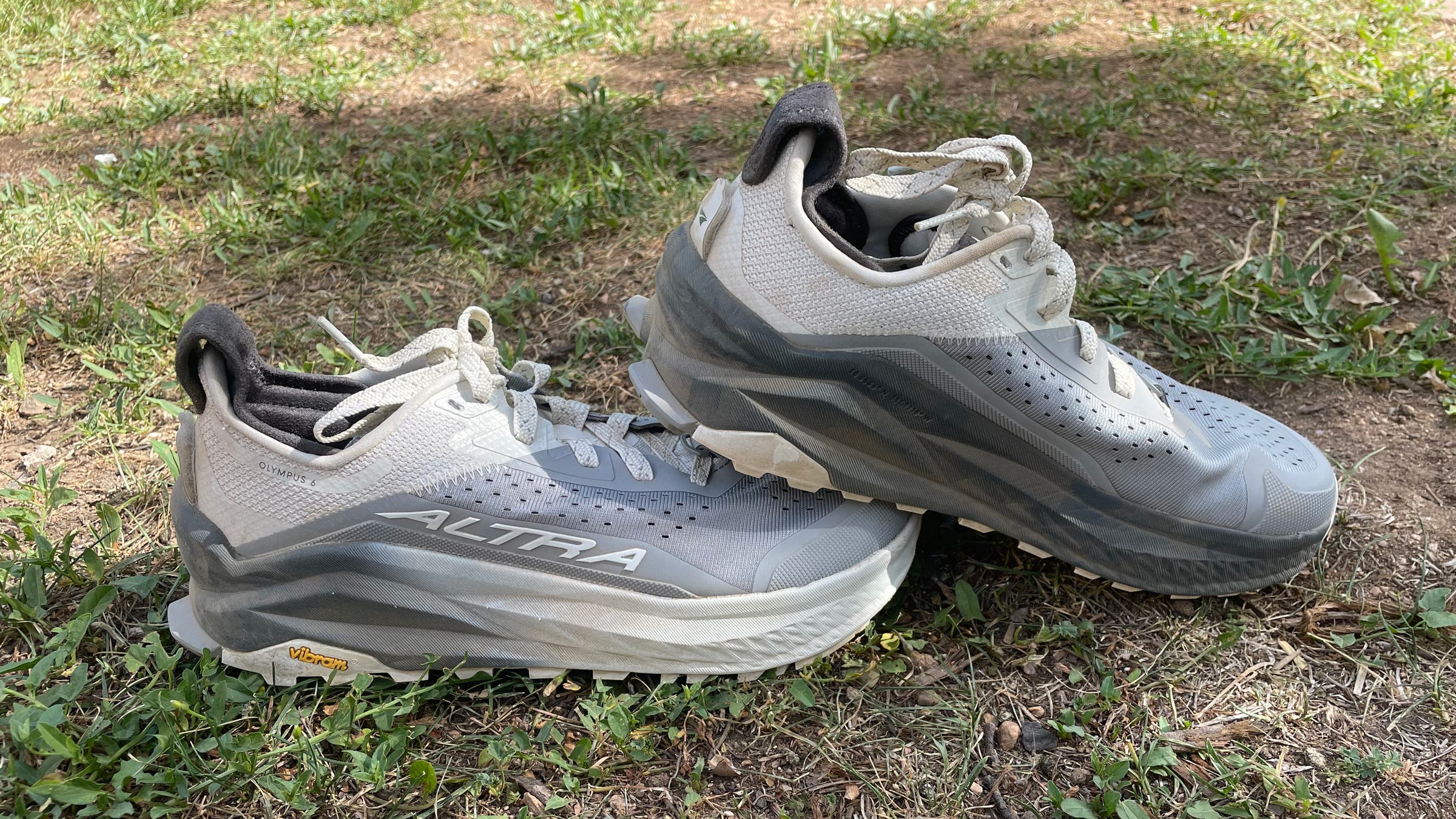
Running Shoe 2: Altra Olympus 6
I started my next experimental hike in the Altra Olympus 6 trail running shoes. Thirty-three millimeters of compression-molded EVA under the full foot provides a maximally plush experience on the trail. The Vibram MegaGrip outsole grabbed solid rock and loose dirt alike. While hiking, I enjoyed the overall comfort of this shoe and didn’t crave more support around my ankles.
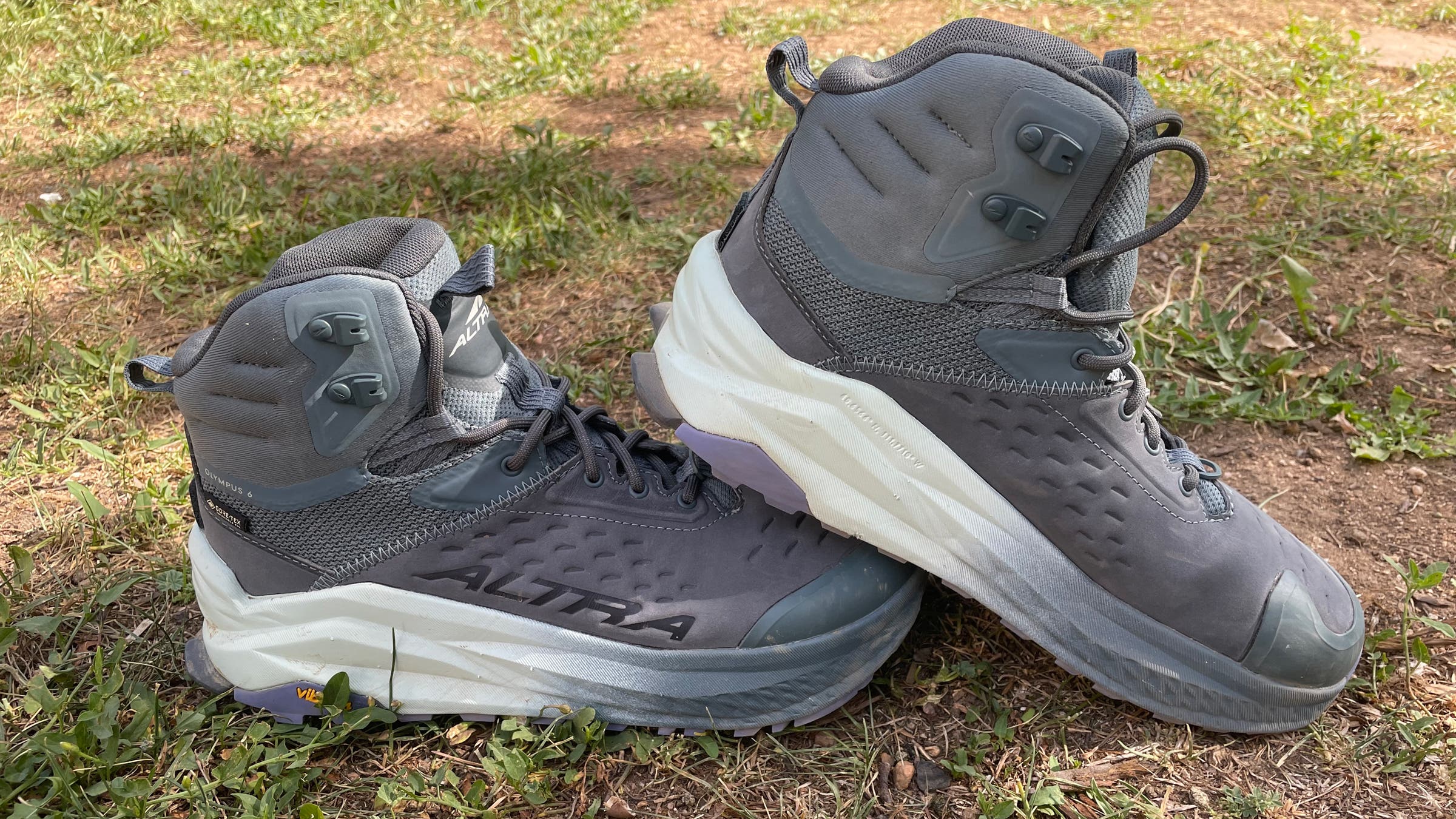
Hiking Boot 2: Altra Olympus 6 Hike Mid GTX
When I switched into the boot and shoved the shoes into my pack, I was pleasantly surprised by the boot’s comfort and light weight—it’s only three ounces heavier than the shoe. The boot has the same midsole as its max-cush running shoe cousin, which felt great underfoot on hard-packed dirt and rocks. The traction of Vibram MegaGrip is the same on the shoe as the boot—lug depth, pattern, and all—and performed equally well. Neither the shoe nor the boot flexes much at the forefoot due to the large amount of midsole foam, but both have a slight rocker rolling the foot off the toe. There is no rock plate in either shoe, but I didn’t miss it, given the thickness of the sole.
The boot, however, has a high, padded ankle cuff, which made my ankles feel hugged and supported. And where the shoe has a breathable engineered mesh fabric, the boot offers GTX and leather upper protection. That upper raises the weight to 15 ounces— light for a boot, but still much heavier than any running shoe.
So, Are Trail Runners or Hiking Boots Better for Day Hikes?
Regardless of the brand, I enjoyed the trail running shoe far more than the boot on the relatively mild trails where I did my testing. Whenever I was swapping out the boot for the shoe, the lightness, softness, and flexibility were a welcome change; there was no compromise in traction, and I didn’t feel unprotected or unstable on the trail. In contrast, when I switched from a trail shoe to a boot, the protection felt like overkill for the length and difficulty of the hike I was taking.
My experiment confirmed to me, however, that there is a time, place, and circumstance for heavier, more protective boots on day hikes. Anyone with foot or ankle injuries would likely benefit from the support and protection of boots. Hiking all day in wet weather and carrying a heavy pack could be easier with the support of a boot and protection from a waterproof upper (although a lot of trail running shoes have proven to excel for backpacking). Boots also provide an opportunity to zone out a little more on the trail. They’re so protective that there’s less concern for exacting footsteps, especially on more rugged, technical trails.
But bottom line: For the vast majority of day hikes, even when carrying fully loaded backpacks, I believe most people will be better off wearing lighter-weight, more comfortable trail-running shoes.
