

Published June 25, 2026 03:04AM
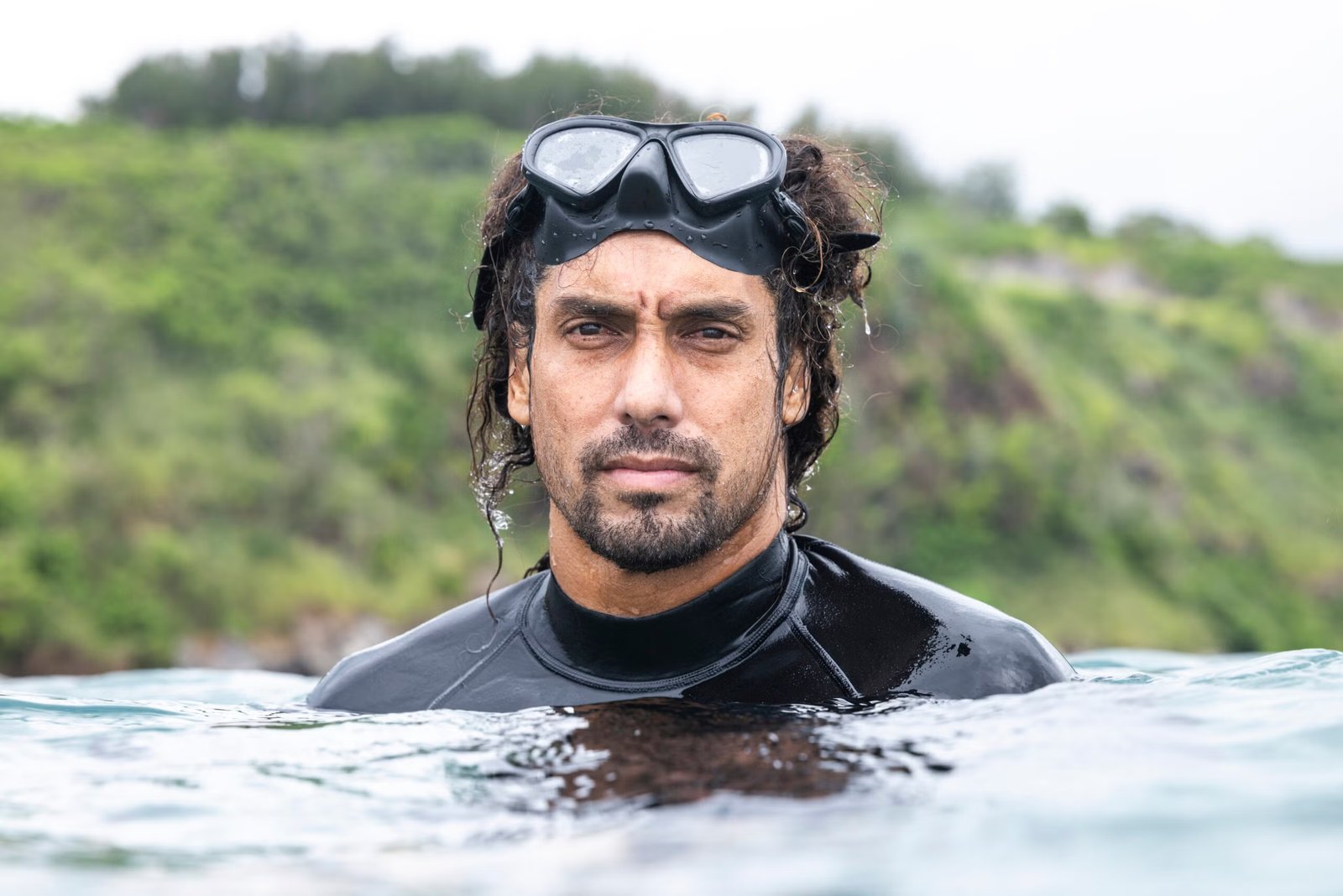
Everyone loves Cliff Kapono. Todd Glaser, preeminent photographer, describes the 38-year-old surfer and scientist as a “special person” who can affect the level of conversation, no matter the topic. Alex Kiluauno, filmmaker, credits Kapono with helping him connect with his Hawaiian family. John Burns, PhD, calls him “one of the most freakishly talented people I’ve ever met.” Across a week spent on Maui and O‘ahu, nearly every person I meet that’s local knows—and loves—Kapono. “Cliff Kapono?!” exclaims my guide on a hike outside of Honolulu. “Of course I know Cliff Kapono!”
Kapono, PhD, is as known for his surfing as for his science: he’s a professional free surfer, a professor at Arizona State University, and a founding partner of nonprofit MegaLab. He is also the driving force behind Reef Week, a project supported by the sandal brand Reef, where MegaLab, Reef, and local communities team up to map reef breaks across the world. Over a weekend in May, I joined the team to map Honolua Bay in Maui.
Why Maps
“Maps are the cornerstone of every successful civilization,” says Kapono. “They show us where our treasures are and they provide us direction of where we’re going.”
Mapping reefs might seem esoteric if you’re not in the ocean on a daily basis—one Maui Uber driver even asked me, when I described the mapping of Honolua, “What’s the point of that?”
Science for science’s sake can be a hard sell in this day and age. But coral reefs are living beings that tell us a lot about the health of the ocean and, in turn, the health of our planet.
“The ocean is the lifeblood of the planet,” says Burns, Kapono’s MegaLab partner. “It’s giving us most of our oxygen, most of our food. They go hand in hand, ocean health and reef health.”
Kapono is fond of reminding people that we’ve mapped more of the surface of Mars than our own oceans (“That’s f-ed up,” he says), which means we’re leaving a lot of knowledge behind.
“Maps tell us where we’ve been and where to go next,” says Kapono. When it comes to a warming planet, maps give us a baseline to compare to—and help us know what solutions to actually deploy. “By having a map and contributing to a larger map of the coral reefs in the world, we’re going to be better prepared to adapt in a changing environment.”
The Process of Mapping a Reef
Honolua Bay is the fifth surf break mapped by Reef Week, after Cloudbreak in Tahiti, Pipeline in Oʻahu, Jaws in Maui, and Teahupoʻo in Tahiti. Honolua—small, tucked into Maui’s northwest shore—is a marine protected area and delivers some of the world’s best barrels. “I could not imagine a more soul-stirring wave,” writes William Finnegan in classic surf memoir Barbarian Days: A Surfing Life. “I wanted more of it. All I could get.”
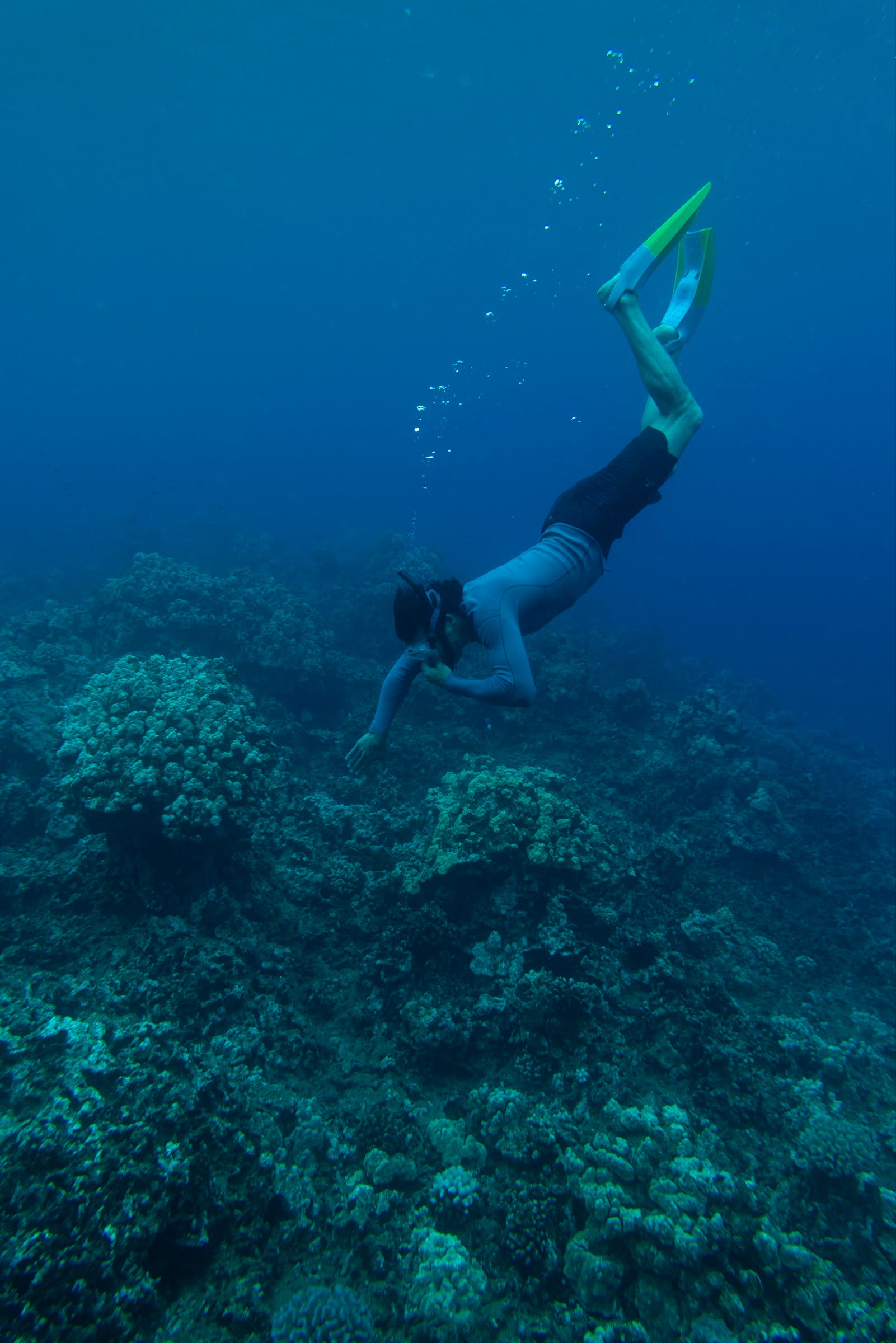
The reef itself supports some of the best snorkeling I’ve done in Hawai‘i. Even on the overcast day we go out mapping, the clarity is exceptional. This is great for contributing images that will ultimately help make up the 3D map we’re there to create.
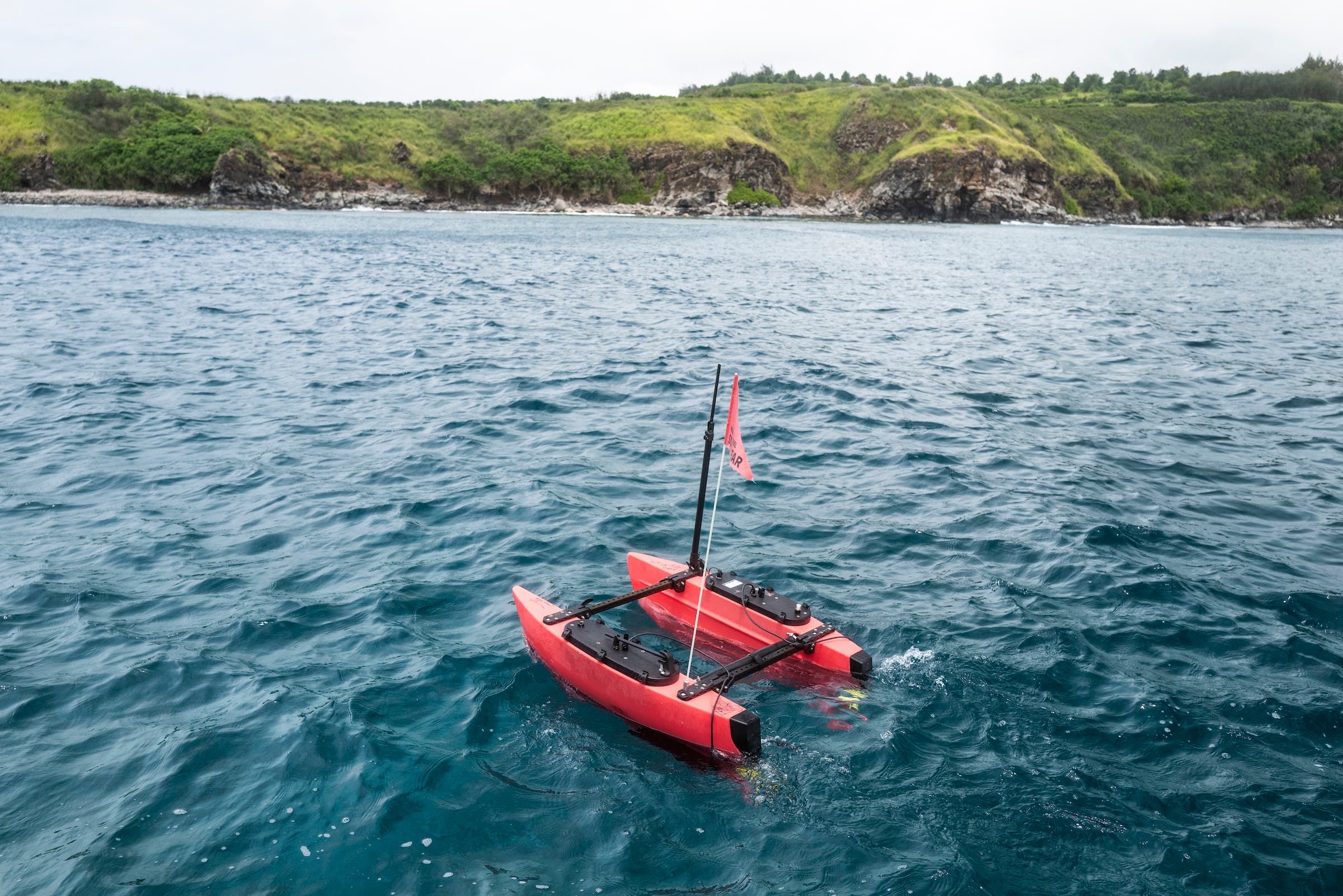
The map itself was built using a combination of sonar data gathered by Blue Boat, a little red robotic boat that tracks up and down the bay, and underwater photos and video shot by MegaLab scientists and everyday citizens—world-class surfers, including Billy Kemper and Katie McConnell, as well as Maui locals showed up to help us map the reef.
When I express, self-deprecatingly, that my personal contribution to the map probably wasn’t much—equipped with a GoPro, I snapped some 15-second videos, the longest I can hold my breath—I am enthusiastically reassured by Kapono and multiple other scientists that all images of the reef are valuable.
“Our initiative is to map a million reefs by 2030. And to do that, we have to train 10,000 people to do the maps,” says Riley Sokol, a researcher at MegaLab. “So we’re training people to use tools, like an iPad or GoPro, where you just take videos of the reef, or pictures, and then upload it to our website, Map2Adapt, where we’re able to now have a repository of reefs that people map all around the world.”
And our mapping of Honolua resulted in real learnings about the reef and how it manifests into a world-class wave.
“These sort of cracks and crevices at Honolua are the reason that we believe the wave is dynamic. It’s not the same—it’s always changing, but in a predictable manner,” Kapono presented at the end of the week. “And the more features that we can identify and the relationships between the different features, we’re going to be able to better understand more about why these things, these organisms, bring us humans out. They attract us.”
Combining Science and Surf
Kapono, as a surfer, is sponsored by Reef, and utilizes that relationship to fund Reef Week.
“Cliff is more selfless than people realize,” says Burns. “He could take the route of, ‘Yeah, they support me to surf. I’m going to pull those budgets to go on surf trips and make it all about the surfing.’ But Cliff has decided, ‘No, I want to channel this financial support for these trips to go into science.’”
In contrast, Kapono often uses the word “selfish” to describe his work, because ultimately, mapping reefs combines two things that are equally enjoyable for him.
“Understanding the complexities of our natural world brings me joy, and experiencing those complexities brings me just as much joy,” he says. “I want to continue as long as I can to make an honest living doing both, at the same time. I don’t see a difference between what I do and the surfer who plays music, or does art, or writes poems. Science is my art.”
“Cliff’s really a genius, and people have a hard time understanding that, because we as humans are designed to categorize,” says Burns. “So, you see him and you want to think like, ‘Oh, tall Hawaiian surfer, ocean guy.’ But wait, also like a crazy chemist? And also a writer? And a musician?”
Embracing all parts of himself was a process for Kapono, who, growing up, didn’t see someone combining surf and science the way he dreamed. He was told by “nearly every single person,” including teachers and other scientists, that it would never work.
“It’s not cool to be a surfer-scientist. None of my friends who were growing up to be pro surfers thought, ‘Yeah, cool, go get some data,’” he says. “No one was like, ‘That’s rad’ growing up. And I had to kind of push through all of that.”
Combining his passions into a cohesive career was inspired, in part, by Bo Jackson, the only professional athlete in history to have been named an All-Star in two major American sports (baseball and football).
“I have like eight jobs. I’m a professor, I’m a professional surfer, I’m a [publishing] PhD scientist,” he says. “People will ask, ‘How do you do all that stuff?’ Because Bo did it. But he’s a freak, way, way gnarlier than I’ll ever be. I’m the nerd version.”
It’d be easy to call Kapono a savior of the reef (other people have). But he’s not interested in that.
“I don’t want to be seen as doing ‘good’ work. I’m doing the work I want to do,” he says. “I’m about science, I’m about elevating scientific literacy. I’m about data. I’m about nerd shit.”
