

Published June 29, 2026 03:33PM
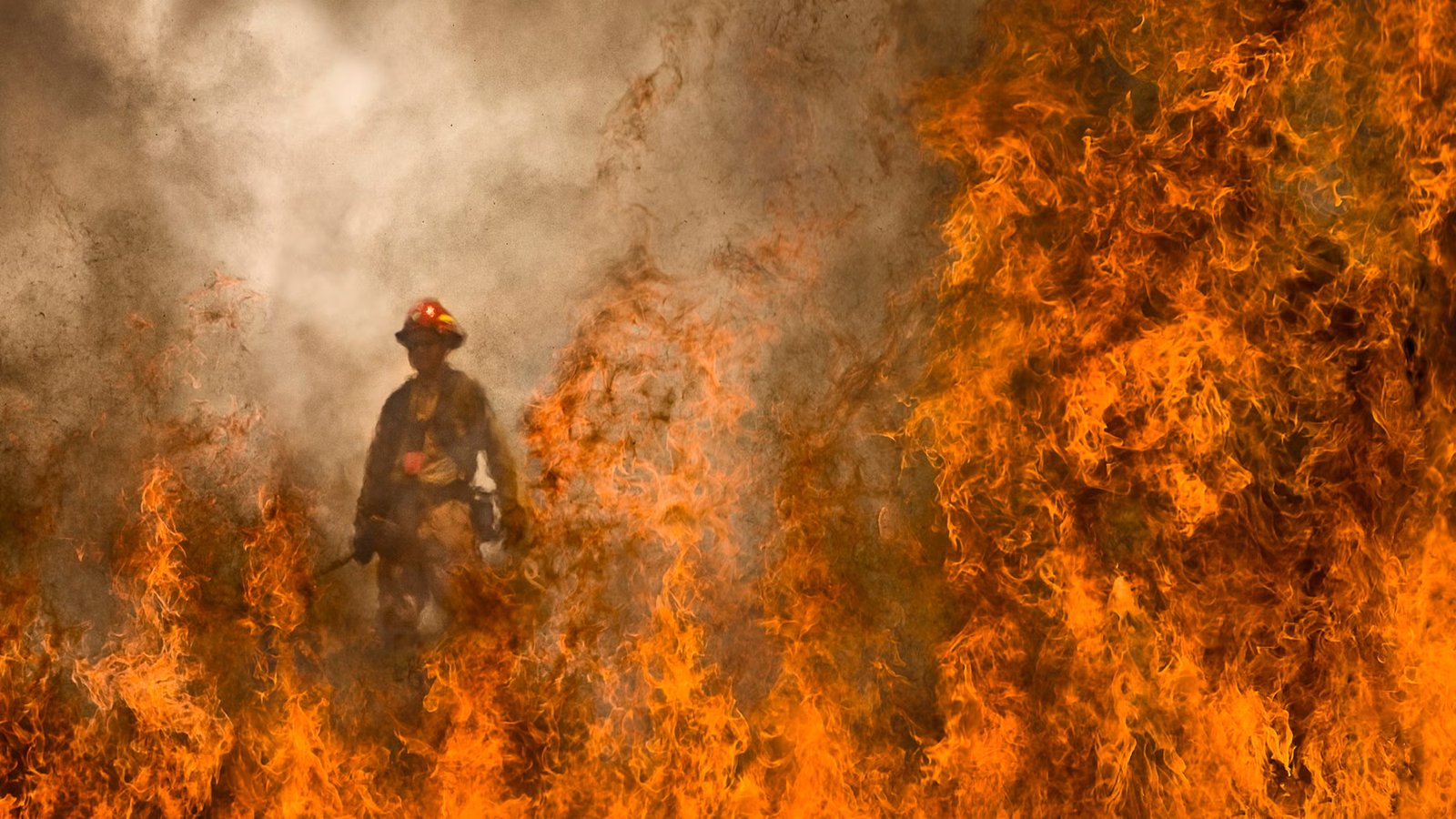
The three firefighters who died on June 27 while battling a blaze along the Colorado-Utah border deployed a technique meant to keep them alive in the event of quickly approaching flames.
But experts say that lifesaving practice—which involves setting up a shelter made of protective material—is a “last resort” that does not always work.
“A shelter is a tool of last resort meant to protect one from a flaming front and the gases released during a fire,” says Bill Kaage, a retired firefighter and the former chief of the National Park Service’s division of fire and aviation. “They train on fire shelter use yearly, if not more often. Realistically, no firefighter wants to be in a situation requiring the use of a shelter.”
Emily Barker, 38, of Michigan, Nick Hutcherson, 27, of Arizona, and Sydney Watson, 27, of Alabama, died after deploying their emergency protective shelters as a fire overtook their position, officials said in a statement. Two other firefighters were injured in the blaze as well.
Their deaths mirror the 2013 Yarnell Fire Incident when 19 firefighters died after deploying their shelters in Arizona—and serve as a reminder that a firefighter’s last resort may not be enough.
“Their deaths are absolutely devastating,” says Riva Duncan, president of the Grassroots Wildland Firefighters, a nonprofit advocacy group.
What is a Fire Shelter and How Does One Use It?
The three firefighters were responding to the Knowles Fire in Western Colorado, which later merged into the Snyder Fire, the Department of the Interior said in a statement. Now estimated at 28,000 acres, the Snyder Fire was one of eight emerging incidents in the area following a red flag warning.
When deploying a fire shelter, firefighters issue a small tent made of technical fabrics that can reflect high heat when they are in a fire entrapment situation, meaning they cannot reach a safe zone and are being overrun by fire. The shelter’s shape allows one person to lie flat, protecting the underside of their body and airway as they breathe the cooler, cleaner air closer to the ground. Deployment takes around 15 to 20 seconds, and firefighters must hold the shelter down before the flame front arrives.
But the exact conditions under which the firefighters deployed their shelter are still being investigated, authorities said.
Duncan told Outside that the firefighters were engaged in initial attack firefighting, the first response by dispatched units to an incident. The exact details of how they died in the fire, she said, are not yet known.
“It was a very dynamic situation, and it will take time to gather information and facts to learn exactly what happened,” Duncan said.
Fire shelters are known to save lives. Under extreme conditions, however, they may prove fatal.
“They crawl into the shelter and hold it down with their arms and legs to try to weather a fire burnover. While shelters have saved the lives of numerous firefighters, not every situation is survivable,” Duncan said.
Most firefighters who perish in fires die from heat that damages their airway, usually not external burns—just one inhalation of hot gases can damage the lungs and suffocate a person, according to the U.S. Forest Service.
Wildland Firefighters Serve the Front Lines
Wildland firefighting is different than structural. In wildland, personnel don’t wear any kind of airway protection, Duncan said, and they often work extremely close to the edge of a wildfire.
“They carry chainsaws and hand tools for digging in the dirt and chopping brush to construct fire containment lines. They work 14-16 hour shifts but can even exceed a 24 hour shift during initial attack,” Duncan said. “Their fire engines are small so they can drive narrow mountain roads. They hike long distances into fires or can rappel from helicopters and parachute into remote areas.”
And with mounting environmental pressures pushing wildfire into more areas, experts like Kaage and Duncan agree that wildland firefighters are needed more than ever.
“Wildland firefighters are the frontline resources working in proximity to a fire’s edge to stop fire spread,” Kaage told Outside. “The work is arduous, requiring long hours, physically fit individuals, and lots of support by others not working alongside them.”
An Unusually Active and Early Fire Season
Nationally, fire managers moved the country to preparedness level four on June 29, with five being the highest. These ratings help authorities guide and mobilize fire resources. As preparedness levels rise, so does the need for incident management teams and suppression resources, such as wildland firefighters.
According to Kaage, the number of fires and acres so far burned this year are above the ten-year average, but it’s difficult to speculate on how the year will continue to unfold. Below-normal snowpack followed by a very warm spring is leading to a drier-than-usual summer.
“This can mean that fuels were exposed to the elements (not under snowpack) for a longer time than is usual, and that vegetation may be stressed from reduced soil moisture,” Kaage said.
Duncan added that persistent drought conditions, paired with a low snowpack, are making this year’s Western fire season challenging.
“This is very early in the summer for places like Utah to be so active,” Duncan said. The three deaths are “absolutely devastating for the wildland fire,” she added.
“We ask the public to please be mindful of fire restrictions and remember we have real people with families out on the firelines doing an already risky job—the last thing we need is a human-caused wildfire (all human-caused wildfires are preventable). Our firefighters are doing the absolute best they can in really difficult and dangerous conditions,” Duncan said.
Authorities say they are continuing to investigate the incident and will release more details as they become available.
“We mourn the loss of three firefighters who answered the call to protect others and made the ultimate sacrifice in service to their fellow citizens,” Wildland Fire Service Chief Brian Fennessy said in a statement. “Our thoughts are with their families, loved ones, friends and crewmates as they face an unimaginable loss. These firefighters embodied the courage, professionalism and selflessness that define the wildland fire service.”
