

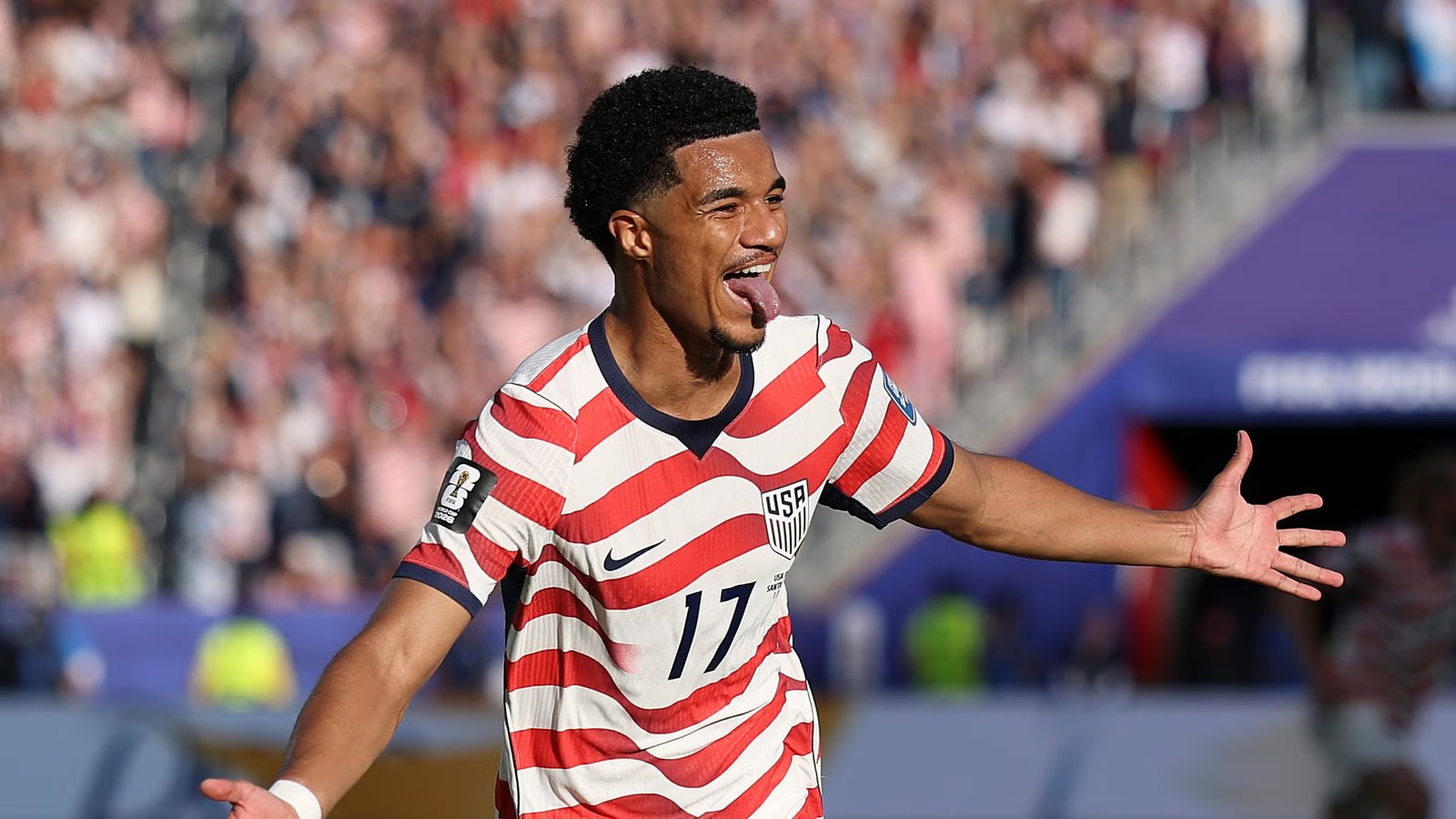
Published July 2, 2026 12:18PM
By the 64th minute, the shadow had taken most of the field. It had been coming all evening, sliding off the rim of Levi’s Stadium, swallowing the grass a few yards at a time, and nobody paid it any mind. Why would we?
It was still a gorgeous day in Santa Clara, California on Wednesday with 68,827 people in the stands, most of them in red, white, and blue. For once, we were the favorite going into the game. A novel sensation in American men’s soccer. For the first time ever, the U.S. entered a World Cup knockout match expected to win.
And for 63 minutes, it played like it. Folarin Balogun had scored just before halftime, slipping the ball between the Bosnian keeper’s legs and breaking out his LeBron Silencer celebration. This is what it must feel like, I thought, to be a fan of a team that simply wins. I wouldn’t know. I root for the Knicks and the Mets, perpetual underdogs.
Then Balogun tangled with Tarik Muharemović, his ankle rolled, and the referee walked to the VAR monitor. In slow mo, it was nasty, but not intentional. Still, the ref issued a straight red. Balogun was off, in tears, consoled and hugged by his teammates as he left the field.
There was a collective groan in the stadium. The game had just become a whole lot meaner.
Here is the thing about being wronged, or feeling wronged, which in the moment are indistinguishable: it clarifies nothing and demands everything. The US had already had a goal disallowed. Christian Pulisic would have another chalked off for being offside in the 78th. Bosnia had spent the afternoon playing a bruising, tough-guy form of soccer. Now the Americans were down a man with 26 minutes plus stoppage to survive, protecting a tenuous one-goal lead.
We all know this feeling. It’s that vertigo of having come so far and then—like the shade you don’t notice crossing your seats until you’re cold—watching the universe casually pick the other side. The U.S. men hadn’t won a World Cup knockout game since 2002. Twenty-four years. At that point, it becomes less of a stat and more your entire personality. You learn to always brace.
But bracing is not what happened. What happened was Malik Tillman.
First, the boot. In the 81st minute, moments before the biggest kick of his life, Tillman was on the sideline dealing with an equipment issue and swapping the right cleat off his foot, his big toe bleeding through the sock. Any runner knows it: the blister at mile 18, the small stupid failure of gear at the exact moment you need everything else to go right. You have to do something about it, because if you don’t, you know what’s coming.
Then he stood over a free kick at the edge of the box and hit the shot of the tournament. Up, over the wall, past a row of Bosnian heads, off the goalkeeper’s fingertips, annnnnd IN!
It was only the second direct free kick an American man has ever scored at a World Cup. The first was Eric Wynalda in 1994, the last time this country hosted, in a tournament whose knockout round took place in Stanford Stadium, 20 miles up the road from where Tillman’s ball landed. Talk about long shadows. This one stretched 32 years, and it lifted in the time it takes a ball to clear a wall.
“You never know when it’s going to happen,” Tillman said afterward in a post-game interview on Fox. “Today, it happened.”
Even then, the game refused the dignity of a simple, triumphant win. The fourth official’s board went up: ten added minutes, an excruciating amount of time to fight through. Bosnia’s coach, Sergej Barbarez, picked up a yellow card. Yes, it was that kind of game, where even the manager got in on it. Then the final whistle came, and, relief.
Pulisic put it plainly: “We had to dig deep for that one.”
“Dig deep” is one of the most worn phrases in sports, but we all say it because it’s also the truest. What the U.S. did on Wednesday wasn’t tactically beautiful. It was better: it accepted the game it was given.
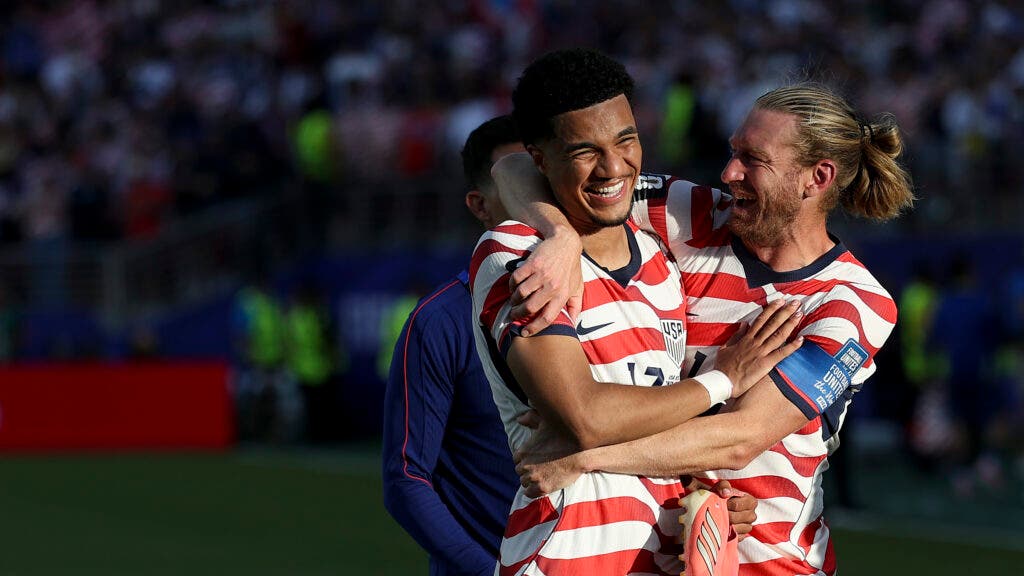
This is the part that travels beyond soccer. You can’t negotiate with a red card any more than you can negotiate with weather on the day of a climb or a headwind at the end of a race. The plan is a beautiful thing right up until the moment it isn’t, and what you do next is the meaning of sport. The instinct is to bitch and moan. To spend the rest of your energy yelling at the sky.
The alternative is what Tillman did: bleed into your sock, change the cleat, and stay ready for a moment you have no reason to believe is coming.
Because it might not come. Tillman had never scored a World Cup goal. He’d spent the tournament doing the unglamorous midfield miles. He said afterward he’d been dreaming about taking a free kick, which is a humble way of saying he’d prepared, for years, for something that was highly unlikely. Readiness without appointment. Most of the time it looks like wasted effort.
And then, every 32 years or so, the ball clears the wall.
The U.S. plays Belgium in the round of 16 on Monday, July 6, in Seattle.
