

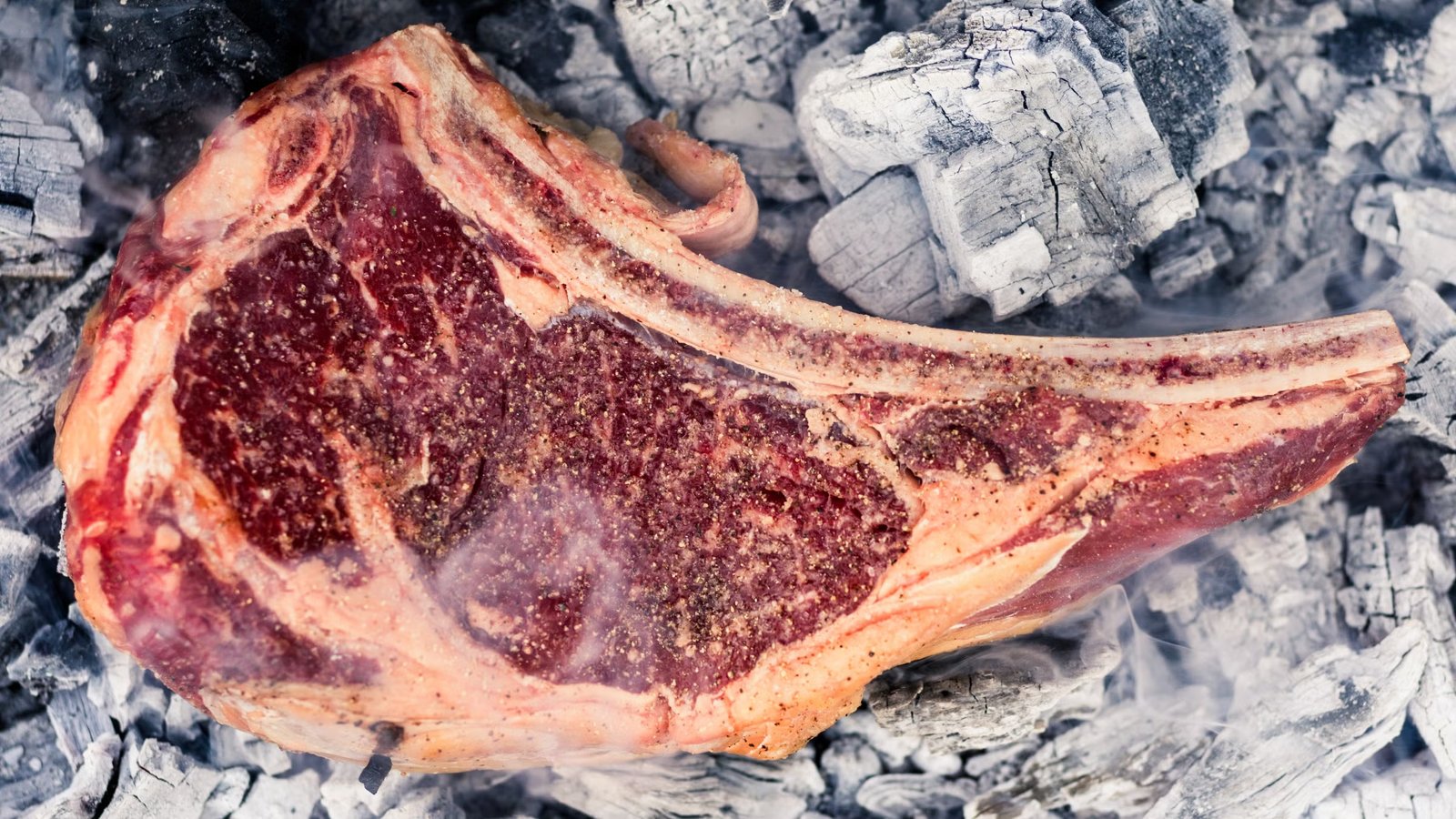
Forget the grill grates—drop your rib eye straight on the coals and discover why Eisenhower swore by this primal method.
(Photo: Kyle Johnson)
Published August 15, 2026 03:12AM
Cooking outdoors means cooking with fire, but the practice is largely predicated on protecting your food from the flames. What if I told you that you can just toss a steak directly on the hot coals, and that it might be the tastiest, juiciest one you’ve ever made? No less a luminary than President Dwight D. Eisenhower swore by this method, which he used to delight dinner guests at the White House, and he never, ever served them well-done. They are variously known as “caveman steaks,” “dirty steaks,” or, appropriately, “Eisenhower steaks.”
Ike favored superthick (four-inch) sirloin, and you’ll want to get steaks at least two inches thick so they don’t overcook on the coals, which can easily exceed 1,000 degrees Fahrenheit (you can get away with one-inch steaks, but you’ll need to flip and pull them pretty quickly and they won’t get the same crust). Bone-in steaks like rib eyes, T-bones, or porterhouses will give you a little more insurance against overcooking, and they’ll also let you double down on the caveman vibe by gnawing on the bones.
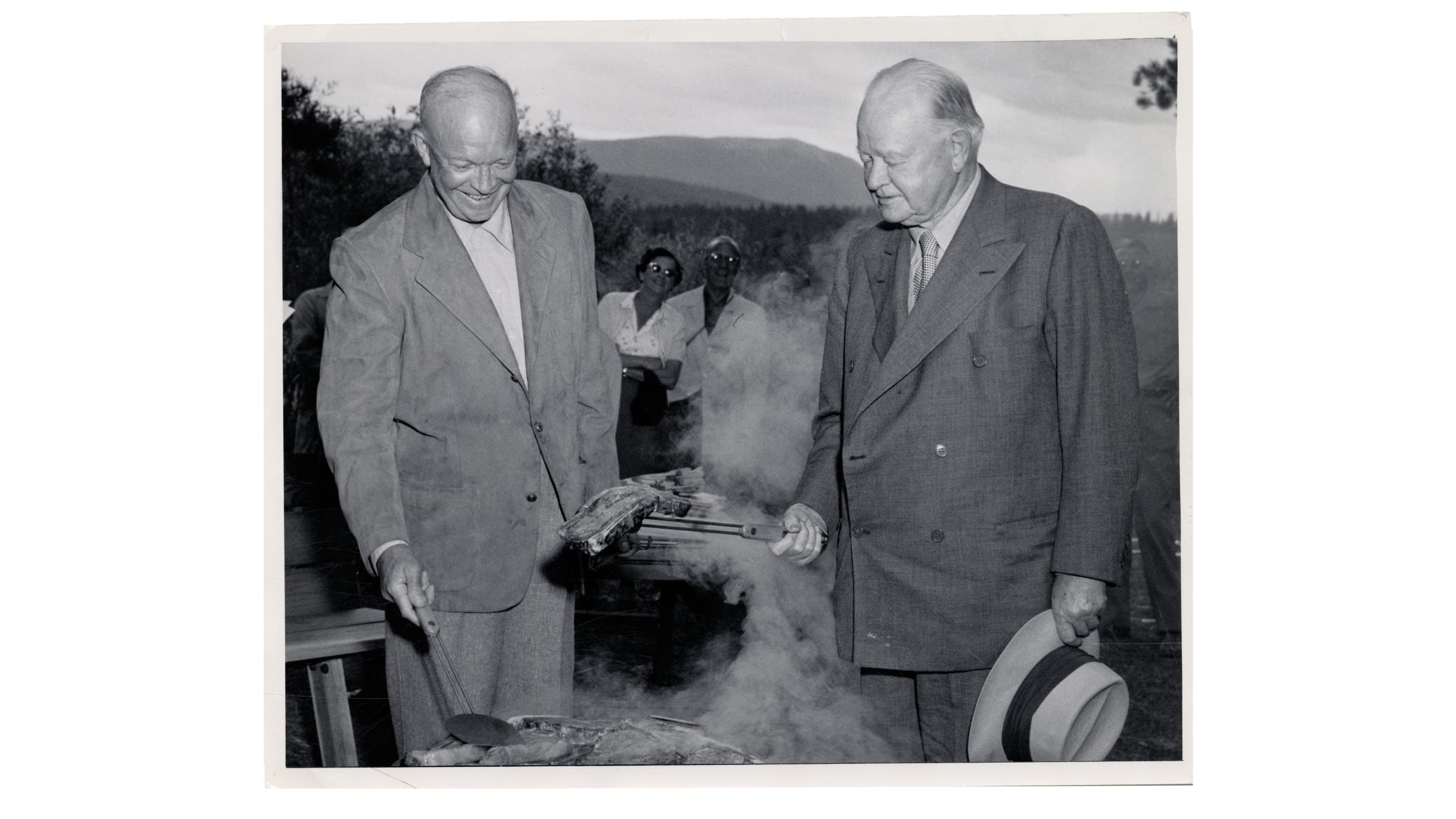
You’ll need a pair of tongs to flip and retrieve your dirty steak, and a plate to rest it on after cooking, but other than that this is as low-tech as cooking gets. For seasoning, all you need is salt and pepper (be generous with the salt), but you can also use a rub: Per steak, mix up a tablespoon of finely ground coffee and a teaspoon each of coriander, garlic powder, and brown sugar, then add a tablespoon of salt and a few twists of black pepper. Rub this all over the exterior at least an hour before cooking.
You want a fire made with hardwood charcoal or actual hardwood that has had time to burn down to proper glowing coals. (Skip briquettes, which disintegrate into powdery ash and will make your meat dirty.) Charcoal will need at least half an hour to get good and hot, and firewood will need closer to twice that long to create a bed of coals. But that’s a good thing; first, you can enjoy sitting around the fire relaxing with a beverage and some snacks before dinner, and second, you can cook your potatoes in the embers so that they’re ready when the meat is done.
Papas al rescoldo is an Andean dish popular from Peru to Argentina, and it couldn’t be simpler. You just bury your spuds in the embers around the edge of the fire and let them cook. Some people like to wrap them in foil, others like to let the outsides char. If you’re going to cook them unprotected, use russets or another thick-skinned variety—sweet potatoes are another excellent choice. Just poke a few holes in each potato, wrap in foil if you want, and nestle in the embers. Spread some more hot coals over the top so they cook evenly, and let them sit there for 40 to 60 minutes, depending on the size of your potatoes and the heat of your fire.
When your coals are glowing red and not yet covered in ash and your spuds are rounding third, you’re ready to cook your dirty steaks. Spread the coals out at least three inches deep; fan them with some newspaper if you want to blow away any surface ash. Drop the steaks on the coals and let them sit for three to five minutes, depending on the thickness. Then flip them over and let them go for about the same amount of time. If you want an outrageous crust, you can flip them more frequently, but aim for the same total duration.
If you’re shooting for a medium rare steak (which you should be), pull them when the interiors reach 115 to 120 degrees Fahrenheit, because the temp will continue to climb while the meat rests, arriving neatly at 130 degrees by the time you slice it. A meat thermometer can be super useful at this juncture—just make sure that the probe isn’t touching bone when you slide it in. Brush off any embers that stuck, and rest your dirty steaks for at least ten minutes before slicing.
So next time you make a campfire, or even just light your grill, consider going the primal route, ignoring the Grillitary Industrial Complex, and connecting with your food in the most direct way possible. An added bonus: very little cleanup!
Sauce of the Andes
To take this meal to the next level, lean into the South American vibes and whip up a batch of chimichurri to spoon over your meat and potatoes. Finely chop a big handful of flat-leaf parsley, two to four cloves of garlic, and the leaves from a couple large sprigs of fresh oregano. Mix this together with olive oil and red wine vinegar (or lemon juice) in about a 2 to 1 ratio until you have a loose, saucy consistency. Season with salt and pepper and you’re ready to go. Most chimichurri recipes call for some hot red pepper, which is grand, but if you were to blacken a poblano or serrano chile or two in the embers before peeling and seeding them, you could add those to your sauce and be glad that you did.
