

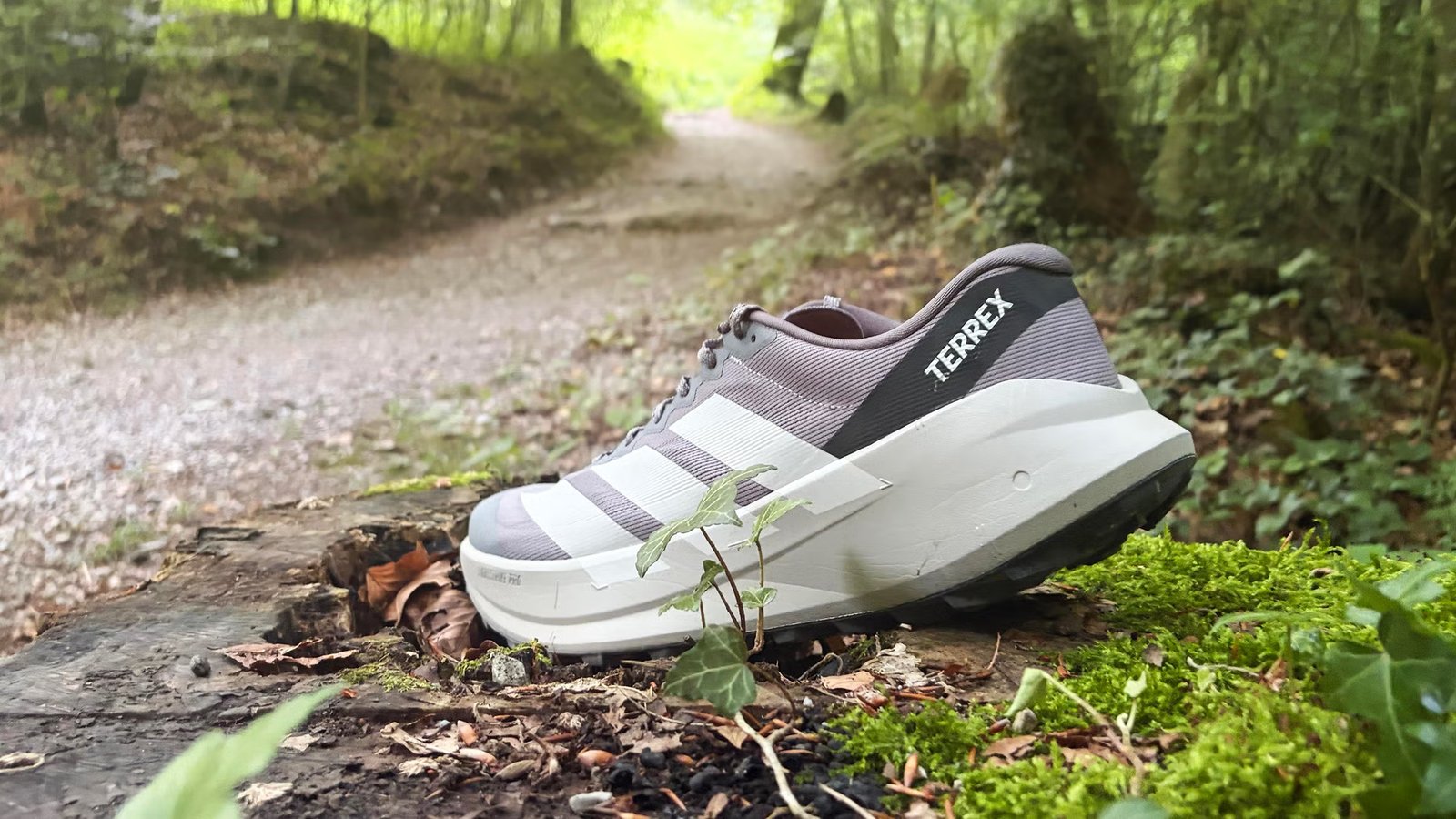
If you’re a fan of the versatile, speedy Adidas EVO SL, the new Terrex Agravic SL is the only trail shoe you should care about right now.
(Photo: Dean Stattmann)
Published July 3, 2026 03:38AM
I recently moved from New York City to Zurich, Switzerland. And, like most runners, my first instinct upon arrival was to lace up and hit the road. But after venturing out for a couple of miles and linking up with a local run club, I quickly realized that while the roads here are perfectly fine, this town—permeated by thick swathes of forest and surrounded by vast expanses of farmland—is all about its trails.
Make no mistake, I was stoked. I love trail running, and Manhattan isn’t exactly renowned for its singletracks. But I’ve had a shoe issue. Not a shortage, of course. As a running journalist, I objectively own far too many pairs, including about a dozen trail and gravel options. (Cue footage of me apologizing to my movers in New York as they discover yet another closet bursting with trainers.)
As I transition to becoming a Swiss trail runner, however, I’ve been struggling to hang up the Adidas EVO SL—a road shoe that I, like many runners, have been completely and hopelessly obsessed with. For me, no other road shoe currently on the market—and certainly no trail shoe—has come close to the lightweight, snappy, and all-around satisfying experience of running in the EVO SL. That is, until I tried the new Terrex Agravic SL.
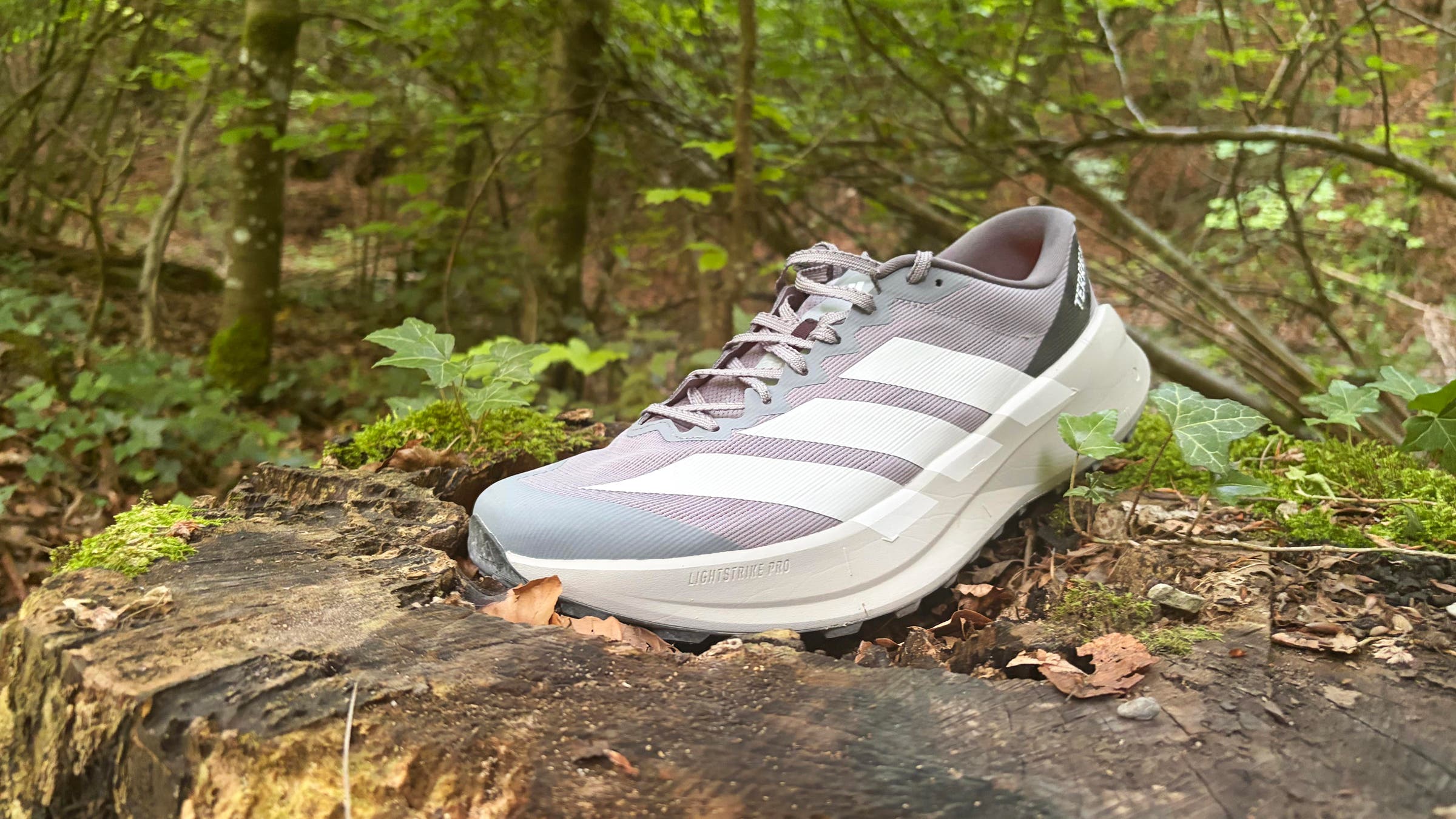
Adidas Terrex Agravic SL
Weight: 9.84 oz
Stack height: 39–33 mm
Drop: 6 mm
A Fan Favorite, But Make It Feral
I love the Agravic SL because it is as close to a trail version of the EVO SL as you’ll find. That seems entirely by design, considering the EVO SL has sold over 10 million pairs, and will likely be remembered as Adidas’ most consequential and well-received running shoe since the 2013 Boost. Built on the same energetic Lightstrike Pro midsole as the Adizero Adios Pro 3 (minus the supershoe’s ride-stiffening energy rods), it is fast, supportive, comfortable, and smooth. It’s the epitome of versatility in a running shoe. And it looks sharp as hell.
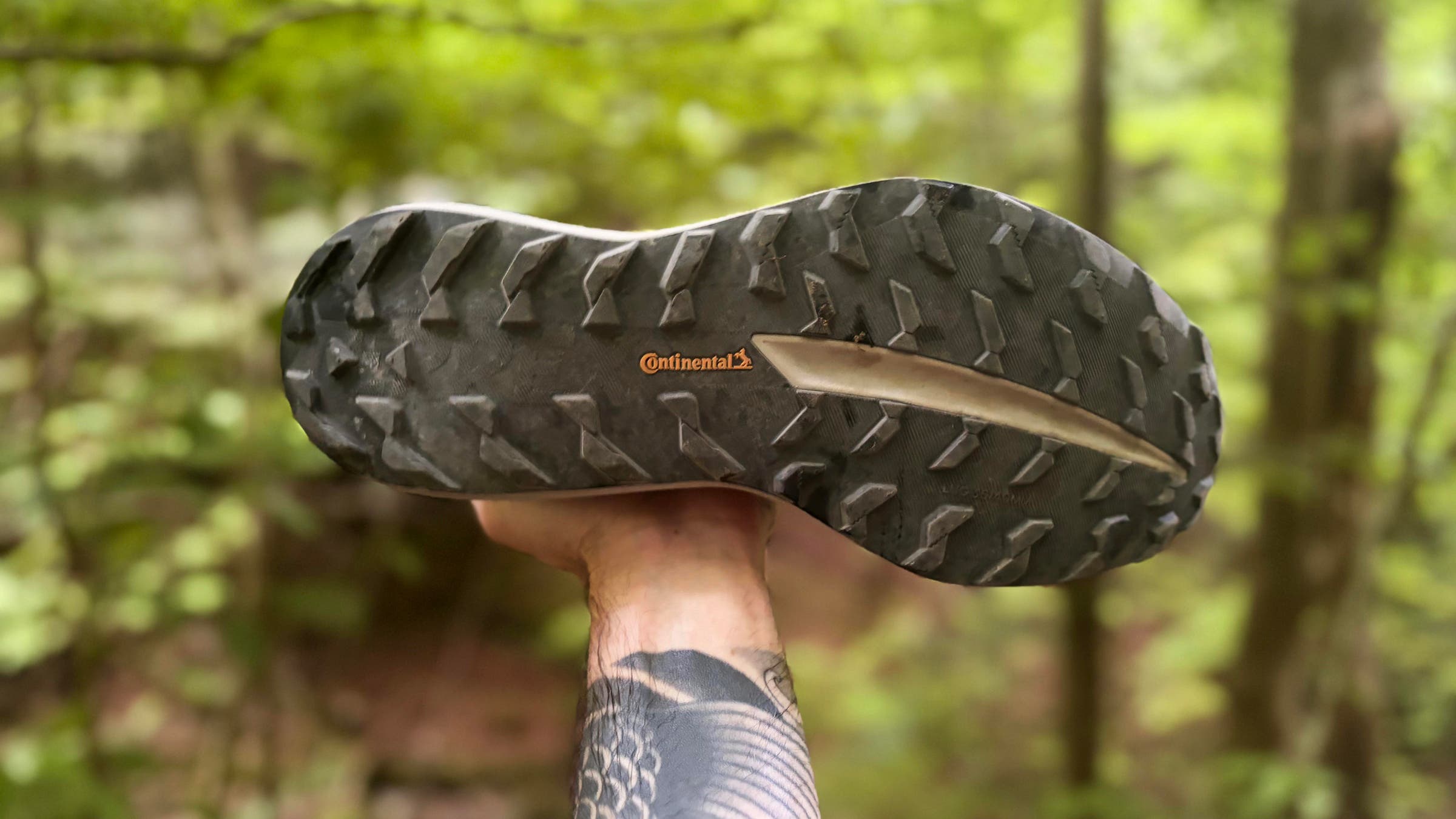
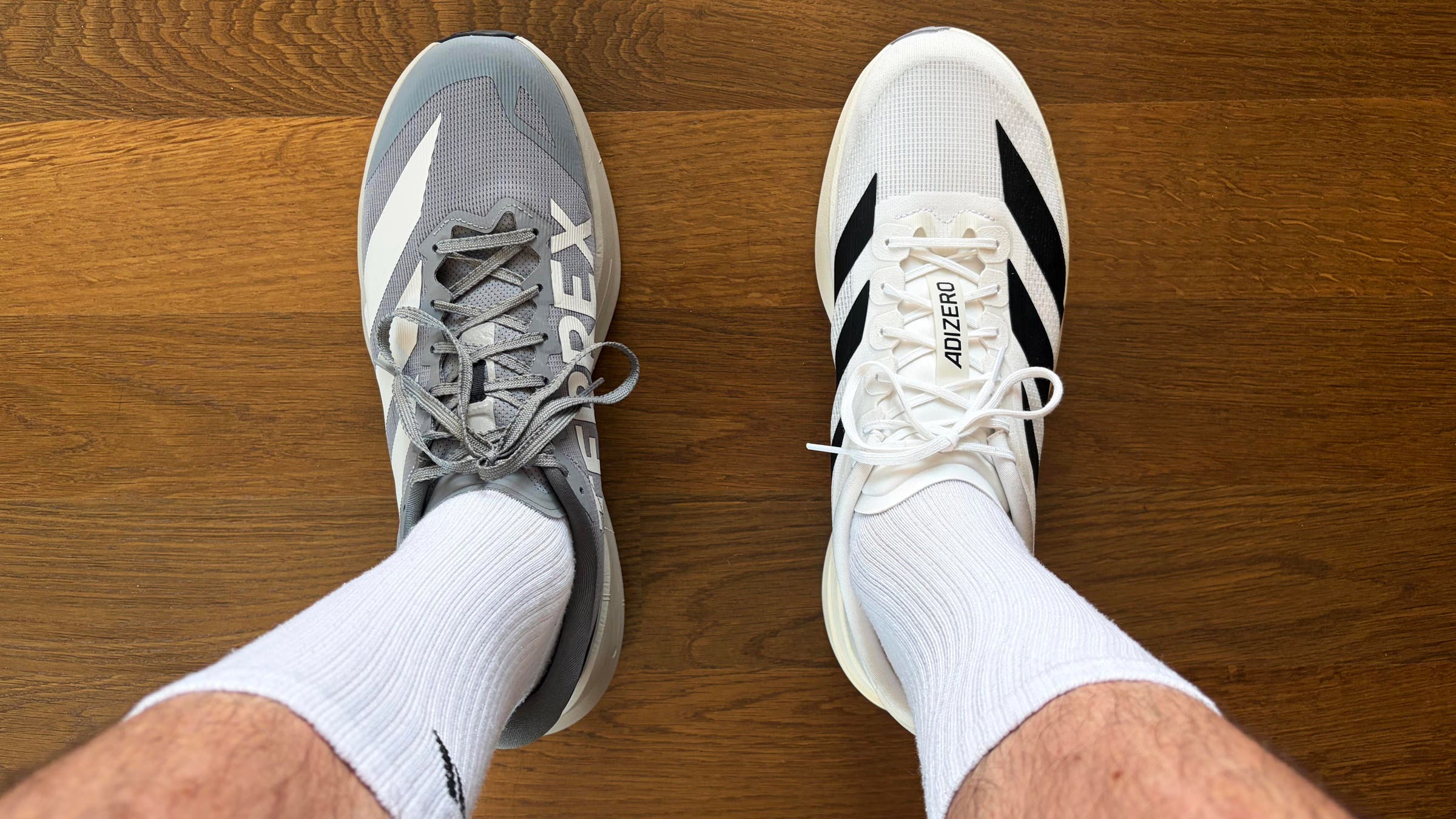
The Terrex Agravic SL is an exercise in restrained design. It updates the EVO SL just enough to be able to tackle the trails, but not a stitch more. The most notable modifications are to the outsole and upper. Whereas the EVO SL sports a thin, smooth layer of Continental rubber that only partially conceals its exposed Lightstrike Pro midsole, the Agravic SL is fully treaded with a robust, toothy outsole, dual-wielding a combination of 3.5 mm and 4 mm lugs. In keeping with the EVO SL’s approach of infusing elite technology into a daily trainer, it has the exact same outsole as the brand’s premium trail racing shoe—the Agravic Speed Ultra 2. Topside, the EVO SL’s engineered mesh upper has been fortified with abrasion-resistant TPU overlays around the toe box, laces, and heel for extra durability.
Same Ride, New Map
Based on what Adidas has updated from the EVO SL to the Agravic SL—and, more importantly, what the brand has chosen to leave as is—my guess is that the goal was to translate the experience of running in the EVO SL as closely as possible to off-road terrain. And, given that as the goal, I’d call the Agravic SL a success: The reworked outsole and reinforced upper effectively protect the snappy, lightweight, and nimble experience that makes the EVO SL great for so many different kinds of runs (and runners), shielding it from the intrinsic hazards and rigors of the trail. Just like the Agravic Speed Ultra brought the propulsive power of the Adios Pro to the trails, the Agravic SL unlocks a world of singletracks and switchbacks for fans of the EVO SL. Essentially, what the EVO SL is to the Adios Pro 3—a more versatile and accessible ride with similar premium materials (and, crucially, no energy rods)—the Agravic SL is to the Speed Ultra 2.
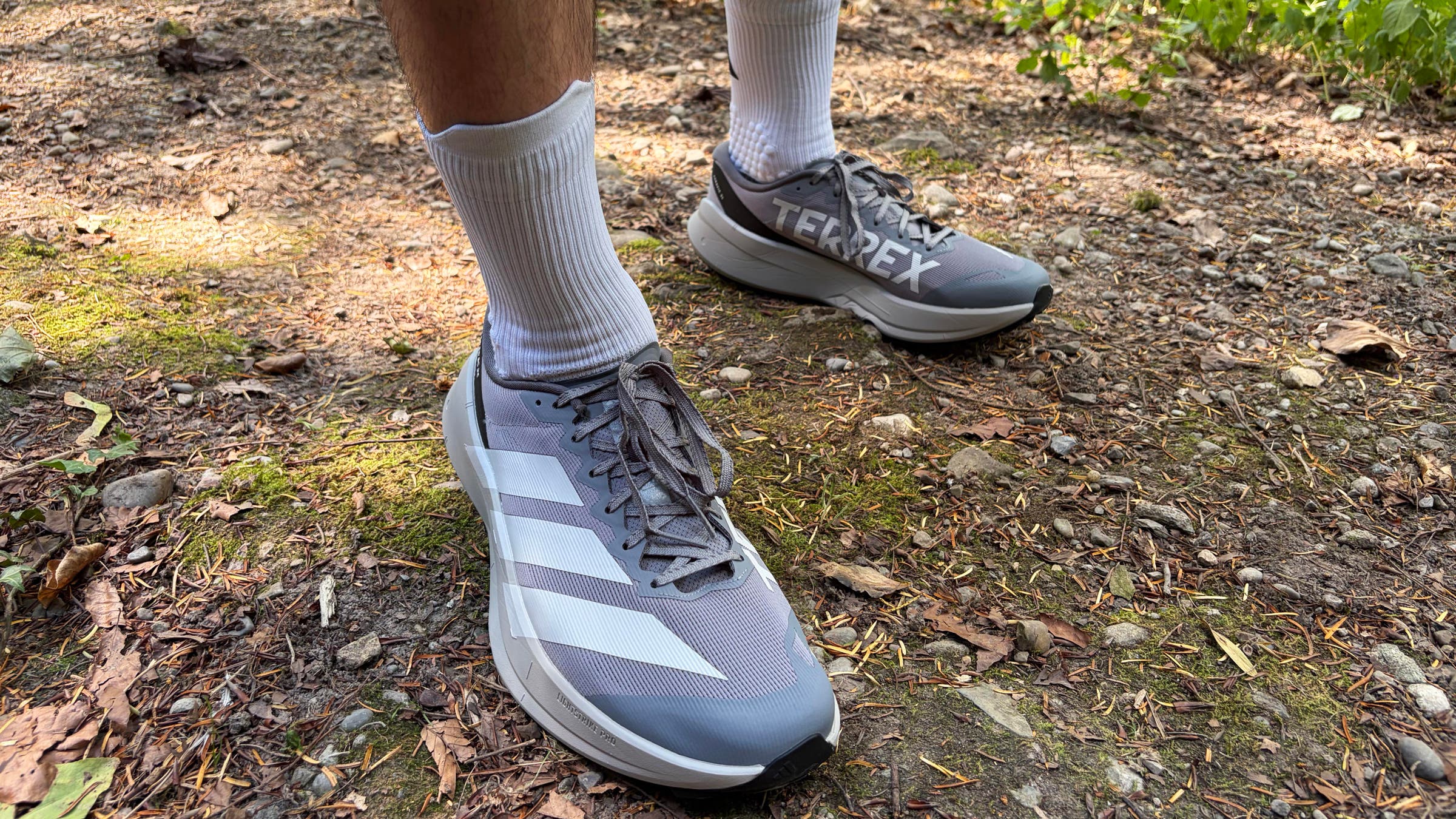
In addition to the obvious changes to the outsole and upper, some more subtle changes help the Agravic SL feel like a purpose-built trail shoe. The Lightstrike Pro midsole, while identical in composition to the EVO SL, has been shaped into a more exaggerated rocker that now extends through the heel to ensure the shoe’s fluid turnover translates across all manner of terrain. The foam base is also slightly wider—both in the forefoot and around the heel. These wider dimensions are matched by the outsole, and the net effect of this increased surface area is a more stable base. The Agravic SL also has a palpably more locked-down feel than the EVO SL, thanks to a new winged tongue and braided laces, and this extra structure is balanced out nicely by a touch more padding around the heel collar.
Who Is the Adidas Terrex Agravic SL For?
If you’re a fan of the EVO SL and have been yearning for a comparable option for trail running, the Agravic SL is it. Similarly, if the idea of a more versatile, forgiving version of the Speed Ultra 2 that you can use for daily miles is exciting to you, you can go ahead and get your credit card ready now.
Of course, even if you have not had the pleasure of running in the EVO SL or Speed Ultra 2, and you have no idea what I’ve been going on about, there’s a very good chance you will enjoy the Agravic SL—for many of the same reasons why its smooth-riding, pavement-pounding counterpart has been such a hit. That said, versatility comes at the expense of specificity, and for runners seeking a leaner, more connected, more stable ride—particularly across rugged technical terrain—a thick slab of Lighstrike Pro foam probably isn’t the answer.
At the end of the day, just like the EVO SL, the Terrex Agravic SL is a shoe that you can feel good about lacing up for just about any kind of run, from racing to recovery and most things in between. And, according to reviews, it seems to work well for most foot shapes. It’s got comfort when you want it and pace when you need it—all wrapped up in a clean, uncomplicated design that gets out of your way so you can enjoy running.
