

Published July 7, 2026 03:42AM
In the spring of 2021, former pro skier and freestyle kayaker turned outdoor economic development guru, Corey Lilly, was on a lunchtime hike on the Grey Flats Trail System near his downtown Beckley, West Virginia, office. He was strolling through dense tree tunnels studded with towering oaks and chittering warblers when he spotted a couple huddled around two small children decked out in climbing gear. Lilly jogged ahead to find them puzzling over maps on the rock climbing app Mountain Project. Excitement struck: his team had created and posted new kid-friendly routes just months before.
The conversation revealed the family was vacationing from Colorado to climb in the famed New River Gorge National Park and Preserve. Local guides touted Beckley’s Piney Creek Crag as a haven for kiddo climbers. The town was a 30-minute scenic cruise from the couple’s Fayetteville rental, so why not? Lilly offered directions, then recommended a newly opened climbing gym cum homemade ice cream spot down the road. He threw a celebratory fist pump as the family hiked away.
“I felt both relieved and kind of elated,” says Lilly, now 36. “That was the moment I knew we’d moved from theory to reality.”
As Beckley’s founding director of outdoor economic development, Lilly helped spearhead a partnership between the city, state, West Virginia Land Trust, and numerous other organizations that created a multi-thousand-acre tapestry of protected lands in and around the Piney Creek Gorge. The properties included the trails in Grey Flats and sprawled across reclaimed coal mines that were abandoned in the 1970s. The Piney Creek Crag area held more than 20 designated climbing routes. The gorge’s flagship preserve meandered through 613 acres of steep, stony cliffs to meet the New River. The initiative brought new access roads, parking lots, kiosks, and about 30 miles of multi-use trails that carried visitors to multiple overlooks and three waterfalls. Plans for a new kayak put-in for whitewater enthusiasts and a purpose-built jump trail for mountain bikers were in the works.
The success convinced skeptical city officials that investments in outdoor recreation can pay dividends. It also landed Lilly a position as West Virginia’s first Manager of Outdoor Community Development in 2023. His team’s mission is no less than Herculean: to boost a struggling economy and inspire visitors and his fellow West Virginians to spend more time outdoors.
Lilly’s job grew out of West Virginia University’s new and wildly ambitious Outdoor Economic Development Collaborative (OEDC). Mountain state native and former CEO of Turbotax parent company Intuit, Brad Smith, and his wife, Alys Smith, donated $25 million to establish the new organization as a statewide force for change in late 2020. Through its flagship Ascend program, OEDC paid out-of-staters $12,000 to move to one of six designated regions across West Virginia. They also gained access to local coworking space, free outdoor gear libraries with items like mountain bikes or kayaks, and guided experiences like whitewater rafting on the New River. The ongoing initiative has attracted 1,400 new residents so far.
“I may have spent the first 22 years of my life dreaming of a way out,” Smith said in a statement, “but I can tell you with clear eyes and a full heart I’ve spent every day since looking for a way back home.”
Smith watched as COVID institutionalized remote work and drove explosive growth in outdoor recreation nationwide. He saw visits to gateway towns like Fayetteville erupt in the lead-up to the New River Gorge national park designation in December 2020. He pondered nature-inspired renaissances in states like Colorado and Utah and thought, Why not West Virginia?
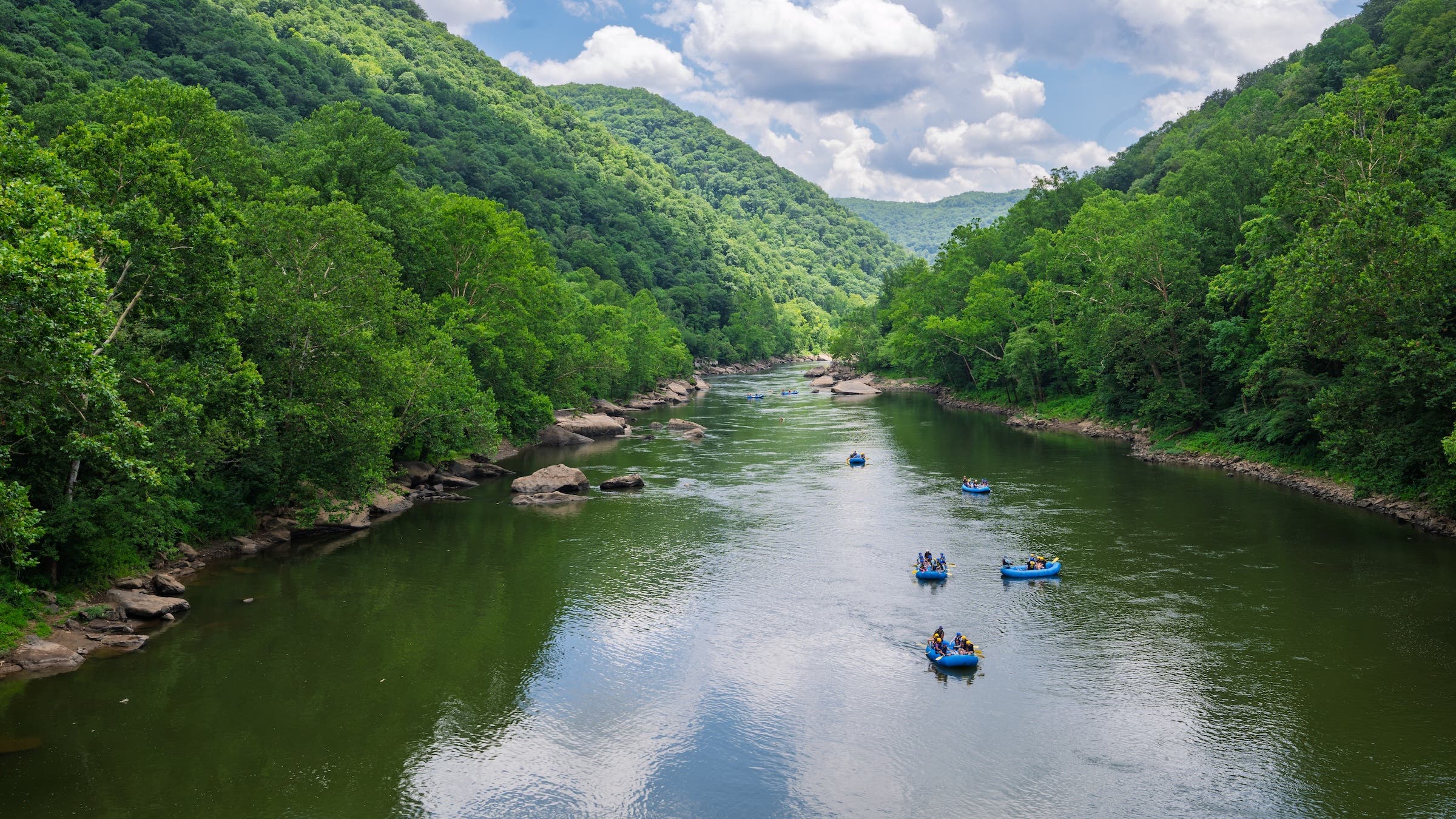
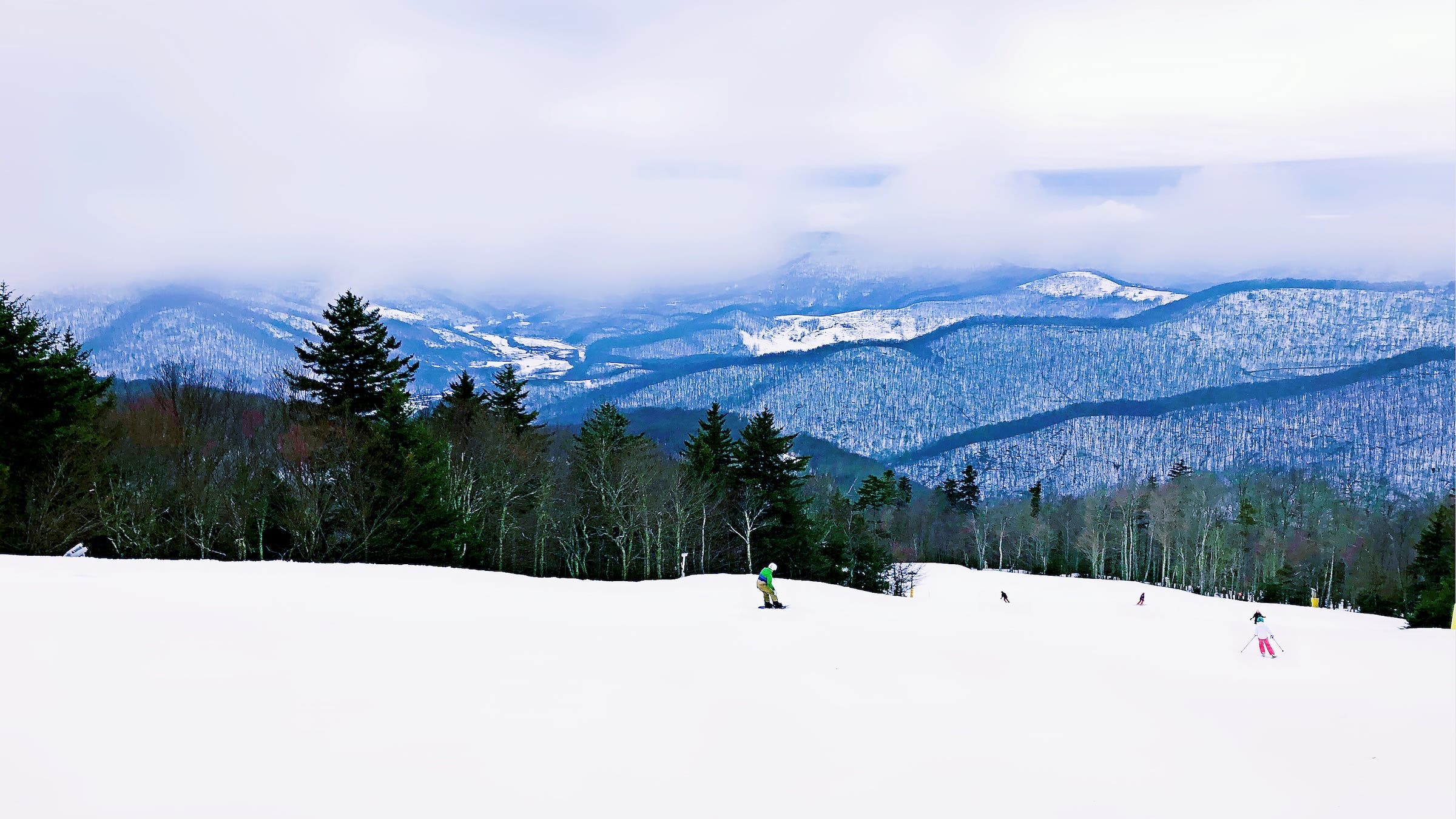
“When you look at our outdoor assets, the potential is off the charts,” says founding OEDC associate vice president, Danny Twilley. West Virginia is the only totally mountainous state in the nation; if you flattened its peaks, the footprint would be larger than Texas. Protected lands are abundant—the Monongahela National Forest alone spans more than one million square miles. The density of navigable waterways, native trout streams, and seasonal whitewater is among the nation’s highest. Ditto for backcountry gravel roads and 4×4 paths. Deep, cliff-lined gorges provide abundant climbing opportunities. Unique weather patterns dump natural snow across a quintet of ski areas—including Ikon Pass member Snowshoe Mountain Resort.
West Virginia’s population, meanwhile, is about half that of the Denver metro area, so there’s no shortage of space. The state also boasts the cheapest housing costs in the country.
“And we already have a strong foundation of deep-rooted traditions and engagement around outdoor recreation laid by incredible pioneers in pretty much every category imaginable,” says Twilley. OG mountain bikers led by champion racer, Sue Haywood, for instance, have transformed the tiny town of Davis into a hub with a 50-plus-mile network of trails. Chip Chase, meanwhile, helped turn an abandoned ski resort into one of the East Coast’s most legendary cross-country areas just ten miles away.
But development in the 1990s and 2000s was often hobbled by a lack of funds and cohesive support at the local and state levels. Projects tended to be volunteer or nonprofit-driven, and focus could vary dramatically by region. One town might convince a state park to direct resources toward hiking routes, while a neighboring community pushed for ATV trails. Community groups rarely collaborated and often viewed counterparts in other areas as competitors.
The OEDC aims to overhaul that equation. Their mission is to help connect the dots for stakeholders and get them working together on the same team, toward the same overall goal. Stakes are high for a state with the nation’s worst economy and steepest rate of continuous population decline. The reality is sobering.
“When we talk to residents about growing the economy through outdoor recreation and show how this strategy has worked in other rural areas,” Twilley says, “that backdrop makes them much more likely to listen—because the biggest thing we hear from people is they want their children and grandchildren to have access to opportunities that will enable them to build a great life here.”
But the Ascend initiative is just a small part of the overall plan. OEDC’s primary mission is to empower communities to drive development around high-impact projects—like Beckley’s Piney Creek Preserve—that fill outdoor recreation gaps and increase access to opportunities of all stripes. Its team of around 20 employees provides wraparound consulting and support throughout the entire process, and connects town or city officials with a broad array of partners that includes the West Virginia Department of Natural Resources, National Forest Service, Brad and Alys Smith’s Wing 2 Wing Foundation, the International Mountain Biking Association, and Appalachian Regional Commission.
“A lot of the infrastructure that we had before was remote and had a high barrier to entry,” says Twilley. Flow trails for mountain bikes, for instance, were almost nonexistent beyond Snowshoe. Hiking routes often blazed up steep ascents and were prone to erosion. Boat ramps tended to be improvised or spread too far apart for comfortable day floats. Connector trails to local towns were rare.
“Now we’re working with community partners to help them create sustainable, purpose-built infrastructure that’s optimized to the terrain and offers users the best possible experience,” Twilley continues. “But we’re not just doing this in one area, it’s happening across the entire state simultaneously.”
And that’s where Lilly comes in.
Lilly was born into a family of tenth-generation West Virginians and raised on a farm in the southeast corner of the state not far from Beckley. Horse and cow pastures rolled across a narrow valley sandwiched between 2,000-plus-foot ridgelines—many of them now contained in the New River Gorge National Park and Preserve. Lilly’s great-grandparents once owned a small coal mine, and most of his older male relatives worked in the industry at some point. But coal was fading fast by the 1990s. An ever-expanding tapestry of decaying or abandoned homes stood like silent monuments to the crisis.
Lilly was too busy enjoying the natural landscape, however, to think much about it. Days were spent hunting in the woods, fishing or camping in Little Beaver State Park, or helping his grandparents wrangle horses and pick vegetables. A local after-school program at Winterplace Ski Resort introduced him to snow sports around age five. The interest quickly spiraled into obsession. Lilly became a protege and joined the Elan Skis pro freestyle team as a rising high school freshman around 2003.
“Looking back, what this place gave me was incredible,” he says. A traumatic head injury from a ski accident ended Lilly’s tour days in his early twenties, but by then he’d traveled extensively and spent time outside in some of the most beautiful spots on the planet.
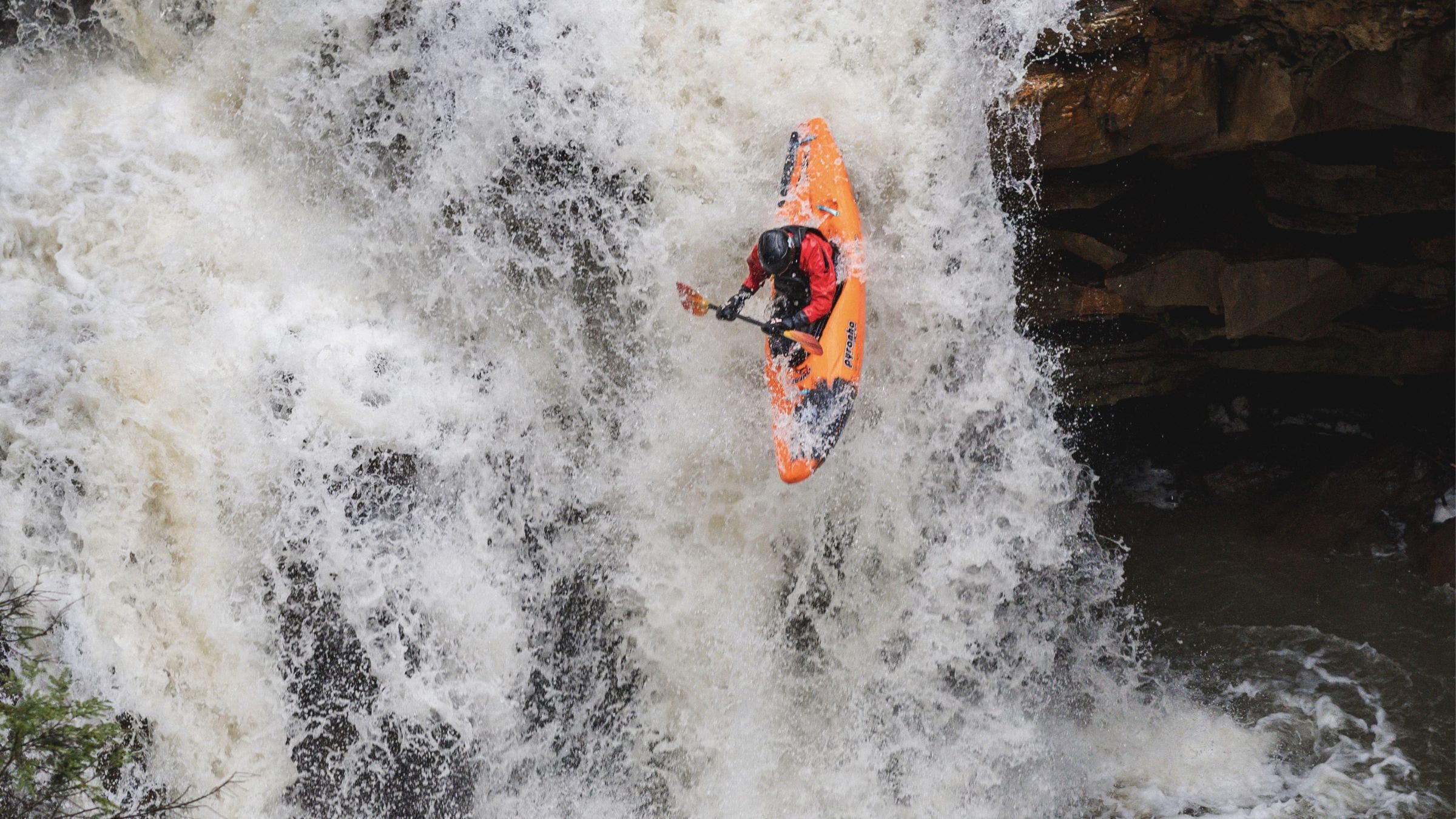
Studying at West Virginia University fueled Lilly’s growing interest in climbing, mountain biking, backpacking, and whitewater paddling. He became a sponsored athlete for Pyranha, and spent much of his free time roaming the state and greater North America to shoot videos in some of the gnarliest whitewater imaginable. The cumulative globe-trotting put his home state’s outdoor assets into perspective. It also revealed a calling.
“I realized that what we have here was just as special as anything I’d seen anywhere else,” Lilly says. “With the right strategy and a lot of hard work, we could capitalize to make life better for everyone—including myself, because at the end of the day, who doesn’t want more great trails and blueways?”
Lilly settled in Fayetteville after graduating in 2017 and shifted his focus to outdoors-based economic development at the local level. A project that year to develop access points around a privately owned whitewater haven, Kanawha Falls, and open the area to the public helped him land the job in Beckley. It also created a namesake Huckfest competition that drew hundreds of white-knuckle paddlers from 13 states and three countries in its first year alone.
“Corey’s deep family history and the fact that he’s making a life here in West Virginia help him get local officials and community members to at least listen to what he has to say,” says Twilley. That’s vital in a state where extraction economies have left many residents suspicious of outsiders and high-level government officials. Lilly’s track record as a catalyst for successful projects and credentials as an outdoor athlete lend weight to his opinions and help pave the way for discussions with team members like grants specialists or trails infrastructure coordinators.
Factor in Lilly’s stubborn refusal to give up and endless passion for advocacy, continues Twilley, and you have both a perfect OEDC ambassador and liaison for local communities.
To say the OEDC and its partners have hit the ground running would be glaringly modest. The group helped communities create parks that contributed to a branded waterfall trail that connects about 50 of West Virginia’s most impressive plunges. It spearheaded work with agencies, volunteers and pro builders to overhaul hiking trails and add 30 miles of purpose-built MTB routes in Berkeley Springs’ Cacapon Resort State Park. Construction on the state’s biggest bike park has begun in Morgantown—and will include an adaptive pumptrack sanctioned by the national racing association, USA BMX. Projects have mapped all navigable spans of whitewater and are being used to pitch and develop future water trails. The East Coast’s largest gravel network launched in the Monongahela National Forest this past April. And dozens of additional projects are currently underway.
But one of the biggest success stories to date has unfolded in Marlinton.
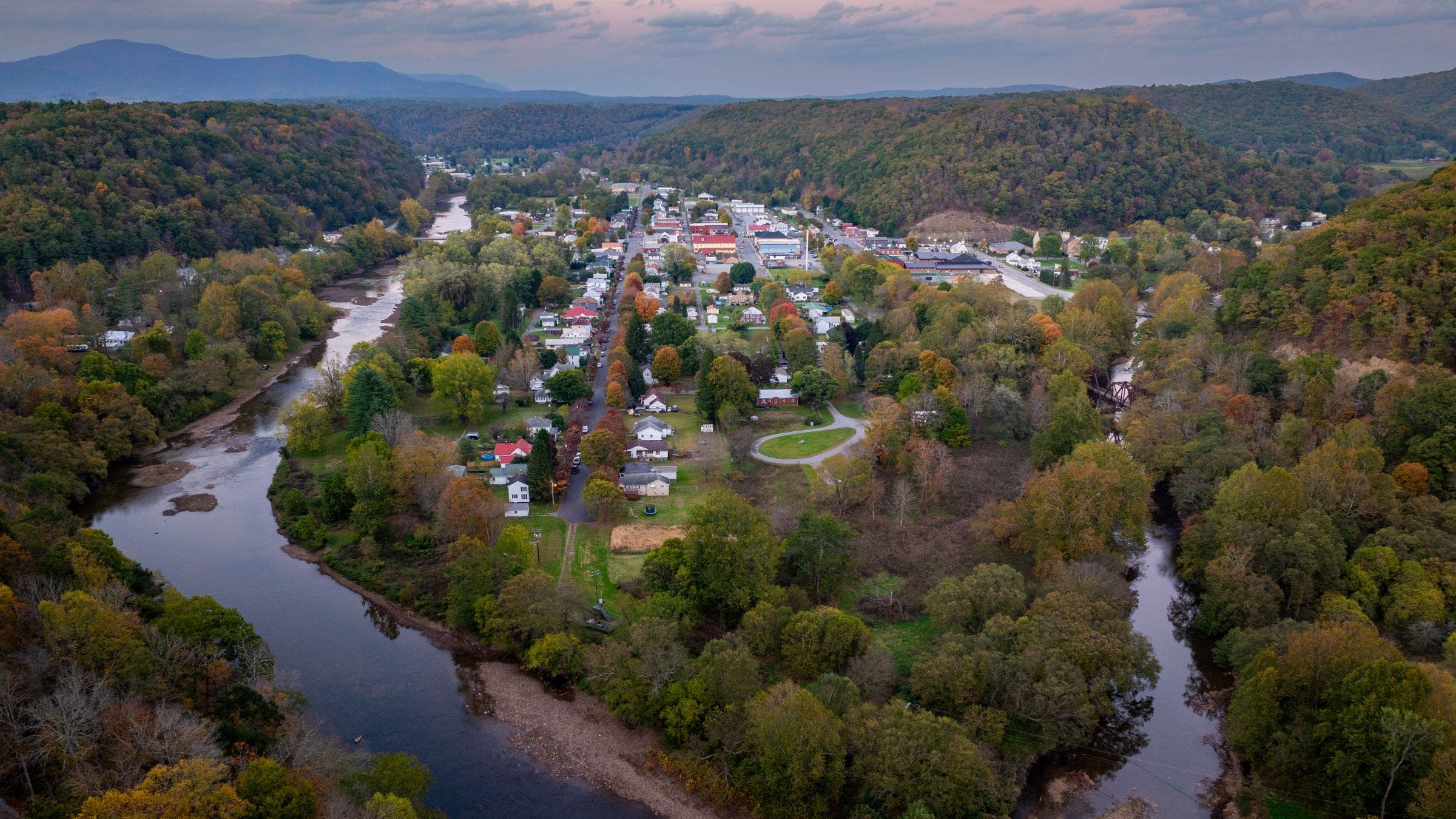
The tiny town of around 800 sits about 14 miles south, as the crow flies, from Snowshoe Mountain Resort. I met longtime resident and mayor Sam Felton downtown by a timber-framed pavilion with a raised stage and grassy seating area called Discovery Junction. The spry 75-year-old wore a chevron mustache, felt newsboy cap and two-tone windbreaker over a gingham button-up and chinos. The park was completed in 2020 and now hosts a summer concert series and a weekly farmers’ market. It’s encircled by a cavalcade of recent renovations and upgrades.
There’s a revamped turn-of-the-century opera house; artisan market and foodstuffs store; gourmet café; wood-fired pizzeria; pottery gallery and studio; and a bike shop that just expanded into an abandoned grocery store. Colorful murals celebrate local history, folklore and outdoor culture. An empty lot will soon hold public bathrooms, a food truck court, a modular pump track, and a trailhead for the Greenbrier River rail-to-trail. Plans for new branded signage, street lamps, expanded sidewalks with trees, and enhancements in two riverside parks are also in the works.
The scene points to a renaissance—but the town was in deep trouble when Felton became mayor in 2015.
“I owned a service station and U-Haul dealership for about 15 years and can tell you all of our business was outgoing,” says Felton. “Barely anyone dropped off equipment—they were all picking up to go somewhere else.”
The once dominant timber industry had all but vanished. Businesses closed and homes slid into disrepair. Felton watched Snowshoe expand ski operations in the mid-alts and lean into mountain biking to create a four-season economy. Once scarce, riders now began to appear in droves. Marlinton straddles the banks of the Greenbrier River and is surrounded by high ridgelines in the Monongahela National Forest. Could it leverage those resources to draw resort-goers into town? Could related economic revitalization convince budget-savvy outdoor lovers to relocate or buy second homes?
“When I first started talking about all this around 2010, people thought I was crazy,” says Felton. His background was in farming and trucking. What did he know about outdoor economics? The community should double down on logging.
But Felton didn’t give up and instead worked to build a coalition. A regional partnership united 12 communities in the Monongahela National Forest under a single tourism brand. A new cell tower expanded coverage beyond a single local provider. Overlook platforms brought destination-grade hikes near town. Emphasis on resort riding and the Greenbrier River rail-to-trail yielded a bike shop in the mid 2010s. Then officials from the IMBA included Marlinton in Ride Center discussions with Snowshoe. The organization partners with communities around the world to promote and expand mountain biking opportunities. It highlights the planet’s top downhill destinations with gold, silver, or bronze awards to encourage riders to visit. The accolades unlock enhanced grant funding opportunities and marketing partnerships. Snowshoe’s lift-served gravity park and 400-plus-mile array of nearby cross-country trails landed it a silver ranking in October 2020. Adding another 30-ish miles of singletrack that connected to downtown Marlinton would make it eligible to become the nation’s fifth gold-level ride center.
“That designation is huge,” says OEDC outdoor recreation infrastructure coordinator Rich Edwards. He spent two decades as an IMBA trail builder and trainer before joining OEDC in 2021. Areas surrounding a gold-level center can expect to see a four-to-sevenfold increase in annual overnight visits. With riders spending upward of $1,000 each, the economic impact can be tremendous.
Felton worked with the Monongahela National Forest, OEDC, Snowshoe-Highlands Area Recreation Collaborative, Appalachian Regional Commission, and others to raise $4 million and create the Monday Lick Trail System, which opened in May 2025. The project helped Marlinton become an official IMBA Trail Town this past April—and Felton hopes Snowshoe’s gold-level designation is soon to follow.
The network inspired a longtime resident to donate the lot for the coming downtown trailhead and food truck court. He’d admired the slow trickle of transplants that renovated derelict houses, built stilted vacation homes along the river, and opened new restaurants and shops downtown. Buzz around the designation led him to act.
“He told me, ‘Sam, when you started out, I didn’t know what to think, but you’ve made me a believer,’” says Felton. “Like me, he realized that outdoor recreation is our town’s way forward and wanted to help build that future for his grandkids and their kids to come.”
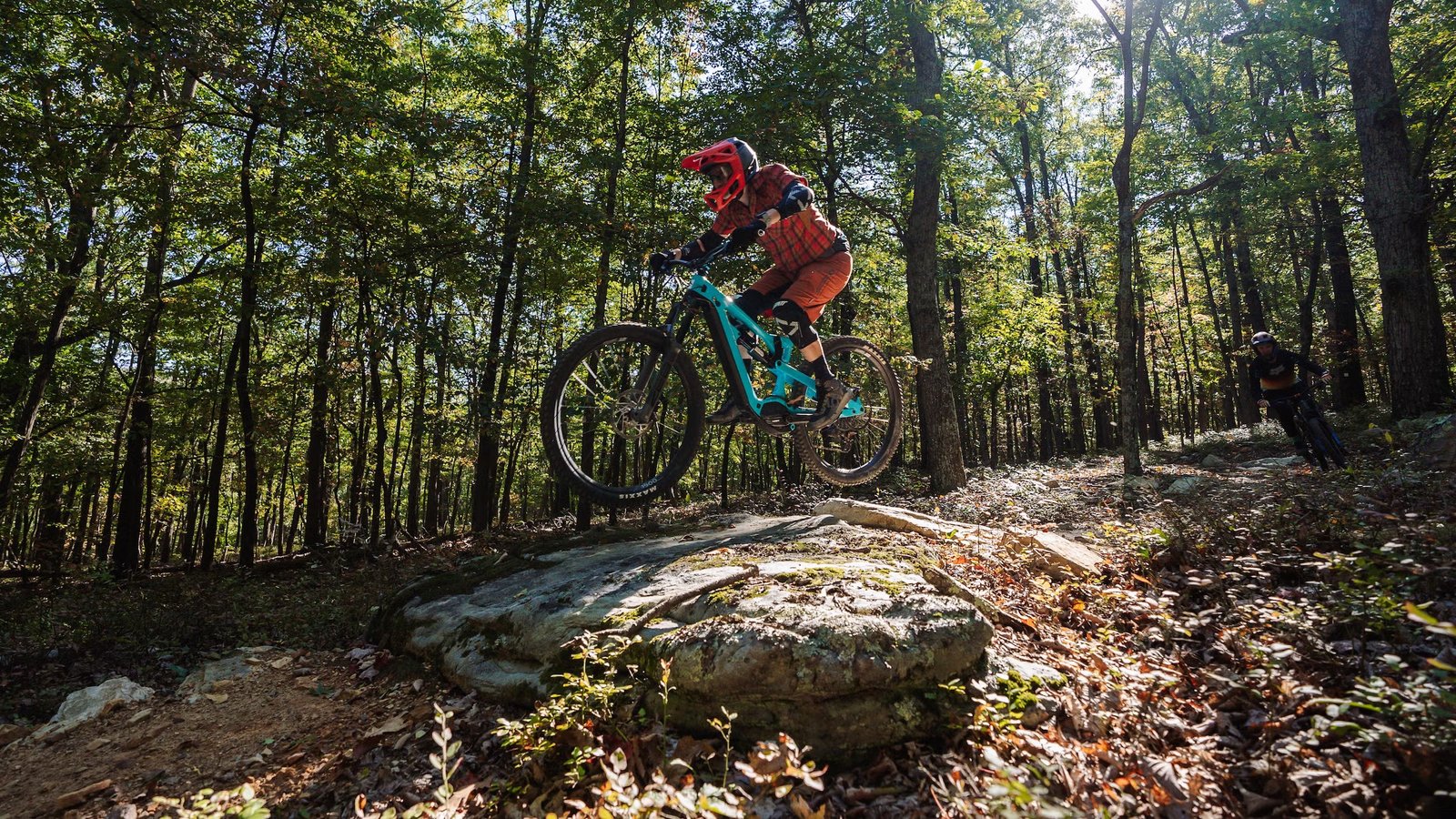
I suit up and take a mile-long pedal on the Greenbriar River Trail to Stillwell Park. The crush-and-run path breezes past a historic neighborhood punctuated by 1900s stick homes, crosses Knapp Creek via a restored railroad trestle, then shoots through a long corridor of dense riparian woodlands. I turn east on a single-lane gravel road near a pair of baseball fields and climb into the national forest. The four-ish-mile ride switchbacks through a steep, cliffy ravine to the 3,300-foot ridge of Buckley Mountain. It’s part of the larger Mon Forest Gravel Network, which launched in partnership with OEDC this past April.
I spot signage for Monday Lick by a gated roundabout at the top and drop into the Stillhouse Connector trail. I’m immediately struck by its firm and flowy smoothness—here you’ll find none of the rocky, wildly technical, and spine-rattling singletrack that used to define the state. The trail soon feeds into a flagship black-diamond called Lens Ridge that brings a five-mile slalom back to Stillwell Park.
The 1,200-foot descent kicks off with a fun rideline weave through vibrant greenery and trees that get bigger and older as I zip along. The action intensifies about a mile in with a ripping parade of rock drops, shelves, stone bridges, hip jumps, and small berms. By the time I reemerge on the Greenbriar trail, my face is plastered in a perma-grin and I’m half wondering if I can convince my wife to let us move. And that experience, says Lilly, is exactly the point.
