

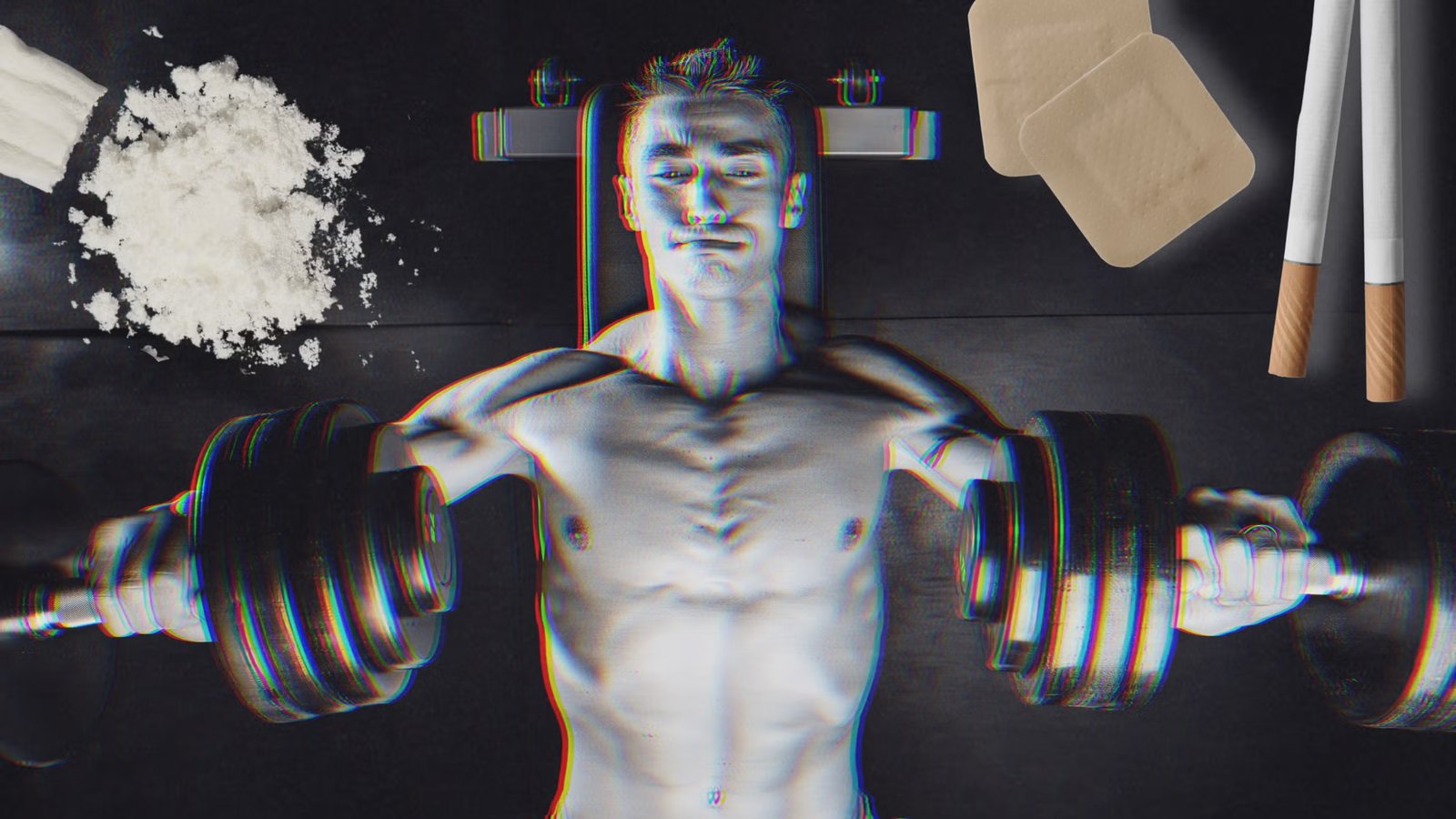
Lifters and influencers are turning to nicotine pouches for a nice jolt ahead of working out. Cardiologists and exercise physiologists say it’s masking fatigue, straining your heart, and setting you up for addiction—not better PRs.
(Photo: Nicotine pouch: Anastassiya Bezhekeneva/Getty; Design: Ayana Underwood/Canva)
Published August 20, 2026 01:16PM
From smelling salts to caffeine-jacked energy drinks, buzzy pre-workout chemicals are now being peddled on social media and in gym locker rooms. But a new and highly unorthodox performance-booster has entered the chat in 2026: nicotine.
Will Tennyson, a fitness influencer with over one million Instagram followers, recently posted a video on his YouTube channel claiming the substance helped him “lock in” during lifts. Celebrity trainer Jillian Michaels, in a NewsNation interview raved about the benefits of nicotine on cognitive function. Michaels also has said that “when not abused, there’s really no reason not to utilize it,” but suggests being strategic about consuming it and getting a doctor’s permission before doing so. Then there’s Robert F. Kennedy Jr., the U.S. Secretary of Health and Human Services. RFK Jr.—a fitness enthusiast and the pioneer of the Make America Healthy Again campaign—has been photographed carrying (and allegedly using) ZYNs, which, according to the American Lung Association, is one of the most popular forms of ingestible nicotine.
To be clear: the growing chorus of fitness voices aren’t actually smoking nicotine, but rather consuming it via so-called tobacco-free products, such as nicotine pouches, patches, and gum.
Here’s why some athletes are turning to nicotine to fuel their performance—and the long-term consequences it could yield.
Why Athletes Are Turning to Nicotine to Reach New PRs
Your sympathetic nervous system—which controls the fight-or-flight response—activates during exercise, which allows your body to meet the demands of whatever activity you’re doing. “Your heart’s going to start to beat faster, and your blood’s going to pump a lot faster to deliver that oxygen and get rid of metabolic waste products,” Tina Lankarge, an exercise physiologist technician and tobacco treatment specialist at Boston Medical Center, told Outside.
Many of those same bodily responses—heart rate and blood pressure spikes—occur when you ingest nicotine, Lankarge said. She added that some research has suggested that nicotine can also temporarily increase a person’s motor skills, improve memory, and boost attention. That’s why a growing number of fitness trainers and influencers love the substance; those physiological changes make them feel primed to exercise, she explained.
While you might not be inhaling chemically dense fumes via a cigarette when you use tobacco-free nicotine products like pouches, gum, or patches, you’re welcoming a host of other issues, Andrea Jonas, a pulmonary and critical care medicine physician with Stanford University, told Outside. She says nicotine increases cardiac contractility, or the amount of oxygen the heart requires for each heartbeat, which can actually make your workouts worse. “Nicotine will actually diminish people’s exercise outputs and also constrict blood vessels,” she said. “Especially if people have underlying cardiac disease, it could make it more challenging for them to reach their peak exercise potential.” You could increase your risk of developing an arrhythmia (an irregular heartbeat) with exercise over time with nicotine use, she said.
Jonas acknowledges that you might feel primed to perform with nicotine. But your brain is essentially gaslighting you, she said. “Nicotine is going to cause tampering of your cardiovascular output, but then simultaneously give a boost in fine motor skills and attention,” she explained. “So you might feel more focused even while your actual physical output has been diminished.” Plus, nicotine is highly addictive—so you might be continuously reaching for pouches because you feel like you need it (even if it’s unknowingly hindering your performance).
While there’s plenty of evidence detailing the long-term effects of cigarettes, isolated nicotine use—particularly in pouches packed with a trove of understudied ingredients—isn’t nearly as well-understood, Jonas explained. Many of these manufacturers also tout their products as “tobacco-free,” which should be seen strictly as a marketing label, she said. “Consumers may understandably interpret ‘tobacco-free’ as a health claim. It really describes how the product is made, not whether it is safe.” Products labeled as tobacco-free simply mean that there’s no nicotine from a tobacco plant present in the product. Instead, the nicotine has been created in a lab; however, the lab-created nicotine is chemically identical to tobacco-derived nicotine and is equally harmful.
How to Prepare for a Strong Workout—Without Nicotine
As an exercise physiologist, Lankarage does not recommend any specific pre-workout chemicals (aside from the occasional cup of coffee). And while a grueling workday or poor night’s sleep can contribute to the occasional sluggish workout, if you find yourself repeatedly needing a jolt of energy to make it to the gym, you should probably address your fatigue. “If you’re experiencing brain fog, trouble concentrating, or excessive fatigue or soreness, it might be worth investigating why,” Lankarge said. “Maybe something has changed in your personal life, or maybe you need to see a doctor about an underlying issue.”
It might not be a hidden health problem. Perhaps you’re not fueling yourself, drinking enough water, or exercising in conditions that don’t necessarily jive with your body—outdoor runs in the heat and humidity, for example. “It could be a training strategy too. Maybe you’re plateauing somewhere, and you need to reach out to a personal trainer,” Lankarge said. Even if you’re looking for a boost—nicotine is not the answer, especially for long-term use. “Yes, a stimulant like nicotine will give you that temporary boost, but you’re setting yourself up for addiction.”
Want more Outside health stories? Sign up for the Bodywork newsletter. And for tips on how to train, fuel, and recover better, sign up for the Sweat Science 101 newsletter.
