

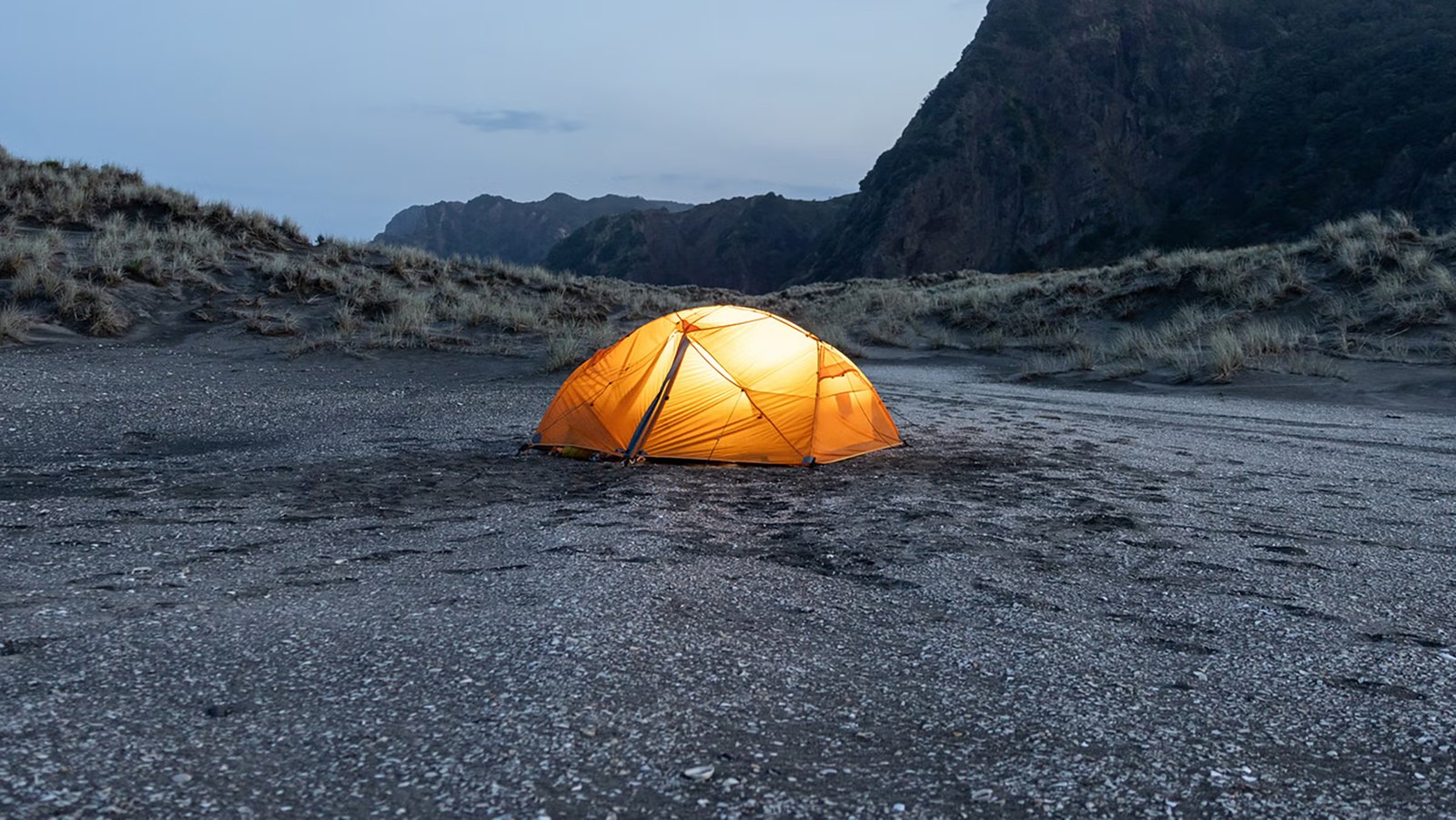
Our outdoor ethicist addresses the plight of a camper who bought a permit for a campsite on Tribal lands, only to find the site occupied by a big group
A campsite reservation doesn’t always keep people away (Photo: Jessie Casson/Getty Images)
Published August 19, 2026 11:43AM
Dear Sundog,
Earlier this summer, I floated the San Juan River in Utah. In addition to buying the permit required by the BLM, we also paid to camp two nights in land owned by the Navajo Nation. We stayed there so we could explore the side canyons, rock art and cliff dwellings. There are no assigned camping spots on the Navajo side of the river, and there is very little enforcement of reservations. A rep from the tribe told us that he’d issued permits to only 20 people those nights, and 12 were in our group. So, we knew that only 8 other people were allowed to camp at the site. But when we arrived at the campground that afternoon, both campsites were occupied by groups 10 people.
We decided to keep floating down the river in hopes of finding a different campsite. We were unable to use the permit we had purchased.
The same thing happened the following night. The campsites we paid for were poached by people who hadn’t purchased permits from the Navajo. While I did not ask anyone to produce their tribal ID, none of the people camped on the reservation appeared to be Navajo.
As an outsider, I felt weird trying to enforce the rules of the tribe. What should we have done?
—River runner Against Trespassing (RAT)
Dear RAT,
If we’ve learned anything from the past 500 years, it’s that white settlers illegally occupying Tribal land are extremely difficult to remove. Just look at America. Your query poses a very specific questions wrapped in a very broad one. Broadly, what to do if someone takes your campsite, and specifically, what if this happens on Tribal land?
First, the specifics. The people you encountered were in the wrong. While it may seem benign to camp without permission or payment on public lands (National Parks, Forest Service, BLM), doing so on Tribal lands is different. These are not public lands. They belong to tribes, as codified in treaties signed by Congress and Tribal representatives.
Most Tribal reservations were reduced by constitutionally-dubious laws such as the Allotment Act and Termination Act, as well as by more blatant theft that did not even pretend to be legal. Today, many of the West’s iconic rivers pass through Tribal land: Arizona’s Salt River on the White Mountain Apache Reservation, Utah’s Desolation Canyon on the Ute Tribe’s Uintah and Ouray Reservation, Montana’s Flathead River through the lands of the Confederated Salish and Kootenai Tribes, and the Grand Canyon through the Havasupai Tribe Reservation.
Camping—or merely walking—on these lands without a permit is trespassing, plain and simple. It’s a crime worsened by the long history of Europeans stealing Indigenous land.
But you didn’t ask for a history lesson, RAT, you asked advice on what you should have done. That’s more tricky. If this occurred in the front country, where a campground host patrol marked sites on four-wheeler, you’d simply rat them out and let the authorities dislodge them. Unpleasant but straightforward. If it were in a more tightly regulated backcountry setting with reserved campsites (Middle Fork of the Salmon, Gates of Lodore), you could flash your paperwork and demand what’s yours. Most boaters who’ve gone through the rigmarole of getting these permits know the etiquette—and the rules.
But in this situation you’re sort of on your own. You’re not the law, and you’re definitely not the law of the Navajo Nation. You’re right that it would be both awkward and ironic for a non-Navajo to dislodge a fellow non-Navajo person from land overseen by the Navajo Nation. Americans who grew up to believe that “this land is our land” are often shocked and offended to learn that some of this land is, in fact, not ours. I doubt they are going to do what you ask, even though you are ethically and legally right.
In this way, being on a Tribal reservation doesn’t change the basic premise: someone is in your site and there’s nobody but you to try to evict them. You can always ask the offending party to vacate the campsite they’ve already established; unless you carry a badge and gun they are very unlikely to do it.
Some might argue: if the Tribes are going to charge fees for these permits, then they should enforce the rules. Well, law enforcement is not a lucrative undertaking. Tribal leaders might simply ban outsiders from their land, rather than undertake an expensive bean-counting operation on the behalf of those visitors.
I still haven’t been able to tell you what to do. Turns out the ethics of this question are simple, while the implementation is messy. So let’s recall: the primary purpose of an outdoor trip, perhaps, is not to get your intended campsite, it’s to have a good time. Getting into a pissing match over permits with rule-breaking, belligerent, and possibly intoxicated yahoos is, in metaphysical terms, a total buzzkill. Despite being in the right, I think you’d have better luck—and better vibes—if you pleaded desperation and asked to share the campsite. Of course, they might also refuse.
I think it’s also worthwhile to presume the squatter’s innocence—however difficult this may be. Let’s face it, there are a lot of regulations, and not everyone reads the signs and the fine print. In your San Juan River scenario, you might assume the campsite squatters were blissfully unaware of whose land they were on, and that they merely saw a nice campsite and took it. As the sages of times past might put it, camping enforcement—like vengeance—is best left to higher powers.
Mark Sundeen is the author of many books about the American West, most recently Delusions + Grandeur. His 2000 cult classic Car Camping will be re-published in 2027 by the University of New Mexico Press. He lives in Missoula where he teaches at the University of Montana.
