

Key Takeaways
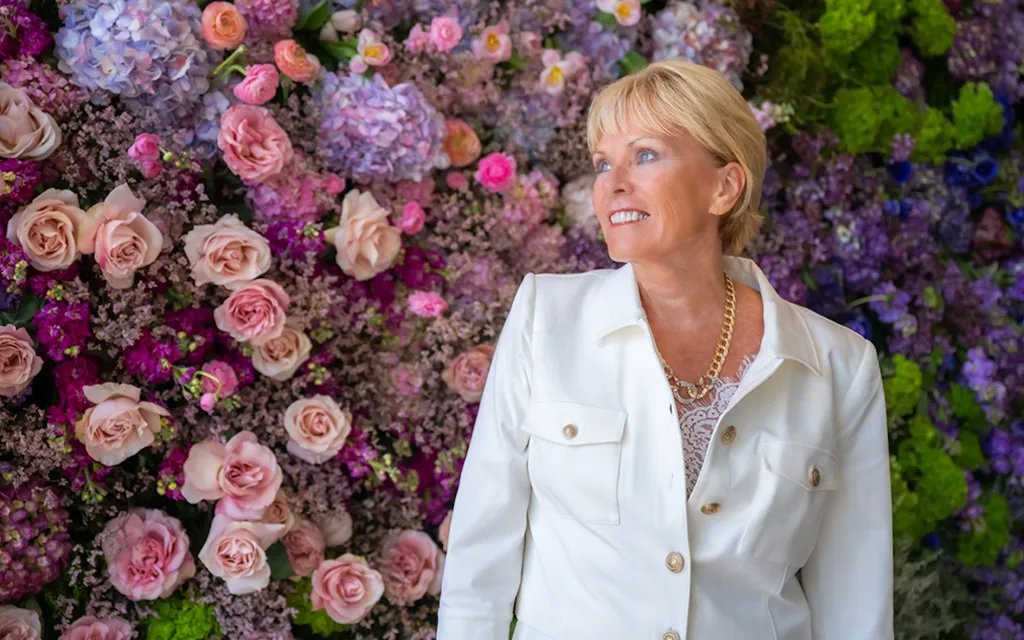
- Patricia Nash built her namesake brand at age 50 after discovering a bag as old as she was in her mother’s closet and realizing that handbags could carry powerful memories.
- Her “affordable luxury” formula is to use full-grain leather and high craftsmanship while stripping out most traditional marketing margin, giving that value back to customers in lower price points.
- She scaled to around $100 million in annual revenue by combining unique assortments for each retail partner and high-visibility sales through HSN and QVC.
In 2010, when Patricia Nash helped move her mother out of the house she’d lived in for 50 years, she found the handbag that would change her life — and her career. In the back of a closet sat an old vintage wrap bag, a gift from Nash’s grandfather to her mother.
It had been carried and cherished for half a century, but when Nash opened the bag, she was struck not only by how the leather had aged beautifully but also by the craftsmanship and emotional weight of the object.
“I just was like, that’s what I gotta do,” she tells Entrepreneur in a new interview. “I got to have a brand that captures all of that, craftsmanship, those memories of our past, and add more function to it…and make it affordable.”
Nash had spent 25 years in the accessories industry, often licensing and designing for other brands, but she still hadn’t found the emotional anchor for her own label.
Discovering her mother’s bag convinced her that handbags could be powerful vessels for memory. “Wouldn’t you like to have that bag that you like and you see it and it’s beautiful and it has great value, but it also reminds you of something that warms your heart?” she says.
From that insight came Patricia Nash Designs, launched when Nash was 50 years old in 2010. Today, the company generates about $100 million in annual revenue, built on what she calls an “affordable luxury” formula.
The winning formula
From the start, Nash was determined to offer full-grain leather and meticulous construction at a price point “that’s maybe a hundred dollars and up,” not the “$500 and up” range that defines many designer bags. To do that, she made a counterintuitive decision: radically compress the built-in marketing margin.
“What I did is I decided to give the best value to the customer with very low margin in there for marketing and give the consumer that value,” she explains. While competitors load product costs with massive advertising budgets, Nash chose to “put all this money in the product” instead and let the bag, not the marketing, carry the brand.
That pricing choice, she says, was both risky and decisive. She had spent years costing and pricing licensed bags and knew what “kind of markup that companies had to put in it to be able to market and advertise the product.” Choosing to “shave that down to hardly anything” and lower retail prices, even on high-quality bags, “was very risky, but it paid off,” she says.
Today, Nash believes that her price-value equation is one of the most distinctive parts of her business: “I don’t know anyone else that is really taking that markup for marketing that they normally would put into the product and giving it to the customer instead,” she claims.
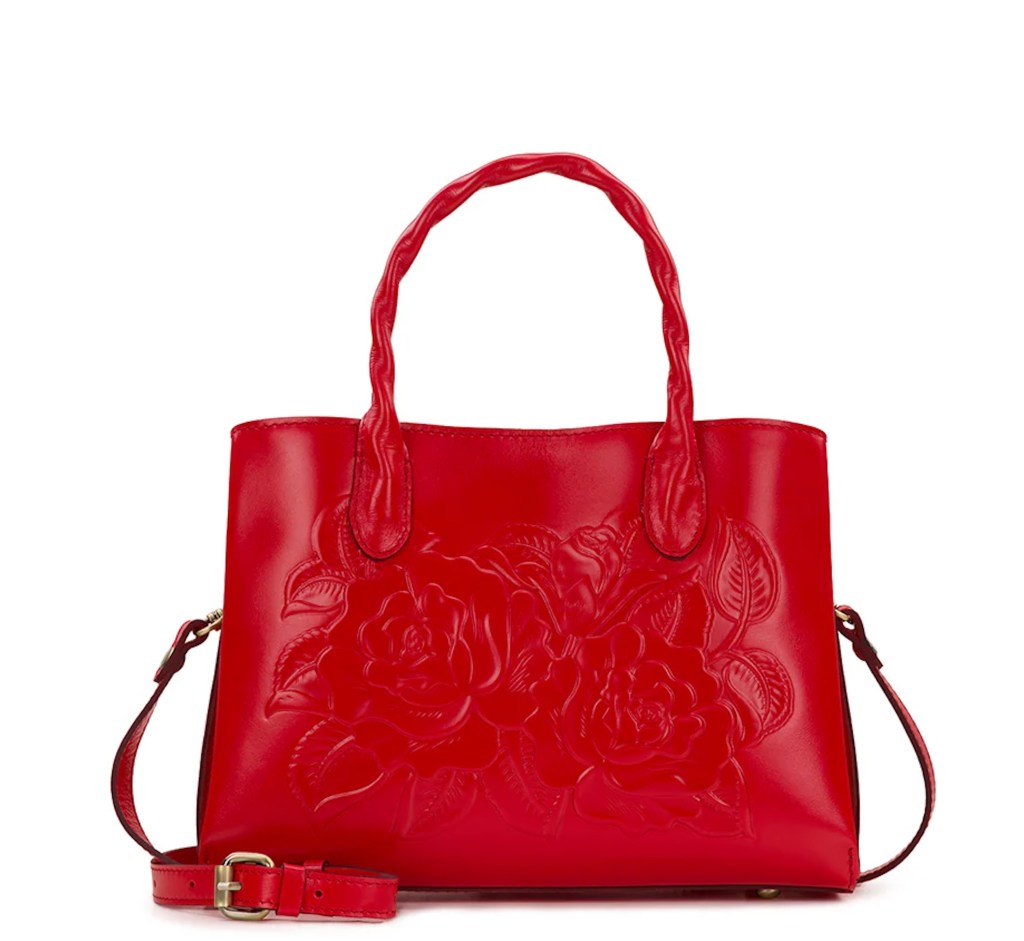
The other pillar of her brand is a tight, personal design DNA grounded in vintage inspiration and storytelling. Nash still leads design for all bags, prints and direction.
“What’s important to me is authenticity, originality, good value and styles that people will really wear and are unique, and it was this vintage European styling,” she says.
She wanted vintage-inspired, “amazing leathers” and original shapes that feel like heirlooms but are still functional — with crossbody straps, pockets, and practical openings layered onto classic silhouettes.
Many collections are built around specific artifacts she has collected: a 1700s Greek map she learned to print on leather, a vintage dress pattern, a bag unearthed in a Paris flea market. “All of them have a story behind them,” she says, and that storytelling is deliberate. “It has to trigger an emotional response for me.”
How she grew the company
Growing Patricia Nash Designs into a nine-figure brand required more than a compelling product and price. Nash strategically combined wholesale, television retail and grassroots efforts.
She leveraged longstanding industry relationships to get in front of major retailers like Macy’s and Dillard’s. Buyers told her, “This is really different. This is really unique. I don’t know if you can sustain making it like this and at this value at this cost, but we’re willing to give you a chance because we believe in you.”
Once inside those doors, she protected the brand’s positioning by giving each retail partner a distinct assortment. “We wanted to make sure our product didn’t become too promotional, and that there was a reason to buy at each place,” she explains; Macy’s and Dillard’s carry overlapping fashion groups, but also exclusives that keep the line special at each store.
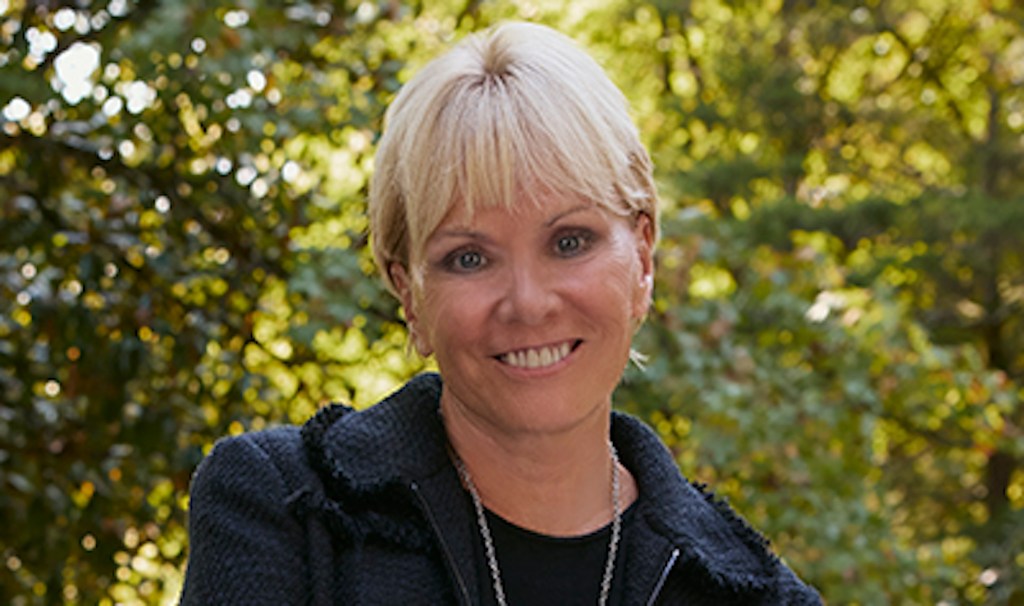
Television became the second growth engine. Starting with HSN and later QVC, Nash introduced her story and product to millions of viewers. These channels now represent about 15% of sales—“a sizable chunk but not groundbreaking,” she notes—but their real value lies in brand awareness. “It was a great way to get myself out there,” she says.
The third engine was intensely personal: store visits, events and one-on-one education with sales associates. Sometimes only a handful of customers showed up, but the real goal was to show associates she was a real person and to teach them the stories behind each print, the specifics of the leather and the functionality of the designs. That hands-on evangelism helped convert staff into informed advocates for the brand.
Nash’s background
Behind the scenes, Nash was drawing on a lifetime of entrepreneurial experiments. She started as a cake decorator, then ran a Pier 1–style gift store with her then-husband, moved into wholesale as a sales director for a household gift company, and eventually built her own sewing factory business in Houston into a $7 million public company before selling her stake.
Later, as a consultant for streetwear powerhouse Marc Ecko, she saw a brand grow to roughly half a billion dollars in retail sales — and then collapse. That experience seared in a set of principles she carries into Patricia Nash Designs: financial discipline, integrity in sourcing and product and respect for relationships.
The Ecko brand, she says, “lost control financially,” cut corners on product and partners, and ultimately paid the price. “No matter how big you are, you can lose it if you don’t fundamentally be financially responsible,” she says. “Keep your people important to you, your leadership, your integrity, your authenticity, your accountability.”
Even with all that experience, Nash underestimated some challenges — especially leather. Developing printed leather that didn’t peel took her three to four years of late nights in tanneries in Santa Croce, Italy. “If you’ve ever been in a tannery, it’s not a lovely place to hang out,” she says.
To this day, “we reject one out of every three hides that we get or see,” she claims, a level of scrutiny that protects the brand but demands vigilance. She managed to scale from a few thousand bags to “over a million annually.”
Looking back, Nash believes launching at age 50 was an advantage. The years of wins and failures before Patricia Nash Designs prepared her for shocks like a global pandemic.
Today, her vision is simple but ambitious: stay true to the brand’s DNA, keep delivering value and authenticity and close the gap with the much larger designer leather players.
“It’s almost a godsend that I didn’t start this brand until I was 50 years old,” she reflects. “I don’t know that I would’ve been equipped to really handle everything that came at me had I started in my 30s.”
Key Takeaways
- Patricia Nash built her namesake brand at age 50 after discovering a bag as old as she was in her mother’s closet and realizing that handbags could carry powerful memories.
- Her “affordable luxury” formula is to use full-grain leather and high craftsmanship while stripping out most traditional marketing margin, giving that value back to customers in lower price points.
- She scaled to around $100 million in annual revenue by combining unique assortments for each retail partner and high-visibility sales through HSN and QVC.
In 2010, when Patricia Nash helped move her mother out of the house she’d lived in for 50 years, she found the handbag that would change her life — and her career. In the back of a closet sat an old vintage wrap bag, a gift from Nash’s grandfather to her mother.
It had been carried and cherished for half a century, but when Nash opened the bag, she was struck not only by how the leather had aged beautifully but also by the craftsmanship and emotional weight of the object.
“I just was like, that’s what I gotta do,” she tells Entrepreneur in a new interview. “I got to have a brand that captures all of that, craftsmanship, those memories of our past, and add more function to it…and make it affordable.”
