

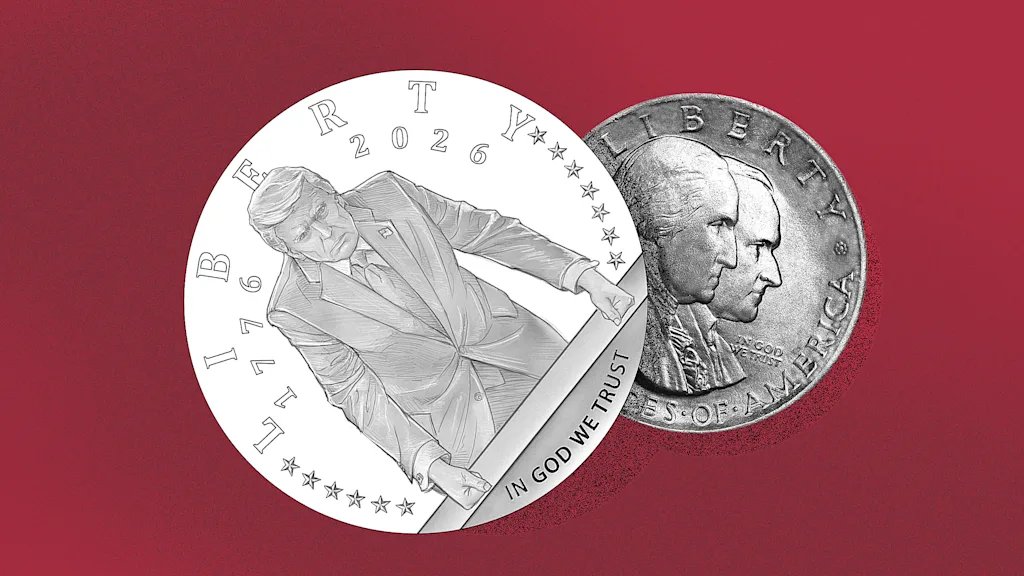
On March 19, the U.S. Commission of Fine Arts voted to approve a commemorative gold coin that flies in the face of the law. On one side of the coin President Donald Trump is seen scowling as he leans with his fist on a desk; on the other, a bald eagle carries the Liberty Bell.
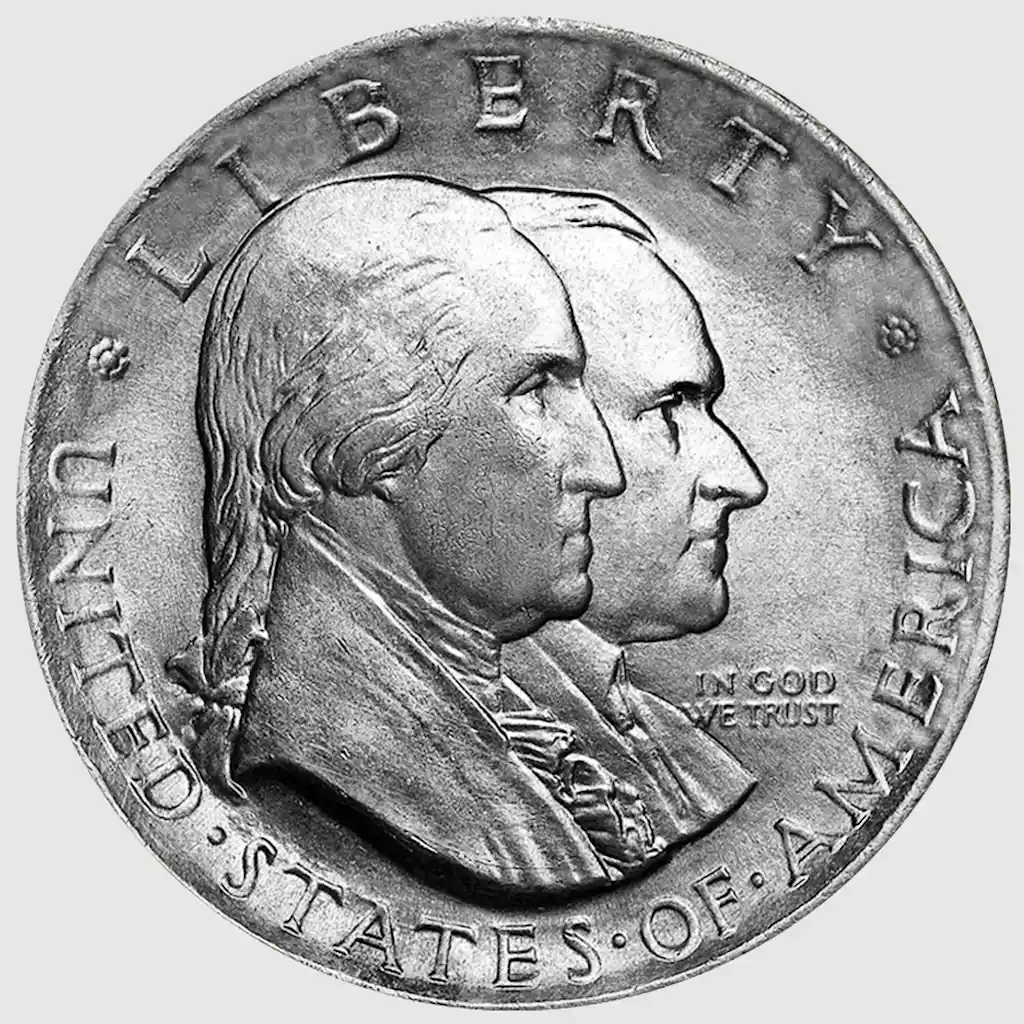
Designed for the United States’ semiquincentennial, the coin would break a longstanding U.S. tradition established via an 1866 law that bans living presidents from appearing on currency. Only one other living president in history has appeared on a coin: 100 years ago when then-President Calvin Coolidge’s profile was depicted alongside George Washington’s for the 1926 Sesquicentennial Half Dollar to mark the 150th anniversary of the U.S. founding.
How the Trump coin got approved
Last year, Trump fired the Commission of Fine Arts board and replaced it with his own nominees who could rubber stamp his design agenda. This is the commission who approved the coin’s design.
The president and administration has taken unprecedented action to stamp his name and likeness across the federal government in a way that mirrors propaganda campaigns of foreign authoritarian regimes.
The Mint has provided a workaround to get Trump’s likeness on a coin by saying the Treasury secretary is authorized to mint and issue new 24-karat gold coins. They also might be trying to exploit a technicality in the law allowing new commemorative coins to be minted for the 250th anniversary of the U.S. founding this year that specifically prohibits the portrait of a living person on the reverse side, or tails, of any coin. Trump’s on obverse, or the heads side.
There’s no word on the size or production run of the Treasury’s commemorative Trump coin, but architect James McCrery II, who is a fine arts commission member and former ballroom designer, said “I think the president likes big things” and a Mint official said the run would be “very limited,” according to the Associated Press.
The Coolidge effect
But Trump’s desire to stamp his likeness on a coin might not have the ending he’s hoping for. Like the Trump coin, the Coolidge coin was commemorative and not for general circulation. Its design was also selected by the U.S. Commission of Fine Arts. The coin was produced to defray costs for the Sesquicentennial Exposition in Philadelphia, and though design reportedly inspired some criticism, the New York Times reported at the time, it was ultimately met with indifference because no one really wanted it.
