

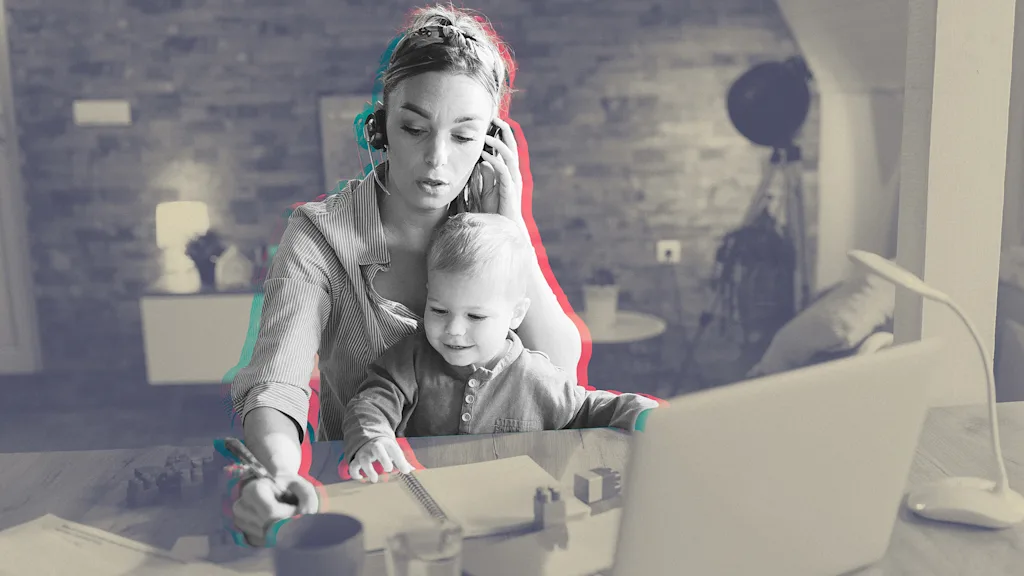
Postpartum depression is often framed as a private struggle that unfolds at home or in the doctor’s office. But for millions of working parents, its effects also show up quietly at work—through missed deadlines, sudden disengagement, or a colleague who no longer seems like themselves. Too often, these changes are misunderstood as performance issues rather than signs of a common and treatable mental health condition.
To better understand what employers, managers, and coworkers often miss—and how workplaces can respond more thoughtfully—I spoke with Andrea Clark, deputy CEO of Postpartum Support International, a global nonprofit focused on supporting families and raising awareness about perinatal mental health disorders. In our conversation, Clark explains how postpartum mood disorders can appear in professional settings, what supportive leadership actually looks like, and why truly family-centered workplaces must consider the mental health of both birthing and non-birthing parents.
Many conversations about postpartum depression still focus primarily on the clinical or home environment. From your vantage point, what are employers and colleagues most often missing about how PPD shows up at work?
A biweekly newsletter for high-achieving moms who value having a meaningful career and being an involved parent, by Jessica Wilen. To learn more visit acupofambition.substack.com.
Like most people, employers and colleagues don’t realize that PPD or other perinatal mood disorders can manifest anytime during the pregnancy or up to one year following delivery. Employers and colleagues sometimes mistake common symptoms of PPD for disorganization and inefficiency. PPD may manifest as a lack of motivation, missed deadlines, isolation, or an unwillingness to attend company functions or have lunch with others. Employees may be late, seem disorganized, or have trouble concentrating or completing tasks. I think most people understand that new parents don’t get much sleep and may struggle to maintain energy during the day. But what people don’t understand is that the lack of sleep and disruption to schedules can exacerbate symptoms.
Another fact many people do not know is that this applies not only to the person who gave birth, but also to the non-birthing partner or father. Approximately 10% of male partners also experience PPD and anxiety. Another common misconception is that PPD is the only perinatal mood disorder. Other perinatal mood disorders that affect birthing people include postpartum anxiety, postpartum psychosis, and postpartum obsessive-compulsive disorder. All are temporary and treatable.
For managers and HR leaders who want to be supportive—but worry about overstepping—what are realistic signs that an employee might be struggling with PPD, and what is an appropriate first response?
In addition to the signs and symptoms listed above, employees may seem more easily agitated or irritable than usual, or they may express feeling overwhelmed despite having the same or a similar workload as before having a baby. Employees may also take more frequent time off or express panic or anxiety attacks triggered by concern for their newborn.
