

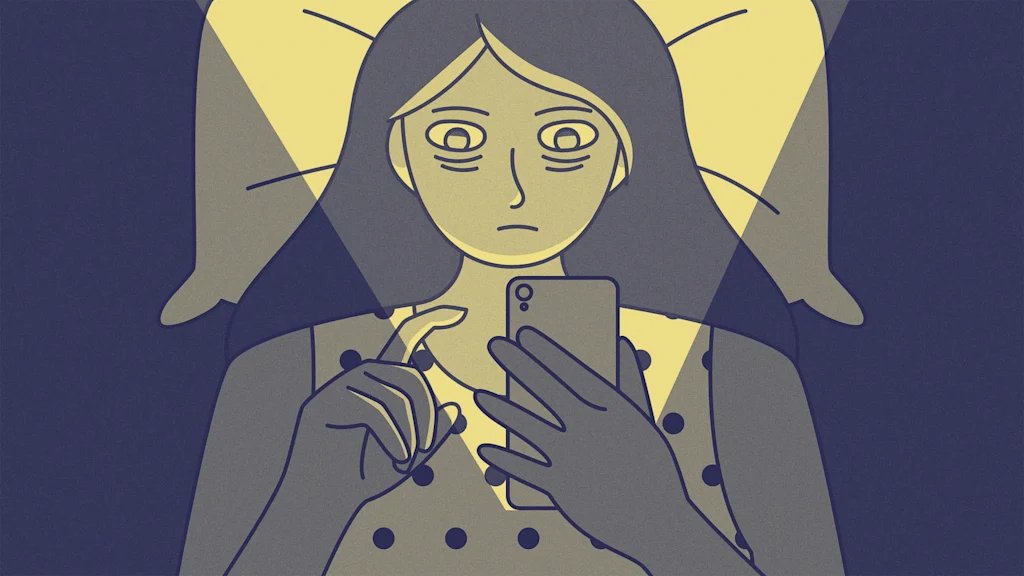
Most people don’t actually want to give up their phone.
They just want it to stop tugging at them like a needy toddler.
There’s a difference. One suggests extremism and poor reception. The other is far more sensible: learning how to live with technology without letting it quietly take charge of your attention, mood, and nervous system while pretending it’s being helpful.
Because for most of us, the problem isn’t “addiction” in the dramatic sense. No one’s pawning the sofa for screen time. It’s accumulation. A thousand tiny habits layered together until checking becomes automatic and being offline feels faintly unsettling, like you’ve forgotten something important but can’t quite place what.
The aim isn’t digital purity. It’s getting your sense of choice back.
Why willpower doesn’t work (and never has)
If resisting your phone feels disproportionately difficult, that’s not a personal shortcoming. It’s biology doing exactly what it was designed to do, just in an environment it was never meant for.
A growing body of research supports this:
- A study found that simply having your phone visible, even when turned off, reduces available cognitive capacity.
- Research shows that habits triggered by environmental cues are often more powerful than conscious intentions, meaning simply being in the right context can automatically drive behavior.
- Behavioral scientist BJ Fogg has consistently shown that behavior change is more reliably driven by environment design than motivation or willpower.
Apps are engineered around novelty, intermittent rewards, and social feedback, perfect conditions for reinforcing habit loops. Not in dramatic bursts, but in just enough variation to keep your brain thinking, one more check won’t hurt.
