

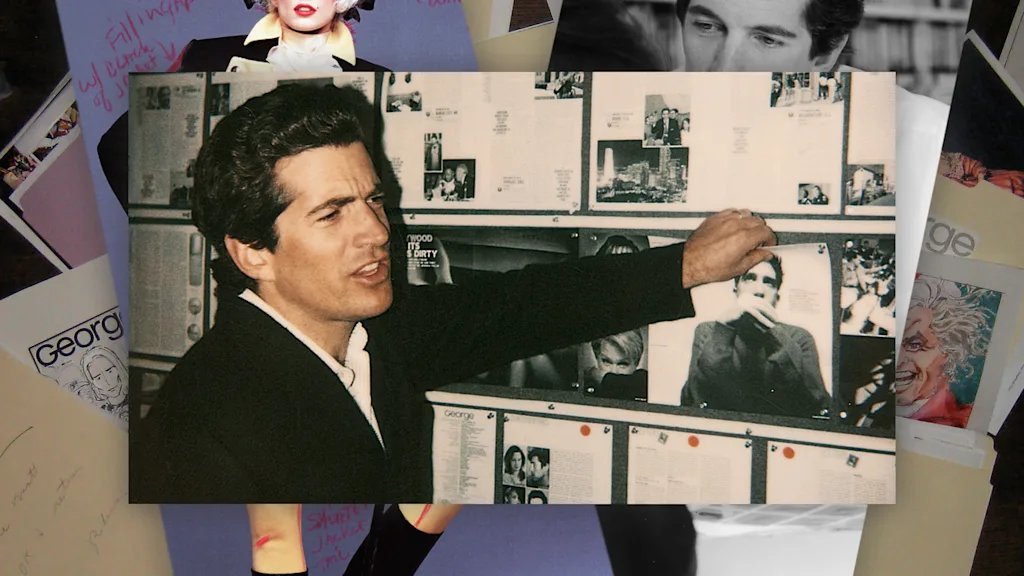
It was 1997, and Matt Berman, the creative director of JFK Jr.’s George magazine, had just gotten back to his hotel in Los Angeles. He had left the ‘Garden of Eden’ style set he’d concocted for the cover of the September issue: lush with greenery and replete with live animals. It would reach peak ripeness once the star, Pam Anderson, arrived on set the next day as the “first woman,” to illustrate a feature on the 20 most fascinating women in politics.
But there was a problem. A note was waiting for him at the front desk of the hotel. It was from Anderson. She was canceling. “She was like, ‘I can’t, a million apologies,’” recalls Berman. “Something like that. It was just crazy.” Amazingly, he secured Kate Moss that night through her former boyfriend Mario Sorrenti, who’d arrived to photograph the shoot. You wouldn’t guess from the talent, set design, and tabloid-like plot twists that this was for a political magazine.
But that was the creative—and challenging—conceit of George: to dust off politics and give it broad, glossy appeal. “He wanted a magazine that would seduce people, and that comes from the fashion world, the music world; different, other kinds of magazines in the world I came from at Elle,” says Berman of his former friend and boss, who died in 1999 at age 38.
For the issue, Kennedy Jr. posed as Adam in his illustriously candid, bantering editor’s letter (no image, sorry). And he suggested he was clued into the criticism: “I’ve heard about substance abuse, and I’m staying away from substance,” he wrote. “To whom much is given, much is expected, right?” An apple dangled overhead. The insider and Berman, a young artistic director outsider, encouraged readers to take a bite.
HOW IT STARTED
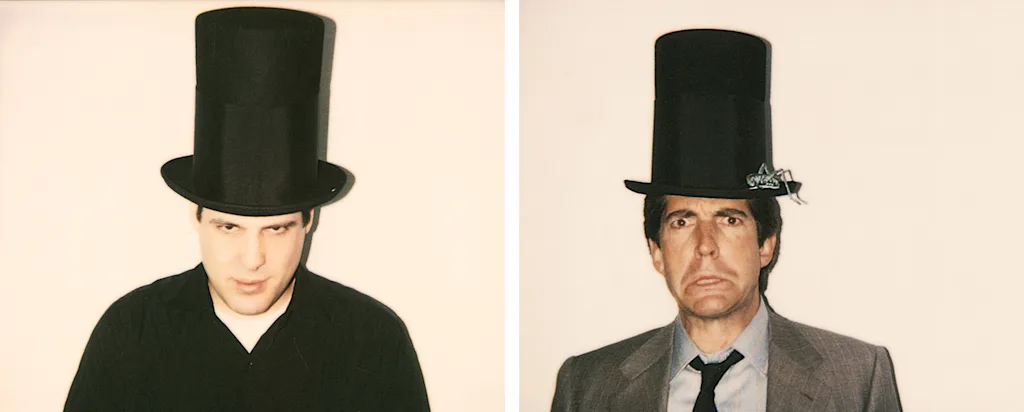
George launched in September 1995 after Kennedy Jr. secured a publishing deal with Hachette. Berman, who was in his late 20s at the time, had been working at another Hachette publication, Elle, where he collaborated with its iconic founding editor Régis Pagniez. “They introduced me to John as the guy who’s going to get him up and running, and I’m going to do his logo and his prototype, and they’re going to go out and sell the magazine,” says Berman. “I was installed in a conference room with John and his business partner and his assistant. And we all became just really good friends.”
Kennedy ultimately had Berman stay on in a permanent role, and they became close creative collaborators in developing the magazine’s overall visual look. George was highly art directed and visually-forward as a way to trojan horse politics as a curated, sometimes campy fashion pub. Berman designed the logo (Univers, Kennedy picked it for the “Ge” ligature), the covers and their concepts and helped select talent, and everything on the pages in between.
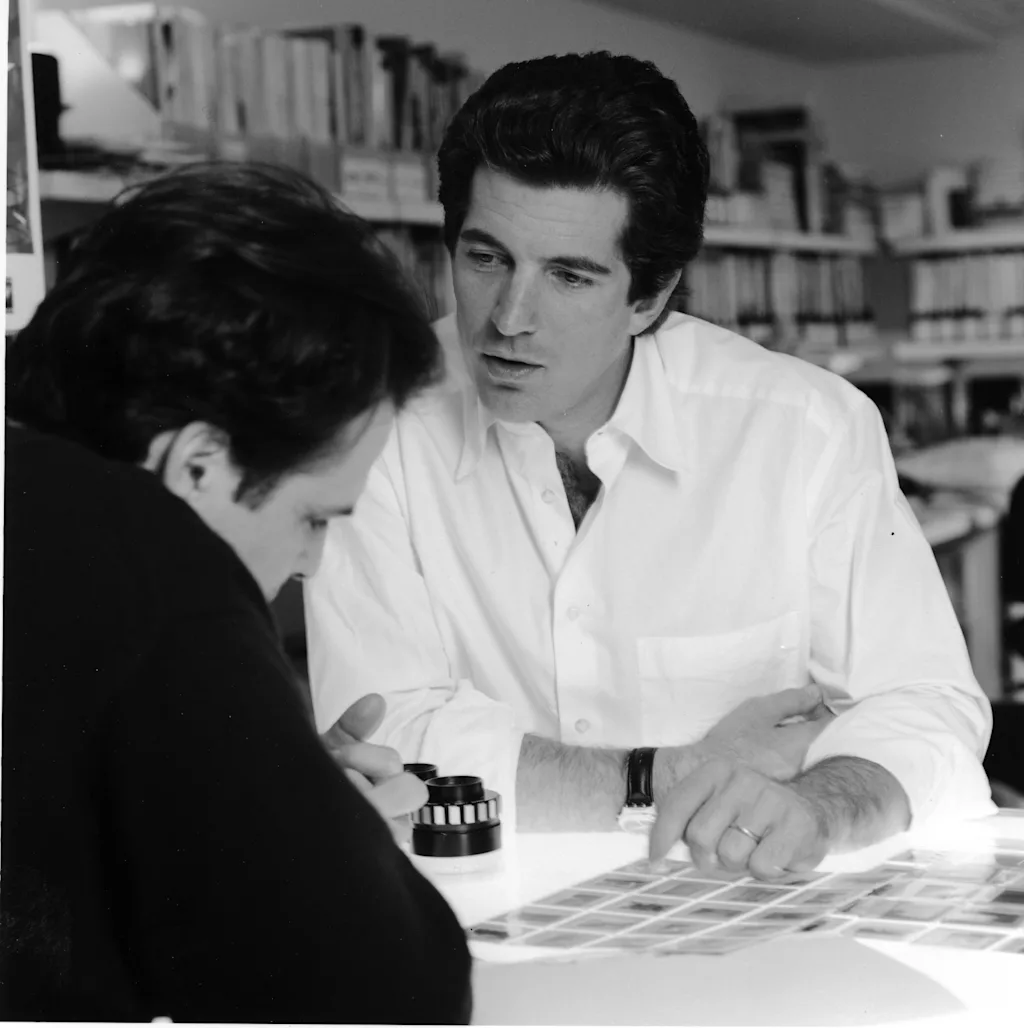
“The general idea is to present politics, which can be kind of boring and dusty in a new way and a new lens, to capture people’s attention and imagination,” Berman says.
