

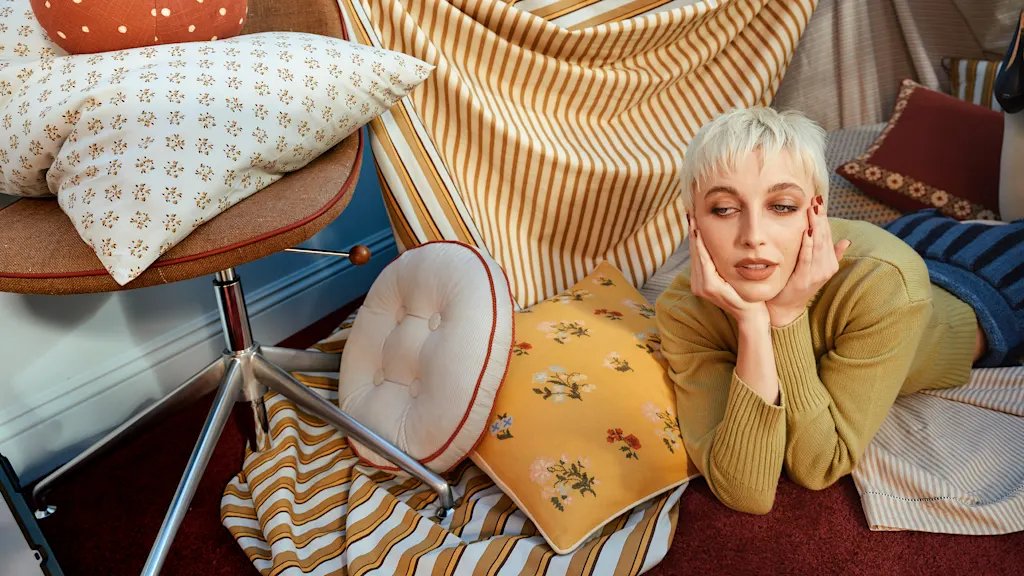
There’s a pigeon pitcher on the dining table. A large burl wood button mounted on the wall as art. A doormat in the shape of an apple.
Emma Chamberlain, one of Gen Z’s most influential tastemakers, has designed a 100-piece collection for West Elm that spans furniture, textiles, and decor. It’s full of elegant pieces including a velvet sofa, a round wooden dining table, and cabinets wrapped in cream lacquer. But woven into this lush aesthetic are kitschy little details meant to feel like thrift shop finds. It’s a collaboration that offers a glimpse into what today’s twenty-somethings are looking for as they outfit their first homes.
Three years ago, when Chamberlain was 21, she opened her Los Angeles home to Architectural Digest, and West Elm’s team took note. The space had elements of the West Elm aesthetic—nods toward mid-century and Scandinavian style—but the house was also distinct. There were unexpected pieces, like a chandelier made of acrylic chain links, and a groovy 1970s inspired mirror. It was hard to simply categorize whether the look was minimalist or maximalist, futuristic or retro.
“My approach to home decorating is inherently eclectic,” Chamberlain tells Fast Company. “Rather than choosing pieces based on what should go together, I choose what feels right to me, mixing styles and eras to create a space that feels unique.”
When Day Kornbluth, West Elm’s President, saw the pictures of Chamberlain’s house, she immediately wanted to collaborate with her. She felt that Chamberlain’s aesthetic would appeal to a new generation of consumers who are just beginning to create their homes. But on a personal level, she wanted to get a glimpse into Chamberlain’s personal creative process, to see how she arrives at a look that feels so fresh.
“For many tastemakers in our culture, the home is a secret obsession,” Kornbluth. “They have a private, creative process to create their spaces. As a home brand, we have this enormous privilege of getting a glimpse into how our collaborators create.”
West Elm reached out, and Chamberlain said yes. This came as as surprise to Kornbluth, since Chamberlain’s life is packed. She first rose to prominence as a YouTube creator in her mid-teens, building a following on the strength of her candid, self-deprecating persona. She has since expanded into fashion—becoming a recurring presence at Paris Fashion Week and a face of Louis Vuitton—and launched Chamberlain Coffee, a thriving business. Home, though, had always been a quieter personal pursuit, but one she has been itching to explore. “It turns out, she had a lot to say about the home,” Kornbluth says.
