

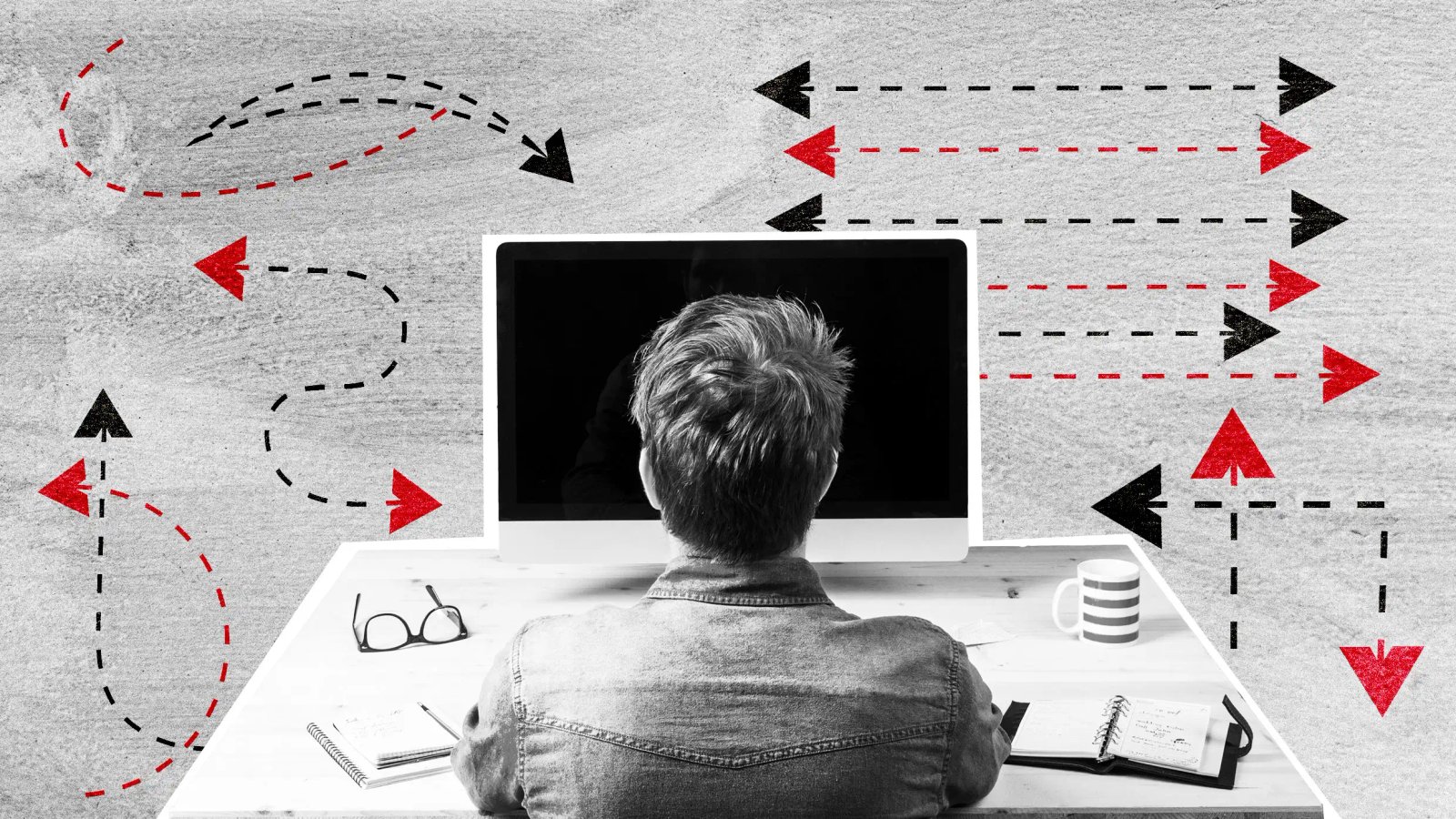
When professionals hit their cognitive limit, most people assume the problem is lack of time or energy. But in reality, overwhelmed people are taking more action than ever. When overwhelm hits, they start doing even more: more lists, more reorganizing, more inbox management, more clicking between tabs. They are busy, visibly productive, heads down for hours, yet at the end of the day the most important work still hasn’t moved.
The productivity mistake almost everyone makes when they’re overwhelmed comes down to taking the wrong action while feeling certain the whole time that they’re taking the right one.
A 2025 managerial study found that digital fatigue and cognitive overload are strongly linked to reduced performance, especially when work demands exceed capacity. Research in cognitive psychology adds to that picture. When the brain is overloaded, it doesn’t reach for its best tools. It reaches for its most familiar ones, the ones that have historically felt like productivity even when they produce very little of it. At the same time, employers are increasingly seeing cognitive load management as a core managerial responsibility rather than an individual burden.
Understanding the difference between organizing and progressing is one of the most important skills a professional can develop, and most people never make that distinction clearly enough to change their behavior because of it.
The action that feels productive but isn’t
When we’re overwhelmed, the brain reaches for something familiar, something that has, in the past, been associated with success. For most professionals, making lists and getting organized has always come right before getting things done, so under pressure that’s what we reach for. We make the list. We sort the inbox. We color-code the calendar, and it feels like progress because it always used to come right before progress. (Turns out, those two things are definitely not the same.)
Stephanie Davis, a business consultant who helps companies identify what’s actually driving growth, calls this pattern “pigeon syndrome,” rooted in B.F. Skinner’s famous experiments: pigeons in cages where food dropped randomly, with no connection to their behavior, would repeat whatever they happened to be doing when the food appeared, obsessively, because the association felt real even though it wasn’t. “I see this in companies all the time,” Davis says. “We are plagued by the illusion of control.”
