

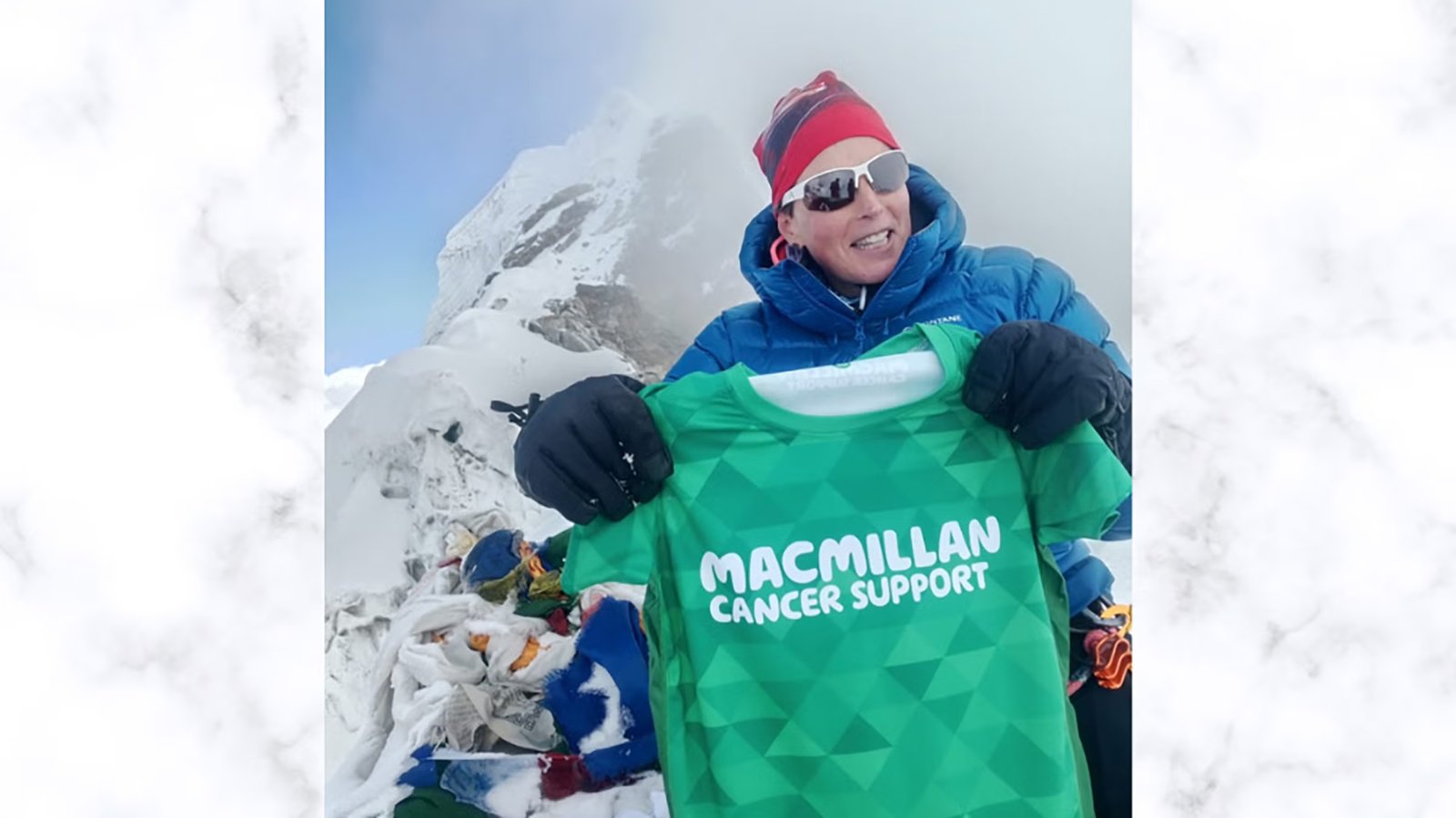
Published April 8, 2026 03:22AM
In March 2024, Shaunna Burke found a lump on her left breast while taking a shower. The timing of the discovery was terrible: Burke, who was 48 at the time, was two months out from running the Everest Marathon, a 26.2-mile trail race in Nepal that begins in the thin air at Base Camp.
For Burke, a professor and researcher at the University of Leeds in the United Kingdom, the discovery was a bitterly ironic twist of fate. Her specialty is cancer research. She has spent most of the last two decades exploring how to prepare cancer patients, physically and psychologically, to undergo treatment. She also tells them how exercise, diet, and other lifestyle choices can augment traditional treatments like chemotherapy and radiation.
Doctors diagnosed Burke with stage II breast cancer, meaning the tumor was growing, but was still localized to the breast and nearby lymph nodes. It was good news: the tumor was highly treatable.
“I held onto that diagnosis really tightly,” Burke told Outside. “I told myself, ‘Okay, this is curable. I’m going to have a tough journey with treatment, but eventually my life can go back to normal.’”
She deferred her entry to the Everest Marathon, then began chemotherapy. But a few weeks later, scans revealed that her cancer had metastasized, spreading to her liver. Burke was now facing stage IV cancer, which is often considered to be incurable.
“I remember my doctor using the word palliative,” she recalled.
The word, which refers to care aimed at relieving suffering in weakened patients, caught her off guard. Burke was intimately familiar with cancer patients in palliative care—she worked with them every day.
“A patient receiving palliative care was someone who was frail, immobile, dependent on other people,” she said. “I thought, ‘This is just not me.’ I was the fittest I’d ever been in my life. How is it possible that I’m so fit, feel so healthy, and I’ve been given this diagnosis?”
Two years since her diagnosis, Burke is proving that patients in her condition can still reach great heights. This spring, she is in Nepal attempting to reach the summit of Mount Everest.
Applying the Mountaineer Mindset to Cancer Treatment
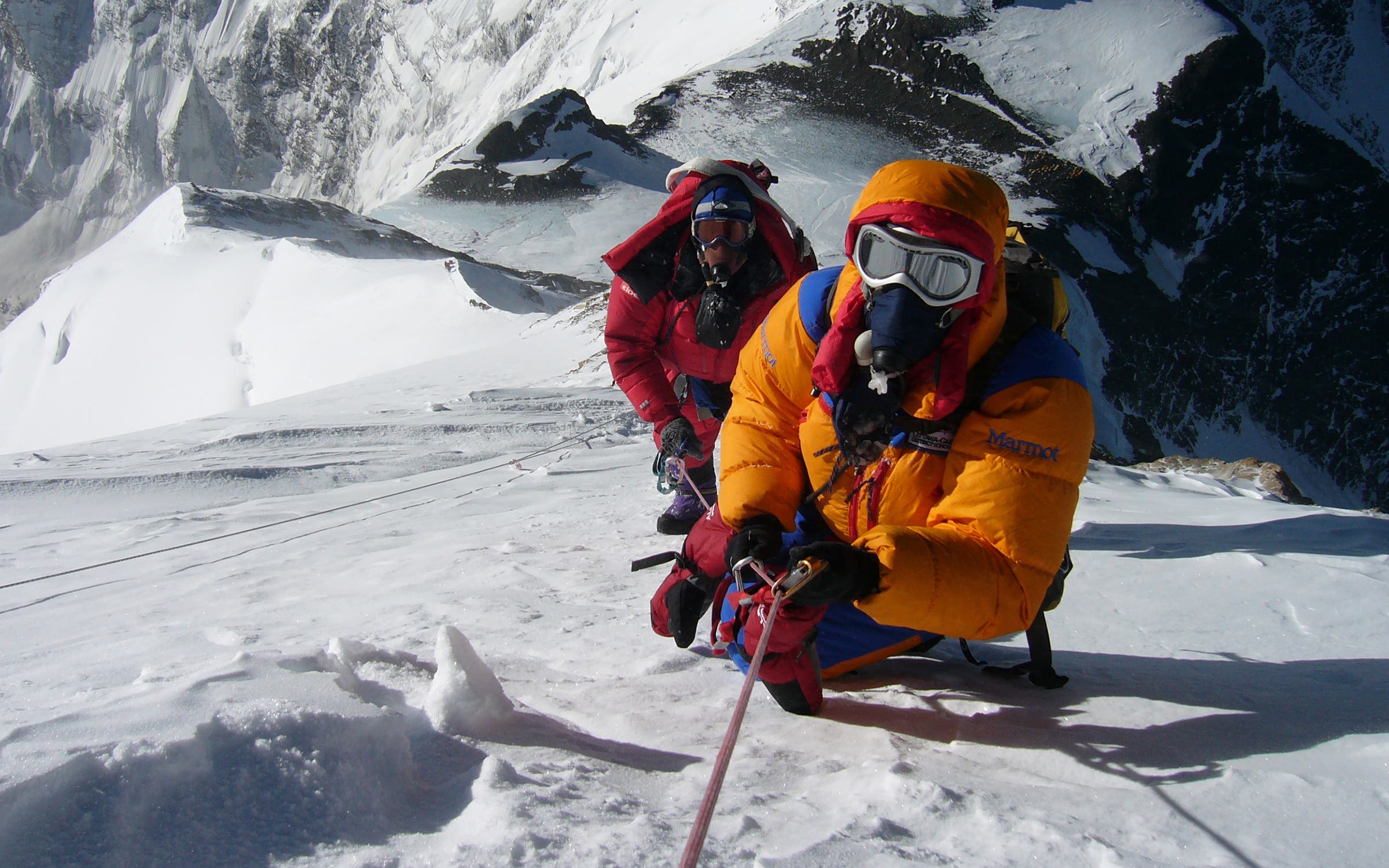
Burke, who is Canadian, first climbed Everest in 2005, when she was 29 years old. A competitive skier in her youth, she saw Everest as the capstone of a young life spent pushing her body in the outdoors. Burke was just the second Canadian woman to summit the mountain, after Sharon Wood in 1986.
“It meant a lot to me to prove that I was capable of getting to the summit, both physically and mentally,” she said. “There also weren’t a lot of women on Everest then.”
The experience catalyzed her interest in the transformative potential of tough physical feats. Burke’s graduate thesis, in sports psychology, studied the mental strategies climbers used to succeed on Everest, and her Ph.D. explored decision-making in high-altitude environments.
“I started to realize that the mindset mountaineers have is quite unique, and wondered if it could be translated to other populations,” she said. “I began to believe there was something we could all learn from how mountaineers manage adversity.”
She later led a study on 19,341-foot Kilimanjaro that involved breast cancer survivors. The project explored how climbing the mountain aided their recovery. “We realized being on Kilimanjaro was actually helping these women psychologically recover from the trauma of what they had gone through with cancer,” Burke told Outside.
What followed was a 17-year career as a cancer researcher. Burke continued this career until she, too, was diagnosed with the disease herself. She spent her entire life in the medical world, but never actually in a hospital bed.
“I’d never been on any serious medication, never had any surgeries or other medical issues, nothing,” she said. “Being on the other side took me a while to get used to.”
Cancer Treatment Before an Expedition to Everest
After her diagnosis, Burke dove into months of chemotherapy, followed by a double mastectomy, and then more surgeries—the removal of several lymph nodes, her ovaries, and the tumors from her liver.
Through it all, she stayed active. She designed a fitness and treatment plan, drawing on her own research, which put exercise front and center. She ran three miles to each of her chemotherapy sessions, then walked home. Partly, she admitted, she kept exercising because she wanted to maintain her identity as an athlete, but also because the research she’d conducted throughout her career indicated that exercising before and after chemotherapy can help the treatments be more effective.
“It has to do with oxygenation and circulation,” she explained. “If you’re exercising, getting your heart rate up, you’re helping pump that chemo through your body, getting it to the places it needs to go.”
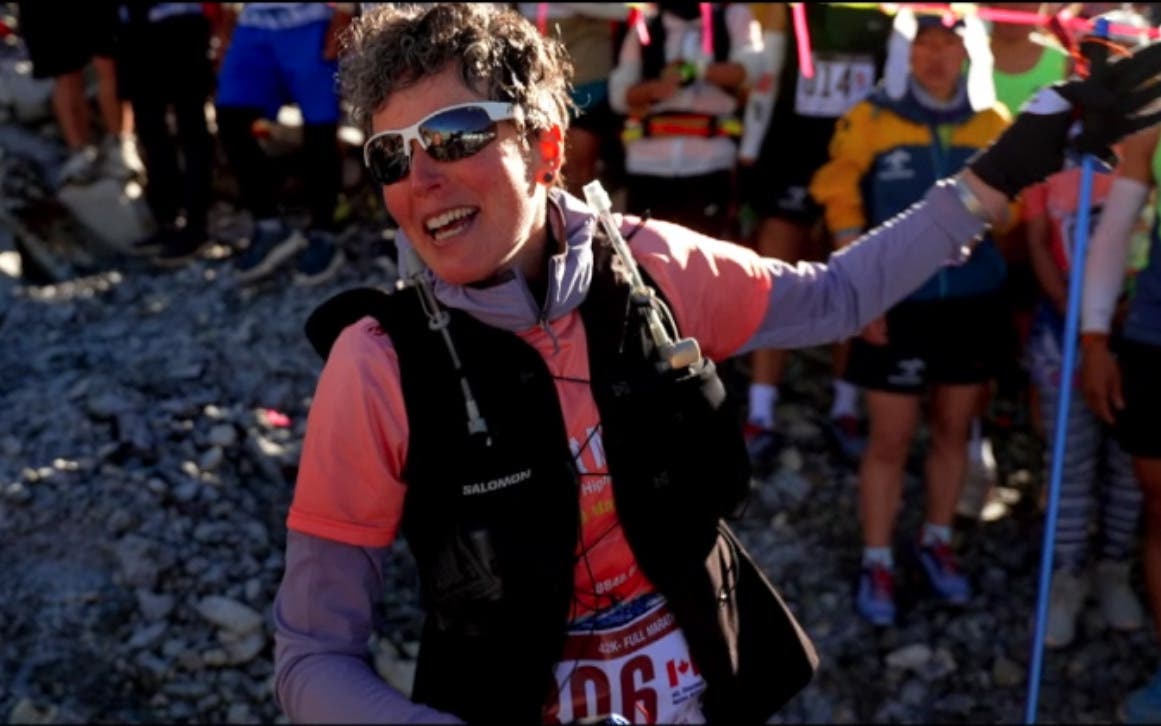
In 2025, a year after Burke’s diagnosis, she returned to Nepal. She was still battling stage IV cancer, but she was also in incredible physical shape. She ran the Everest Marathon and also climbed a peak near Everest called Lobuche East, which tops out at 20,075 feet above sea level.
Returning to the Himalayas to accomplish massive endurance feats was a key pillar of her treatment plan. Now, a year later, she’s returning to Nepal, and this time to the summit of Everest. If she succeeds, she’ll be the first woman in history to climb the mountain with stage IV cancer. (Ian Toothill, a British mountaineer, climbed with stage IV cancer in 2017. He died the following year.)
“It’s surreal,” she told me. “You feel vulnerable. Your awareness of your mortality is heightened. But there’s beauty intertwined with that, because you prioritize life differently.”
“If you don’t stare death in the face, it’s going to paralyze you,” Burke continued. “That’s true whether you have cancer or not. Sometimes in life, we go through the motions, and it’s not until something shakes us to our core that we realize how temporary and fleeting this life is. For me, my diagnosis did that. It shook me to my core, but I’ve grown as a result.”
Cancer Research at 29,000 Feet
In her return to Everest, Burke is pursuing both personal and professional goals. A film production company is making a documentary, Dying to Climb, about her experience on the mountain. She also plans to conduct a battery of tests on herself to see how her body and her cancer respond to the extreme environment.
With the help of a physiologist colleague, Burke underwent comprehensive baseline lab tests in advance of her climb. Those results will be compared with data collected on the mountain to assess how the disease responds to high elevation and extreme physical exertion.
“Were going to look at physiological markers and immune system markers, to explore how being in a low-oxygen environment impacts my body and immune system,” she explained. Burke and her team will also monitor her cancer markers—biomarkers that signify the presence of cancer—to see how they respond to the stress of the expedition.
Burke told me that her own curiosity, as a scientist and researcher, is one of the reasons she wants to return to Everest. But she also wants to shatter the stigma of a terminal diagnosis.
“I want to use this climb as a platform to inspire other people,” she said. “I want to show people that even when living with something so difficult, like an incurable cancer diagnosis, you can still go out there, push yourself, and follow your dreams.”
“A lot of people get a terminal diagnosis and think ‘Game Over,’” Burke added. “They think that means it’s time to roll over in bed and pull the duvet back over their heads. The way I see it is the opposite. You keep going, you keep putting one foot in front of the other, and continue to live as fully as possible while you can.”
