

Published April 12, 2026 12:07PM
Lisa Shellenberger is a Denver-based family law attorney. She is an avid mountain biker and dirt biker who consistently ranks in the top ten percent of CrossFit athletes worldwide in the annual Open competition. Shellenberger spoke with Outside about a harrowing experience she had one spring day in September 2023. This is her story as told to writer Dylan Nickerson.
I stood up quickly, dusted myself off, and took a breath. It’s my typical ritual after crashing on my mountain bike.
Then, something heavy slapped against my shin. I gazed down and then looked away. What I just saw can’t be real, I thought. I looked again.
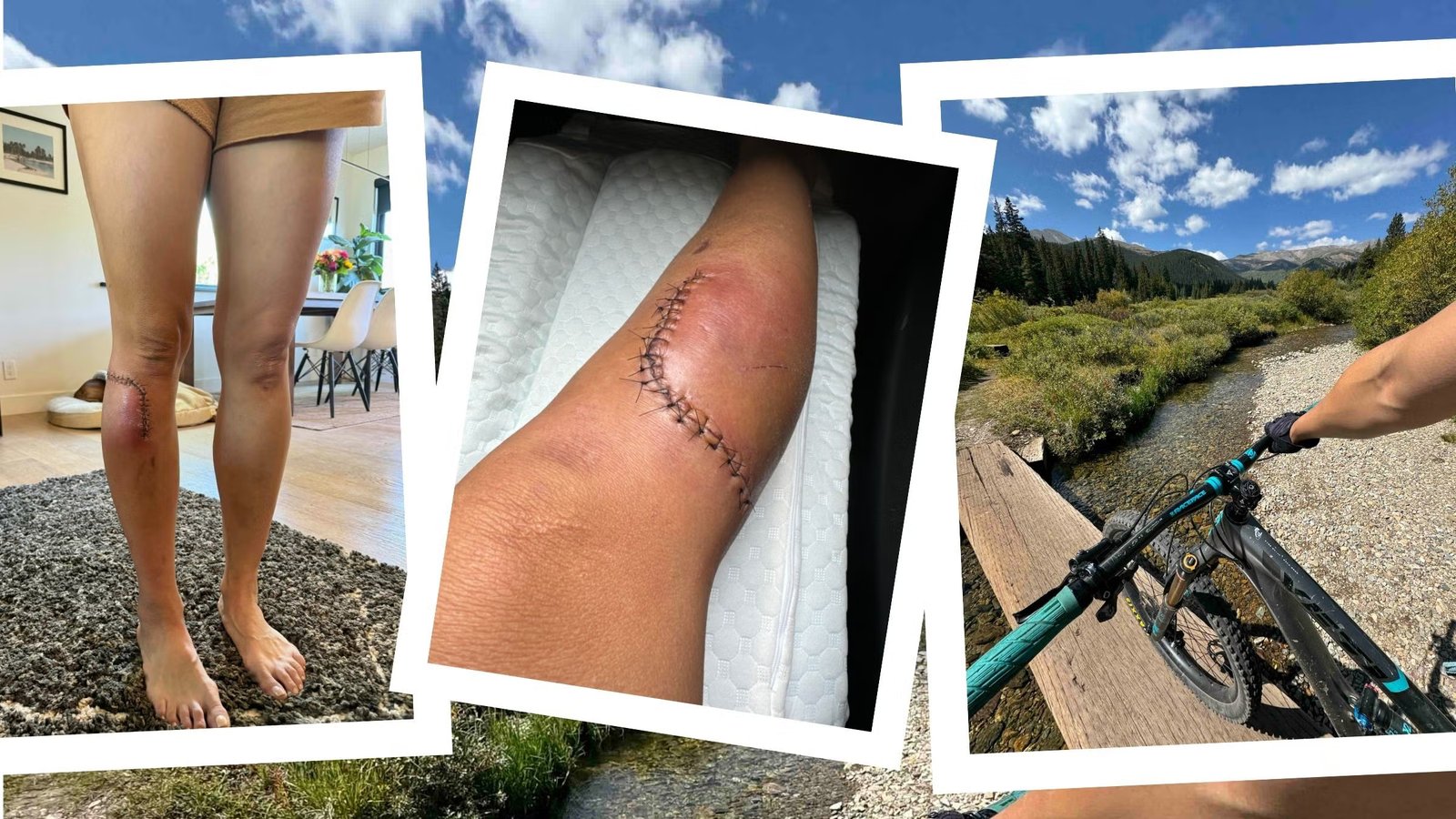
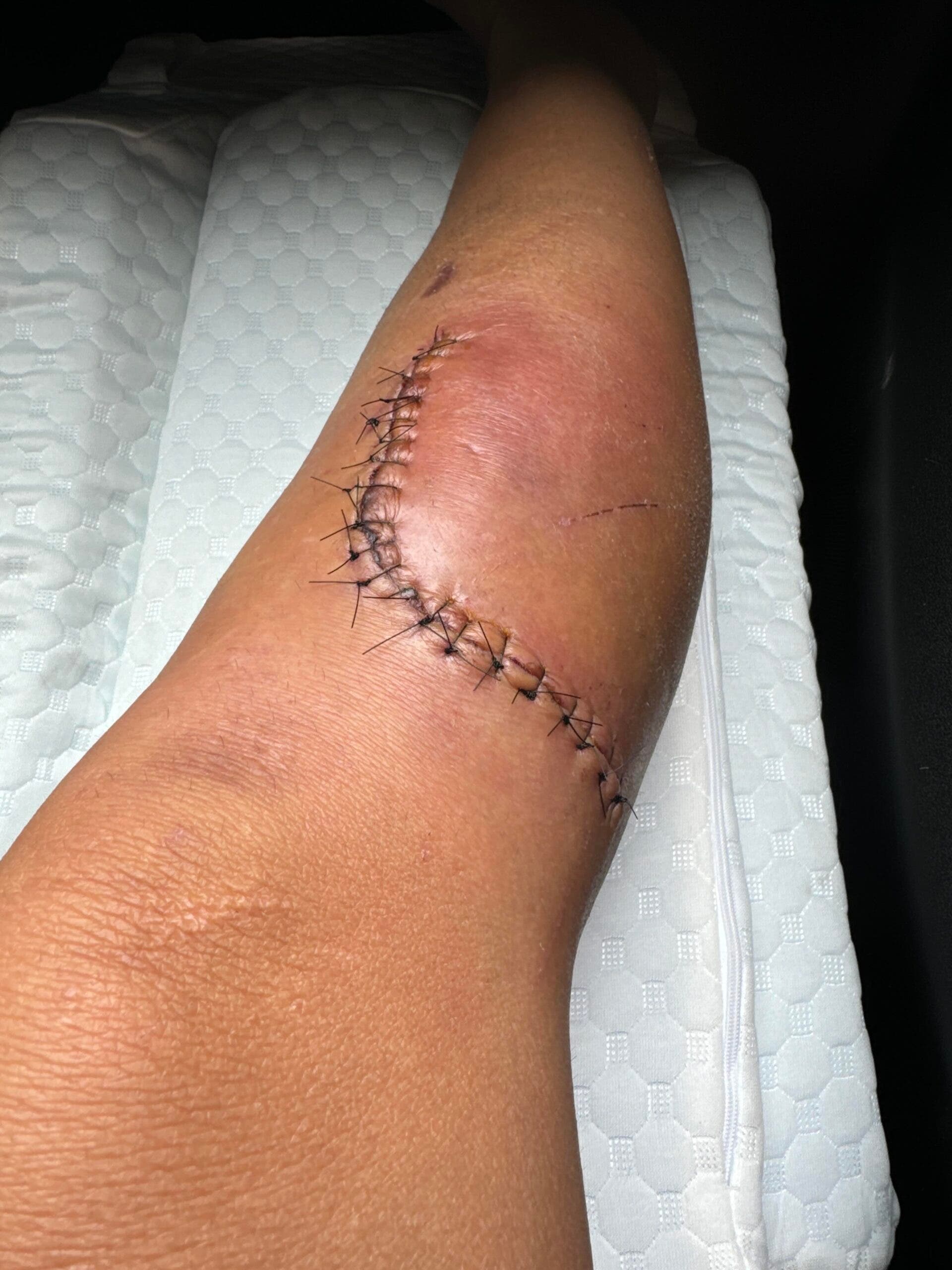
The skin and muscle on the front of my right shin had been cleaved open. It looked like a butcher had filleted the flesh just below my knee in his shop for a lunch special. I could see white. I didn’t know if it was bone or ligament, but I just knew the cut was deep.
“Oh God, oh God, oh God.” I said.
A Mountain Bike Crash That Caught Me by Surprise
I often mountain bike alone—I’m neither reckless nor do I ride terrain I can’t handle. The risks I take are calculated, and I try to ensure that I can rescue myself.
One cool Saturday morning in September 2023, I woke early, grabbed breakfast in the town of Como, Colorado, and drove up toward Boreas Pass. It was peak leaf season. Kenosha Pass, a popular leaf-peeping destination, was likely packed, so I went in the quieter direction.
I parked on the side of the road, leaned my bike against my Tesla, and sat on the tailgate pulling on my gear and helmet. I held my knee pads in my hand for a moment, but then tossed them back into the car. They’d be annoying on the climb, I thought.
The ride up the unmarked and unnamed fire road to the top was steep and lonely and beautiful. When I reached a rocky technical section on my way back down, I walked. I was alone and far from help, and this was part of my risk calculation. A bad crash out here would be a problem, I thought. After that, I clipped in and started descending through the trees, fast and smooth, enjoying that familiar feeling of flying you only get on a bike. And then, something happened that literally sent me flying.
I had “endoed,” which is bike parlance for when your front wheel stops suddenly and your back wheel lifts, sending you over the handlebars. It wasn’t even a tricky section of trail where I crashed. Later, I’d see the culprit—a small, dagger-like rock protruding from the dirt.
My Survival Instincts Kicked In
In a panic, I grabbed the flap of flesh and pressed it back into place. A pinecone and dirt were lodged inside, and blood was pouring down my leg.
I ripped off my helmet and pulled off my tank top with one hand, keeping the other pressed against my leg so the skin wouldn’t flop back when I stood up. I wrapped my shirt tightly around the wound. But my tank top didn’t lend me enough fabric, and I could still see bone through the armholes. I stripped off my bike shorts and used the Velcro waist straps to cinch everything tighter, making a crude tourniquet. I watched as the bleeding slowed. It was at that moment that I considered my dire situation. I was alone in the Pike National Forest.
A Satellite Connection Saved Me
I pulled out my phone to call for help, and my heart sank when I realized I had zero bars of service. Fortunately, I recalled a situation years earlier when my husband had accidentally triggered his iPhone’s SOS feature (which calls emergency services via satellite when you’re off-grid) at a campsite in Delta, Colorado, by shoving his phone into the cupholder of his camp chair. Not too long after, a first responder showed up at our remote campsite. I was gratified by the reminder that this feature can be activated so easily in an emergency.
I held the side buttons on my iPhone and slid the toggle to call Emergency SOS. For a second, nothing happened. Then a message cut through the black screen: Searching for satellite. Hold your phone to the sky.
I stood in the trees, arm raised, shaking, hyperventilating. The screen told me to adjust my phone slightly to the right. I tried that, but it wouldn’t connect. I decided that I could no longer just stand there and wait. I proceeded to take my first step since the crash and instantly felt a surge of lightning bolts shoot up my leg. I can’t walk this out, I thought. I was miles from the road, and I was losing a lot of blood.
I glanced at my bike, secured my helmet on my head, and clipped in. Because I couldn’t absorb drops with my right leg, I let the bike buck underneath me. Every hit sent shock waves through my leaking leg. So, I pedaled as hard as I could with my left.
After about fifteen minutes, I stopped when I broke into a clearing. I pulled out my phone again. I read the words on the screen: Connected to satellite. Continue pointing here until message sends. I waited. Message successfully sent.
Almost immediately, a text came through: “Park County 911. Do you have an emergency?”
I texted back: “Yes.”
“What is the nature of your emergency?”
I typed a quick reply: “Bike crash. Bad. Near Camp Como. Need ambulance.”
I didn’t have the energy to say anything more, so I put my phone away and kept moving. When I reached the gravel fire road, I heard yelling. I watched as a white truck with “Park County Fire and Rescue” on the side drove toward me. Help is finally here, I thought. With that comfort came a flood of tears, the first I had shed all day. An ambulance arrived soon after, and I was swarmed with kind faces and soft voices. They were hooking me up to IVs and all kinds of other tubes and opened the wound to remove debris. Then, they told me they had to transport me to Denver.
“I live in Boulder,” I said. “My car drives itself.”
They told me that driving myself was not a good idea, but I persisted partly to avoid a hefty ambulance fee and because I’d have to go back and get my car at some point anyway. Eventually, after giving in, they had me sign paperwork and followed me to the county line to make sure I made it safely. But that two-hour drive to Boulder was the most painful of my life.
Forty Stitches Later
When I reached the hospital, I realized I couldn’t walk across the parking lot, so I started bear-crawling until a stranger ran over and grabbed a wheelchair.
Hours after the crash, a trauma tech irrigated the wound. A surgeon diagnosed my injury as a severe lower-leg laceration with significant tissue involvement and closed it with heavy sutures. It took 40 stitches to pull everything back together, and I felt every single one.
The recovery lasted months. In the immediate aftermath of my accident, things got worse, not better. The swelling in my lower leg and foot was severe. I couldn’t wear a shoe on that foot. Compartment syndrome, a painful ailment caused by excessive trauma to muscle and ligaments, was a real risk; if the swelling worsened, doctors would have to surgically relieve the pressure to prevent tissue damage by slicing open my skin. Infection was another concern. There was a real possibility I could lose part of my leg if things went badly.
If I had worn my knee pads, most of this likely wouldn’t have happened. If I hadn’t had satellite SOS, it could have been much worse.
I used to think being alone in the mountains meant relying only on myself. Now I understand it differently. Yes, I relied on my grit, skill, and decision-making. But I also relied on modern-day technology and our amazing first responders. Thank you, Park County.
While technology doesn’t replace resilience, it certainly helps amplify it. But next time, I’m wearing my knee pads.
