

Published April 15, 2026 12:06PM
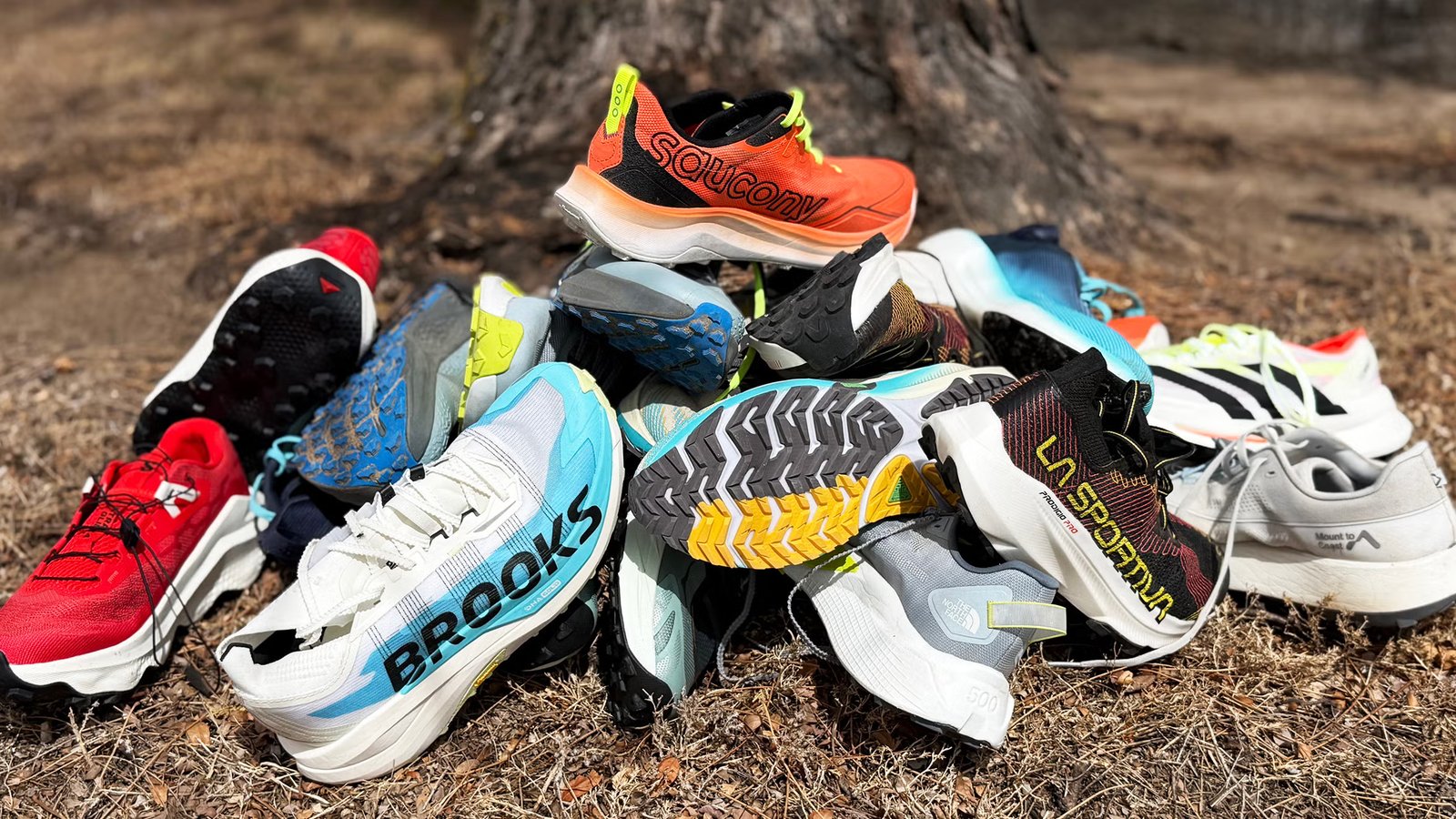
After thousands of miles testing more than 60 new trail shoes over a variety of terrain, the Saucony Peregrine 16 emerged as the best all-around trail running shoe for its superior blend of lightweight agility and responsive, shock-absorbing cushioning. If you’re hunting for a value, look no further than the $150 Brooks Ghost Trail, a versatile, comfortable, road-to-trail model you can wear any day, anywhere.
Every time we lace up a trail shoe, we know we’re in for adventure, whether we’re running across sandy California beach bluffs, charging up rocky Colorado peaks, or negotiating sloppy New England mud. And that is a beautiful thing—when you’re in the right shoe.
Our team is constantly researching, testing, and comparing new trail running shoe releases with tried-and-true favorites to find the ones that let us focus on fun, whatever adventure the trail brings us. Our fleet of 20-plus testers put this season’s best trail shoe through the paces on a range of trail types. These are the shoes that emerged as the best.
Update April 2026: We’ve simplified our categories to better match how you search for trail shoes and reviewed 10 new shoes that impressed our testers. We are continually testing and will be updating this list of best trail running shoes throughout the year.
Top Trail Running Shoes Comparison Chart
Best of the Rest
Best Technical Terrain Shoe: La Sportiva Prodigio Pro ($225)
Best Gravel Shoe: Craft Nordlite Ultra 2.0 ($180)
Best All-Around
Saucony Peregrine 16
Weight: 9.5 oz (men’s), 8.4 oz (women’s)
Stack Height: 32–28 mm
Drop: 4 mm
Sizing: 7-13, 14, 15 (men’s), 5-12 (women’s)
Pros and Cons
+ Excellent traction
+ Lightweight and nimble
– Slippery laces require double-knotting
We’ve tested every version of the Saucony Peregrine since the model’s debut in 2011, and this sixteenth iteration just might be our all-time favorite. The shoe has long been capable of making us feel nimble on rugged terrain, with its great balance of ground feel and cushioning, plus traction on all kinds of trail, wrapped up in a lightweight package. But version 16 takes the Peregrine’s trail capabilities to new levels.
The outsole has been upgraded to a Vibram Megagrip rubber that we found grabs onto rocky slabs with aplomb, while the four-millimeter lugs excel at digging into loose or soft terrain (though some sandy-trail testers craved even deeper, toothier lugs). The midsole has a balanced vibe—not too springy, not too mushy, not too thick—that delivered a strong connection to the trail while still feeling responsive and shock absorbing, even during wild descents. The flexible, breathable mesh upper with added toe protection kept out trail debris and warded off snags from roots and branches.
The fit of this shoe somehow made a variety of testers feel like it was custom-made for them. It held heels securely, and the just-roomy-enough toebox allowed toes space to breathe while maintaining control. “The fit is just perfect,” said a tester. “I feel secure and supported from heel to toe, and side to side.”
Testers’ praise for the ride was diverse and unanimously positive: “The Peregrine 16 is burly enough without taking up too much real estate on the ground,” said one. “The cushioning is responsive and allows for changes in speed on the trail,” said another. Another raved about how the Peregrine 16 “hugs the camber on trail and just feels nimble.”
The Peregrine 16 is a shoe that everyone, from beginners to elite trail runners, can be happy in, and it sells for only $150.
Runner-Up All-Around
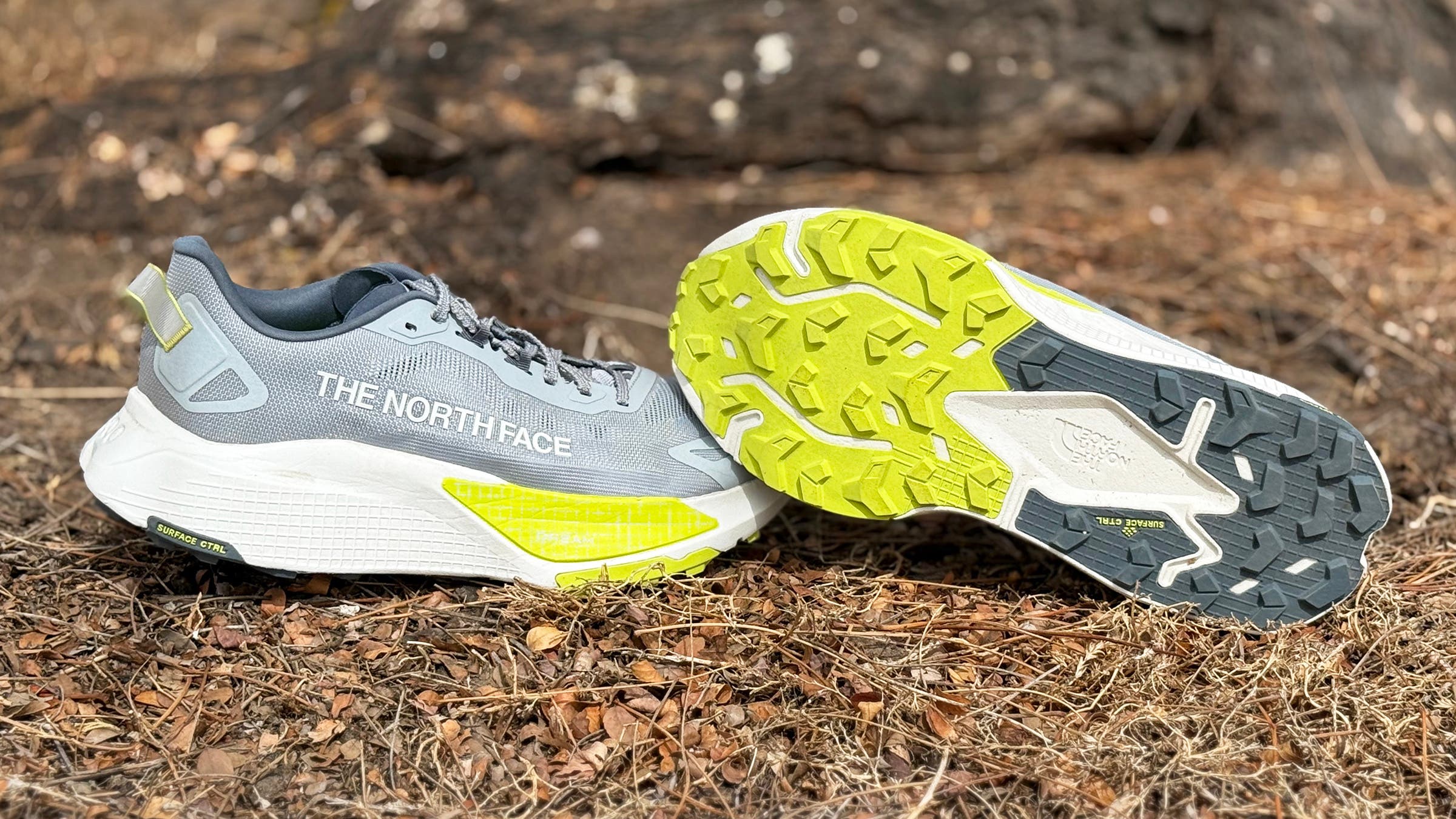
North Face Altamesa 500 V2
Weight: 9.8 oz (men’s); 8.6 oz (women’s)
Stack Height: 36–30 mm
Drop: 6 mm
Sizing: 7-13, 14 (men’s), 5-11 (women’s)
Pros and Cons
+ Upgraded midsole is comfortable and responsive
+ Highly versatile ride
+ Lightweight
– Limited ground feel
The Altamesa 500 really hit its stride in this second iteration. “These are some of the most comfortable shoes I have run in in a very long time,” said one Boulder, Colorado, tester—echoing the consensus among the test team. That comfort comes from a full-length, ultralight, nitrogen-infused TPU midsole foam, a significant upgrade from the EVA used in the original.
The comfort, however, does not come at the expense of speed and an efficient and responsive ride. The midsole doesn’t have a plate, but the sole is quite rigid and wide, with prominent sidewalls—which contributes to an extremely stable ride. “This is the best non-plated ultra racing shoe available,” opined a tester. “Transitioning from midfoot to forefoot is, for lack of better words, dreamy.”
A seamless, reinforced engineered upper holds the foot like a tightly wrapped burrito. “The upper provided enough space and elasticity for long hours, but snugged down for fast paces and technical terrain,” noted a tester.
The outsole is a proprietary rubber with four-millimeter lugs that are slightly sharper and more angular than the original. From steep, rocky technical trails to concrete roads, the outsole gripped when it needed to and disappeared on hard surfaces. One Montana tester was surprised by how pliable the outside rubber was on cold, wet, and frosty mornings.
Regardless of the tester’s level or where they took the Altamesa 500 V2, they consistently ranked it among the best trail running shoes. Secure and grippy for technical descents, comfortable and protected for long days in the mountains, and springy and smooth on hard pack. Except for those who prefer strong ground feel, testers found this trail shoe checked all the boxes on just about every terrain.
Best Value
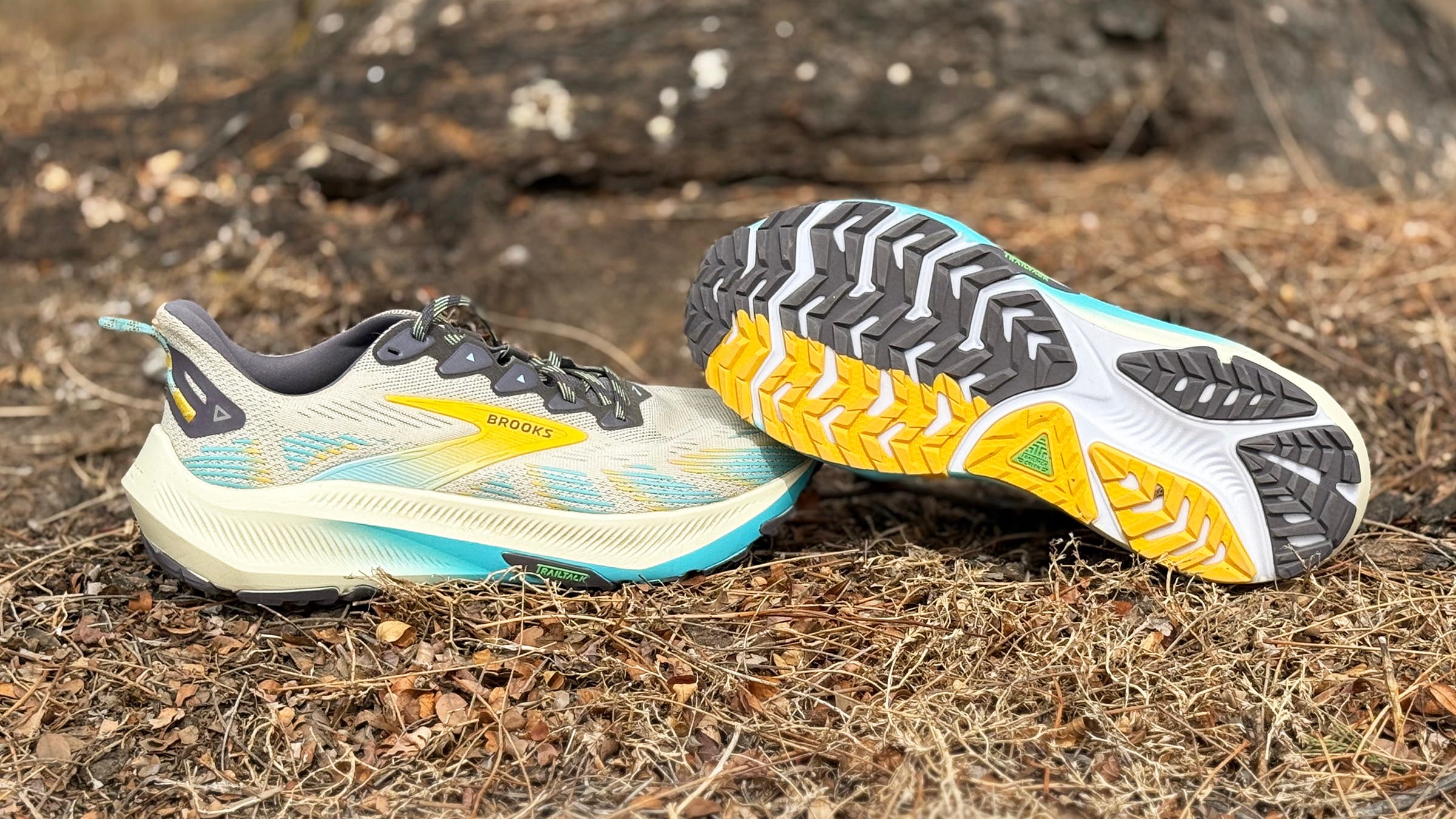
Brooks Ghost Trail
Weight: 10.5 ounces (men’s), 9.5 ounces (women’s)
Stack Height: 36.5–28.5 mm
Drop: 8mm
Sizing: 7-13, 14, 15 (men’s), 7-13, 14, 15 (women’s)
Pros and Cons
+ Runs smoothly on both road and trail
+ Plush and comfortable
– Traction is limited to moderate terrain
Brooks took its perennially popular Ghost road running shoe and gave it some off-road chops, creating an extremely comfortable, versatile shoe that won high marks across the test team. “This shoe is out-of-the-box comfortable,” said a tester, who ran a night race on packed snow in these right after she got them. “It feels like a road shoe but with tread designed for messy and variable conditions.” A plush tongue and heel collar add comfort to the nitrogen-infused midsole foam underfoot, contributing to the road-worthy ride.
The outsole features three-millimeter lugs that made us feel secure on sloppy winter roads, gravel, and moderately rugged trails, while also rolling smoothly on roads. The securely fitting upper and moderate stack of midsole foam made this shoe work on mild singletrack terrain, where we felt connected and in control rather than blindly rolling over obstacles. For more technical trails, we’d want deeper, toothier lugs and a more protective upper, but the shoe isn’t designed for that: every aspect is optimized for its crossover ability.
“These are very versatile for travel,” noted a tester. “They’re comfortable for getting my steps in at the airport—like a road shoe or walking shoe would be—as well as being ready for road to trail or off-road runs. They also handled day hikes with ease.”
Best For Technical Terrain
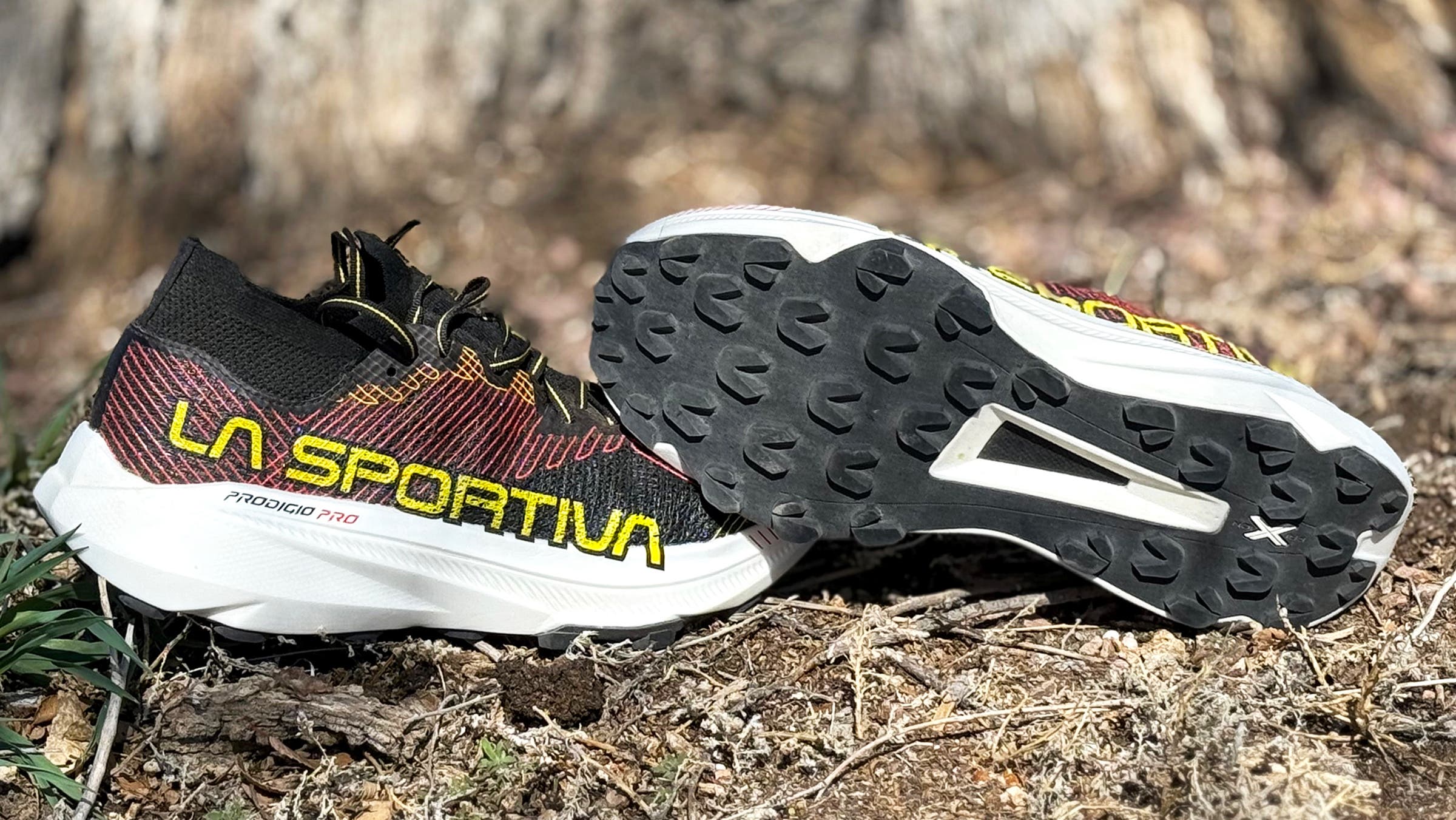
La Sportiva Prodigio Pro
Weight: 8.9 oz (men’s), 7.9 oz (women’s)
Stack height: 34–28 mm
Drop: 6 mm
Sizes: 7.5-15.5 (men’s), 5.5-11 (women’s)
Pros and Cons
+ Lively midsole that still allows ground feel
+ Great traction
– Some pressure on the top of the foot
We’ve kept the Prodigio Pro in our guide for three seasons running because of its soft and lively ride that’s downright fun, combined with stellar traction and a locked-in fit. The midsole—a core of bouncy nitrogen-infused TPU surrounded by a more stable, nitrogen-infused EVA cage—feels snappy underfoot. “Your foot just pops off the ground with each step,” said one tester.
The bootie construction—a sock-like, engineered mesh upper encircling the ankle— successfully kept trail debris from sneaking inside the shoe. The durable upper mesh, made from a mix of polyester, TPU, and nylon threads that the brand is calling “Power Wire,” worked in conjunction with the secure midfoot wrap to anchor our feet comfortably. One knock on the upper: The tongue, with an interesting, tubular padding, caused a little irritation on the top of the foot beneath the laces for some testers. Most, however, found it comfortable overall and a pleasure to pull on.
Underfoot, the outsole, made of La Sportiva’s proprietary Frixion rubber with multidirectional, four-millimeter lugs, does a fantastic job at gripping all surfaces. “This shoe has great traction in mud, slush, dirt, rocks, and roots,” said one tester, who noted that the trail shoe performs expertly on off-camber terrain. “This shoe makes me feel more nimble and quick than most shoes do.”
Best Gravel
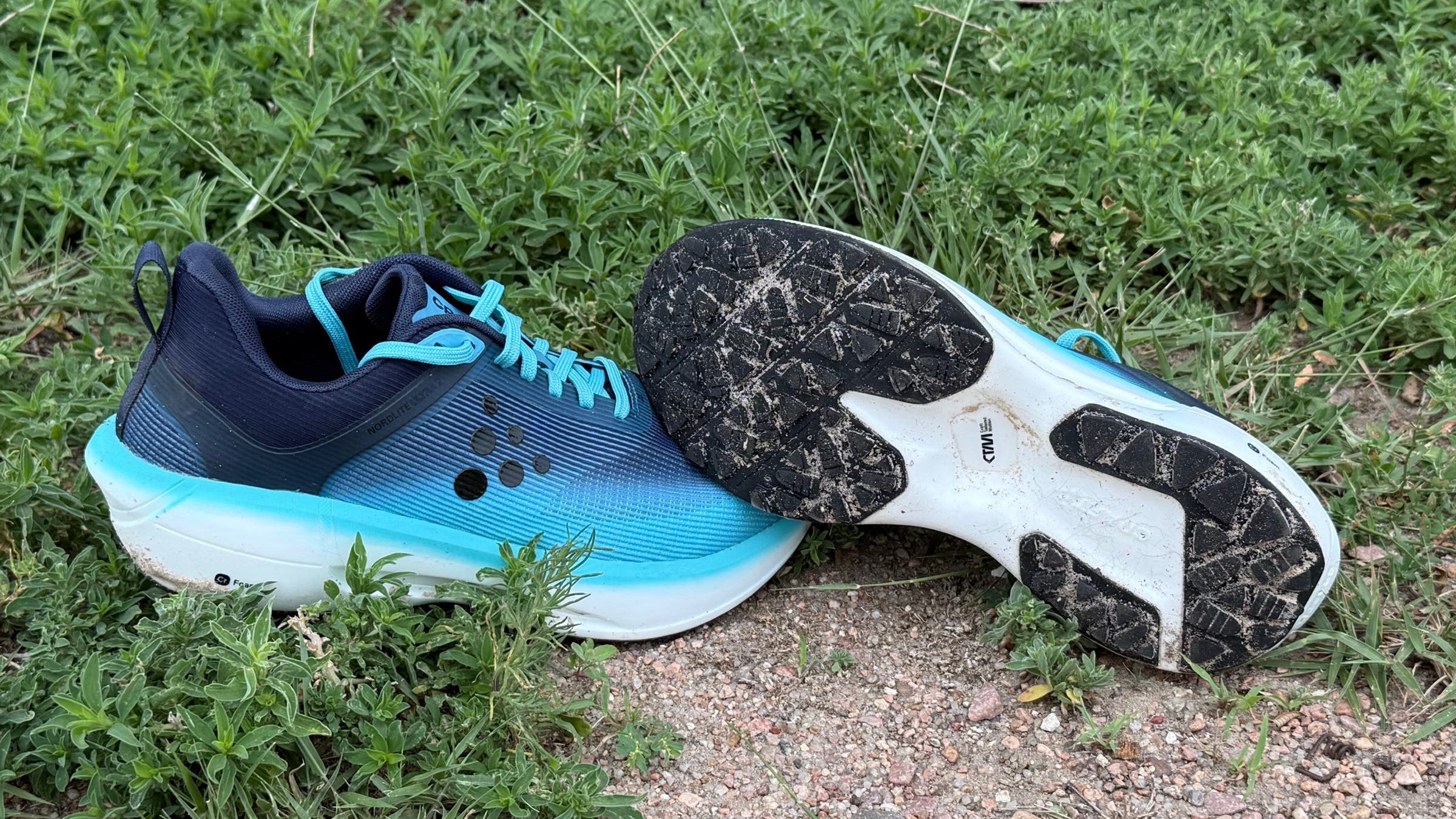
Craft Nordlite Ultra 2.0
Weight: 10.9 oz (men’s); 8.9 oz (women’s)
Stack height: 40–34 mm
Drop: 6 mm
Sizes: 8-13 (men’s); 6-10 (women’s)
Pros and Cons
+ Ample, responsive cushioning
+ Solid traction
– Foothold could be better
We loved the first version of the Nordlite Ultra for its ample and lively midsole, made of reusable materials turned into supercritical foam in a non-toxic process. This second iteration still boasts great cushioning that rivals straight-up road running shoes in shock absorption and rebound.
The Nordlite Ultra’s new, more secure-fitting upper improved the fit from the baggy first version. “It’s snug and secure in the heel, and the tongue is form-fitting and comfortable,” said a Virginia-based tester. “When I was on flat terrain and wearing zero-cushion socks, I felt very comfortable in the shoe.” The secure heel hold gives way to a moderately snug midfoot. It opens up farther in the forefoot, offering wiggle room in the toe box. Cheers to Craft for using recyclable TPU on the upper, adding to the sustainable efforts of this trail running shoe.
Off-road, the Nordlite Ultra 2.0’s traction proved capable on a range of surfaces, although the rubber is a tad noisy on pavement. “The outsole is extremely grippy,” said a tester, “which makes them fun on gravel and when accelerating. They also worked well on a dew-soaked wood boardwalk.” On steep, technical trails and even smooth descents, our feet slipped inside the shoe a bit too much. Still, most road-to-trail routes only cover pavement to moderate trails and back, and these versatile shoes excelled at making both surfaces comfortable and fun.
Best Road-to-Trail Shoes
Nike ACG Pegasus Trail
Weight: 11.7 oz (men’s), 9.5 oz (women’s)
Stack Height: 39–31 mm
Drop: 8 mm
Sizing: 6-15 (men’s), 5-12 (women’s)
Pros and Cons
+ Extremely versatile
+ Comfortable for all-day wear
– Traction could be better
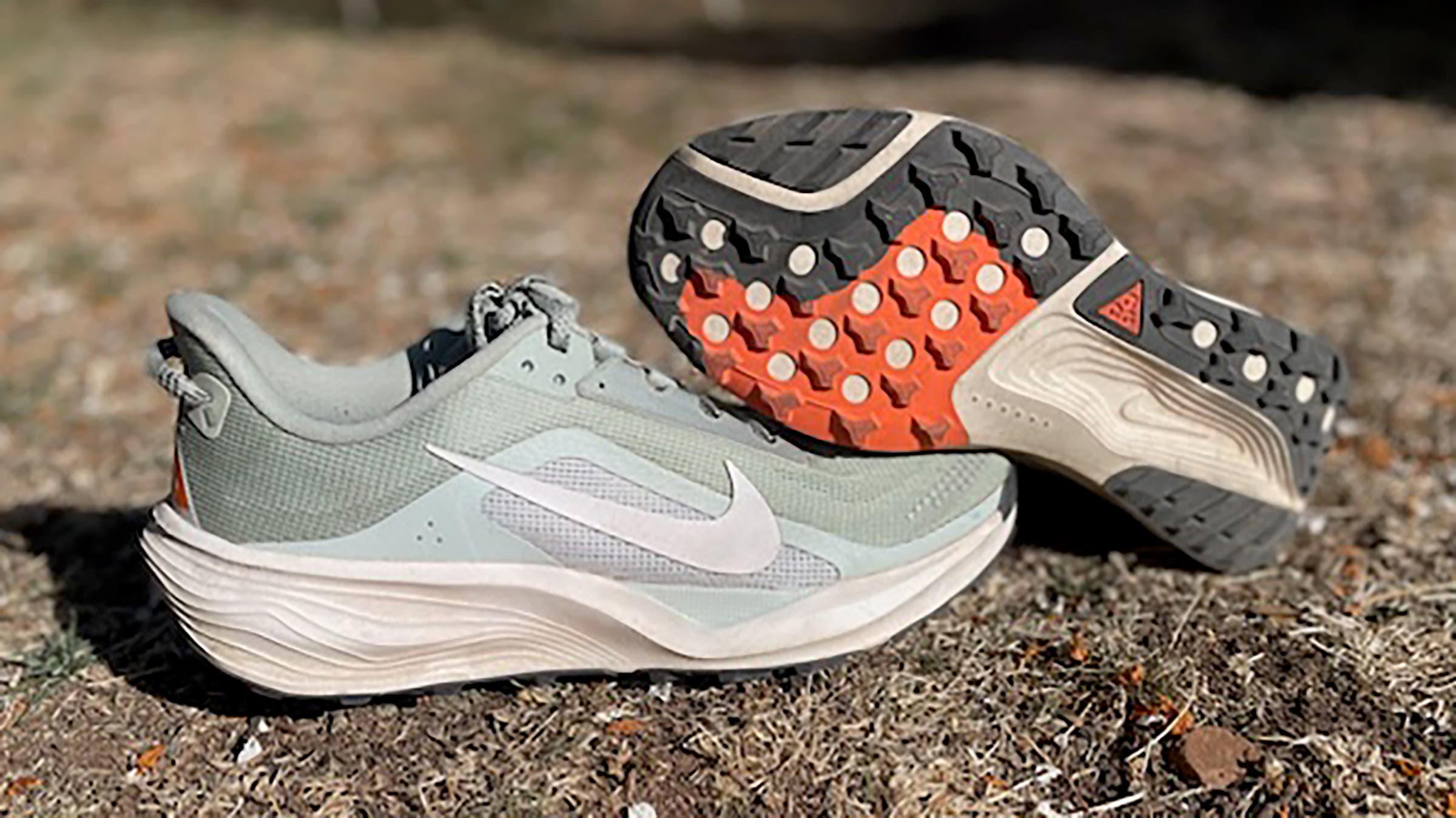
The Nike Trail Pegasus 5 has been our top choice for road-to-trail runs for several seasons, so we were concerned that its newly branded replacement, the Nike ACG Pegasus Trail, would mess with its winning formula. But as soon as we stepped into the new model, we breathed a sigh of relief. The shoe is just as comfortable as its predecessor and, after testing, has proven to be just as capable on and off roads, continuing its reign as the most versatile shoe in this roundup.
The midsole foam—Nike’s injection-molded ReactX—feels responsive and cushions comfortably on concrete, pavement, and hard-packed dirt. The outsole traction, from 3.5-millimeter lugs made of the brand’s proprietary “All Terrain Compound 2.0,” is tackier on wet terrain than the previous version, but still pales in comparison to Vibram MegaGrip.
What makes this shoe work from roads to singletrack trails is the fit and foothold. Even our most narrow-footed testers felt a secure hold without any pressure points, which allows precise footing on trails, no matter how steep or rocky. This shoe’s versatility makes it a great pick as a one-trick pony for the casual runner who doesn’t need a lighter, faster race shoe, and a solid choice for travel.
Mount to Coast H1
Weight: 8.5 oz (men’s 9, women’s 10.5)
Stack Height: 35–29 mm
Drop: 6 mm
Sizing: 7-13, 14 (men’s), 5.5-11(women’s)
Pros and Cons
+ Excellent balance of cushioning, responsiveness, and ground feel
+ Lightweight for the amount of cushion underfoot
+ Sustainable midsole
– Shallow lugs
– Upper laces can pinch the top of the foot
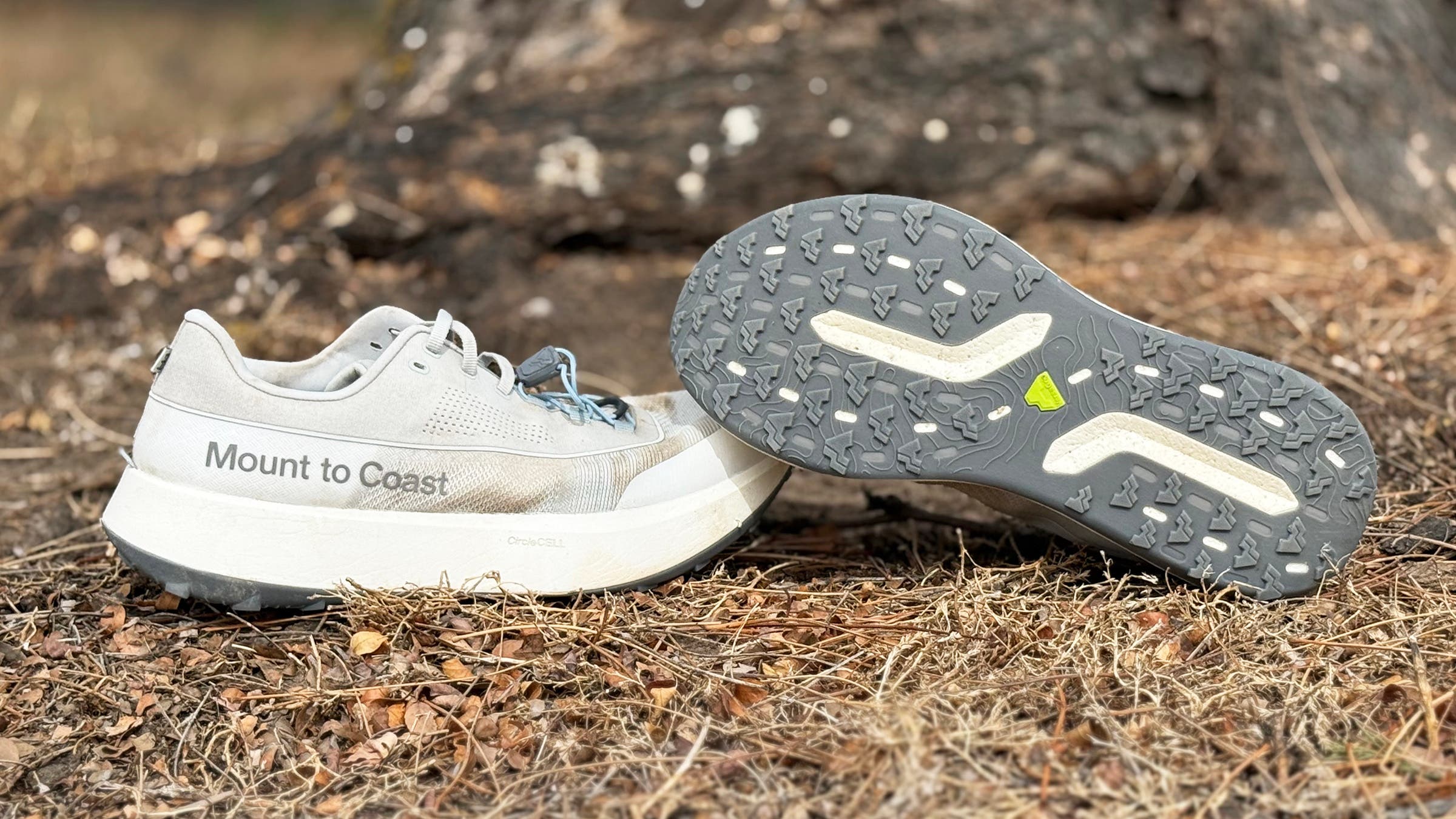
Among all the new, indie running shoe brands, Mount to Coast has burst into the limelight quickly. The brand offers solid models for both trail and road, and the new H1 bridges both. It’s built around an all-new supercritical foam called CircleCELL, made from renewable feedstock and recycled organic waste. We’ve tested a lot of “sustainable” foams, and, up to now, all of them have underperformed, yet CircleCELL looks, feels, and acts like the superfoams found in today’s best trainers.
Underfoot, the 35–29 mm stack delivers a ride that’s smooth, responsive, and surprisingly ground-connected. Despite moderate cushioning, the flexible sole lets your metatarsals and ankle joints move freely and actively engage. At 8.5 ounces for a men’s 9, turning over quickly is not an issue—one of Outside’s fastest testers found they performed surprisingly well at 5-minute-per-mile pace.
Like most road-to-trail shoes, these feel like road shoes with knobby soles. On pavement, the shallow two-millimeter lugs disappear underfoot. On packed dirt and crushed gravel, they deliver a reliable grip. “It thrives on fire roads, gravel bike paths, and cruisey dirt trails, as the modest lugs work in tandem with a cushy midsole and a rocker design,” noted that same speedy tester. Tackling rocky, twisting descents, however, will push the H1 beyond its comfort zone for control and traction.
A signature feature of Mount to Coast’s shoes is the dual-lacing system, which combines a traditional lace-and-tie on the instep with a pull-string quick-lace system near the toe box. This allows you to tighten each zone independently. It’s simple, but brilliant. One tester said, “The dual lacing system makes it one of the most comfortable fits I’ve experienced, with plenty of room for the forefoot and toes while still keeping my foot secure.” The one complaint: cranking down the upper laces caused some pinching across the top of the foot.
The H1 strikes a middle ground between big cushioning and a flexible, sensitive feel, delivering a comfortable, energetic ride for runners of any level on roads, smooth dirt, or packed paths. “It’s one of my favorite shoes I’ve run in in a while,” said one tester.
Read our full review of the Mount to Coast H1.
Best Cushioned Trail Shoes
Hoka Speedgoat 7
Weight: 9.7 oz (men’s); 8.3 oz (women’s)
Stack Height: 40–35 mm (men’s), 38–33 mm (women’s)
Drop: 5 mm
Lug Depth: 5 mm
Sizing: 7-13, 14, 15 (men’s), 5-11, 12 (women’s)
Pros and Cons
+ New supercritical foam is more energetic
+ Stable despite high stack
+ Grippy outsole
– Runs small in width and length
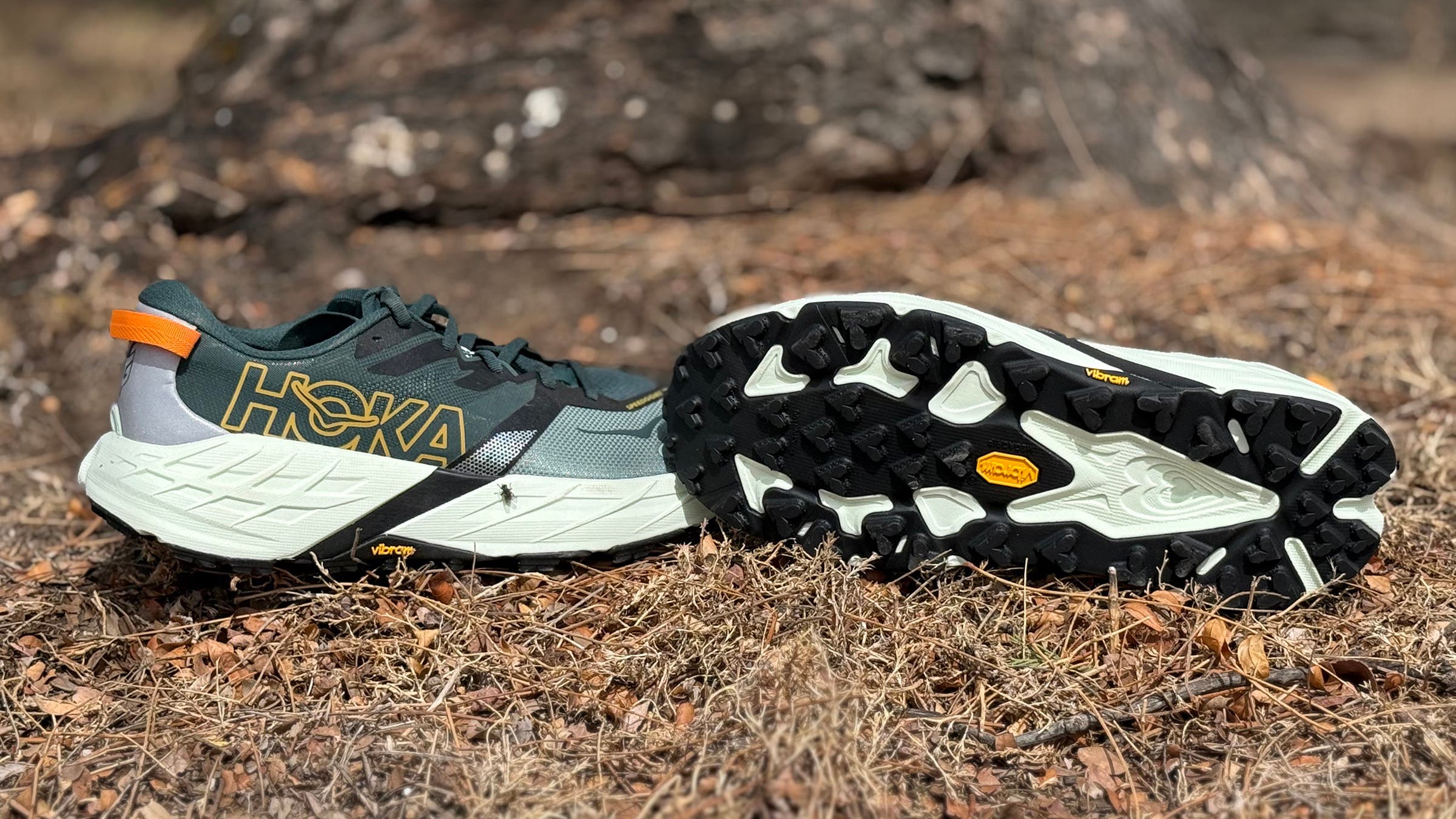
Named after ultra-running legend Karl “Speedgoat” Meltzer, the Hoka Speedgoat is built to chew through rough, technical terrain. Since its 2015 launch, this lightweight model has undergone seven iterations, some of which were unwelcomed by fans. “I was pretty disappointed by the Speedgoat 5 and 6, which felt way too firm, rode too harsh, and fit too narrow,” said one long-time Speedgoat admirer. Fortunately, after running in the new version, he proclaimed, “All of that is better in the Speedgoat 7, and it’s back to a trail model that I really dig.” Other testers concurred.
The biggest upgrade comes in the way of a new supercritical EVA foam midsole, replacing the previous compression-molded EVA. Testers described the new midsole as “super responsive” and having “an energetic pop on the trail—it feels really lively and fun.”
Despite a relatively high stack, we found the stability to be surprisingly good, thanks to the slightly firmer midsole and wide underfoot platform. That midsole is paired with a Vibram Megagrip outsole with five-millimeter traction lugs that grips any surface: hard, slick, soft, or sloppy. One tester called it, “flexible and durable, with rock-solid traction. Best in class.” The upper features a lightweight RPET woven textile that’s tough as nails and looks great. “Aesthetically, Hoka knocked it out of the park with these,” raved one tester.
The biggest complaint was that the toe box felt a little cramped in both length and width. “These might have been a 10/10 trail shoe for me if it weren’t for the narrow, constrictive toe box,” said one tester. The suggested solution? Testers recommended sizing up or going with the wide version if your feet aren’t noticeably narrow.
Once the fit was corrected, we all agreed that the Speedgoat 7 returns the franchise to its preeminent place among cushioned trail shoes, delivering a terrain-swallowing ride that makes trail miles fly by. “There’s a reason the Speedgoats are the OG of trail shoes,” one tester
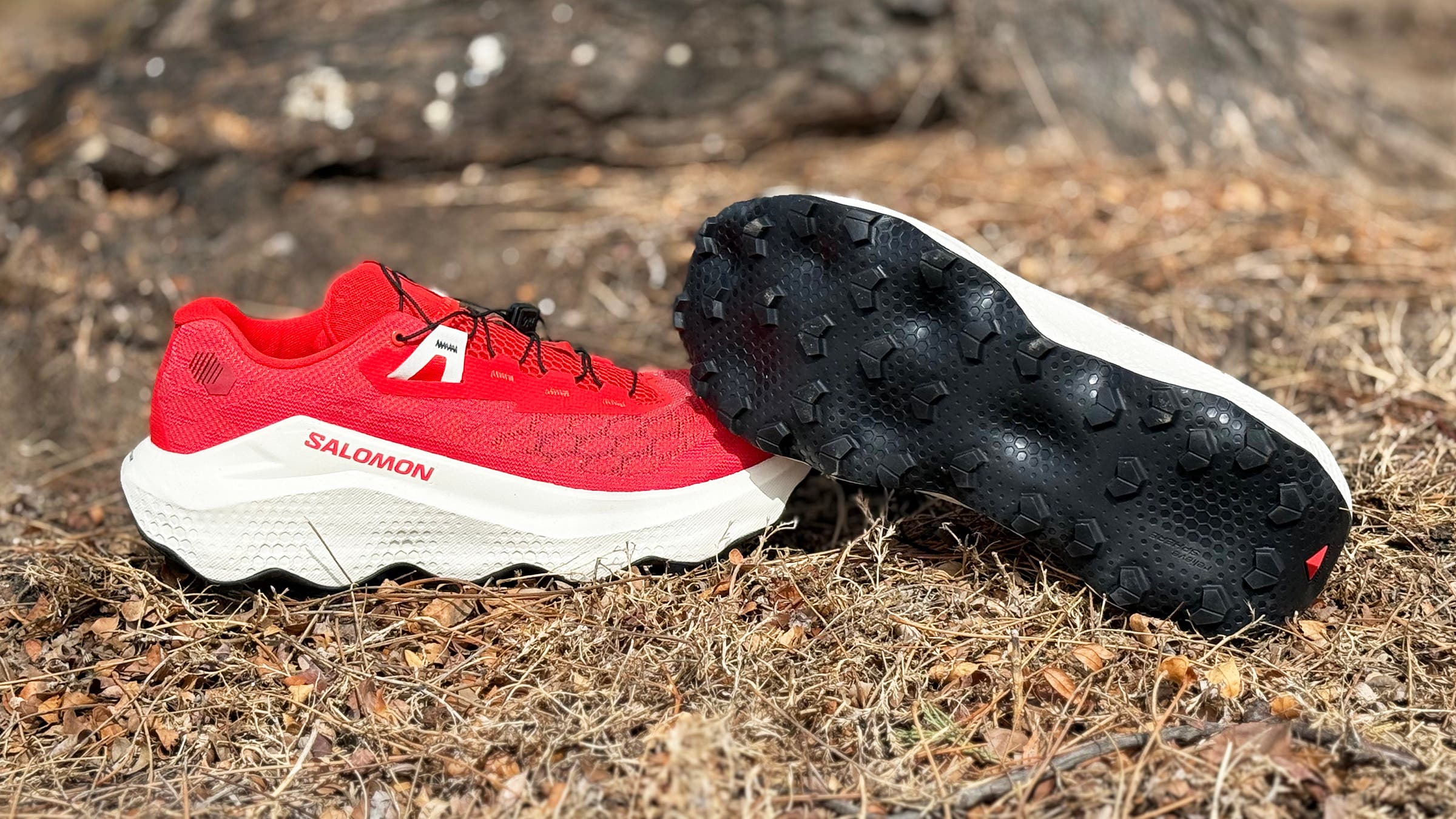
Salomon Ultra Glide 4
Weight: 9.9 oz (men’s), 8.9 oz (women’s)
Stack Height: 41–35 mm
Drop: 6 mm
Sizing: 7-13, 14 (men’s), 5-11 (women’s)
Pros and Cons
+ Max-cushioned comfort
+ One-pull Kevlar laces are quick and secure
– Not the most nimble-feeling
We found the maximally cushioned Salomon Ultra Glide 4 made us feel ready to tackle tough terrain in comfort, like riding a mountain bike with long-travel shocks. An ample amount of moderately soft, smoothly stable EVA foam sits atop the unique wavy outsole, designed to help evenly distribute the weight of each step on variable terrain and to morph around any sharp object underfoot. We wore the Salomon Ultra Glide 4 on hilly singletrack trails covered in packed snow, on dry gravel roads, and on trails riddled with rooty jabs and loved how this shoe made us feel like we could zone out and roll over anything in our way.
The combination of an internal fit sleeve (stretchy mesh paneling connecting the tongue to the midsole) and one-pull lacing made us feel securely locked and loaded, and our feet didn’t slide around within the shoe, even on steeply cambered terrain. The outsole features four-millimeter lugs made of Salomon’s ContaGrip rubber in a widely spaced pattern that grabbed and held on all but the loosest of surfaces.
The full EVA midsole isn’t as bouncy as the PEBA/EVA core found in Salomon’s S/LAB Ultra Glide, but it delivers smooth, consistent cushioning. “This isn’t the most responsive shoe I’ve run in,” said a tester, “but it provides a lot of comfort for longer, less technical trails.”
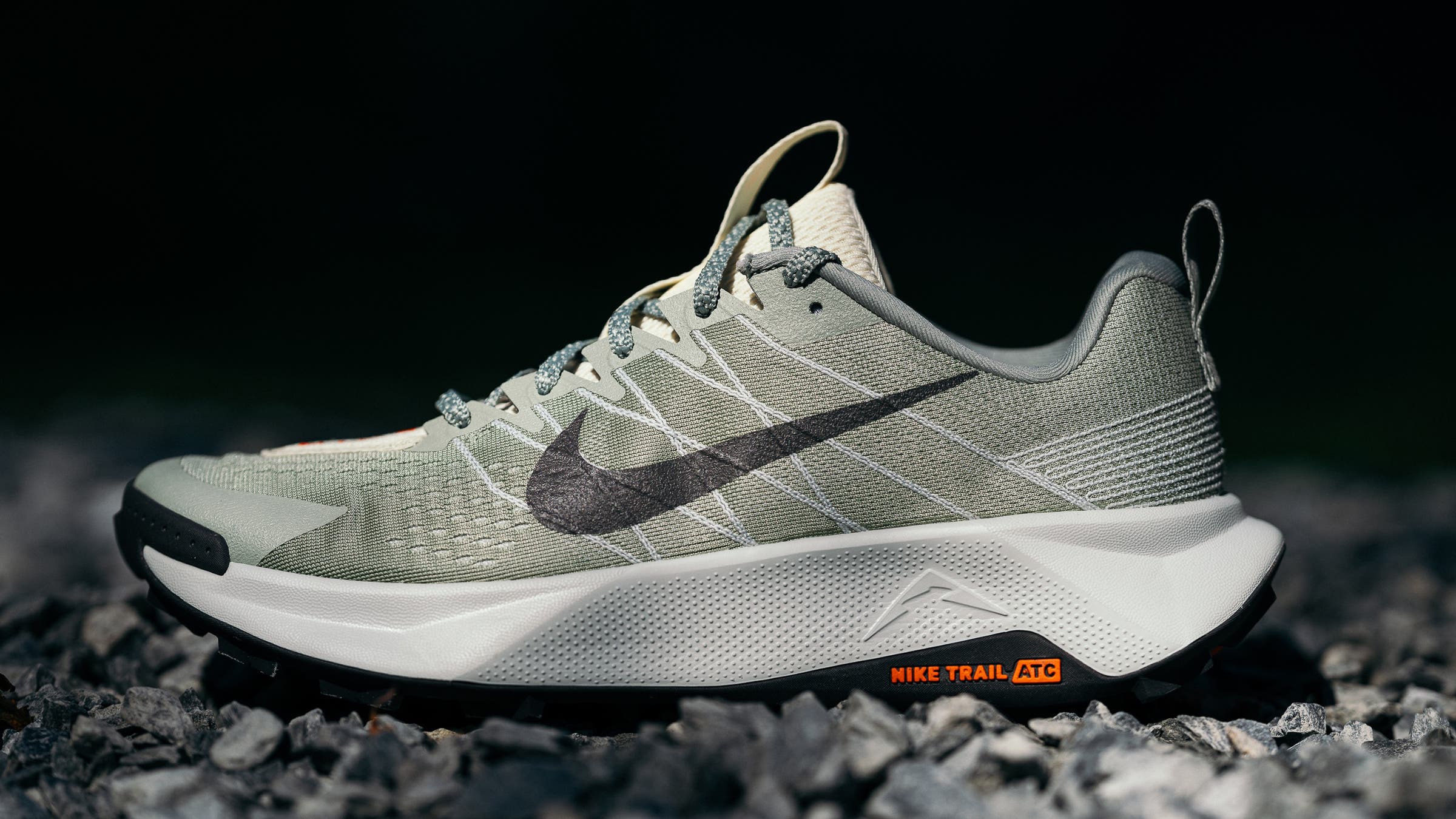
Nike Wildhorse 10
Weight: 11 oz (men’s); 8.6 oz (women’s)
Stack height: 38–28.5 mm (men’s); 40.3–30.8 mm (women’s)
Drop: 9.5 mm
Sizes: 6-13, 14, 15 (men’s); 5-12 (women’s)
Pros and Cons
+ ReactX foam is lightweight and lively
+ Secure foothold
– A tad heavy
The Nike Wildhorse 10 stays on our list for its ability to cushion, protect, and provide a super-secure foothold that inspires confidence on even the wildest terrain.
“Love this shoe!” exclaimed a tester based in Louisville, Colorado. “It has fantastic cushioning, great tread, and it’s just all-around comfortable.” She also noted that the cushioning placement of the Wildhorse 10 is unusually prominent on the perimeter. ”I noticed it more on the outer parts of my midfoot, which was new, but I really liked it.”
We’ve loved this trail running shoe for everything from speedy, hilly dawn-patrols to all-day mountain epics. Its secure, comfortable engineered mesh upper moved with our feet more like a skin than a shell, which made us feel nimble over hill and dale (and river and rocky peak). And a protective midsole worked in conjunction with the Wildhorse’s full-ground-contact traction to make it a reliable go-anywhere partner. Traction comes from Nike Trail All Terrain Compound (ATC)—a rubber outsole that works well on steep ups and downs.
The Nike Wildhorse 10 is not the lightest trail shoe, but for all its cushioning, protection, and agility in rugged terrain, it’s a solid choice. (It may, however, be overkill for flat, smooth trails.)
Best Trail Racing Shoes
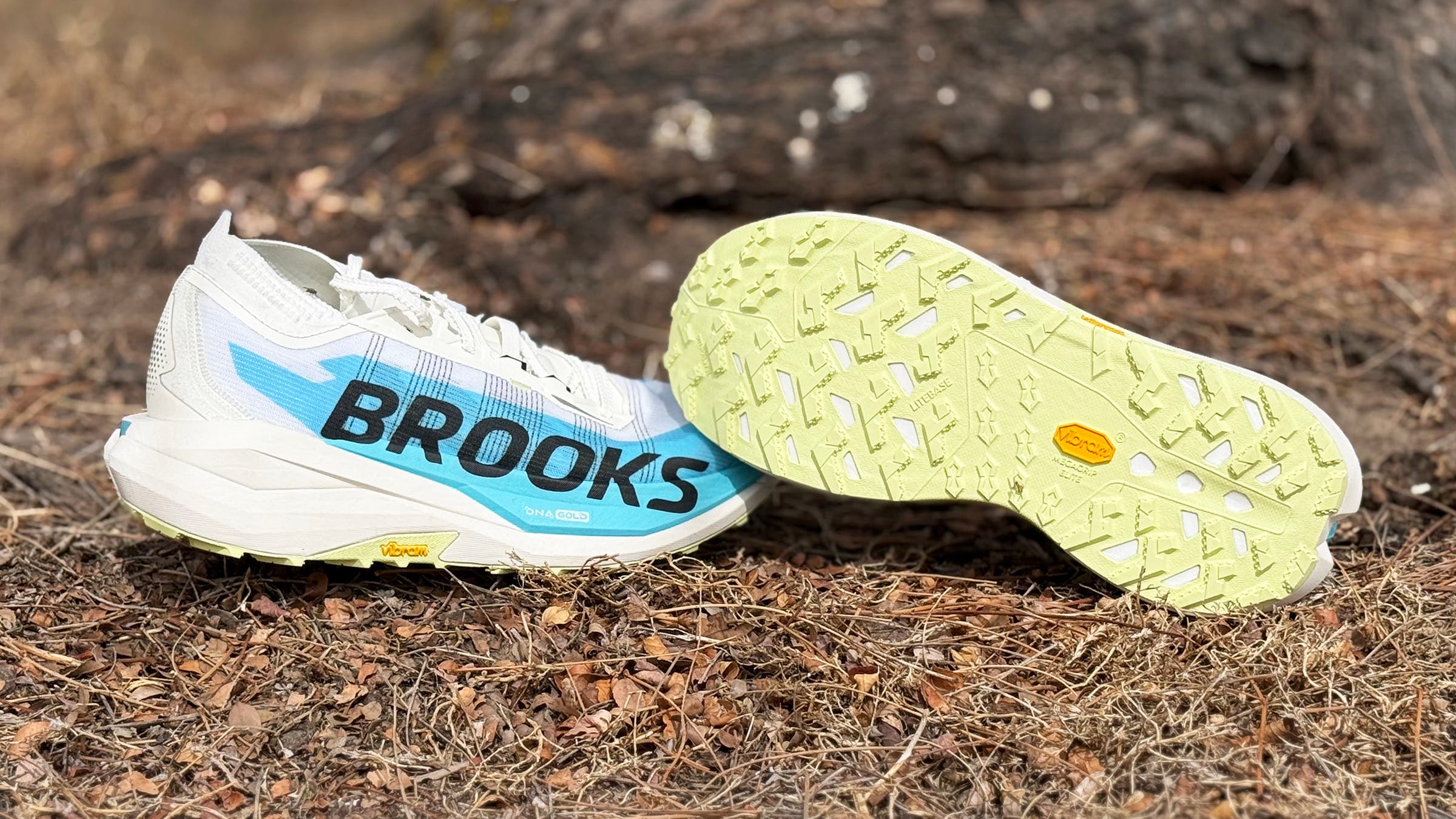
Brooks Cascadia Elite
Weight: 9.5 oz (unisex)
Stack Height: 40–34 mm
Drop: 6 mm
Sizing: 5-12,13 (men’s), 6.5-13.5, 14.5 (women’s)
Pros and Cons
+ Extremely lightweight for a 40mm stack
+ Great stability
– Premium pricetag
Brooks has a reputation for building a great shoe and sticking to that formula, giving loyal fans a consistent ride, model after model. The tradeoff? It can make the brand seem boring. The all-new Brooks Cascadia Elite shatters that mold. It’s one of the most exciting shoes Brooks has launched in years, and arguably one of the most exciting trail releases of the year.
Despite sharing a name, the Cascadia Elite is nothing like the everyday, cushioned Cascadia trail runner: It’s a trail racing super shoe that is lighter, faster, and more nimble. The standout feature is the 100% PEBA midsole paired with a carbon-infused PEBAX plate that strikes a perfect balance between a springy and stable ride. On smooth, flowy single track in Santa Barbara, CA, running in the Cascadia Elite felt almost effortless, and a ton of fun.
40 millimeters under the heel is a lot of foam to deal with, but the ride never felt squishy or bounced me around in off-camber footing. A wide platform, paired with a flexible, embedded horseshoe-shaped plate, keeps the Cascadia Elite from being tippy. That width does come at a cost, though; picking tight lines through technical terrain requires precise footplants to keep from getting wedged between rocks.
The upper is a Matryx-engineered woven fabric, reinforced with Kevlar fibers and topped with a soft bootie that extends high on the ankle. The built-in gaiter feels neither excessive nor intrusive and adds a nice layer of protection from trail debris. The Vibram Litebase Megagrip Elite outsole with 3.75-millimeter lugs performed well across all surfaces, providing secure traction on all but the softest terrain.
We’ve been testing running shoes for more than a decade, and the Cascadia Elite stands out as one of Brooks’ best-performing shoes ever, road or trail.
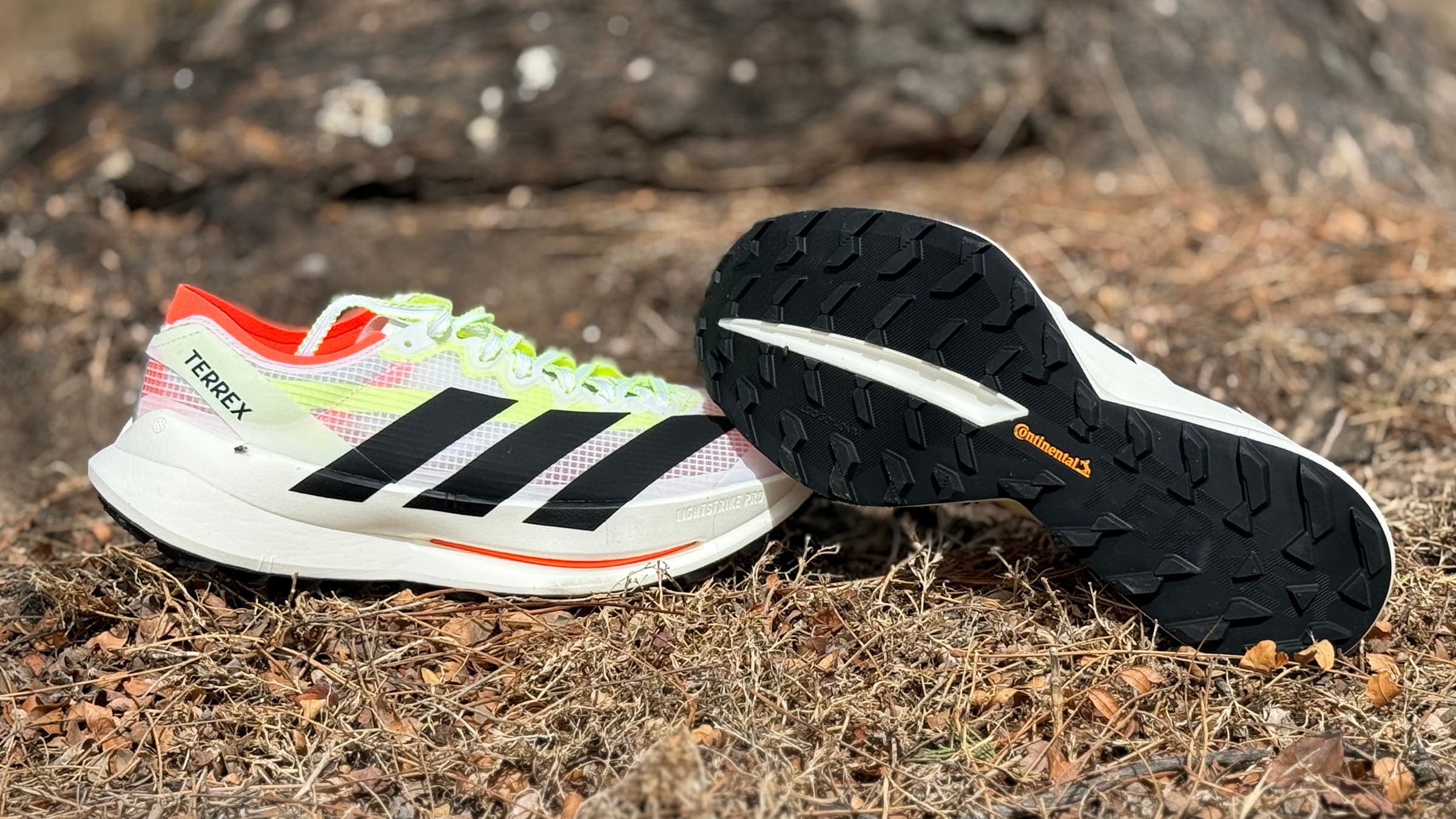
Adidas Terrex Agravic Speed Ultra 2
Weight: 9.5 oz (men’s); 7.9 oz (women’s)
Stack Height: 44–36 mm
Drop: 8 mm
Sizing: 4-13, 14(men’s), 5-11 (women’s)
Pros and Cons
+ Road super shoe feel with trail toughness
+ New, better-designed upper doesn’t rub
– Steep rocker can create an unstable feeling
Ever since its debut in the spring of 2024, the Adidas Terrex Agravic Speed Ultra has topped our list of best race-day trail shoes. While other shoes are catching up, it’s still the trail shoe that has come closest to replicating the high-energy, performance-enhancing ride of the best carbon-plated, road super shoes.
The shoe’s hallmark feature, for better or worse, is a steep rockered profile, which testers either absolutely loved or struggled to find their balance on. The biggest update is a new, slightly softer version of Adidas’s bouncy Lightstrike Pro midsole foam. Running on the trails, however, it didn’t feel much different than the original and there’s still the same Energy Rods—an articulated version of the curved carbon plate—stiffening the midsole, so the ride is much the same, thankfully.
On smooth terrain, the Speed Ultra 2 absolutely rips. On each touchdown, you can feel the shoe gathering energy from the sole’s compression, quickly transferring it through the steep rocker to the forefoot rebound that slings you forward off the toe.
This update addressed one of the biggest complaints we had with the first version: the thin, stiff upper felt like a razor blade against the Achilles for some testers. More padding lines the inside of the heel and extends above where the abrasive collar rubbed. Meanwhile, a TPU band wraps the outside of the heel for better lockdown—a feature Adidas borrowed from their rock climbing shoes, Five Ten. The sticky Continental rubber outsole still provides excellent grip on slippery surfaces, and now has larger lugs to dig into soft terrain better: three-millimeter lugs under the forefoot balance traction and a smooth roll, while four-millimeter lugs under the heel provide better braking.
In sum, Adidas did a great job of preserving what made the first Speed Ultra so special while incrementally addressing some of its flaws, making it an even better shoe. This is still, however, a very sharp and precise tool designed for the few runners who have a more aggressive, forward-balanced stride.
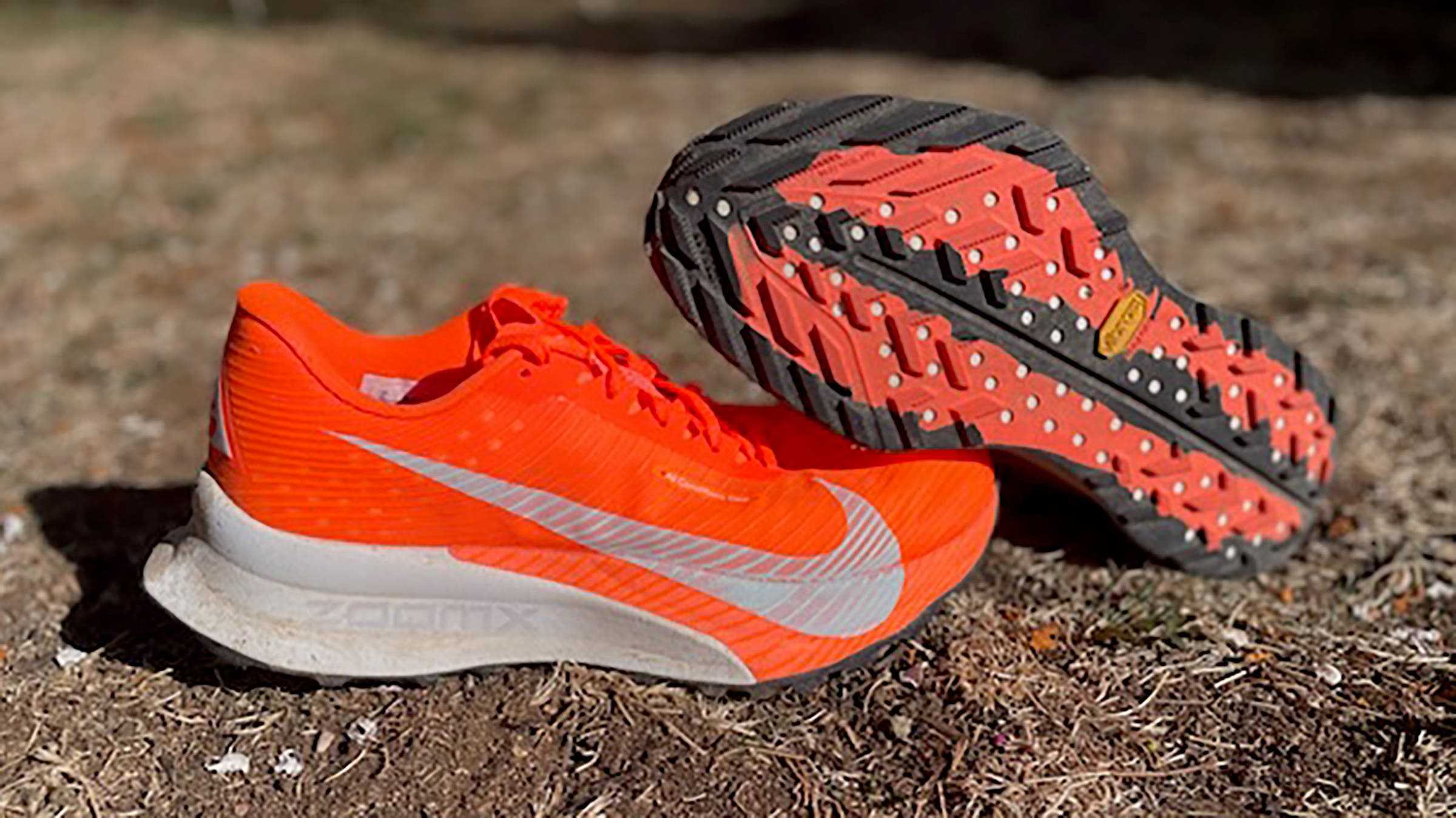
Nike ACG Ultrafly Trail
Weight: 10.1 oz (unisex, M10/W8.5)
Stack Height: 37–28.5 mm
Drop: 8.5 mm
Sizing: M3.5-15, W5-16.5
Pros and Cons
+ Springy midsole
+ More flexible and adaptable ride
– Tippy on technical terrain
We loved the original Ultrafly for its midsole combination of super-responsive ZoomX foam and a carbon-fiber plate that somehow still allowed for a tactile feel of the trail. We also dug its thin, film-like upper that felt fast, breathed well, and looked cool.
The newly rebranded and revamped ACG Trail Ultrafly is more comfortable than its predecessor and takes responsiveness to a new level. Change comes from an updated ZoomX midsole compound that feels downright springy, particularly under the forefoot. The full-length carbon fiber plate is slightly less rigid than before, making the whole shoe more flexible and the ride more adaptable and more comfortable over the long haul. The flared midsole at the back of the shoe helped heel strikers feel smooth in transition from landing to mid-foot stance.
The shoe fits and feels more like a road shoe than its predecessor, with its more padded, stretchier upper. It does, however, retain its Vibram Megagrip outsole that does a fantastic job grabbing hold of rocky surfaces, wet or dry. But the 3.5-millimeter lugs lack toothiness and felt a little inadequate on loose footing.
The combo of plate and foam provides an inherently stable platform on smooth, level terrain, but we found the new Ultrafly, like its predecessor, to feel a little tippy on more rugged trails. Still, when reserved for smooth to moderate terrain, this is a speedy shoe with a great combination of cushion, propulsion, traction, and flexibility.
Best Natural-Ride Shoes
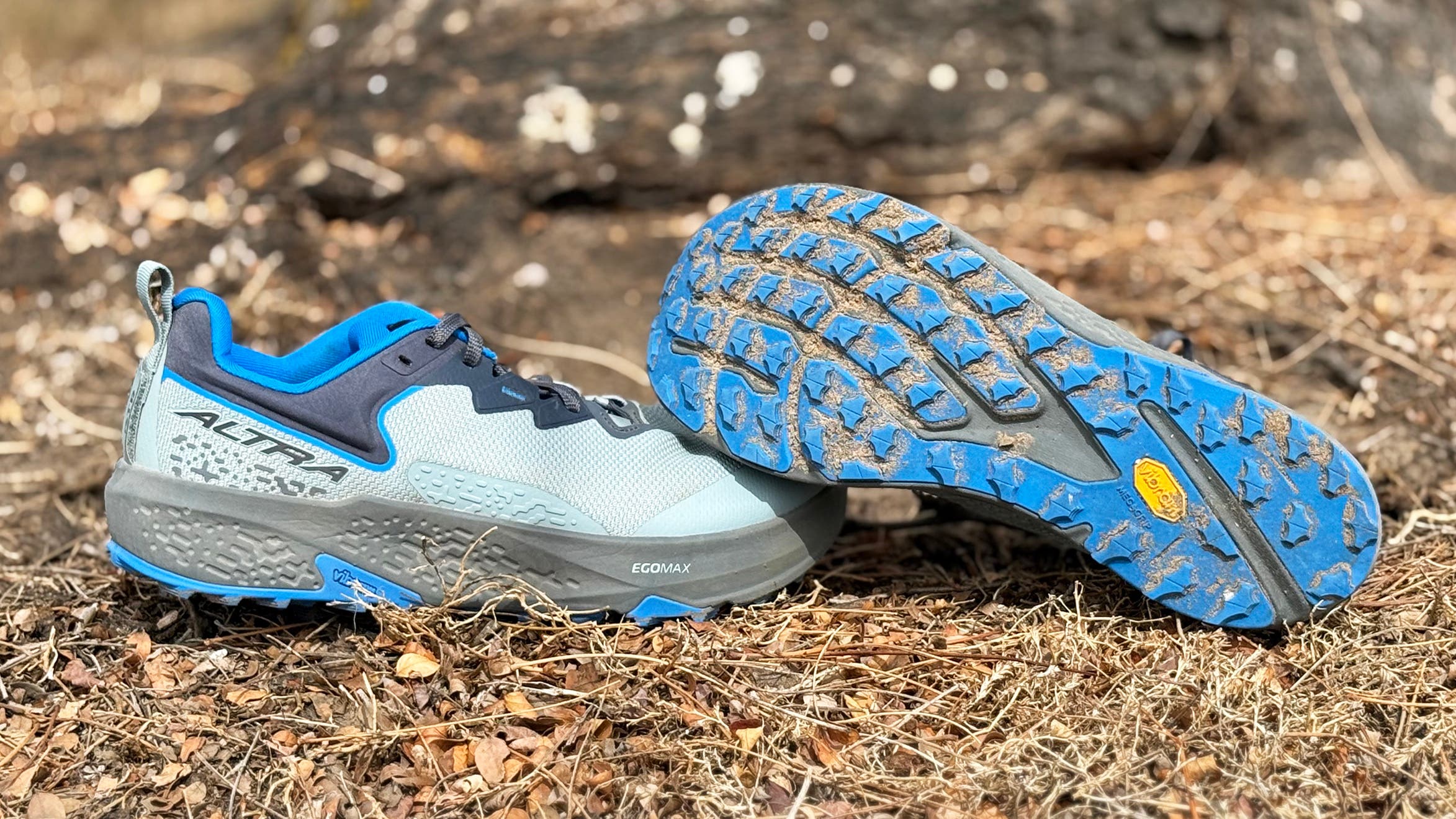
Altra Timp 6
Weight: 11.5 oz (men’s); 9.5 oz (women’s)
Stack Height: 30-30 mm
Drop: zero
Lug Depth: 3.5 mm
Sizing: 7-13, 14, 15 (men’s), 5.5-12 (women’s)
Pros and Cons
+ Softer, more comfortable upper
+ Good balance of cushioning and ground feel
– Heavy
Beloved by Altra loyalists and winning over some zero-drop haters, the Altra Timp always seems to make its way onto our best trail shoes list. In the middle ground between the more cushioned and protective Olympius and the speedy, nimble Lone Peak, the Timp 6 strikes a nice, versatile balance between comfort and performance. “Durable and dependable for long days and long distances in the woods,” one tester described the Timp 6. “It’s one of those trail shoes you can lace up and forget about.”
The biggest updates are in the upper; a softer mesh wraps the foot comfortably, and tougher overlays provide added protection and security. A Midwest tester, who’s been testing Altras for Outside for more than 15 years, called the new upper “substantial and protective without being bulky and full of unnecessary stitched-on panels.” He particularly praised the improved padding in the tongue. “It feels great and stays put,” he said.
Underfoot, the latest Timp stays consistent, with an Altra EGO MAX midsole foam that balances cushioning, responsiveness, and tactile support with a lightly energetic feel. At 30 millimeters from heel to toe, it could be considered low-profile by today’s standards, yet it doesn’t feel at all minimal, with ample protection, especially under the thick forefoot. One Boulder, Colorado, tester found it plenty thick enough to ride comfortably over varied terrain while keeping ground sensitivity.
One update that testers noticed as soon as they ventured onto shifty footing was the improved grip of the Vibram Megagrip outsole. A Wisconsin ultra runner tester, who, in the dead of winter, runs almost exclusively on frozen ground, ice, and snow (both packed and loose), was pleasantly surprised to find they “held their own even without the extra help from YakTrax or Kahtoola spikes.”
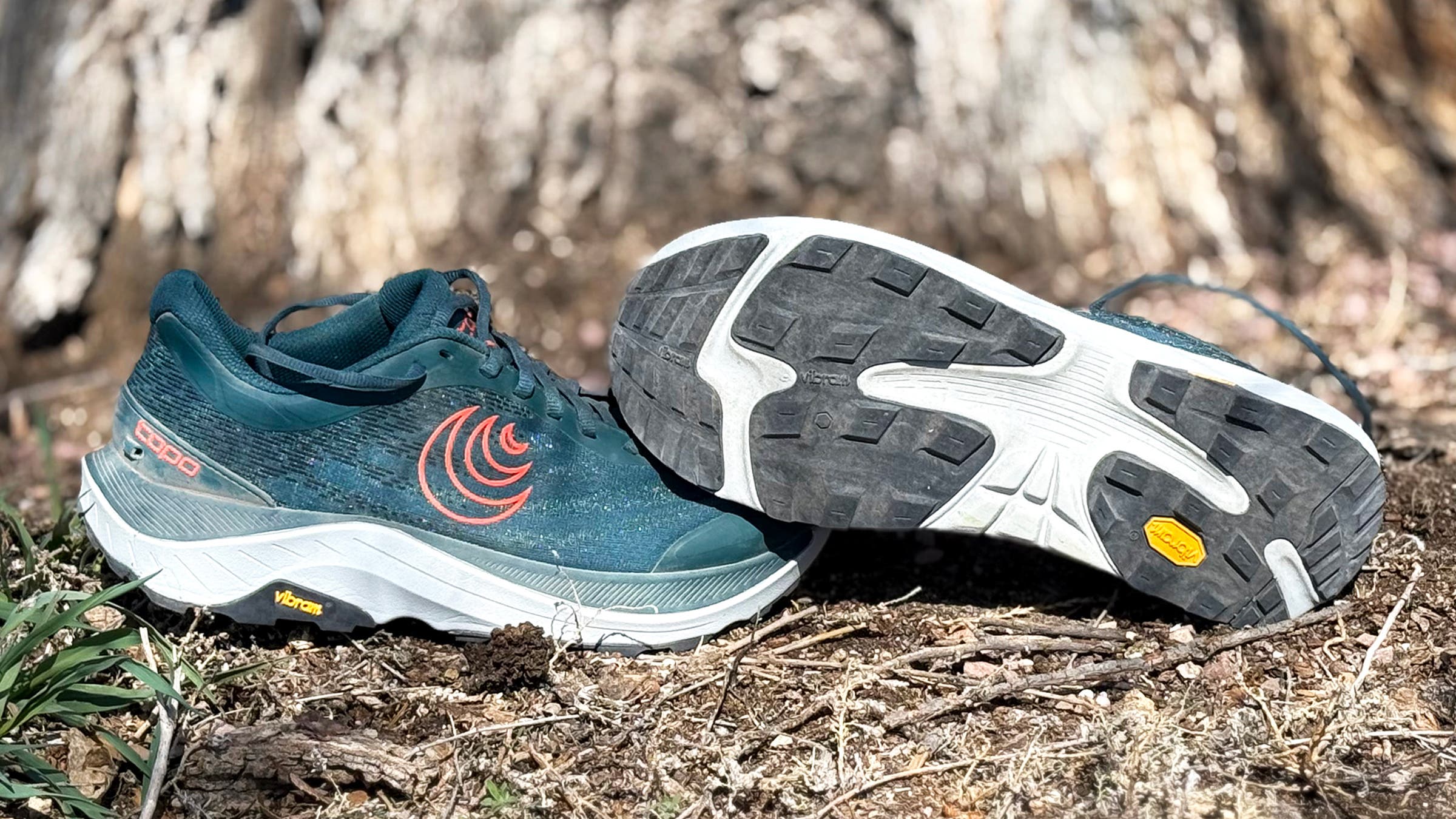
Topo Athletic Ultraventure 4
Weight: 10.4 oz (men’s), 8.2 oz (women’s)
Stack height: 35–30 mm
Drop: 5 mm
Sizes: 7-13, 14, 15 (men’s); 6.5-12 (women’s)
Pros and Cons
+ Instantly comfortable on a variety of feet
+ Highly cushioned while still allowing ground feel
– Doesn’t grab loose dirt well
The Topo Athletic Ultraventure 4 fits like a classic Topo shoe—a secure heel hold gives way to a wide toe box allowing the foot to splay out naturally. Even narrow-footed testers noted the secure and comfortable hold of this trail running shoe, and enjoyed the feeling of support under the arch, which seems to further promote a relaxed forefoot.
The moderately high stack delivers an ample amount of lively cushioning, which testers particularly noticed and appreciated under the ball of the foot. But unlike its high-cush contemporaries, the slightly firm, responsive, flexible midsole allows great feel for the ground. We enjoyed the surefooted feeling of being connected to the trails instead of floating on top of them.
The upper—a recycled mesh with a polyurethane wrap around the front of the shoe for protection from toe stubs—is slightly stretchy and conforms around the foot. “This felt like a slipper with traction,” said one tester.
Underfoot, wide, flat, 3.5-millimeter-deep lugs made of Vibram rubber stuck to steep rock slabs on dry trail runs in Boulder, Colorado, and ran smoothly on packed dirt. We craved a little more toothiness on loose trails, but appreciated the versatility and overall natural feel of this shoe. “The Ultraventure 4 felt better the longer I went and more tired I got, encouraging and supporting a soft midfoot landing and gentle roll that ate up the miles,” said one tester.
How to Choose a Trail Running Shoe
If you’re in the market for a trail running shoe, first consider the type of trails you run on regularly: do you tackle rugged, mountainous terrain, or stick to mellow dirt paths? Some trail shoes can handle both adequately, while others are specialized and excel in one or the other. Shoes with smaller lugs are generally better on smoother, firmer terrain, whereas shoes with deeper, more aggressive outsoles are optimized for steep, muddy, or rocky trails. If you like to feel the trail and dance around rocks and roots, you’ll likely prefer a light, more minimal shoe, but if you’d rather let the shoe roll over trail variations, cushioning and protecting while you zone out, you should look for a shoe with a thicker midsole.
Once you’ve narrowed the search to a certain type of trail shoe, you need to find a pair that complements your unique body and stride. Every runner’s body, gait, speed, experience, and ride preferences are different, so every runner will interact differently with each trail shoe. The shoe that your best friend or your sister-in-law loves may be uncomfortable for you and make running feel slow, sluggish, or even painful. Finding the perfect pair of trail running shoes is a seriously personal affair.
The process for choosing the best running shoes is a matter of finding the models that both fit your foot and also feel best when you’re running. To determine fit and feel, there’s no substitute for trying the shoes on and running in them.
Fit: Match Your Foot Shape
When assessing fit, first pay attention to length. You need room at the end of your toes as your feet lengthen during their dynamic movements on the run. A rule of thumb is to allow a thumb’s width between your longest toe and the end of the shoe. Runners often wear a running shoe a half or full size bigger than their street shoes.
Ensure that the shape of the sole and the upper matches your foot shape. The sole should be as wide or wider than your foot for the whole length, and match the curve of your arch comfortably. The shoe should hold your foot securely over the instep, while allowing the ball of the foot and the toes to splay and flex when you roll forward onto them. Your heel shouldn’t slip when you lift it, and the arch should be able to dome and lengthen naturally. Nothing should bind or rub as you roll through the stride.
Feel: Match Your Movement Path
If the shoe fits, it’s time to take them on a short run on a treadmill, around the store, or, ideally, down the block and back. Every trail running shoe has a unique ride created by the type and density of foam in the midsole and the geometry of that foam: its thickness, width, heel-to-toe drop, molded sidewalls or flares, and forefoot flexibility or rocker shape (plus, in an increasing number of models, the presence of and type of embedded plate). Each of these elements interact with each other and your stride to determine how the shoe reacts on landing, how much it cushions, how stably it supports, how smoothly it transitions from landing to toe off, and how quickly and powerfully it rebounds.
The best way to choose trail running shoes that complement your body and stride is to find the ones that feel right on the run. Benno Nigg, the world-leading biomechanics professor who proposed this method of shoe selection, calls it the “comfort filter,” but makes clear it is far more than how plush the shoe feels when you step into it. What you want to assess is whether the shoe allows and supports the way your feet want to move, what Nigg calls your “preferred movement path.” In the right shoe, while running at your normal pace, you will touch down where you expect to land, roll smoothly and stably through the stride without noticing the shoe, feel both cushioned from and connected to the ground, and push off naturally, quickly, and powerfully. When this comes together you’ll know that you’ve found your pair.
It’s likely that several shoes will feel good on your feet. To find the most comfortable, it helps to compare them back to back, like an eye doctor will do with corrective lenses: flipping between “A” or “B,” “1” or “2.” You may also find that different shoes feel better at different paces or level of fatigue, and you may want more than one pair. In fact, research shows that wearing a variety of different shoes is one of the few proven ways to reduce injury risk as it appears to vary the stresses on your feet and joints.
What About Injury Prevention?
Running shoes have long been marketed and sold as prescriptive devices to help runners stay healthy, but there is little scientific evidence correlating shoes, or any specific shoe properties—like cushioning or pronation control—with running injuries. Medical professionals say that it is highly difficult to determine whether a runner needs a certain type of shoe, and studies have shown that prescribing shoes using traditional methods like treadmill gait analyses or wet-foot arch height tests don’t consistently reduce injuries.
Don’t assume that you need more cushioning or more stability if you have sore joints, or if you’re a heavier runner, or if you’re a beginner—evidence doesn’t support many common beliefs. The best way prevent injury is find two or three different pairs that feel right on the run, ease into using them, and vary your shoes, your running surface and your pace regularly (plus avoid rapid increases in your training load and work on improving your mechanics).
How We Test Trail Running Shoes
- Number of testers: 23
- Number of shoes tested: 65
- Number of miles: 22,000+ over a year
- Most Memorable Trail Run: A toss up between a moose encounter in Rocky Mountain National Park, and climbing 13,229-foot Mt. Audubon in a late-summer blizzard.
To test trail running shoes, we begin by researching every brand’s new offerings for the coming season. We wind up with dozens of samples of the models (65 throughout the year, 42 trail running shoes this season) that are most promising, and distribute them to 26 testers who range in age, ability, running form, geographical location, terrain, and preferred shoe types. We try to put each tester in shoes from within the same category (all rugged, backcountry trail shoes, or all road-to-trail crossovers) so everyone can test apples-to-apples.
After three to six months of running in each model on varied terrain and in all conditions, our crew members report back with their assessments of fit, comfort, traction, cushioning, flexibility, stiffness, pop, what type of running the model is best used for, how the shoe compares to other models, and more. We also run in every trail running shoe ourselves, and, combining all the tester feedback with years of personal experience, hone in on the best. We then weigh this season’s bests against the heroes from previous seasons that are still available and choose winners and honorable mentions for each category.
Meet Our Lead Testers
Lisa Jhung
Freelance journalist, editor, and author Lisa Jhung has researched, tested, and written about running shoes for the past decade and a half, much of that time for Outside. She coordinates a fleet of female shoe testers out of Boulder, Colorado, and says her home office is a perpetual obstacle course of cardboard boxes and piles of running shoes. Lisa’s written about gear of all kinds for numerous national magazines as both an editor and freelancer, including a stint as the shoes and gear blogger and trail running microsite editor for Runner’s World.
A high school jumper and occasional sprinter/hurdler, she started running—really running—after walking off the collegiate volleyball team, and moved on to road and trail races of any distance, triathlons, adventure races, and mountain running. She’s happiest testing rugged trail shoes on gnarly terrain, and also loves a good neighborhood jaunt…but is almost always looking for ribbons of dirt. Lisa is the author of Running That Doesn’t Suck: How to Love Running (Even if You Think You Hate It) and Trailhead: The Dirt on All Things Trail Running.
Cory Smith
Cory’s passion for running started over 30 years ago in high school when he became the number six ranked runner in the nation at 3000 meters his senior year. After high school, he competed at Villanova University, earning two NCAA Division I Championship showings. Today, he’s determined not to let age slow him down and competes on the national master’s circuit, running a 4:12 (4:30 mile pace) 1500 meters and 9:04 (4:52 mile pace) 3000 meters in 2021 at age 43. He prefers a hard track workout or tempo run over an easy long run any day but also appreciates a challenging trail or mountain run.
His obsession with running shoes started in 2014 when he wrote his first shoe review for Gear Institute. Since then, he’s tested and reviewed hundreds of running shoes, clothing, and gear for Outside, Runner’s World, Footwear News, and other outlets. He has a soft spot for speedy shoes over heavy trainers but loves dissecting all shoes equally and thinking like a product engineer to explain the why behind every design detail. Cory is the Founder of Run Your Personal Best, an online running coaching business, and since its inception in 2014, has coached runners’ to over 100 Boston Marathon Qualifying times.
One of Cory Smith’s go-to routes for testing trail running shoes:
Jonathan Beverly
Jonathan fell in love with running his freshman year of high school and quickly became fascinated with finding the perfect pair of running shoes. That quest got a boost when he became editor of Running Times in 2000 and started receiving every new model as they were released. The parade of shoes continued while he served as shoe editor for Runner’s World, then editor of PodiumRunner, and currently fitness gear editor at Outside. Having now worn nearly every running shoe created in this century—and a fair amount of those dating back to the early models of the ’70s—he’s given up on finding the one best and now relishes the wide variety of excellent options.
Once a 2:46 marathoner regularly doing 50+ mile weeks, recent injuries and his age have reduced his volume and slowed his pace—but he still enjoys an uptempo workout or two each week. Beverly is the author of the book Your Best Stride which explores how each individual’s gait—and thus shoe preference—is unique. He enjoys getting scientists’ take on new shoe trends and trying to describe the nuances of each shoe’s ride.
One of Jonathan Beverly’s go-to routes for testing trail running shoes:
