

Key Takeaways
- Linda Clemons parlayed her innate communication talents into a successful business career.
- Her Clemons Method focuses on what goes unsaid — and the necessary context to understand it.
- She reveals why you should forget the ‘fake it till you make it’ approach and prioritize other tools.
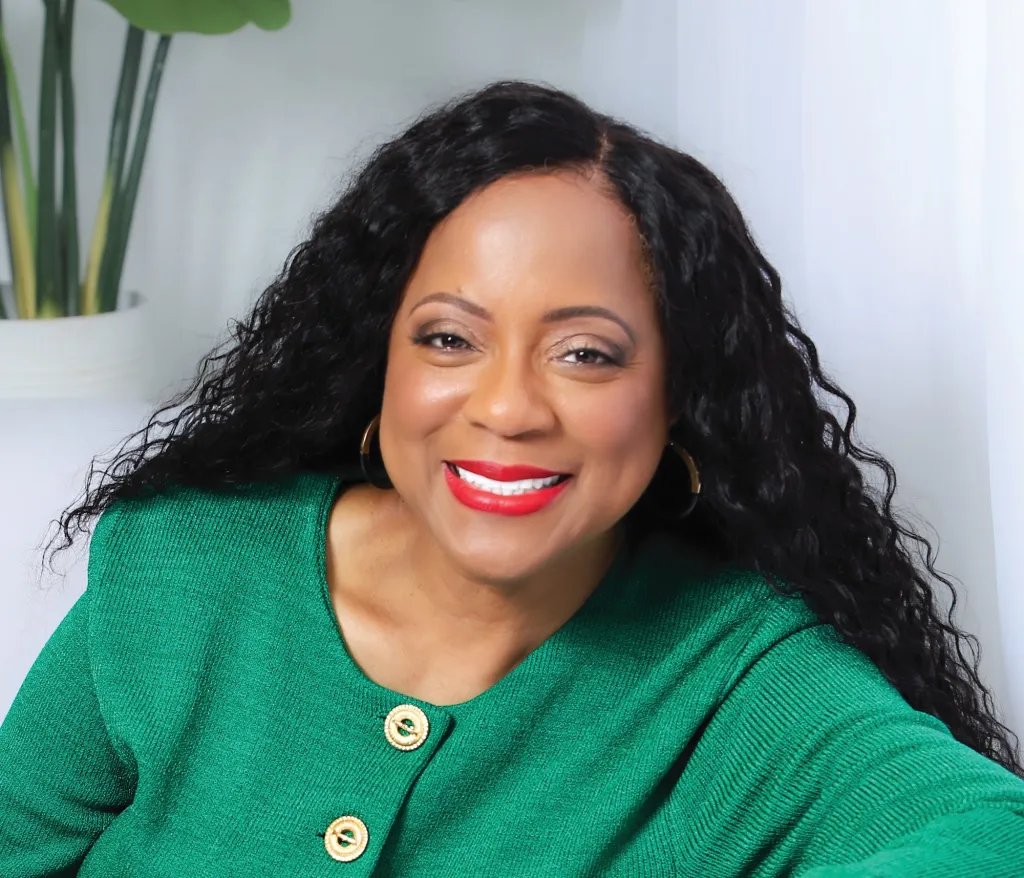
From a young age, nonverbal communication expert Linda Clemons had a high level of emotional intelligence.
As a firstborn daughter (research suggests they often act as mediators in family dynamics), Clemons was eager to please and grew to understand body language intuitively. She could tell if someone’s words didn’t align with their facial expressions or posture.
Eventually, Clemons would use her innate communication talents to launch a career in sales. She became a top sales producer with every company she joined, and went on to found Sisterpreneur Inc., which educates and empowers women entrepreneurs. Today, her clients have generated more than $2 billion in sales. She also wrote the book Hush: How to Radiate Power and Confidence Without Saying a Word.
The Indianapolis, Indiana-based entrepreneur attributes her sales success to her ability to be sensitive to people’s needs and understand what’s important to them.
The Clemons Method: the power of nonverbal communication
Clemons, who is trained and certified in Analytic Interviewing and Statement Analysis™ (a process used to detect deception), has coined a term for her approach to the nonverbal communication field: “The Clemons Method.”
“ The Clemons Method allows you to see the invisible, what others may not see, and hear the inaudible,” she explains. The Clemons Method also emphasizes the value in context and not drawing conclusions on one body language signal alone.
What people say — and even how they say it — isn’t the be-all and end-all when it comes to delivering their intended message.
“Your nonverbal will get in the way and perhaps overrule it because it’s our first language,” Clemons says.
But it’s not enough to read someone’s body language in a silo. All nonverbal communication must be interpreted with enough context. Otherwise, even the most determined body language detectives risk misreading the subject of their investigation.
Reading body language accurately requires context
Clemons tells an anecdote about a presentation where she was sharing the stage with other experts on a panel, and this lack of context and subsequent misinterpretation played out in real time.
“Another expert showed a video of an African American woman [pulling at her cornrows] and was trying to indicate the individual had a psychiatric problem,” Clemons recalls. “I have a room full of women looking at me, half of them are African American, thinking, Is somebody going to say something?”
Clemons did interject — and provided the missing context. She asked how many Black women in the room understood what was going on, and they all raised their hands. She asked someone to yell out what it meant: The woman’s braids were tight and itchy, and she was tapping on them to loosen them.
Another example presents in the simple gesture of someone crossing their arms, Clemons says. Many people think they can read that body language; they believe the person is closing themselves off. But that’s not always the case. Perhaps the missing and much-needed context is that the gesture is the person’s baseline when they’re considering something deeply.
Don’t draw conclusions based on one nonverbal cue alone
Although it’s important not to draw conclusions about nonverbal communication based on one movement alone, it’s also key to pay attention to subtle, compounding cues, Clemons notes.
Consider how an entrepreneur’s ability to detect nonverbal cues might make or break a pitch meeting.
At first, the prospective client is leaning in — a sure sign they’re interested in the conversation. Then the entrepreneur says something that gives the client pause; they lean out, literally “taken aback.” The single gesture doesn’t necessarily mean they’re out. But if the pitch continues without addressing concerns, those body language cues can compound until the client is out the door.
“Second movement, they lock up and fold their arms,” Clemons says. “Third movement, they turn towards the door — our feet point in the direction we want to go. They’re done. They’re ready to exit. And quite often we miss those cues.”
The “TAP” strategy strengthens nonverbal communication
When it comes to projecting confident body language, people should forget a common adage that does more harm than good: “Fake it till you make it.”
Clemons offers the “TAP” acronym — “Truthful,” “authentic” and “proof shows” — as a helpful tool to strengthen your nonverbal communication, ensuring your intentions and gestures align.
“Whatever you think in your mind, your nonverbals will display,” Clemons explains. “And it will reveal truly what’s in your heart. If you are committed to your beliefs and convictions, then it shows up. It’s like a symphony.”
For instance, consider how often a fake smile falls flat. A genuine smile uses many different facial muscles, which is why a manufactured or “pageant” smile reads as inauthentic, Clemons adds.
In other words: “The moment that you think it, you ink it,” according to Clemons. And that “ink” shows up all over your face, in micro and macro expressions, and in your body’s movements.
The “Triangle Technique” and other body language tactics
Clemons provides additional strategies, including the “Triangle Technique” and EASE method, to help people harness the power of body language.
Clemons’s “Triangle Technique,” in which someone networking opens the dialogue to a third person and welcomes them into the exchange, reveals “the power of the pyramid.”
The EASE method requires thinking about “how you flow” and own the space as you go about a room. “Enter” with presence, “adapt” to the energy of the room, “situate” yourself strategically and “engage” in conversation.
Clemons delves deeper into these nonverbal tactics and others in Hush.
“ You don’t have to be an expert in nonverbal communication,” Clemons says. “But you have all the tools to make you an expert in building the best relationship.”
Key Takeaways
- Linda Clemons parlayed her innate communication talents into a successful business career.
- Her Clemons Method focuses on what goes unsaid — and the necessary context to understand it.
- She reveals why you should forget the ‘fake it till you make it’ approach and prioritize other tools.
From a young age, nonverbal communication expert Linda Clemons had a high level of emotional intelligence.
As a firstborn daughter (research suggests they often act as mediators in family dynamics), Clemons was eager to please and grew to understand body language intuitively. She could tell if someone’s words didn’t align with their facial expressions or posture.
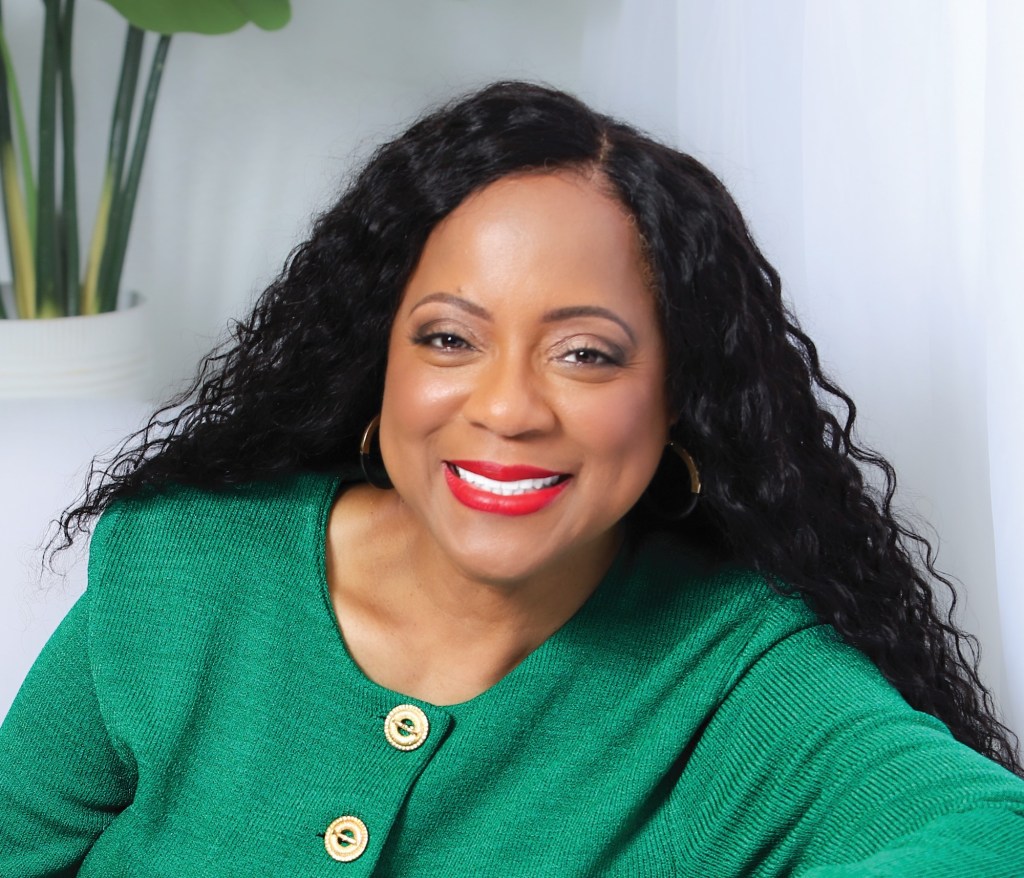
Eventually, Clemons would use her innate communication talents to launch a career in sales. She became a top sales producer with every company she joined, and went on to found Sisterpreneur Inc., which educates and empowers women entrepreneurs. Today, her clients have generated more than $2 billion in sales. She also wrote the book Hush: How to Radiate Power and Confidence Without Saying a Word.
