

Published April 17, 2026 03:28AM
Philip Henderson has told his Mount Everest story hundreds of times, but he’s not done repeating it—not by a long shot.
“This is a lifetime of work I’m talking about,” Henderson, 63, recently told me. “I’ll never turn anyone down who wants to hear about it.”
Four years ago, Henderson was the leader of Full Circle Everest, the first all-Black team to attempt the peak. Black climbers, historically, have been a stark minority on the mountain, even as mountaineers from India, China, and Central and South America have flocked to Everest.
The project generated a glut of global media attention in the lead-up to its 2022 expedition. Full Circle climbers often repeated a dismal metric in their interviews before the trip: of the 8,000 or so people to ever climb Mount Everest, only eight were Black.
Henderson, who had worked as a guide on Everest in previous years, manned the radio in Base Camp while the ten others pushed for the summit. Seven climbers—Manoah Ainuu, Eddie Taylor, Demond Mullins, Thomas Moore, James Kagami, Rosemary Saal, and Evan Green—reached the top.
“The idea wasn’t just to try and get 11 Black people to go climb Mount Everest,” Henderson told Outside. “Everyone on the team was already an experienced climber. Doing Everest was the obvious next step for a lot of us.”
But after the newspapers and TV stations stopped calling, Henderson believed he still had a job to do. Since 2022, he’s traveled the country telling the story of Full Circle Everest to outdoor groups, clubs, and most importantly, to schoolchildren.
When I spoke to Henderson, he had just given a speech to college kids at Bowdoin College in Maine. Later in April he will travel to Louisville, Kentucky to give his presentation to a group of fifth graders. I asked him what he tells the kids, and he said that he brings plenty of mountaineering props to keep them interested.
“I show them a summit suit for Everest and I let them put it on. I bring a tent and the kids always want to get inside it,” Henderson said. “I show them pictures of glaciers and they are glued to it. It opens their eyes up to something they’ve probably never seen before.”
Henderson tries to visit schools in communities that are predominantly Black. But he’ll never turn down an invitation. The message that Henderson preaches to the kids, climbing clubs, and outdoor groups is you belong here, too.
“My whole goal is to get people exposed to what is possible if they try,” Henderson said. “Especially marginalized Black and Brown folks who don’t have any idea of what is going on in the outdoor world.”
There’s power in hearing the story of how seven Black climbers reached the summit of Everest, Henderson said. And there’s also value in meeting a Black person who guides in the Himalayas, has climbed in Yosemite, and knows how to navigate high-alpine terrain safely.
Henderson reinforced to me the notion that the best way to invite new people into the outdoors is to show them familiar faces, and to tell them relatable stories. If kids can see a Black mentor who can climb Everest, they may believe they can, too.
“From a young age, I want kids to see that they can be a leader or a guide or a trend setter in the outdoor industry,” Henderson said. “But if they don’t see anyone in a leadership position that looks like them, then it won’t resonate with them as something they can realistically do in the future.”
Creating New Gear Out of What We Throw Away
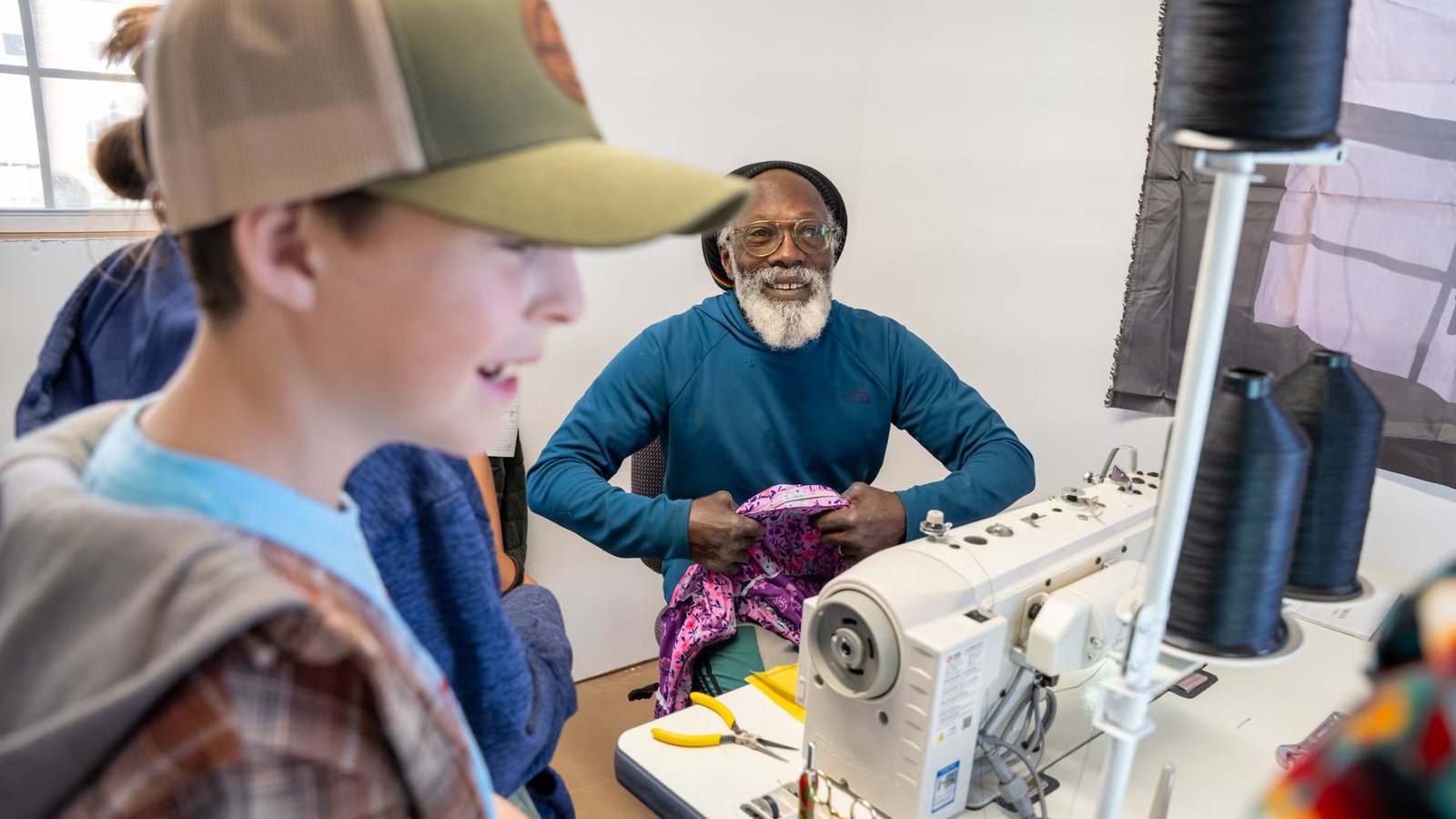
While the speaking engagements aren’t new, Henderson is also spearheading a fresh project he’s calling Full Circle Rural Gear Repair. Henderson repairs old or broken outdoor gear at his home workshop in Cortez, Colorado, and then donates it to nonprofits that give it to those in need.
“Most people don’t know how to sew, so when something breaks, you throw it away,” Henderson said. “I realized I could do small repairs and save products. If I can change someone’s mindset in how they look at these products, maybe we can keep them out of the trash.”
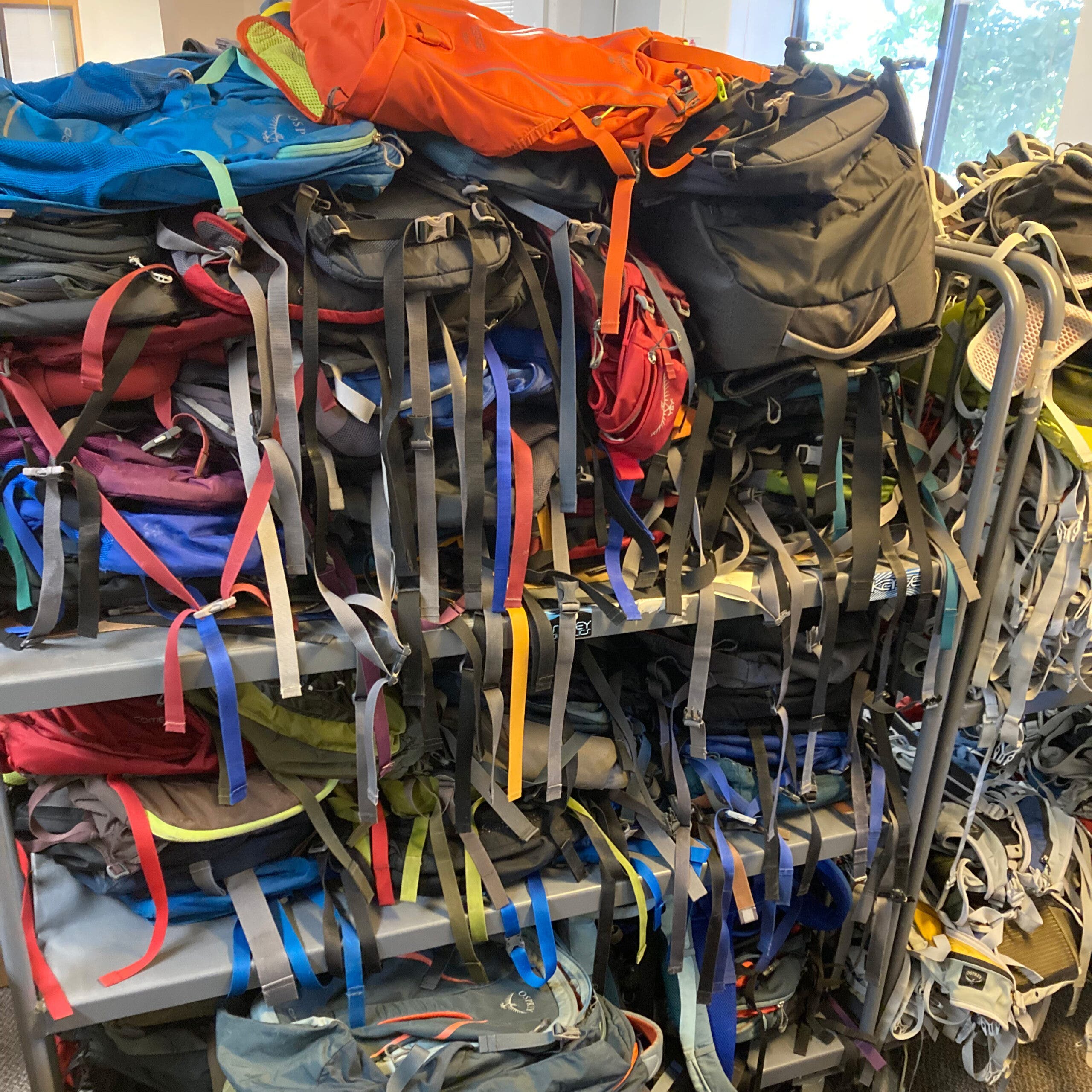
Henderson has one employee, but he is planning to grow. The next step in the Full Circle Rural Gear Repair plan is to launch a mentorship program to teach others the lessons of upcycling and gear repair.
During his career as a mountain guide, Henderson worked for the apparel and gear company Osprey. He completed repairs on broken backpacks, and saw the need for dedicated service for used gear.
There are plenty of ticks he picked up from his time restoring Osprey backpacks that he wants to pass along.
“I teach them how to brush Velcro so that it will stick back together,” he said. “If something is broken, you can usually salvage Velcro or a zipper or shoulder straps and use it on a different piece of gear before it all goes to the landfill.”
Henderson added: “Those are the types of trade secretes I know.”
In 2026, he received a grant from a nonprofit called the LOR Foundation, which seeds businesses in small towns in the West, to build a workshop. He now has two industrial sewing machines and a bartack machine, which completes heavy-duty stitching on tents and backpacks. There’s also a heat press for patches and welds.
“And of course needle and thread,” Henderson said. “You’d be surprised—a needle and some thread can do wonders for you.”
