

At the Aysaita Refugee Camp in northeastern Ethiopia’s Afar region, there are about 40,000 Eritreans struggling to meet their basic daily needs. For the 10,000 children younger than 10 who live in the camp, that includes one often overlooked resource: play.
At many refugee camps around the world, play can, understandably, become an afterthought as humanitarian organizations focus on delivering essentials like housing and food. But studies show that play is critical for helping kids develop executive motor function and relational skills. It’s also a key therapeutic tool for children who have experienced trauma. These insights inspired Playrise, a U.K.-based charity designing play structures for children living in disaster-relief sites around the world.
Alexander Meininger, the founder and director of Playrise, says the concept for the nonprofit came about in early 2024. As he watched his own two young kids learning through play, he was simultaneously keeping up with an influx of news about conflict and war in various global locations, including Ukraine, Gaza, Sudan, and Eritrea. During this time, he became increasingly concerned about how children displaced by violence would be impacted by the lack of access to play structures.
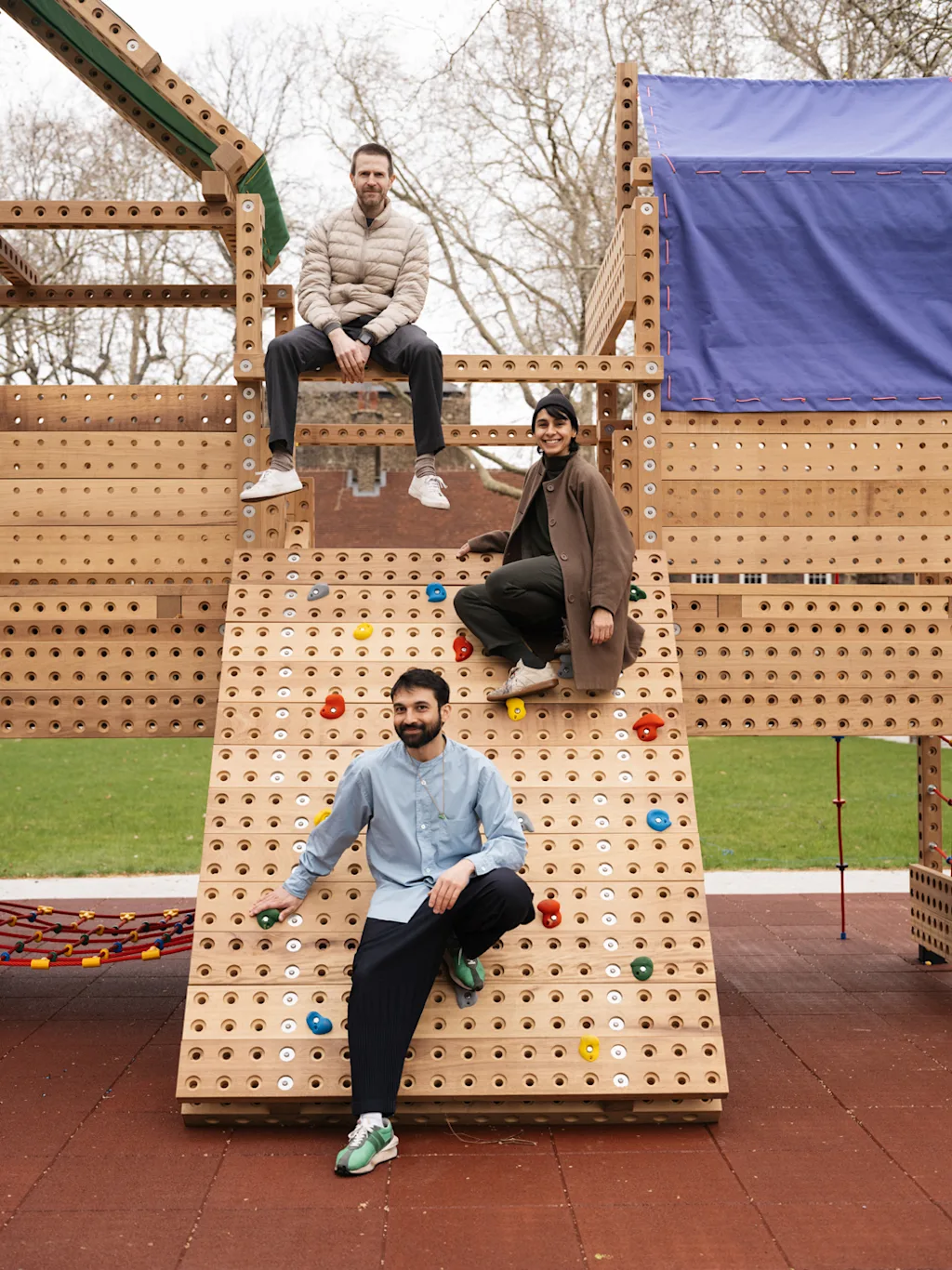
“Play is important generally for every child to develop, but especially for kids who are in these really extreme circumstances, it helps them to regain some sense of normality, overcome some trauma, escape the horrors that they’ve been through,” Meininger says. “It is really beyond the physical and mental development for every child: For them, play has a really big role in terms of healing.”
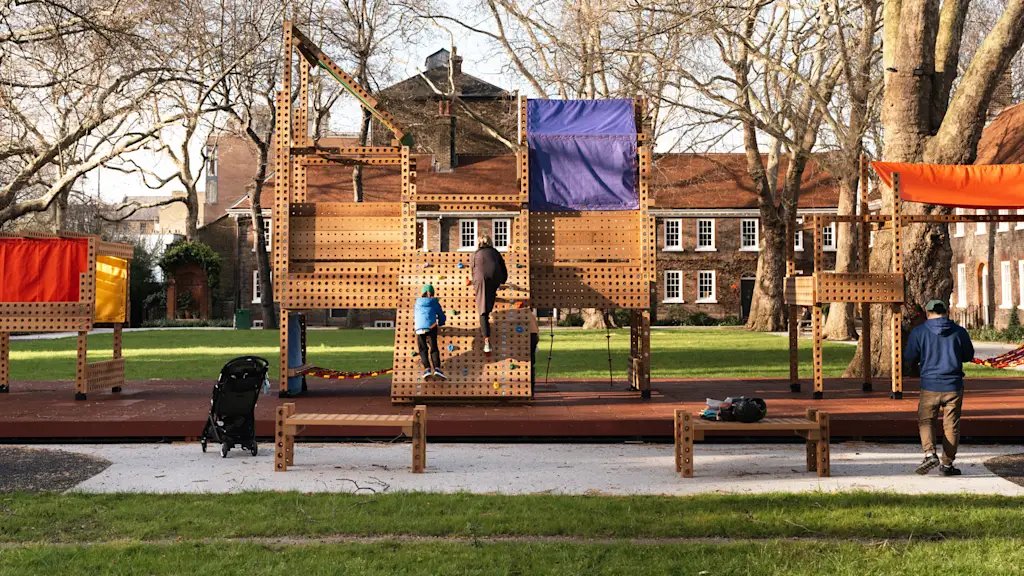
Alongside the London architecture firm OMMX, which specializes in what it calls “socially responsible architecture,” Meininger has spent the past two years working on a prototype for a flat-packed play structure that can be easily shipped and built on-site. The first Playrise structure—set to be shipped to the Aysaita camp at the end of April—is endlessly reconfigurable, safe for climbing, and designed to be adaptable to any environment.
The goal is to eventually make play universally accessible to the nearly 50 million kids who are currently displaced from their homes due to violence and conflict.
Play as a tool for healing
Before the Playrise team began the design process in earnest, they consulted with several different refugee communities around the world in order to understand their unique challenges, natural environments, and how the kids themselves actually wanted to play.
To gather those insights, OMMX cofounder and director Hikaru Nissanke, Meininger, and a team of project members spent June and July of 2025 conducting workshops. They traveled to Cairo, where many Palestinian children have fled from the Israel-Hamas war; six different villages in south Egypt, which is home to a group of refugees from Sudan; and the Aysaita Refugee Camp.
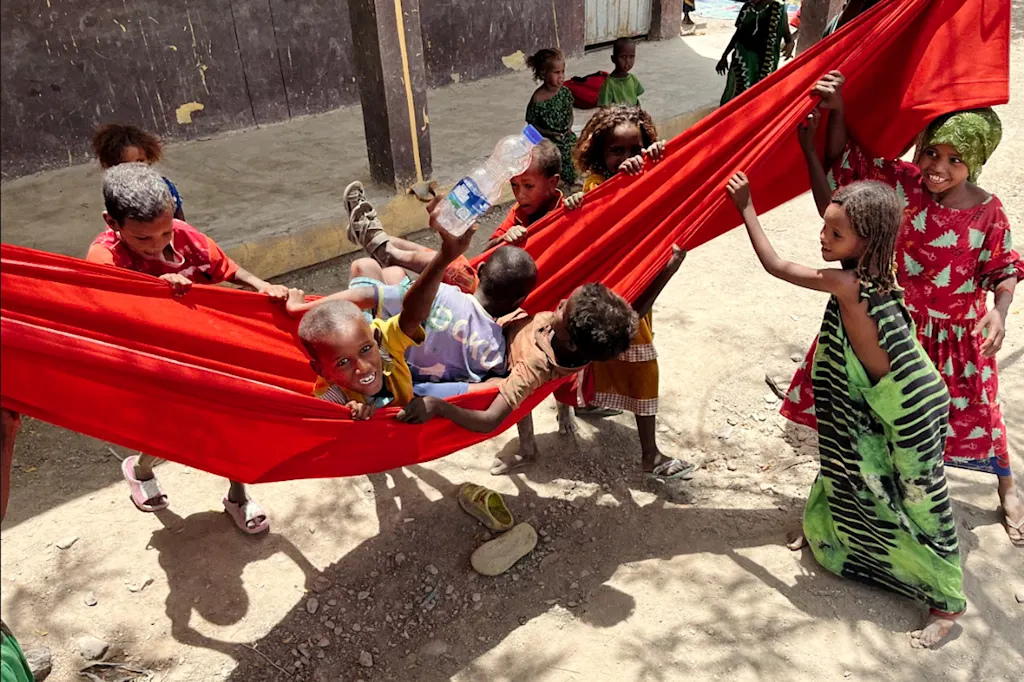
Nissanke brought along a kit of fabric pieces, fashioned by a tailor near his London office, to set up makeshift playgrounds at each site. In the U.K., he explains, his team typically engages kids through structured activities, like coloring, playing with tools, or working with stickers. In the workshops, they focused instead on movements like dancing, jumping, and singing—intuititive staples of play that the kids could guide themselves, rather than requiring excessive explanation or instruction through a translator.
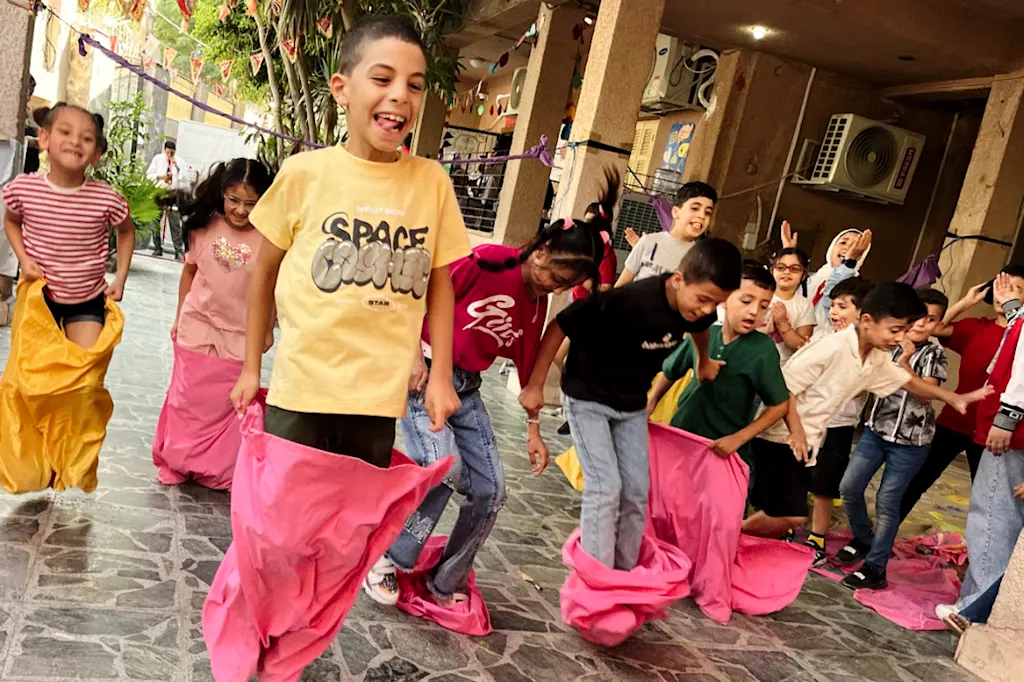
“We wanted something very direct, authentic, and in the moment,” Nissanke says. “We didn’t want to just assume one way of thinking, like, This is how we do it in the U.K., therefore this is the way we’ll do it in Ethiopia. We wanted to learn from them as much as possible rather than teaching.”
With free rein, the children’s creativity flourished. They transformed fabric into parachutes, slides, monkey bars, and hammocks—features that informed Playrise’s design. “A big takeaway is that they did love everything,” Nissanke says. “That was a really huge challenge.”
At each of the three sites, it was clear that the kids didn’t want just one unchanging structure; they wanted to be able to climb, create forts, build stages, and play based on their imaginations. At the same time, the workshops highlighted how different the architectural conditions of refugee camps are: In Aysaita, the available space was a vast, arid desert made of sandy terrain and exposed to the sun, whereas in Cairo, the available area was a cramped courtyard within a walled enclosure.
Playrise would need to create a system that could be mass-produced, flat-packed, built on-site, and constantly reconfigured based on both the kids’ ideas and the constraints of the natural terrain.
The best solution “was to give them a tool kit so that they could then build their own forms of play for whatever they need at that moment in time,” Nissanke says. Flexibility also helped the kit become more culturally responsive, a takeaway the design team learned from workshops in Ethiopia.
“The parents said that they really would see benefit to their children building and maintaining a play structure because it is a directly transferable skill to looking after their homes, which are incredibly fragile and precarious,” Nissanke adds.
A modular playground designed like Lego
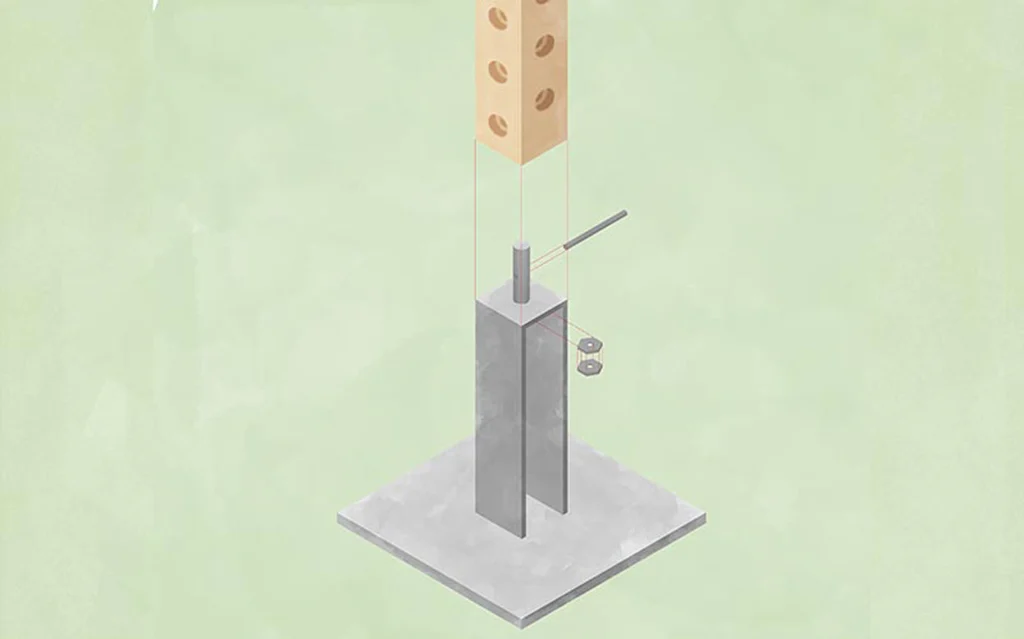
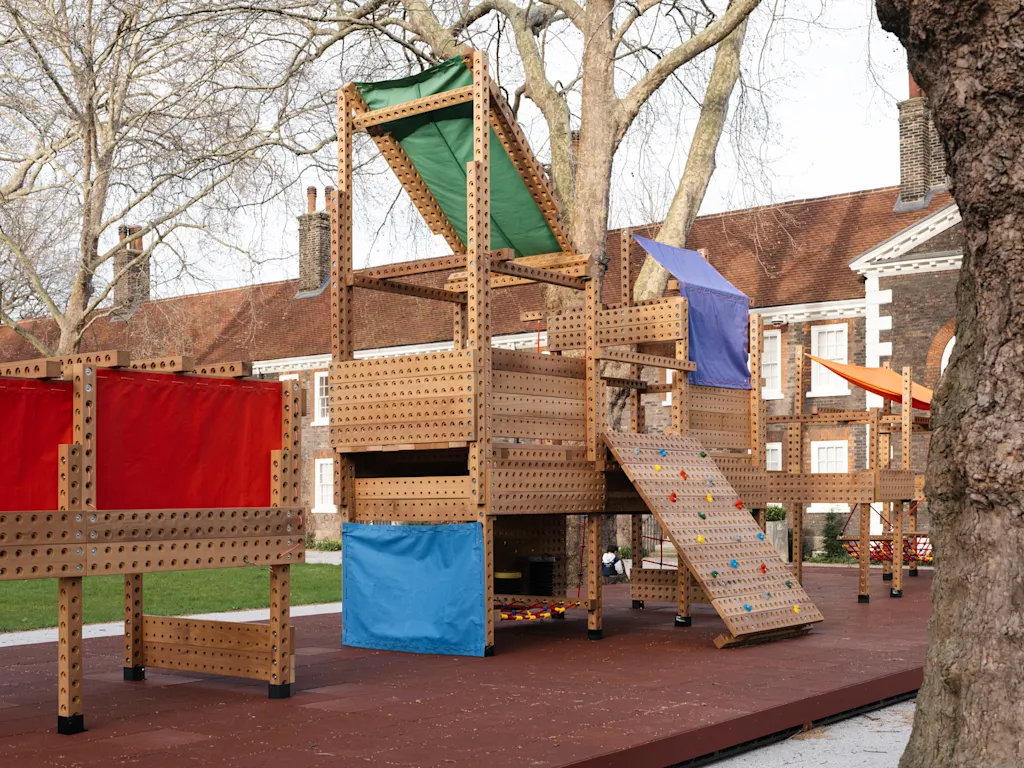
In the early phases of the design process, Meininger and Nissanke thought of Playrise’s modular system like a set of giant Legos: Each part had to be flexible enough to be used in an infinite number of ways, but strong enough to hold up to years of play.
First, they selected wood to serve as the main building block of the system. While in Ethiopia and Egypt, the team noticed multiple metal playgrounds that had been abandoned because a single break in the structure would make it unsafe, and because the material would reach scorching temperatures in the desert heat. Wood, in contrast, could offer durability and stay relatively cool under direct sunlight.
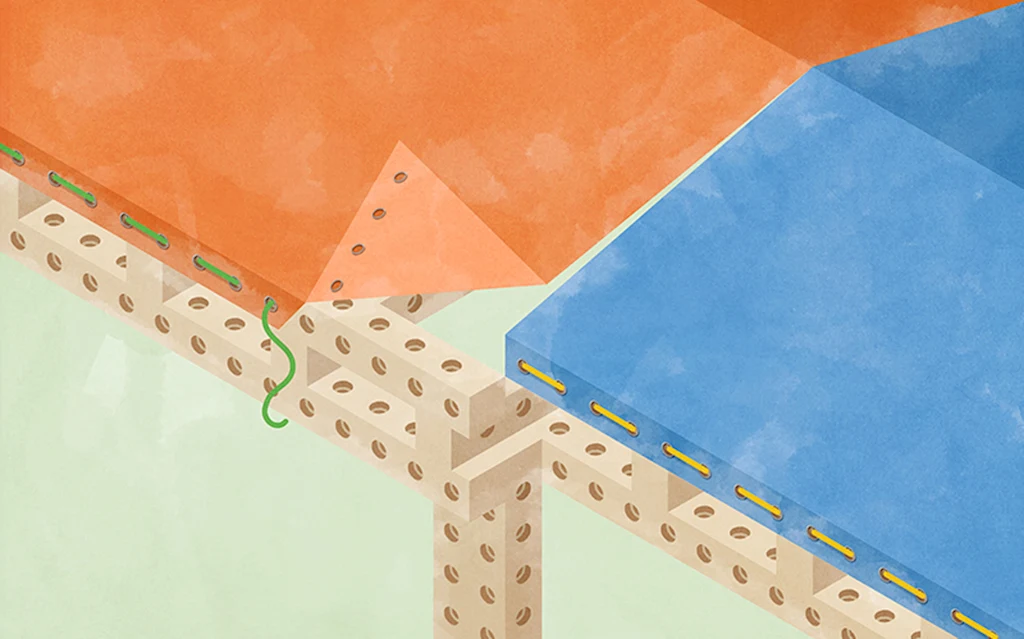
The next phase of the design process, and the most challenging, was finding a way to secure wood joinery. “It’s a bit of a compromise, because if you want it to go together as easily as possible, the easiest thing is stuff that just clicks together like Lego—but that wouldn’t be sturdy enough,” Meininger says. Instead, he and Nissanke designed a custom bolt that could be screwed and unscrewed with simple, easy-to-use tools.
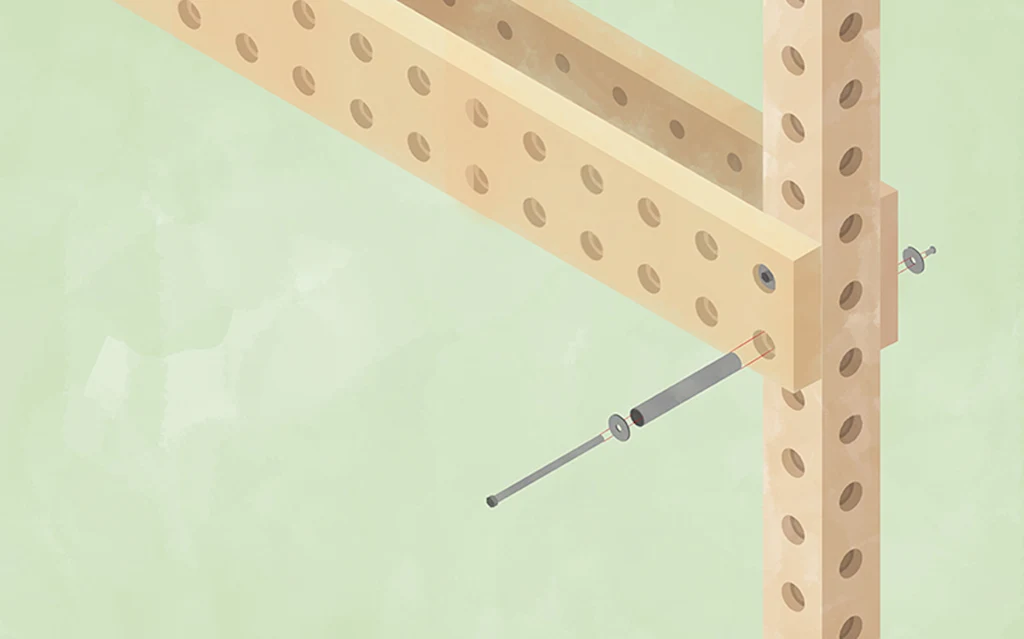
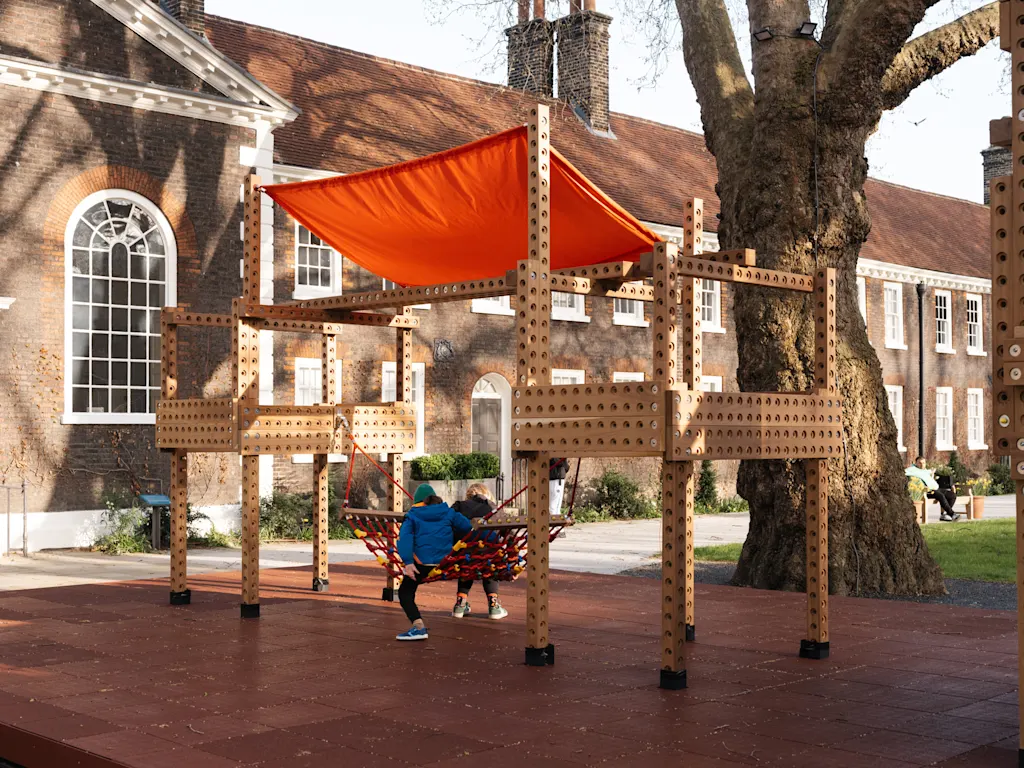
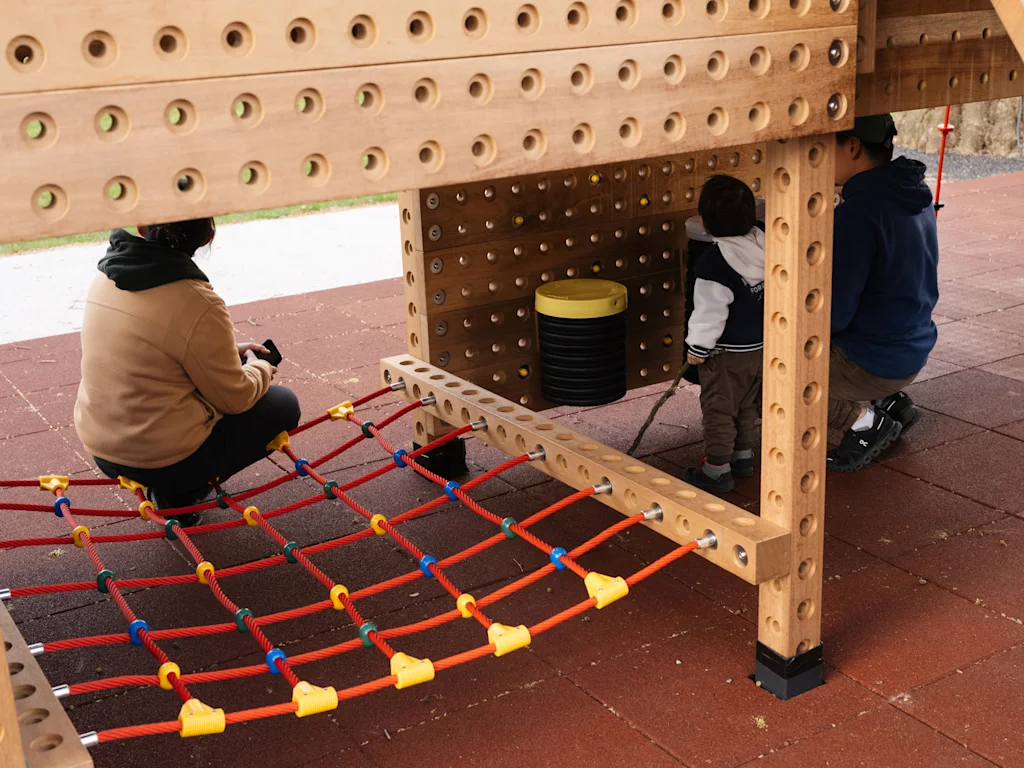
Through a collaboration with a U.K. organization called the Play Inspector, which consults on play structures to make sure that they reach a high safety standard, Meininger and Nissanke learned that any small hole on a playground could trap fingers. So along each beam of wood they drilled a series of 26-millimeter-wide holes (about 1 inch, which is large enough to be safe for kids’ hands) and created a fitting consisting of a pipe, bolts, and washers that allow these beams to be joined together in almost any configuration.
Once the beams were complete, the final step was developing a series of supplemental parts—the Lego accessories of Playrise. To shield kids from the blazing sun, Nissanke designed colorful fabric “sails” that can be tied down between the beams to create pockets of shade. They also double as a canvas kids can paint. Additional parts in the kit include climbable handholds, swings, and rope nets.
“I worked on this for the whole year, and I’ve seen a thousand pictures and drawings, but when you see it in reality it really looks like a giant toy,” Meininger says. “You look at it, and it looks a bit like Lego, and you think, Wow, this is really joyful.”
Playrise’s next steps
Right now, Playrise is preparing to ship its first modular playground to Aysaita by the end of April; playgrounds in Cairo and the south of Egypt will follow.
Meininger and Nissanke plan to use learnings from these locations to inform future updates to the design. They’re already expanding the accessories to include more accessible options at ground level for kids who may be unable to climb, like drums and sensory toys. They want to eventually stock a complete kit on their website that can bring the benefits of play to the sites where it’s needed the most.
“Everything kids do is play,” Meininger says. “That’s how they experience the world. That’s how they learn. That’s how they grow and develop. Sophia Apdi, a child psychologist who sat with us on a roundtable recently, expressed it really nicely. She said, ‘Play is the language of children.’”
