

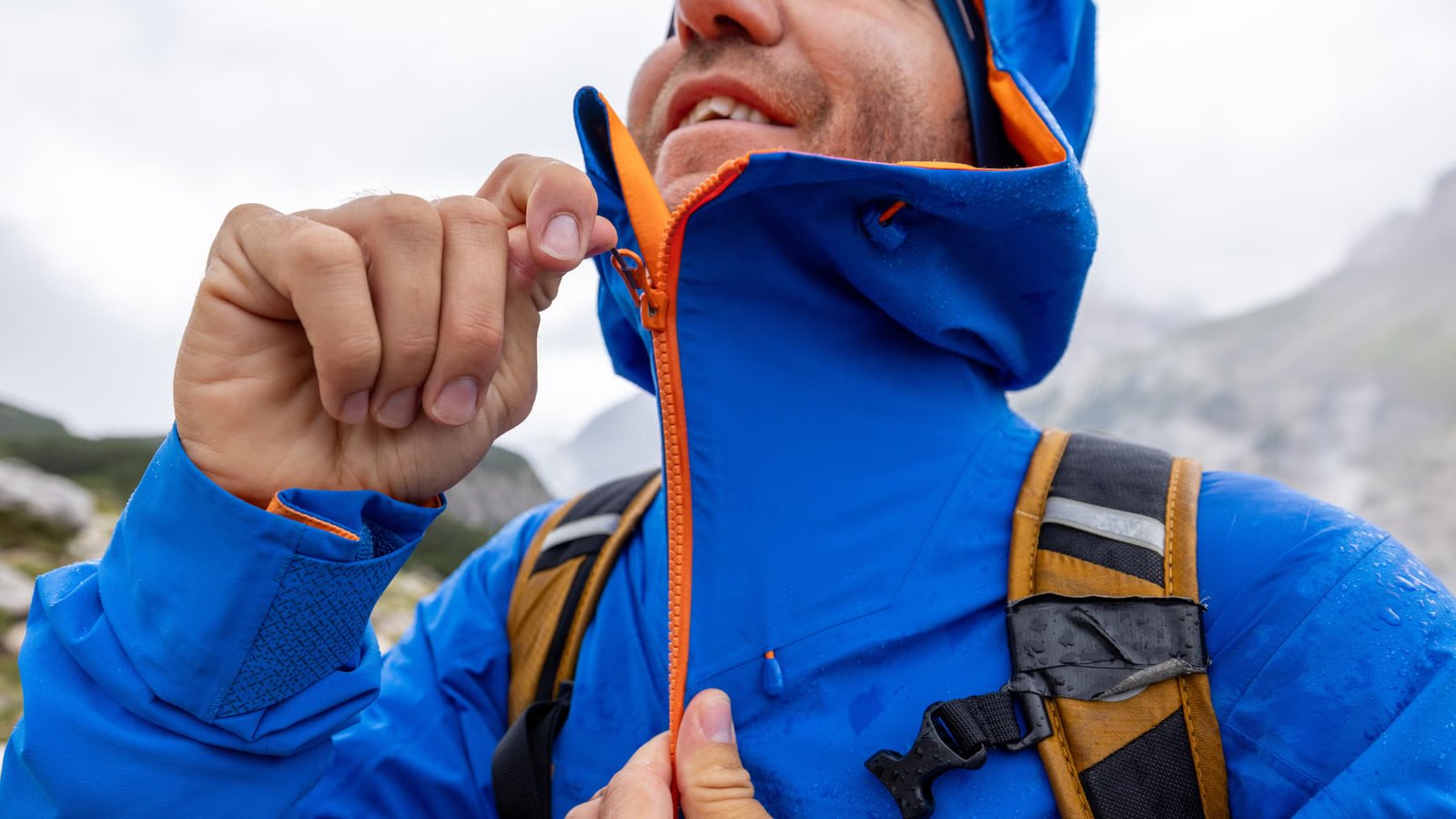
Don’t retire your shell just because it’s wetting out. From unclogging microscopic pores to reactivating DWR in the dryer, here’s how to properly wash and restore your waterproof gear to make it last forever.
Keeping your technical gear clean ensures the waterproof membrane continues to breathe and protect you on the trail. (Photo: Getty Images)
Published April 20, 2026 11:15AM
Key Takeaway: Most rain jackets “wet out” because their waterproof pores are clogged with grime, oil, and dirt. You can easily fix this by washing your rain shell in a front-loading washer with a specialized technical detergent; then, tumble dry low to reactivate its waterproof coating, reapplying a waterproof solution first if necessary.
There comes a time in every rain jacket’s life when it’s just not keeping you as dry as it once did. You might assume that the waterproofing has worn off, that you need a new one—which is surprising because you haven’t even had it for very long. But more often than not, it just needs a thorough wash.
Don’t buy into the misconception that washing and drying your shell will ruin it. The opposite is true: Just like your skin, a jacket’s waterproof membrane has pores. Those microscopic holes allow it to breathe while being small enough to seal out rain, snow, wind, and even toothpaste dribble and spilt summit beer (we see you).
But when grime, oil, and dirt build up and coat the outer layer, those pores become blocked and stop working—similar to how sunscreen and sweat can cause breakouts if not rinsed clean.
You’ll know it’s time to give your rain jacket a bath when it starts to wet out. Here’s what could be happening: Either dirt and grime are preventing your jacket from breathing, making you clammy with condensation. Or, the durable water repellant (DWR) coating has worn off and your jacket isn’t beading rain, causing it to seep into your jacket’s outer layer. That also stops your jacket from breathing, making you clammy.
Regardless of if your jacket has PFAS-free DWR or not, here are the steps to bring it back.
What Is the Best Way to Wash a Technical Shell?
First, toss it into a front-loading washing machine either at home or at the laundromat—as long as it doesn’t have an agitator that can tangle and mangle it. Zip up your zippers so they don’t bash against the drum.
Use a detergent designed for technical layers, such as Nikwax’s two-step wash, Storm Clothing Wash, or Granger’s Performance Wash. Follow the directions on the label. These products lift residues that attract water without ruining the waterproof coating.
In a pinch, a mild detergent—one without additives like bleach, heavy enzymes, or strong fragrances—is better than nothing. Avoid using it every time to avoid chemical and soap buildup.
You’ll also want a waterproofing solution like Nikwax TX Direct, which comes as liquid to add to the wash or a spray-on product that you can apply after the wash cycle but before the dry cycle.
Can You Put Your Rain Jacket in the Dryer?
After washing, drying your jacket on gentle tumble and low heat will fully set that waterproof coating. The gentle heat reactivates the water-repellant polymers, spreading into gaps and creating a surface that sheds precipitation. You might need to run it through a few cycles to completely dry it.
Experts recommend washing your shell layers when you return from a big trip, after a season of use, or when you start to notice it wetting out. Testing from Patagonia suggests that PFAS-free shells need to be washed twice as often as shells with PFAS because the membrane’s pores are more sensitive to soiling.
How Can You Repair Zippers and Fabric Tears?
For stubborn or sticky zippers, use a toothbrush to clean the teeth, then apply Gear Aid Zipper Lubricant or beeswax, which allows the slider to move like butter.
If you develop a hole or tear or your seams start to come apart, your local gear shop might be able to patch it or recommend a place that knows how, such as Mountain Soles and Outdoor Threads in Portland, Oregon. Many brands like Patagonia, Arc’teryx, Stio, and The North Face also offer repair services.
See? There’s no reason to toss your rain jacket when it still has plenty of life left.
