

Published April 22, 2026 02:14PM
Hundreds of climbers are in the Himalayas this spring to attempt Mount Everest and the other peaks above 8,000 meters (26,000 feet). Very few of them, however, will climb without supplemental oxygen. Stefi Troguet of Andorra is one. Troguet, 33, recently attempted to reach the top of 26,545-foot Annapurna in Nepal. Troguet told Outside what it was like to venture into thin air without bottled O2.
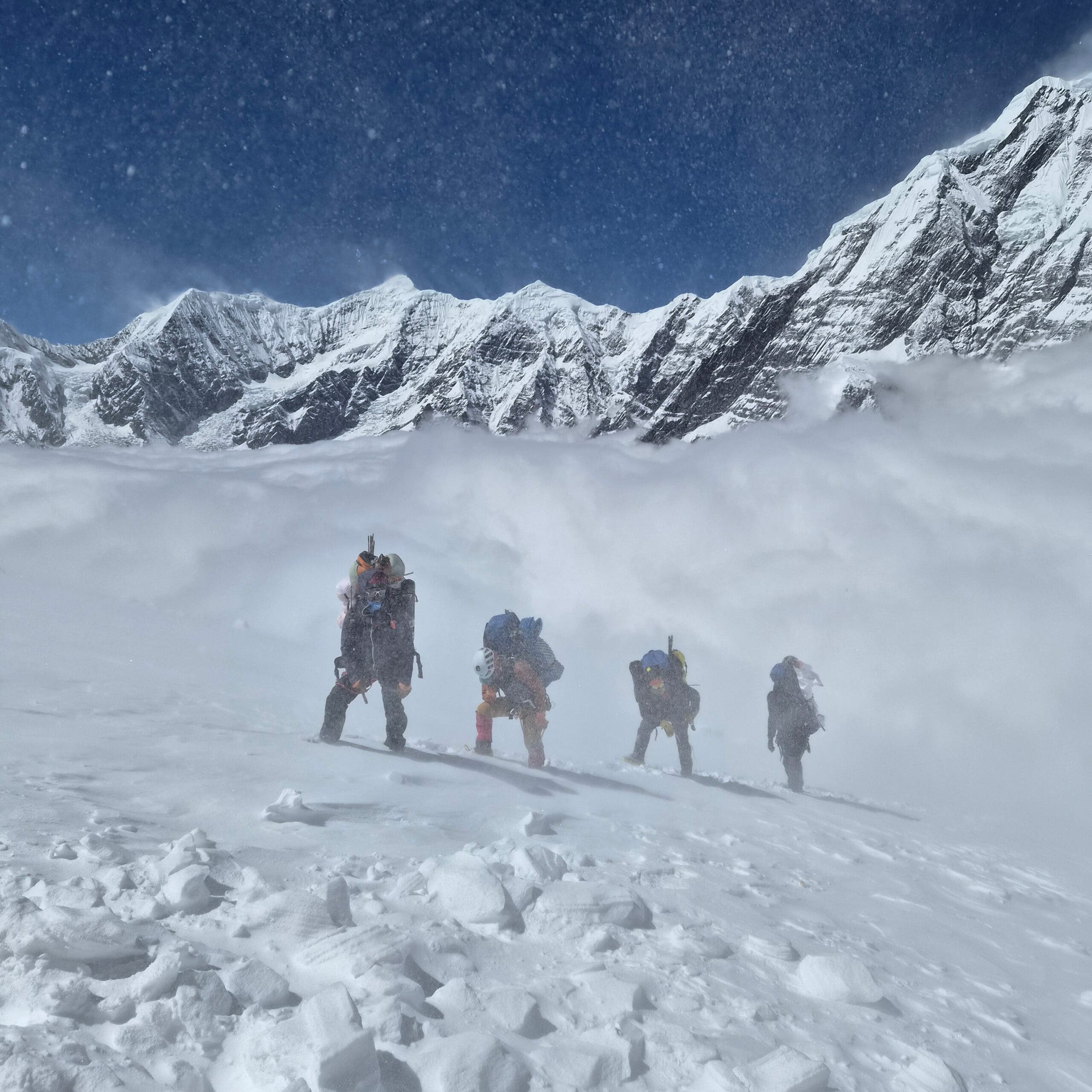
We launched our summit bid from Camp IV at 8:30 P.M on April 17. The sun had long since set, and the temperature was dropping steadily, with sharp gusts of wind strafing the face of 26,545-foot Annapurna in Nepal.
My climbing partner, Ming Temba Sherpa, and I moved steadily up the steep terrain for hours, kicking the front points of our crampons into hard ice and pulling on the fixed ropes. Above me, a string of headlamps moved slowly through the darkness, suspended in black space. We had been climbing for a long time, and I was sure the summit was close.
I checked my altimeter to confirm. It read 7,400 meters, or 24,300 feet.
OK, I thought. It’s broken. There’s no way we’re still this far below the summit.
So I kept going, facing winds gusting over 30 miles per hour.
I’ve been a ski instructor my whole life, working in one of the coldest parts of Andorra in the Pyrenees, where I’m from. But I had never felt cold like this. After every step or two, I had to stop because I was shaking uncontrollably. I was just trying to pull myself together and keep moving.
After some time, Ming Temba stopped and asked me to check the altitude, because he also thought his altimeter wasn’t working. I hadn’t told him what mine had shown earlier.
“Crap,” I said. “If yours isn’t working and mine isn’t working, that means they’re both actually working.”
We weren’t even close to the top. And I was starting to lose feeling in my toes.
Why Climb Without Supplemental Oxygen?
In 2019, I started my quest to climb all 14 mountains above 8,000 meters (26,000 feet) without supplemental oxygen. It’s a feat that only two other women have accomplished. When I first set out, only three of the 14 mountains truly scared me: K2, Nanga Parbat, and Annapurna. These are the most technical and dangerous of the 14 peaks, and I decided to climb these first.
In my first season, I summited Nanga Parbat and Manaslu without oxygen. In 2022, I climbed K2 and Broad Peak.
When I first started climbing, I always wore red lipstick. I’m not especially feminine, and I actually hate makeup, but I noticed how much it provoked the men around me. It was as if they couldn’t reconcile strength and femininity in the same person. It didn’t take long for the lipstick to become my calling card and, in some ways, my brand.
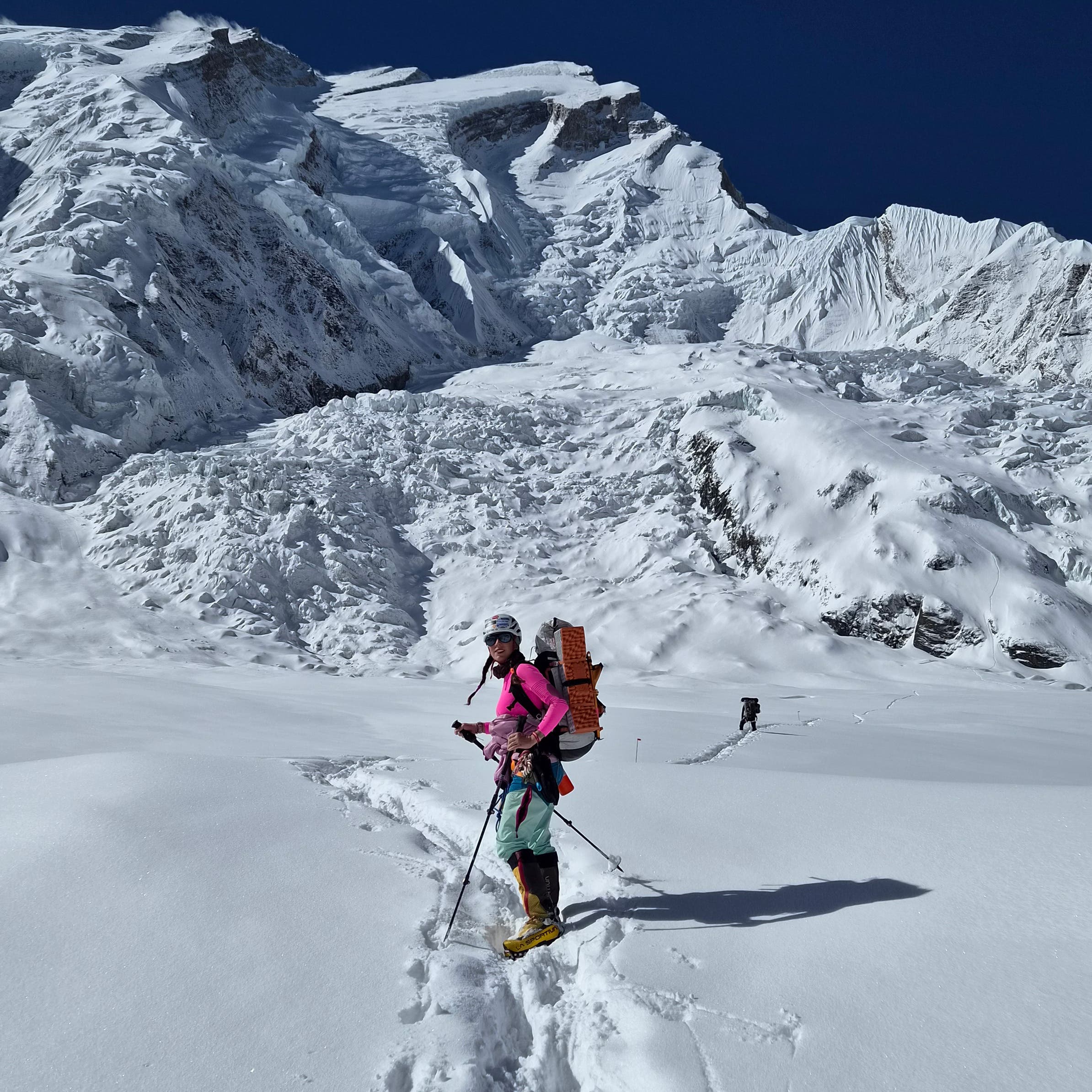
Seven years later, I see more and more women in base camps who look like me. They don’t feel the need to hide their femininity to be taken seriously. When I was on Dhaulagiri in 2023, half the climbers there were women. I can’t take credit for that shift, but I’m proud to be part of it.
A few years ago, everything in my life outside the mountains fell apart. My family business went bankrupt, and I lost my home. I found myself dealing with anxiety in places where I had always felt strong. I tried to climb Mount Everest and Makalu, but my heart wasn’t in it.
So I stepped away for a year. I worked with a psychologist and focused on rebuilding myself from the inside out. When I knew I was ready to return, I chose to climb the last mountain that still truly scared me: Annapurna.
The Many Dangers of Annapurna
I arrived in Kathmandu on March 18, and within a few days, we were at Annapurna base camp. The atmosphere there was different from other expeditions. Annapurna doesn’t attract casual climbers as Mount Everest does. Everyone who comes to this mountain is experienced and committed to the climb. Those of us in base camp quickly became like a family.
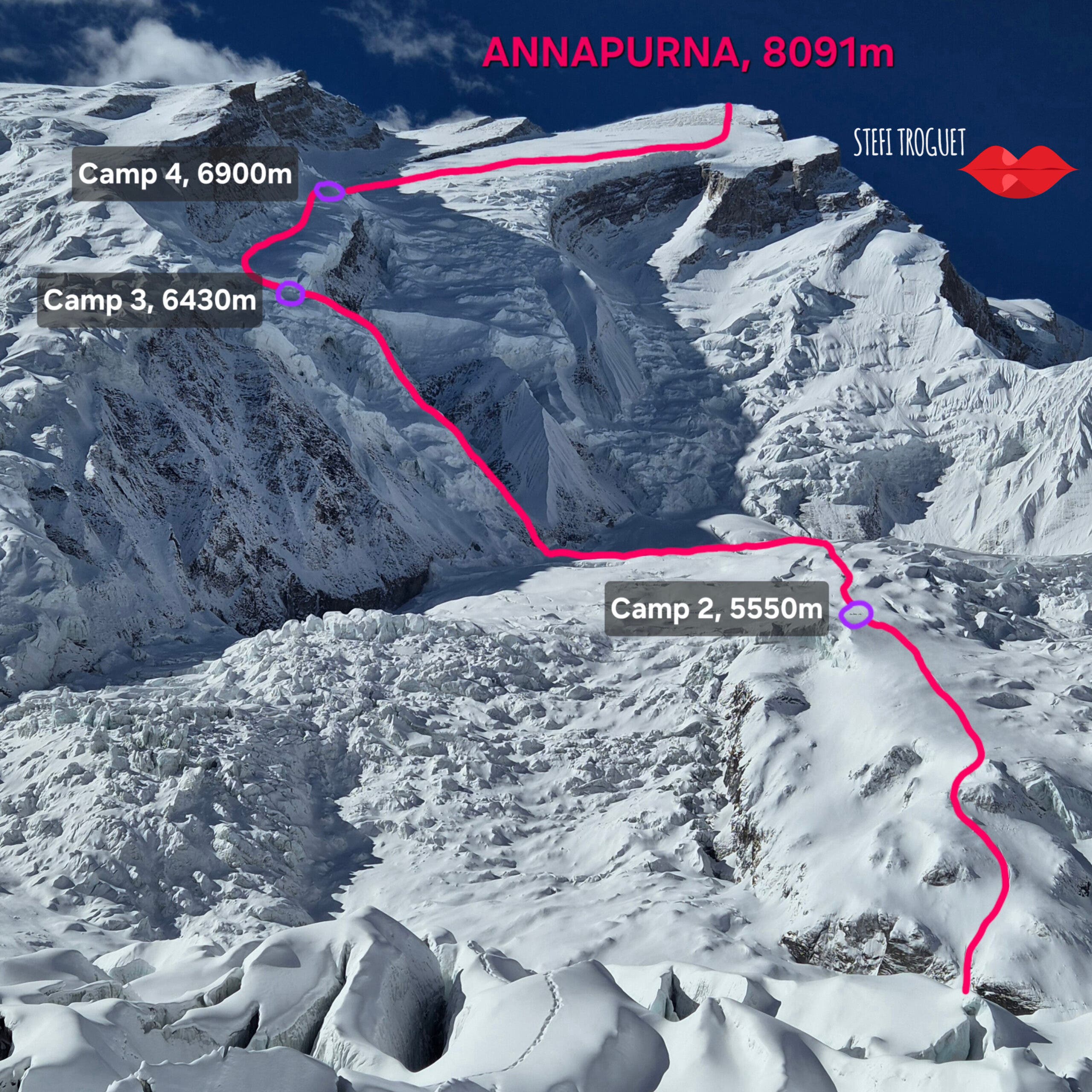
We moved fast through our acclimatization rotations, hikes to high points on the mountain. Because I was climbing without oxygen, I did two rotations to Camp III at 21,300 feet, which meant crossing a dangerous section multiple times. This section requires upwards of two hours to navigate and is constantly exposed to avalanches and rockfall. It seems like someone dies there almost every year. Climbers using oxygen typically only cross it on their summit push to reduce their exposure to danger. We called this section “Russian Roulette.”
Early in my time on Annapurna, everything was moving quickly and going really well. Maybe too quickly.
After a major storm forced us to retreat from the mountain for ten days, we returned to base camp under clear skies. I questioned whether I was acclimatized enough for the extreme elevation. I also knew there wasn’t much choice about whether or not to try for the summit. Mount Everest season was approaching, and the support staff I relied on would soon have to travel elsewhere.
We moved up together to Camp I at 17,000 feet, and the good energy returned. That evening, as it got dark, someone played music, and we all stayed outside watching the sunset and talking. It felt like a family dinner. No one wanted to go into their tents.
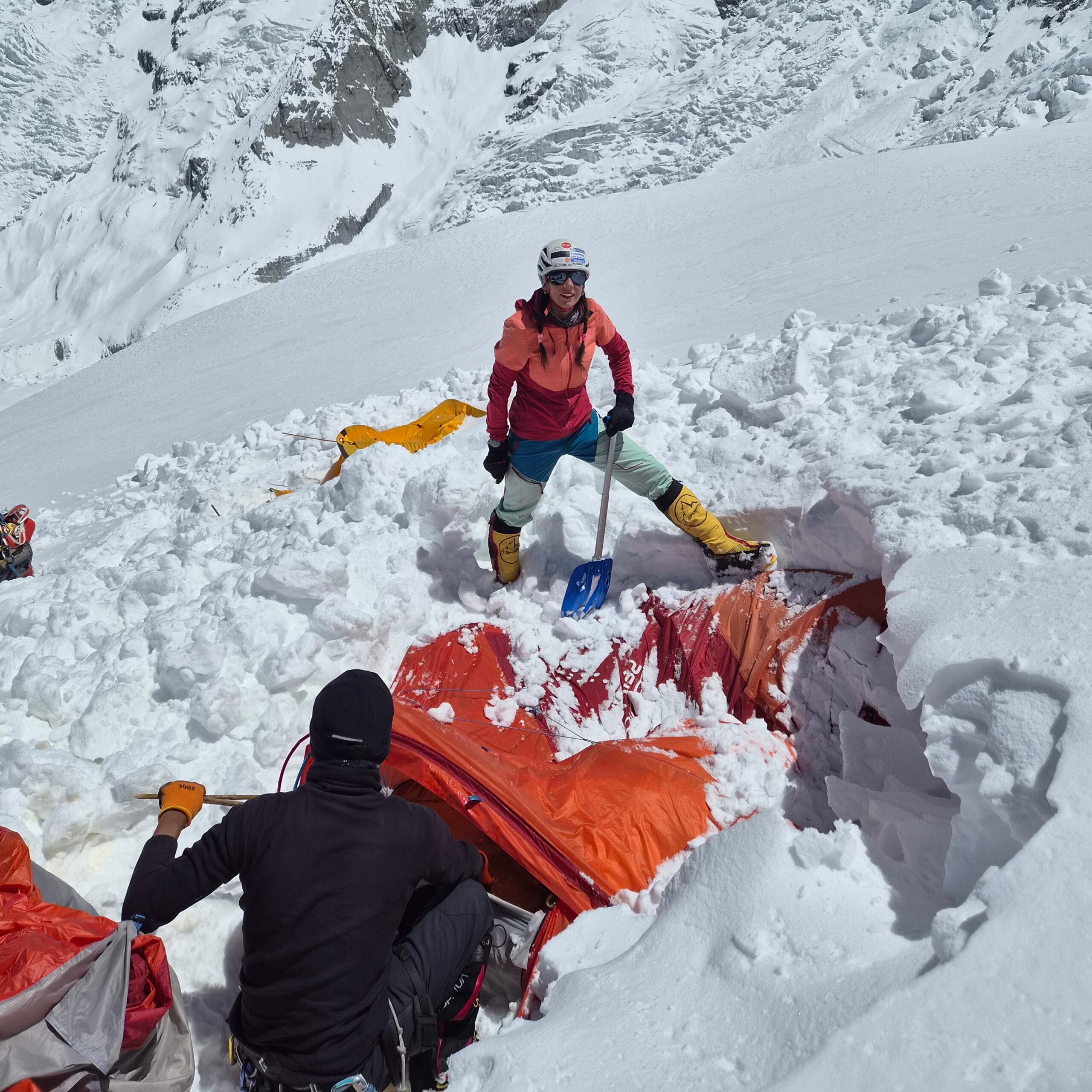
At Camp II at 19,500 feet, we had to dig out our tents and food caches, which had been buried by the storm. I crossed the Russian Roulette section easily and started to feel more confident. Maybe I was acclimatized after all, I thought.
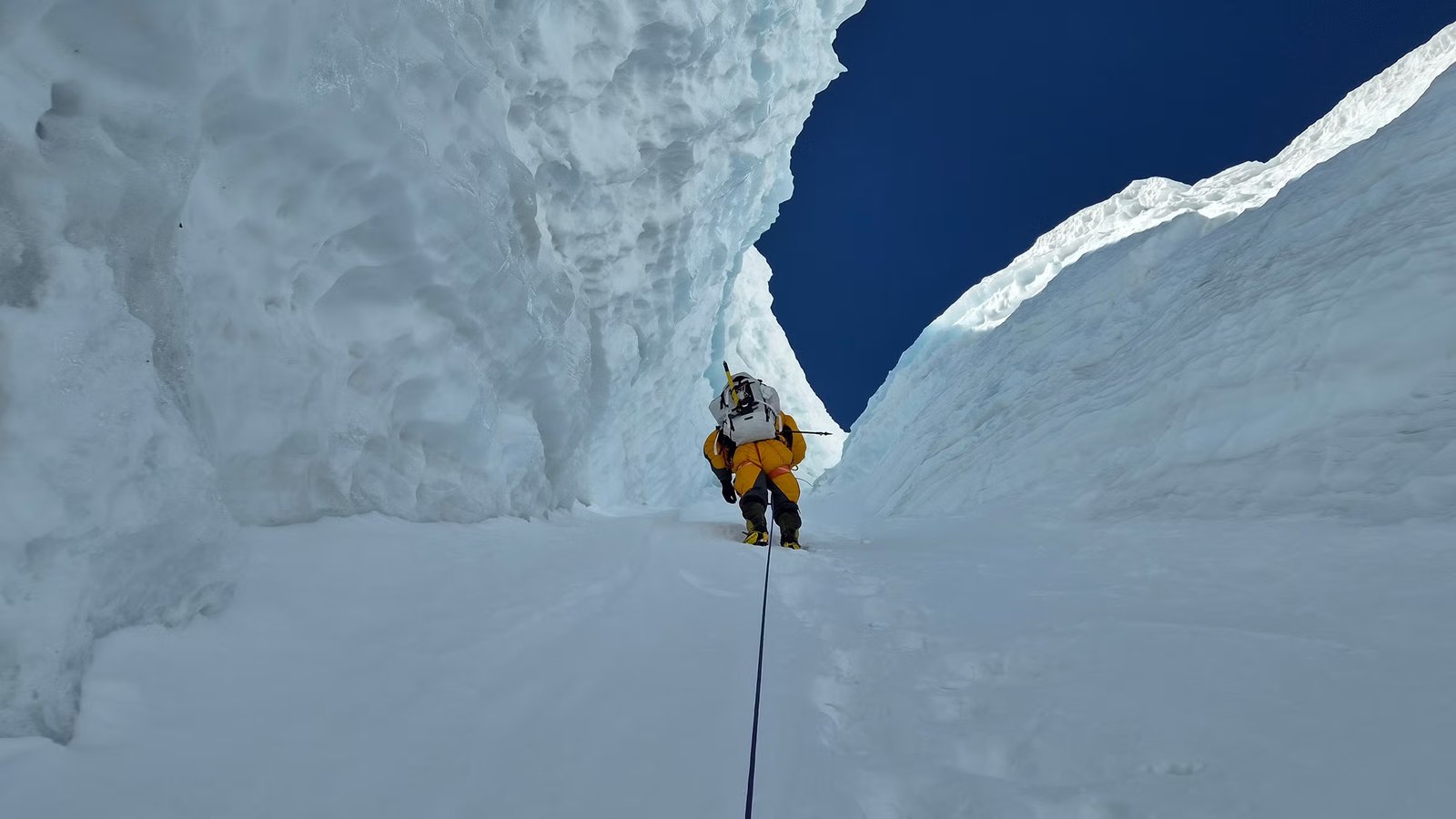
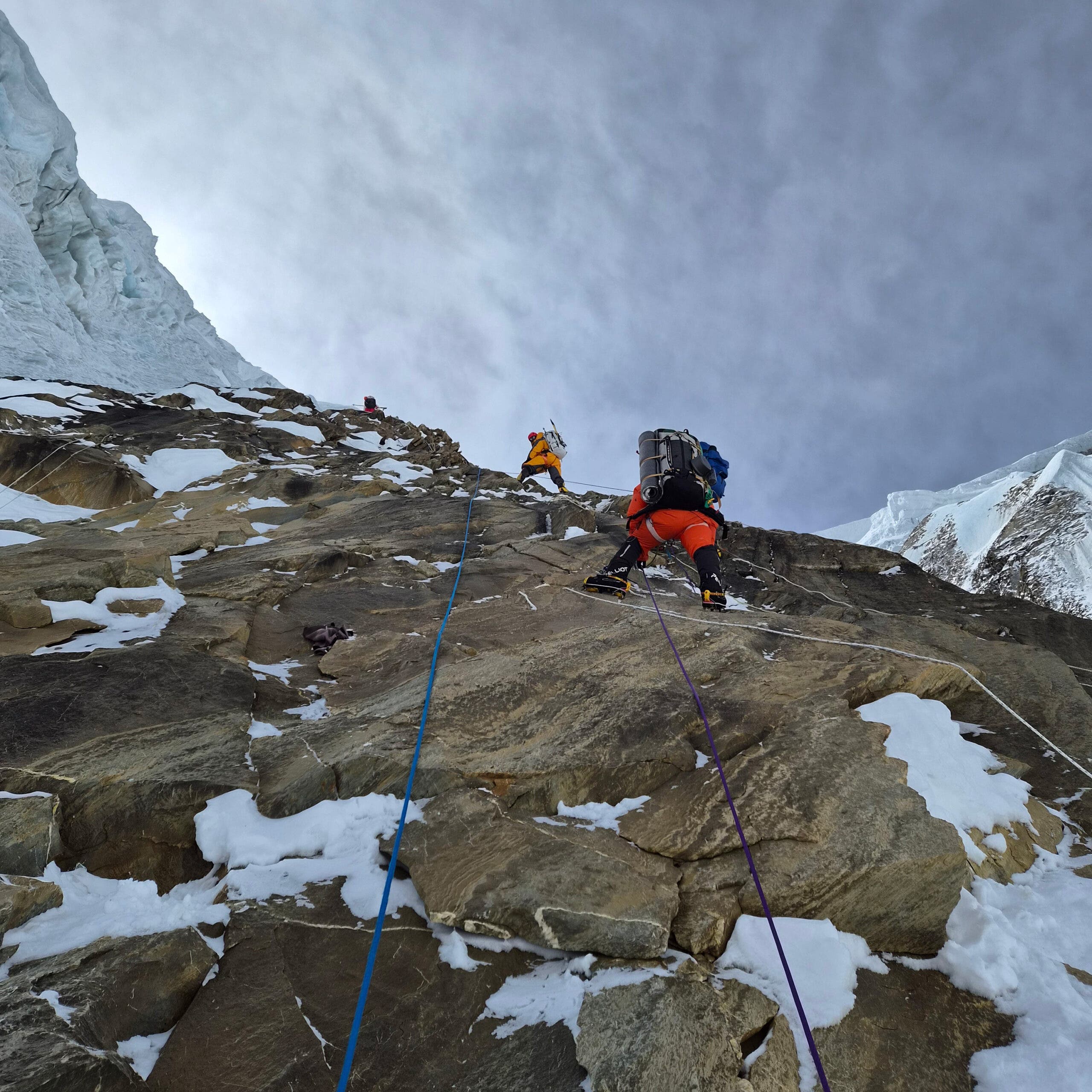
After a night at Camp III, we climbed to Camp IV. The route in 2026 passes directly through an overhanging ice couloir between massive hanging seracs. It was direct, exposed, and beautiful. At 21,000 feet, the scene felt surreal.
The route usually heads around a dangerous section of hanging pillars of ice, but this year the rope-fixers found an ice couloir sitting directly between the two seracs. Ascending this section required steep and aesthetic climbing on blue ice situated between these massive hanging seracs, at 21,000 feet.
At Camp IV, we set our single tent just a bit higher than everyone else’s. It was steep, but we had an incredible view. As we watched the sunset, I was worried about my acclimatization. I had been moving very slowly during the last few hundred feet before we reached camp. When Ming Temba made some instant noodles, the smell almost made me throw up. That’s an indicator of altitude sickness.
Lying in my sleeping bag that night, I played out the possible scenarios in my mind. We still had 3,000 feet to climb. I was tired, I couldn’t eat, and I was afraid of going higher. But I had felt this way before on a different mountain and reached the summit. Maybe this time would be the same.
A Midnight Push for the Top of Annapurna
We left for the summit at night.
At first, my climbing rhythm returned. We moved steadily up the steep face, front-pointing on hard ice. For a while, I kept pace with climbers using oxygen who had caught up to us. Then, I began to fall behind.
The wind came in hard gusts, and my body started shaking uncontrollably. Despite heated gloves and socks, my hands were freezing and losing sensation. I tried to drink, but my bottles were frozen. I forced down an energy gel and immediately threw it up.
After we realized our altimeters were correct and that we were far behind schedule, Ming Temba looked at me.
“Stefi, I think we have to make a decision,” he said.
“I know what that decision is,” I said. “But let’s just take a few more steps.”
We repeated this ordeal for a few more hours.
I would take one or two steps and then drift into sleep. I checked my altimeter again: 7,440 meters, or 24,409 feet. We had gained just 120 feet in two hours. The batteries in my heat socks and gloves died. My hands were too stiff from the cold to replace them. I couldn’t feel my feet at all, and I was shaking violently.
What the hell am I doing here? I thought. I’m not here to die.
But I kept moving. Up to that point, I was ahead of all the other Annapurna climbers that were not using supplemental oxygen. This realization provided me with some hope that I could still make it to the top and return.
At around 3 A.M., fellow no-O2 climber Israfil Ashurli from Azerbaijan caught up to us. It seemed like he was moving in slow motion. He was in the exact same shape we were in. He’d take one step, then fall asleep, then another step, and then fall asleep again.
A Painful Realization
For long stretches, Ashurli didn’t move at all. Then he would lurch forward for a single step. While watching him, I finally saw myself from the outside.
This is how people die, I thought. That’s when I made the decision to stop. When I told Ming Temba, I noticed his eyelashes were frozen together. We turned around.
I didn’t summit, but I lived to the fullest on Annapurna. I enjoyed every day of that expedition, and I’m at peace with the decision I made. I came back with all my fingers still attached to my hand. I feel healthy. I feel strong. I walked down to base camp on my own.
Israfil continued upward and reached the summit. But by the time he descended to Camp III, he was completely exhausted and severely dehydrated. He had to be evacuated by helicopter and hopefully he will not lose any body parts to frostbite.
My only real disappointment is that, by the time I came down, I was finally acclimatized. I wanted to go back up, to try again on my own for the summit. But the team was finished. They all had other mountains to climb.
As told to Ben Ayers.
