

Previously, transportation planners have thought bigger was more efficient. It didn’t work, but in the world of self-driving, a different answer is possible: Less is more
getty
Bigger isn’t more efficient when it comes to transportation.
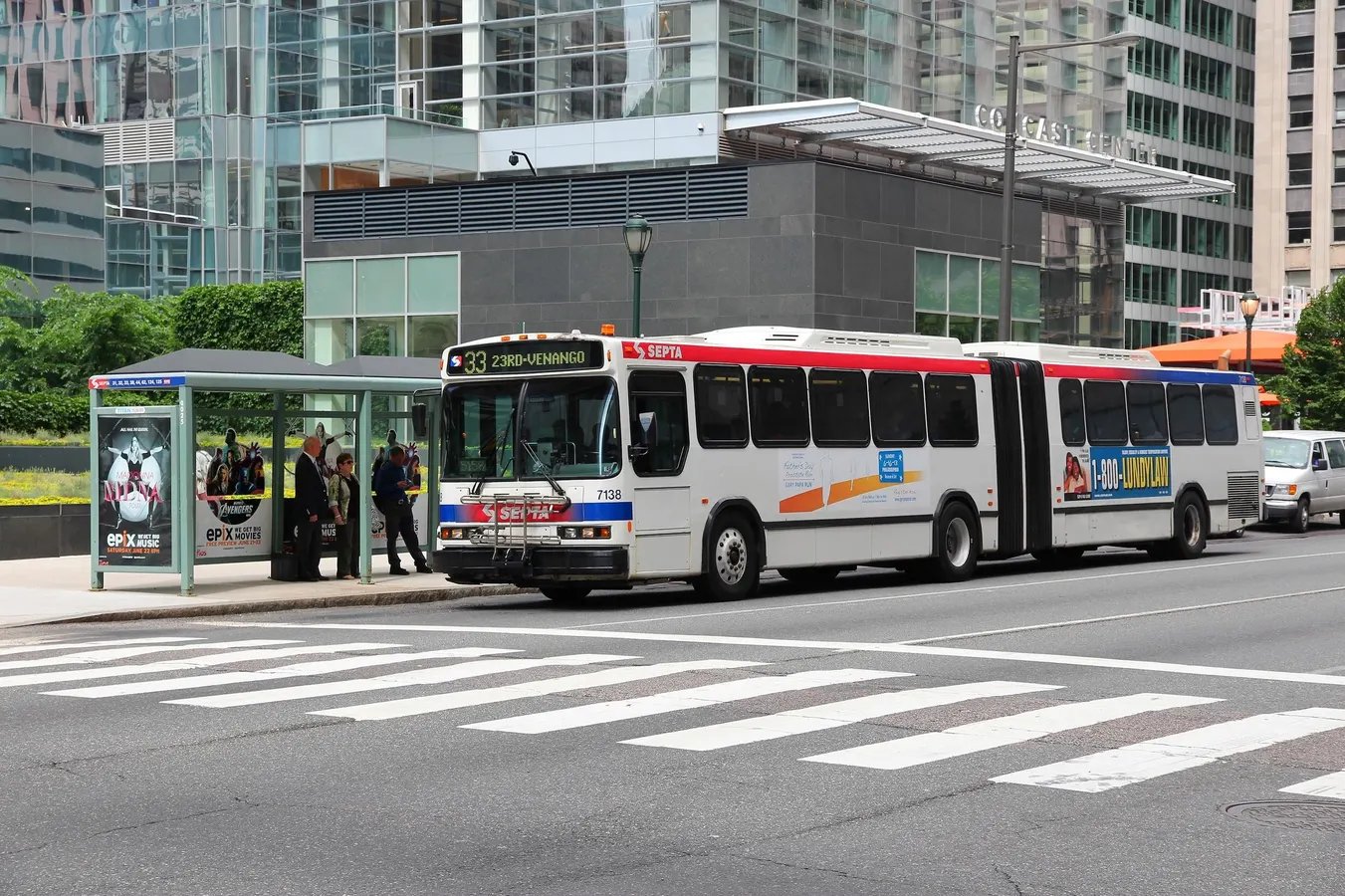
A large fraction of our energy use in modern society goes to transportation, and most of our oil. About 25% of greenhouse gas emissions come from transportation, so it’s naturally one of the top topics for yesterday’s Earth Day. A common thrust of earth day messages is to use more transit. The problem is that in the USA, transit is surprisingly energy inefficient. Many people are unaware that U.S. systems almost universally use more energy per passenger-mile than the average equivalent private automobile. Often a lot more.
One of the biggest questions to address in transportation is why this is, and what can be done to fix it. The proximate cause of this inefficiency is poor “load factor”–how full the vehicle is. While a packed bus or train is efficient, no transit system consists of only full vehicles. Theoretical efficiency is nice, but moving empty seats is not efficient, and so the cause of these empty seats is important.
(It should be noted that this is relevant to the debate about transport system design. It is generally more efficient for an individual to hop on an already operating train to take one of those empty seats than to go drive their own car. That doesn’t mean the question of why a transit system does so poorly isn’t important.)
Some wake-up numbers are in order. The Dept of Energy publishes a regular Transportation Energy Data Book. Table 2-13 has the broad data, though other useful tables can include the light rail data by city and others. (These charts use the BTU as their energy unit, and for more confusion, you must not compare electric transportation, which really should not be done in BTUs, with fossil-fuel modes.) For example, they show the average U.S. transit bus using 66% more fuel per passenger-mile than the average private car. In electric transport, the New York MTA subway uses the same energy/passenger as an EV like the Tesla Model 3, and every other electric train in the USA uses more. That’s quite at odds with the common image people have of energy use on these vehicles. Just how can this be?
The normal intuition is that bigger is more efficient, thanks to physics. But physics only speaks to theoretical maximum efficiency, not real-world efficiency. It turns out smaller can actually be more efficient than big, because it’s easier to keep the seats full in smaller vehicles.
The Transit Compromise
Transit means sharing a vehicle. When multiple people share a vehicle, most of them must make some compromise from their ideal trip. The ideal trip is non-stop and direct from your origin to your destination. On a shared vehicle, people must merge their schedules and routes, and some leave earlier or later than they wanted, some have to travel to and from stations, and the route may differ from their ideal. There are also multiple stops to board others, and may even be transfers.
The more people on the vehicle, the more compromise, and it’s not just linear. Double the passengers and you may more than double the total compromise, and really increase the maximum compromise. But as this increases, the passengers revolt if they have a choice, and switch to another mode. That makes an empty seat.
Van-sized vehicles may be the most efficient size of transit
getty
It’s easy to see what would happen if you compared a large bus every 30 minutes with a smaller van every 5 minutes. The bus seems more efficient, but the greatly increased frequency will make the van service much more desirable, resulting in fuller vans and more total passengers. While the vans are less efficient than a full bus, full vans can be more efficient than an fairly empty bus.
Cars manage to do so much better than expected because if there is no passenger demand, the car simply doesn’t go at all. Shared services have to go, even with nobody on board.
Even so, the car (which carries 1.5 people on average) is probably not the most efficient vehicle. Neither is the bus (which has an average of 7.6 people) nor the train (with 23.6) We don’t yet know what the optimal size is, and it varies based on things like route and time, but I suspect it’s a mixed fleet, which contains:
- Mostly vans for 12-20 people
- Some larger vehicles like buses, and in rare cases big trains, for super-high-volume routes at peak times. Some open-seating, some with private compartments
- Large numbers of 1-2 person vehicles for unusual trips and first/last mile trips to meet the vans and buses.
- Some 4-6 seaters similar to today’s cars.
The key is to be able to use the right vehicle for each trip, the one that’s nearly full, while minimizing compromise, offering service people want, but deploying high capacity when needed for peak travel times on our existing infrastructure.
It’s easy to imagine if you were to consider two designs of a commuter train. You could have one, giant train that gets in at 8:45 (pretty good for the 9-5 shift) and it would be quite efficient. Everybody not on that shift, or near its route would reject it, though. More, smaller trains on different routes would serve far more people. Smaller is more efficient.
The Airbus A380 was huge, and failed. It was too big
Getty Images
In aviation, Airbus was convinced that making the biggest plane they could, the A380, would win because a full A380 is very efficient, and that means lower airfares. The A380 was so big, though, that there was probably only one flight a day, and you had to change flights in the UAE. The A380 was eventually a failure, and now has been cancelled, because passengers preferred the 787 and the A350, which were smaller, and allowed more flights, and more direct flights. It was too big to be efficient.
Another example of less is more is the most efficient vehicles of all: e-Bikes and scooters. These use a remarkable 20 w-h/passenger-mile, compared with the 170 of the electric sedan and New York subway. They also take up the least road space and parking space. In fact, for a truly shocking number, it turns out that in theory, these are more efficient than walking and human-powered cycling! Or at least would be if most people didn’t need the exercise and eat agribusiness food. It turns out that food from mainstream agriculture uses lots of fossil fuel to grow, harvest and ship–the equivalent of a gallon of gasoline to make 1,000 alories of beef, 0.3 gallons for 1,000 Calories of veggies. So it turns out a human-powered vehicle, if the human ate solely to get the energy to move and not to exercise, is not as green as an e-Bike that can be recharged from the sun.
Cities, however, have been pushing back against and even banning the shared scooter and e-Bike programs because users were not well behaved.
