

Updated April 27, 2026 01:14PM
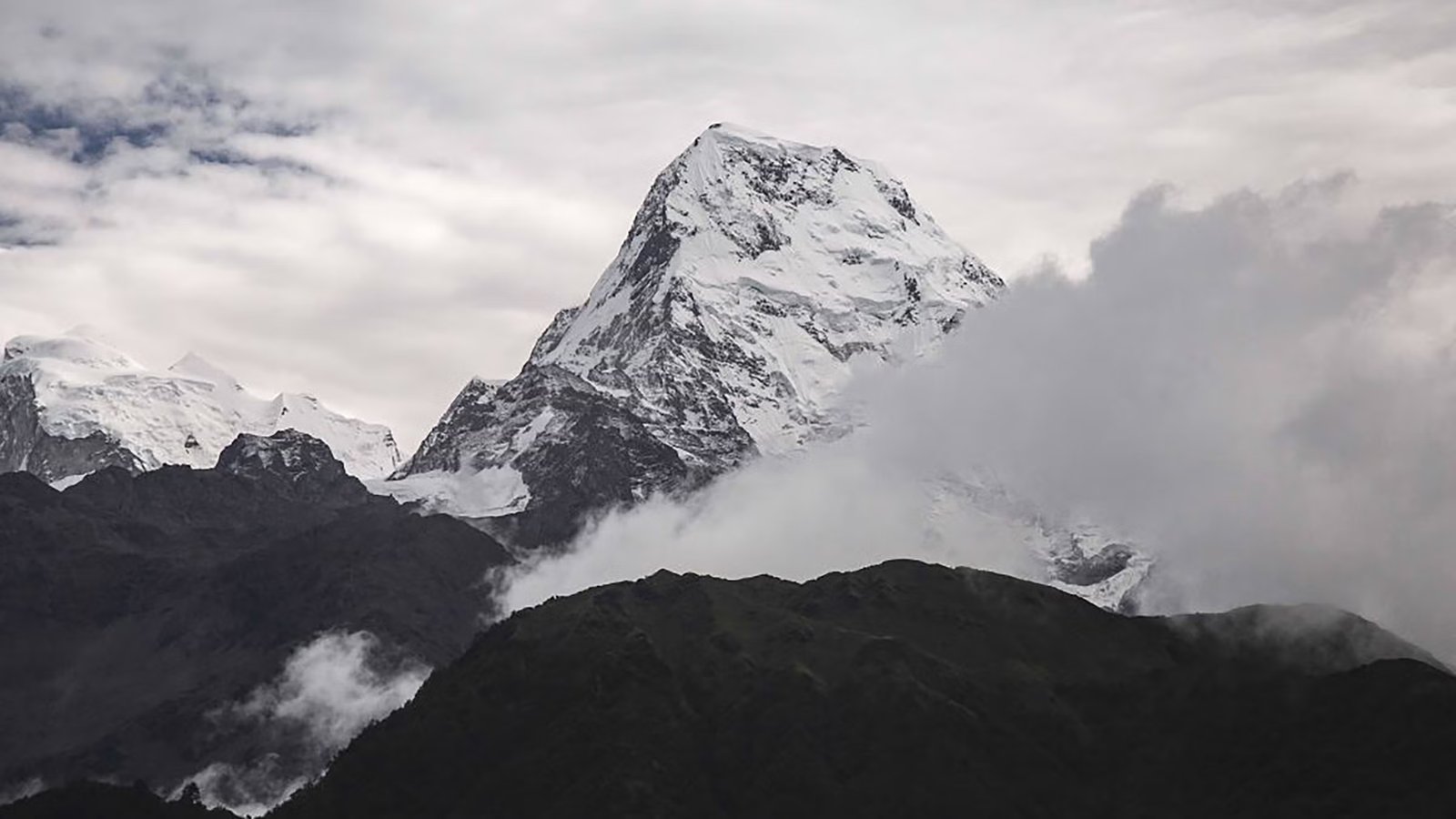
Nepali guide Ashok Lama is a rising star in the world of Himalayan guiding. He recently received his International Federation of Mountain Guides Association (IFMGA) certification, and has led clients to the summit of Mount Everest and other high peaks. In April, Ashok rescued two climbers from 26,545-foot Annapurna. The mission nearly cost him his own life. Here, Ashok takes Outside readers into the daring rescue mission.
As I rappelled down the fixed lines on Annapurna, just before I disappeared over a small ridge, I happened to look up towards the skyline. That’s when I saw him.
It was unquestionably Dawa Nurbu Sherpa.
Dawa, a guide from outfitter 8K Expeditions, was descending slowly on the ropes far above Camp IV at about 24,000 feet. I climbed up to him as quickly as I could.
When I reached Dawa, he could barely move. He had no gloves on, and his hands were coated in a thick layer of ice, frozen into an open claw position. It’s amazing that he had made it down this far, as he could barely operate his carabiner. I gave him a bottle of juice, which he drank immediately. I put him on oxygen, and we descended to an abandoned tent, where we took refuge. I increased his oxygen flow. I gave him an apple to eat.
After about ten minutes, Dawa started to come around. He could move more easily, but he still wasn’t coherent. He began speaking to people who weren’t there in the tent with us.
A Mission to Climb the Deadliest Mountain
This spring was my first time guiding on Annapurna, the world’s tenth-highest mountain. I was on a month-long expedition for an Australian climber who was young, strong, and ambitious. After Annapurna, we had plans to summit four other peaks in a row.
Annapurna has a reputation as one of the deadliest mountains in the world, due to a combination of extreme weather, long climbing days, and near-constant exposure to avalanches and rockfall.
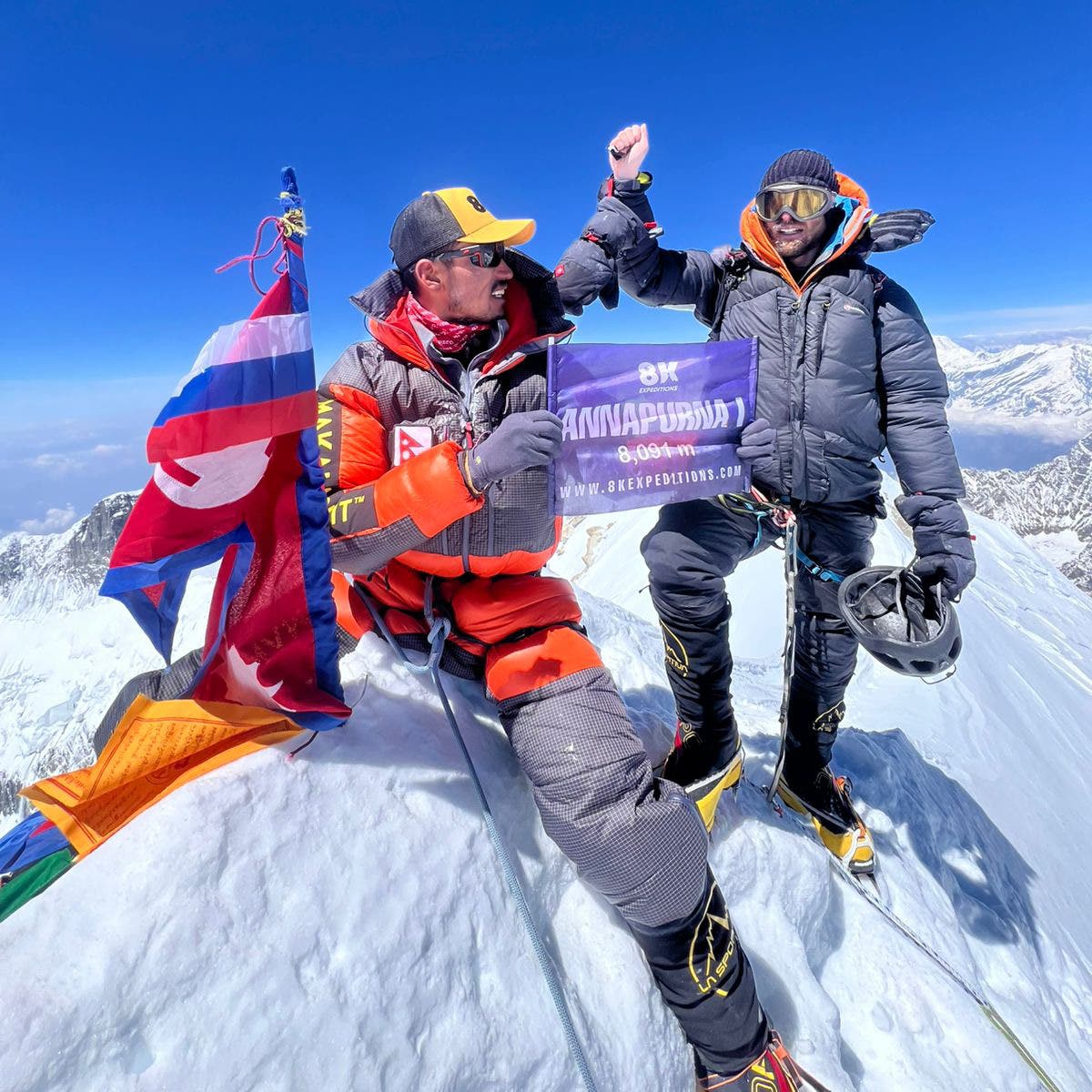
After a month of acclimatizing and waiting for a weather window, my client and I reached the summit in perfect conditions on April 18. My close friend, Dawa Sherpa, was one day behind us, leading an experienced IFMGA guide from Switzerland.
Dawa and his client arrived at Base Camp late in the Annapurna season, which meant they would be summiting the mountain alone, after all the other climbers had descended. I remember telling him before we left, “You don’t want to be up high alone, please climb with us.”
At the time, it felt like routine advice.
On our way to the summit, at around 24,000 feet altitude, my client and I met a Russian climber on her descent. She was climbing without oxygen, and she was showing signs of altitude illness. She was uncoordinated and could barely walk. I gave her some juice from my pack and encouraged her to descend immediately.
We met her a day later as we descended to Camp II. Her condition had worsened significantly. She complained of chest pains and had difficulty speaking. I gave her my emergency oxygen bottle and began helping her down.
We left Camp II with her at about 3 P.M. and didn’t arrive in base camp until 2 A.M. The Russian climber was moving slowly and had trouble descending, and my client and I worked together to bring her down.
It was during that descent that I got the first call for help from Dawa on the radio.
A Call for Help at 25,000 Feet
At first, the information was unclear.
From what I could piece together, Dawa and his client were descending. The client had gone ahead while Dawa sat down to rest. Dawa fell asleep from exhaustion, and when he woke up, he realized his client was gone, and he was alone on the massive summit ridge.
On the radio, Dawa asked me for directions to a series of fixed ropes leading down through a tight couloir to Camp III at 21,300 feet. I told him to just keep descending, as the route was easy to see.
But as Dawa continued, his calls for help became more panicked. His descriptions didn’t match the terrain of the climbing route. I realized he was likely much higher on the mountain than he thought he was. He was also hallucinating.
As his calls came in, I was still descending with the Russian climber and my client. I was absolutely torn about what to do. Going back up to find Dawa required putting myself in significant danger by traversing avalanche terrain. I didn’t have any emergency supplies, and it would likely take me several hours to reach Dawa at that elevation. I was also managing the rescue of the Russian climber, and I couldn’t abandon my client. I decided to continue to base camp and told myself I would figure out a plan after that.
But as we reached Camp I at 16,800 feet, Dawa came on the radio. He said that his hands were frozen and blackened.
A Critical Resupply in Base Camp
That evening, as I slept for a few hours in base camp, Dawa went out of radio contact.
I was woken up at 6:30 A.M. by one of the kitchen staff. He told me that there was a rescue helicopter on the way. Once it arrived, I boarded the helicopter, and we flew above the mountain to look for Dawa. My friend, Priya “Priyanka” Adhikari, Nepal’s only woman pilot, was flying.
From the air, we scanned the slopes between Camp III and Camp IV, between 21,300 feet and 22,474 feet. As we criss-crossed the route, I saw what looked like a person on a slope. It must have been Dawa, I surmised, as that object wasn’t there when I had descended just a few hours before.
We went back to base camp. I grabbed my climbing gear and some emergency supplies, and then got back in the helicopter. Priyanka flew me up to Camp III at 21,300 feet, and I got out. With hope in my heart, I climbed for two hours toward the location where I had seen the figure.
But when I got there, all I found was rock and ice.
I had no choice but to keep climbing in the hopes that I could find Dawa.
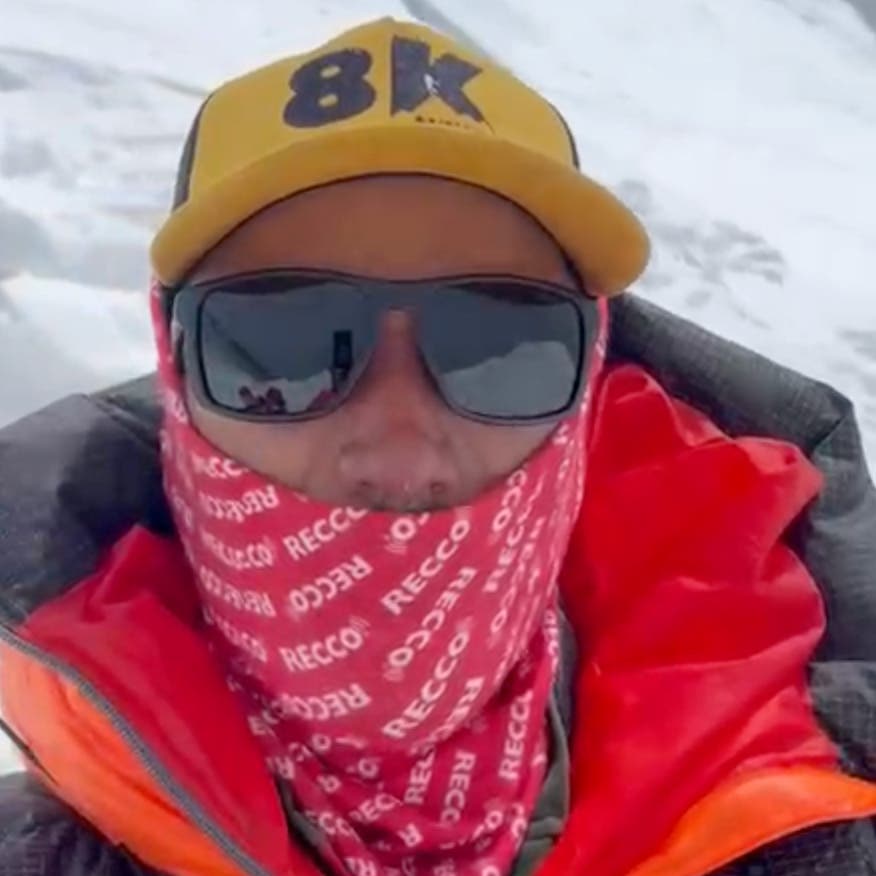
As I climbed, Dawa came back onto the radio. I think that the morning sun warmed him and brought him back to consciousness. But he wasn’t making any sense on the radio. He just repeated the word “helicopter” without giving a position or any other information.
Priyanka was still flying above Annapurna searching for Dawe. She radioed me that she had potentially seen him near a tent above Camp IV, so I climbed in that direction.
Again, I found nothing.
I was running out of energy and hope. I needed to descend to Camp III, where Priyanka could land and take me to safety. So I descended again, and dropped below the standard route just to see if Dawa had wandered down there.
At this stage, I assumed he was no longer alive. And that’s when I saw him.
A Race Against Time
I knew I needed to bring Dawa down.
His feet seemed OK, and he could walk slowly. I gave him a spare pair of gloves, and together we descended the fixed ropes towards Camp III. I held him as he descended, and helped clip and unclip his safety system as we passed anchors.
We descended for three hours this way, and reached Camp III at about 3 P.M. We were finally at an altitude where Priyanka could safely rescue us. But the weather was deteriorating quickly.
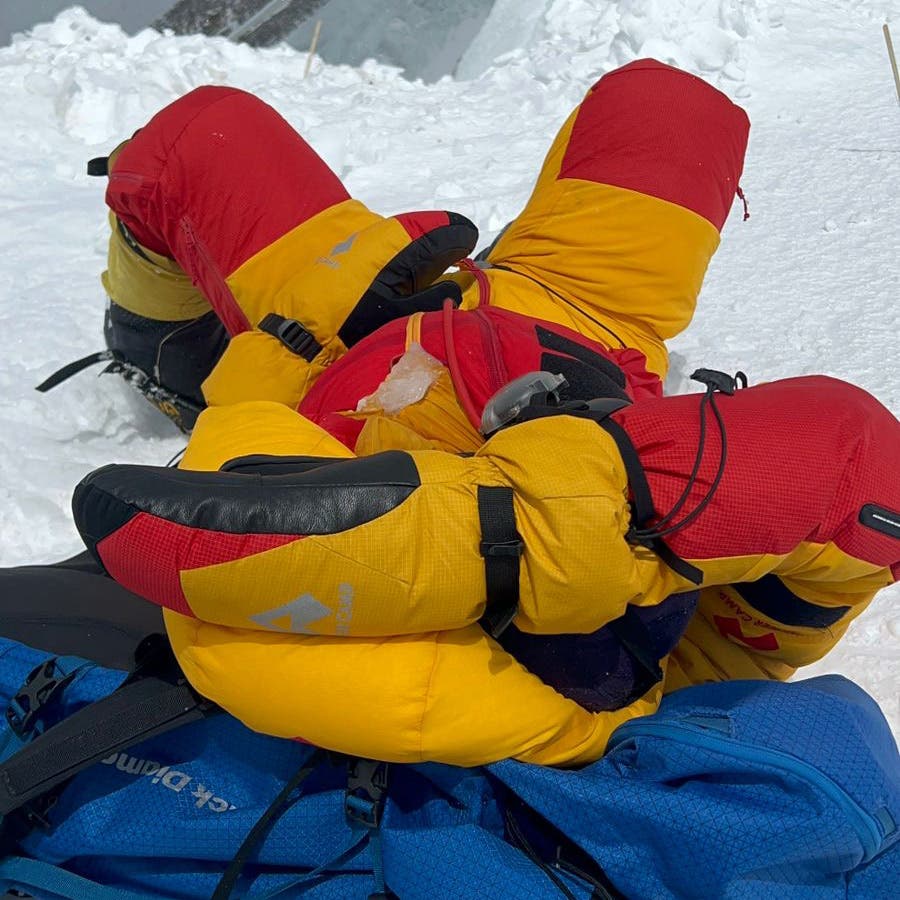
It started to snow, lightly at first, and then much harder. The snow meant there was no longer hope for a helicopter rescue.
We were alone at Camp III.
I found another abandoned tent and helped Dawa in. I wrapped him in a foam mattress that I found, and used it to insulate him against the cold. The tent’s wind-breaking flysheet had been blown off by the gusts, but luckily I spotted it a few hundred feet below us. I climbed down, grabbed it, and secured it back on the tent.
We were completely alone. We had no remaining food or water. We had no stove or fuel. Over the previous three days, I had eaten only one small meal and slept for about three hours.
I stayed awake the entire night, clearing snow and monitoring Dawa’s health.
The snow fell heavily, and the wind gusts were so strong that I thought it might blow us and the tent off the mountain. I realized that if the storm continued with this intensity in the morning, and if the rescue flight couldn’t come, both of us would die.
Base camp maintained radio contact through the night. I was told that a helicopter would attempt to reach us at first light. As the sun rose in the morning, the skies cleared. I spent half an hour making a landing spot for the helicopter. I had to clear four feet of fresh snow with my hands and feet.
When the landing pad was ready, I saw Priyanka’s helicopter flying up the valley. She half-landed, half-hovered on the snowy slope while I helped Dawa get into the helicopter. She peeled to the left and flew him to safety.
After some time, I heard the helicopter returning. But instead of coming into land, Priyanka flew in a wide circle above me. The wind had shifted direction, and she was struggling to safely land.
Again, my heart fell. I knew I couldn’t survive another night in Camp III.
Then I heard the helicopter come back.
Priyanka fought the wind as she flew towards me. The helicopter slowed and hovered a few feet above my landing pad, very briefly. I used all my remaining strength to open the door and jump in.
As told to Ben Ayers.
