

Updated April 28, 2026 10:43AM
Gas prices are insane, and air travel is chaotic and expensive right now. This is a problem, because you still love to travel. Summer is rapidly approaching and you need a break, but you don’t want to sacrifice your savings for a far-flung trip. Don’t worry; I have you covered. Our country’s largest metropolitan areas happen to be located within a quick drive of some of the best adventures inside our national park system. This means if you’re one of the tens of millions of people living in one of of the country’s biggest cities—New York City, Los Angeles, Chicago, Houston, and Phoenix—a big adventure is just a short road trip (or train trip) away.
Here are my picks for quick and easy national park adventures close to the five biggest cities in the country.
New York City, New York
Population: 8.5 million
It’s easy to assume New York City is far removed from the wild landscapes that our national park system protects, but the fact remains that residents of the largest city in the country have a adventure just beyond the skyscrapers. Head east and you’ll find a coastal wilderness, or head west for rugged mountains.
Fire Island National Seashore, New York
Fire Island is a 32-mile-long, narrow strip of a barrier island that protects Long Island from the Atlantic Ocean, and the vast majority of it is protected as a National Seashore by the park service. The park unit is a mix of wild beaches, coastal wilderness, and historic buildings offering the chance for a primitive island escape that’s just a short ferry ride from Long Island.
The Adventure: Hike Otis Pike High Dunes Wilderness, the only federally designated wilderness area in the state of New York. The Otis Pike protects 1,400 acres of the island that includes a seven mile stretch of undeveloped maritime forest, dunes and beach. It’s the smallest wilderness area managed by the park service, but it packs a punch for city dwellers looking for a pristine coastal experience. Hike the seven-mile Burma Trail through the heart of the wilderness, keeping an eye out for bald eagles and white-tailed deer. The path is sandy as it weaves through grass-covered dunes and you’ll have plenty of opportunities to access the beach on the Atlantic.
Spend the Night: Snag a campsite at Watch Hill Campground, which has 20 tent sites and eight safari-style tents, all of which put you close to the beach and the hiking within the Otis Pike High Dunes Wilderness (from $35 a night).
Delaware Water Gap National Recreation Area, Pennsylvania
This national recreation area protects a mile-long section of the Middle Delaware River that has carved a deep gap and formed two mountains on either side of the water. The park includes 67,000 acres of forest loaded with opportunities to hike, camp and paddle, and it’s just 75 miles west of New York City, providing residents of the massive metropolitan area with a quick wilderness escape. More than 20 miles of the Appalachian Trail runs through the center of the park.
The Adventure: Paddle the Middle Delaware. The National Recreation Area protects 40 miles of free-flowing river, offering mild water with multiple access points. The six-mile stretch from Smithfield Beach to Kittatinny Point is the most popular, cruising past islands and sandy beaches before ending at the actual gap in the mountains. Edge of the Woods Outfitters has kayak and tube rentals and shuttles (starting at $40 per person).
Spend the Night: Worthington State Forest, which makes up a large chunk of the recreation area on the New Jersey side of the river, has 78 campsites close to the water with quick access to the Appalachian Trail (from $20 a night).
Los Angeles, California
Population: 3.8 million
Traffic, smog, interstates, more traffic. L.A. can get a bad rap, but the West Coast’s largest city is actually surrounded by some pretty stellar outdoor recreation. And I’m not just talking about surf breaks. There are also mountains to climb and canyons to explore, all within a quick drive from all of that Hollywood glitz and glam.
Santa Monica Mountains National Recreation Area
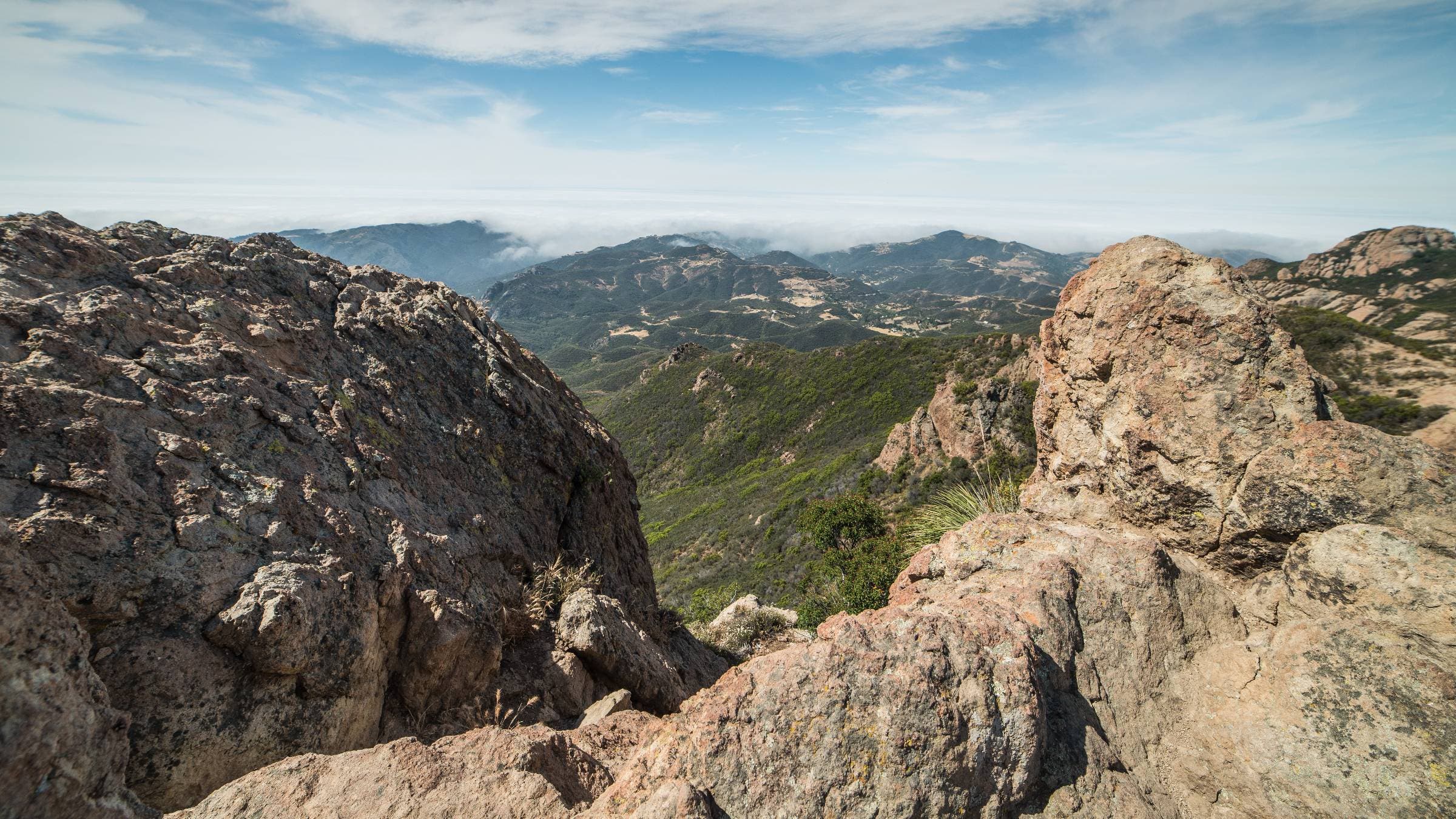
It’s the largest urban park in the country, with more than 500 miles of trails traversing mountains and coastal landscapes on the northern edge of L.A. It’s just 20 miles from downtown L.A. to the southernmost trailhead at Will Rogers State Historic Park.
The Adventure: Hike a piece of the Backbone Trail, a 67-mile-long trail running through the mountains with 12 different trailheads. Camping isn’t allowed along the trail, so most hikers and trail runners tackle sections of the long trail as day hikes. There’s a particularly scenic six-mile loop that incorporates the Backbone Trail and the Mishe Mokwa Trail that climbs to the summit of Sandstone Peak, the highest point in the Santa Monica Mountains at 3,111 feet. From the top, you’ll have views that take in downtown L.A. below and the Channel Islands in the Pacific to the west. There’s some mild scrambling to reach the summit, and you’ll pass some cool rock formations along the way.
Spend the Night: Try to get a site in Point Mugu State Park, a 14,000-acre park inside the national recreation area with two campgrounds, the best of these is Sycamore Canyon, which has 58 tent sites shaded by large sycamore trees ($45 per night). Reservations are tough to score, so plan six months in advance if possible. You’ll find several private campgrounds nearby through Hipcamp if you can’t get a reservation inside the state park.
Channel Islands National Park
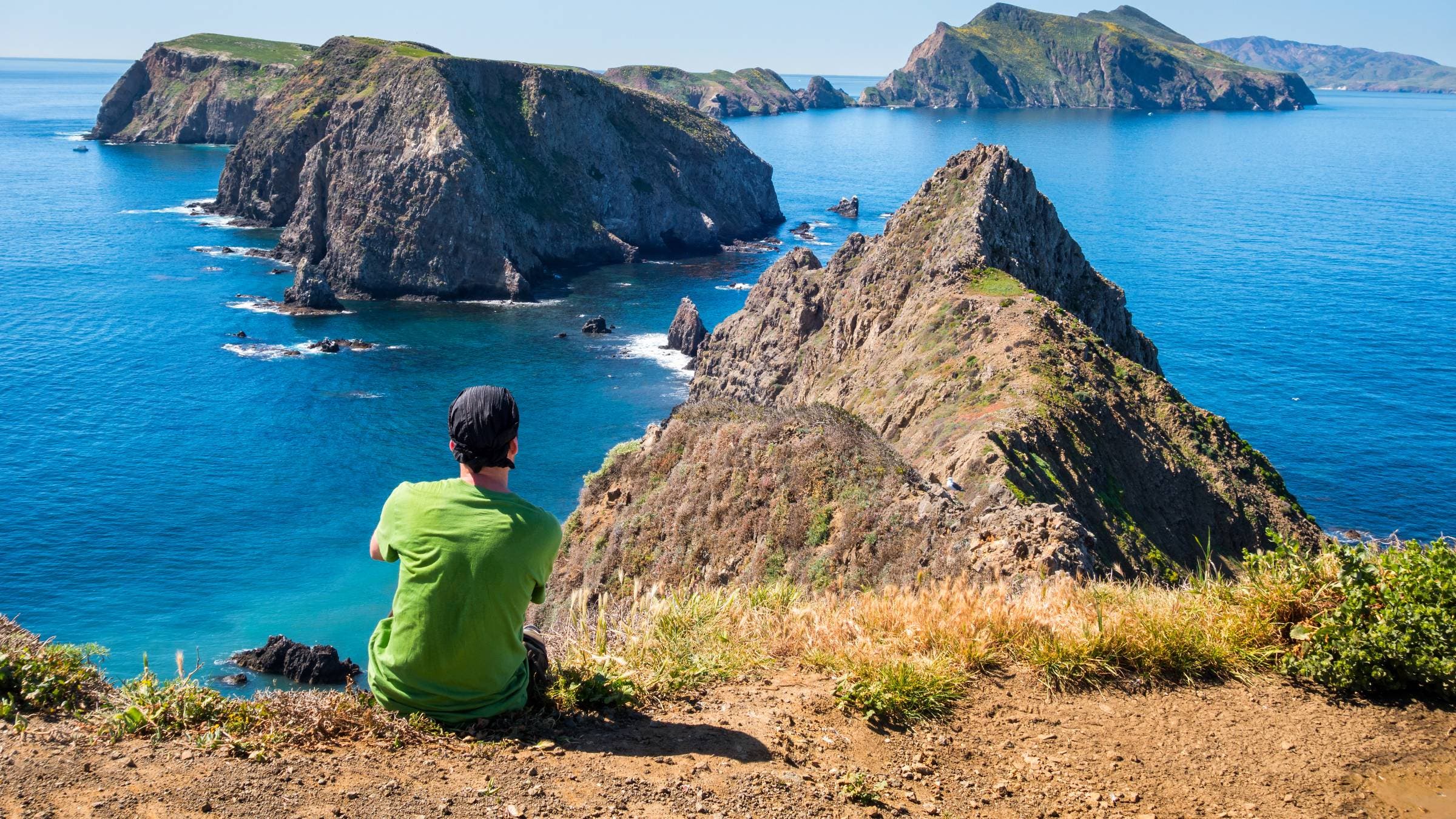
This park encompasses five islands roughly 30 miles off the coast of Los Angeles that can only be accessed by boat. Each island has a different vibe, but you can expect remote beaches, steep cliffs rising up from the sea and endemic species like the small, adorable island fox.
The Adventure: Hike Santa Rosa, which is arguably the most scenic spit of land in the archipelago, as it’s a mix of rare Torrey pine forest, open meadows and dramatic cliff line. Catch a ferry to Santa Rosa with Island Packers (day trips from $96) and hike the 12-mile out-and-back to Skunk Point, where sand dunes and cliffs meet the Pacific. You’ll hike singletrack through tall grass and trace the edge of the cliffs that line the island.
Spend the Night: Each island within the park has one established campground. On Santa Rosa, that’s Water Canyon, a 15-site campground that has potable water (a luxury on these islands), but it’s a 1.5-mile hike from the pier, so pack light ($15 per night, reserve six months in advance).
Chicago, Illinois
Population: 2.7 million
Chicago has a reputation for beautiful outdoor spaces, known as the “city in a garden” because of its bevy of parks and open spaces. Residents can bike the Lakefront Trail along Lake Michigan, kayak the Chicago River, or run the 606, an elevated trail that runs through a series of hip neighborhoods. And the adventure gets better just outside the city limits with one of the newest designated national parks protecting a pristine slice of Lake Michigan’s coast.
Indiana Dunes National Park, Indiana
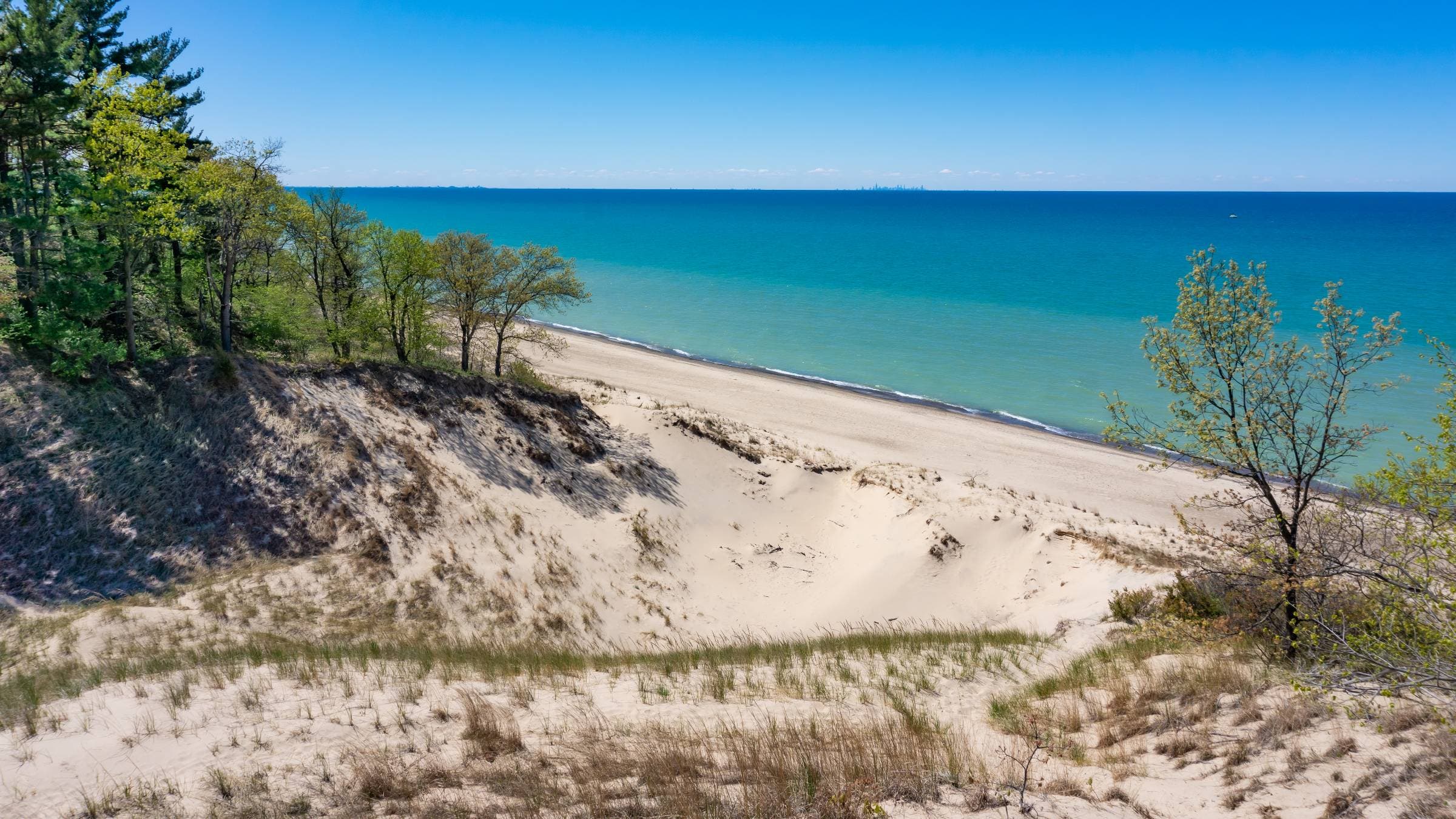
At just 16,000 acres, Indiana Dunes is a smaller unit in the park system, but it protects a key slice of coastal wilderness on Lake Michigan, which is essentially an inland sea. The park has 50 miles of trails for hiking as well as 15 miles of beaches for lounging and swimming Lake Michigan. It’s just 40 miles from downtown Chicago, and you can even reach it by train.
The Adventure: Hike to the beach. Yes, you can drive to several designated beaches within the park, but the Cowles Bog Trail is a 4.7-mile lollipop loop that takes you through just about every ecosystem protected inside the park, from the beach to inland marshes and black oak forests. You’ll have to traverse steep dunes as you approach Lake Michigan and will have access to one of the most remote beaches in the park, which has views of downtown Chicago.
Spend the Night: Pitch your tent in Dunewood Campground, which has 66 sites a mile south of the lake ($25 a night, reserve six months in advance).
Houston, Texas
Population: 2.4 million
The largest city in Texas isn’t exactly known for its outdoor adventure, though Houston does have an impressive array of city parks, including the Buffalo Bayou Park, which protects 160 acres of waterfront green space. And the 1,500 Memorial Park is twice as big as Central Park with miles of running and biking trails to explore. But you need to satisfy your traveling itch, so you’re heading 90 miles northeast to explore a gorgeous swamp and forest.
Big Thicket National Preserve
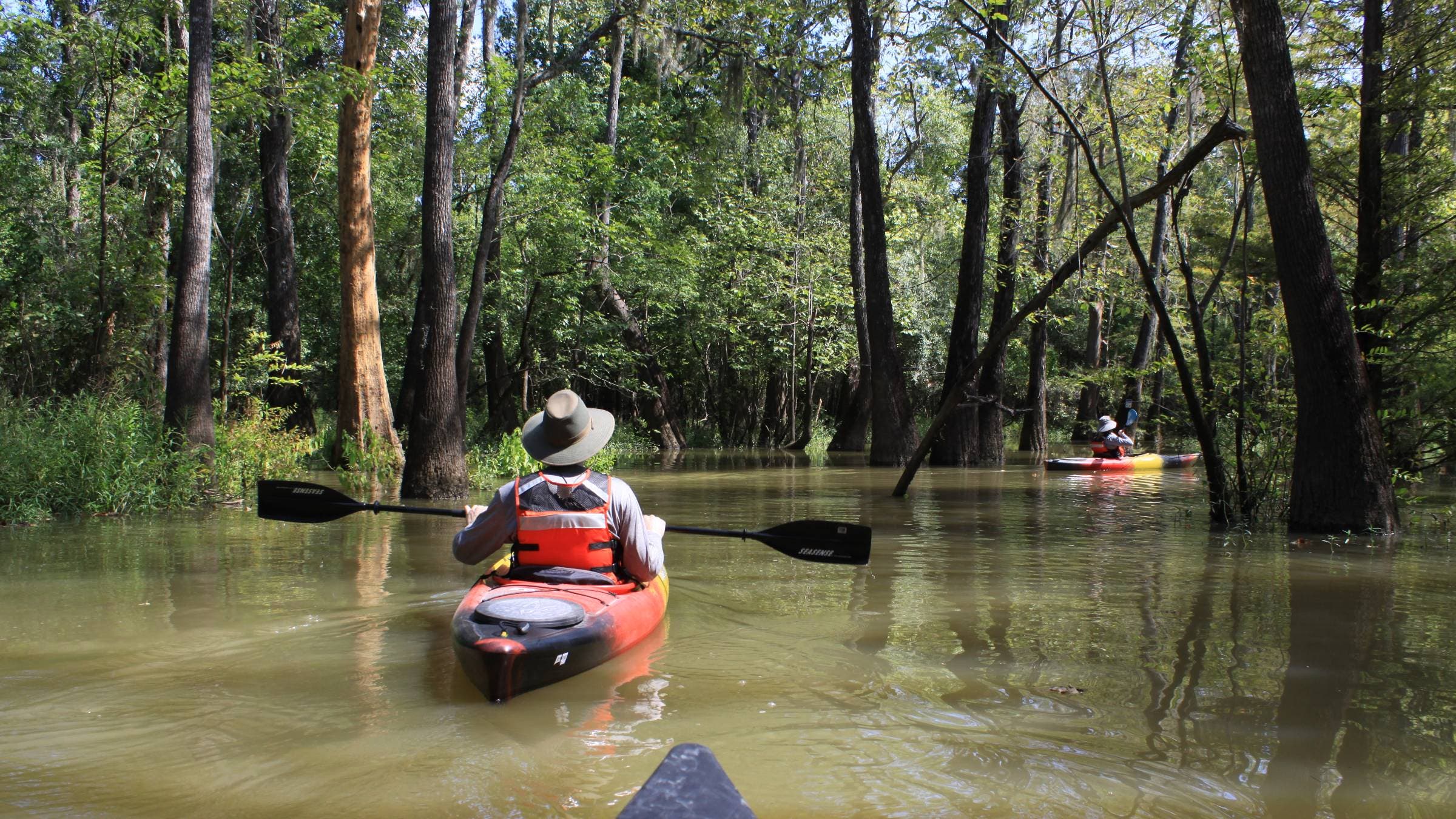
Big Thicket protects a biologically diverse area that includes nine different ecosystems, from longleaf pine forests to cypress-lined bayous. The 97,000-acre preserve is packed with 40 miles of hiking trails and marked canoe trails that traverse blackwater swamps, meadows, coastal prairies and hardwood forests. It is a grand, diverse landscape that’s just outside of Houston’s borders.
The Adventure: Paddle the preserve. There are more than 30 miles of paddle trails that run through the park and beyond, but the best introduction to the ecosystem is to paddle the 4.8-mile Cooks Lake to Scatterman Paddling Trail, which forms a perfect loop that connects rivers, swamps and lakes inside the park. It’s a classic, blackwater adventure as you paddle through mazes of cypress and tupelo trees.
Spend the Night: Big Thicket Preserve only has backcountry camping, but if you’re looking to car camp, pull up to the adjacent Village Creek State Park, which has sites near one of the few free-flowing rivers in the state of Texas. Just watch for gators ($16 a night).
Phoenix, Arizona
Population: 1.7 million
I’ll be honest, I didn’t realize Phoenix was the fifth largest city in the country until I started researching this article. Those nearly two million residents have some extraordinary desert terrain to explore within and around the city. The Phoenix Mountains Preserve protects craggy peaks on the edge of downtown, while the city’s South Mountain Park boasts 100 miles of trail. If you’re looking for a national park experience, you’ll need a vehicle and a free weekend. But the slightly longer drive is worth it.
Tonto National Monument
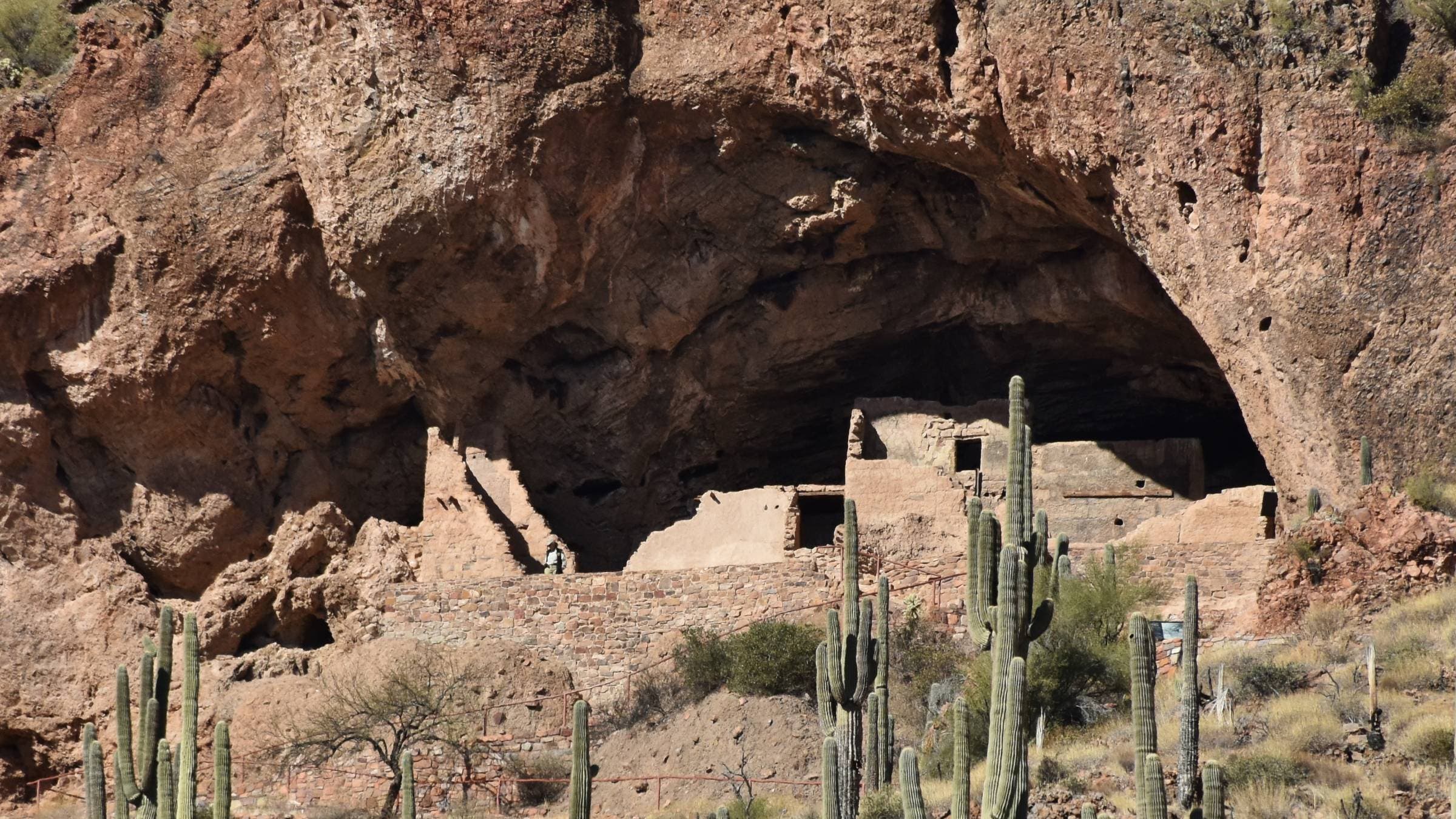
This small national monument located 100 miles east of the city protects a slice of the Sonoran desert (think saguaro cactus) and two ancient cliff dwellings that date back to 1300 CE.
The Adventure: Hike to cliff dwellings. Tonto National Monument is unique in that you can actually hike into the cliff dwellings it protects. Start with the one-mile out-and-back hike from the visitor center to the Lower Cliff Dwelling, where you can enter the rooms and see the original wood used to support some of the structure and the handprints in the wall which were formed when the adobe was hard pressed to the rock to create the walls. From the site, you have a great view of the Salt River and Roosevelt Lake. Make a reservation for a guided hike between November and April, and you can hike to the Upper Cliff Dwellings, which is twice as big and is thought to have housed 100 people in its heyday.
Spend the Night: There’s no camping inside Tonto National Monument, but the park service unit sits right next to Theodore Roosevelt Lake, which is managed by Tonto National Forest and has plenty of campground options. Windy Hill Campground is the closest to the national monument, with sites on the lake for easy access to fishing and paddling. It is first come, first served from April 24 through October 31 ($25 per night).
Grand Canyon National Park
One of the most iconic national parks in the country is 200 miles north of downtown Phoenix, and while that might be a longer drive than you’re willing to do right now considering gas prices, please keep in mind that it’s the Grand Canyon. It’s worth the extra effort. It’s a gorge that’s more than a mile deep, with some of the most awesome (I’m using the word literally here) views in the world.
The Adventure: Hike the South Rim. It’s summer, so it’s going to be hot on the South Rim, but this is the closest access to Phoenix and we’re prioritizing proximity here. Do your hiking at sunrise if you can and you’ll be fine. Hike the South Kaibab Trail, a 7-mile path that drops 4,780 feet on its way to the Colorado River. If you’re not up for the full 14-mile out-and-back, Ooh Aah Point, less than a mile in, is a good turnaround point.
Spend the Night: There are five hotels inside the park on the South Rim and countless more at nearby communities, but try to get a site at Desert View Campground, which is known for its sunsets. Make reservations up to six months in advance, or try to snag a last-minute cancellation ($30 per night).
Graham Averill is Outside‘s national parks columnist. He grew up north of Atlanta and spent most of his youth exploring Kennesaw National Battlefield and the Chattahoochee National Recreation Area, both of which are prime examples of urban adventure courtesy of our national park system. He recently wrote in defense of visiting the obvious places in our national parks.
