

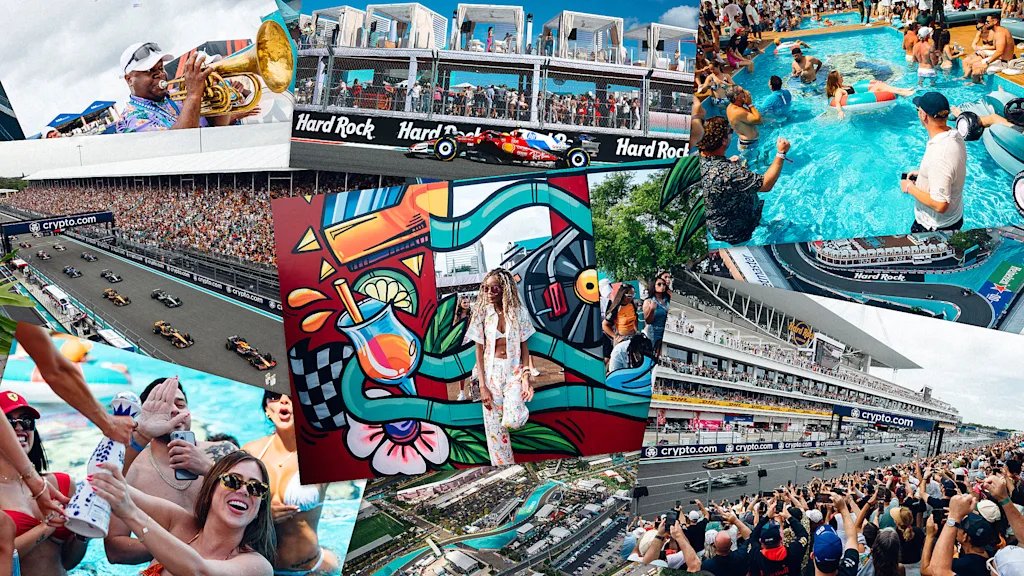
The Miami Grand Prix, hosted at the Hard Rock Stadium’s 3.3-mile Miami International Autodrome, will look and feel different this year. In its fifth year, the race will spotlight the city with new experiences, activations like the MSC Yacht Club, and new sight lines for spectators.
While relatively new to Formula 1’s 24 Grand Prix race season, the Miami GP’s agreement to serve as a host city until 2041 is an indicator that F1 is focused on investing in the U.S. market. It’s a big departure from F1’s history.
“ We used to turn up in the U.S., race, and [then] expect everyone in the U.S. to continue to stay in love with us, engage with us, and that was probably arrogant,” says Liam Parker, chief communications and corporate relations officer at Formula 1.
But in 2017, that changed when Liberty Media Corp. acquired F1, recognizing the “enormous opportunity to grow the sport.” F1, currently valued at roughly $3.6 billion, doubled down on the U.S. as a strategic market with its first modern U.S. race, Austin’s Circuit of the Americas. To deepen its U.S. presence, F1 wished for an international, cultural destination.
“It was the second race to join us from the U.S. It was a big test case,” Parker says. “If Miami hadn’t gone well, people might have started to say ‘Can F1 really make a success of the U.S.’?”
As the U.S. circuit’s first race, Miami GP is designed to set the tone for the rest of the calendar and plays a key role in growing F1 commercially stateside.
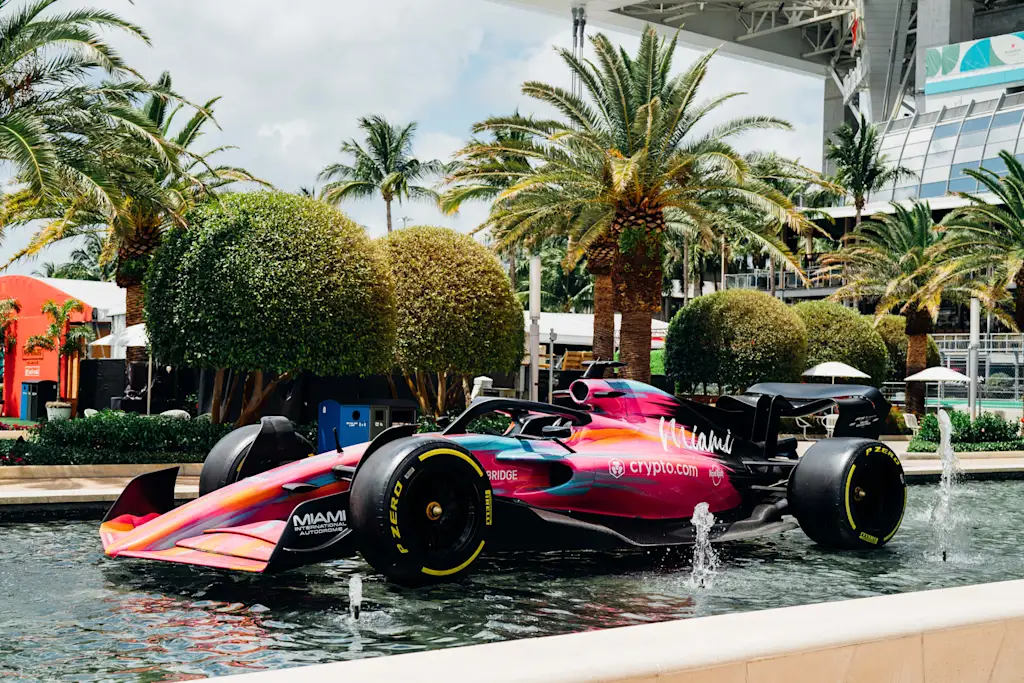
Designing the Miami Grand Prix
Parker recognizes that F1 is not competing with legacy sports like the NFL, NBA, and MLB, but rather with entertainment and people’s attention. For that reason, F1’s recipe for relevancy in the U.S. market has to go beyond the race. Parker says it centers on “people’s mindsets, news feeds, and their lifestyle.”
